
9 Best Car Batteries For Cold Weather in 2026
This post contains affiliate links. As an Amazon Associate, we earn from qualifying purchases.
For reliable cold-weather starts, the Weize Platinum AGM Battery Group 49 leads our list with 900 cold-cranking amps and a 160-minute reserve capacity, making it a strong choice for drivers facing freezing mornings. For those needing maximum extreme-cold power, the Odyssey Extreme Series AGM Battery offers 930 CCA, while the Optima RedTop AGM Battery 34/78 is built to handle high vibration from trucks and SUVs.
A dead battery on a subzero morning is more than an inconvenience, it can leave you stranded. Cold weather thickens engine oil and slows chemical reactions inside the battery, so starting power (measured in CCA) and reserve capacity (RC) become critical. You need a battery that delivers reliable cranking power and holds a charge through long, cold nights.
This guide is based on a thorough review of manufacturer specifications, expert round-ups, and patterns in owner feedback. We focused on the key specs that matter most for winter performance: cold-cranking amps, reserve capacity, battery type (AGM vs. Flooded), and build quality. Our goal is to help you choose with confidence.
Top 9 Car Batteries For Cold Weather in the Market
Certain content that appears on this site comes from Amazon. This content is provided "as is" and is subject to change or removal at any time.
The Best Car Batteries For Cold Weather, Reviewed
Weize Platinum AGM Battery Group 49

What We Like
- 900 CCA for reliable cold starts
- 160 RC for long reserve power
- AGM design supports start-stop systems
- Leak-proof and vibration resistant
Trade-offs
- Heavy at 56.4 lbs for installation
- Not suitable for deep-cycle marine applications.
A 900 cold cranking amp rating means this battery delivers immediate starting power even when temperatures drop well below freezing, down to -22°F. With 160 minutes of reserve capacity and a 95Ah rating, it keeps your accessories running and recharges faster than conventional batteries. That combination of cold-weather muscle and steady long-term output makes it a strong fit for drivers who need reliable starts in harsh winters and also run heated seats, defrosters, or other electrical loads.
The trade-off is its weight and size. At 56.4 pounds, it’s noticeably heavier than something like the Optima RedTop AGM Battery 34/78, which weighs about 38.8 pounds. That extra heft comes from the larger lead plates that give it higher capacity, but it can make installation a two-person job in tight engine bays. If your main concern is pure cold-weather cranking and you have the space, this battery delivers where it counts.
Product photos
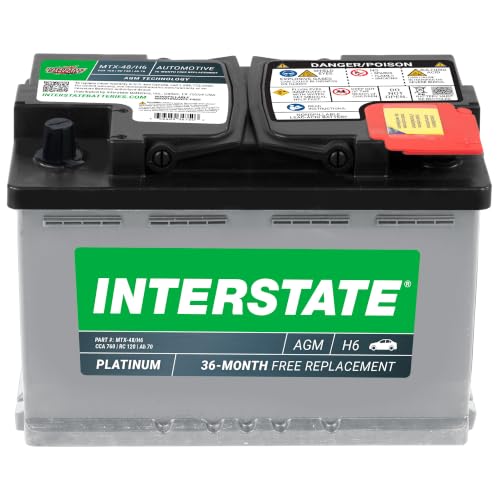
Interstate Batteries AGM Battery Group H6
What We Like
- 2X-3X longer life than conventional batteries
- Pure lead AGM for maximum durability
- Spill-proof and vibration resistant
- Maintenance-free VRLA design
Trade-offs
- No cold-cranking amp rating above 760 CCA
- Heavier than many standard flooded batteries at 44 pounds
Interstate claims 2X to 3X the service life of a conventional flooded battery, which matters most when winter temps strain every starting component. The pure lead AGM construction packs more lead into the same group H6 footprint, so you get 760 cold-cranking amps without upgrading your battery tray. That combination makes this a strong fit for drivers who keep a car for years and want a battery that won’t fade after two hard winters.
Extra mass in a battery improves durability, but it can make installation more challenging in tight engine bays. The Interstate MTX-48/H6 uses a pure lead AGM design that packs more lead into the case. That contributes to a longer service life, reportedly twice that of a conventional lead alloy AGM battery and three times that of a flooded battery. That added weight and density means the battery stays put and resists vibration, but owners should allow a little extra maneuvering room when sliding it into place. The spill-proof, maintenance-free construction, thanks to AGM and VRLA technology, eliminates worries about acid leaks during handling.
Product photos
Optima RedTop AGM Battery 34/78

What We Like
- 800 CCA for reliable cold-weather starts
- SpiralCell technology with 99.99% pure lead
- Maintenance-free sealed AGM design
Trade-offs
- Reserve capacity is shorter than deep-cycle options
- Heavier than standard flooded batteries of similar size
The SpiralCell construction with 99.99% pure lead means it keeps delivering starting power even when the temperature drops, and the maintenance-free case means you never check water levels. It’s a battery built for trucks, SUVs, and any rig that takes a beating and still needs to crank on a frigid morning.
Its 100-minute reserve capacity is modest compared to some deep-cycle batteries, so you won’t want to run accessories for long with the engine off. And while 800 CCA is plenty for most cold-weather starts, the Weize Platinum offers 900 CCA if you need extra cranking power. For the driver who values durability over raw cranking power, the RedTop’s vibration resistance and pure-lead internals make it a smart fit for high-shake environments.
Odyssey Extreme Series AGM Battery ODX-AGM65

What We Like
- 930 CCA for reliable cold starts
- 1750 PHCA for powerful engine turnover
- 135-minute reserve capacity
- Tin-plated brass SAE terminals resist corrosion
Trade-offs
- At 60 pounds, it's very heavy to handle
- Large footprint: 14.8 inches long
- Group 65 size limits vehicle compatibility
With 930 Cold Cranking Amps and a 1750 Pulse Hot Cranking Amps rating, this battery delivers serious starting power when temperatures drop. That combination means your engine gets a strong, fast crank even on the coldest mornings, reducing the strain on your starter and electrical system. The 135-minute reserve capacity also gives you a comfortable safety net if your alternator fails or you accidentally leave lights on. For drivers who face harsh winters and need absolute starting reliability, this is the kind of spec sheet that inspires confidence before you even turn the key.
Physical size is the main consideration: at 60 pounds and 14.8 inches long, this is a heavy, large battery that can be awkward to lift into tight engine bays. Compared to the Optima RedTop (38.8 pounds), you’ll notice the extra heft every time you install or remove it. That weight comes from the thick lead plates and rugged AGM construction that give it the extreme cold performance, so it’s a fair exchange if your priority is starting power over easy handling. Make sure your vehicle’s battery tray can accommodate the Group 65 dimensions before buying.
Product photos
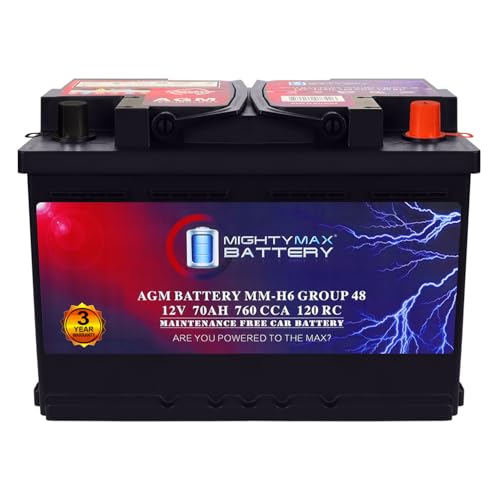
Mighty Max Battery MM-H6 AGM Battery
What We Like
- 760 CCA for cold-weather starts
- 120-minute reserve capacity for longer runs
- Sealed, spill-proof AGM design
- Rugged construction resists shock and vibration
Trade-offs
- At 12 pounds, lighter than many AGM batteries
- 760 CCA is lower than Optima RedTop's 800 CCA
A 760 cold cranking amps rating means this battery has the punch to fire up your engine when temperatures drop. The 120-minute reserve capacity gives you extra run time if you need to keep accessories going. That combination makes the Mighty Max MM-H6 a smart pick for drivers who want reliable cold-weather performance without spending a premium. Its sealed AGM construction handles vibration and lets you mount it in multiple positions, which adds flexibility for tight engine bays.
The trade-off here is that at 70 amp-hours and 12 pounds, it doesn’t have the deep energy reserves of heavier batteries like the Weize Platinum AGM Group 49. That battery offers 95 Ah for vehicles that demand more sustained power. But if your car fits a Group H6 size and you prioritize strong starting power and a budget-friendly price over maximum capacity, this Mighty Max delivers where it counts.
Product photos
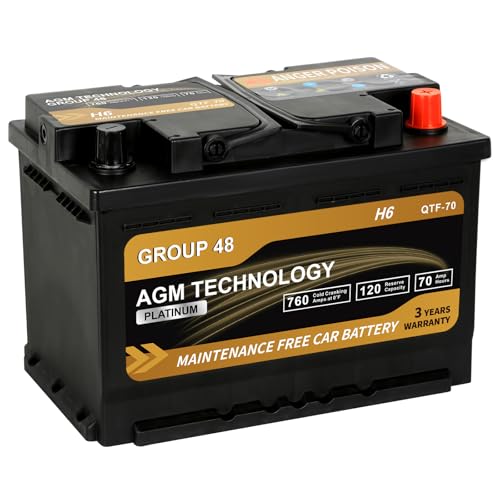
Daakmax Platinum AGM Battery Group 48
What We Like
- 760 CCA for reliable cold starts
- Designed for start-stop systems
- Maintenance-free sealed AGM design
Trade-offs
- At 44 lbs, heavier than some alternatives
Drivers in northern climates will appreciate the 760 Cold Cranking Amps, which deliver reliable engine starts even when temperatures drop well below freezing. This AGM battery is also engineered for vehicles equipped with start-stop technology, providing up to twice the cycle life of conventional batteries. A 3-year warranty backs that durability, offering a free replacement if any quality issues arise during that period. The maintenance-free design means no need to add water, and the low self-discharge rate helps retain charge during long storage, making it a practical choice for modern cars that sit idle for extended stretches.
This is strictly a starting battery. If you also power a winch, inverter, or trolling motor from the same battery, you will want a dual-purpose model instead. Compared to the Weize Platinum AGM Group 49, the Daakmax has a smaller physical size and lower weight. But the Weize delivers 900 CCA and 160 RC for vehicles that need extra reserve capacity. For a daily driver in a cold climate with start-stop, the Daakmax hits the right balance of cold-weather muscle and fitment flexibility.
Product photos
Optima YellowTop AGM Battery D34/78

What We Like
- 750 CCA for reliable cold-weather starts
- 120-minute reserve capacity for steady power
- Maintenance-free with faster charging
Trade-offs
- Heavier than many standard batteries at 43.5 lb
- 55 Ah capacity is modest for high-demand setups
- Not a dedicated starting battery like RedTop
With 750 cold cranking amps and a 120-minute reserve capacity, this battery delivers dependable starting power even when temperatures drop, while still having enough deep-cycle stamina to run accessories. That dual personality makes it a natural fit for drivers who need a single battery that handles both cranking and moderate electrical loads, like powering lights or a small inverter during a road trip. The SpiralCell construction with 99.99% pure lead also shrugs off vibration far longer than a standard flooded battery, so it holds up on rough roads or off the pavement.
At 43.5 pounds, this battery is noticeably heavier than many standard options, which can make installation in tight engine bays a chore. The 55 amp-hour C20 capacity works well for dual-purpose use, but if your vehicle has heavy electrical demands like running a fridge and winch, you might find it limiting. For most daily drivers and weekend adventurers, it strikes a smart balance between cold-weather cranking and accessory power.
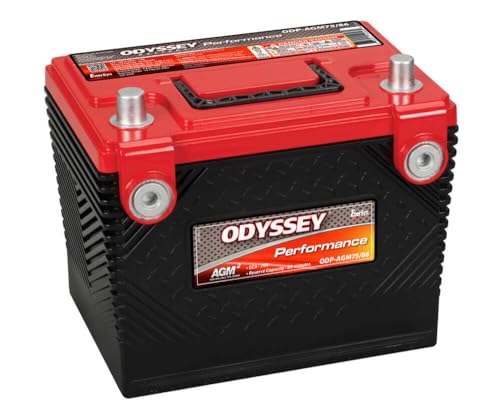
Odyssey Performance Series AGM Battery
What We Like
- 708 CCA for reliable cold starts
- AGM design resists vibration damage
- SAE posts fit standard cables
Trade-offs
- 89-minute reserve is lower than some rivals
- At 43.3 lb, it is heavy to carry
With 708 cold cranking amps, this Odyssey Performance Series battery delivers the punch needed to turn over a stubborn engine on a frigid morning. That CCA number, combined with its AGM construction, means it can handle repeated start attempts without losing steam. For drivers who face regular winter starts but don’t need the extreme reserve capacity of a deep-cycle battery, this is a well-balanced choice that won’t leave you cranking in the cold.
The trade-off shows up in reserve capacity: 89 minutes is noticeably less than the 160 minutes offered by the Weize Platinum AGM. If you frequently run accessories with the engine off, that shorter reserve could leave you stranded. But for pure starting duty in cold weather, the Odyssey’s 708 CCA gives it a clear edge over batteries that prioritize deep cycling over instant power.
Product photos
Autocessking Start-Stop AGM Battery
What We Like
- AGM design for leak and spill safety
- Heat- and cold-resistant materials for all-weather use
- Low self-discharge for long storage periods
- 36-month warranty coverage
Trade-offs
- Group 65 size limits fit to compatible vehicles only
- 750 CCA is lower than some competitors' cold-cranking amps
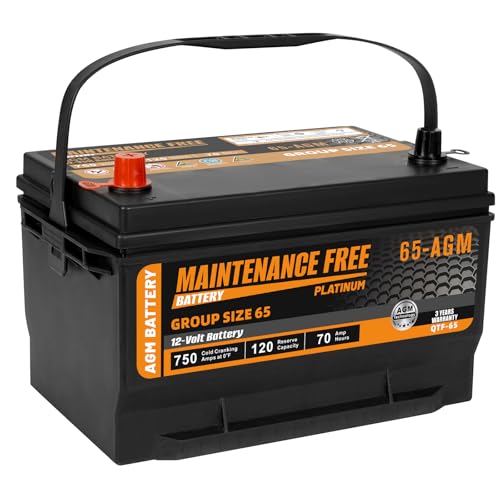
With 750 cold cranking amps and a reserve capacity of 120 RC, this battery is built to deliver reliable starts even when the mercury drops. The AGM construction uses glass fiber mats to absorb acid, which cuts down on leaks and corrosion while also handling temperature swings better than a conventional flooded battery. For drivers who face both bitter winter mornings and hot summer traffic, the all-weather materials help maintain consistent performance across the seasons. The low self-discharge rate also means it holds its charge well if your car sits for weeks between trips, so you are less likely to find a dead battery when you need it most.
The Autocessking delivers 750 cold cranking amps, which is enough to start most modern start-stop vehicles in moderate to cold climates. That rating sits below the 900 CCA of the Weize Platinum AGM Group 49, so if you drive a large V8 or face extreme subzero winters, you might want a higher CCA battery. Just confirm your car accepts a Group 65 battery with the positive terminal on the left, because fit is critical, and remember this is a starting battery, not meant for deep-cycle use.
Product photos
How We Evaluated Car Batteries For Cold Weather
We evaluated these batteries by analyzing manufacturer specifications, expert recommendations from automotive publications, and common themes in owner reviews. Our assessment focuses on published data and what real-world users consistently report about cold-start performance and longevity.
The three most important criteria for this category are cold-cranking amps (CCA), reserve capacity (RC), and battery construction. CCA measures a battery’s ability to start an engine in cold temperatures; a higher number means more starting power. RC indicates how long a battery can run essential accessories if the alternator fails, which matters in winter when you might be stuck in traffic with the heater and lights on. AGM (Absorbent Glass Mat) batteries generally outperform flooded batteries in cold weather because they resist freezing better and handle vibration well.
A research-led evaluation has limits. We cannot verify long-term durability or real-world CCA performance under extreme conditions. Owner reports can vary by climate and driving habits. We recommend using this guide to narrow your choices, then checking your vehicle’s owner manual for the correct group size and terminal orientation before purchasing.
What To Look For In Car Batteries For Cold Weather
Choosing a battery for cold weather means looking past the price tag and focusing on the specs that matter when the temperature drops. Here are the key factors to consider.
Look for a battery with a CCA rating well above your vehicle’s minimum requirement. Check the reserve capacity for accessory run time. Choose AGM over flooded for better cold performance and vibration resistance. Verify the group size fits your vehicle.
Cold-Cranking Amps (CCA)
Cold-cranking amps measure a battery’s ability to start an engine at 0°F. A higher CCA rating means more starting power in freezing conditions. For cold climates, aim for a CCA rating that provides reliable starts on the coldest mornings. Check your vehicle’s owner manual for the minimum CCA required, then add a buffer.
Reserve Capacity (RC)
Reserve capacity tells you how long a fully charged battery can deliver a constant current at a standard temperature before dropping below 10.5 volts. In winter, a high RC can keep your car running if the alternator fails, powering the heater, lights, and defroster. A battery with a low RC may leave you stranded if you need to run accessories for an extended period.
Battery Type: AGM vs. Flooded
AGM (Absorbent Glass Mat) batteries are the standard recommendation for cold climates. They have a lower internal resistance, which means they deliver more power on the first crank. They are also sealed, leak-proof, and more resistant to vibration damage than traditional flooded batteries. Flooded batteries are cheaper but more prone to freezing and require periodic maintenance.
- Verify your vehicle’s battery group size (e.g., Group 48, Group 65) in the owner manual.
- Check the terminal orientation (left vs. Right positive) to ensure cable reach.
- Look for a warranty of at least 3 years for peace of mind.
- Consider the battery’s weight: heavier AGM batteries often have more lead and higher capacity.
A good rule of thumb: choose an AGM battery with a CCA rating well above your vehicle’s minimum and a reserve capacity of at least 120 minutes for reliable winter performance.
Car Batteries For Cold Weather Compared
The table below compares the key specs of our top picks, including CCA, reserve capacity, and battery type, to help you see the differences at a glance.
| Product | CCA | Reserve Capacity | Weight |
|---|---|---|---|
| Weize Platinum AGM Battery Group 49 | 900A | 160RC | 56.4 lbs |
| Interstate Batteries AGM Battery Group H6 | 760 | N/A | N/A |
| Optima RedTop AGM Battery 34/78 | 800 CCA | 100 minutes | 38.8 pounds |
| Odyssey Extreme Series AGM Battery ODX-AGM65 | 930 CCA | 135 minutes | 60.0 pounds |
| Mighty Max Battery MM-H6 AGM Battery | 760 CCA | 120 minutes | 12.0 pounds |
| Daakmax Platinum AGM Battery Group 48 | 760 | 120 RC | 44.0 lbs |
| Optima YellowTop AGM Battery D34/78 | 750 CCA | 120 minutes | 43.5 pounds |
| Odyssey Performance Series AGM Battery | 708 CCA | 89 minutes | 43.3 pounds |
| Autocessking Start-Stop AGM Battery | 750 | 120 RC | N/A |
Frequently Asked Questions
What is the best car battery for extreme cold weather?
Best Extreme Cold Starting goes to the Odyssey Extreme Series AGM Battery ODX-AGM65, which delivers 930 CCA and a 135-minute reserve capacity. That cold-cranking amp figure is the highest of any battery on our list, so it provides reliable starting power in severe winter climates.
Is an AGM battery better for cold weather than a flooded battery?
Yes, AGM batteries generally perform better in cold weather. They have lower internal resistance, which delivers more power on the first crank, and they resist freezing better than flooded batteries. AGM batteries are also sealed and vibration-resistant, making them more durable in harsh conditions.
How many cold-cranking amps do I need for winter?
For reliable cold-weather starts, look for a battery with a CCA rating that provides strong starting power, and check your vehicle’s owner manual for the manufacturer’s minimum CCA requirement, adding a buffer for added reliability.
What does reserve capacity mean on a car battery?
Reserve capacity (RC) measures how long a fully charged battery can deliver a constant current at a standard temperature before dropping below 10.5 volts. A higher RC is valuable in winter, as it provides backup power for the heater, lights, and other accessories if the alternator fails.
How long do AGM batteries last in cold climates?
AGM batteries can last 3 to 5 years or more in cold climates with proper care, though extreme temperatures can shorten lifespan. Their maintenance-free design and resistance to vibration help them outlast conventional flooded batteries in many cases.
The Bottom Line
For most drivers in cold climates, the Weize Platinum AGM Battery Group 49 is our best overall pick, offering a strong balance of 900 CCA for reliable starts and 160 minutes of reserve capacity. It’s a great fit for vehicles with start-stop technology and drivers who want maximum starting power without paying for extreme specs they may not need.
If your budget is tighter, the Mighty Max Battery MM-H6 AGM Battery provides solid cold-weather performance at a more accessible price point, with 760 CCA and a 120-minute reserve capacity. For those who need the absolute highest cold-cranking power, the Odyssey Extreme Series AGM Battery delivers 930 CCA for the most severe winter conditions.
The single most important factor when buying a battery for cold weather is ensuring the CCA rating exceeds your vehicle’s minimum requirement by a comfortable margin. Pair that with an AGM design and a high reserve capacity, and you will have a battery that starts reliably all winter long.
