
10 Best Car Engine Cleaners in 2026
This post contains affiliate links. As an Amazon Associate, we earn from qualifying purchases.
For a clean engine bay, the Chemical Guys Orange Degreaser Spray is our top pick because it dilutes from a light maintenance wash to a full-strength degreaser. That versatility makes it a good choice for both DIYers and professionals. The Gunk Original Engine Degreaser is best for no-scrub cleaning on older engines, while the 3D Grand Blast Engine Degreaser is our pick for Best Biodegradable Cleaner.
The challenge with cleaning a car engine isn’t just cutting through grease, it’s doing so without damaging sensitive plastic covers, rubber hoses, or electrical components. A good engine cleaner needs to be strong enough on grime yet safe on the various materials under the hood.
This guide is based on research into product specifications, manufacturer documentation, expert recommendations from automotive forums, and patterns in owner feedback. We focused on versatility, surface safety, cleaning power, and ease of use to help you find the right cleaner for your engine bay.
Top 10 Car Engine Cleaners in the Market
Certain content that appears on this site comes from Amazon. This content is provided "as is" and is subject to change or removal at any time.
The Best Car Engine Cleaners, Reviewed
Chemical Guys Orange Degreaser Spray
What We Like
- Dilutable for light or full-strength cleaning
- Safe on engines, tires, tools, and undercarriages
- Trusted by professional detailers worldwide
Trade-offs
- Concentrated formula requires dilution for light jobs
- Requires scrubbing for thorough cleaning
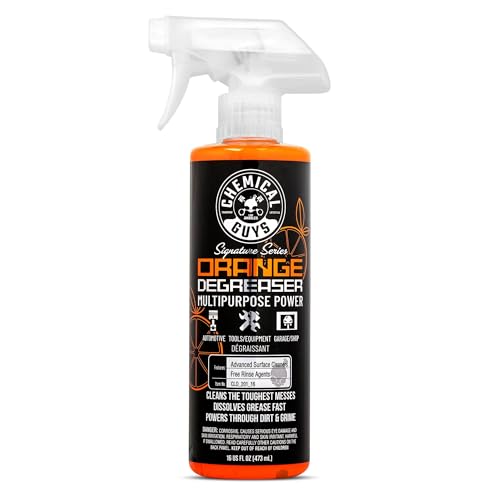
A 16-ounce bottle of concentrated degreaser that you can dilute for lighter messes or spray full-strength when an engine is caked in years of oil and grime. That flexibility is what makes this spray a go-to for anyone who wants one cleaner that handles everything from a quick engine bay freshen-up to a deep scrub on tires, tools, and undercarriages. The citrus-based formula is strong enough for heavy-duty cleaning, and it is trusted by shops worldwide for tackling the dirtiest jobs with speed and reliability.
The Chemical Guys Orange Degreaser Spray is a concentrated formula that you can dilute for light cleaning or use full strength for heavy-duty jobs. That gives you control over strength but adds a step compared to ready-to-use sprays. The Gunk Foamy Engine Cleaner expands into a foam that clings to surfaces, while the Chemical Guys product requires you to spray, scrub, and rinse for best results. That hands-on approach is exactly what many enthusiasts prefer for getting every last bit of grease off their engine bay.
Product photos
3D Grand Blast Engine Degreaser

What We Like
- Heavy-duty degreasing without heavy scrubbing
- Safe on metal, plastic, paint, and rubber
- Fast-acting, low-odor, non-staining formula
- Biodegradable and environmentally friendly
Trade-offs
- Not a spray: requires separate sprayer or brush
- Gallon size is bulky for small or occasional jobs
This 1-gallon jug delivers heavy-duty degreasing power that cuts through caked-on oil and grease with minimal scrubbing. The fast-acting formula breaks down grime on contact and rinses clean, leaving no stain or residue on metal, plastic, paint, or rubber. It’s a strong choice for anyone who wants a pro-level clean with an eco-friendly conscience, especially detailers and DIYers who tackle multiple engines or undercarriages in one session.
A full gallon gives you serious volume for frequent or heavy-duty degreasing. It’s best for a shop or someone who already has a spray bottle ready to go rather than for a quick one-off cleanup where a smaller aerosol might be handier.
Product photos
Gunk Original Engine Degreaser

What We Like
- No scrubbing required
- Deep-penetrating formula for baked-on grease
- Works on cars, trucks, mowers, ATVs, tractors
- Trusted brand for over 60 years
Trade-offs
- Requires 10-15 minute wait before rinsing
- Best for older engines, not modern plastic-covered bays
A 15-ounce spray can that requires zero scrubbing means you can degrease a grimy engine in about 15 minutes with just a garden hose. The deep-penetrating formula is built specifically for older, leaky engines where years of baked-on oil and grease have built up. So it suits classic cars, farm equipment, and high-mileage daily drivers that need a heavy-duty clean without elbow grease. This is the pick for someone who wants a straightforward, no-fuss approach to engine cleaning: spray it on, wait, and rinse away the grime.
The trade-off is that 10-15 minute wait time, which is required before rinsing. Compared to other degreasers in the guide, this original formula is specially formulated for older, greasy, leaky engines rather than modern bays with lots of plastic trim. If your engine is relatively clean or has plastic covers, other products may be a better fit, but for tough, greasy engines, this no-scrub approach is effective.
Gunk Foamy Engine Cleaner
What We Like
- Safe on plastic covers and rubber
- Foam clings to vertical surfaces
- Removes oil, dirt, road grime
- Works on cars, trucks, marine, ATVs
Trade-offs
- Requires 10-15 minute dwell time
- Needs water rinse to remove foam
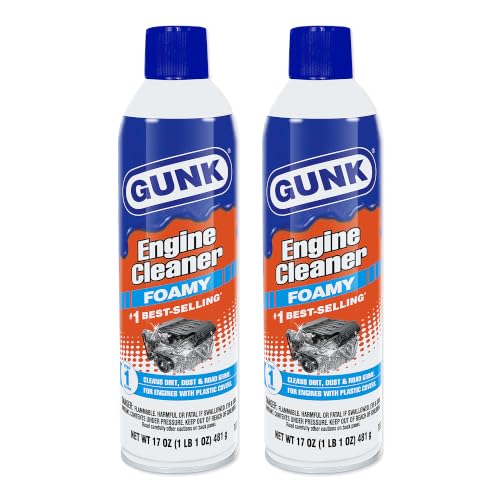
This expanding foam is formulated specifically for engines with plastic covers, so you can spray it directly on delicate under-hood parts without worrying about damage. The foam clings to vertical surfaces and works into tight crevices where oil and grime hide, then rinses away cleanly with a hose. It’s a straightforward choice if you keep your engine bay tidy and want a cleaner that won’t attack plastic trim or painted components. Gunk has been making engine cleaners for over 60 years, and this one reflects that focus on safe, effective degreasing for everyday vehicles and equipment.
The foam clings to vertical surfaces and works into every crevice where oil and grime hide, so you get a thorough clean even on engines with plastic covers. You spray it on, wait 10 to 15 minutes, then hose it off completely with water. That dwell time lets the expanding foam penetrate built-up grease and road grime without you having to scrub. If you’re cleaning an engine with plastic covers, the formula is specially safe on plastic, rubber, and paint, so you don’t have to worry about damage. For bare metal engines or quick touch-ups, a different degreaser might save you time, but this one gives you peace of mind on sensitive surfaces.
Chemical Guys Citrus Degreaser Aerosol

What We Like
- Reaches tight spaces with pressurized spray
- Fast-acting on caked-on grease and grime
- Reduces scrubbing time during detailing
- Prepares surfaces for dressing and protectants
Trade-offs
- Aerosol can limits coverage for large shop floors
- Not biodegradable like some water-based degreasers
The pressurized aerosol delivery is what sets this degreaser apart for detailed engine work. It shoots into tight spots, bolts, brackets, hinges, and mechanical seams, without drenching everything around them. That precision means less waste, less overspray, and a cleaner result when you’re cleaning an engine bay or undercarriage. For someone who wants to target stubborn grease without soaking nearby wiring or plastic, this spray gives you control that a trigger bottle or pour-on degreaser simply can’t match.
The 18-ounce aerosol can holds less volume than a gallon jug, so for large-scale degreasing like a full shop floor or several engines, you would need multiple cans. The 3D Grand Blast Engine Degreaser comes in a 1-gallon container, which is more practical for big jobs where you don’t need to direct the spray into tight spots. For a single engine detail or tool cleanup where precision matters, the Chemical Guys Citrus Degreaser Aerosol gives you controlled application without overspray.
Product photos
SONAX Heavy Duty Engine Degreaser
What We Like
- Phosphate-free formula protects parts
- Safe on metal, plastic and rubber
- Penetrates hard-to-reach areas
- No harsh acids or solvents
Trade-offs
- Not ideal for engines with sensitive electrical components.
- Requires a follow-up trim detailer for plastic parts.
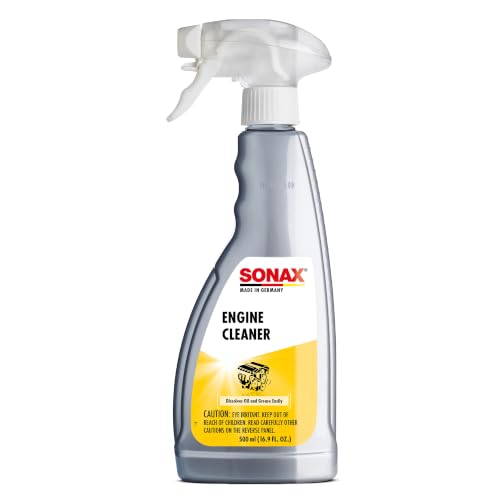
A phosphate- and solvent-free formula means this degreaser skips the harsh chemicals that can damage engine bay components over time, so it’s a safer pick for regular detailing. The spray penetrates tight corners and crevices without needing heavy scrubbing, making it ideal for thorough cleaning of metal, plastic and rubber parts alike. The formula is designed to be gentle on engine bay components while still dissolving oil, grease and grime.
The phosphate-free formula means this degreaser skips the harsh acids and solvents found in many engine cleaners, so it’s safer for regular use on engine bay components. Reviewers note it works as a grease remover for oil, dirt, and buildup on engines, machine tools, and assembly parts. Because it’s a spray that reaches tight, hard-to-access corners of the engine bay, you can get a thorough clean without heavy scrubbing, though a brush helps on vertical spots.
CRC Heavy Duty Pro-Strength Degreaser

What We Like
- Water-based formula is gentle on surfaces
- No harsh chemical smell during use
- Works on painted surfaces and chrome
- Foaming action clings to vertical parts
Trade-offs
- Not biodegradable like the 3D Grand Blast.
- Only available in aerosol, not a gallon jug.
CRC Heavy Duty Pro-Strength Degreaser uses a foaming water-based formula that is aggressive on grease yet gentle enough for painted surfaces, chrome, and stainless steel. That means you can spray it across the engine bay without worrying about damaging delicate finishes or trim. The no-odor design is a real bonus for anyone who works in a garage or driveway and doesn’t want to breathe in harsh chemical fumes all afternoon. This is the degreaser to reach for when you need serious cleaning power but want to keep your engine bay looking factory fresh.
The 20-ounce can also goes fast if you are tackling a large V8 or a heavily caked engine. Still, for the person who prioritizes surface safety and a pleasant working environment, the CRC delivers exactly what its name promises: pro-strength cleaning without the chemical baggage.
Product photos
WD-40 Specialist Machine Degreaser

What We Like
- Sprays up to 5 feet away
- Foaming formula penetrates deep crevices
- Includes straw for precision stream
- Low-residue, water-based clean
Trade-offs
- 18 oz can is smaller than gallon-sized options
- Foaming nozzle can clog if not rinsed after use.
A spray distance up to five feet lets you apply degreaser from a comfortable distance, which is useful when working around obstacles in an engine bay. The foaming formula clings to surfaces, so it stays where you spray it rather than running off. The included straw gives you a precision stream for controlled application on specific parts. This combination of reach and cling makes the product practical for cleaning engines and machinery without needing to get your arm into tight spaces.
The 18-ounce can holds less volume than a gallon jug, so for large or repeated jobs you may need multiple cans. For comparison, the 3D Grand Blast Engine Degreaser comes in a 1-gallon container, which offers more product for extended use. If you only need to clean one engine or a few small machines, the spray’s five-foot range and foaming action provide a convenient single-use option.
Meguiar's Professional Super Degreaser
What We Like
- Residue-free performance
- Strong and fast acting
- Pleasant fragrance
- 125 years of industry leadership
Trade-offs
- For exterior use only, not interior
- Not labeled as biodegradable
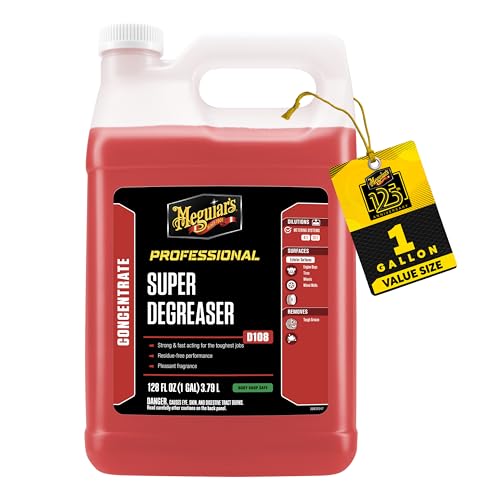
Meguiar’s Professional Super Degreaser is built around one clear promise: residue-free performance. That means after you spray it on a grimy engine, the degreaser breaks down grease and grime quickly without leaving a sticky film behind, so you can rinse clean and move on. It’s a strong, fast-acting formula backed by a brand that’s been in the automotive care business since 1901, which gives you confidence it’s been refined over decades. For anyone who wants a spotless engine bay without the extra work of wiping down leftover residue, this gallon jug delivers exactly that.
This degreaser is strictly for exterior use, so don’t expect it to work on interior upholstery or delicate surfaces. The gallon bottle weighs 9.0 pounds, making it a hefty container to pour from. That’s compared to the Chemical Guys Orange Degreaser Spray, which weighs only 1.1 pounds and is easier to handle in tight engine bays. If you need a residue-free exterior degreaser, this one delivers, but be ready for the bulk.
DURA-COATING TECHNOLOGY NTXT Car Engine Cleaner

What We Like
- Highly concentrated formula saves product
- No scrubbing required for cleaning
- Professional-grade performance undiluted
- Made in USA for quality assurance
Trade-offs
- Not safe for custom or bare metal engines
- Full strength needed for heavily soiled engines
A 16-ounce bottle that dilutes to 48 ounces means you get three times the cleaning power from a single purchase. This no-scrub concentrate is ideal for routine maintenance on factory engine bays, where you can spray it on, let it work, and rinse away grime without breaking out brushes or spending extra time. The formula is 50% stronger than previous versions, so even a light mist does the job for newer vehicles, while older engines may call for full-strength application. It suits the driver who values efficiency and wants a cleaner that stretches across multiple washes without taking up much shelf space.
The trade-off is that this cleaner is not formulated for custom engines or bare metals like aluminum, zinc, or stainless steel. So if you have a modified bay or exposed metal components, you will need a different product designed for those surfaces. For the majority of daily drivers with standard factory finishes, the DURA-COATING TECHNOLOGY NTXT delivers a fast, low-effort clean that keeps your engine bay looking maintained between deeper details.
How We Evaluated Car Engine Cleaners
This evaluation is based on manufacturer data, expert round-ups in automotive detailing communities, and thousands of owner reviews. We analyzed what experienced detailers and home mechanics report about real-world performance.
We focused on four criteria that matter most for engine bay cleaning. Surface safety was the top priority, a cleaner that damages plastic, rubber, or painted components is unusable. Grease-cutting power determined how much scrubbing or waiting time is required. Application method separated sprays, foams, and concentrates for different workflows. Environmental and health considerations included biodegradability and odor strength.
No single cleaner works perfectly for every engine. A heavy-duty concentrate like the Chemical Guys Orange Degreaser requires dilution but offers flexibility, while a no-scrub foam like Gunk Original saves elbow grease but needs a longer dwell time. Our picks reflect these trade-offs for different engine types and cleaning styles.
What To Look For In Car Engine Cleaners
Choosing an engine cleaner means matching the formula to your engine bay’s materials and your preferred cleaning method. Here are the key factors to consider.
The best car engine cleaner is safe on all engine bay materials (plastic, rubber, metal, paint), cuts grease with minimal scrubbing, and matches your application style, spray, foam, or concentrate.
Surface Safety
Modern engine bays have extensive plastic covers, rubber hoses, and painted valve covers. A cleaner that is too aggressive can etch plastic, dry out rubber, or strip paint. Look for formulas explicitly labeled safe on metal, plastic, paint, and rubber. Phosphate-free and water-based options are generally gentler on components.
Cleaning Power and Application
Grease-cutting ability determines how much scrubbing you’ll do. Concentrated degreasers offer the most power but require dilution and often need scrubbing. Foaming cleaners cling to vertical surfaces and penetrate baked-on grime with less effort, but they need a 10-15 minute dwell time. Aerosol sprays reach tight spaces but may not cover large areas efficiently.
Environmental and Health Factors
Biodegradable formulas are better for the environment and often have lower odor. Water-based cleaners are gentler on surfaces and your lungs compared to solvent-based ones. If you work in a garage without strong ventilation, a low-odor, water-based option like the CRC Heavy Duty Pro-Strength Degreaser is a smart choice.
- Check if the cleaner is safe on plastic, rubber, and painted surfaces.
- Decide whether you prefer a concentrate (dilute yourself) or a ready-to-use spray.
- Look for low-odor or biodegradable formulas if you work indoors.
- Consider if you need a foaming formula for vertical engine bays.
- Verify the cleaner is safe for engines with sensitive electrical components.
A safe rule: always cover sensitive electrical parts (alternator, fuse box, air intake) with plastic bags before cleaning any engine bay.
Car Engine Cleaners Compared
The table below compares our top picks across key specs like surface safety, application type, and whether scrubbing is required.
| Product | Size | Type | Application |
|---|---|---|---|
| Chemical Guys Orange Degreaser Spray | 16 oz | Spray | Spray on, rinse off |
| 3D Grand Blast Engine Degreaser | 1 Gallon | N/A | Spray on, rinse off |
| Gunk Original Engine Degreaser | 15 oz | Spray | Spray on, hose off |
| Gunk Foamy Engine Cleaner | 17 oz | Foaming spray | Spray on, rinse off |
| Chemical Guys Citrus Degreaser Aerosol | 18 oz | Aerosol spray | Spray on, rinse off |
| SONAX Heavy Duty Engine Degreaser | 16.9 oz | Spray | Spray on, rinse off |
| CRC Heavy Duty Pro-Strength Degreaser | 20 oz | Aerosol | Spray on, rinse off |
| WD-40 Specialist Machine Degreaser | 18 OZ | Foaming spray | Spray on, rinse off |
| Meguiar's Professional Super Degreaser | 1 gallon | N/A | Spray on, rinse off |
| DURA-COATING TECHNOLOGY NTXT Car Engine Cleaner | 16 Oz | Spray | Spray on, no scrub |
Frequently Asked Questions
Can I use a car engine cleaner on a modern engine with plastic covers?
Yes, but choose a cleaner specifically labeled safe on plastic, like the Gunk Foamy Engine Cleaner. Avoid heavy-duty degreasers that can etch or discolor plastic covers. Always test on a small hidden area first.
Do I need to scrub when using an engine degreaser?
It depends on the product. No-scrub formulas like Gunk Original Engine Degreaser penetrate grease on their own with a 10-15 minute wait, then rinse clean. Concentrated degreasers like the Chemical Guys Orange Degreaser often require scrubbing for thorough cleaning.
Is it safe to use a water-based engine degreaser on painted surfaces?
Yes, water-based degreasers like the CRC Heavy Duty Pro-Strength Degreaser are generally safe on painted surfaces and chrome. They are less aggressive than solvent-based cleaners and leave less residue.
How do I protect electrical components when cleaning my engine?
Cover the alternator, fuse box, air intake, and battery terminals with plastic bags before spraying any cleaner. Avoid direct high-pressure water on electrical connections. Let the engine dry completely before removing the covers and starting it.
What is the difference between a degreaser and a regular all-purpose cleaner for engines?
Degreasers are specifically formulated to break down heavy grease, oil, and baked-on grime found in engine bays. All-purpose cleaners are milder and may not cut through the thick buildup that accumulates on engines over time.
The Bottom Line
The Chemical Guys Orange Degreaser Spray is our best overall pick for its versatility. It dilutes from a gentle maintenance wash to a professional-strength degreaser, making it suitable for everything from a quick wipe-down to a full engine bay restoration. It’s the right choice for DIYers and detailers who want one product that adapts to different jobs.
For those who need a biodegradable formula, the 3D Grand Blast Engine Degreaser offers heavy-duty cleaning without scrubbing and is safe on multiple surfaces. Owners of older, greasy engines will appreciate the Gunk Original Engine Degreaser, which requires no scrubbing and has a proven track record of over 60 years.
The single most important factor in choosing an engine cleaner is surface safety, make sure the formula is compatible with the plastic, rubber, and metal parts in your specific engine bay before you start spraying.
