
10 Best Car Sound Dampening Materials in 2026
This post contains affiliate links. As an Amazon Associate, we earn from qualifying purchases.
For a noticeably quieter cabin and richer car audio, the Dynamat Xtreme Sound Deadening Mat stands out as the Best Overall. It reduces road noise, vibration, and heat with a proven, self-adhesive design. For thicker coverage, the Noico Pro 80 mil is our Best Thick Butyl Mat, while the Amazon Basics mat is an excellent Budget Pick for small projects.
The real challenge is cutting through the noise of confusing specs, thickness, weight, and coverage area all matter, but not in the way you might think. A thick mat isn’t always the right choice for every panel, and buying the biggest kit can leave you with more material than you need.
This guide is based on manufacturer specifications, material science, and patterns found in thousands of owner experiences across automotive forums. We break down what each material type does best, so you can match the right product to your specific noise problem.
Top 10 Car Sound Dampening Materials in the Market
Certain content that appears on this site comes from Amazon. This content is provided "as is" and is subject to change or removal at any time.
The Best Car Sound Dampening Materials, Reviewed
Dynamat Xtreme Sound Deadening Mat
What We Like
- Reduces road noise, vibration, and heat
- Self-adhesive backing for easy installation
- Improves car audio bass and clarity
- Made in the USA by category creator
Trade-offs
- 18 sq ft covers only a trunk lid or two doors, not a full SUV
- Requires precise cutting to fit curved panels
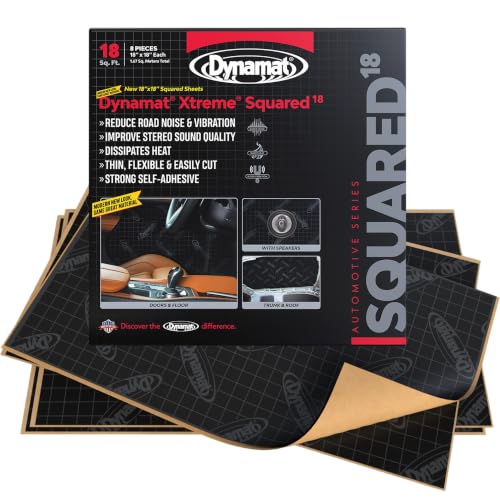
The Dynamat Xtreme Sound Deadening Mat uses a precision-engineered butyl rubber formula to reduce road noise, panel vibration, and heat inside a vehicle cabin. Its 18 x 18 inch sheets come with a self-adhesive backing that you trim and stick to doors, floors, trunks, roofs, and quarter panels without extra glue or tools. That straightforward installation makes it a practical choice for drivers who want a quieter, more comfortable ride and better audio clarity from their car stereo.
With 18 square feet of coverage, this pack is sized for a trunk lid or a pair of doors. A full SUV or van will likely need a second kit. The 0.1-inch butyl sheets are thin enough to slip into tight body panels without fighting the material, so you can focus on getting the job done on a sedan or coupe without wrestling with bulky mats.
Noico Pro 80 mil Sound Deadening Mat

What We Like
- 1.5x thicker than 50 mil mats
- Full-weight 0.7 lb per sq ft
- Embossing shows correct installation
- Easy-to-cut 9.84 x 7.87 inch sheets
Trade-offs
- Roller tool not included for smoothing
- Covers only 10 sq ft per pack
- Heavier than thinner mats at 7.7 lbs
The foil embossing gives you a clear visual cue, once you roll it smooth, you know the adhesive has bonded fully. That’s a practical touch for DIYers who want professional-grade results without guessing. It comes in 19 manageable sheets, each about 10 by 8 inches, so cutting and placing them in tight door cavities or trunk corners is straightforward.
The main trade-off is that you have to supply your own roller tool to flatten the material properly, nothing fancy, just a small metal or plastic roller. Compared to the KILMAT 80 mil pack, which offers 36 square feet in one box, the Noico Pro requires buying multiple boxes for larger projects. But if you are sound-deadening just the doors or a trunk lid, this pack’s coverage is right-sized, and the thicker butyl gives you more performance per square foot than a 50 mil mat. It is a focused solution for someone who values thickness and installation feedback over bulk coverage.
Product photos
KILMAT 80 mil Sound Deadening Mat
What We Like
- Lightweight at 0.5 lbs per sqft
- Embossed foil confirms correct installation
- Convenient sheet size for cutting and DIY
Trade-offs
- Requires smoothing embossing until completely flat.
- At 17 pounds, heavy for extended overhead installation.
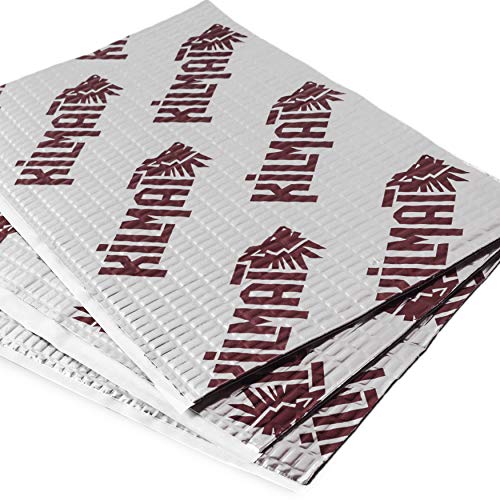
The embossed foil surface gives you a clear visual cue. Roll it flat until smooth, so you know the adhesive has bonded properly. That is a nice touch for DIYers who want professional-level results on their first try.
KILMAT’s light weight means less mass per square foot than denser options like Dynamat Xtreme. That may not deaden deep, low-frequency boom as effectively in larger panels like a van roof or truck floor. For a sedan door or trunk floor, this is a well-balanced, easy-to-handle material that installs cleanly and cuts neatly with scissors. For a full-cabin job on a heavy SUV where maximum mass is the priority, you would want to step up to a heavier mat. But for most everyday cars, KILMAT delivers real noise reduction without the backache.
Product photos
Amazon Basics Car Sound Deadening Mat

What We Like
- Self-adhesive backing for easy installation
- Reflective aluminum foil adds thermal insulation
- Pliable material cuts easily to fit
- Includes installation instructions
Trade-offs
- Each piece covers only 1 square foot.
- Requires multiple layers for significant noise reduction.
The Amazon Basics Car Sound Deadening Mat comes as a 10-pack of butyl rubber sheets, each 14.5 by 10 inches, giving you 10 square feet of coverage. The self-adhesive backing and pliable material make it simple to cut and press into place, while the reflective aluminum foil on the front helps keep cabin temperatures down. For a budget-friendly entry into sound deadening, this kit gets you started with everything you need in one package.
The biggest trade-off here is the thickness. At 0.1 inches, each mat is about the same thickness as many other sound deadening mats, but the butyl rubber compound substrate helps reduce vibrations and road noise. The self-adhesive backing makes installation straightforward, and the reflective aluminum foil on the front provides thermal insulation. For a first-time install or light rattle reduction, this pack offers a simple way to get started without extra complexity.
Product photos
Siless Hybrid 3in1 Sound Deadening Mat

What We Like
- Three-in-one damping, heat, and noise barrier
- Thick 200 mil construction for heavy insulation
- Peel-and-place installation without spray adhesives
- Cost-effective compared to separate combined products
Trade-offs
- Roller not included for proper adhesion
- Requires hand rolling for full adhesion.
At 200 mil thick with three distinct layers, butyl mastic, PE foam, and a mass loaded butyl membrane, this mat tackles vibration, heat, and low-frequency noise all in one sheet. That means you don’t have to layer separate damping and barrier materials, saving both time and the headache of matching different products. It’s a smart pick for someone soundproofing a daily driver or weekend project who wants a straightforward, effective solution without juggling multiple rolls. The peel-and-place backing makes installation clean and fast, no messy sprays or extra adhesives needed.
At 25 square feet per pack, you may need two or more for a full sedan or SUV, especially if you’re doing doors, floor, and trunk. And unlike some competitors, this kit doesn’t include a roller, so you’ll want to buy or borrow one to press the mat firmly into curves and corners for lasting adhesion. But if you value a do-it-all composite that simplifies the job and still delivers serious noise and heat blocking, this is a well-designed shortcut worth the extra upfront thought.
ZARBRE 80 Mil Sound Deadening Mat
What We Like
- Odorless pure butyl, no asphalt fillers
- 80 mil triple-layer dampens vibration and heat
- 36 sq ft covers doors, floors, trunks
- High-tack adhesive bonds firmly on clean surfaces
Trade-offs
- Requires clean, dry surface for reliable adhesion
- Only 2mm thick; not a standalone deep noise blocker
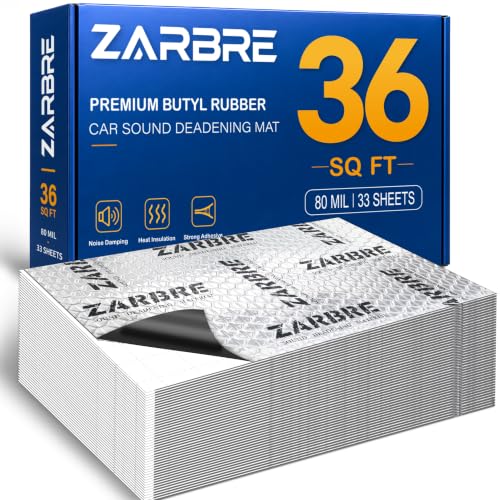
The 80 mil triple-layer design uses pure butyl rubber with no asphalt fillers, so it stays odorless even when your car bakes in summer sun. That makes it a smart pick if you’re sensitive to chemical smells or plan to insulate a cabin you spend hours in. With 36 square feet across 33 sheets, you can tackle doors, floors, trunks, and wheel wells in one go. The high-tack adhesive means you just cut, peel, apply, and roll until the foil lies flat. It’s built to cut vibration, panel resonance, and heat transfer, which helps both quiet the ride and sharpen car audio clarity.
At 80 mil (2mm) thick, this mat is designed to dampen panel vibrations and reduce resonance, which helps quiet a car’s interior when applied to doors, floors, and trunks. The pure butyl construction stays odorless even in hot weather, so the cabin remains fresh. For deeper low-frequency noise, a thicker mass-loaded vinyl barrier like the Second Skin Luxury Liner would be needed, but as a straightforward vibration dampener, this covers the basics for a DIY audio or comfort project.
Product photos
Second Skin Luxury Liner MLV

What We Like
- Dense 2 lb per sq ft barrier
- Blocks airborne noise effectively
- Odorless and fire-tested (FMVSS 302)
- Made in the USA
Trade-offs
- Requires 100% coverage with no gaps
- Heavier than typical sound deadening mats
- Needs nails, screws, or grommets for install
At 2 pounds per square foot, this MLV is dense and limp, so it blocks airborne sound waves about as well as a standard household wall when installed with no gaps. Its STC rating of 32 means it handles loud or low-frequency noise effectively. Common uses include soundproof boxes, generator enclosures, pool pumps, and automotive projects where significant noise reduction is needed.
This is not a peel-and-stick mat. You need to fasten it with nails, screws, or grommets, and every gap must be sealed for it to work as intended. That makes installation more involved than a self-adhesive mat like Dynamat Xtreme, which is better suited for quick panel damping. But if your goal is to block airborne noise in small-scale projects, the extra effort with Luxury Liner pays off where lighter materials are less effective.
Product photos
VEVOR Car Sound Deadening Mat

What We Like
- Covers 52 sq ft for full car
- Three-layer composite blocks noise and heat
- Self-adhesive backing for easy install
- Fire-resistant and waterproof
Trade-offs
- At 50 mil, thinner than 80 mil competitors
- Heavy 22.7 lb package can be awkward to handle
- No rolling tool included for best adhesion
The set covers 52 square feet with 47 sheets, enough to treat multiple areas of a vehicle in one purchase. The 50-mil butyl rubber material uses a three-layer composite design that the manufacturer says reduces interior noise, provides heat insulation, and offers fire resistance. For someone planning a full-car soundproofing project, this kit provides ample material without needing to combine multiple smaller packs.
A 50 mil butyl rubber layer is on the thinner side compared to some competitors that offer 80 mil or even 200 mil options, so it won’t add as much bulk to door panels or floor pans. That thinner profile makes it easier to work into tight crevices and around complex curves without fighting the material. The downside is that a single layer provides less mass for blocking deeper, low-frequency road noise, though the 3-layer composite design with aluminum foil and low-air-permeability butyl still cuts a wide range of interior sounds. For most daily drivers, this balance of coverage and manageable thickness works well.
FatMat Self-Adhesive Sound Deadener
What We Like
- Includes roller and knife for installation
- Easy peel-off release liner
- Pliable and conforms to sheet metal
- Works on automotive, home, RV, marine
Trade-offs
- 50 mil thickness is thinner than 80 mil options
- 25 sq ft covers less than larger kits
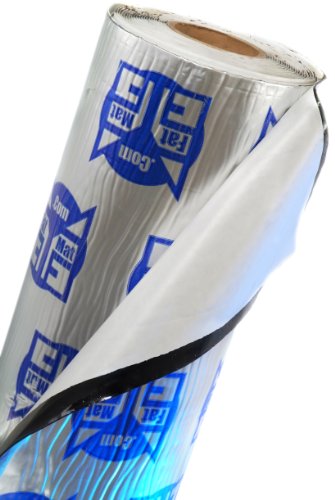
The 50 mil thickness provides sound deadening acoustical insulation for automotive, trucks, homes, RVs, and marine use. The pack includes a roller, knife, and easy instructions, so you don’t need to buy extra tools or guess the technique. The material is pliable, easy to cut, and conforms to sheet metal, with a self-adhesive liner that peels off cleanly. For someone tackling their first project on a car, truck, or even an RV, this kit removes the guesswork and gets you started right out of the box.
Fifty mil is thinner than some other mats like Noico Pro at 80 mil, which may mean less low-frequency noise blocking on large panels. The 25 square foot coverage is enough for a set of doors or a trunk floor, but a full sedan interior will need a second roll. If you plan to cover an entire vehicle or want maximum noise reduction from the start, a thicker mat might suit you better. For targeted quieting of doors, floors, or a trunk on a budget, this kit gives you everything you need in one package.
Product photos
HKACSTHI Heat Shield Sound Deadening Mat
What We Like
- Self-adhesive backing for easy installation
- Waterproof and moisture-resistant
- Multi-surface use: hood, doors, roof, chassis
Trade-offs
- At 6.5 sq ft, covers less area than many competitors
- No butyl rubber mention; material type unspecified
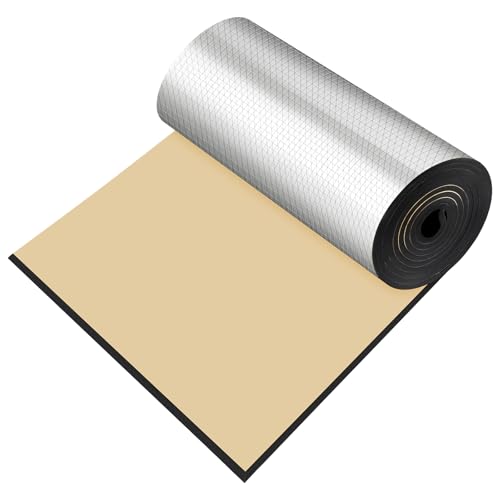
This mat measures 394 Mil thick, which is nearly five times thicker than common 80-mil sound deadening mats. The self-adhesive backing simplifies installation: clean the surface, cut to size, and stick it on without extra tools or adhesive. The product is waterproof and lightweight, with a thermal barrier that blocks engine and exhaust heat, making it suitable for hoods, firewalls, and other hot areas. For someone focused on a specific zone like a hood or door panel, the thickness adds mass that can help reduce noise and vibration.
Coverage is limited: at 6.5 square feet, you get enough for a hood or a single door panel, but not a full interior floor or trunk. Dynamat Xtreme’s 18-square-foot pack covers more area in one purchase, so if you plan to do the entire cabin, you will need multiple packs of this mat or a larger-format material. If you are targeting one or two spots, the HKACSTHI’s thickness gives you a dense layer for sound and heat control.
Product photos
How We Evaluated Car Sound Dampening Materials
Our evaluation is research-based, drawing from manufacturer data, expert round-ups from automotive audio installers, and the collective feedback of thousands of DIY installers. We focused on what actually stops noise, material density, thickness, and adhesion quality, not marketing claims.
We prioritized four criteria: material type (butyl vs. Asphalt vs. MLV), damping effectiveness (weight per square foot and thickness), ease of installation (self-adhesive backing, included tools), and coverage value (square feet per kit). A product that is hard to install or too thin to work rarely gets recommended.
The honest limit of a research-led evaluation is that real-world results vary by vehicle, installation skill, and the specific noise source. We can tell you what the specs and owner consensus say works, but we cannot guarantee your trunk will sound like a library.
What To Look For In Car Sound Dampening Materials
Choosing the right material starts with understanding the three main types: damping mats, mass loaded vinyl, and composite barriers. Each targets a different kind of noise, and the best install often uses more than one.
Start with a butyl-based damping mat for panel vibration, then add a mass loaded barrier for airborne road noise. Match thickness to the panel: 50-80 mil for doors and floors, 200+ mil for firewalls and trunks.
Material Type: Butyl vs. Asphalt vs. MLV
Butyl rubber mats like the Dynamat Xtreme and Noico Pro are the standard for damping panel vibration. They are pliable, self-adhesive, and odor-free when pure. Asphalt-based mats are cheaper but can smell in heat and are less effective per thickness. Mass loaded vinyl (MLV), like the Second Skin Luxury Liner, is a dense, limp barrier that blocks airborne noise, it does not damp vibration but stops sound from passing through.
Thickness and Weight Per Square Foot
Thicker is not always better for every job. A 50 mil mat is fine for doors and small panels, while 80 mil is the sweet spot for floors and trunks. The Noico Pro at 80 mil and 0.7 lb per sq ft provides excellent mass for blocking low-frequency drone. For maximum airborne noise blocking, a 2 lb per sq ft MLV is the right tool, but it requires a different installation method with fasteners.
Coverage and Kit Size
Measure your vehicle’s panels before buying. A typical car door needs about 3-5 sq ft, a trunk floor 10-15 sq ft, and a full car interior 40-60 sq ft. The VEVOR kit covers 52 sq ft, making it a strong choice for one-purchase full coverage. Smaller kits like the Amazon Basics (1 sq ft per sheet) are better for targeted patches or beginners.
- Measure each panel (door, floor, trunk) in square feet before ordering.
- Add 10-15% extra for waste from cutting and fitting curves.
- Check if the kit includes a roller or installation tool, it saves time.
- Verify the material is butyl-based if odor is a concern in hot climates.
- Confirm the adhesive is rated for the temperature range in your area.
A good rule: one layer of 80 mil butyl on a portion of a panel’s surface area eliminates most vibration noise.
Car Sound Dampening Materials Compared
The table below compares the top picks by material type, thickness, coverage, and key features to help you match the right product to your project.
| Product | Thickness | Coverage | Material | Installation |
|---|---|---|---|---|
| Dynamat Xtreme Sound Deadening Mat | 0.1 inches | 18 sq ft | Butyl rubber | Self-adhesive, peel-and-stick |
| Noico Pro 80 mil Sound Deadening Mat | 80 mil (2 mm) | 10 sq ft | Butyl with foil | Self-adhesive |
| KILMAT 80 mil Sound Deadening Mat | 80 mil | 36 sqft | Butyl and foil | Self-adhesive |
| Amazon Basics Car Sound Deadening Mat | 0.1 inches | 10 sq ft | Butyl rubber compound | Self-adhesive |
| Siless Hybrid 3in1 Sound Deadening Mat | 200 mil / 5 mm | 25 sq ft | Butyl Mastic, PE Foam, Mass Loaded Butyl Membrane | Peel and place |
| ZARBRE 80 Mil Sound Deadening Mat | 80 mil (2mm) | 36 sq ft | Pure butyl rubber | Self-adhesive |
| Second Skin Luxury Liner MLV | 1/4" | 36 sq ft | Mass Loaded Vinyl | N/A |
| VEVOR Car Sound Deadening Mat | 50 mil (1.3 mm) | 52 sqft | Butyl rubber with aluminum foil | Self-adhesive |
| FatMat Self-Adhesive Sound Deadener | 50 mil | 25 Sq Ft | Self-adhesive butyl | Self-adhesive |
| HKACSTHI Heat Shield Sound Deadening Mat | 394 Mil / 10 mm | 6.5 Sqft | High-performance self-adhesive | Self-adhesive |
Frequently Asked Questions
What is the difference between sound deadening and soundproofing?
Sound deadening reduces vibration and panel rattle using damping mats like butyl. Soundproofing blocks airborne noise (engine, traffic) using dense mass loaded vinyl barriers. Most effective car installations use both types together.
How much sound deadening material do I need for my car?
A typical sedan needs 36-50 sq ft for doors, floors, and trunk. Measure each panel’s length and width, then add 15% for waste. Kits like the VEVOR 52 sq ft cover a full car in one purchase, while smaller projects can use 10 sq ft kits.
Can I install sound deadening material myself?
Yes, most butyl mats have a self-adhesive backing and cut easily with a utility knife. A roller helps press the material into curves for full adhesion. The FatMat kit includes a roller and knife, making it a good choice for first-time installers.
Does sound deadening material help with heat insulation?
Many sound deadening mats include an aluminum foil layer that reflects radiant heat, which can reduce cabin temperature. The Siless Hybrid 3in1 and Amazon Basics mats specifically combine sound damping with thermal insulation for a dual benefit.
Will sound deadening material add a lot of weight to my car?
It depends on the material and coverage. A full install with 80 mil butyl adds about 25-30 pounds, while MLV barriers are heavier at 2 lbs per sq ft. For weight-sensitive builds, lightweight options like the KILMAT 80 mil (0.5 lb per sq ft) are a better fit.
The Bottom Line
The Dynamat Xtreme Sound Deadening Mat remains the Best Overall for its proven balance of noise reduction, heat blocking, and easy installation. It is the right choice for DIYers and audio enthusiasts who want a reliable, category-defining product for doors, floors, and trunks.
If you are covering an entire vehicle in one kit, the VEVOR Car Sound Deadening Mat offers 52 sq ft of coverage. Budget-conscious buyers should start with the Amazon Basics mat for small areas, while those needing maximum thickness for a firewall or hood can turn to the HKACSTHI Heat Shield mat.
The single most important factor is matching the material type to your noise source: use butyl mats for vibration and MLV for airborne noise. Measure your panels first, and you will buy the right amount the first time.
