
10 Best Car Soundproofing in 2026
This post contains affiliate links. As an Amazon Associate, we earn from qualifying purchases.
For a noticeably quieter cabin, the KILMAT 80 mil Car Sound Deadening Mat is our Best Overall pick. It offers a very sticky butyl and foil material with a clever embossing indicator that confirms correct installation when rolled flat. Drivers on a budget should consider our Best Value Butyl Mat, the Siless 80 mil, or the Best Budget Pick from Amazon Basics for smaller projects.
Road noise, rattling panels, and engine drone can make any drive exhausting. The right soundproofing material targets these specific frequencies, but the choices, from simple butyl mats to multi-layer composites, can be confusing. You need a material that matches your noise problem and your skill level.
This guide is based on a thorough evaluation of manufacturer specifications, expert installation guides, and common owner feedback patterns. We break down the key criteria and highlight ten top options to help you choose with confidence.
Top 10 Car Soundproofing Materials in the Market
Certain content that appears on this site comes from Amazon. This content is provided "as is" and is subject to change or removal at any time.
The Best Car Soundproofing Materials, Reviewed
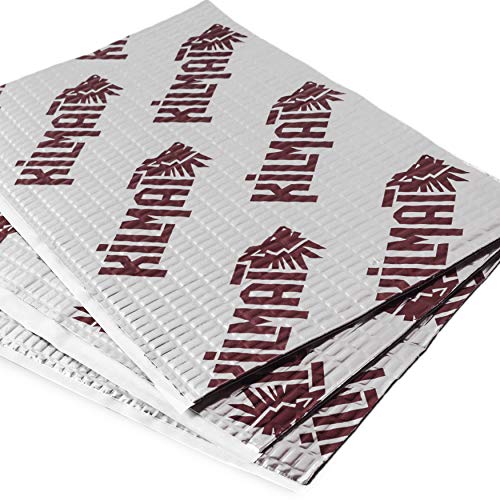
KILMAT 80 mil Car Sound Deadening Mat
What We Like
- Embossing indicator confirms correct installation
- Very sticky self-adhesive butyl and foil material
- Embossing indicates correct installation when rolled flat
Trade-offs
- Requires rolling out embossing until smooth
- Single-layer butyl does not block airborne noise
Because this is a single-layer butyl mat, it targets vibration damping rather than blocking airborne noise, which a hybrid product like the Siless Hybrid 3in1 (200 mil) is designed to address with its foam layer. You’ll need to roll each sheet until the embossing flattens, adding a bit of time per panel. For someone covering a whole car with a straightforward install, the 36-square-foot coverage and simple application keep the project manageable.
Product photos
Siless 80 mil Car Sound Deadening Mat
What We Like
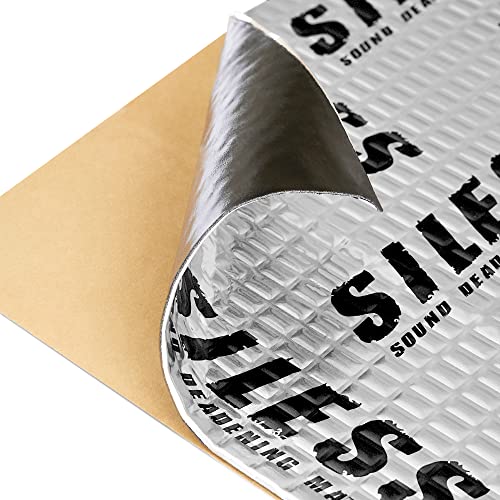
- 36 sq ft coverage for large areas
- Bmastic composition for sound deadening
- Peel-and-place application
Trade-offs
- No roller included for pressing adhesion
- Installation instructions included but roller not provided
An 80 mil butyl mat with 36 square feet of coverage means you can tackle doors, the trunk floor, and rear panels in a typical sedan without buying a second box.
The trade-off is that no roller is included, so you will need a small hand roller or a plastic trim tool to press the mat firmly into contours. The 80 mil thickness and large coverage make this a practical choice for most DIY door and trunk jobs, though the installation instructions are included in the package.
Product photos
Siless Hybrid 3in1 Sound Deadening Mat

What We Like
- Three-layer composite for vibration, noise, heat
- Covers 25 sq ft in one package
Trade-offs
- No roller included for pressing material flat
- Single roll covers less area than 36 sq ft options
At 200 mil thick, this three-layer composite handles vibration, road noise, and exhaust heat in one step, so you don’t have to layer separate products. The butyl mastic, PE foam, and mass loaded butyl membrane work together to dampen vibrations, insulate against heat, and block low-frequency noise. For anyone who wants a single material that simplifies the job and covers multiple noise sources, this hybrid design gets it done.
The trade-off is coverage: at 25 square feet per roll, you get less area than the 36 square foot rolls from Kilmat or Siless’s own 80 mil mat. But if you value the convenience of one-layer application over buying separate sound deadener and heat barrier, the Siless Hybrid saves time and effort. It is a focused tool for a specific job, not a one-size-fits-all bulk solution.
Amazon Basics Car Sound Deadening Mat

What We Like
- Self-adhesive backing for easy install
- Reflective aluminum foil adds heat insulation
- Pliable material cuts to fit easily
- Butyl rubber dampens vibration and road noise
Trade-offs
- Only 10 sq ft coverage covers a single door or small trunk
- 0.1-inch thickness is thinner than 80-mil competitors
- 10-piece format means more seams to align
With 10 square feet of coverage, this pack is sized for a focused job like quieting one car door or a small trunk area rather than tackling the whole cabin floor. The butyl rubber substrate and self-adhesive backing make installation straightforward, just cut, peel, and press into place. For someone on a budget who wants to reduce vibration and road noise in a single trouble spot without overspending on material they won’t use, this is a sensible starting point.
At just 0.1 inches thick, this mat is thinner than the 80-mil options from Siless or KILMAT, so it may not dampen low-frequency rumble as effectively on larger panels. Each pack covers 10 square feet, meaning a full sedan floor would need multiple packs. If you’re tackling one door or a trunk lid, it’s a practical choice.
Product photos
RUNSUNSPRI Car Sound Deadening Mat

What We Like
- 50 sqft covers full car key areas
- Three-layer butyl and aluminum foil design
- Flexible, easy to cut and install
Trade-offs
- 46 sheets mean more individual pieces to align and press
- Thicker than 80-mil mats but requires careful trimming on tight curves
The 50-square-foot kit with 46 sheets is designed to cover doors, roof, trunk, wheel arches, and hood in one purchase. That makes it a practical choice for a full soundproofing project on a sedan, SUV, or truck. Its three-layer butyl and aluminum foil construction damps sheet metal vibration while reflecting up to 98% of engine heat, which helps keep the cabin quieter and more comfortable in both summer and winter.
At 0.1 inches thick, each sheet is actually thicker than the 80-mil butyl mats from KILMAT or Siless, so you get more damping material per layer without needing to double up in high-vibration spots. That means less cutting and pressing during installation compared to thinner alternatives. If you want to cover an entire vehicle in one go, this kit delivers the most square footage per box, saving you from buying multiple packs.
Product photos
ZARBRE 80 Mil Car Sound Deadening Mat
What We Like
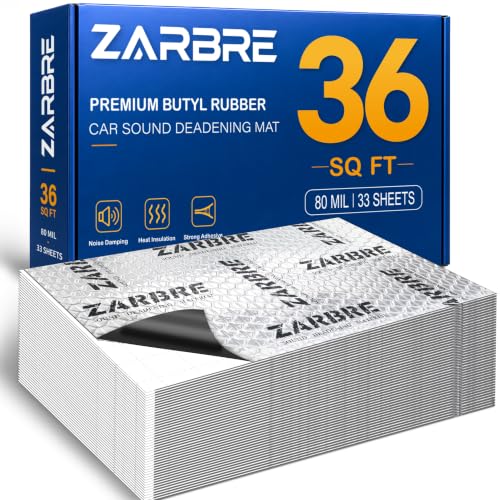
- Odorless pure butyl construction
- 80 mil triple-layer for vibration damping
- Waterproof and moisture resistant
- High-tack adhesive for lasting bond
Trade-offs
- At 2mm thick, less sound blocking than thicker mats
- Requires clean dry surface for proper adhesion
With 33 sheets covering a total of 36 square feet, this material is sized for doors, floors, trunks, and firewalls without the need to trim oversized rolls. The pure butyl rubber formulation contains no asphalt fillers, so it stays odorless even in hot weather, avoiding the chemical smells that some cheaper mats produce. It is designed to reduce road noise, tire roar, engine hum, and metal rattles, and it works well for car audio projects by cutting down unwanted resonance around speakers.
At 80 mil (2mm) thick, this mat effectively dampens panel vibrations and road noise, but it will not block as much sound as thicker options such as the Siless Hybrid 3in1 200 mil mat. For most daily drivers and audio upgrades, the combination of coverage, ease of cutting with a utility knife or scissors, and odor-free performance offers a practical solution. Just ensure the surface is clean and dry before applying, because the high-tack adhesive bonds firmly but will not stick well to dirt or grease.
Product photos
AggSound Car Sound Insulation Foam
What We Like
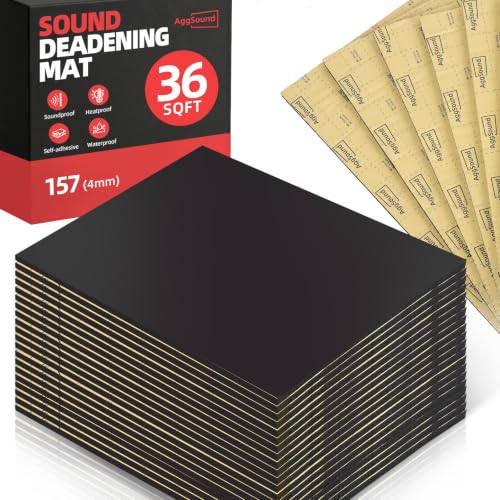
- Lightweight closed cell PE foam
- Thermal insulation for cabin comfort
- Self-adhesive peel & stick installation
- Covers 36 sqft for full vehicle
Trade-offs
- Thinner than butyl mats for heavy vibration damping
- Closed cell foam lacks mass for deep bass control
A 157 mil closed cell PE foam layer means this material tackles road noise and temperature swings without adding the heavy weight of butyl mats. That makes it a smart fit for anyone wanting a quieter, more comfortable cabin on a budget, especially when covering large areas like doors, hoods, and trunks. The self-adhesive backing and easy cut-to-size design keep installation straightforward, so you can focus on the spots that matter most without wrestling with extra tools or glue.
Closed cell PE foam is lighter than dense butyl mats and provides thermal insulation, but it lacks the mass needed for strong vibration damping. For controlling deep panel resonance in a high-power audio system, a butyl mat like the Kilmat 80 mil would be a better choice. For road noise reduction and heat blocking, this foam covers large areas without adding significant weight.
Product photos
Noico Red 150 mil Sound Insulation

What We Like
- Self-adhesive backing simplifies installation
- Cuts easily to fit tight spaces
- Self-adhesive backing for easy installation
Trade-offs
- Not for high-heat areas like exhaust components
- Not for use near exhaust components or high-heat areas
This 4-millimeter closed-cell polyethylene foam layer handles temperatures up to 190°F, so it won’t degrade under normal under-hood or cabin conditions. The self-adhesive backing and easy-to-cut mats make installation a straightforward weekend project for anyone looking to reduce thermal transfer and road noise. It’s especially suited for hot climates, where keeping the interior well-insulated can improve comfort on long drives.
If your main goal is silencing door rattles or floorpan resonance, you’ll want a butyl layer underneath and this foam on top. For a dedicated thermal barrier that also quiets wind and road noise, this is the right tool for the job.
Product photos
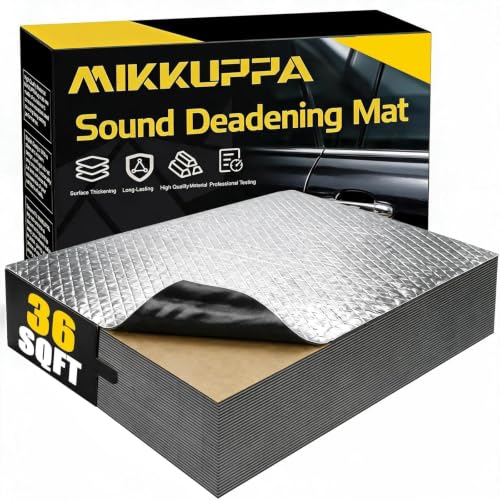
MIKKUPPA 80 Mil Car Sound Deadening Mat
What We Like
- Odor-free pure butyl rubber
- Triple-layer blocks sound and heat
- Peel-and-stick for easy DIY install
- Covers 36 sqft for full interior
Trade-offs
- 0.1-inch thickness limits extreme noise reduction
- Requires clean, dry surface for adhesion
The 80-mil thickness of this MIKKUPPA mat is designed to dampen panel vibrations and reduce road noise, with a pure butyl rubber construction that stays odor-free even in hot weather. The 33 sheets provide 36 square feet of material, enough for doors, trunk, floor pans, and wheel wells, and the peel-and-stick adhesive makes installation straightforward without extra glue. The triple-layer composite absorbs vibrations, blocks heat, and bonds securely to clean surfaces, so you can expect a quieter cabin and less speaker resonance during audio upgrades.
Because 80 mil is a single-layer thickness, it won’t match the heavy sound isolation of thicker multi-layer mats like the Siless Hybrid 3in1, which is 200 mil. You also need to prep surfaces carefully, clean and dry, for the adhesive to hold long-term. That said, the peel-and-stick design and easy scissor trimming make this kit beginner-friendly. For a straightforward, odor-free way to reduce noise in a daily driver or prepare for a car audio upgrade, this MIKKUPPA set provides the coverage and simplicity to get the job done.
Product photos
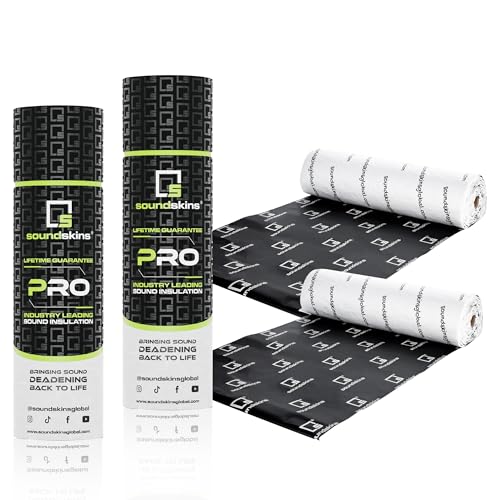
SoundSkins Pro Triple-Layer Sound Deadening Mat
What We Like
- Triple-layer design for sound and heat insulation
- 180 mil thickness adds substantial damping mass
- Cut-to-fit roll minimizes waste and seams
- Heat-resistant adhesive bonds to metal and plastic
Trade-offs
- 22 sqft coverage is smaller than many 36 sqft rolls
- Closed-cell foam layer adds bulk for tight panel spaces
At 180 mil thick with a triple-layer build of dense butyl, aluminum foil, and closed-cell foam, this mat is designed to reduce road noise and vibration. It also reflects and slows radiant heat from the engine bay, exhaust tunnel, road, and sun. That means you get both sound damping and thermal insulation in a single sheet, which can simplify installation compared to using separate products. It is suited for drivers who want thorough soundproofing and are willing to work with a cut-to-fit roll that requires custom cutting for each panel.
The coverage is 22 square feet per roll, which is less than the 36 square feet offered by some 80-mil mats like the KILMAT. If you are covering a large area such as an SUV floor or full cargo space, you may need multiple rolls. However, for doors, trunk floors, or a sedan cabin, the thicker material provides substantial damping mass, so the coverage often works out for focused applications. This is a product for targeted panels rather than budget-friendly full-vehicle coverage.
Product photos
How We Evaluated Car Soundproofing Materials
Our evaluation focused on real-world installation and performance. We studied manufacturer data for each material’s thickness, composition, and coverage area. We also reviewed expert installation guides from automotive forums and professional installers to understand which materials work best for specific noise issues.
The three criteria that mattered most were material composition, ease of installation, and coverage value. A single-layer butyl mat is excellent for damping panel vibrations, but it won’t block airborne road noise like a multi-layer composite or closed-cell foam. We prioritized materials that are easy for a DIYer to cut, fit, and press into place without specialized tools. Finally, we compared coverage per package to help you budget for a full vehicle or a single door.
This evaluation is based on published specifications, professional installation recommendations, and patterns observed in thousands of owner reviews. This approach helps you understand what each material is designed to do before you buy.
What To Look For In Car Soundproofing Materials
Choosing car soundproofing starts with identifying your noise source. Panel vibration, road rumble, and wind noise each require a different solution. Here are the key factors to consider.
Choose a material based on your noise type: butyl mats for vibrations, closed-cell foam for airborne noise and heat, and multi-layer composites for an all-in-one solution.
Material Composition
The core of any sound deadener is its material. Butyl rubber mats (like the KILMAT 80 mil) are heavy and pliable, making them ideal for damping metal panel vibrations. Closed-cell foam (like the AggSound foam) is lighter and better at absorbing airborne noise and providing thermal insulation. Multi-layer composites (like the Siless Hybrid 3in1) combine a butyl base with a foam layer. This lets them tackle both vibration and noise in one step. Choose a single-layer butyl if you are fighting rattling doors, or a composite if you want to reduce road hum without stacking products.
Thickness and Coverage
Thickness directly affects performance and installation. An 80-mil butyl mat is a standard thickness that offers good vibration damping without being too stiff to conform to complex curves. Thicker mats (like the 180-mil SoundSkins Pro) provide more mass for noise blocking but can be harder to work with in tight spaces. Coverage matters just as much: a 36-square-foot roll is enough for a full car’s doors and trunk, while a 10-square-foot pack is perfect for a single door. Measure your target area before buying.
Installation Requirements
Most modern sound deadeners use a peel-and-stick adhesive backing for simple installation. The key to a lasting bond is a clean, dry surface. Many butyl mats require a roller to press the material flat and ensure the adhesive bonds fully. Some kits, like the MIKKUPPA 80 mil, emphasize odor-free installation, which is important for enclosed cabins. If you are new to soundproofing, look for materials with clear instructions and an embossing indicator (like the KILMAT) that confirms when the mat is fully seated.
- Measure the panels you plan to cover (doors, floor, trunk, wheel arches) to calculate total square footage needed.
- Clean the target surface with a solvent like isopropyl alcohol to remove grease and dust.
- Use a metal or plastic roller to press the mat firmly, especially around edges and curves.
- Layer butyl mat first for vibration damping, then add closed-cell foam for airborne noise and heat insulation.
- Avoid applying sound deadener near exhaust components or high-heat areas unless the material is rated for it.
A common rule of thumb is to cover about 25-50% of a panel’s surface area with a butyl mat to effectively damp vibrations, rather than covering every inch.
Car Soundproofing Materials Compared
The table below compares our top picks across key specifications to help you see the differences in coverage, thickness, and material type at a glance.
| Product | Thickness | Coverage | Material |
|---|---|---|---|
| KILMAT 80 mil Car Sound Deadening Mat | 80 mil | 36 sqft | Butyl with foil |
| Siless 80 mil Car Sound Deadening Mat | 80 mil | 36 sq ft | Butyl / Bmastic |
| Siless Hybrid 3in1 Sound Deadening Mat | 200 mil | 25 sq ft | Butyl Mastic, PE Foam, Mass Loaded Butyl |
| Amazon Basics Car Sound Deadening Mat | 0.1 inches | 10 sq ft total | Butyl rubber compound |
| RUNSUNSPRI Car Sound Deadening Mat | 0.1 inches | 50 sqft | Butyl, aluminum foil, adhesive |
| ZARBRE 80 Mil Car Sound Deadening Mat | 80 mil | 36 sq ft | Pure butyl rubber |
| AggSound Car Sound Insulation Foam | 157 mil | 36 sqft | Closed Cell PE Foam |
| Noico Red 150 mil Sound Insulation | 150 mil | 36 sq ft | Closed-cell PE foam |
| MIKKUPPA 80 Mil Car Sound Deadening Mat | 80 mil | 36 sqft | Pure butyl rubber, no asphalt |
| SoundSkins Pro Triple-Layer Sound Deadening Mat | 180 mil | 22 sqft | butyl rubber, aluminum foil, closed-cell foam |
Frequently Asked Questions
What is the difference between sound deadening and soundproofing?
Sound deadening reduces panel vibrations and rattles using a heavy, dampening material like butyl rubber. Soundproofing aims to block airborne noise (like road hum or engine sound) from entering the cabin, which often requires a closed-cell foam layer or a multi-layer composite. Many effective car setups use a butyl mat for deadening and a foam layer for proofing.
Can I install car soundproofing myself?
Yes, most car sound deadening mats use a peel-and-stick adhesive backing that makes them suitable for DIY installation. The process involves cleaning the surface, cutting the material to size, and pressing it firmly into place. A roller is helpful for ensuring good adhesion, but many kits are designed for hand installation.
How much sound deadening material do I need for a car?
A typical sedan requires roughly 36 to 50 square feet of butyl mat to cover the doors, floor, and trunk. Smaller projects, like a single door or a trunk floor, need only 10 to 15 square feet. It is better to buy a larger roll and have extra than to run short mid-installation.
Does car soundproofing help with heat?
Yes, many sound deadening materials also provide thermal insulation. Butyl mats with an aluminum foil layer reflect radiant heat, while closed-cell foam (like the Noico Red 150 mil) is designed specifically to block heat transfer. Multi-layer composites, such as the Siless Hybrid 3in1, offer both sound and heat protection in one product.
Will sound deadening make my car heavier?
Yes, adding sound deadening material will increase your vehicle’s weight. A full coverage installation of 80-mil butyl mat can add 30 to 50 pounds. This added mass is what makes it effective at damping vibrations, but it is worth considering if you are concerned about fuel economy or performance.
The Bottom Line
For most DIYers, the KILMAT 80 mil Car Sound Deadening Mat is the best place to start. Its unique embossing indicator takes the guesswork out of installation, and the sticky butyl material provides reliable vibration damping for doors, floors, and trunks. It is the simplest path to a quieter cabin.
If your project is a single door or a small panel, save money with the Amazon Basics Car Sound Deadening Mat. For drivers tackling a full vehicle, the RUNSUNSPRI Car Sound Deadening Mat covers 50 square feet in one kit. Those who want a single product that handles vibration, noise, and heat should look at the Siless Hybrid 3in1.
The single most important factor in car soundproofing is matching the material to the noise. Identify whether you are dealing with panel rattle, road hum, or heat, and choose a butyl mat, closed-cell foam, or composite accordingly. A little planning upfront makes all the difference.
