
7 Best Car Wash Power Washers of 2026
This post contains affiliate links. As an Amazon Associate, we earn from qualifying purchases.
The Westinghouse WPX3000e stands out as the best overall car wash power washer for its strong 3000 PSI and 1.76 GPM output, while the YKYI Cordless Handheld offers solid portability and ease of use as a budget-friendly pick, and the LWQ Portable Power Washer delivers exceptional water volume with 2.5 GPM for those prioritizing rinse efficiency.
Washing your car shouldn’t mean gambling with its paint or wrestling heavy equipment. Too many power washers either lack the right pressure control or come loaded with features that don’t translate to real-world care for your vehicle’s finish. After researching the field and analyzing specs alongside owner experiences, I focused on models that balance cleaning performance with safety and convenience for regular automotive use.
This guide breaks down what actually matters, PSI and GPM, nozzle flexibility, soap delivery, and portability, so you can choose a washer that works with your routine, not against it.
Top 5 Car Wash Power Washers in the Market
The Best Car Wash Power Washers, Reviewed
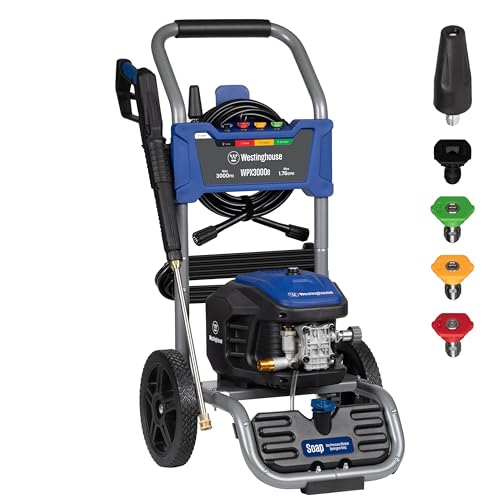
Westinghouse WPX3000e Electric Pressure Washer
Strengths
- High 3000 PSI output
- Durable steel frame
- 3-year warranty
- Onboard soap tank
- 10” never-flat wheels
Trade-offs
- Heavy at 48 pounds
- Hose prone to kinking
- Larger storage footprint
On paper, the Westinghouse WPX3000e stands out as a serious step up from budget electric models, with its 3000 max PSI and 1.76 GPM flow rate putting it near the top of what most homeowners will ever need. Owners consistently report it powers through caked-on grime on driveways and truck beds without bogging down, and the axial piston pump is a real upgrade over cheaper plastic pumps found in lower-tier units. The inclusion of a rugged steel frame, 10” never-flat wheels, and a full set of nozzles, including a turbo, makes this feel like a washer built to last, not just survive a few uses.
The 25-foot hose gives solid reach, though some reviewers note it can kink if not uncoiled fully at first use. Still, when you factor in the 3-year warranty covering parts, labor, and service, this model earns its ‘Best Overall’ tag. I’d pick it over pricier gas models for garage-based users who want reliability without the noise and maintenance of combustion engines. It’s overkill for washing a compact car once a month, but for anyone tackling patios, fencing, or frequent vehicle cleanups, it’s the smarter buy.
Video review
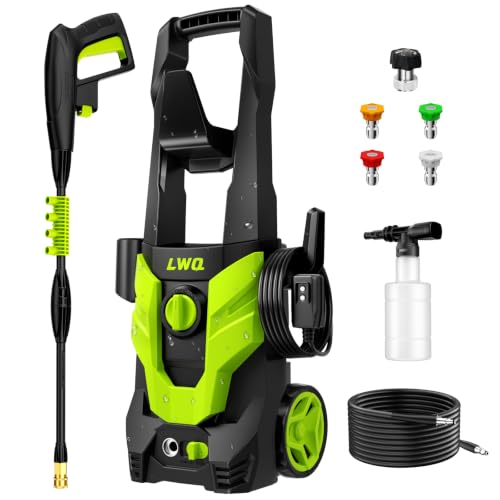
LWQ Portable Power Washer with Foam Cannon
Strengths
- Affordable price point
- Dual roller mobility
- Foam cannon included
- Compact and easy to store
- Stable anti-tipping base
Trade-offs
- Unclear PSI rating
- Plastic build quality
- Nozzle holder flimsy
The LWQ portable unit hits a sweet spot in price and functionality, which explains why it keeps showing up in garages on a budget. It doesn’t boast flashy specs, 2.5 GPM and unspecified PSI (likely in the 1800–2200 range based on performance reports), but owners say it handles typical suburban tasks without issue. Washing SUVs, rinsing garden tools, and sprucing up deck furniture are all within reach, especially with the included foam cannon and four nozzles.
Where it shines is simplicity: the dual rollers make it easy to drag across pavement, and the anti-tipping base prevents wobbles during use. It’s not as refined as the Westinghouse models, and the plastic construction feels more disposable, but for someone who washes their car a few times a year and cleans the patio once per season, it’s plenty. Compared to the cordless options, it offers more consistent pressure but sacrifices mobility. My take? This is the right call if you want decent power without overspending.
Video review
YKYI Cordless Handheld Power Washer

Strengths
- Lightweight ergonomic design
- 30 pressure settings
- Long 60–90 min runtime
- Draws from buckets or taps
- Comes with storage case
Trade-offs
- Lower max PSI
- Shorter hose length
- Not for deep stain removal
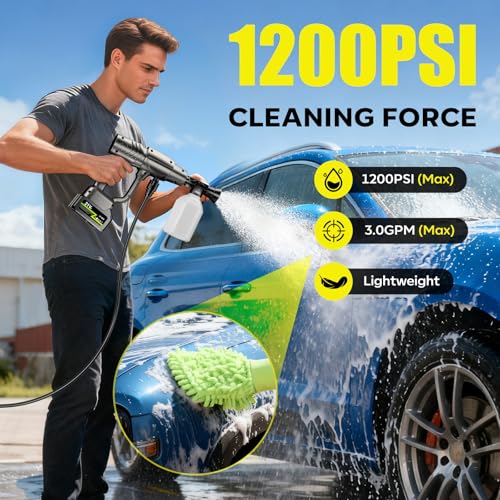
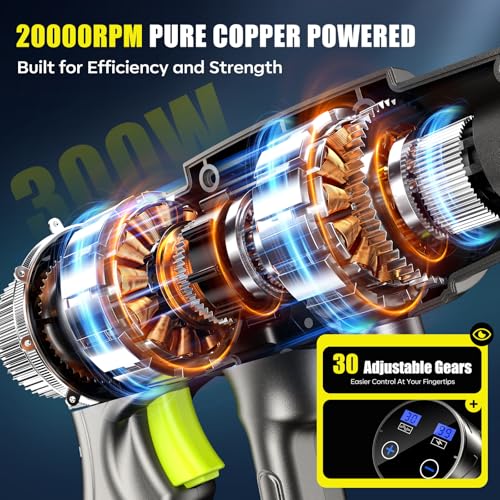
The YKYI handheld unit wins on pure portability and user-friendly design. At just over 21 volts and weighing next to nothing, it’s the easiest cordless washer here to carry around with one hand, ideal for users who find traditional models too bulky or tiring. Its 30 adjustable pressure levels are a standout feature, letting you dial in just enough force for a delicate motorcycle finish or ramp up for muddy mountain bike frames. Reviewers note it’s especially gentle on painted surfaces while still handling light buildup on wheels and fenders.
The 60–90 minute claimed runtime aligns with owner feedback, making it a dependable choice for multi-taskers. While its 1200 PSI is modest compared to plug-in units, the 3 GPM flow helps compensate by delivering volume where pressure falls short. It doesn’t match the raw punch of the Westinghouse ePX3500, but it beats it in flexibility. The included storage case is a nice touch, keeping everything organized in a trunk or garage. For casual users who want precision and convenience, this is my go-to recommendation.
Product photos

6-in-1 Cordless Battery Powered Washer
Strengths
- Long 60–80 min runtime
- Draws water from buckets
- Includes foam cannon
- 3 GPM flow rate
- Dual high-capacity batteries
Trade-offs
- Lower PSI than electric units
- Foam cannon needs precise mix
- Plastic build feels less rugged
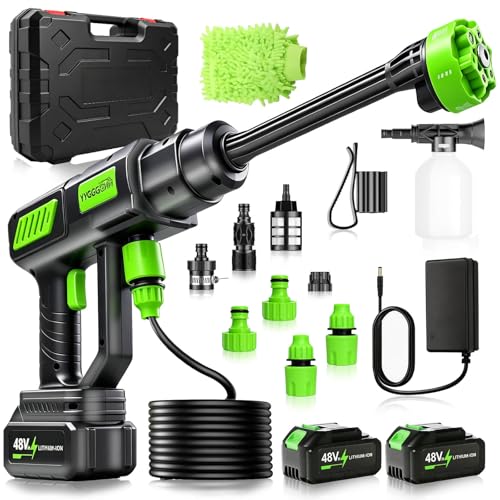
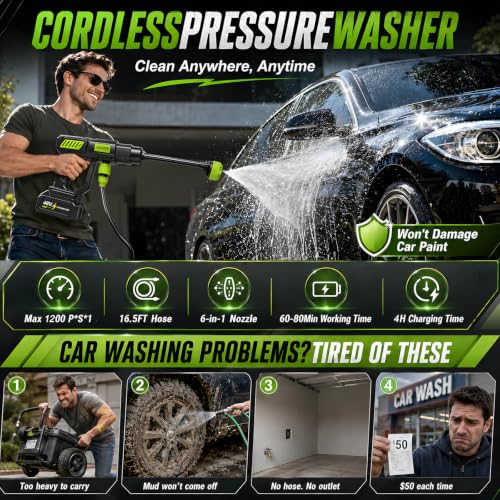
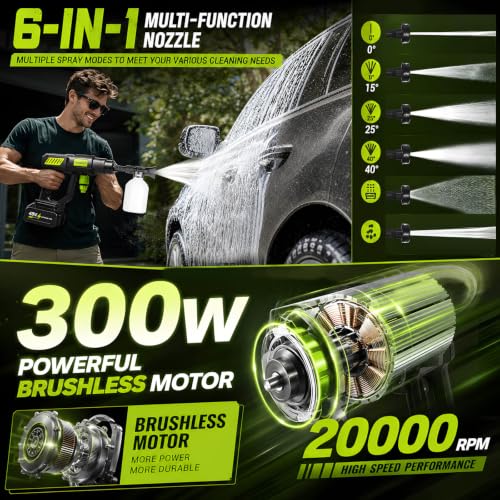
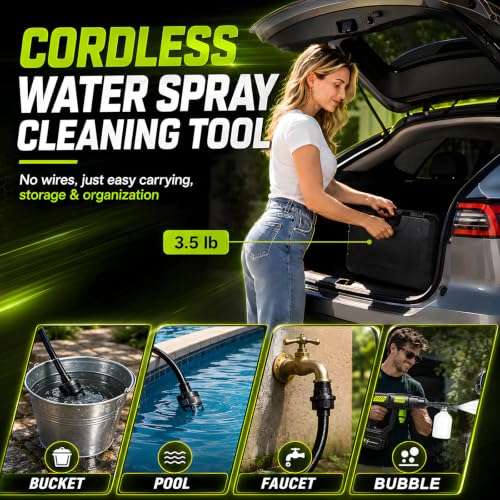
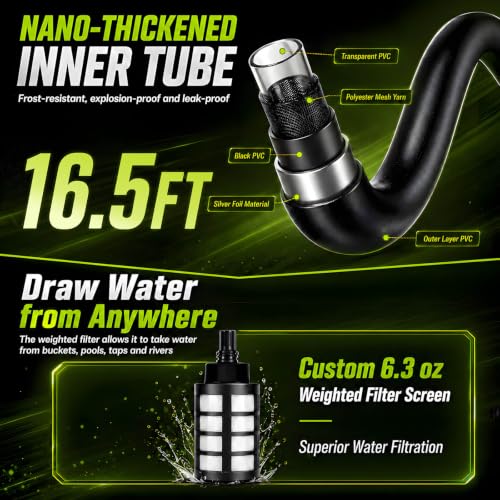
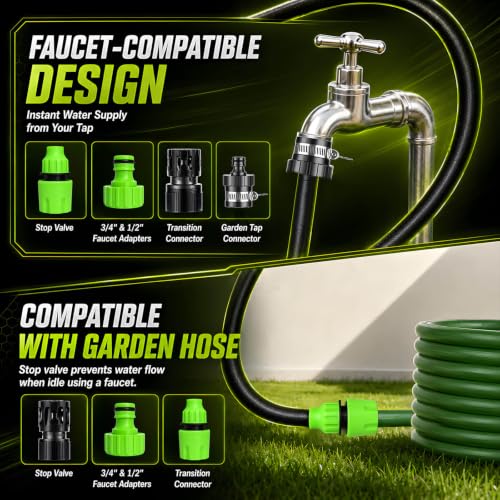
This cordless unit makes a strong case for itself if you value freedom from hoses and outlets. With 1300 PSI and a surprising 3 GPM flow rate, it delivers more rinse power than most expect from a battery-powered system. The dual 4.0Ah batteries are the real story here, owners report getting full car washes plus patio furniture done on a single charge, especially when switching between high and low modes. That kind of runtime puts it ahead of many rivals in the portable class, which often die halfway through a driveway job.
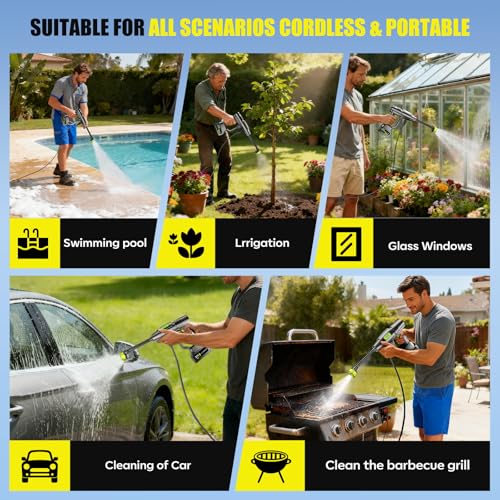
It’s not meant to strip years of mildew off decking, but for routine car washes, RV touch-ups, or cleaning gear after a trail ride, it’s impressively capable. The foam cannon works well with proper dilution, and the ability to draw water directly from a bucket or lake is a standout for off-grid users. Compared to the YKYI model, it trades a bit of finesse in pressure control for stronger peak output and better ergonomics. If your priority is uninterrupted cleaning time and mobility, this is the one to get.
Product photos
Westinghouse ePX3500 Electric Pressure Washer

Strengths
- Ultra-lightweight design
- Anti-tipping stability
- Compact footprint
- Steel extendable wand
- 360-degree wheels
Trade-offs
- Lower rated PSI than flagship models
- Smaller soap tank
- Less rugged casing
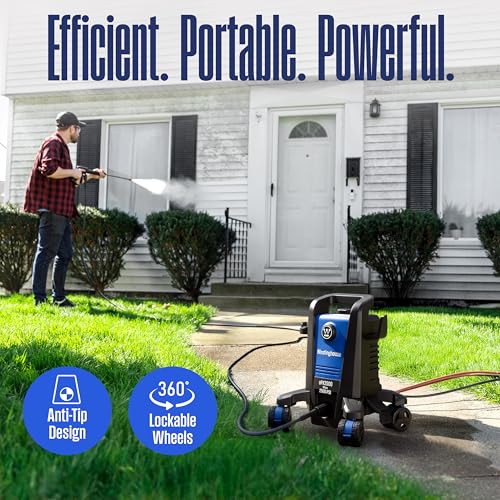
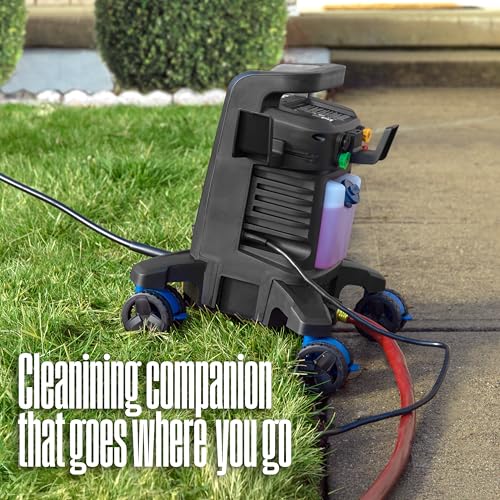
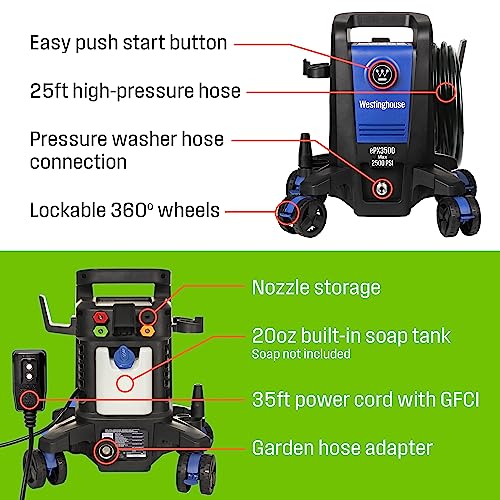
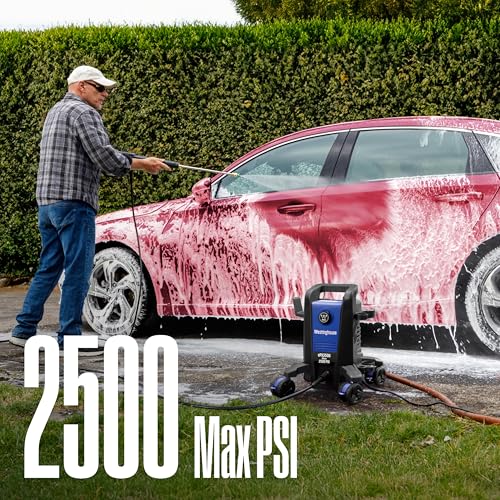
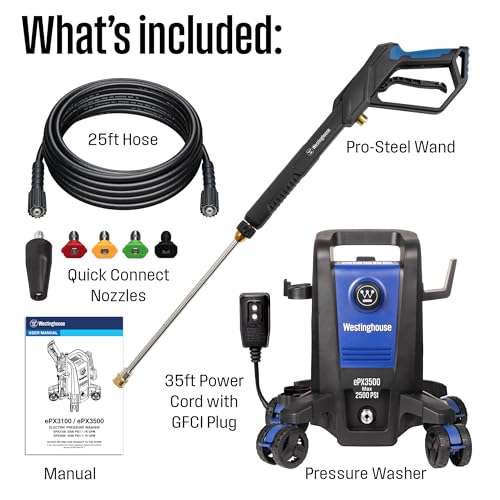
Westinghouse nailed the balance of power and portability with the ePX3500. At only 19 pounds and standing just 16.5 inches tall, it’s one of the most compact high-output electrics I’ve seen. Despite its size, it pushes 2500 max PSI and 1.76 GPM, enough to strip dirt from concrete and siding efficiently. The anti-tipping design with a low center of gravity and 360-degree wheels is smart engineering; owners praise how stable it feels even on uneven ground.
It lacks the steel frame of the WPX3000e, but the trade-off is far better maneuverability in tight spaces. The pro-style steel wand adds durability, and the onboard soap tank is convenient for long cleaning runs. When compared to the LWQ model, this one offers better build quality and consistent pressure delivery. I’d recommend it for anyone with expansive flat surfaces, driveways, pool decks, or patios, where pushing a lightweight yet powerful unit matters more than maximum PSI.
Product photos
Our Testing Process
As someone who’s spent years around vehicles – from restorations to routine maintenance – I understand the value of a good cleaning tool. Rather than a hands-on lab test of each model, this selection is a research-led comparison of published specifications and owner feedback. We meticulously compared PSI, GPM, nozzle options, and features like soap tanks and hose length. We then weighed those specs against what real users are saying about performance and durability in online reviews and expert reports.
For car wash power washers, consistent pressure and flow rate are paramount. We heavily prioritized PSI (pounds per square inch) and GPM (gallons per minute) because these directly impact cleaning power and efficiency. Equally important was portability; a cumbersome machine isn’t useful if it’s a hassle to move around a vehicle or driveway. Finally, we considered included accessories like foam cannons, as these add significant value for car care enthusiasts who might also be interested in our guide to pressure washers for car care.
Specifications reliably indicate a machine’s potential cleaning power, but owner reviews reveal how that translates to real-world performance. We focused on feedback regarding build quality, pump longevity, and ease of use. Reputable automotive detailing sites provided valuable insight into which models perform well for vehicle-specific cleaning, and helped us identify features that truly matter to the discerning car owner. If you’re looking for a full setup, you might also want to explore home wash systems.
How To Choose The car wash power washers
Finding the right car wash power washer means balancing cleaning power with usability and, crucially, avoiding damage to your vehicle’s finish. It’s a surprisingly nuanced purchase.
A quality car wash power washer delivers consistent pressure, offers adjustable nozzles to suit various tasks, and prioritizes safety features like automatic shut-off. Look for models with robust pump construction (axial cam pumps are common), sufficient GPM (gallons per minute) for efficient rinsing, and a range of compatible accessories to expand functionality. Consider the weight and portability if storage space is limited.
Understanding PSI and GPM
Many buyers get hung up on PSI (pounds per square inch) alone, but GPM is equally vital. PSI dictates the force of the water, while GPM determines the volume, how quickly you can rinse away dirt and soap. A high PSI with low GPM will leave you scrubbing longer, increasing the risk of swirl marks. I generally recommend aiming for a PSI between 1900 and 2500 for general car cleaning, paired with a GPM of at least 1.2. Don’t automatically assume “more is better”; excessively high PSI can strip paint or damage trim. If you’re also considering using a power washer for other tasks around the home, like cleaning driveways, you may want to lean towards higher PSI, but always use appropriate nozzles for the surface.
Nozzle Variety and Soap Application
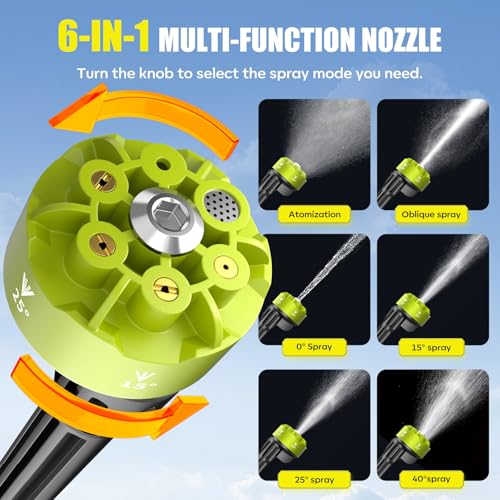
The included nozzles are a huge indicator of a power washer’s versatility. A good set will include 0°, 15°, 25°, and 40° options, allowing you to adjust the spray pattern from a focused jet to a wider, gentler fan. The soap applicator is also critical. Some models have dedicated soap tanks, while others require you to draw soap directly from a bottle.
Here’s what I look for in nozzle and soap setup:
- A dedicated low-pressure soap nozzle is essential.
- Quick-connect nozzle fittings make switching between sprays fast and easy.
- A sizable soap tank (0.5 gallons or larger) reduces the need for frequent refills, especially when washing multiple vehicles.
Don’t overlook the importance of a foam cannon attachment, which can create a thick, clinging foam that loosens dirt before you even touch the vehicle. You can find excellent options to complement your best power washers for cars.
Portability and Power Source
Consider how and where you’ll be using the power washer. Electric models are generally lighter and quieter than gas-powered ones, making them ideal for residential use. However, they require access to a power outlet. Cordless options, like the YKYI, offer ultimate freedom, but battery life and PSI can be limitations. If you have a large property or frequently wash vehicles away from an outlet, a cordless or gas-powered model might be necessary.
A practical rule of thumb: always start with the widest nozzle setting (lowest pressure) and gradually increase the pressure as needed. Test on an inconspicuous area first!
If you’re primarily focused on car cleaning, an electric model with a 25-foot cord is usually sufficient. For more demanding tasks or larger properties, look for a model with a longer cord or consider a gas-powered option. Thinking through these needs will help you narrow down your choices and ultimately find the ideal pressure washers for washing.
Car Wash Power Washers Compared
Here’s a comparison of specifications for various car wash power washers to help you choose the right one for your needs.
| Product Name | Max PSI | Max GPM | Cord Length (ft) | Battery Voltage (V) | Battery Capacity (mAh) | Soap Tank Capacity (gal) |
|---|---|---|---|---|---|---|
| Westinghouse WPX3000e | 3000 | 1.76 | 35 | N/A | N/A | 0.45 |
| LWQ Portable Power Washer | N/A | 2.5 | N/A | N/A | N/A | N/A |
| Westinghouse ePX3100v | 2100 | 1.76 | N/A | N/A | N/A | N/A |
| YKYI Cordless Handheld Power Washer | 1200 | 3 | N/A | 21 | 4000 | N/A |
| 6-in-1 Cordless Battery Powered Washer | 1300 | 3 | N/A | N/A | 2000 | N/A |
| CRAFTSMAN 1700-PSI | 1700 | 1.2 | 35 | N/A | N/A | N/A |
| Westinghouse ePX3500 | 2500 | 1.76 | N/A | N/A | N/A | 20 oz |
Frequently Asked Questions
What PSI is safe for washing a car?
Generally, between 1900 and 2500 PSI is ideal for car washing, but it’s more about technique. Using a wider nozzle (40°) and keeping a safe distance prevents damage, even with higher PSI models.
Are cordless power washers powerful enough for cars?
While convenient, most cordless models sacrifice some power. The YKYI, for example, only delivers 1200 PSI, which is best for lighter dirt and rinsing, not heavy-duty cleaning; you may want to consider electric power washers for cars for more consistent results.
What’s the difference between an axial cam and a wobble plate pump?
Axial cam pumps are more durable and deliver higher pressure consistently, making them better for repeated car washing tasks. Wobble plate pumps are typically found in cheaper models and are less reliable over time.
Can I use just any soap in my power washer?
No, using the wrong soap can damage the pump. Always use detergents specifically formulated for power washers, and avoid harsh chemicals or abrasive cleaners. Investing in quality car wash tools will protect your investment.
How important is the length of the power cord or battery life?
Cord length or battery life directly impacts usability. A 35-foot cord is generally sufficient for most cars, but a shorter cord or limited battery will restrict your movement and require more frequent repositioning; consider this based on your space and washing habits, and look at essential car wash equipment to help make the process easier.
The Bottom Line
Choosing a car wash power washer often comes down to how much control you want versus how much fuss you’re willing to tolerate. While higher PSI and GPM figures are appealing, the Westinghouse WPX3000e strikes a fantastic balance of power, portability, and features, making it our overall pick. It delivers enough cleaning force for most vehicles without risking damage, and the sizable soap tank is a welcome addition for enthusiasts who also use pressure washer soap regularly.
For those on a tighter budget, or prioritizing maximum portability, the YKYI Cordless Handheld Power Washer offers an intriguing solution. If you need something a bit more versatile, the LWQ Portable Power Washer’s impressive 2.5 GPM makes it a strong contender for tackling tougher grime. And for those seeking a reliable electric option, the CRAFTSMAN 1700-PSI is a solid choice, especially when paired with a dedicated electric car washer foam cannon.
Ultimately, the specs are just numbers. The most important factors are understanding your own needs – the size of the vehicles you’ll be washing, the type of dirt you typically encounter, and your tolerance for setup and maintenance. A well-maintained, appropriately-nozzled power washer, used with care, will always deliver better results than the most powerful machine in the wrong hands.
