
10 Best Car Wifis in 2026
This post contains affiliate links. As an Amazon Associate, we earn from qualifying purchases.
The TP-Link 5G Mobile Hotspot AXE3600 is the best overall car WiFi for most drivers, thanks to its tri-band Wi-Fi 6E speeds and 14-hour battery that keeps everyone online through a full day of driving. For global travelers who need premium performance, the NETGEAR Nighthawk M7 delivers WiFi 7 and eSIM coverage in over 140 countries. If you venture where cell towers fade, the Starlink Mini Kit brings satellite internet in a backpack-portable package.
The real challenge with in-car WiFi isn’t finding a hotspot, it’s picking one that actually works where you drive, for the devices you bring, without draining your car’s battery or your patience. A device that works great for a commuter might leave a family on a cross-country road trip frustrated.
This guide is based on manufacturer specifications, expert round-ups, and patterns in owner feedback across dozens of models. We’ve organized ten picks by the real-world needs that matter most: speed, coverage, battery life, and how you plan to use it.
Top 10 Car WiFis in the Market
Certain content that appears on this site comes from Amazon. This content is provided "as is" and is subject to change or removal at any time.
The Best Car WiFis, Reviewed
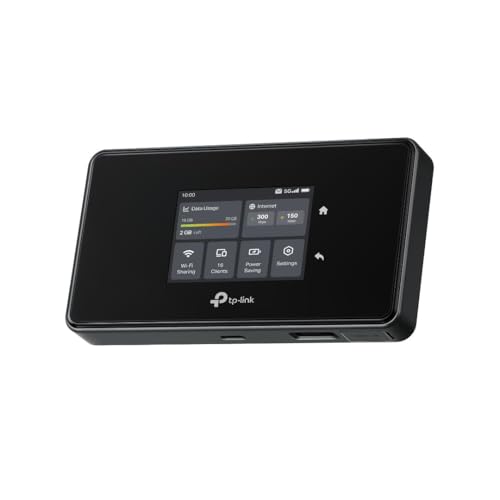
TP-Link 5G Mobile Hotspot AXE3600
What We Like
- Tri-band Wi-Fi 6E for fast streaming
- 14-hour battery supports all-day trips
- Unlocked for major U.S. carriers
- External antenna ports boost weak signals
Trade-offs
- No eSIM support, requires physical SIM
- External antennas sold separately
- At 0.4 pounds, pocketable but not ultra-light
The hotspot delivers up to 2,880 Mbps on the 6 GHz band, which means it can stream 8K video without buffering under ideal conditions, handy for keeping a family entertained on a long drive. Its 14-hour battery lasts through a full day of camping or remote work, and since it’s unlocked for AT&T, T-Mobile, and Verizon, you just drop in your own SIM and go. That speed, runtime, and carrier flexibility let you stay productive or unwind anywhere with cell service.
The trade-off is that it uses a physical nano SIM with no eSIM support, so switching carriers or traveling abroad means swapping cards. External antenna ports let you boost reception in weak-signal areas like rural campsites, but the antennas are sold separately. Next to the NETGEAR Nighthawk M7, which has eSIM and Wi-Fi 7, the TP-Link skips the embedded SIM convenience for a design that relies on a standard SIM slot.
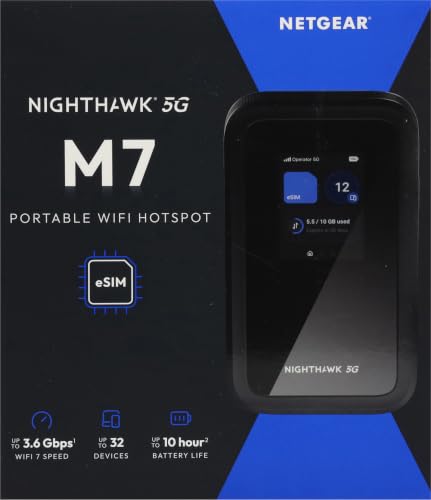
NETGEAR Nighthawk M7 5G Hotspot
What We Like
- WiFi 7 speeds up to 3.6 Gbps
- Global eSIM coverage in 140+ countries
- Connects up to 32 devices at once
- WPA3 encryption and firewall protection
Trade-offs
- Ethernet adapter sold separately
- Real-world speeds depend on carrier and signal
- Battery life varies with usage and network
Global coverage extends to more than 140 countries through a built-in eSIM, letting frequent travelers purchase 5G or 4G data plans directly from the Nighthawk app without needing to track down local SIM cards. A free NETGEAR account is required to manage plans, and coverage as well as speeds will vary by country and carrier. This setup removes the usual hassle of swapping physical SIMs when crossing borders, so the hotspot stays ready for work or leisure in most regions worldwide.
The internal battery is rated for up to 10 hours on a single charge, which can support a full workday of moderate use. Actual runtime depends on how many devices are connected, the type of activity, and network conditions, so heavy streaming or large downloads will reduce that figure. Owners report keeping the hotspot plugged into a USB-C charger during long road trips to avoid running out of power mid-journey.
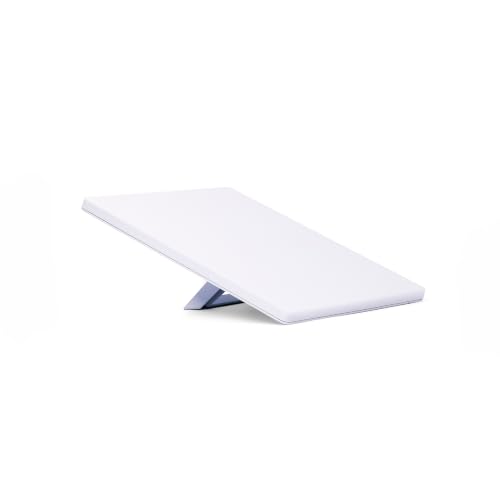
Starlink Mini Kit
What We Like
- Backpack-portable all-in-one kit
- Built-in Wi-Fi router and kickstand
- DC power input for vehicle use
- Ethernet port for third-party routers
Trade-offs
- Requires clear view of sky to work
- Wi-Fi 5, not the newest standard
- No built-in battery for off-grid use
Starlink Mini delivers over 100 Mbps from space, which means you can stream, work, or video-call from places where cell towers and cable simply don’t reach. The whole kit fits in a backpack, integrated router, kickstand, and pipe adapter included, so you can toss it in the car and set it up in minutes. Just plug it in and point the dish at an unobstructed patch of sky. That low 25-40 watt power draw also makes it friendly for running off a vehicle’s DC outlet or a small solar setup, which is exactly what you need when you’re deep off the pavement.
This system lives and dies by its view of the sky. Park under heavy tree cover or in a narrow canyon, and the connection drops. It also uses Wi-Fi 5 rather than the newer Wi-Fi 6 or 7 you’ll find on a portable hotspot like the NETGEAR Nighthawk M7, so local speeds between your devices won’t be as fast. And unlike most hotspots, there’s no built-in battery, you’ll need to keep it plugged into your car’s power or a portable battery pack. For full-time overlanders and remote workers who park in the open, it is a strong option. For weekend campers in wooded campgrounds, a cellular hotspot may be simpler.
Product photos
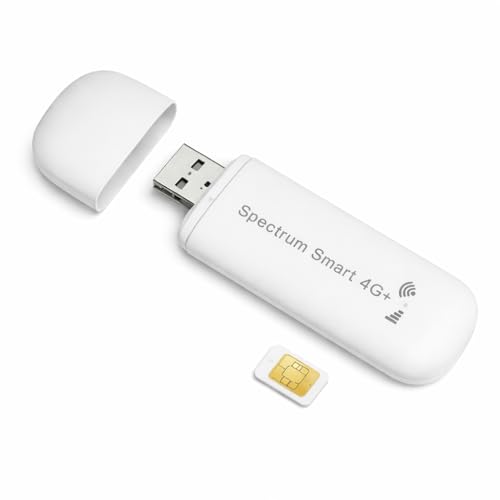
Spectrum Smart 4G LTE USB Hotspot
What We Like
- Works on two major networks
- No software or setup needed
- Powers from any USB port
- Includes SIM and trial data
Trade-offs
- No built-in battery for portable use
- 4G LTE only, not 5G
- Limited to 10 devices at once
Plugging into any USB port, your car’s charger, a laptop, or a power bank, this hotspot turns on in seconds without drivers or software. That simplicity, plus its coverage on both AT&T and T-Mobile networks, makes it a natural fit for anyone who wants internet on the road without fussing with settings or carrying a separate battery pack. It’s smaller than a pack of gum, and the included SIM with 500MB of trial data means you can verify coverage before committing to a plan.
Because this hotspot is USB-powered, it needs a constant power source, a laptop, car charger, or power bank, so it won’t run independently like a battery-powered model. That trade-off makes it ideal for road trips or desk use, but less handy for walking around a campsite or tossing in a backpack. The NETGEAR Nighthawk M7 has its own battery for hours of untethered use, but for drivers who just need reliable WiFi from the front seat, this plug-in does the trick.
Spectrum Smart WiFi Hotspot

What We Like
- Dual-carrier coverage auto-switches to strongest signal
- SIM included, no separate purchase needed
- Pocket-size at 0.2 pounds
- 500MB trial data to test coverage
Trade-offs
- 4G LTE only, no 5G support
- 3000 mAh battery limits all-day use
- Supports only 10 devices at once
A 0.2-pound portable hotspot that fits in your pocket means you can toss it in the glove box or a backpack without thinking twice. The double-carrier design automatically picks the stronger signal between AT&T and T-Mobile, so you’re not stuck if one network fades on a remote stretch of highway. With a SIM card included in the box, setup requires no separate purchase. For road-trippers, RV campers, or anyone who needs reliable WiFi in the car without a permanent install, this is a grab-and-go solution that just works.
This is a 4G LTE device, so don’t expect the multi-gigabit speeds of a 5G hotspot like the NETGEAR Nighthawk M7. The 3000 mAh battery powers the unit, and it creates a personal WiFi hotspot for up to 10 devices simultaneously. It works on both AT&T and T-Mobile networks, automatically connecting to the strongest signal, and covers the US, Canada, and Mexico.
Product photos
EVDO-LINK M2000 Car Wifi
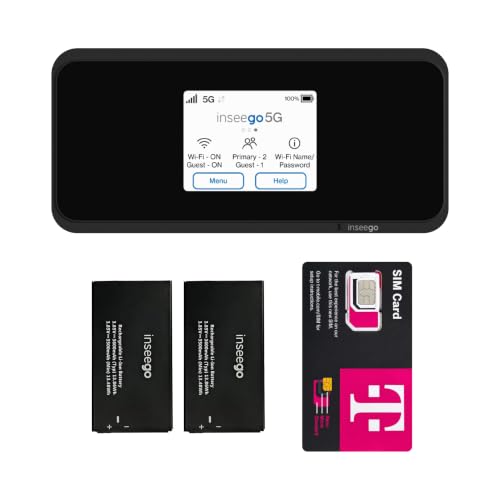
What We Like
- Connects up to 30 devices
- 5050mAh battery doubles as power bank
- 5G speeds up to 2.7 Gbps
- WPA3 encryption and VPN support
Trade-offs
- Unlocked only for GSM carriers (T-Mobile original)
- Wi-Fi 6, not Wi-Fi 6E or 7
Support for up to 30 devices at once makes this hotspot ideal for a road trip where every passenger has a tablet, phone, or laptop and nobody wants to wait for a buffering video. The 5050mAh battery keeps it running all day and can even charge your phone in a pinch, which is handy when the car’s USB ports are already spoken for. That 5G speed, up to 2.7 Gbps, means streaming in the back seat or pulling up directions on a big screen won’t lag, even with a full carload of connected gadgets.
This hotspot is GSM-unlocked with T-Mobile as the original carrier, so you’ll need to check compatibility if you’re on a CDMA network like Verizon or want dual-carrier fallback. Weighing half a pound, it’s compact enough for a glove box or center console. Compared to the TP-Link AXE3600, which supports 32 devices and uses Wi-Fi 6E, the M2000 trades the newest Wi-Fi band for a built-in power bank and a slightly lower device count. For most families that extra charging capability matters more than the latest wireless standard.
Product photos
AT&T Turbo Hotspot 3
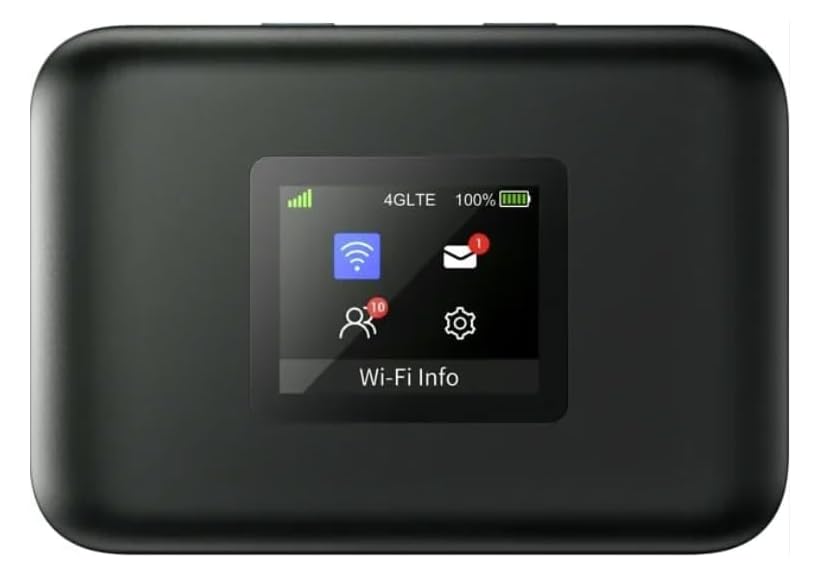
What We Like
- Over 15 hours on one charge
- Connects up to 16 devices
- Dual-band Wi-Fi reduces congestion
- Pocket-sized with color LCD screen
Trade-offs
- Requires separate AT&T prepaid plan
- No 5G support for faster speeds
A 3000 mAh battery that delivers over 15 hours on a single charge means you can drive all day without hunting for an outlet. That long-lasting power makes this hotspot a natural fit for road trips, camping weekends, or any day where you need the car Wi-Fi to outlast your fuel tank. It handles up to 16 devices at once, so everyone in the vehicle can stream, navigate, or work without fighting for bandwidth. The dual-band Wi-Fi helps keep things smooth even when the network gets crowded. The pocket-sized design and clear 1.77-inch LCD screen let you check signal strength and data usage at a glance, no phone app required.
This hotspot requires an AT&T prepaid plan to work, which adds a step before you can hit the road. If you’re after the fastest possible speeds for heavy downloads or video conferencing, the NETGEAR Nighthawk M7 with its 5G and Wi-Fi 7 will leave it behind. For anyone whose priority is staying connected all day without stopping to recharge, the AT&T Turbo Hotspot 3 delivers exactly that. It does it in a package that slips into a cup holder or glove box.
Product photos
KUMA Connect Play 4G Cellular Router
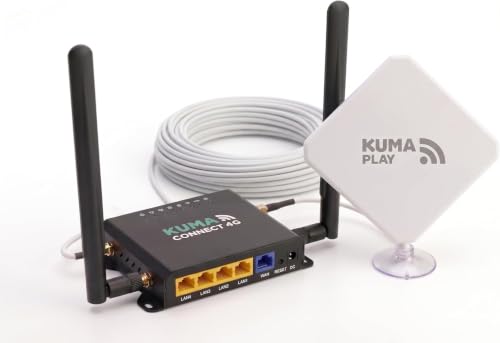
What We Like
- Drill-free MIMO window antenna included
- Rugged metal casing handles road vibration
- Dual power: 12V vehicle and wall plug
- 4 LAN ports for hardwiring devices
Trade-offs
- Verizon requires manually set APN and activated SIM
- WAN/LAN ports limited to 10/100 Mbps speeds
Verizon users face extra setup steps, you’ll need a previously activated SIM and must enter APN settings manually, since Verizon stores may not activate a new line for this third-party router. Compared to the pocket-sized TP-Link 5G Mobile Hotspot AXE3600, the KUMA is larger and heavier, but it offers wired LAN ports for connecting a TV or game console without relying solely on Wi-Fi. If you camp where cellular coverage is spotty and you want a permanent, rugged router that can handle the road, this is a smart buy.
EIOTCLUB 4G LTE Portable WiFi
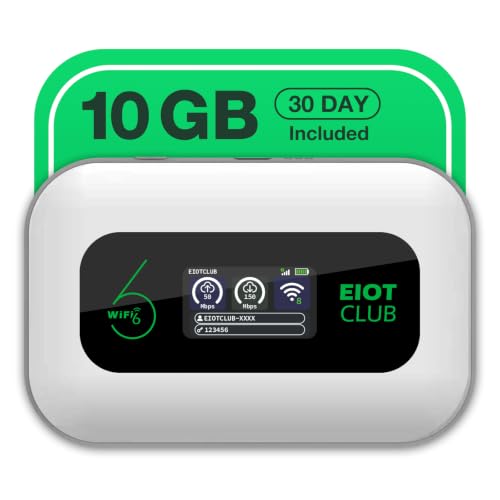
What We Like
- 10 GB data included, no setup needed
- 12-hour battery with smart power-saving mode
- Supports up to 32 devices at once
- Clear LCD screen shows status and QR code
Trade-offs
- 4G LTE only, not 5G for faster speeds
- Requires topping up via QR code after data expires
A 10 GB data plan that’s ready to use right out of the box means you can power this hotspot on and get connected without hunting for a SIM or fiddling with settings. For road trips where you need a reliable internet connection for navigation, streaming music, or keeping the kids entertained, that convenience is a real time-saver. The 12-hour battery easily lasts a full day of driving, and the ability to share that connection with up to 32 devices, phones, tablets, laptops, makes it a practical hub for the whole car. It’s a straightforward, no-hassle option for anyone who wants internet on the go without a contract or complicated setup.
Ten GB of data can disappear fast if you’re streaming video or doing heavy downloads, and topping up requires scanning a QR code once the plan runs out. If your trips are shorter or you mostly need data for maps and email, the included data and simple operation make it a strong value. Just keep an eye on your usage if you plan to stream movies on a long haul.
LINOVISION Industrial 4G LTE Router

What We Like
- Dual SIM failover for carrier backup
- 9-48V DC input suits vehicle power systems
- Extended bands B66/B71 for rural signal
- Diecast aluminum enclosure resists harsh environments
Trade-offs
- Wi-Fi is 802.11b/g/n only, not Wi-Fi 5 or 6
- No battery for portable, untethered use
A 9-48V DC input range means this router can tap directly into a car, truck, or RV electrical system without needing an extra voltage converter. That is a real advantage for permanent or semi-permanent vehicle installations. The dual SIM slots with automatic failover keep your connection alive if one carrier drops out. The extended frequency bands (B66 and B71) give it a fighting chance in rural areas where standard routers struggle. This is the pick for someone who wants to hardwire internet into a work truck, fleet vehicle, or overland rig and leave it there. It is not for someone who needs a pocket hotspot to toss in a bag.
The Wi-Fi here is 802.11b/g/n, which is Wi-Fi 4, so it won’t match the throughput of newer standards if you stream to many devices at once. But if your priority is rock-solid, always-on connectivity with industrial-grade durability and flexible power input, the LINOVISION’s design choices make sense. It’s a tool built for integration, not portability.
Product photos
How We Evaluated Car WiFis
Our evaluation combines manufacturer documentation, expert round-ups from automotive and tech sources, and patterns we see in owner feedback across the most popular models. We focused on the specifications and use cases that actually determine whether a hotspot will work for your specific driving situation.
The four criteria that mattered most were network compatibility and speed (4G LTE vs. 5G vs. Satellite, plus carrier support), battery life and power options (built-in battery vs. USB-powered vs. Hardwired), device capacity (how many passengers can connect at once), and portability versus integration (pocket hotspot vs. Permanent vehicle router). Each pick earned its place by solving a specific driving scenario better than the alternatives.
A research-led evaluation has honest limits: we haven’t driven across the country with each device, and real-world performance depends heavily on your carrier’s coverage and local terrain. What we can tell you is exactly what each device is built to do and who it works best for, based on the data available.
What To Look For In Car WiFis
Choosing a car WiFi comes down to matching the device’s strengths with how and where you drive. The right pick for a daily commuter looks very different from what an overlander needs.
Focus on network generation (5G vs. 4G LTE), battery life or power source, how many devices you need to connect, and whether you want carrier flexibility or a simple plug-and-play setup.
Network Generation and Carrier Compatibility
The biggest speed difference comes from whether the hotspot supports 5G or only 4G LTE. 5G models like the TP-Link AXE3600 and NETGEAR Nighthawk M7 can deliver streaming and video calls with less buffering, but they cost more and require a 5G data plan. 4G LTE hotspots like the Spectrum Smart USB Hotspot are perfectly fine for navigation, music, and light browsing, and they’re significantly more affordable.
Carrier compatibility matters just as much. Some hotspots are unlocked and work with any major carrier (great for switching plans), while others are locked to a specific provider like AT&T or come with a SIM included. If you travel through rural areas, look for models with extended band support like the LINOVISION Industrial Router, which picks up bands B66 and B71 for better rural signal.
Battery Life and Power Source
How you power the hotspot determines where you can use it. Built-in batteries give you freedom to take the device outside the car. Battery life varies widely, from around 3,000 mAh in the Spectrum Smart WiFi Hotspot to over 15 hours in the AT&T Turbo Hotspot 3.
USB-powered hotspots like the Spectrum Smart 4G LTE USB Hotspot draw power from your car’s port and never need charging, but they stop working when the car is off. For permanent installations, routers like the LINOVISION accept 9-48V DC input and can be hardwired directly to your vehicle’s electrical system.
Device Capacity and Connectivity
Count how many phones, tablets, and laptops will need WiFi at the same time. Basic hotspots handle 10 devices, while premium models like the NETGEAR Nighthawk M7 support up to 32. If you’re traveling with a family or a group, higher capacity prevents slow connections when everyone is online.
Some devices also offer Ethernet ports for hardwiring a laptop or gaming console, which can be more stable than WiFi. The KUMA Connect Play includes 4 LAN ports, making it a good choice for RVs with multiple devices that benefit from a wired connection.
- Check whether the hotspot is unlocked or locked to a specific carrier
- Verify the battery life matches your longest driving day
- Count the maximum number of connected devices against your group size
- Consider whether you need external antenna ports for weak-signal areas
- Look at physical size and whether you’ll keep it in a pocket, glove box, or mounted permanently
A good rule of thumb: buy the fastest network generation you can afford, then choose the battery life and carrier compatibility that matches your driving routes.
Car WiFis Compared
The table below compares all ten car WiFi options side by side, so you can see at a glance how network speed, battery life, device capacity, and key features stack up across our picks.
| Product | Max Devices | Battery | Carrier Support |
|---|---|---|---|
| TP-Link 5G Mobile Hotspot AXE3600 | 32 | 4680 mAh, up to 14 hours | AT&T, T-Mobile, Verizon |
| NETGEAR Nighthawk M7 5G Hotspot | 32 | Up to 10 hours | AT&T, T-Mobile, Verizon |
| Starlink Mini Kit | N/A | N/A | N/A |
| Spectrum Smart 4G LTE USB Hotspot | 10 | USB-powered | AT&T & T-Mobile |
| Spectrum Smart WiFi Hotspot | 10 | 3000 mAh | AT&T and T-Mobile |
| EVDO-LINK M2000 Car Wifi | 30 | 5050 mAh | T-Mobile Unlocked |
| AT&T Turbo Hotspot 3 | 16 | 3000 mAh / 15+ hours | AT&T Prepaid required |
| KUMA Connect Play 4G Cellular Router | 32 | N/A | T-Mobile & AT&T unlocked |
| EIOTCLUB 4G LTE Portable WiFi | 32 | 12 hours | AT&T, T-Mobile, Verizon |
| LINOVISION Industrial 4G LTE Router | N/A | N/A | Verizon/AT&T/T-Mobile Certified |
Frequently Asked Questions
Can I use a regular mobile hotspot in my car?
Yes, any portable hotspot works in a car as long as it has power and a cellular signal. The key difference is whether you want a battery-powered device you can take with you or a hardwired router that stays in the vehicle permanently.
What’s the difference between 4G LTE and 5G for car WiFi?
5G offers faster speeds and lower latency, which means smoother video streaming and quicker web browsing. 4G LTE is still fast enough for navigation, music, and most online tasks, and it’s usually more affordable and available in more rural areas.
How many devices can a car WiFi hotspot handle?
It depends on the model. Basic hotspots support around 10 devices, while premium models can handle 30 or more. If you’re traveling with a family or group, look for a hotspot with higher device capacity to avoid slow connections.
Do I need a separate data plan for a car WiFi hotspot?
Most hotspots require a separate data plan from a cellular carrier. Some models come with a SIM card and trial data included, but you’ll typically need to sign up for a monthly or pay-as-you-go plan. Unlocked hotspots let you choose your own carrier and plan.
Can I get WiFi in my car without a cellular signal?
Yes, if you use a satellite-based system like the Starlink Mini Kit. It requires a clear view of the sky and works where cell towers don’t reach, making it ideal for remote areas. It’s larger and more expensive than cellular hotspots, but it’s the only option for true off-grid connectivity.
The Bottom Line
For most drivers, the TP-Link 5G Mobile Hotspot AXE3600 hits the sweet spot with fast Wi-Fi 6E speeds. It also has a battery that lasts through a full day of driving and the flexibility to work with any major U.S. Carrier. It’s the one to buy if you need reliable in-car WiFi for multiple devices and don’t want to be locked into a contract.
If your budget is tighter, the Spectrum Smart 4G LTE USB Hotspot gives you a simple, affordable way to add WiFi without any setup or separate battery to manage. For serious overlanders and remote workers, the Starlink Mini Kit and KUMA Connect Play each solve specific problems that cellular hotspots can’t touch.
The single most important factor is matching the hotspot to where you actually drive. A 5G device is wasted if you spend most of your time in areas with weak 4G coverage, and a budget 4G hotspot will frustrate a family of streamers. Pick the network and power source that fits your routes, and the rest will fall into place.
