
6 Best Carbon Mountain Bikes in 2026
This post contains affiliate links. As an Amazon Associate, we earn from qualifying purchases.
For aggressive trail riders who want a bike that descends with confidence and still climbs efficiently, the Canyon Spectral 29 CF 8 takes the top spot. It has a lightweight carbon frame, responsive Shimano Deore XT drivetrain, and long-travel suspension. For those who prioritize climbing and agility, the Canyon Spectral 125 CF 7 offers excellent trail versatility, while the TRIFOX Carbon Fiber Mountain Bike is a standout for riders focused on a lightweight hardtail. This guide helps you choose the right carbon mountain bike by focusing on frame design, suspension travel, and component quality.
The real challenge with buying a carbon mountain bike is balancing weight, suspension travel, and durability for your specific riding style. A bike that excels on big descents may feel sluggish on long climbs, and a lightweight XC racer might rattle your teeth on rough trails. We break down what matters most for each type of rider.
This guide is based on a careful review of manufacturer specifications, component data, and patterns in owner feedback across the most popular models in the category. We focus on the six bikes that offer the best balance of performance, build quality, and value for trail, cross-country, and all-mountain riding.
Top 6 Carbon Mountain Bikes in the Market
Certain content that appears on this site comes from Amazon. This content is provided "as is" and is subject to change or removal at any time.
The Best Carbon Mountain Bikes, Reviewed
Canyon Spectral 29 CF 8

What We Like
- Lightweight carbon frame with responsive stiffness
- Shimano Deore XT 12-speed wide-range drivetrain
- DT Swiss wheels and RockShox Reverb dropper post
Trade-offs
- Small frame size limits taller rider options
- Long-travel setup adds weight for cross-country climbs
With 160mm of front and 150mm of rear travel, this bike is built for aggressive trail riding, giving you the confidence to push hard on technical descents. The FOX 36 Performance Elite fork and FOX Float X shock soak up rough terrain, while the Shimano Deore XT 12-speed drivetrain offers a wide gear range to help you climb back up without struggling. It’s a setup that rewards precision and control, making it a great fit for riders who want a capable carbon mountain bike for demanding trails.
Long-travel suspension and a carbon frame mean this bike is built for demanding terrain. Riders who mostly stick to smooth singletrack or long cross-country loops might prefer a shorter-travel option like the Canyon Spectral 125 CF 7. The only frame size listed is Small, so taller riders should confirm fit before buying. For riders who regularly tackle technical descents and want a bike that feels stable on rough trails, the Spectral 29 CF 8 offers the suspension travel and component quality to handle that.
Canyon Spectral 125 CF 7

What We Like
- Lightweight carbon frame for responsiveness
- SRAM GX Eagle 12-speed wide gear range
- Tubeless-ready wheels and dropper seatpost
Trade-offs
- 125 mm rear travel limits big-hit capability
- No dropper post included for quick saddle adjustment
With 140 millimeters of front travel and 125 in the rear, this bike is built to keep you planted on technical singletrack while still climbing efficiently. The carbon frame keeps weight low, so you can flick the bike through tight corners and pop off roots without feeling sluggish. That combination makes it a strong match for riders who want one bike that handles both flowy descents and punchy climbs without demanding a second mortgage.
125 millimeters of rear travel is less than what you get on many long-travel trail bikes, so if your local trails are full of steep, chunky drops, you may want more cushion. But for riders who value agility and all-day versatility over pure downhill plow, this setup hits a sweet spot.
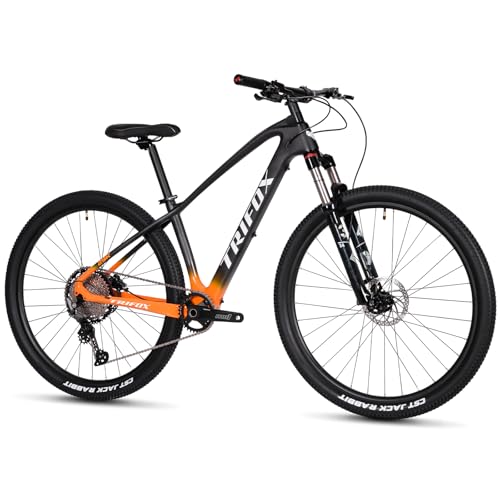
TRIFOX Carbon Fiber Mountain Bike
What We Like
- T800 carbon frame keeps total weight at 26 lbs
- Shimano M6100 Deore 12-speed drivetrain
- 130mm lockable hydraulic suspension fork
- Shimano hydraulic disc brakes for all-weather stopping
Trade-offs
- Hardtail design limits rear comfort on rough trails
- No rear suspension for technical downhill riding
The trade-off is clear: a hardtail frame means every root and rock hammer straight through the rear wheel. On smoother trails, the stiffness helps you accelerate quickly. But on rough descents, you will miss the rear suspension of a full-suspension bike like the Canyon Spectral 29 CF 8. If your trails are chunky or you prefer downhill comfort over uphill speed, the TRIFOX’s hardtail design will leave you feeling every bump. For riders focused on cross-country miles, though, the weight savings and direct power transfer make it a smart pick.
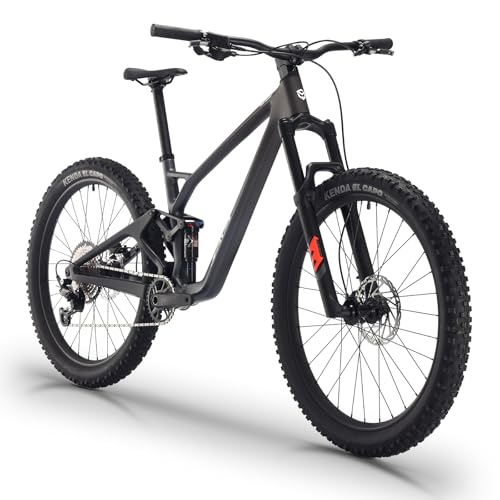
SAVADECK Carbon Fiber Soft Tail Mountain Bike
What We Like
- Lightweight full-suspension carbon frame
- DNM air shock with three-stage lockout
- Shimano DEORE M6100 12-speed shifting
- Four-piston hydraulic disc brakes
Trade-offs
- No frame size options listed beyond 29×17
- DNM air shock requires periodic adjustment for best performance
A dual-link suspension system with a DNM air shock and three-stage lockout means you can lock out the rear for climbing efficiency and open it up for rocky descents, all without swapping bikes. That versatility, paired with a lightweight carbon frame and a Shimano DEORE M6100 12-speed drivetrain, makes this Savadeck a strong fit for riders who want one bike that handles both steep climbs and rowy downhills. The four-piston hydraulic disc brakes add confidence on long, brake-heavy trails, while the 2.4-inch Continental tires roll well over mud and gravel.
Compared to the Canyon Spectral 29 CF 8, which uses a more established frame platform, the Savadeck’s dual-link design offers a unique blend of pedaling support and plushness. Its sizing options are limited. This bike suits the rider who enjoys dialing in their suspension and wants a carbon full-suspension rig without stepping up to premium brand pricing.
Product photos
TRIFOX Full Suspension Carbon Fiber Mountain Bike

What We Like
- Carbon frame keeps weight low at 27.8 lbs
- Integrated bar and internal cable routing for clean look
- Active Braking Pivot reduces brake jack
Trade-offs
- Integrated bar limits stem/handlebar swaps
- 85% assembly still requires 20 minutes of work
- No size options listed beyond frame sizes
A 27.8-pound full-suspension carbon frame is the headline here, and it means you can climb and maneuver without fighting a heavy bike. TRIFOX pairs that light chassis with a 140mm fork and a rear shock that work together through an Active Braking Pivot, which separates braking forces from suspension movement. That design choice helps keep the rear wheel planted when you grab the brakes mid-trail, so the bike stays composed rather than bucking you forward.
The integrated bar and stem setup gives a sleek look with internal cable routing. Riders who prefer a more adjustable cockpit might find that limiting since you cannot swap stems or bars easily to fine-tune fit. Assembly is 85% complete out of the box, so you will spend about 20 minutes with the included tools and video to get rolling. For someone who values a lightweight, cohesive suspension system and does not plan to chase after custom cockpit geometry, this TRIFOX delivers a well-integrated package at a competitive weight.
Product photos
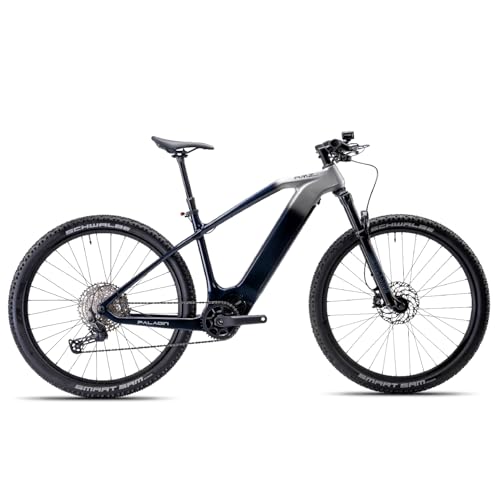
Amzcycle Paladin Electric Carbon Mountain Bike
What We Like
- Toray T700+T800 carbon frame
- BAFANG M560 motor with 120N·m torque
- RockShox 35G fork suspension
- MAGURA MT5 brakes with Storm discs
Trade-offs
- Class 2 e-bike limits trail access in some areas
- 48.4 lb weight is heavy for a carbon bike
- Front suspension only, no rear shock
With 120N·m of torque from the BAFANG motor, this bike powers up steep climbs without you having to pedal like crazy. The carbon frame keeps the whole thing at 48.4 pounds, not the lightest out there, but still manageable for an e-MTB with this much grunt. RockShox fork and MAGURA brakes give you the stopping and steering confidence you need when the trail gets rough.
The trade-off here is that this is a Class 2 e-bike, which means it has a throttle and is subject to local regulations that may restrict its use on certain trails. That opens up more riding opportunities for some, but it also closes the door on trails that restrict access to Class 1 bikes only. Compared to something like the Canyon Spectral 29 CF 8, which is a pure human-powered carbon mountain bike, the Paladin is heavier and less nimble when the battery runs out. If your local trail system allows Class 2 e-bikes and you want the torque to tackle steep climbs without exhausting yourself, this bike makes a lot of sense.
Product photos
How We Evaluated Carbon Mountain Bikes
We started by analyzing the frame construction, suspension design, and drivetrain specs for each model, using manufacturer data and component specifications. Carbon fiber frames vary widely in layup, weight, and stiffness, so we paid close attention to the carbon grade and frame geometry for each bike. We also looked at wheel quality, brake systems, and dropper post inclusion as key indicators of overall build quality.
The three most important criteria for this category were frame weight and stiffness, suspension travel and adjustability, and drivetrain range. Frame weight directly affects climbing efficiency and maneuverability, while suspension travel determines how much rough terrain a bike can handle. Drivetrain range matters because a wide gear spread helps riders tackle steep climbs without sacrificing top-end speed on descents.
This is a research-led evaluation, not a hands-on test. We rely on published specs, expert round-ups, and patterns in owner feedback to identify which bikes deliver the best real-world performance. Our goal is to help you narrow down your options based on your riding style and budget, not to claim we have ridden every model.
What To Look For In Carbon Mountain Bikes
Choosing the right carbon mountain bike means matching the bike’s suspension, geometry, and component spec to the trails you ride most. The wrong travel or frame design can turn a great bike into a poor fit for your terrain.
Focus on suspension travel (120–160mm for trail bikes), frame weight (under 30 lbs is excellent), and drivetrain quality (12-speed with a wide-range cassette). A dropper post is a must for technical descents.
Suspension Travel and Design
Suspension travel is the single biggest factor in how a bike rides. Short-travel bikes (100-120mm) are efficient climbers but limited on rough descents. Mid-travel (130-150mm) offers the best all-around balance for most trail riders. Long-travel (160mm+) is for aggressive downhill and enduro riding but adds weight. Dual-link suspension designs, like the SAVADECK’s DNM air shock with three-stage lockout, provide better pedaling efficiency and reduce brake jack compared to simpler single-pivot systems.
Frame Weight and Carbon Quality
Carbon fiber frames vary in stiffness, weight, and durability based on the carbon grade and layup schedule. T800 carbon, used in the TRIFOX hardtail, offers a good balance of strength and weight reduction, while higher-end frames may use T700 for even lighter builds. A complete bike under a certain weight is considered lightweight for a full-suspension model, while hardtails can drop to 26 lbs or less. Heavier builds may sacrifice climbing responsiveness.
Drivetrain and Components
A quality drivetrain ensures smooth, reliable shifting across a wide range of gears. Shimano Deore XT and SRAM GX Eagle are both excellent 12-speed groupsets with wide-range cassettes for steep climbs. Hydraulic disc brakes provide reliable stopping power in wet or muddy conditions. A dropper post is a critical feature for technical descents, allowing quick saddle adjustment on the fly.
- Check if the bike comes with tubeless-ready wheels and tires for better traction and fewer flats.
- Verify the frame size availability matches your height, especially for models that only offer one or two sizes.
- Look for internal cable routing to reduce maintenance and keep the bike looking clean.
- Consider whether the bike includes a dropper post or if you will need to buy one separately.
A bike with a dropper post and tubeless-ready wheels is almost always worth paying more for.
Carbon Mountain Bikes Compared
The table below compares the six carbon mountain bikes side-by-side, highlighting frame type, suspension travel, drivetrain, and key features to help you find the right fit.
| Product | Frame Material | Front Travel | Drivetrain |
|---|---|---|---|
| Canyon Spectral 29 CF 8 | Carbon fiber | 160mm | Shimano Deore XT 12-speed |
| Canyon Spectral 125 CF 7 | Carbon fiber | 140 mm | SRAM GX Eagle 12-speed |
| TRIFOX Carbon Fiber Mountain Bike | T800 Carbon Fiber | 130mm Hydraulic | Shimano M6100 Deore 12-Speed |
| SAVADECK Carbon Fiber Soft Tail Mountain Bike | Carbon Fiber | N/A | Shimano DEORE M6100 12-Speed |
| TRIFOX Full Suspension Carbon Fiber Mountain Bike | Carbon fiber | 140mm | Shimano M6100 12-speed |
| Amzcycle Paladin Electric Carbon Mountain Bike | Toray T700+T800 Carbon Fiber | RockShox 35G Fork | N/A |
Frequently Asked Questions
What is the best carbon mountain bike for climbing?
The Canyon Spectral 125 CF 7 is an excellent choice for climbing thanks to its lightweight carbon frame and 125mm rear travel that keeps the bike efficient on ascents. The TRIFOX Carbon Fiber hardtail is even lighter at 26 lbs, making it a strong option for cross-country climbing on smoother trails.
Is a carbon mountain bike worth the extra cost?
Carbon frames are lighter and stiffer than aluminum, which translates to better acceleration, climbing efficiency, and vibration damping on rough terrain. For riders who prioritize weight savings and responsive handling, a carbon bike is a worthwhile investment. However, aluminum bikes are more durable for hard impacts and cost less.
How much travel do I need on a trail carbon mountain bike?
For most trail riders, 130-150mm of rear travel provides the best balance of climbing efficiency and descending capability. Bikes with 120mm or less are better for cross-country, while 160mm or more is ideal for aggressive downhill and enduro riding. Consider the terrain you ride most before choosing.
Can a carbon mountain bike be repaired if damaged?
Small cracks or cosmetic damage to a carbon frame can often be repaired by a specialist, though the cost may be significant. Major structural damage usually requires frame replacement. Many manufacturers offer crash replacement programs with discounted frames. Always inspect your frame after a hard impact.
What is the difference between a hardtail and full-suspension carbon mountain bike?
A hardtail carbon bike has no rear suspension, making it lighter, more efficient on climbs, and less expensive. A full-suspension bike adds rear travel for better traction and comfort on rough descents. Hardtails are best for cross-country and smooth trails, while full-suspension bikes handle technical terrain and big drops.
The Bottom Line
For most aggressive trail riders, the Canyon Spectral 29 CF 8 is the best overall choice. Its long-travel suspension, lightweight carbon frame, and Shimano Deore XT drivetrain make it a confident descender that still climbs well. It is best for riders who want a capable all-mountain bike and fit the available frame sizes.
If you prioritize climbing efficiency and agility over big-hit capability, the Canyon Spectral 125 CF 7 offers excellent trail versatility with a lighter, shorter-travel setup. For budget-conscious riders who want a lightweight carbon bike, the TRIFOX Carbon Fiber hardtail delivers an impressive 26-pound build that excels on cross-country trails.
The single most important factor when choosing a carbon mountain bike is matching the suspension travel and frame geometry to the trails you ride. A bike that is too long-travel will feel sluggish on climbs, while one that is too short-travel will struggle on rough descents. Choose the bike that fits your terrain, not the one with the most impressive spec sheet.
