
10 Best Cold Weather Motorcycle Jackets in 2026
This post contains affiliate links. As an Amazon Associate, we earn from qualifying purchases.
For cold-weather riding, the KEMIMOTO Heated Motorcycle Jacket with Battery stands as our best overall pick thanks to its nine heating zones that cover the core body areas and its long battery runtime. Riders on a budget will find the DUHAN 3-in-1 Waterproof Jacket a solid value, while those wanting a do-it-all textile jacket should look at the HWK Motorsports Apparel Adventure Cold Weather Jacket.
The real challenge of cold-weather riding isn’t just staying warm, it’s staying warm without sacrificing mobility or safety. A jacket that traps heat but restricts movement can make handling a bike more difficult, while one that lacks proper armor leaves you exposed. The best cold-weather jackets balance insulation, protection, and freedom of movement.
This guide is based on a careful review of manufacturer specifications, expert round-ups, and patterns in owner feedback. We focused on what matters most for cold-weather riding: warmth, protection, weather resistance, and adaptability. Here are the ten jackets that earned a spot.
Top 10 Cold Weather Motorcycle Jackets in the Market



Certain content that appears on this site comes from Amazon. This content is provided "as is" and is subject to change or removal at any time.
The Best Cold Weather Motorcycle Jackets, Reviewed
KEMIMOTO Heated Motorcycle Jacket with Battery

What We Like
- 9 heating zones cover core body areas
- Reflective strips for night visibility
- CE Level 1 protectors at elbows and shoulders
Trade-offs
- Switch on forearm requires stopping to adjust safely
- No back protector included, only elbows and shoulders
The nine carbon fiber heating zones wrap around your core, reaching up to 65°C, so the heat stays where your body needs it most. This is the jacket for riders who want active warmth built right in, not just a passive liner. It also offers the convenience of a rechargeable battery pack that works with a power bank or a 12V source.
The trade-off is that the control switch sits on the right forearm, and the manufacturer recommends adjusting it only while stationary. So you cannot easily change the temperature on the fly at highway speeds. Compared to a jacket like the ILM Adventure Motorcycle Jacket with its detachable thermal liner, the KEMIMOTO trades the simplicity of a passive layer for the added complexity and weight of a battery system, but the payoff is consistent warmth on the coldest days. The four CE Level 1 protectors cover your elbows and shoulders, though there is no back protector included, so you may want to add one if you ride aggressively.
Product photos
ILM Adventure Motorcycle Jacket CE Armored JRL3
What We Like
- CE armor at shoulder, elbow, back
- Removable thermal liner for cold weather
- 600D Oxford fabric resists abrasion
- Adjustable cuff, collar, and hem
Trade-offs
- No built-in electric heating for extreme cold
- No electric heating for sub-freezing rides.
A 600D Oxford shell with a built-in waterproof layer means this jacket is built to shrug off both rain and abrasion, making it a rugged companion for long days on the bike. The CE armor at the shoulders, elbows, and back gives you solid impact protection, while the removable thermal liner lets you adapt when temperatures drop. It suits riders who want one jacket that can handle everything from chilly mornings to warmer afternoons without switching gear.
The ILM Adventure Motorcycle Jacket is fully waterproof thanks to its 600D Oxford fabric and built-in waterproof layer, so you stay dry in a downpour. The removable thermal liner lets you adapt to cold or warm weather. The chest, back, and shoulder vents open via zippers to dump excess heat quickly. If you ride for hours in bitter cold, a heated option like the KEMIMOTO Heated Jacket might suit you better, but for all-season versatility with dependable waterproofing and adjustable airflow, this jacket covers a lot of ground.
HWK Motorsports Apparel Adventure Cold Weather Motorcycle Jacket
What We Like
- 600D Cordura for high abrasion resistance
- CE armor covers shoulders, elbows, back
- 5-zone ventilation with mesh panels
- Detachable thermal liner adapts to seasons
Trade-offs
- Snug aerodynamic fit limits thick underlayers without sizing up
- Water-resistant, not fully waterproof for heavy rain
A 600D Cordura outer shell with CE armor at the shoulders, elbows, and back means this jacket is built to take a slide without giving up on protection. The detachable thermal liner and five-zone ventilation system let you ride through changing seasons without switching gear, liner in for fall and winter, liner out with vents open for warmer months. That makes it a strong fit for touring riders who need one jacket that handles everything from chilly mornings to afternoon heat, backed by double-safety stitching and reflective visibility details for low-light confidence.
The trade-off comes in the snug aerodynamic fit: if you plan to wear a thick hoodie or multiple base layers underneath, you will need to size up. That can throw off the sleeve and torso proportions. The jacket uses a water-resistant breathable membrane that handles light rain but isn’t built for sustained downpours. For riders who prioritize abrasion resistance, armor coverage, and seasonal flexibility over all-weather waterproofing, this jacket delivers heavy-duty value without being expensive for premium fabrics.
Product photos
DUHAN 3-in-1 Waterproof Motorcycle Jacket CE Level 2

What We Like
- CE Level 2 armor for shoulders and elbows
- Waterproof membrane keeps you dry in heavy rain
- Removable thermal liner for cold weather
- Reflective strips enhance nighttime visibility
Trade-offs
- CE1 back protector is less protective than CE2
- No heated elements for extreme cold below 30°F
A 600D Oxford outer shell paired with a waterproof membrane means this jacket keeps you dry even in a downpour, while CE Level 2 armor at the shoulders and elbows gives you serious impact protection without the premium price tag. The removable thermal liner extends its usefulness into chilly 30°F commutes. That makes it a practical all-season option for people who need one jacket to handle rain, cold, and everyday riding without breaking the bank.
The trade-off comes in cold weather: the detachable thermal liner is rated for chilly 30°F commutes, but riders facing sustained sub-freezing conditions may need additional layering. You also get a CE1 back protector rather than the CE2 found on the shoulders and elbows, which is a step down in spine protection. For mild to cold weather riding where budget matters most, this jacket delivers strong value, but serious winter warriors may want to layer up or look elsewhere.
Product photos
Alpinestars Andes V3 Drystar Textile Jacket

What We Like
- 100% waterproof Drystar membrane
- Direct Ventilation System for airflow
- Removable thermal liner for cold rides
- Tech-Air 5 airbag compatible
Trade-offs
- Airbag system sold separately
- No heated layer built in
A fully waterproof Drystar membrane makes this jacket ready for serious rain without turning into a clammy sweatbox. The Direct Ventilation System lets you open chest intakes and back exhaust ports to dump heat when the sun breaks through. That combination of all-weather sealing and on-demand airflow is what sets it apart for riders who face changing conditions on long tours. The removable long-sleeve thermal liner adds warmth when temperatures drop, and the pre-contoured sleeves keep movement natural on the bike. If you want premium weather protection that breathes, this jacket delivers.
The Alpinestars Andes V3 Drystar Textile Jacket is designed to accommodate the Tech-Air 5 airbag system, which is sold separately. So riders who want that level of protection can add it later without buying a new jacket. Compared to the REV’IT! Tornado 4 H2O, this jacket offers airbag compatibility as a future-proofing option. For riders who prioritize staying dry and comfortable over a built-in heated layer like the KEMIMOTO provides, this jacket is a viable all-season touring choice.
REV'IT! Tornado 4 H2O Adventure Touring Jacket

What We Like
- Waterproof liner can go inside or outside
- CE-level 2 armor at shoulders and elbows
- Removable thermal and waterproof liners
- Integrated 3D air mesh ventilation panels
Trade-offs
- Back protector sold separately
- 4.0 pounds feels heavy on long rides
The ability to place the waterproof liner either inside or outside the shell is the standout feature here, giving you real flexibility when the weather shifts from drizzle to downpour. That modular climate control, paired with removable thermal and waterproof liners, makes this jacket a smart pick for riders who face changing conditions on long tours. The SEEFLEX CE-level 2 armor at shoulders and elbows provides solid impact protection, and the integrated 3D air mesh panels keep airflow moving when you strip down to the shell.
At four pounds, it’s not the lightest jacket in this guide, and the back protector is an extra purchase rather than included. That said, the liner system offers more flexibility than some fixed-waterproof jackets, letting you fine-tune your setup for changing weather. If you value the ability to adjust your protection for every ride, the Tornado 4 H2O rewards that extra thought with genuine all-weather adaptability.
HWK Motorsports Apparel HWK motorcycle jacket F-1 Cold Weather Motorcycle Jacket
What We Like
- Genuine 1.1-1.2mm leather construction
- Removable CE armor at back, elbows, shoulders
- Water-resistant exterior with thermal lining
Trade-offs
- Leather is heavier than textile jackets
- No ventilation zippers for warmer rides
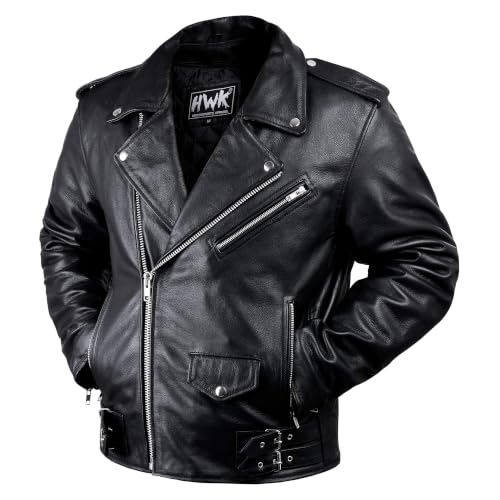
A 1.1-1.2mm genuine leather shell gives this jacket the classic biker look and abrasion resistance typical of leather. With removable CE armor at the back, elbows, and shoulders, it offers impact protection for the rider. The water-resistant exterior and breathable micro-mesh polyester thermal lining help keep you comfortable in cooler conditions. This jacket suits riders who want vintage style with modern safety features and appreciate the feel of real leather.
The trade-off is weight: leather is heavier than textile jackets like the ILM Adventure JRL3, so it’s less suited for riders who prefer a lighter option. There are also no ventilation zippers, which some riders may miss on warmer days. If you prioritize timeless style and cold-weather protection over versatility, this jacket delivers what it promises.
Product photos
BORLENI Motorcycle Jacket Winter EN 17092 with CE2 Armor
What We Like
- CE Level 2 shoulder and elbow armor
- Detachable hood reduces wind flap
- Removable thermal liner for seasonal use
- Four zippered outer pockets secure valuables
Trade-offs
- Back protector is EVA foam, not CE-rated
- Shell is windproof but not waterproof
This jacket carries a Class A CE certification (EN 17092-4), which means it meets European safety standards for protective gear. The certification number is 0598/PPE/25/5881. The removable hood is designed to prevent swinging while riding, and the detachable thermal liner allows you to adjust the jacket for different temperatures. With CE Level 2 armor at the shoulders and elbows, this jacket offers impact protection for street riding. The Amazon listing lists it for commuter and touring use.
Compared to the ILM Adventure JRL3, which includes a CE back protector and a waterproof shell, the BORLENI focuses more on versatility and comfort than all-weather sealing.
ILM JAM1 Mesh Motorcycle Jacket

What We Like
- Mesh fabric maximizes airflow
- CE armor at shoulders, elbows, back
- Removable waterproof thermal liner
- Reflective strips for low-light visibility
Trade-offs
- Mesh shell offers less cold-weather insulation than solid textiles
- No heated elements for extreme cold
- 600D Oxford only at shoulders and elbows, not full jacket
The ILM JAM1 uses extensive mesh fabric to maximize airflow, which helps pull heat away during summer riding. The detachable waterproof thermal liner adds warmth when temperatures drop, so the jacket can be worn across multiple seasons. CE armor at shoulders, elbows, and back provides impact protection, and reflective strips on the front, back, and shoulders improve visibility in low light. For riders who want a single jacket that works in varied conditions without overheating, this is a practical option.
The mesh shell offers less wind-blocking and insulation than solid textile jackets, so in cold weather you will need to rely on the removable liner or additional layers. The 600D Oxford reinforcement is only at the shoulders and elbows, not the entire shell, which prioritizes airflow over maximum abrasion resistance. That makes this jacket best suited for warm-weather riding or three-season use, but if you regularly face freezing temperatures, a dedicated cold-weather shell would be more appropriate.
Product photos
REV'IT! Sand 5 H2O Adventure Jacket
What We Like
- Integrated hydration pack compatibility
- Strategic tube routing system
- Detachable waterproof and thermal liners
- Multiple ventilation and adjustment points
Trade-offs
- At 4.0 lb, heavier than some all-season jackets
- Weighs 4.0 pounds, which is noticeable on long rides
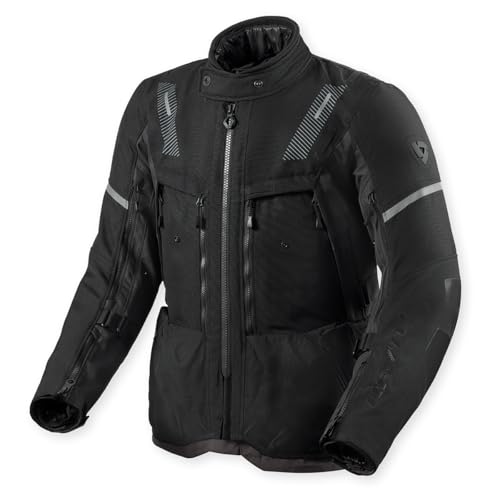
The built-in hydration pack compatibility with a strategic tube routing system means you can carry water without awkward hose snags or stopping to drink, a real advantage on long off-road days. This jacket suits riders who tackle multi-hour adventure tours where staying hydrated is as important as staying dry. The detachable hydratex 3L waterproof liner and thermal liner let you adapt to shifting weather, while multiple adjustment points and vents give you control over airflow and fit.
The trade-off is weight: at 4.0 pounds, this jacket is on the heavier side for an adventure touring shell, partly because of the integrated hydration system and dual liners. If you prioritize a lighter, more streamlined jacket for short commutes or pavement-only trips, a simpler model without hydration integration may serve you better. But for riders who want to carry water hands-free and ride through varied conditions, the Sand 5 H2O delivers exactly what its name promises.
How We Evaluated Cold Weather Motorcycle Jackets
To build this list, we studied manufacturer documentation, expert recommendations from the motorcycle community, and common themes in owner reviews. We cross-referenced specs and owner experiences to identify the jackets that consistently perform well for cold-weather riding.
Four criteria guided our evaluation. Warmth came first: we looked at insulation types, thermal liners, and whether a jacket offered active heating. Protection followed, with attention to armor type (CE Level 1 or 2) and coverage areas. Weather resistance mattered for riders facing rain, wind, and snow. Finally, adaptability was key. A jacket that works across seasons with removable liners and ventilation offers more value than a single-purpose winter shell.
A research-led evaluation has limits. We can’t tell you how a jacket feels after four hours in the saddle, and individual fit varies widely. What we can do is point you toward the jackets that owners consistently praise for warmth and durability, so you can narrow your options before trying one on.
What To Look For In Cold Weather Motorcycle Jackets
Choosing a cold-weather jacket means balancing warmth, protection, and comfort. The right jacket keeps you warm without overheating, protects you in a fall, and fits well enough to let you move freely on the bike.
Look for a jacket with a removable thermal liner for seasonal flexibility, CE-rated armor at the shoulders and elbows (Level 2 offers more protection), and a waterproof or water-resistant outer shell. Active heating is a bonus for extreme cold.
Insulation and Active Heating
The warmth of a jacket comes from its insulation layer and, for some models, an active heating system. Traditional insulated jackets use a quilted thermal liner that traps body heat. These work well for most riders down to about freezing, but for sustained sub-freezing rides, a heated jacket with battery-powered elements is the better choice. The KEMIMOTO, for instance, uses nine heating zones to warm the core, while the REV’IT! Tornado 4 relies on a removable thermal liner and layering.
Armor and Protection
CE-rated armor absorbs impact energy in a crash. Level 1 armor offers a lower level of protection, while Level 2 absorbs more force. Most jackets in this guide include armor at the shoulders and elbows; some also include a back protector. The HWK Motorsports Adventure Jacket and the DUHAN 3-in-1 both offer full CE armor coverage, while the KEMIMOTO includes CE Level 1 protectors at the elbows and shoulders but omits a back protector. If a jacket lacks a back protector, you can buy one separately.
Weather Resistance and Ventilation
A waterproof membrane like Alpinestars’ Drystar or the DUHAN’s waterproof layer keeps rain out, but it also traps moisture if the jacket doesn’t breathe. Look for ventilation zippers or mesh panels that let air flow when you’re warm. The HWK Adventure Jacket has five-zone ventilation, while the REV’IT! Tornado 4 uses a waterproof liner that can be worn inside or outside for different conditions. A jacket that seals out wind and rain but lets sweat escape is the ideal balance.
- Check that the jacket fits over your base layers without restricting arm movement.
- Make sure zippers and vents are easy to operate with gloves on.
- Confirm that the armor stays in place when you move your arms and shoulders.
- Look for reflective panels or strips if you ride at night or in low light.
- Consider the jacket’s weight: heavier jackets with more insulation can tire you on long rides.
A good rule of thumb: if you can comfortably wear the jacket while standing still in the parking lot, you’ll be warm enough at highway speeds.
Cold Weather Motorcycle Jackets Compared
The table below compares the top ten cold-weather motorcycle jackets across key specs, including insulation type, armor level, weather protection, and standout features.
| Product | Shell Material | Armor Type | Liner Type | Waterproofing |
|---|---|---|---|---|
| KEMIMOTO Heated Motorcycle Jacket with Battery | Windproof, water-resistant shell | CE Level 1 (elbows, shoulders) | N/A | Water-resistant |
| ILM Adventure Motorcycle Jacket CE Armored JRL3 | 600D Oxford | CE (shoulder/elbow/back) | Detachable thermal | Built-in waterproof layer |
| HWK Motorsports Apparel Adventure Cold Weather Motorcycle Jacket | 600D Cordura | CE (shoulders, elbows, back) | Detachable insulated thermal | Water-resistant membrane |
| DUHAN 3-in-1 Waterproof Motorcycle Jacket CE Level 2 | 600D Oxford | CE Level 2 (shoulders/elbows), CE1 back | Detachable thermal | Waterproof & breathable membrane |
| Alpinestars Andes V3 Drystar Textile Jacket | Textile | N/A | Removable long-sleeve thermal | Drystar membrane |
| REV'IT! Tornado 4 H2O Adventure Touring Jacket | N/A | SEEFLEX CE-level 2 (shoulders/elbows) | Removable thermal & waterproof | Removable waterproof liner |
| HWK Motorsports Apparel HWK motorcycle jacket F-1 Cold Weather Motorcycle Jacket | 1.1-1.2mm genuine leather | Removable CE (back, elbows, shoulders) | Breathable micro-mesh polyester thermal | Water-resistant |
| BORLENI Motorcycle Jacket Winter EN 17092 with CE2 Armor | Windproof polyester | CE Level 2 (shoulders, elbows), EVA back | Detachable thermal | N/A |
| ILM JAM1 Mesh Motorcycle Jacket | Mesh / 600D Oxford | CE (shoulder, elbow, back) | Detachable waterproof thermal | Waterproof thermal liner |
| REV'IT! Sand 5 H2O Adventure Jacket | Adventure touring textile | N/A | Detachable thermal | Hydratex 3L (detachable) |
Frequently Asked Questions
What temperature rating do I need for a cold-weather motorcycle jacket?
There is no industry standard for temperature ratings on motorcycle jackets. Most insulated jackets with a thermal liner are comfortable down to around freezing, depending on wind chill and your personal tolerance. For sustained riding below freezing, a heated jacket with battery-powered elements is more effective.
Can I wear a heated motorcycle jacket in the rain?
It depends on the jacket. Some heated jackets, like the KEMIMOTO, are water-resistant but not fully waterproof. If you expect heavy rain, look for a jacket with a waterproof membrane or wear a separate rain shell over the heated layer. Always check the manufacturer’s care instructions for the heating elements.
What is CE armor and why does it matter?
CE armor is certified impact protection for motorcycle gear. Level 1 armor absorbs less force than Level 2, but both are better than foam padding. For cold-weather riding, Level 2 armor at the shoulders and elbows offers stronger protection without sacrificing comfort. A back protector is also recommended, even if it must be bought separately.
How do I layer under a cold-weather motorcycle jacket?
Start with a moisture-wicking base layer to keep sweat off your skin. Add a mid-layer like a fleece or wool sweater for insulation, then the jacket. The jacket should fit snugly over these layers without restricting movement. Avoid cotton base layers, as they hold moisture and make you colder.
Do I need a waterproof jacket for cold-weather riding?
Not always, but it helps. A waterproof jacket keeps rain and melting snow off your body, which is critical for staying warm. If you ride in dry cold conditions, a water-resistant jacket with a thermal liner may be enough. For riders who encounter rain or slush, a jacket with a waterproof membrane, like the Alpinestars Andes V3, is a smart choice.
The Bottom Line
For most riders facing genuinely cold conditions, the KEMIMOTO Heated Motorcycle Jacket with Battery delivers the best combination of active warmth, battery life, and core protection. Its nine heating zones and CE Level 1 armor make it a strong choice for long trips in sub-freezing weather. Riders who prefer a traditional insulated jacket without batteries should consider the HWK Motorsports Adventure Jacket for its durable Cordura shell and full CE armor.
If your budget is tight, the DUHAN 3-in-1 Waterproof Jacket offers CE Level 2 armor and a removable thermal liner at an affordable price. For those who want premium waterproofing and airbag compatibility, the Alpinestars Andes V3 Drystar is worth the investment.
The single most important factor when buying a cold-weather jacket is fit. A jacket that fits poorly, too tight for layering or too loose for armor to stay in place, will fail you when you need it most. Start with the jacket that matches your coldest riding conditions, then make sure it fits with your gear.
