
10 Best Cranksets For Road Bikes in 2026
This post contains affiliate links. As an Amazon Associate, we earn from qualifying purchases.
The Shimano 105 FC-R7100 12-Speed Crankset is our best overall pick for its blend of stiff hollow aluminum arms, a wide selection of arm lengths, and simple installation with a standard 68mm threaded bottom bracket. For riders wanting a stiff, lightweight aluminum option on a 10-speed drivetrain, the Shimano Tiagra FC-4700 Crankset earns our award for best stiffness and lightweight. The SRAM Rival 22 11-Speed Crankset is our pick for best SRAM performance.
Choosing a crankset for a road bike means balancing stiffness, weight, gear range, and compatibility with your frame and drivetrain. A crankset that flexes under power wastes your energy, while the wrong chainring size can leave you spinning out on descents or grinding up climbs. Getting the right fit and spindle standard is just as critical.
This guide is based on a review of manufacturer specifications, expert round-ups, and patterns in owner feedback. We evaluated each crankset for stiffness, weight, compatibility, and real-world gearing options to help you match the right component to your riding style and bike.
Top 10 Cranksets For Road Bikes in the Market
Certain content that appears on this site comes from Amazon. This content is provided "as is" and is subject to change or removal at any time.
The Best Cranksets For Road Bikes, Reviewed
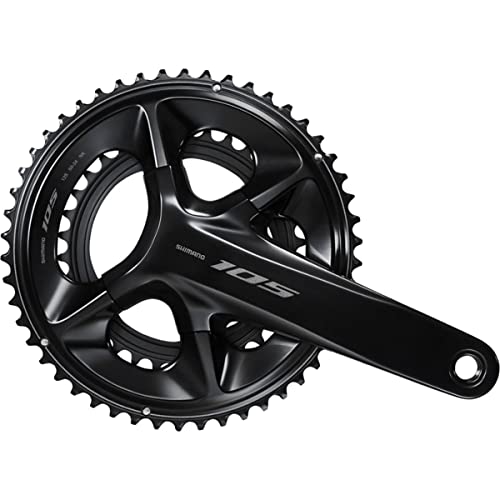
Shimano 105 FC-R7100 12-Speed Crankset
What We Like
- Hollow aluminum arms for stiffness
- Wide range of arm lengths available
- Standard 68mm threaded bottom bracket
Trade-offs
- Only 50/34t chainring option offered
- Aluminum arms heavier than carbon alternatives
A 50/34t compact chainring setup gives you a gear range that handles steep climbs and fast flats without needing a triple front ring. That makes this crankset a natural fit for road riders who want one reliable setup for mixed terrain, from weekend group rides to long solo centuries.
Aluminum arms keep the crankset stiff for efficient power transfer during hard efforts, though the material is denser than carbon. Owners familiar with the Campagnolo Chorus 12-Speed Carbon Crankset will notice the Shimano 105 FC-R7100 carries a bit more heft, as that Chorus unit weighs only 1.6 pounds. The trade-off is a more affordable build without sacrificing the rigidity that experienced riders look for when sprinting or climbing out of the saddle.
Shimano Tiagra FC-4700 Crankset

What We Like
- Integrated 24mm Hollowtech II axle reduces weight
- Aluminum construction with anodized gray finish
- 50/34t compact gearing for varied terrain
- 110mm asymmetric BCD for stiff chainrings
Trade-offs
- 10-speed only limits drivetrain upgrade options
- Heavier than carbon or higher-tier aluminum cranksets
A 50/34t compact double with a 110mm asymmetric BCD gives you a wide, climb-friendly gear range without sacrificing the stiffness needed for hard efforts out of the saddle. The Hollowtech II 24mm axle and aluminum construction work together to keep weight reasonable while transferring every watt cleanly to the drivetrain. For a rider building or upgrading a 10-speed road bike, this crankset delivers the kind of rigid, responsive feel that makes each pedal stroke count, especially on steep grades or during sprints.
Compared to the Shimano 105 12-speed crankset, the Tiagra is heavier (3.8 pounds versus 3.0 pounds) and limited to one fewer gear in the back.
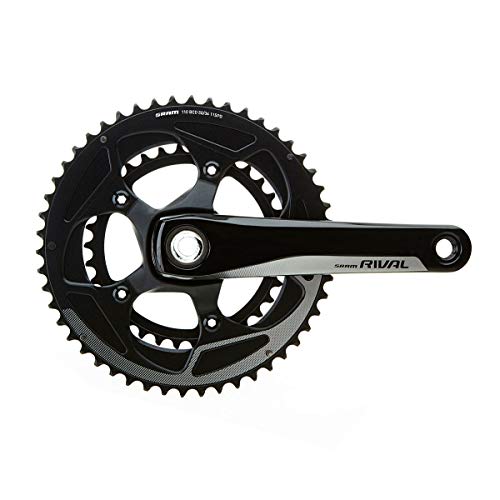
SRAM Rival 22 11-Speed Crankset
What We Like
- Removable 110 BCD spider for customization
- Compatible with 11-speed chains and YAW derailleurs
- Lightweight at 0.7 pounds
Trade-offs
- 11-speed only limits upgrade path to newer groups
- GXP spindle not cross-compatible with Hollowtech II frames
At 0.7 pounds, this crankset keeps weight low for everyday road riding without adding unnecessary heft to your bike. The 52/36 tooth chainrings pair with SRAM’s 11-speed chains and YAW front derailleurs, so shifting stays reliable over the miles. For riders who want SRAM performance at a sensible weight and don’t need 12-speed compatibility, this is a straightforward choice.
This crankset uses an 11-speed chainring setup, so it pairs directly with SRAM 11-speed chains and YAW front derailleurs without any adapter or extra parts. The 170mm crank length suits riders who prefer a standard reach for efficient power transfer, and the 110 BCD spider is removable, letting you customize the chainrings to different tooth counts down the road.
Campagnolo Super Record Carbon Crankset

What We Like
- Carbon fiber hand cranks for stiffness
- Steel axle for durability
- Symmetrical inner chainring teeth for smooth shifting
- Compatible with all frame systems
Trade-offs
- Steel axle adds weight compared to carbon-only alternatives
- Not for riders who prefer a lighter full-carbon crankset.
A 52-36T chainring combo paired with unidirectional carbon fiber hand cranks means this crankset delivers maximum stiffness during upshifts and efficient power transfer. It’s built for riders who want precise, fluid drivetrain performance even under heavy crossovers, and the unchanged 145.5 mm Q factor keeps your pedaling position consistent. This is the choice for someone chasing every watt of efficiency on long climbs or fast group rides, where every bit of stiffness counts.
Product photos
Campagnolo Chorus 12-Speed Carbon Crankset

What We Like
- Unidirectional carbon fiber for stiffness
- Ultra-Torque design for rigidity and easy assembly
- Micro Precision Shifting System for accurate gear changes
- Compatible with disc and rim brakes
Trade-offs
- Steel axle adds weight over full-carbon alternatives
- 52/36t chainrings limit gearing range for steep climbs
The crankset uses unidirectional carbon fiber crankarms, a steel axle, and aluminum chainrings, which together provide stiffness for efficient power transfer. This construction reduces flex during hard efforts, so more of your pedaling force reaches the drivetrain. It works with Campagnolo 12-speed groups and is compatible with both disc and rim brakes, making it a straightforward upgrade for riders already on that system.
The Campagnolo Chorus 12-Speed Carbon Crankset uses a steel axle and aluminum chainrings, which means it prioritizes stiffness and efficient power transfer over the lightest possible weight. The 52/36t chainring combination provides a versatile gear range suitable for varied road riding, while the unidirectional carbon fiber cranks contribute to overall rigidity.
FSA Omega Adventure Series Crankset

What We Like
- Die cast aluminum crank arms are lightweight and durable
- 30/46T chainrings for mixed terrain gearing
- Chromoly chainring bolts for strength
- Fits SRAM and FSA 10/11-speed systems
Trade-offs
- At 3.7 lb, heavier than many road-only cranksets
- Not compatible with 12-speed drivetrains
The 30/46T chainring combination is the key here: it gives you a low climbing gear for steep gravel climbs without sacrificing top-end speed on pavement. That wide range makes this a natural fit for riders who split their time between tarmac and dirt. You need both a granny gear for loose ascents and enough teeth to keep pace on the flats. The die cast aluminum construction keeps weight manageable, and the MegaExo 19mm spindle interface provides a secure, creak-free connection to the frame.
At 3.7 pounds, this crankset is over half a pound heavier than the Shimano 105 12-speed, enough that you’d feel it on a long climb. But that extra weight comes with a wider gear range that actually works on gravel and fire roads, so riders who mix pavement with dirt won’t have to swap parts for different terrain.
SRAM Rival DUB Crankset

What We Like
- 165mm crank length for shorter legs
- DUB spindle for durability and simplicity
- Stiffness-optimized aluminum arms and rings
- Secure 8-bolt direct mount chainring
Trade-offs
- Heavier than some road cranksets at 3.5 lb
- 46/33T gearing limits top-end speed
- Requires DUB bottom bracket (sold separately)
The 165mm crank length is the key feature here, offering a shorter option that can improve fit for riders on smaller frames or those who prefer a tighter pedaling arc. The aluminum crankarms and chainrings are designed to balance stiffness and weight, and the DUB spindle interface (28.99mm) aims for durability and simplicity. The direct-mount 8-bolt chainring attachment provides a secure connection. This crankset focuses on fit and reliable construction rather than being the lightest option.
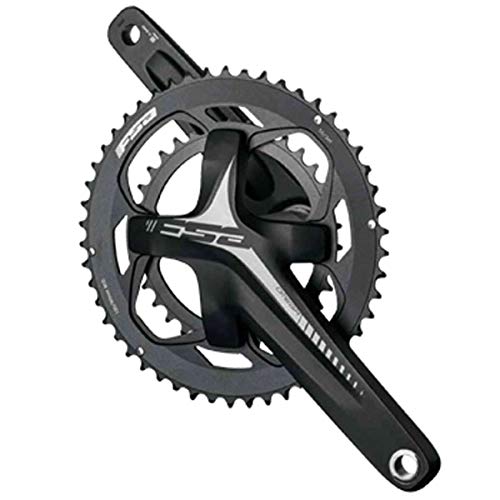
FSA Omega 11-Speed Crankset
What We Like
- Lightweight die cast aluminum arms
- Compatible with SRAM 10-11 speed
- 50/34t compact gearing for road
- Chromoly chainring bolts
Trade-offs
- Heavier than some aluminum cranksets at 3.9 pounds
- Not compatible with 12-speed drivetrains
The 50/34t compact chainring setup gives you a gear range that works for climbing and cruising on road rides, while the die cast aluminum arms keep weight manageable. This crankset suits riders who want a clean, all-black look and reliable shifting across SRAM 10- or 11-speed groups, no need to upgrade your whole drivetrain just to get a fresh crank. It’s a straightforward choice for someone building or refreshing a road bike on a sensible budget, where function and durability matter more than chasing the lightest grams.
The trade-off is weight: at 3.9 pounds, it’s noticeably heavier than the Shimano 105 12-speed crankset, which comes in at 3.0 pounds. That extra heft won’t matter much on a casual weekend ride, but if you’re counting every ounce for racing or long climbs, the 105 will save you nearly a full pound. For the rider focused on value and proven compatibility, though, it’s a solid fit.
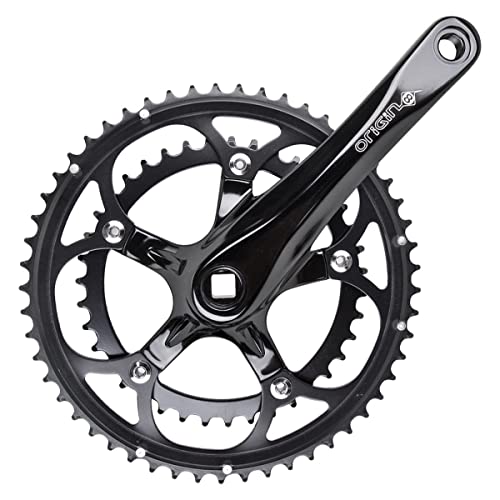
Origin8 Pro Pulsion Alloy Crankset
What We Like
- Forged AL6061-T6 crankarms for durability
- Classic square taper interface
- Standard 43.5mm chainline
- 53/39T chainrings for aggressive gearing
Trade-offs
- 9-speed only; not compatible with 10/11/12-speed drivetrains
- Bottom bracket not included
- 172mm crank length limits fit options
A 53/39T chainring setup provides the high gearing many road cyclists prefer for fast flats and descending, while the forged AL6061-T6 crankarms deliver strength without the cost of carbon. The square taper interface is a widely used standard that works with many bottom brackets.
This is a 9-speed road crankset, so it pairs with 9-speed drivetrains. The 172mm crank length suits riders who prefer longer cranks. A bottom bracket is not included, so you will need to purchase one separately.
Gravity Tempo Double Crankset

What We Like
- Lightweight die cast aluminum arms
- CNC machined outer chainring for precision
- Heat treated chromoly inner chainring
- Plastic outer chain guard included
Trade-offs
- Square taper spindle limits upgrade paths
- No retail packaging included
- 46/30T gearing narrows road-only use
The square taper spindle is a proven standard, but it means you will need a compatible bottom bracket and future crankset swaps will require replacing that bracket too. The FSA Omega Adventure Series uses a different interface, but the Tempo keeps things straightforward and affordable. If you are assembling a budget-friendly gravel or adventure bike and want reliable low gears right away, this crankset delivers that without extra complexity.
Product photos
How We Evaluated Cranksets For Road Bikes
Our evaluation focused on manufacturer data, expert analysis of materials and design, and common themes from owner experiences. We compared specifications to identify the best options for different priorities.
The three most important criteria were stiffness-to-weight ratio, drivetrain compatibility, and gearing range. Stiffness determines how efficiently power transfers to the rear wheel, while compatibility ensures the crankset fits your bottom bracket and shifters. Gear range dictates whether you can climb steep hills or hit high speeds on flats.
We also considered crank arm length options, as proper fit is critical for comfort and power. A research-led evaluation has limits: real-world ride feel and durability can vary with installation and riding style, so we prioritized features and specs that consistently matter to riders.
What To Look For In Cranksets For Road Bikes
The right crankset transforms your bike’s feel, but choosing one requires understanding a few key specs. Focus on compatibility first, then weight and stiffness within your budget.
Prioritize bottom bracket and drivetrain compatibility first, then choose a crank length that fits your body, and finally balance stiffness and weight for your riding style.
Drivetrain Compatibility
Your crankset must match the speed of your drivetrain (9, 10, 11, or 12-speed) and the type of shifters you use (Shimano, SRAM, or Campagnolo). Mixing brands and speeds often leads to poor shifting. Also check the bottom bracket standard: common options include Hollowtech II, GXP, DUB, and square taper. The spindle diameter and frame interface must match your frame.
Crank Arm Length
Crank arms typically range from 165mm to 175mm. Shorter arms (165mm) suit smaller frames, tighter hip angles, or riders who spin a higher cadence. Longer arms (172.5mm or 175mm) offer more leverage for climbing but can cause knee strain on some bodies. Choose based on your inseam and comfort, not a default size.
Chainring Gearing
Compact gearing (50/34t) is the most common for road riding, offering a low gear for climbs and a high gear for flats. Mid-compact (52/36t) provides a higher top end, while standard (53/39t) is for strong riders on flat terrain. Consider your local terrain and fitness level when picking a chainring combination.
- Check if the crankset includes a bottom bracket or if you need to buy one separately.
- Verify the chainline matches your frame and rear hub spacing.
- Look for replaceable chainrings to extend the crankset’s life.
A good rule of thumb: if you regularly ride steep climbs, a compact or sub-compact crankset will make your rides more enjoyable than a standard one.
Cranksets For Road Bikes Compared
The table below compares the key specifications of our top ten cranksets to help you see the differences at a glance.
| Product | Arm Length | Chainring Sizes | Weight |
|---|---|---|---|
| Shimano 105 FC-R7100 12-Speed Crankset | 160mm, 165mm, 170mm, 172.5mm, 175mm | 50/34t | 3.0 Pounds |
| Shimano Tiagra FC-4700 Crankset | 165mm | 50/34t | 3.8 pounds |
| SRAM Rival 22 11-Speed Crankset | 170mm | 52/36t | 0.7 Pounds |
| Campagnolo Super Record Carbon Crankset | 172.5 mm | 52-36T | 1.4 pounds |
| Campagnolo Chorus 12-Speed Carbon Crankset | 170mm | 52/36t | 1.6 pounds |
| FSA Omega Adventure Series Crankset | 170mm | 30/46T | 3.7 pounds |
| SRAM Rival DUB Crankset | 165mm | 46/33T | 3.5 pounds |
| FSA Omega 11-Speed Crankset | 170mm | 50/34t | 3.9 pounds |
| Origin8 Pro Pulsion Alloy Crankset | 172mm | 53/39T | 0.5 pounds |
| Gravity Tempo Double Crankset | 170mm | 46/30T | 1.0 Pounds |
Frequently Asked Questions
What is the difference between a compact and a standard crankset?
A compact crankset typically has 50/34 tooth chainrings, offering lower gearing for easier climbing. A standard crankset has 53/39 tooth chainrings, providing higher top-end speed but requiring more strength on hills. Choose compact for varied terrain, standard for flat or rolling roads.
How do I know which crank arm length I need?
Crank arm length is usually chosen based on your inseam measurement. Riders with shorter legs often prefer 165mm or 170mm arms, while taller riders may use 172.5mm or 175mm. The best way is to test different lengths on a bike or consult a professional bike fitter.
Can I mix a Shimano crankset with SRAM shifters?
It is not recommended. Shimano and SRAM use different chainring tooth profiles and shift ramps designed for their own chains and derailleurs. Mixing them often results in poor shifting performance and increased chain wear. Stick to one groupset brand for best results.
Do I need a new bottom bracket with my new crankset?
Often yes, because cranksets use different spindle diameters and interface standards. For example, a Shimano Hollowtech II crankset requires a Hollowtech II bottom bracket, while a SRAM DUB crankset needs a DUB bottom bracket. Check your frame’s bottom bracket shell size and the crankset’s spindle requirements.
What is the benefit of a carbon fiber crankset over aluminum?
Carbon fiber cranksets are generally lighter and can be engineered for higher stiffness-to-weight ratios than aluminum. They often damp road vibration better, improving comfort. The trade-off is higher cost and potential fragility from impacts. Aluminum cranksets are more affordable and durable for everyday use.
The Bottom Line
The Shimano 105 FC-R7100 12-Speed Crankset is our best overall choice for most road cyclists. It delivers reliable stiffness, a wide range of available arm lengths, and straightforward installation. If you are building a 10-speed bike and want excellent stiffness without a premium price, the Shimano Tiagra FC-4700 Crankset is your best bet.
For riders committed to SRAM 11-speed, the SRAM Rival 22 Crankset offers a lightweight, customizable option. Those seeking the ultimate in stiffness and Campagnolo heritage should consider the Campagnolo Super Record Carbon Crankset, while gravel riders will appreciate the wide gear range of the FSA Omega Adventure Series Crankset.
The single most important factor is compatibility: make sure your crankset matches your drivetrain speed, bottom bracket standard, and frame before you buy. Get that right, and you will enjoy every watt you put into the pedals.
