
9 Best Cycle Trainers For Zwift in 2026
This post contains affiliate links. As an Amazon Associate, we earn from qualifying purchases.
For Zwift riders who want to get pedaling fast, the Wahoo KICKR CORE 2 Smart Trainer is the best overall choice. It comes with a pre-installed Zwift Cog and Click Shifter, plus Wi-Fi connectivity for quick pairing. The Elite Avanti offers professional power accuracy at a strong value, while the Garmin TacX NEO 3M delivers the most realistic ride feel with built-in motion plates.
The real challenge with a Zwift trainer isn’t just resistance, it’s setup time, connectivity, and how well the trainer translates digital terrain into road-like feel. A trainer that drops connection mid-race or requires a complicated setup can ruin the experience.
This guide is based on a thorough review of manufacturer specifications, expert round-ups, and patterns in owner feedback across the nine best models. We focused on the features that matter most for a smooth, reliable Zwift experience so you can choose with confidence.
Top 9 Cycle Trainers For Zwift in the Market
Certain content that appears on this site comes from Amazon. This content is provided "as is" and is subject to change or removal at any time.
The Best Cycle Trainers For Zwift, Reviewed
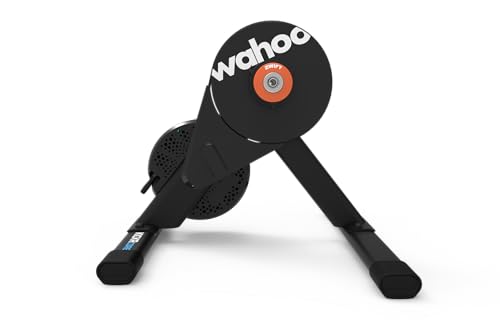
Wahoo KICKR CORE 2 Smart Trainer
What We Like
- Pre-installed Zwift Cog and Click Shifter
- Wi-Fi for faster pairing and updates
- Smooth road-like resistance feel
- Fits 8 to 13 speed bikes
Trade-offs
- At 30 lb, heavier than some compact trainers
- No built-in climb simulation feature
- Wi-Fi setup depends on active network
An 1800W max power output means this trainer can handle everything from steady endurance spins to all-out sprint efforts without hitting a ceiling, which is exactly what structured training demands. The included Zwift Cog and Click Shifter let you use virtual shifting without a separate cassette, so setup is quicker than with many direct-drive trainers. It’s built for the rider who wants a straightforward indoor experience that still delivers the smooth, road-like resistance Wahoo is known for, making it a good pick for someone who values reliability over extra features.
The trade-off for that straightforward design is weight: at 30 pounds, it’s not the easiest trainer to move between rooms or pack away after a ride. It’s especially heavy compared to the lighter Elite Rivo Zwift Ready Trainer. Where the Elite Rivo is more portable, the KICKR CORE 2 is better suited as a more permanent fixture in your training space. If you have a dedicated spot for indoor riding and want a direct connection to Zwift, the extra heft is a fair price for the stability you get in return.
Product photos
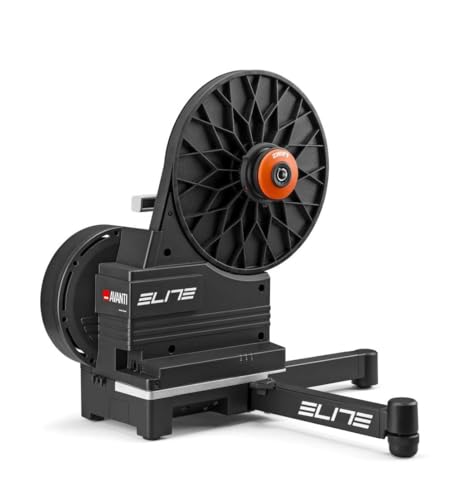
Elite Avanti Zwift Ready Trainer
What We Like
- Professional ±1% power accuracy
- Pre-installed Zwift Cog and Click
- WiFi, Bluetooth & ANT+ connectivity
- 2100W max power with 18% climb sim
Trade-offs
- No multidirectional movement like costlier models
- 4kg flywheel is lighter than some competitors' units
A 2100W max power output and 18% gradient simulation mean this trainer can punish even the strongest sprinters and replicate steep alpine climbs inside Zwift. The pre-installed Zwift Cog and Click deliver virtual shifting with 24 silent gears, so you get a true Zwift experience right out of the box without needing a separate cassette. For riders who want professional-grade power meter accuracy (within ±1%) and triple wireless connectivity for pairing with any app, this is a value-focused package. It skips the frills without cutting corners on the numbers that matter.
The trade-off is weight: at 13 kg, the Avanti is noticeably heavier than the Elite Rivo (10 kg), making it less convenient to move between rooms or take to a friend’s place. It also lacks the multidirectional motion you’d get from the Garmin TacX NEO 3M, so the ride is fixed in place. But if your priority is rock-solid power data, high resistance, and Zwift-ready convenience at a reasonable investment, this trainer delivers where it counts.
Garmin TacX NEO 3M Smart Trainer

What We Like
- Built-in motion plates for realistic ride feel
- 25% grade simulation for tough climbs
- Power accuracy within 1%
Trade-offs
- At 52 lb, it is heavy to move around
- Its 52-pound weight makes it hard to move frequently
The trade-off is weight: at 52 pounds, the NEO 3M is noticeably heavier than the Wahoo KICKR CORE 2 (30 lb), so moving it between rooms or storing it after a ride takes more effort.
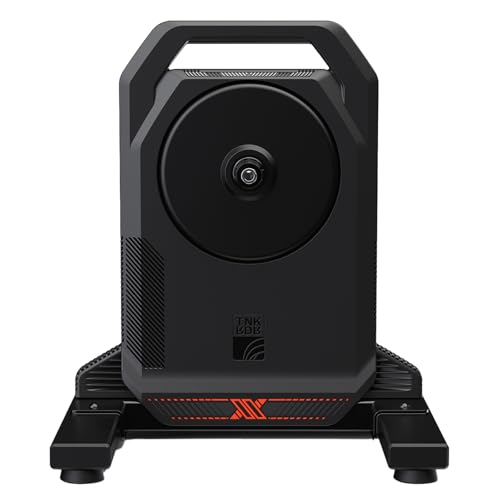
ThinkRider XXPRO Smart Trainer
What We Like
- Self-powered: no power adapter needed
- Downhill simulation adjusts to map slope
- 2500W max power handles hard sprints
- 25% gradient for steep climbs
Trade-offs
- No cassette included, requires separate purchase
- Self-powered mode limits maximum resistance output
A self-powered motor that generates its own electricity means you can set this trainer up anywhere without hunting for an outlet. With 2500W of max power and a 25% gradient ceiling, it handles everything from all-out sprints to the steepest virtual climbs Zwift can throw at you. That ±1% accuracy and no-calibration design keeps the data honest ride after ride. It is a great fit for Zwifters who want a truly cord-free setup and realistic downhill simulation that adjusts automatically to the terrain.
The XXPRO generates its own power, so you can ride without plugging it in, which makes setup simpler in spaces without easy outlet access. It also simulates downhill riding by adjusting resistance based on map slope, adding realism to virtual rides. With a maximum simulated gradient of 25%, it handles steep climbs that many trainers cannot match, while the 2500-watt peak power means even hard sprinters won’t overwhelm it.
Elite Rivo Zwift Ready Trainer

What We Like
- Foldable legs with carry handle
- WiFi for automatic firmware updates
- Pre-installed Zwift Cog and Click
- Ultra-quiet operation
Trade-offs
- Power accuracy ±2.5% lags behind ±1% rivals
- Power accuracy ±2.5% is less precise than some rivals like the Elite Avanti at ±1%
At just 10.0 kilograms with foldable legs and an integrated carry handle, this trainer is built for riders who need to stow their gear between sessions or move it from room to room. The pre-installed Zwift Cog and Click let you shift 24 virtual gears from the handlebars without any derailleur adjustments, making setup simple for beginners while still offering reliable performance for structured workouts. WiFi connectivity handles automatic firmware updates so you never have to fuss with cables, and the ultra-quiet operation means you can ride late without disturbing the household.
The trade-off for that compact, portable design is a power accuracy of ±2.5%, which is less precise than the Elite Avanti’s ±1% rating, something to consider if you’re chasing every watt in structured training. Still, for Zwift riders who prioritize easy storage and quick setup over absolute precision, this foldable package delivers a clean, quiet experience that fits neatly into a corner of the living room.
Saris M2 Smart Indoor Trainer

What We Like
- No wheel removal needed
- Electromagnetic resistance for consistency
- Zwift certified with dual connectivity
- Includes one month Rouvy subscription
Trade-offs
- Wheel-on design adds tire wear
- 69 dB noise level at 20 mph
- Only +/- 5% accuracy
A wheel-on design means you can clip your bike onto the Saris M2 without removing the rear wheel or disassembling anything. The electromagnetic resistance holds a steady load every time you pedal, and with +/- 5% power accuracy it tracks your effort closely enough for structured workouts on Zwift. If you want a trainer that avoids the extra steps of a direct-drive unit, this one makes that trade-off worthwhile.
Wheel-on trainers like this one connect to your bike’s rear tire, so you don’t have to remove the wheel or disassemble the frame, but the tire will wear faster than on direct-drive models. At 69 decibels at 20 mph, the noise level is noticeable, you’ll hear the tire hum against the roller during hard efforts. For a rider who wants to hop on Zwift without extra steps, the trade-off is acceptable.
Product photos
ThinkRider X2Max Smart Trainer

What We Like
- 58 dB noise at 30 km/h
- 2000W max power output
- 18% slope simulation
- I-beam triangular stability
Trade-offs
- 35.2 lb is heavy to move
- Cassette not included
- No virtual shifting mentioned
At 58 decibels while rolling at 30 km/h, this trainer is quiet enough that you can ride late without waking the household. That noise level puts it among the most neighbor-friendly options for indoor training, especially when paired with its 2000-watt power ceiling and 18 percent grade simulation. Riders who want realistic Zwift climbs without a roar under the bike will find the I-beam frame keeps everything planted. The DEPT power meter holds error to within plus or minus two percent, so your watts match what the screen shows.
At 35.2 pounds, this trainer is heavier than the Elite Avanti, so moving it between rooms or storing it after a ride takes more effort. It also ships without a cassette, meaning you’ll need to buy and install one before your first session. If quiet operation matters more than portability, owners report the X2Max delivers a noise level of about 58dB at 30 km/h, which keeps the sound from bothering neighbors.
Product photos
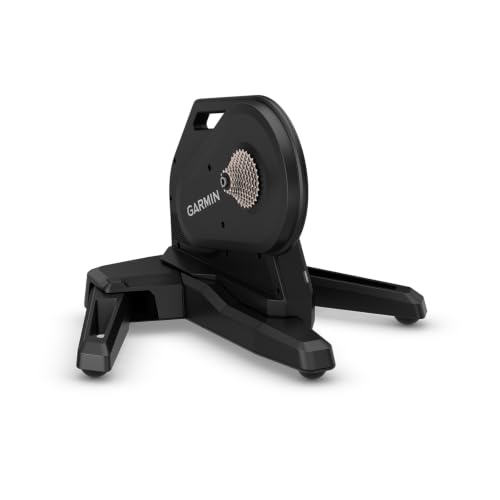
Garmin Tacx Nēra Smart Trainer
What We Like
- Built-in multidirectional motion for realistic ride feel
- Power and cadence accuracy within 1%
- Pre-installed cassette, ready out of the box
- Foldable legs and built-in handle for storage
Trade-offs
- At 54.5 lb, it is heavy to move regularly
- Requires a dedicated floor space due to its 30.3-inch height
A built-in multidirectional motion system sets this trainer apart from most direct-drive models, letting the bike sway side to side as you pedal out of the saddle or climb a steep virtual grade. That movement mimics the natural lean and roll of riding on pavement, so Zwift miles feel less like a stationary grind and more like the real thing. With power accuracy within one percent and no calibration needed, you can trust your numbers from the first ride without fussing with setup.
The trade-off is heft and size. At 54.5 pounds and 30.3 inches tall, the Nēra is the heaviest trainer in this guide, so it is not a unit you will want to fold and stash after every session. If floor space is tight or you plan to move it between rooms, the lighter Wahoo KICKR CORE 2 (30 pounds) is far easier to lug. But if you value ride feel and want a trainer that stays put in a dedicated training spot, the Nēra delivers the most immersive Zwift experience here.
Product photos
CYCPLUS R200 Smart Trainer
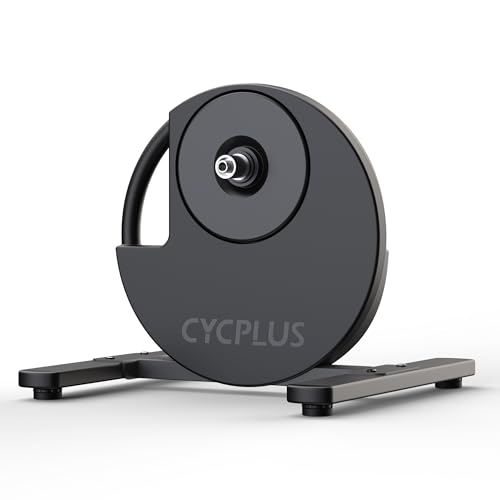
What We Like
- Self-powered or plug-in flexibility
- 2200W peak power with ±1% accuracy
- 19% incline simulation for hills
- Built-in cooling fan for long rides
Trade-offs
- Virtual shifting requires separate BC2 shifter
- Virtual shifting not compatible with ERG mode
- Cassette not included
A peak power of 2200W and 19% gradient simulation mean this trainer can handle steep climbs and hard sprints without breaking a sweat. The self-powered or plug-in operation gives you flexibility depending on your setup. That dual power flexibility, paired with ±1% power accuracy and BLE/ANT+ connectivity, makes it a strong fit for Zwift riders who want one trainer that works at home or on the go.
The real trade-off is the virtual shifting system: it needs the separately sold BC2 shifter and won’t work in ERG mode, so you lose that structured workout convenience. Compared to the Wahoo KICKR CORE 2, which comes with Zwift Cog and Click Shifter built in, the CYCPLUS requires an extra purchase for the same feature. For riders who prefer manual control and don’t mind the added cost, this is a capable, versatile option.
Product photos
How We Evaluated Cycle Trainers For Zwift
To build this guide, we analyzed manufacturer specifications, read expert round-ups from cycling publications, and studied patterns in owner feedback across dozens of models. We didn’t test any trainers ourselves; instead, we focused on what the data and experienced riders consistently report.
The four criteria that mattered most were connectivity (Wi-Fi, Bluetooth, ANT+), power accuracy, Zwift-specific features like pre-installed cogs, and realistic ride feel. A trainer with poor connectivity or low accuracy can make structured workouts and virtual racing frustrating.
A research-led evaluation has limits: real-world noise levels, long-term durability, and setup ease can vary by home environment and bike fit. We prioritized models with consistent positive feedback on these points to give you a reliable starting point.
What To Look For In Cycle Trainers For Zwift
Choosing a Zwift trainer comes down to a few key specs that determine how immersive and hassle-free your indoor rides will be.
Look for a direct-drive trainer with sufficient max power and gradient simulation. Prioritize Wi-Fi or dual-band connectivity for stable pairing, and choose a model with a pre-installed Zwift Cog for the easiest setup.
Power Accuracy
Power accuracy is the most critical spec for structured training and racing on Zwift. A trainer with ±1% accuracy will give you consistent, repeatable wattage numbers, which is essential for following workout plans and comparing efforts. Models with ±2.5% accuracy are fine for casual riding but can introduce enough variance to frustrate data-driven athletes.
Connectivity and Virtual Shifting
A stable connection keeps you in the race, not staring at a “reconnecting” screen. Wi-Fi connectivity is the gold standard because it bypasses Bluetooth interference from other devices in your home. Virtual shifting, enabled by a pre-installed Zwift Cog and Click, lets you change gears without a physical cassette, making setup faster and quieter.
Gradient Simulation and Flywheel Weight
Gradient simulation determines how steep a climb the trainer can replicate. Look for enough gradient to handle Zwift’s toughest ascents like the Alpe du Zwift. Flywheel weight matters for road-like feel: a heavier flywheel provides smoother momentum and a more natural deceleration when you stop pedaling.
- Check that the trainer is Zwift-certified for full compatibility.
- Confirm the trainer supports your bike’s drivetrain (8 to 13 speeds).
- Measure your floor space and account for the trainer’s footprint and height.
- Consider noise level if you ride in a shared living space or late at night.
- Look for foldable legs or a carry handle if you plan to store the trainer between rides.
A trainer with Wi-Fi connectivity and a pre-installed Zwift Cog is the easiest path to a frustration-free setup.
Cycle Trainers For Zwift Compared
The table below compares the key specs and trade-offs of each trainer side by side, making it easy to see which one fits your riding style and space constraints.
| Product | Max Power | Connectivity | Power Accuracy |
|---|---|---|---|
| Wahoo KICKR CORE 2 Smart Trainer | 1800W | Wi-Fi | N/A |
| Elite Avanti Zwift Ready Trainer | 2100W | WiFi, Bluetooth, ANT+ | ±1% |
| Garmin TacX NEO 3M Smart Trainer | 2200 watts | N/A | within 1% |
| ThinkRider XXPRO Smart Trainer | 2500W | ANT+ & BLE | ±1% |
| Elite Rivo Zwift Ready Trainer | 2,100 watts | WiFi + Dual Bluetooth | ±2.5% |
| Saris M2 Smart Indoor Trainer | N/A | ANT+ FE-C & Bluetooth | +/- 5% |
| ThinkRider X2Max Smart Trainer | 2000W | ANT+ & BLE | ± 2% |
| Garmin Tacx Nēra Smart Trainer | N/A | Wi-Fi, Bluetooth, ANT+ | within 1% |
| CYCPLUS R200 Smart Trainer | 2200W | BLE/ANT+ | ±1% |
Frequently Asked Questions
Do I need a Zwift Cog and Click Shifter to use Zwift?
No, you can use Zwift with a standard cassette and a Bluetooth-enabled trainer. The Zwift Cog and Click Shifter simplify setup by eliminating the cassette and allowing virtual gear changes, but they are not required.
What is the difference between a wheel-on and direct-drive trainer?
A wheel-on trainer uses your bike’s rear tire against a resistance roller, which is more affordable but adds tire wear and noise. A direct-drive trainer replaces the rear wheel entirely, offering better power accuracy, quieter operation, and a more realistic feel.
How much floor space do I need for a smart trainer?
Most direct-drive trainers have a footprint of roughly 24 by 30 inches, but models with motion plates or foldable legs can be larger or more compact. Measure your space and account for the trainer’s height if you plan to store it upright.
Can I use a Zwift trainer with a gravel or mountain bike?
Yes, as long as the trainer supports your bike’s drivetrain speed and axle standard. Most direct-drive trainers fit 8 to 13 speed cassettes, and many include adapters for thru-axle and quick-release skewers.
What is the quietest smart trainer for late-night Zwifting?
The ThinkRider X2Max is rated at 58 dB at 30 km/h, making it one of the quietest direct-drive trainers available. The Elite Rivo is also noted for ultra-quiet operation, making both good choices for shared living spaces.
The Bottom Line
The Wahoo KICKR CORE 2 Smart Trainer is our best overall pick for Zwift riders who want a ready-to-ride experience with Wi-Fi stability and smooth resistance. It’s the easiest path from box to virtual ride, especially for those new to indoor training.
If you want professional power accuracy without paying for motion features, the Elite Avanti delivers ±1% accuracy and a pre-installed Zwift Cog at a strong value. For riders who prioritize realistic road feel, the Garmin TacX NEO 3M‘s built-in motion plates and 25% grade simulation make every climb and descent feel authentic.
The single most important factor is connectivity: a trainer that drops out mid-ride will ruin any workout or race. Choose a model with Wi-Fi or reliable dual-band Bluetooth to keep your Zwift sessions smooth.
