
9 Best Direct Drive Bike Trainers in 2026
This post contains affiliate links. As an Amazon Associate, we earn from qualifying purchases.
The Elite Avanti Zwift Ready Smart Trainer is the best overall direct drive bike trainer because it combines pro-level ±1% power accuracy with virtual shifting and pre-installed Zwift integration for a ready-to-ride experience. The Wahoo KICKR CORE 2 offers a simple smart trainer setup, while the Garmin TacX NEO 3M delivers the most realistic ride feel with built-in motion plates.
Choosing a direct drive trainer means committing to a more immersive, stable indoor cycling experience than wheel-on alternatives. The real challenge is balancing power accuracy, gradient simulation, connectivity, and weight against your training goals and available space.
We evaluated these nine trainers by analyzing manufacturer specifications, expert round-ups, and patterns in owner feedback to identify the strengths and trade-offs that matter most for different riding styles and budgets.
Top 9 Direct Drive Bike Trainers in the Market
Certain content that appears on this site comes from Amazon. This content is provided "as is" and is subject to change or removal at any time.
The Best Direct Drive Bike Trainers, Reviewed
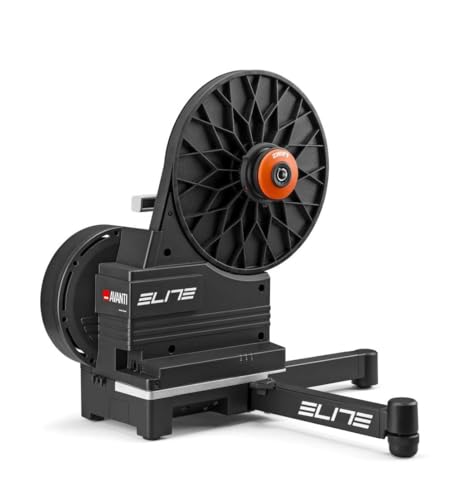
Elite Avanti Zwift Ready Smart Trainer
What We Like
- ±1% power accuracy for pro-level training
- Virtual shifting with 24 gears included
- WiFi, Bluetooth, and ANT+ connectivity
- Zwift Cog and Click pre-installed
Trade-offs
- 13 kg weight makes it less portable than some lighter trainers
- Requires removing Zwift Cog to use standard cassette.
A ±1% power accuracy rating puts this trainer in the same league as the units pro teams rely on, so your watts are honest whether you are racing a Zwift crit or grinding through a TrainerRoad plan. The 2,100W max power and 18% climb simulation cover nearly every real-world hill and sprint, while the 4 kg flywheel keeps the ride feeling like pavement. With WiFi, Bluetooth, and ANT+ all on board, pairing to Zwift, Rouvy, or a bike computer takes seconds. The pre-installed Zwift Cog and Click give you 24 virtual gears without touching your drivetrain. This is the trainer for riders who want lab-grade data without the lab-grade hassle.
The 18% gradient simulation also stops short of the 24% offered by the ELITE Direto XR, which matters if you live for steep virtual climbs. Still, for most riders the Avanti delivers the accuracy, connectivity, and real-road feel that make structured indoor training effective and enjoyable, without the premium price of the Garmin TacX NEO 3M.
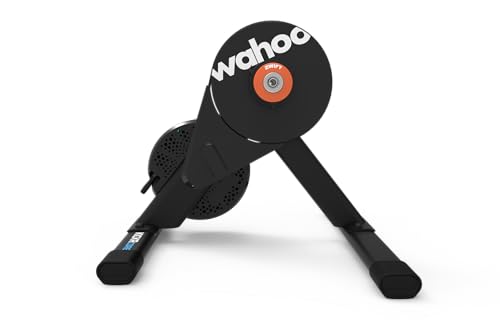
Wahoo KICKR CORE 2 Smart Bike Trainer
What We Like
- Wi-Fi for fast pairing and updates
- Zwift Cog pre-installed for easy setup
- Smooth, road-like ride feel
- Fits 8 to 13 speed bikes
Trade-offs
- At 30.0 lb, it's heavy to move frequently
- 1800W max power limits extreme sprint loads
A 1800W max power rating covers most riders’ sprint efforts and sustained climbs. The integrated Wi-Fi means pairing and firmware updates happen without fumbling with cables or USB sticks, which keeps you riding instead of troubleshooting. The included Zwift Cog and Click Shifter remove the usual cassette swap and gear fumbling, so you can clip in and start a workout in minutes. This trainer suits anyone who wants a dependable, connected setup without extra accessories or complicated assembly.
The trade-off is weight: at 30.0 pounds, it’s not something you’ll casually move between rooms or toss in the car for a friend’s basement session. If your bike stays on the trainer in a dedicated spot, the KICKR CORE 2’s stable feel and simple electronics make it a satisfying buy. For those who need portability or higher peak power, a lighter or more powerful model might fit better.
Product photos
Garmin TacX NEO 3M Smart Trainer

What We Like
- Built-in motion plates for realistic ride feel
- Virtual flywheel simulates cobblestone and gravel
- LED indicator shows effort level in color
Trade-offs
- At 52.0 pounds, it is heavy to move
- Premium features require app subscriptions for full access
A 25% gradient simulation and built-in motion plates (which can be toggled on or off) let this trainer mimic varied road conditions when paired with compatible apps. The virtual flywheel simulates surface textures like cobblestone and gravel through the Tacx Training app or other training apps, so indoor rides can feel more varied than a static machine. This suits riders who want to train for different terrain without leaving home.
At 52 pounds and with a footprint over two feet wide, it is not a trainer you will easily stash after each ride. The Wahoo KICKR CORE 2 weighs 30.0 pounds, making it lighter for those who need portability. While the core hardware delivers features like motion plates and gradient simulation, getting the full experience, such as training videos and group rides, requires a premium subscription. For riders who prioritize realistic feel over easy storage, these trade-offs may be acceptable.
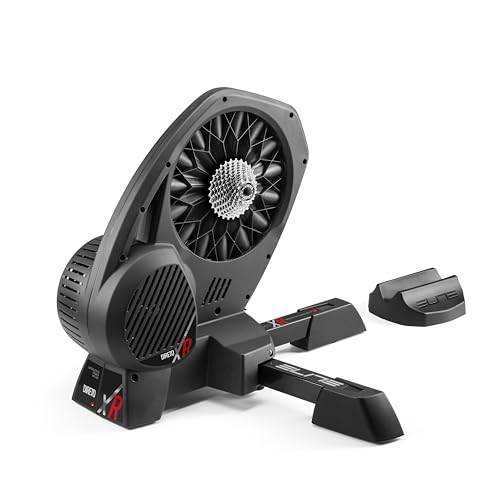
ELITE Direto XR Black Bike Trainer
What We Like
- 24% max gradient for steep climbs
- ±1.5% power accuracy with optical torque sensor
- Works with road, gravel, and mountain bikes
- Includes 12-month My E-Training subscription
Trade-offs
- At 40 lb, it's heavy to move between rides
- Freehub only fits Shimano/SRAM 9-12spd out of box
- Other axle adapters and freehubs sold separately
A 24% simulated gradient lets you grind up virtual Alpe d’Huez stages without leaving your garage, making this trainer a natural fit for riders who train for mountain centuries or need serious resistance for low-cadence strength work. The built-in optical torque sensor delivers power readings accurate to ±1.5%, so your structured intervals and FTP tests stay honest from session to session. It pairs with Zwift, TrainerRoad, and ROUVY via ANT+ or Bluetooth. The included year of Elite’s own training app gives you guided workouts right out of the box.
The trade-off for that steep climb capability is weight: at 40 pounds, the Direto XR is noticeably heavier than the Wahoo KICKR CORE 2 (30 lb), so you won’t want to lug it between rooms every day. For the rider who prioritizes realistic climbing resistance and cares more about power accuracy than portability, this trainer delivers where it counts.
Product photos
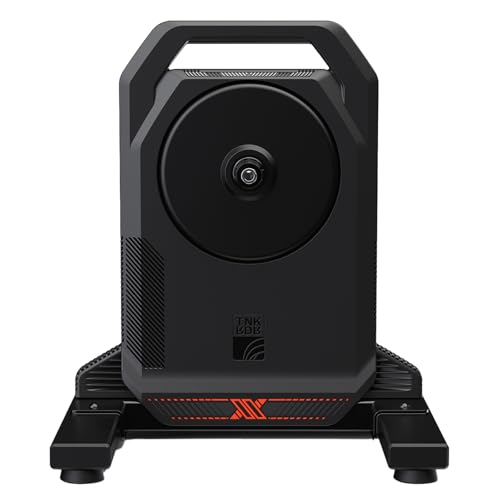
ThinkRider XXPRO Smart Bike Trainer
What We Like
- Self-powered, no wall outlet required
- Downhill simulation adjusts to map slope
- 2500W max power handles hard sprints
- Direct motor drive with ±1% accuracy
Trade-offs
- No cassette included in the box
- Requires a separate cassette purchase for use
The ThinkRider XXPRO can generate its own electricity, so you never have to hunt for an outlet or worry about tripping over a power cord. That self-power capability, combined with a 2500W maximum and 25% grade simulation, means it can handle everything from steady endurance rides to explosive sprint efforts without breaking a sweat. It is a great match for cyclists who want a clean, cable-free setup and do not want to be tethered to a wall plug.
The ThinkRider XXPRO delivers 2500 watts of max power and simulates up to a 25% grade, which means it can handle even the hardest sprints and steepest climbs without hitting a limit. It also generates its own electricity, so you can ride without plugging it into the wall, no tripping over cords in a cramped apartment. The unit ships without a cassette, so you’ll need to supply your own before your first ride.
CYCPLUS Smart Bike Trainer R200
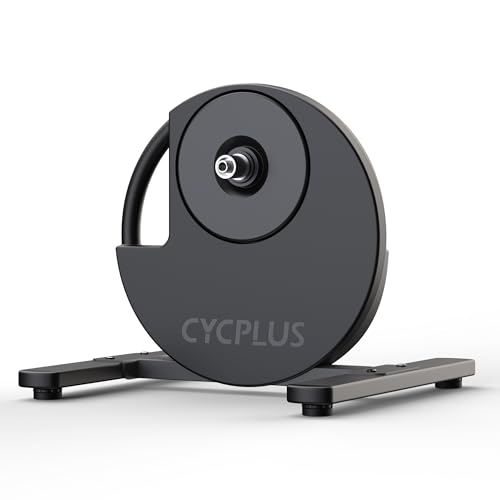
What We Like
- 2200W peak power for high-intensity efforts
- ±1% power accuracy for reliable training data
- 19% gradient simulation for steep climbs
- Built-in cooling fan for sustained performance
Trade-offs
- Virtual shifting requires separate BC2 shifter purchase
- Virtual shifting not compatible with ERG mode
- Cassette not included
A 2200W peak power and 19% gradient simulation put this trainer in the same performance league as models costing significantly more. For riders who push hard intervals or tackle steep virtual climbs, that power ceiling means the unit won’t fade when you dig deep. The built-in cooling fan keeps the brushless motor consistent during long sessions, so your wattage readings stay honest from warm-up to cooldown. It connects via BLE and ANT+ to apps like Zwift and MyWhoosh out of the box, making setup straightforward for anyone already using training software.
The catch is that virtual shifting requires the CYCPLUS BC2 shifter sold separately, and it won’t work in ERG mode when using that feature. If you prefer ERG workouts, you will still get accurate resistance from the motor, but the shifting convenience is locked behind an extra purchase. Compared to the Elite Avanti, which includes virtual shifting and WiFi for a higher price, this CYCPLUS trades those extras for raw power and gradient range at a more accessible cost. It is a focused tool for riders who want maximum resistance without paying for frills they do not need.
ThinkRider X2Max Smart Bike Trainer

What We Like
- DEPT dynamic electromagnetic torque power meter
- 2000W max power output
Trade-offs
- Power accuracy ±2% is less precise than some rivals
- Cassette not included, requires separate purchase
A noise level of 58dB at 30km/h means you can ride late at night without waking the household. That puts it quieter than a normal conversation, so neighbors are unlikely to hear anything through a wall. For anyone sharing a house or apartment, this makes indoor training far less disruptive. The quiet operation is a direct result of the design choices made to keep sound dampened, which riders appreciate when they need to squeeze in a session after the kids go to bed. It allows for flexible scheduling without the worry of disturbing others.
You will need to buy a cassette separately, since it is not included, and at 35.2 pounds the trainer is heavy to move around for storage. Compared to the Wahoo KICKR CORE 2, which comes with a Zwift Cog and Click Shifter already installed, the X2Max requires more initial setup. Still, its 2000-watt power output and 18 percent slope simulation deliver realistic resistance for structured workouts, and the quiet operation is a real benefit for home use.
Product photos
COOSPO T10 Belt-Driven Direct Drive Trainer

What We Like
- Belt-driven direct drive reduces noise and maintenance
- 2200W max power handles intense workouts
- ±2% power accuracy for reliable training data
- ERG mode auto-adjusts resistance during intervals
Trade-offs
- 15% grade simulation is lower than some rivals
- Max power 2200W trails ThinkRider XXPRO's 2500W
A 2200W max power rating means this trainer can handle everything from easy recovery spins to all-out sprint intervals as your fitness grows. The belt-driven direct drive design keeps operation quieter and reduces the need for regular maintenance compared to chain-driven models, making it a practical choice for home use where noise matters. With ±2% power accuracy and automatic ERG mode, it gives you the data and resistance control needed to follow structured workout plans without constant manual adjustments.
The trade-off comes with the 15% grade simulation, which is lower than the 18% offered by the Elite Avanti or the 24% on the ELITE Direto XR. That means steep virtual climbs won’t feel as intense, so if tackling the Alps in Zwift is your goal, one of those alternatives might suit you better. At 35.3 pounds, it’s also heavier than some portable options, so it’s less ideal if you need to stow it away after every ride. Still, for focused indoor training with a smooth, low-maintenance ride, this is a well-rounded pick.
Product photos
Tacx Neo Bike Smart Trainer

What We Like
- Left/right power distribution analysis
- Virtual shifting simulates gear changes
- Road feel for cobblestone and gravel
Trade-offs
- At 127 lb, it's heavy to move
- Large footprint needs dedicated space
- Next-to-silent but not fully silent
The Tacx Neo Bike Smart Trainer’s left/right power balance analysis is its standout feature, giving you a clear picture of your pedal stroke symmetry. That means you can spot weaknesses and work on them, which is why it’s a top pick for riders focused on efficiency. The virtual shifting simulates gear changes, adding realism, and the road feel feature lets you experience cobblestone or gravel without leaving your living room. This trainer suits cyclists who want data-driven improvement and a realistic ride experience, even if it’s a premium investment.
At 127 lb, the Neo Bike is not something you’ll easily move between rooms, so you’ll want a permanent setup. Compared to the Wahoo KICKR CORE 2, which is lighter at 30 lb, the Neo Bike is significantly heavier, but it offers the unique road feel and pedal analysis that the KICKR lacks. If you value detailed stroke data and immersive feedback over portability, this trainer justifies its footprint. For most riders, the weight is a minor inconvenience once it’s in place, but it’s worth considering if you have limited space or plan to store it away after each ride.
Product photos
How We Evaluated Direct Drive Bike Trainers
Our evaluation is research-based, drawing on manufacturer documentation, expert round-ups from the cycling community, and consistent patterns in owner feedback. We focused on the specifications and real-world performance characteristics that determine a trainer’s suitability for indoor training.
The four criteria that mattered most were power accuracy, gradient simulation range, connectivity options, and overall build quality. A trainer with ±1% accuracy provides reliable data for structured workouts, while a wider gradient range (up to 24%) better replicates outdoor climbing. WiFi connectivity ensures stable pairing with apps like Zwift, and a heavier, more solid frame often translates to a quieter, more stable ride.
We acknowledge the limits of a research-led approach: our recommendations are based on expert consensus and what owners consistently report about ease of setup, noise levels, and long-term durability.
What To Look For In Direct Drive Bike Trainers
A direct drive trainer replaces your bike’s rear wheel and connects directly to the drivetrain, offering a quieter, more accurate, and more realistic indoor training experience. The right choice depends on your power needs, space, and preferred training apps.
Choose a trainer with at least ±2% power accuracy for reliable data, 15% gradient for climb simulation, and WiFi connectivity for stable app pairing. Heavier trainers are quieter but harder to move.
Power Accuracy and Max Wattage
Power accuracy, measured as a percentage of actual output, determines how faithfully the trainer reports your effort. Models range from ±1% (pro-grade) to ±2% (solid for most riders). Max wattage matters for sprinters: 1800W handles most efforts, while 2200W to 2500W accommodates explosive sprints without plateauing.
Gradient Simulation and Road Feel
Gradient simulation, expressed as a percentage, replicates climbing resistance. A 15% max grade suits rolling hills, while 24% simulates alpine passes. Some trainers add motion plates or virtual flywheels to mimic cobblestone, gravel, or road vibration for a more engaging ride.
Connectivity and App Compatibility
Modern trainers use Bluetooth, ANT+, or WiFi to pair with Zwift, TrainerRoad, and other platforms. WiFi offers faster updates and more stable connections than Bluetooth alone. Virtual shifting, which simulates gear changes without a physical cassette, simplifies setup and maintenance.
- Check your bike’s axle standard (QR or thru-axle) and cassette compatibility before buying.
- Consider whether you want a pre-installed Zwift Cog or plan to use your own cassette.
- Measure your training space for the trainer’s footprint, especially with motion plates.
- Look for a built-in cooling fan if you plan long, high-intensity sessions.
- Verify that the trainer’s max rider weight matches your needs.
A trainer that fits your bike and connects to your preferred app is more valuable than one with the highest spec sheet.
Direct Drive Bike Trainers Compared
The table below compares key specifications across these nine direct drive trainers, including power accuracy, max gradient, connectivity, and weight.
| Product | Max Power | Max Gradient/Climb | Power Accuracy |
|---|---|---|---|
| Elite Avanti Zwift Ready Smart Trainer | 2100W | 18% | ±1% |
| Wahoo KICKR CORE 2 Smart Bike Trainer | 1800W | N/A | N/A |
| Garmin TacX NEO 3M Smart Trainer | 2200 watts | 25% | ±1% |
| ELITE Direto XR Black Bike Trainer | N/A | Up to 24% | ±1.5% |
| ThinkRider XXPRO Smart Bike Trainer | 2500W | 25% | ±1% |
| CYCPLUS Smart Bike Trainer R200 | 2200W | 19% | ±1% |
| ThinkRider X2Max Smart Bike Trainer | 2000w | 18% | ±2% |
| COOSPO T10 Belt-Driven Direct Drive Trainer | 2200W | 15% | ±2% |
| Tacx Neo Bike Smart Trainer | N/A | N/A | within 1% |
Frequently Asked Questions
Do I need a direct drive trainer or a wheel-on trainer?
Direct drive trainers are quieter, more accurate, and feel more realistic because they replace the rear wheel entirely. Wheel-on trainers are cheaper and easier to store but are louder and less precise. If you train seriously with power-based workouts, a direct drive trainer is worth the investment.
How much power accuracy do I need for structured training?
For most riders, ±2% accuracy is sufficient for consistent training data and progress tracking. Competitive cyclists or those following precise power-based plans will benefit from ±1% accuracy. Anything above ±2% may introduce enough variability to affect workout quality.
Can I use a direct drive trainer with any bike?
Direct drive trainers work with most road, gravel, and mountain bikes that have a compatible rear axle standard. You may need adapters for thru-axle or quick-release setups. Check the trainer’s freehub compatibility for your cassette brand and speed (Shimano/SRAM 9-12 speed is common).
What is virtual shifting and do I need it?
Virtual shifting simulates gear changes without a physical cassette, letting you shift smoothly through a range of gears using buttons on the handlebars or a shifter. It simplifies setup because you don’t need to install a cassette. It is convenient but not essential if you already own a cassette.
How heavy is too heavy for a direct drive trainer?
Weight affects portability and storage. Trainers under 30 pounds are easier to move between rooms or take to events. Models over 40 pounds, like those with motion plates, are more stable and quieter but stay in one place. Choose based on whether you plan to set up and break down frequently.
The Bottom Line
The Elite Avanti Zwift Ready Smart Trainer earns the best overall spot for its pro-grade power accuracy, virtual shifting, and pre-installed Zwift integration that gets you riding fast. It is the ideal choice for cyclists who want a complete, ready-to-ride package without sacrificing performance.
If you prioritize a straightforward, WiFi-connected setup with minimal fuss, the Wahoo KICKR CORE 2 is your best smart trainer setup. For riders who want the most realistic indoor experience with motion plates and surface simulation, the Garmin TacX NEO 3M delivers unmatched ride feel.
The single most important factor when buying a direct drive trainer is matching the power accuracy and gradient range to your training goals. A precise, connected trainer that fits your bike will serve you well for years.
