
10 Best Downhill Mountain Bike Helmets in 2026
This post contains affiliate links. As an Amazon Associate, we earn from qualifying purchases.
For serious downhill riding, the Fly Racing Rayce Full-Face Helmet earns our Best Overall spot thanks to its triple certification, lightweight 930-gram shell, and adjustable visor. The Bell Sanction 2 is a top choice for riders wanting maximum ventilation, while the Troy Lee Designs D4 Polyacrylite offers premium MIPS protection. This guide helps you find the right helmet for your riding style and budget.
A full-face helmet is non-negotiable for downhill, park, and enduro riding. The real challenge is balancing protection, weight, airflow, and fit, especially when you’re spending all day on the mountain or pedaling to the top. A helmet that’s too heavy or stuffy can ruin a session, while one that lacks proper certification leaves you vulnerable.
We evaluated ten helmets by comparing manufacturer specifications, certification data, and expert round-ups. This research-based approach focuses on the features that matter most for downhill riding: safety certifications, impact protection systems, weight, ventilation, and fit adjustments.
Top 10 Downhill Mountain Bike Helmets in the Market
Certain content that appears on this site comes from Amazon. This content is provided "as is" and is subject to change or removal at any time.
The Best Downhill Mountain Bike Helmets, Reviewed
Fly Racing Rayce Full-Face Helmet
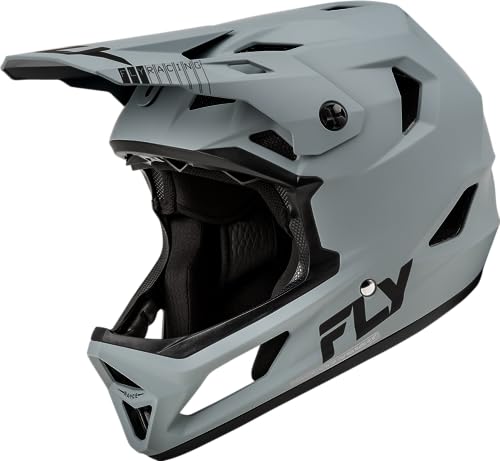
What We Like
- Triple-certified for downhill and cycling
- Removable, washable liner and cheek pads
- Lightweight 930g (size M) reduces fatigue
- Adjustable visor with aluminum hardware
Trade-offs
- D-ring strap slower to fasten than a buckle
- No MIPS rotational impact protection listed
A full-face helmet that weighs about 2.5 pounds in large keeps your neck from getting sore during a full day of bike-park laps. The poly-alloy shell and EPS liner pass ASTM F1952-15 for downhill, plus CPSC and CE EN1078 standards, so you get certified protection for gravity riding. Its TFV airflow system uses multiple intake and exhaust ports to manage heat in warm conditions, which helps you stay cooler on long, sweaty descents. For riders who want certified coverage without a heavy helmet, this is a smart balance of safety and comfort.
The trade-off is the D-ring closure: it’s secure and proven, but it takes a bit longer to cinch than a quick-release buckle. If you prefer one-handed fastening, the Bell Sanction 2 is another option, though its closure type is not detailed here. Still, the Rayce’s removable liner and cheek pads make post-ride cleanup easy, and the adjustable visor lets you position it for different riding styles. For a straightforward downhill helmet that covers the basics well, this one delivers what it promises.
Product photos
Bell Sanction 2 Full-Face Helmet

What We Like
- 14 vents for airflow
- Removable washable cheek pads
- Flying Bridge Visor improves ventilation
- ASTM Downhill and BMX certified
Trade-offs
- At 3.8 lb, heavier than some full-face helmets
- No MIPS or rotational impact system listed
Fourteen vents and a Flying Bridge Visor that skips the traditional center post let this helmet push a lot of air across your head while you ride. That design also lets Bell pack more impact-absorbing material into the high-impact zone, so you get both cooling and extra protection in a place that matters. The Sanction 2 is a straightforward full-face aimed at riders who prioritize breathability on hot, long descents and want ASTM downhill and BMX certifications without spending into premium territory.
The trade-off shows up on the scale: at 3.8 pounds it’s noticeably heavier than something like the Fox Racing Proframe RS, which weighs 3.1 pounds. That extra heft is fine for lift-served or shuttle days but might feel tiring on long pedal-up climbs. The cheek pads come out for washing, which helps keep things fresh, and the size range from XXS to XL covers a wide span of head shapes. If you want a ventilated full-face that doesn’t skimp on safety certs and don’t mind the weight, this is a straightforward choice.
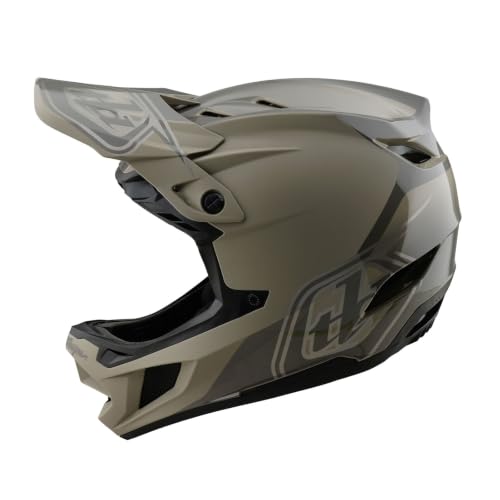
Troy Lee Designs D4 Polyacrylite Helmet
What We Like
- MIPS and EPP collarbone impact protection
- 24 vents for downhill cooling
- Three shell sizes for precise fit
- Removable washable Coolmax-Dri-lex liner
Trade-offs
- At 1150g, heavier than some enduro lids
- At 1150g, heavier than Fox Racing Proframe RS (3.1 lb)
With 24 vents and a weight of 1150 grams, this helmet offers a balance of coverage and airflow for aggressive riding. The Polyacrylite shell, MIPS system, and EPP collarbone impact structure provide multiple layers of protection. Three shell sizes across six total sizes help achieve a precise fit, and the removable Coolmax-Dri-lex liner keeps sweat from building up during use.
At 1150 grams, it is heavier than the Fox Racing Proframe RS (3.1 pounds), so riders who prioritize low weight for long climbs may notice the difference. For lift-access park laps or enduro stages where protection is the priority, the added material contributes to crash coverage. The D-ring closure stays secure even when things get rough, and the removable liner helps manage sweat.
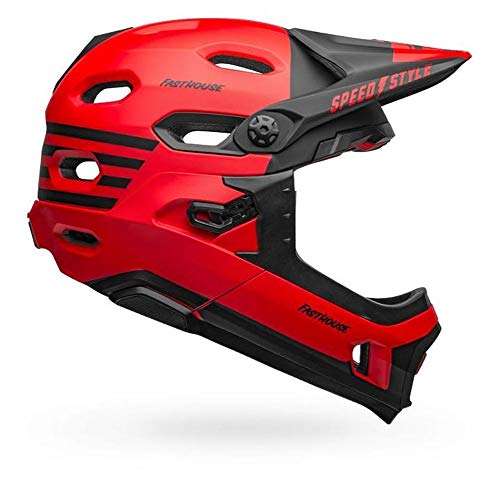
Bell Super Dh MIPS Spherical Helmet
What We Like
- Flex Spherical+MIPS for rotational impact protection
- Fusion In-Mold polycarbonate shell bonded to EPS
- Removable wraparound chin bar without tools
- Overbrow ventilation with 19 vents total
Trade-offs
- Chin bar has limits per warning; serious injury possible
- Chin bar has limits; serious injury or death can occur per warning
A 1.0-pound full-face helmet with Flex Spherical+MIPS technology addresses high-speed, low-speed, and rotational impacts. Bell uses Fusion In-Mold to bond the polycarbonate shell to EPS foam with variable densities, which helps manage energy transfer after impacts. The removable wraparound chin bar lets you switch between open-face and full-face coverage without tools, making this a versatile option for riders who ride both trails and downhill. Nineteen vents, two brow ports, and four chin bar vents are built into the design.
At just 1.0 pound, this helmet is lighter than many full-face models like the Proframe RS from Fox Racing at 3.1 pounds, so it won’t weigh you down on the trail. The Flex Spherical+MIPS system addresses high-speed, low-speed, and rotational impacts, giving you a wide safety net. The chin bar is removable without tools, but the manufacturer warns that all chin bars have limits and serious injury can occur. The integrated breakaway camera mount is designed to reduce injury risk on impact, a practical feature for riders who record their rides.
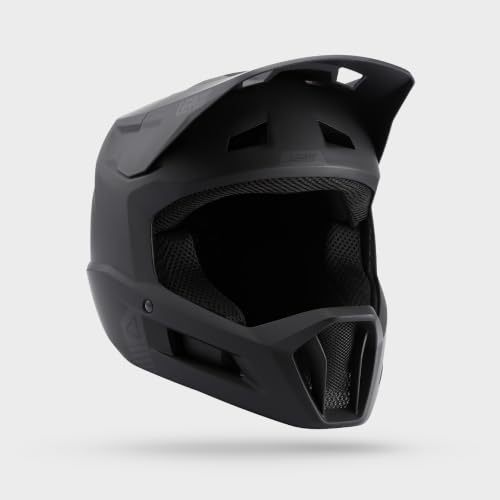
Leatt MTB Gravity 1.0 Full-Face Helmet
What We Like
- ASTM downhill certified for serious riding
- 360° Turbine Technology dissipates impact energy
- Double-D ring closure for race-ready security
Trade-offs
- No MIPS or spherical system listed
- No MIPS or spherical rotational system included
The Leatt MTB Gravity 1.0 Full-Face Helmet is built with a polymer shell certified to ASTM F1952-10 downhill standards, so it delivers full-face protection you can trust on aggressive trails. The double-D ring closure keeps everything snug and secure when the trail gets rough, and the open ventilation ports paired with a washable liner help you stay comfortable on long days.
Fox Racing Proframe RS Helmet

What We Like
- BOA system for precise, secure fit
- Fidlock magnetic closure for easy fastening
- Removable GoPro mount under visor
Trade-offs
- Heavier than the 1.0-pound Bell Super Dh MIPS Spherical
- At 3.1 pounds, it is heavier than the 2.5-pound Fly Racing Rayce.
Increased ventilation and an Ionic+ liner that wicks sweat and fights odor mean you stay cooler and fresher on hot, dusty descents. This is the helmet for riders who want full-face protection without the weight penalty that usually comes with it.
The trade-off is that 3.1 pounds is still heavier than the 1.0-pound Bell Super Dh MIPS Spherical, so if every ounce matters on long climbs, that Bell might suit you better. For aggressive trail and enduro riders who prioritize ventilation and a secure fit over absolute minimum weight, this Fox helmet hits a sweet spot that’s hard to beat.
Product photos
BATFOX Full Face Mountain Bike Helmet

What We Like
- DH-certified ASTM F1952 protection
- EPP collarbone impact buffer system
- Adjustable sun visor for glare control
- Goggle-compatible design
Trade-offs
- No MIPS or rotational impact system listed
- Limited to M and L size options
The BATFOX Full Face helmet carries ASTM F1952 downhill certification, meaning it meets the same safety standard as helmets costing three times as much. That alone makes it a strong option for riders who want certified protection on a budget. The EPP collarbone impact buffer adds an extra layer of crash energy management, and the adjustable visor works well for changing trail light. It suits newer downhill riders or anyone looking for an affordable full-face that doesn’t skip the important safety credentials.
At just 0.2 pounds, the BATFOX is lighter than any other full-face helmet on the list. The Bell Sanction 2, for comparison, weighs 3.8 pounds, so your neck won’t tire as quickly on long descents. That low weight comes from a thinner shell and less padding than heavier competitors, which means less material to absorb hard impacts. It meets ASTM F1952 and CPSC safety standards for downhill riding, but lacks a rotational impact system like MIPS, so riders hitting aggressive bike park laps regularly might prefer a model with that extra layer of protection. For casual gravity riding or budget-conscious builds, the BATFOX delivers certified peace of mind at a friendly weight.
Product photos
Leatt MTB Enduro 4.0 Convertible Helmet
What We Like
- Removable chin bar with locking system
- 360° Turbine Technology for rotational energy
- Dual-density EPS/EPO impact foam
- Neck brace compatible
Trade-offs
- No MIPS system included
- Not suited for riders who prefer a fixed full-face shell
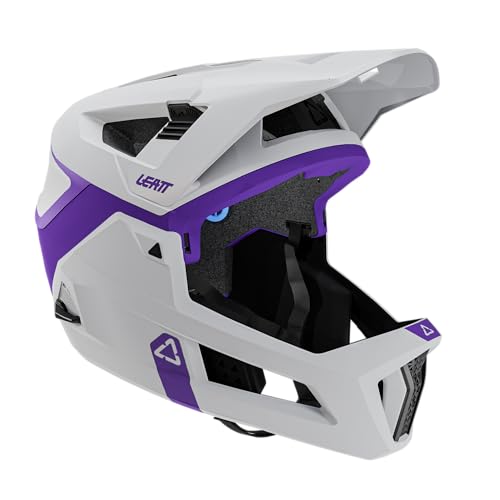
The Leatt MTB Enduro 4.0 Convertible Helmet’s removable chin bar with a locking system means you can climb in an open-face configuration and then snap on full DH-certified protection for the descent, all without carrying a second helmet. This dual-role design suits riders who pedal to the top of aggressive trails and want one helmet that does both jobs without compromise on safety. The 360° Turbine Technology and dual-density EPS/EPO foam target low-speed, high-speed, and rotational impacts, while the integrated sunglasses dock and neck brace compatibility add practical trail-day convenience.
Riders who prioritize maximum airflow on long, hot climbs might consider the Bell Super Dh MIPS Spherical, which weighs just one pound. But the Leatt’s convertible design and comprehensive certification make it a strong fit for enduro and e-MTB duty.
Fox Racing Rampage Comp Mountain Bike Helmet
What We Like
- Fiberglass shell for strength and lightness
- MIPS reduces rotational forces to the brain
- Removable, washable moisture-wicking liner
- Downhill and BMX certified
Trade-offs
- No ventilation details provided for hot climbs
- Fixed full-face design limits airflow for enduro riding
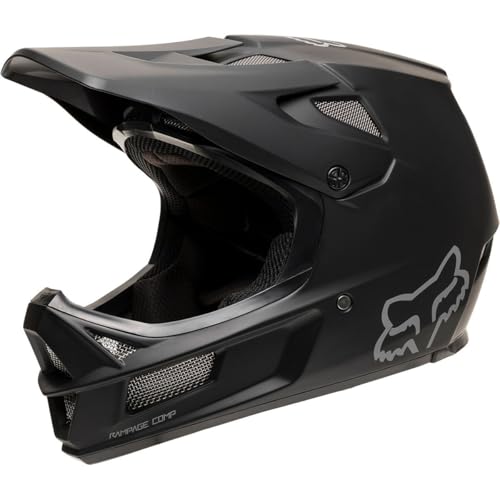
A fiberglass shell construction that prioritizes strength without piling on unnecessary weight is the core reason this helmet suits aggressive downhill riding. The MIPS system works inside to redirect rotational forces, and the Dri-Lex liner pulls sweat away so you stay focused on the trail ahead. With certifications for both downhill (ASTM 1952) and BMX (ASTM 2032), it covers the hard hits that come with gravity riding. This is a helmet built for riders who want proven protection in a shell that won’t flex or crack under repeated abuse.
At 3.9 pounds, the Rampage Comp is noticeably heavier than the Fly Racing Rayce (2.5 lb). That extra mass is the cost of the fiberglass shell and full-coverage design, so it feels planted on fast descents but less ideal for long pedaling sections. If you spend most of your day shuttling or riding lift-served trails, the heft is a non-issue.
Product photos
OUMURS Adult Full Face Mountain Bike Helmet
What We Like
- Meets CPSC, ASTM F1447, ASTM F1952, CE EN1078 standards
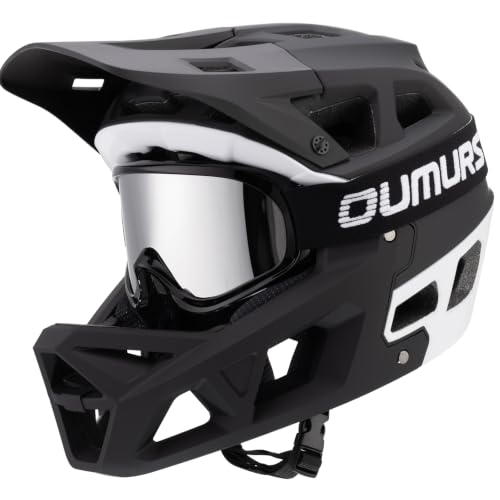
- Removable chin guard for convertible use
- Washable liner included
Trade-offs
- No MIPS or spherical rotational impact system
- No rotational impact management system listed
For the rider who values multi-standard certification and convertible flexibility over the latest rotational tech, though, it delivers a lot of function in one package.
Product photos
How We Evaluated Downhill Mountain Bike Helmets
Our evaluation is research-based, drawing from manufacturer specifications, safety certification data, expert round-ups, and patterns in owner feedback. We did not conduct physical testing. Instead, we focused on the features that directly affect protection and comfort for downhill riding.
The four criteria that mattered most were safety certifications (ASTM F1952 downhill, CPSC, and EN 1078), rotational impact protection systems like MIPS or 360° Turbine Technology, weight for all-day riding comfort, and ventilation for climbing or warm-weather sessions. We also considered closure type, liner quality, and fit options.
A research-led evaluation has limits. We cannot report on long-term durability or real-world crash performance. We recommend reading owner reviews for fit and comfort impressions, and always trying on a helmet before buying when possible.
What To Look For In Downhill Mountain Bike Helmets
Choosing a downhill helmet means looking past the graphics. The key factors are certification, impact protection, weight, and ventilation. Here’s what to check before you buy.
Look for ASTM F1952 downhill certification, a rotational impact system (MIPS or similar), a weight under 1,200 grams for all-day comfort, and at least 14 vents for airflow.
Safety Certifications
A downhill helmet must meet ASTM F1952, the standard for downhill mountain biking. This certification tests the helmet for higher-impact forces than a standard bike helmet. Many helmets also meet CPSC (U.S. Consumer standard) and EN 1078 (European standard). Triple-certified models like the Fly Racing Rayce offer broad protection.
Rotational Impact Protection
Systems like MIPS, 360° Turbine Technology, and Flex Spherical reduce rotational forces to the brain during angled impacts. This is a critical safety feature for downhill riding, where crashes often involve a twisting motion. The Troy Lee Designs D4, Bell Super Dh, and Fox Racing Rampage Comp all include MIPS.
Weight and Ventilation
Downhill helmets are heavier than trail lids, but a lighter helmet reduces neck fatigue over a long day. The Fly Racing Rayce weighs approximately 930 grams, while some models are heavier. Ventilation is equally important; look for at least 14 vents for airflow, especially if you pedal to the top of the trail.
- Check the certification label for ASTM F1952 downhill approval.
- Confirm whether the helmet includes MIPS or a similar rotational impact system.
- Weigh the helmet if possible; under 1,100 grams is ideal for all-day riding.
- Count the vents and check for channeled airflow designs.
- Test the closure system: D-ring vs. Micro-buckle vs. Magnetic Fidlock.
A helmet that fits poorly is dangerous, no matter how many certifications it has.
Downhill Mountain Bike Helmets Compared
The table below compares the key specs and features of our top ten downhill mountain bike helmets side by side.
| Product | Weight | Certification | Closure |
|---|---|---|---|
| Fly Racing Rayce Full-Face Helmet | 2.5 pounds | ASTM F1952-15, CPSC, CE EN1078 | D-ring strap |
| Bell Sanction 2 Full-Face Helmet | 3.8 pounds | CPSC, ASTM DH, BMX | N/A |
| Troy Lee Designs D4 Polyacrylite Helmet | 1150 grams | N/A | D-rings |
| Bell Super Dh MIPS Spherical Helmet | 1.0 pounds | N/A | FIDLOCK BUCKLE |
| Leatt MTB Gravity 1.0 Full-Face Helmet | N/A | ASTM F1952-10 downhill | Double-D ring |
| Fox Racing Proframe RS Helmet | 3.1 Pounds | N/A | BOA + Fidlock Magnetic |
| BATFOX Full Face Mountain Bike Helmet | 0.2 pounds | ASTM F1952, CPSC, EN1078 | N/A |
| Leatt MTB Enduro 4.0 Convertible Helmet | N/A | ASTM F1952-10, NTA 8776 | N/A |
| Fox Racing Rampage Comp Mountain Bike Helmet | 3.9 pounds | CPSC, EN 1078, ASTM 1952 | N/A |
| OUMURS Adult Full Face Mountain Bike Helmet | N/A | CPSC, ASTM F1447, ASTM F1952, CE EN1078 | D-ring buckle |
Frequently Asked Questions
What is the difference between MIPS and 360° Turbine Technology?
MIPS uses a low-friction layer inside the helmet to allow the shell to rotate slightly on impact, reducing rotational forces to the brain. 360° Turbine Technology uses small, energy-absorbing turbines that compress and shear during an impact to dissipate both linear and rotational energy. Both are effective rotational impact protection systems.
Are convertible full-face helmets safe for downhill riding?
Convertible full-face helmets like the Bell Super Dh and Leatt MTB Enduro 4.0 can be safe for downhill riding if they are ASTM F1952 certified when the chin bar is attached. Always check that the helmet meets the downhill standard in full-face mode, and follow the manufacturer’s warnings about the chin bar’s limits.
How should a downhill mountain bike helmet fit?
A downhill helmet should fit snugly without pressure points. It should not move when you shake your head, and the chin bar should not touch your chin when you close your mouth. The cheek pads should press firmly against your cheeks. Most helmets offer adjustable fit systems or multiple shell sizes.
What is the lightest full-face downhill helmet?
The Fly Racing Rayce Full-Face Helmet is among the lightest options at 930 grams for a size medium. The Fox Racing Proframe RS and Bell Super Dh are also lightweight choices, though they trade some weight for additional features like a BOA system or convertible design.
Do I need a neck brace compatible helmet?
A neck brace compatible helmet is recommended if you ride downhill at bike parks or race. Helmets like the Leatt MTB Gravity 1.0 are designed with a recessed back and lower profile to work with a neck brace. If you do not wear a neck brace, compatibility is not a concern.
The Bottom Line
The Fly Racing Rayce Full-Face Helmet is our Best Overall pick for riders who want a triple-certified, lightweight helmet that balances protection with ventilation for all-day park sessions. At 930 grams, it is one of the lightest options available, and the adjustable visor and washable liner add everyday convenience.
If ventilation is your top priority, the Bell Sanction 2 offers 14 vents and a Flying Bridge Visor for maximum airflow. For riders who want premium rotational impact protection, the Troy Lee Designs D4 Polyacrylite includes MIPS and 24 vents. Budget-conscious riders should look at the BATFOX Full Face, which is DH-certified at an affordable price point.
The single most important factor in choosing a downhill helmet is proper fit. A helmet that does not fit correctly cannot protect you as designed, no matter how many certifications or features it has. Try on multiple models, adjust the fit system, and make sure the chin bar and cheek pads feel secure before you ride.
