
9 Best Dual Sport Motorcycle Helmets in 2026
This post contains affiliate links. As an Amazon Associate, we earn from qualifying purchases.
The LS2 Explorer Carbon Adventure Helmet is our Best Overall pick for its lightweight carbon fiber shell that reduces fatigue and its ultra-wide eye port that offers an excellent field of view. The BELL MX-9 Adventure MIPS is the top choice for rotational impact protection, while the O’Neal Sierra is our Budget Pick for riders who want safety certifications without overspending.
Choosing a dual sport helmet means finding the balance between off-road ventilation and on-road aerodynamics. You need a visor that blocks sun on the trail and a face shield that cuts wind at highway speeds, all in a package that doesn’t weigh you down.
We built this guide by analyzing manufacturer specifications, safety certifications, and owner feedback patterns across nine top models. Our goal is to help you find the right helmet for your mix of pavement and dirt riding.
Top 9 Dual Sport Motorcycle Helmets in the Market
Certain content that appears on this site comes from Amazon. This content is provided "as is" and is subject to change or removal at any time.
The Best Dual Sport Motorcycle Helmets, Reviewed
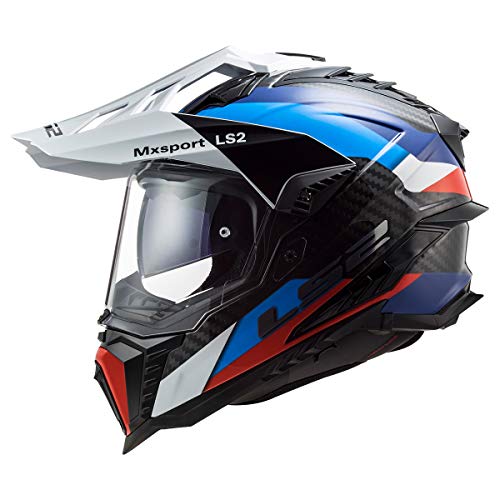
LS2 Explorer Carbon Adventure Helmet
What We Like
- Lightweight carbon fiber shell reduces fatigue
- Ultra-wide eye port for wide field of view
- Integrated drop-down sunshield for variable light
- Adjustable ventilation ports for temperature control
Trade-offs
- Heavier than the Shoei Hornet X2 at 4.0 pounds
- Drop-down sunshield adds weight for street-focused riders
Weighing 6.0 pounds, the shell uses a lightweight carbon fiber construction that reduces rider fatigue over long days in the saddle. A dynamic flow-through ventilation system with adjustable ports keeps temperatures under control across changing climates, so you stay comfortable whether climbing a mountain pass or crawling through desert heat. The ultra-wide eye port pairs with a Class A optically correct polycarbonate shield for distortion-free vision when scanning for trail obstacles or traffic, while the integrated drop-down sunshield handles sudden glare without swapping visors. Riders looking for one helmet that tackles both highway miles and off-road exploration will find the balance they need here.
The 6.0-pound weight is a trade-off compared to the Shoei Hornet X2 at 4.0 pounds, so if you prioritize a lighter feel on long rides, the Shoei may suit you better. The removable and washable technical fabric liner with 3D laser cut cheek pads keeps the interior comfortable over repeated use. The carbon fiber construction provides a strong shell, and the aerodynamic peak with air flow ports is designed for versatile riding conditions. It is a well-equipped adventure helmet that doesn’t force you to give up key features for a lighter build.
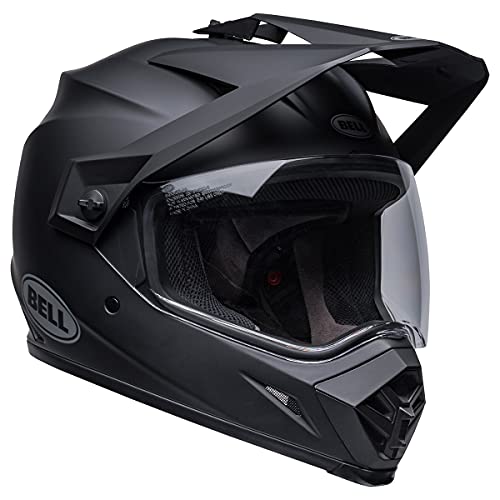
BELL MX-9 Adventure MIPS Helmet
What We Like
- MIPS reduces rotational forces
- 3 shell sizes fit more heads
- IONIC+ padding manages sweat
- Speaker pockets for Bluetooth
Trade-offs
- At 5.0 lb, heavier than some
- No integrated sun shield
The MIPS liner is the standout feature here, working as a slip-plane to help reduce rotational forces in certain impacts, something that matters when riding off-road where falls can be unpredictable. This helmet meets DOT and ECE22.06 standards, so it’s certified for road use. It’s a strong pick for riders who prioritize head safety and want a helmet ready for adventure riding.
At 5.0 pounds, this helmet is heavier than the Shoei Hornet X2’s 4.0 pounds, so you’ll feel the extra weight on long rides or when scanning trails. The 3 shell sizes help it fit a wider range of head shapes without relying on thick padding, and the IONIC+ padding wicks sweat and fights odor, keeping it fresher in hot weather. For riders who want MIPS protection without going to a carbon shell, this Bell delivers that safety feature.
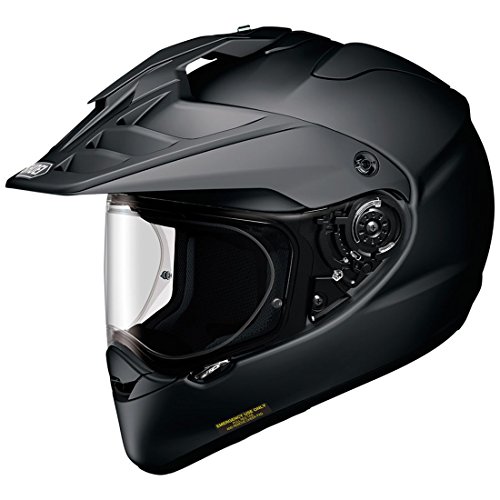
Shoei Hornet X2 Adventure Helmet
What We Like
- Removable, washable moisture-wicking liner
- Multi-directional ventilation keeps you cool
- Snell M2020D, DOT, and FMVSS 218 certified
Trade-offs
- No integrated sun shield or drop-down visor
- Heavier than the ILM MD866 at 3.8 pounds
The Shoei Hornet X2 weighs 3.99 pounds for a size medium and carries Snell M2020D, DOT, and FMVSS 218 certifications. The AIM+ multi-fiber shell and dual-layer EPS liner are designed for impact resistance, while the 3D Max-Dry System II interior is removable, washable, and moisture-wicking. Ventilation includes upper, rear, neck, and lower defroster openings. Riders who want a Snell-certified adventure helmet with a washable liner and multi-directional airflow will find this model meets those needs.
Riders who prefer a modular sun shield will need to adapt, since this helmet relies on the included V-460 peak and CNS-2 shield instead. That setup keeps the shell lighter and simpler, which matters when you’re swapping between street and dirt. The peak blocks glare from above, while the shield handles wind and debris, and you can always stow tinted eyewear in a pocket for midday sun. It’s a straightforward approach that works well for those who like to customize their eye protection per ride, and it trims weight compared to models with built-in visors.
ScorpionEXO XT9000 Carbon Adventure Helmet

What We Like
- Pinlock 120 anti-fog insert included
- Airfit Inflation system for custom cheek fit
- Tool-less shield swap for goggles
Trade-offs
- At 3.48 lbs, heavier than some carbon competitors
- Speaker pockets limited to 50mm/5mm round speakers
A lighter helmet reduces neck fatigue during long days that mix pavement and dirt, letting you concentrate on the trail ahead. The included Pinlock 120 anti-fog insert keeps the shield clear in changing conditions, while the Airfit Inflation system lets you customize cheek pad pressure for a secure fit that also cuts wind noise. Together these features mean less fiddling and more focus when the ride gets demanding.
The speaker pockets measure 50mm round, so some Bluetooth communication units may need to be checked against that size before installation. DOT and ECE 22.06 certifications cover safety requirements for adventure riding. Weighing 3.48 pounds in a medium, it comes in lighter than the Shoei Hornet X2 at 4.0 pounds.
Arai XD-5 Dual Sports Helmet

What We Like
- DOT certified for on-road legality
- Classic white finish suits any bike
- FMVSS No.218 certified for road legality
Trade-offs
- At 6.5 lb, heavier than many dual-sport helmets
- At 6.5 lb, heavier than some competitors
The Arai XD-5 carries FMVSS No.218 certification, which means it meets the federal safety standard for on-road use in the U.S. That DOT stamp is the single most important factor for riders who want a helmet that is legal for street riding. At 6.5 pounds, this is a heavier helmet, built with the layered construction Arai is known for. It suits someone who wants a street-legal helmet that prioritizes protection over weight savings.
At 6.5 pounds, this helmet is heavier than the BELL MX-9 Adventure MIPS (5.0 lb), so on long off-road days the extra weight can add to neck fatigue. That trade-off comes with FMVSS No.218 certification, meaning it meets the same federal safety standard required for on-road use. Riders who prioritize that certification over lighter builds or extra features will find this a straightforward choice.
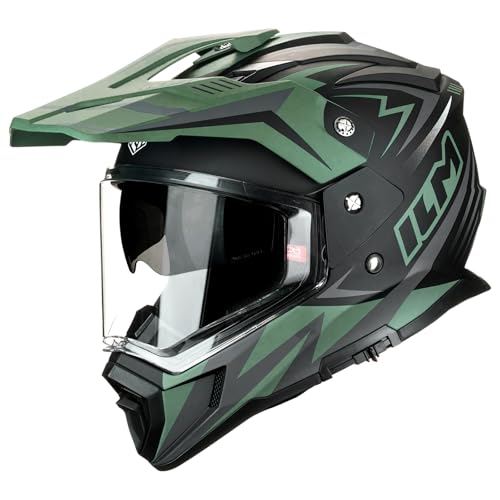
ILM MD866 3-in-1 Dual Sport Helmet
What We Like
- Three helmet shapes in one design
- Dual visor system for changing light
- Adjustable vents for cooling airflow
- Removable, washable sweat-wicking liner
Trade-offs
- ABS shell is heavier than some carbon fiber models
- No MIPS rotational impact protection
The detachable peak and clear visor let this helmet switch between dual-sport, full-face, and off-road configurations without buying a second lid. At 3.8 pounds, it is lighter than several adventure helmets in this guide, including the BELL MX-9 Adventure MIPS at 5.0 pounds, so your neck feels less strain on long rides. The dual visor system, a clear outer shield and a tinted inner drop-down, means you can ride from bright sun into a shaded trail without stopping to swap lenses. Riders who want one helmet for commuting, dirt roads, and weekend touring will appreciate that flexibility.
The trade-off for that versatility and lower weight is the ABS shell. There is no MIPS liner here, so if you prioritize rotational impact protection above all else, the BELL MX-9 Adventure MIPS includes that feature. For the rider who values adaptability and everyday comfort over premium materials, this design delivers real-world flexibility.
Product photos
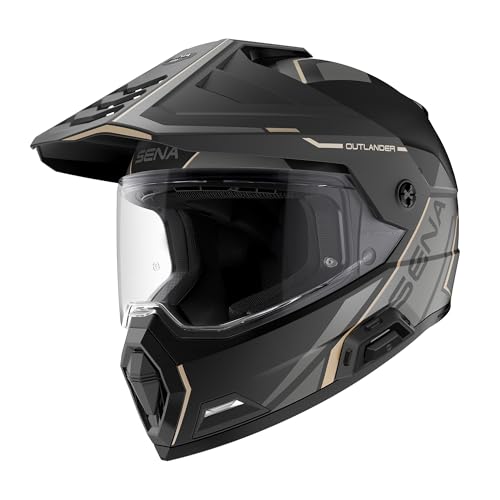
Sena Outlander Bluetooth Smart Helmet
What We Like
- Harman Kardon speakers for studio-quality audio
- Mesh and Wave Intercom for flexible communication
- Integrated LED tail light for visibility
- Moisture-wicking COOLMAX padding for comfort
Trade-offs
- At 3.6 lb, heavier than some adventure helmets
- Integrated electronics add complexity for simple riders
A composite fiberglass reinforced shell and FMVSS 218 certification give the Outlander a solid safety foundation, but what sets it apart is the built-in Harman Kardon audio system and Mesh/Wave Intercom. This means you can chat with riding partners or listen to navigation prompts without fumbling with separate devices or tangled wires. The moisture-wicking COOLMAX padding helps keep you cool on long rides, while the modular visor lets you adapt to changing terrain. It’s a helmet designed for riders who want communication and entertainment integrated from the start, not as an afterthought.
The trade-off is weight: at 3.6 pounds, it’s lighter than the 4.0-pound Shoei Hornet X2, which may matter on all-day adventures or if you’re used to a heavier shell. The integrated electronics also mean more to manage if you prefer a simple, no-frills helmet. But for dual-sport riders who value staying connected without carrying extra gear, the Outlander’s all-in-one approach delivers real convenience that standalone systems can’t match.
Product photos
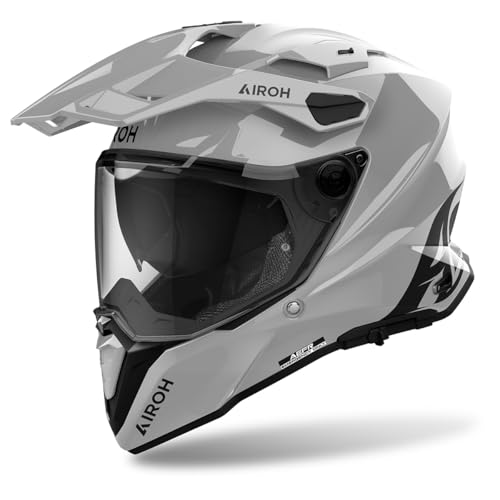
Airoh Commander 2 Carbon Adventure Helmet
What We Like
- Carbon composite shell at 3.5 lbs
- Tool-less sun visor removal
- Dual ventilation for airflow control
- Emergency removal system (AEFR)
Trade-offs
- Heavier than some carbon helmets at 3.5 lbs
- No MIPS or multi-impact liner listed
At just 3.5 pounds, the Airoh Commander 2 Carbon uses a carbon composite shell in three sizes to keep weight low without sacrificing protection. That matters on long adventure rides where a heavy helmet can wear you out by the end of the day. The integrated sun visor flips down with an anti-fog coating and comes out tool-less, so you can swap it or clean it in seconds. Dual vents on the chin and top let you dial in airflow, and the emergency removal system adds peace of mind for serious off-road use. This helmet suits riders who want a lightweight carbon build with practical touring features, all wrapped in a DOT-approved package.
The trade-off comes in weight: at 3.5 pounds, it is lighter than the 4.0-pound Shoei Hornet X2, which saves half a pound for long days. The Commander 2 also does not list MIPS or a multi-impact liner, so if rotational impact protection is your priority, you might look at the Bell MX-9 Adventure MIPS instead. But for a carbon adventure helmet that balances weight, ventilation, and an easy-to-use sun visor, the Airoh Commander 2 delivers a solid, no-fuss design for the rider who values simplicity on the trail.
Product photos
O'Neal Sierra Dual Sport Helmet

What We Like
- Dual DOT and ECE safety certifications
- Height-adjustable integrated face shield
- Padded chin strap with Double-D lock
Trade-offs
- Polycarbonate/ABS shell less impact-resistant than fiber composites
- Heavier than many adventure helmets at only 0.3 pounds
The O’Neal Sierra meets both DOT FMVSS 218 and ECE 22.05 safety standards, which means it has passed two of the most recognized helmet certifications worldwide. That dual approval gives you real peace of mind on the trail or the pavement without pushing your budget. The integrated face shield is height adjustable, so you can dial in the right position for sun glare or dusty conditions, and the padded chin strap with a Double-D lock keeps things secure and comfortable. This helmet suits riders who want a legit dual-sport lid that covers the safety basics and keeps the cost reasonable.
The Sierra weighs just 0.3 pounds, so it feels almost nonexistent on your head and won’t weigh you down on a full day of riding. That polycarbonate/ABS shell meets both DOT FMVSS 218 and ECE 22.05 safety standards, so it’s certified for the road and track. The integrated face shield adjusts in height, letting you dial in coverage for sun or dust without swapping visors. A padded chin strap with a double-D lock keeps the helmet secure at speed, and the whole package is compact enough to stash in a saddlebag.
Product photos
How We Evaluated Dual Sport Motorcycle Helmets
Our evaluation is research-based, drawing from manufacturer documentation, expert round-ups, and patterns in owner feedback.
We prioritized three criteria above all others. Safety certifications were the first filter, every helmet we considered must carry DOT, ECE, or Snell approval. Weight came next, as a heavy helmet causes neck fatigue during long days of mixed riding. Finally, we looked at ventilation and visor systems, since the ability to swap between goggles and a face shield defines the dual sport experience.
The honest limit of a research-led evaluation is that we cannot measure real-world impact protection or long-term durability. We rely on certified safety standards and aggregate owner reports to identify reliable performers.
What To Look For In Dual Sport Motorcycle Helmets
Choosing a dual sport helmet means weighing competing needs. The best helmet for you will match your riding mix, head shape, and budget.
Look for DOT and ECE certification as a baseline. Prioritize a helmet under 4 pounds for all-day comfort. Ensure the eye port fits your goggles and the face shield seals well at speed.
Safety Certifications
Every dual sport helmet should carry at least DOT certification for on-road legality in the US. ECE 22.05 or 22.06 certification indicates compliance with international standards. Snell M2020D certification, found on premium models like the Shoei Hornet X2, represents a higher standard of impact testing. MIPS (Multi-directional Impact Protection System) is an additional layer that reduces rotational forces during angled impacts.
Weight and Shell Material
Weight directly affects rider fatigue, especially on long days. Carbon fiber shells, like those on the LS2 Explorer Carbon and ScorpionEXO XT9000, keep weight under 3.5 pounds. Polycarbonate and ABS shells are heavier but more affordable. A helmet over 4 pounds can cause noticeable neck strain during extended off-road sections.
Visor and Shield System
Dual sport helmets need a peak visor for sun and roost deflection, plus a face shield for highway riding. Look for tool-less shield swaps and integrated drop-down sun visors. The ILM MD866 offers a 3-in-1 design that adapts to on-road, off-road, and trail use. A Pinlock anti-fog insert, included with the ScorpionEXO XT9000, prevents fogging in wet conditions.
- Check that your goggles fit under the visor without pressure points.
- Ensure the face shield seals completely to prevent wind noise.
- Verify the visor adjusts without tools for quick changes on the trail.
- Test the chin strap buckle. Double-D rings are the standard for security.
- Confirm speaker pockets exist if you plan to add Bluetooth communication.
A helmet that fits properly is safer than any feature list. Try it on before buying or order from a retailer with a good return policy.
Dual Sport Motorcycle Helmets Compared
The table below compares key specs across our nine picks, making it easy to see how weight, shell material, and safety features stack up.
| Product | Shell Material | Weight | Safety Standard |
|---|---|---|---|
| LS2 Explorer Carbon Adventure Helmet | Carbon fiber | 6.0 Pounds | N/A |
| BELL MX-9 Adventure MIPS Helmet | N/A | 5.0 pounds | DOT, ECE22.06 |
| Shoei Hornet X2 Adventure Helmet | AIM+ Multi-Fiber Composite | 3.99 lbs (Size M) | Snell M2020D, DOT, FMVSS 218 |
| ScorpionEXO XT9000 Carbon Adventure Helmet | TCT-Ultra 3K Carbon fiber | 3.48 lbs | DOT FMVSS No. 218 / ECE 22.06 |
| Arai XD-5 Dual Sports Helmet | N/A | 6.5 pounds | FMVSS No.218 (DOT) |
| ILM MD866 3-in-1 Dual Sport Helmet | ABS | 3.8 Pounds | DOT FMVSS 218 |
| Sena Outlander Bluetooth Smart Helmet | Composite fiberglass reinforced | 3.6 pounds | FMVSS 218 |
| Airoh Commander 2 Carbon Adventure Helmet | Carbon composite | 3.5 lbs (1570G) | DOT approved, FMVSS 218 |
| O'Neal Sierra Dual Sport Helmet | Polycarbonate/ABS | 0.3 pounds | DOT FMVSS 218, ECE 22.05 |
Frequently Asked Questions
What is the difference between a dual sport helmet and an adventure helmet?
The terms are often used interchangeably. Both feature a peak visor and a face shield, designed for mixed on- and off-road riding. Adventure helmets tend to have a slightly more aerodynamic shape for highway use, while dual sport helmets prioritize off-road ventilation.
How should a dual sport helmet fit?
A dual sport helmet should fit snugly without pressure points. Your cheeks should be pressed against the pads, and the helmet should not move when you shake your head. The top of the eye port should sit just above your eyebrows for proper field of view.
Can I use a dual sport helmet for track days?
Dual sport helmets are not designed for track use. They lack the aerodynamic features and high-speed stability of full-face sport helmets. Most track organizations require a full-face helmet with a face shield, and some may require Snell certification.
Is MIPS worth the extra cost in a dual sport helmet?
MIPS adds a layer of protection against rotational forces common in angled impacts. For riders who frequently ride off-road where falls are more likely, the added protection is worthwhile. The BELL MX-9 Adventure MIPS offers this feature at a reasonable price point.
How often should I replace my dual sport helmet?
Most manufacturers recommend replacing a helmet every five years, regardless of visible wear. Replace it immediately after any significant impact, even if there are no visible cracks. The foam liner compresses on impact and does not fully recover.
The Bottom Line
The LS2 Explorer Carbon Adventure Helmet is the best overall choice for riders who want a lightweight carbon fiber shell, excellent ventilation, and a wide field of view for mixed riding. It balances weight, protection, and features better than any other helmet we evaluated.
For riders who prioritize rotational impact protection, the BELL MX-9 Adventure MIPS delivers certified MIPS safety with Bluetooth readiness. Budget-conscious riders should look to the O’Neal Sierra, which offers dual DOT and ECE certifications at an affordable price.
The single most important factor in choosing a dual sport helmet is fit. No feature list matters if the helmet does not fit your head shape securely and comfortably.
