
9 Best Dual Tire Pressure Equalization Systems in 2026
This post contains affiliate links. As an Amazon Associate, we earn from qualifying purchases.
For drivers of dual-tire trucks, trailers, and RVs, the Dual Dynamics Crossfire Dual Tire Equalizer is the best overall pick. It combines a visible pressure gauge, single-point inflation, and a durable American-made build that bolts directly to your wheel assembly. For those needing a complete set for heavy-duty fleets, the Myers Tire Supply Crossfire Equalizer Valve Set offers blowout safety isolation. The MEASUREMAN 4-Wheel Rapid Air System is the top choice for overlanders who want to inflate and deflate all four tires at once.
Keeping dual tires at the same pressure isn’t just about fuel economy, it’s about safety. When one tire in a pair runs low, the other carries the load, leading to heat buildup, uneven wear, and a higher risk of a blowout. A pressure equalization system takes the guesswork out of this by balancing pressure between the two tires automatically and giving you a single point to check and inflate.
This guide is based on a thorough review of manufacturer specifications, expert recommendations, and patterns in owner feedback. We’ve organized the top nine systems by their best use case, so you can match the right equalizer to your vehicle, tire pressure needs, and installation preferences.
Top 9 Dual Tire Pressure Equalization Systems in the Market
Certain content that appears on this site comes from Amazon. This content is provided "as is" and is subject to change or removal at any time.
The Best Dual Tire Pressure Equalization Systems, Reviewed
Dual Dynamics Crossfire Dual Tire Equalizer

What We Like
- Single-point inflation cuts maintenance time
- Visual pressure gauge for quick checks
- Bolts to lug, hub cap, or axle end
- American-made with two-year warranty
Trade-offs
- 0.8-pound unit adds weight to wheel assembly
- Requires proper mounting for air to flow freely
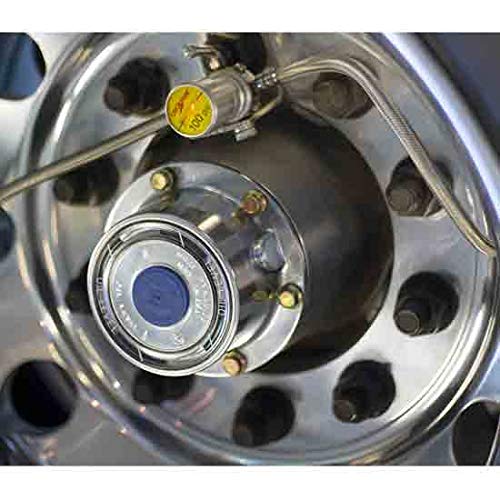
A 110 PSI maximum capacity means this system handles the heavy loads that dual tires are built for, from tow rigs to work trucks. The Crossfire equalizer mounts directly between the tires, bolting to the lug, hub cap, or drive axle end so air flows freely from one tire to the other. That single-point inflation saves you from kneeling down to check each tire separately, and the visual gauge lets you spot pressure imbalance at a glance. For anyone running duals on a daily driver or fleet vehicle, this is the straightforward fix for uneven wear and fuel waste caused by pressure differences.
The 0.8-pound unit adds some weight to the wheel assembly, and proper mounting is required for air to flow freely between the tires. Compared to the Myers Tire Supply set of four Crossfire valves at 105 PSI, this single unit offers a higher 110 PSI maximum. The two-year warranty and American-made build give confidence that this is a buy-once part, not a seasonal replacement. If you want to equalize pressure without adding complexity, this system delivers exactly that.
Myers Tire Supply Crossfire Equalizer Valve Set

What We Like
- Set of 4 for dual tires
- Stainless steel hoses resist corrosion
- Blowout safety isolation included
- Single-point inflation saves time
Trade-offs
- Fixed at 105 PSI, not adjustable
- No digital gauge for precise reading
- Requires lug or hubcap mounting points
This set includes four Crossfire equalizer valves preset to 105 PSI, so you can outfit a full dual-tire setup right out of the box. Each valve equalizes pressure between paired tires as they heat and cool, which helps reduce rolling resistance and can improve stability, braking, and fuel mileage. The stainless steel hoses resist corrosion from road grime and weather, and the built-in visual gauge lets you check pressure at a glance. For a fleet truck, heavy trailer, or work van that runs at 105 PSI, this set simplifies maintenance to a single inflation point per pair.
The trade-off is that 105 PSI is the only setting these valves offer. If your tires call for a different pressure, you’ll need another model. The set includes four valves, which covers a full dual-tire setup without buying separate pieces. The blowout safety isolation feature is included, adding a layer of protection in case of a tire failure. Just make sure your wheels have lug or hubcap mounting spots, because this system relies on them for installation.
MEASUREMAN 4-Wheel Rapid Air System
What We Like
- Inflates and deflates four tires simultaneously
- Digital LCD gauge with backlight
- Dual-length hoses for different wheelbases
- Push-lock air chuck for quick connection
Trade-offs
- At 6.2 lb, heavier than single-tire kits
- Requires a compressor to inflate (not included)
- Larger footprint: 16 x 16 x 4 inches
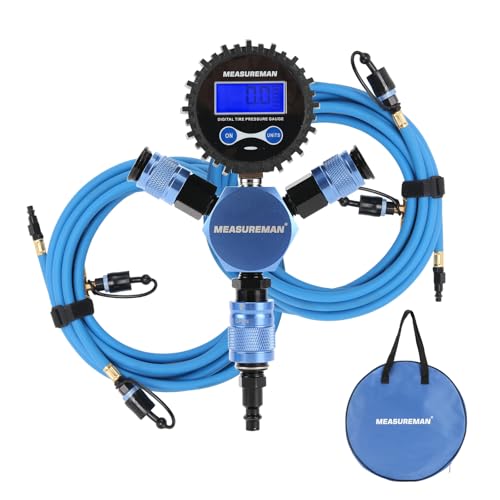
The ability to inflate or deflate all four tires at once is the reason this system stands out. Instead of working on each tire individually, you hook up the dual-length hoses, 2.5 meters for the front axle, 4.5 meters for the rear, and watch the LCD backlit display balance pressures across all wheels. The digital readout lets you switch between PSI, kPa, Bar, or kgf/cm² without mental math. This is built for the person who wants to spend less time on tire pressure adjustments and more time on the road.
Size and weight are the main considerations here. At 6.2 pounds with a 16-inch footprint, this kit takes up more space than a simple valve-stem equalizer like the Crossfire Dual Tire Equalizer, which weighs under a pound. You also need a compressor to feed air, this system supports simultaneous inflation and deflation but does not generate pressure on its own. For those who already carry a compressor and have room for a dedicated tire kit, the time savings are worth the bulk. If you are trying to save every ounce or work on a dual-rear-wheel truck, a lighter mechanical equalizer might suit you better.
Product photos
Cat's Eye Tire Pressure Maintenance System

What We Like
- Stainless steel construction resists corrosion
- 110 PSI rating covers most trailer tires
- 2-pack covers one dual axle
- Clear torque spec prevents installation error
Trade-offs
- Not recommended for steer axles
- Requires good valve stems and careful hose routing
- Over-tightening the bolt causes leakage
A 15 ft. lbs torque limit on the mounting bolt is the kind of specific instruction that saves you from a leaking install. The Cat’s Eye Tire Pressure Maintenance System is made of stainless steel, which resists corrosion better than some other materials. The 110 PSI rating covers many dual-wheel trailers, and the two-pack gives you one complete set for a single dual axle immediately after unpacking.
The Cat’s Eye is not recommended for steer axles, so it’s a dedicated tool for trailers or rear duals. That limitation is shared by most crossfire-style equalizers, but the JINKEY Dual Tire Pressure Equalizer includes a quick-coupler adaptor and an open-flow air chuck. If you need a rugged, corrosion-resistant unit for a trailer with clear installation guidelines that prevent mistakes, the Cat’s Eye delivers exactly that without extra frills.
Product photos
BUNKER INDUST Rapid Inflation Deflation System

What We Like
- Inflates or deflates two tires at once
- 0.1 PSI graduations for precise adjustments
- Built-in top light for dark environments
- Includes durable carry bag for storage
Trade-offs
- 3.8 pounds is heavier for portable use
- Requires two AAA batteries for gauge and light
- Designed for up to 200" wheelbase, not longer rigs
With a 200-inch wheelbase limit, this system covers vehicles up to that length, letting you work on two tires at once without repositioning. The 0.1 PSI graduations and ±1% accuracy let you dial in pressure precisely, which matters when you are airing down for traction or matching pressures after a long highway stretch. Its 1/4-inch M-style fittings pair with most air compressors, including ARB and PowerTank, and the built-in top light keeps you from fumbling in the dark. This kit is designed for anyone who wants to save time by inflating or deflating two tires simultaneously.
Weight is a factor here: at 3.8 pounds, it is heavier than a simple single-tire gauge setup, and the two AAA batteries mean you will want spares on a multi-day trip. Compared to the Dual Dynamics Crossfire system, which is a dual-tire pressure equalization system rated at 110 PSI, the BUNKER INDUST kit is a portable tool you hook up and remove. That makes it more versatile for airing up and down on the trail, but less of a set-and-forget solution for daily driving. If you need a system that lives on the vehicle and equalizes pressure continuously, the Crossfire is simpler; if you want rapid dual-tire adjustments for off-road work, this is the better fit.
Parts Express Crossfire Tire Equalizer Valve 110 PSI
What We Like
- Stainless steel hoses resist corrosion
- Single-point inflation cuts maintenance time
- Visual pressure gauge for quick checks
- Designed for 110 PSI tires
Trade-offs
- Single unit covers only one dual-wheel position
- 110 PSI rating limits use to heavy-duty trucks
- No blowout isolation feature included
This equalizer is designed for tires with a normal pressure setting at 110 PSI, so it matches the spec for heavy-duty applications where consistent pressure across duals matters. The stainless steel hoses and visual pressure gauge are included, and the single-point inflation feature cuts maintenance time by letting you check and adjust from one spot. Reviewers note that keeping tires at the correct pressure decreases rolling resistance, which helps improve fuel mileage.
A single valve means you will need multiple units for a multi-axle setup, and it does not include the blowout safety isolation that the Myers Tire Supply set offers. If you need isolation protection for peace of mind, the Myers system covers that out of the box. But for a straightforward equalizer that matches the 110 PSI spec exactly, the Parts Express Crossfire gets the job done without extra complexity.
Parts Express Crossfire Equalizer Valves 120 PSI Set

What We Like
- 120 PSI rating for heavy loads
- Set of 4 covers all duals
- Maximizes tire life and fuel mileage
- Low maintenance once installed
Trade-offs
- No blowout safety isolation feature
- Requires manual pressure check for accuracy
At 120 PSI, this set matches the highest pressure rating among the Crossfire equalizer valves listed, so it can handle the same heavy-duty dual-tire applications that demand that capacity. The four valves cover all duals as soon as you open the package, and installation takes minutes with minimal upkeep afterward. It’s built for drivers who want to extend tire life and cut rolling resistance without fussing over complicated hardware or constant adjustments.
The Myers Tire Supply set includes blowout safety isolation, which means a sudden leak on one tire won’t drain the other until you notice and react. That’s a real consideration for long-haul work where a single puncture could strand you. If you run at or near 120 PSI and want straightforward equalization, this Parts Express set delivers the pressure rating it promises.
JINKEY Dual Tire Pressure Equalizer
What We Like
- Digital gauge with 360° swivel and backlight
- Quick coupler adaptor for compressor connection
- Corrosion-resistant brass and alloy steel construction
- Open flow chuck locks securely on valve stem
Trade-offs
- Requires 15-second inactivity to auto power off
- No built-in mounting for permanent installation
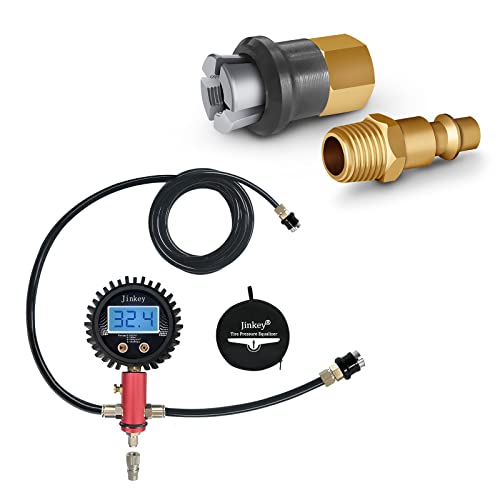
A digital gauge accurate to within 1% up to 255 PSI means you can trust the reading whether topping off a pickup or airing down for trail driving. The 360° swivel and LED backlight make it easy to read in any position or low light, so you are not crouching or squinting. That precision, paired with the quick coupler adaptor that lets you hook up an air compressor directly, makes this a genuinely useful tool for anyone who wants both tires exactly equal without guesswork. It is built from brass and alloy steel that resist corrosion, and the open flow chuck grips valve threads securely, no frustrating slips on short stems.
The JINKEY Dual Tire Pressure Equalizer can check, equalize, inflate, and deflate two tires at once. It connects to an air compressor using the included quick coupler adaptor, so you don’t even need a separate inflator. The sleeve on the air chuck is made of nylon instead of stainless steel, which reduces friction between moving parts and makes operation easier. For a weekend mechanic or overlander who wants accurate pressure control without spending a fortune, this tool covers the essential jobs without the bulk of a permanent lug-mount system.
BESTfit Crossfire Tire Equalizer Valve
What We Like
- Stainless steel hoses resist corrosion
- 80 PSI rating suits lighter-duty setups
- Includes AT/BH mounting brackets
- Sold individually for targeted replacement
Trade-offs
- Single unit covers only one dual set
- No quick coupler or air chuck included
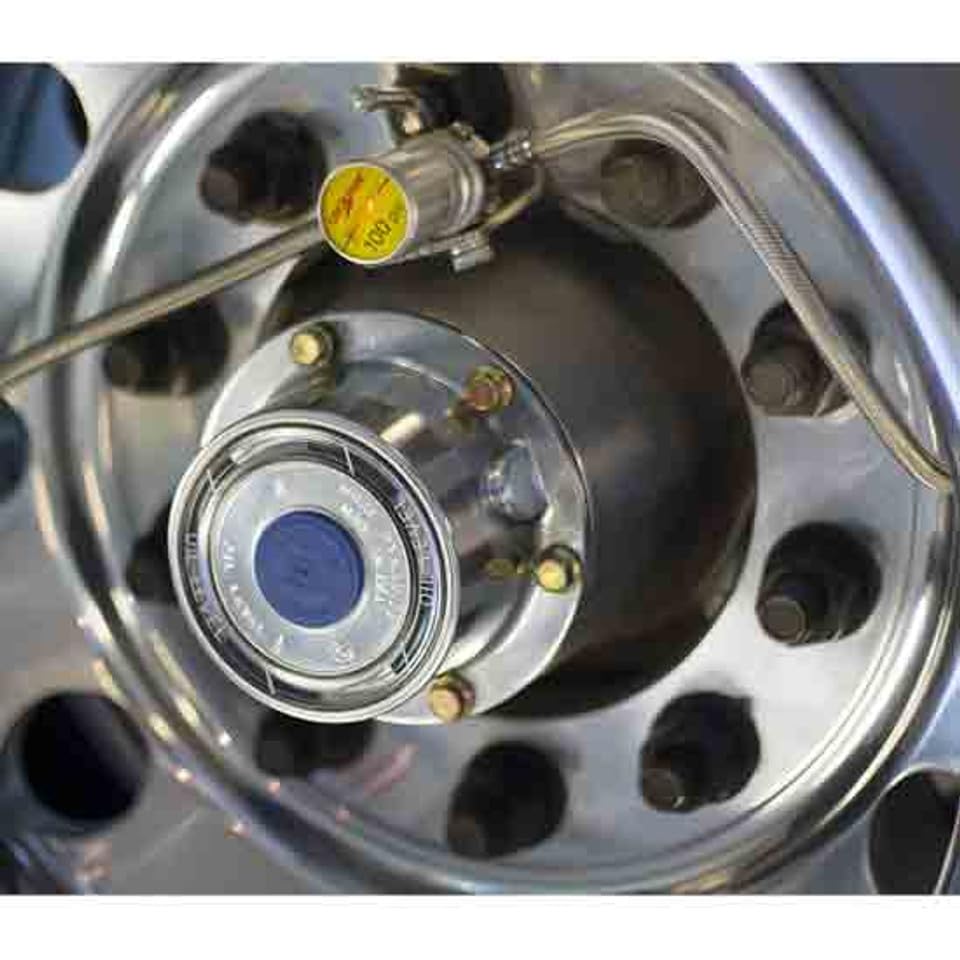
An 80 PSI rating means this BESTfit Crossfire Tire Equalizer Valve is built for lighter-duty dual tire setups, not the heavy haulers that need 110 or 120 PSI. The stainless steel hoses resist rust and road salt, so this valve should hold up well on a trailer or light truck that sees all-weather miles. With AT/BH brackets included, mounting to the axle or brake hub is straightforward. This is the right pick if you run a smaller rig or utility trailer and want the even-wear benefits of pressure equalization without paying for a higher-pressure system you don’t need.
The trade-off here is that 80 PSI max cuts you off from heavier commercial use. If you tow a loaded gooseneck or run a dually that calls for higher pressure, the Dual Dynamics Crossfire at 110 PSI is the better match. And since this unit sells individually, you’ll need to buy two for a full dual-axle trailer, which adds cost. But for a single-axle dual setup or a lighter truck that stays within 80 PSI, this valve delivers the same crossfire function in a corrosion-resistant package at a more accessible pressure rating.
How We Evaluated Dual Tire Pressure Equalization Systems
Our evaluation of these systems began with a close look at manufacturer specifications and installation documentation. We studied the materials, pressure ratings, valve types, and mounting options for each product to understand the engineering behind them. We also reviewed patterns in owner feedback across the automotive community, focusing on what real users report about durability, ease of installation, and long-term reliability.
The three criteria that mattered most were pressure range compatibility, build quality and corrosion resistance, and the practicality of the mounting and inflation setup. A system that cannot handle your tire’s specific PSI rating is a non-starter. Stainless steel hoses and brass or alloy steel fittings separate the systems that last from those that rust. And a single-point inflation port with a clear gauge is what makes these systems truly useful instead of just another gadget.
One honest limit of this guide is that installation fitment for your specific wheel, hub, or valve stem configuration should always be double-checked against your vehicle’s manual and the manufacturer’s instructions.
What To Look For In Dual Tire Pressure Equalization Systems
Choosing the right pressure equalization system means matching the hardware to your tire pressure, wheel type, and driving environment. The wrong system can be a safety hazard or simply not fit your wheels.
Focus on the PSI rating of your tires, the materials the system is made from, and the mounting method. A system that matches your pressure, resists corrosion, and installs securely will save you time and prevent problems.
PSI Rating and Compatibility
Every equalizer has a maximum pressure rating, and yours must match the normal operating pressure of your tires. Systems like the Parts Express Crossfire Equalizer Valves 120 PSI Set are designed for heavy loads, while the BESTfit Crossfire Tire Equalizer Valve is built for lighter-duty setups at 80 PSI. Using a system rated lower than your tire pressure can cause failure, while a system rated much higher than needed is unnecessary expense. Check your tire sidewall for the recommended PSI before buying.
Build Materials and Corrosion Resistance
Dual tire systems live on the road, exposed to rain, mud, salt, and road chemicals. Stainless steel hoses and brass or alloy steel fittings resist rust and last far longer than plain steel. The Cat’s Eye Tire Pressure Maintenance System uses stainless steel construction specifically for this reason, and the JINKEY Dual Tire Pressure Equalizer uses corrosion-resistant brass and alloy steel. If you drive in winter conditions or near the coast, prioritize corrosion-resistant materials.
Mounting and Installation
- Does the system bolt to your lug nuts, hub cap, or axle end? The Dual Dynamics Crossfire offers all nine options.
- Do you have access to good valve stems that point outward? Some systems require specific stem orientations.
- Is the system permanent or portable? Portable equalizers like the BUNKER INDUST Rapid Inflation Deflation System require setup each time, while permanent ones mount on the wheel.
- Does the kit include all necessary brackets and hardware? The BESTfit includes AT/BH mounting brackets.
- Can you reach the inflation point easily once installed? A single-point inflation port is far more convenient than trying to reach two separate valves.
A good rule of thumb: If you have to force the hoses or brackets into place, you have the wrong system for your wheel setup.
Dual Tire Pressure Equalization Systems Compared
The table below compares the nine dual tire pressure equalization systems side by side, highlighting their key specifications and best use cases so you can see at a glance which one fits your needs.
| Product | Max PSI | Weight | Construction/Material |
|---|---|---|---|
| Dual Dynamics Crossfire Dual Tire Equalizer | 110 PSI | 0.8 Pounds | American-made |
| Myers Tire Supply Crossfire Equalizer Valve Set | 105 PSI | N/A | Stainless steel |
| MEASUREMAN 4-Wheel Rapid Air System | N/A | 6.2 pounds | N/A |
| Cat's Eye Tire Pressure Maintenance System | 110 PSI | N/A | Stainless Steel |
| BUNKER INDUST Rapid Inflation Deflation System | 0-250 PSI | 3.8 pounds | N/A |
| Parts Express Crossfire Tire Equalizer Valve 110 PSI | 110 PSI | N/A | Stainless Steel Hoses |
| Parts Express Crossfire Equalizer Valves 120 PSI Set | 120 PSI | N/A | N/A |
| JINKEY Dual Tire Pressure Equalizer | 0-255 PSI | N/A | Brass, nylon, alloy steel |
| BESTfit Crossfire Tire Equalizer Valve | 80 PSI | N/A | Stainless Steel |
Frequently Asked Questions
What does a dual tire pressure equalizer do?
A dual tire pressure equalizer connects the two tires on a dual-wheel setup so they share the same air pressure. It automatically balances pressure between the inner and outer tire, which prevents one tire from carrying more load than the other. Most systems also provide a single inflation point, so you only need to check and fill one valve instead of two.
Can I install a pressure equalizer on any dual-tire vehicle?
Most systems are designed for common dual-tire configurations on trucks, trailers, and RVs, but fitment depends on your wheel type, valve stem orientation, and available mounting points. Some systems bolt to lug nuts, others to hub caps or axle ends. Always check the manufacturer’s fitment guide and your vehicle’s wheel specifications before purchasing.
How do I know what PSI rating I need for an equalizer?
The PSI rating of the equalizer must match or exceed the normal operating pressure of your tires. You can find this pressure on the tire sidewall or in your vehicle owner’s manual. Common ratings include 80 PSI for lighter-duty trailers, 105 to 110 PSI for heavy-duty trucks, and 120 PSI for maximum load applications. Never use an equalizer rated lower than your tire pressure.
Will a pressure equalizer protect against a blowout?
Some systems include blowout safety isolation, which automatically seals off a tire if it loses pressure rapidly. The Myers Tire Supply Crossfire Equalizer Valve Set includes this feature. Other systems simply equalize pressure without isolation, meaning a puncture in one tire will cause both to lose air. If blowout protection is a priority, look for a system that explicitly includes isolation.
How often do I need to check the pressure with an equalizer installed?
Even with an equalizer, you should check tire pressure regularly, at least once a month and before long trips. The equalizer keeps both tires at the same pressure, but it does not prevent slow leaks or temperature-related pressure changes. Systems with a visual gauge make these checks quick, but you should still verify pressure with a separate gauge periodically.
The Bottom Line
For the vast majority of dual-tire drivers, the Dual Dynamics Crossfire Dual Tire Equalizer is the best choice. Its combination of a visible pressure gauge, single-point inflation, and flexible mounting options makes it a straightforward upgrade that saves time and improves safety. It is built to last with American manufacturing and a two-year warranty, and it works on a wide range of trucks, trailers, and RVs.
If your budget is tighter or you prefer a portable system you can use with a compressor, the JINKEY Dual Tire Pressure Equalizer is the best budget pick. Its digital gauge and quick coupler give you accurate readings and easy connection, though it requires manual setup each time. For fleet operators running tires at exactly 105 PSI, the Myers Tire Supply Crossfire Equalizer Valve Set delivers a complete four-valve kit with blowout protection.
The single most important factor in choosing a pressure equalization system is matching the PSI rating to your tires. Everything else, materials, mounting, portability, comes second to getting the right pressure rating. Start there, and you will find the system that keeps your dual tires working together mile after mile.
