
10 Best Electric Bikes For Climbing Steep Hills in 2026
This post contains affiliate links. As an Amazon Associate, we earn from qualifying purchases.
The ECOCOGY C5PRO Dual Motor Electric Bike is the best overall pick for climbing steep hills, thanks to its dual 4000W motors and 200Nm torque that handle 45-degree climbs with ease. For riders who want maximum torque in a more traditional package, the Jasion RetroVolt delivers 99Nm of climbing power. The FLIWIN Electric Bike For Adults earns the Best All-Terrain Climber award for those mixing off-road trails with city streets.
Climbing steep hills on an electric bike comes down to one thing: torque. Without enough Newton-meters, even the most powerful motor will struggle on a long, sustained grade. Battery range, weight, and braking power also matter when you are hauling yourself and the bike up and down inclines repeatedly.
This guide is based on a thorough review of manufacturer specifications, expert round-ups, and patterns in owner feedback. We evaluated each model on torque output, motor power, battery capacity, and braking system to help you find the right e-bike for your steepest commutes or weekend adventures.
Top 10 Electric Bikes For Climbing Steep Hills in the Market
Certain content that appears on this site comes from Amazon. This content is provided "as is" and is subject to change or removal at any time.
The Best Electric Bikes For Climbing Steep Hills, Reviewed
ECOCOGY C5PRO Dual Motor Electric Bike
What We Like
- Dual 4000W motors for steep hills
- 200Nm torque handles 45° climbs
- 110-mile range on PAS Level 1
- Hydraulic disc brakes for confident stopping
Trade-offs
- Heavy build limits portability for stairs
- Dual-motor mode drains battery faster
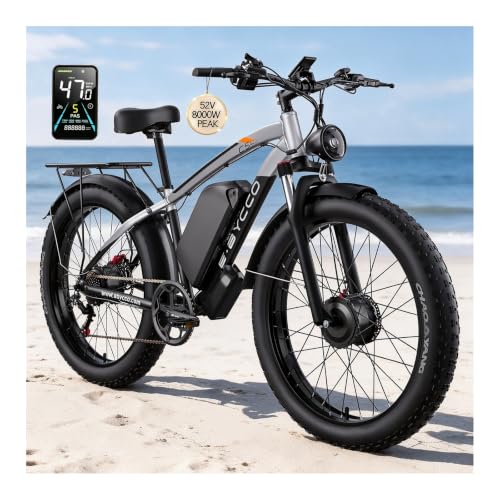
With dual 4000W motors delivering a combined 8000W peak and 200Nm of torque, this bike makes 45° climbs feel almost flat. That kind of hill-flattening power is exactly what riders tackling steep grades need, and it pairs with a 52V 32Ah battery that can stretch up to 110 miles in the lowest assist setting. The hydraulic disc brakes bring everything to a controlled stop even on wet descents, and the 24×4.0 fat tires float over loose gravel, sand, or snow. It’s a bike built for riders who want one machine that can handle serious inclines without sacrificing range or control.
The trade-off is weight: the dual motors and large battery add heft, so carrying it up stairs or loading it onto a rack takes more effort than lighter single-motor models like the HOVSCO HovAlpha. Riders who prioritize raw climbing ability and don’t need to lift the bike often will find this a well-rounded package.
Product photos
Jasion RetroVolt Electric Bike

What We Like
- 99Nm torque for steep climbs
- 2000W peak motor output
- 70-mile range per charge
- 330 lb payload capacity
Trade-offs
- 75 lb weight makes lifting difficult
- Full charge takes 5-6 hours
With 99Nm of torque and a 2000W peak motor, this bike delivers the kind of low-end grunt that makes steep hills feel like flat ground. The 330 lb payload capacity means you can carry cargo or a passenger, making it a practical choice for shared use or errand running.
At 75 pounds, this bike is heavy, which may be a consideration for lifting onto a rack or carrying up stairs. The HOVSCO HovAlpha, with its 72.8 lb weight and torque sensor, offers a different riding feel, but the RetroVolt’s torque and motor are designed for consistent hill support. Riders who prioritize climbing power over portability may find this bike well-suited to their needs.
FLIWIN Electric Bike For Adults
What We Like
- 2000W peak motor for steep climbs
- 20" fat tires with dual suspension
- UL-certified battery and components
Trade-offs
- 115 lb weight makes it hard to carry
- 20 mph speed limiter requires unlocking
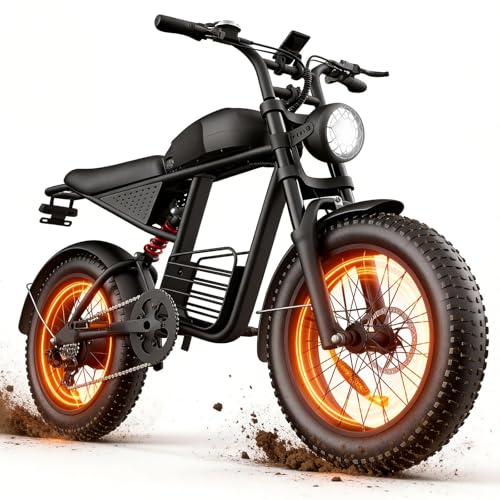
A 2000W peak motor and 48V 20Ah battery mean this bike can muscle up steep hills without running out of breath early. It suits riders who want one machine that handles both gnarly off-road climbs and daily city commutes without swapping bikes.
At 115 lb, it is heavy to lift onto a rack or carry up stairs. Compared to the lighter Jasion RetroVolt (75 lb), this bike demands more muscle when you are not riding it. For anyone who prioritizes hill-climbing power and all-terrain stability over portability, the FLIWIN delivers where it counts.
EcoE 8000W Dual Motor Electric Bike

What We Like
- Full suspension and fat tires
- Hydraulic disc brakes for safe stopping
- 8000W dual motor for high power output
Trade-offs
- At 110.2 lb, very heavy to maneuver
- Requires keeping original packaging 30 days
Riders tackling rocky trails or uneven pavement will appreciate the dual front suspension and rear shocks, which work together to reduce impact and strain during long rides. The 26-inch wheels wrapped in 4-inch fat tires provide excellent grip across diverse terrains, from loose gravel to muddy paths. When it’s time to slow down, the front and rear hydraulic disc brakes deliver safe, responsive stopping power on steep descents or in wet conditions. This combination of comfort and control makes the bike suitable for both mountain trails and city streets, giving riders confidence in varied environments.
At 110.2 pounds, this is a heavy machine to handle when you’re not riding. The 52 MPH top speed is more suited to open roads than tight singletrack. Compared to other dual-motor e-bikes like the ECOCOGY C5PRO, the EcoE prioritizes power over portability. If your priority is maximum speed and you have a way to manage the heft, this bike delivers on that goal.
HOVSCO HovAlpha Fat Tires Electric Bike
What We Like
- Torque sensor adjusts power 500 times/sec
- 90 N·m torque for steep climbs
- 960Wh battery with LG/Samsung cells
- Bafang motor with 2000W peak output
Trade-offs
- 72.8 lb weight makes maneuvering harder
- 7-speed gearing limits top-end range
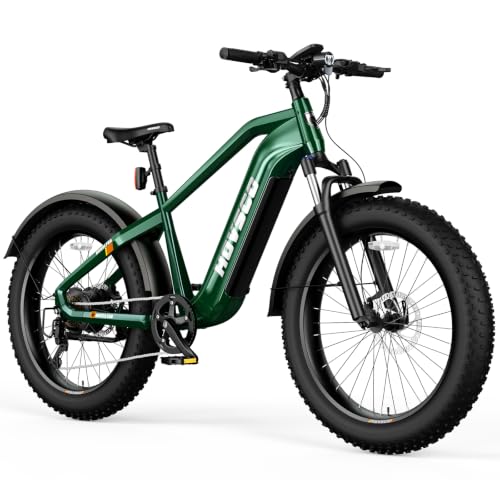
The torque sensor reads your pedaling force 500 times per second, so the motor responds instantly when you push harder on a climb and eases off when you back down. That natural feel means you get climbing help that matches your effort rather than a sudden surge. The 960Wh battery with LG/Samsung cells can stretch to 100 miles in low assist, which covers a long hilly commute or a weekend trail ride without range anxiety. This bike suits riders who want precise, intuitive climbing help rather than an on-off surge.
At 72.8 pounds, this bike is heavy enough that carrying it up stairs or onto a rack requires some muscle. The 7-speed Shimano gearing handles most hills, but the single motor means you’ll need to pedal on the steepest climbs. The torque sensor and fat tires provide confident traction and control on loose or uneven ground, giving a natural pedal feel that many riders will appreciate.
iFAYFAN Electric Bike For Adults
What We Like
- UL 2849 certified safety
- Full suspension and fat tires
- 2000W peak motor for steep hills
Trade-offs
- 115 lb weight makes it hard to maneuver
- Speed limited to 20 mph out of box
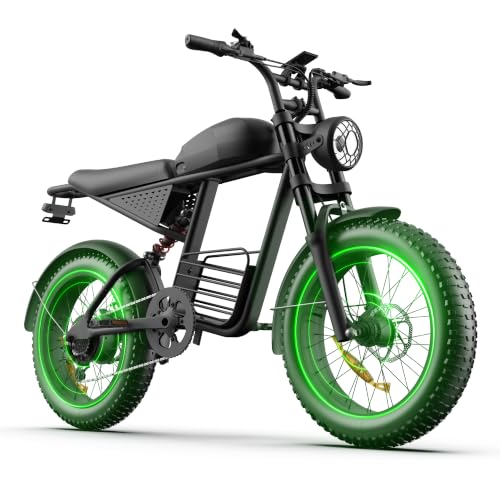
It’s built for riders who need raw torque and range to conquer serious hills, with fat tires and full suspension smoothing out rough terrain along the way.
At 115 pounds, this bike is a beast to lift or carry up stairs. It also ships with a 20 mph speed limiter for safety; you can follow the product page video guide to unlock full power. Compared to the Jasion RetroVolt (75 lb), the iFAYFAN is noticeably heavier, but that heft comes with a larger battery and a more powerful motor, worth it if your commute or trail ride involves relentless climbing.
YVY Dual Motor Electric Bike

What We Like
- 52V 40Ah battery for long range
- Dual suspension and hydraulic disc brakes
- 20-inch fat tires for all terrains
Trade-offs
- Heavy build limits portability
- 20-inch wheels less stable at high speed
Dual suspension and hydraulic disc brakes keep the ride controlled and comfortable, while the 20-inch fat tires grip loose gravel, dirt, and pavement alike. This is the bike for anyone who wants raw climbing power and the range to actually use it.
This much capability comes with heft, and the 38 MPH top speed might be more than some riders need on shared paths or tight trails. Compared to the Jasion RetroVolt, which tops out at 30 MPH, the YVY offers significantly more speed and torque for hill climbing. If your priority is conquering steep grades and covering ground fast, the YVY delivers; if you need something lighter for mixed commuting, you might look elsewhere.
Product photos
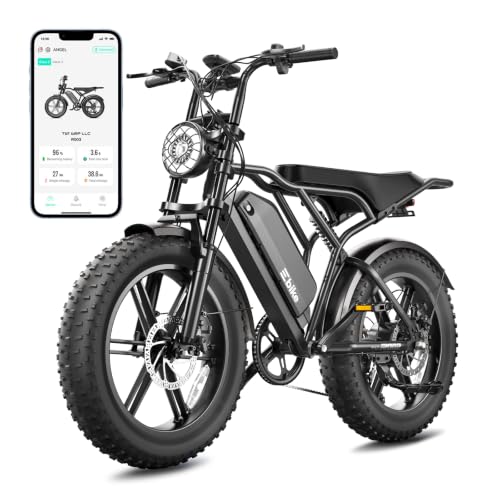
TS TST GRP LLC R004 Electric Bikes
What We Like
- 750W motor with 1500W peak for climbs
- 48V 15Ah battery offers up to 60 miles
- Front and rear suspension for comfort
- 20×4 fat tires for traction on hills
Trade-offs
- 66 lb weight makes it less maneuverable on steep trails
- Mechanical disc brakes need regular adjustment for hill stops
At 66 pounds, it’s lighter than some competitors like the HOVSCO HovAlpha (72.8 lbs), but still heavy enough to require effort when lifting or maneuvering. The mechanical disc brakes need inspection and adjustment before each ride, which is important to keep in mind for safety. For riders who want a capable electric bike for commuting and light off-road use without breaking the bank, this is a practical option.
Product photos
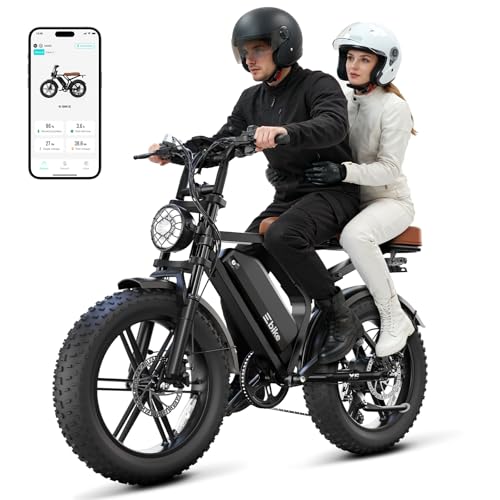
TS TST GRP LLC Retro Ebike
What We Like
- 90 N.m torque for 30-degree hills
- 60-mile range on a charge
- Dual suspension smooths rough trails
- 20×4 fat tires for stability
Trade-offs
- 180-day warranty is shorter than some
- Peak 1500W motor is weaker than 2000W+ rivals
A 1500W peak motor with 90 N.m of torque lets this retro-styled ebike climb 30-degree hills without breaking a sweat. That torque, paired with 20×4 fat tires and dual suspension, means loose gravel and steep fire roads feel planted rather than sketchy. The 48V 15Ah battery delivers up to 60 miles of range, so you can tackle a full afternoon of climbing without hunting for an outlet. It suits riders who want classic looks with genuine off-road capability, not just a commuter in disguise.
The 180-day warranty is shorter than some competitors offer. If your priority is raw climbing power in a retro package, this bike delivers. Not ideal for riders who want a longer coverage period.
Product photos
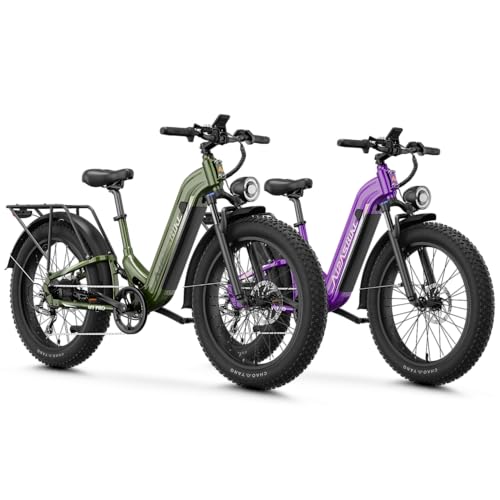
Aipas M1 Pro Electric Bike
What We Like
- 110 Nm torque for steep climbs
- Step-thru frame for easy mounting
- Full suspension smooths rough terrain
- 180mm disc brakes for controlled descents
Trade-offs
- 88 lb weight makes lifting awkward
- Motor is less powerful than dual-motor rivals
Weighing 88 lb, this is a hefty bike to lift onto a rack or carry up stairs. The single rear-hub motor can’t match the peak power of a dual-motor system like the ECOCOGY C5PRO’s 8000W setup for the most demanding off-road climbs. But for anyone who wants a stable, comfortable hill climber with easy step-thru access and enough torque to conquer most paved and gravel grades, the Aipas M1 Pro delivers real capability.
Product photos
How We Evaluated Electric Bikes For Climbing Steep Hills
To find the best electric bikes for climbing steep hills, we analyzed manufacturer specifications, read expert round-ups from automotive and cycling publications, and studied patterns in owner feedback across multiple sources. Our evaluation focused on the mechanical and electrical components that determine hill-climbing ability, not subjective ride feel.
The four criteria that mattered most were torque output (measured in Newton-meters), peak motor power, battery capacity, and braking system quality. Torque is the primary factor for climbing; a motor with high Nm can maintain speed on a steep grade without overheating. Battery capacity determines how long you can climb before recharging, and reliable brakes are essential for safe descents.
An honest evaluation acknowledges its limits. Real-world performance depends on rider weight, terrain conditions, and tire pressure. Recommendations are based on what the specifications and owner feedback suggest about each model’s capability on steep climbs.
What To Look For In Electric Bikes For Climbing Steep Hills
Choosing an electric bike for steep hills means prioritizing torque and motor power over speed or lightweight portability. Here are the key specifications to compare.
Look for at least 80 Nm of torque for moderate hills, 90 Nm or more for steep sustained climbs. Peak motor power should be 1500W or higher. Battery capacity of 48V 15Ah or greater ensures enough range for hill-heavy routes. Hydraulic disc brakes provide the most reliable stopping power on descents.
Torque and Motor Power
Torque is the force that turns the wheels and gets you up a hill. Measured in Newton-meters (Nm), it is the single most important specification for climbing. A bike with 90 Nm or more will handle steep paved grades and moderate off-road climbs. Dual-motor setups, like the ECOCOGY C5PRO’s 200Nm, provide the highest torque for extreme 45-degree inclines.
Peak motor power (measured in watts) indicates how much power the motor can deliver in short bursts. A 2000W peak motor gives you strong acceleration on hills, while a 1500W peak motor is adequate for lighter riders or gentler grades. Continuous rated power matters less for climbing than peak power.
Battery Capacity and Range
Battery voltage and amp-hours determine how far you can climb. A 48V 15Ah battery offers around 60 miles of range on low assist levels, but climbing hills drains the battery faster. Higher capacity batteries, such as 52V 40Ah, provide more reserve for long, steep routes.
Look for batteries with quality cells from manufacturers like LG or Samsung, as they tend to maintain capacity longer. UL certification is a safety marker worth prioritizing.
Braking System
Climbing hills means descending them, and reliable brakes are non-negotiable. Hydraulic disc brakes provide consistent stopping power with less hand effort than mechanical disc brakes. They also require less frequent adjustment, which matters if you ride steep hills regularly.
- Check that the brake rotors are at least 180mm for adequate stopping power on descents
- Confirm the brakes are hydraulic disc, not mechanical disc, for steep terrain
- Look for models with motor cutoff switches in the brake levers for safety
- Verify that brake pads are easily replaceable and widely available
A bike that climbs well but brakes poorly is dangerous on steep descents.
Electric Bikes For Climbing Steep Hills Compared
The table below compares the key specifications of each electric bike for climbing steep hills, including torque, motor power, battery capacity, and weight.
| Product | Motor Power | Battery | Range |
|---|---|---|---|
| ECOCOGY C5PRO Dual Motor Electric Bike | 8000W Peak | 52V 32Ah (1664Wh) | 110 miles |
| Jasion RetroVolt Electric Bike | 2000W Peak | 48V 15Ah removable | 70 miles |
| FLIWIN Electric Bike For Adults | 2000W Peak | 48V 20Ah removable | Up to 80 miles (PAS) |
| EcoE 8000W Dual Motor Electric Bike | 8000W Dual Motor | 60V 32AH | 35-80 miles |
| HOVSCO HovAlpha Fat Tires Electric Bike | 2000W Peak | 48V 20Ah (960Wh) LG/Samsung | Up to 100 miles |
| iFAYFAN Electric Bike For Adults | 2500W Peak | 48V 20Ah | 40-80 Miles |
| YVY Dual Motor Electric Bike | 3000W Dual Motor | 52V 40Ah | 55-70 miles (electric) |
| TS TST GRP LLC R004 Electric Bikes | 1500W peak | 48V 15Ah removable | 60 miles (PAS mode) |
| TS TST GRP LLC Retro Ebike | 1500W peak | 48V 15Ah removable | 60 miles |
| Aipas M1 Pro Electric Bike | 1800W Peak | 48V 17.5Ah removable | 85 miles |
Frequently Asked Questions
How much torque do I need to climb steep hills on an electric bike?
For moderate paved hills, 80 Nm of torque is sufficient. For steep sustained grades or off-road climbs, look for 90 Nm or more. Dual-motor bikes can deliver over 200 Nm for extreme 45-degree inclines.
What is the difference between peak motor power and continuous motor power?
Peak motor power is the maximum wattage the motor can deliver in short bursts, which matters most for climbing. Continuous power is what the motor can sustain over time. For hill climbing, focus on peak power ratings of 1500W or higher.
How does rider weight affect hill-climbing performance on an e-bike?
Heavier riders put more load on the motor, reducing effective torque and range. A bike with a given torque may struggle with a heavier rider on a steep grade, while it performs well for a lighter rider. Consider your weight when choosing a motor and battery.
Are fat tires better for climbing steep hills?
Fat tires provide more traction on loose surfaces like gravel, dirt, and snow, which helps maintain grip on steep off-road climbs. On paved roads, they add rolling resistance and weight without significant climbing benefit.
Can I ride a hill-climbing e-bike on flat terrain?
Yes, but you may find the bike heavier and less nimble than a standard commuter e-bike. The powerful motors and large batteries that enable hill climbing add weight. Most models have multiple pedal-assist levels so you can ride efficiently on flat ground.
The Bottom Line
The ECOCOGY C5PRO Dual Motor Electric Bike is the best overall choice for riders who need maximum hill-climbing torque and long range for off-road or mixed-terrain commutes. Its dual 4000W motors and 200Nm torque handle the steepest grades, though the heavy build means it is not ideal for carrying up stairs.
If you want maximum torque in a more traditional bike design, the Jasion RetroVolt offers 99Nm of climbing power with a 2000W peak motor. Budget-conscious riders should consider the TS TST GRP LLC R004 Electric Bikes, which provides a 750W motor with 1500W peak power at an affordable price point.
The single most important factor when buying an electric bike for steep hills is torque output. Prioritize Nm over speed or range, and you will have a bike that gets you to the top every time.
