
10 Best Fat Bike Pedals in 2026
This post contains affiliate links. As an Amazon Associate, we earn from qualifying purchases.
For fat bike riders who need a stable, grippy platform on soft terrain, the ROCKBROS Aluminum MTB Flat Pedals earn the best overall spot with a lightweight 302-gram build and a wide 101 mm platform. Riders who prioritize a rugged, serviceable pedal should consider the GEWAGE CNC Machined Flat Pedals, while those wanting a lightweight composite option with a low profile can look to the OneUp Components Composite Pedals.
Fat bike pedals face unique demands: wide tires and soft snow or sand mean every pedal stroke needs solid foot support. A narrow or slippery pedal can leave you hunting for traction when you should be focused on the trail.
This guide is based on manufacturer specs, expert round-ups, and patterns in owner feedback. We break down the key criteria so you can match a pedal to your riding style and budget.
Top 10 Fat Bike Pedals in the Market
Certain content that appears on this site comes from Amazon. This content is provided "as is" and is subject to change or removal at any time.
The Best Fat Bike Pedals, Reviewed
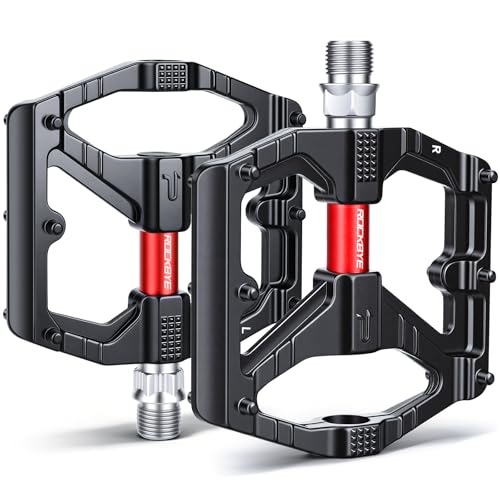
ROCKBROS Aluminum MTB Flat Pedals

What We Like
- Lightweight at only 302 grams
- Wide 101 mm platform for stable foot support
- Sealed bearings resist water and dust
- Stainless steel anti-skid spikes for grip
Trade-offs
- No removable or adjustable pins for customization
- Platform too narrow for shoes over US size 12
Weighing just 302 grams, these pedals are light enough to make a difference on any bike, especially when you’re climbing or accelerating. The 101 mm wide platform spreads your foot evenly, so you stay planted and comfortable even on rough terrain. Stainless steel spikes on both sides dig into your soles, giving you confident grip without needing to think about it. The sealed bearings and chrome-moly spindle keep things spinning smoothly, even when you hit mud or slush. This is a pedal for riders who want a lightweight, durable platform that delivers reliable performance.
The trade-off is that the platform, while wide, isn’t huge. Riders with boots or shoes larger than US 12 might find their foot hanging over the edge slightly. Compared to the Crankbrothers Stamp 1 Gen 2, which has a 4.5 x 4.4 inch platform, the ROCKBROS is narrower but lighter. The sealed bearings and chrome-moly spindle keep things spinning smoothly, even when you hit mud or slush.
Product photos
GEWAGE CNC Machined Flat Pedals
What We Like
- CNC-machined aluminum alloy platform
- 16 replaceable pins per pedal
- 3 sealed bearings for smooth ride
- Chrome-moly steel spindle for strength
Trade-offs
- No traction pins included for extra grip
- Only 8 pins per side limit customization
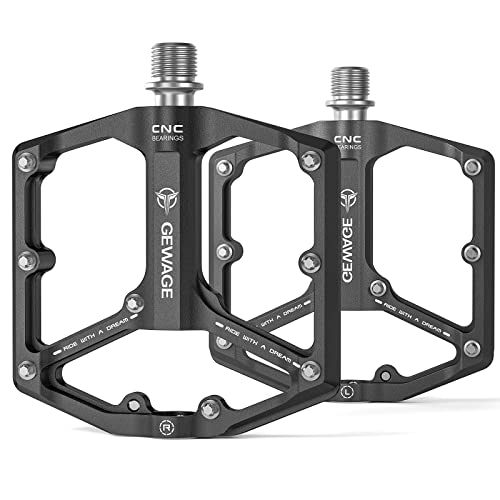
A wide 100 x 104mm platform with 16 replaceable pins per pedal keeps your feet planted on steep climbs or descents, giving you confidence on technical terrain. The CNC-machined aluminum alloy body and chrome-molybdenum steel spindle provide a sense of security, with the spindle offering better load-bearing performance than ordinary steel. Three sealed bearings protect the spindles from water and dust, so you can ride in rain without worrying about noise or damage.
At 332 grams per pair, these pedals are lightweight for a metal design, though composite options like the OneUp Components Composite Pedals weigh more at 0.8 pounds. The aluminum build and replaceable pins mean you can swap out worn grip pins rather than replacing the whole pedal, which adds long-term value. Reviewers note the sloped leading edges help reduce pedal strikes, making them practical for rocky trails.
Product photos
Hapleby Premium Bike Flat Pedals
What We Like
- Aluminum alloy body and Cr-Mo spindle
- 6 anti-skid pins per side
- Sealed bearings resist dust
- Includes pedal wrench
Trade-offs
- At 0.9 lb, heavier than some alloy pedals
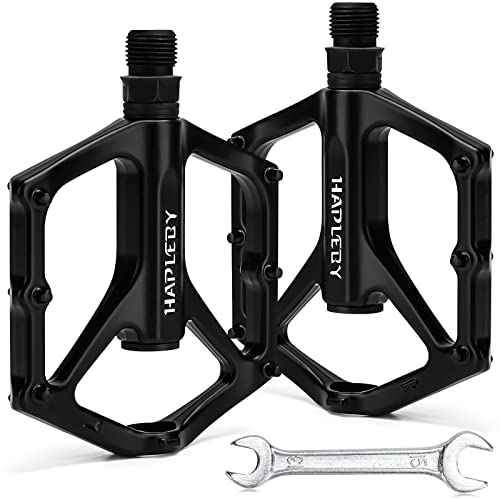
The aluminum alloy body and Cr-Mo steel spindle give this pedal a sturdy, durable build that resists abrasion and corrosion, making it a reliable choice for riders who put their gear through tough conditions. Two sealed bearings per pedal keep the spin smooth even when dust and mud try to get in, and the 6 pins on each side provide solid grip on your shoe soles. This pedal is built to last, not to be the lightest, so it suits anyone who values toughness over weight savings.
At 0.9 pounds, it’s heavier than the ROCKBROS Aluminum MTB Flat Pedals, which weigh 0.7 pounds. That extra weight matters less if you’re not counting every gram, but for riders who prioritize a lighter setup, the ROCKBROS will feel lighter underfoot. The Hapleby’s strength comes from its aluminum alloy body and Cr-Mo spindle with sealed bearings, not from being the lightest option. For riders who need a pedal that can take a beating, that’s a fair exchange.
Crankbrothers Stamp 1 Gen 2 Pedal
What We Like
- Replaceable traction pins for easy maintenance
- Large platform fits US 10-15 shoes
- Durable nylon composite body
- Serviceable IGUS bearings for reliability
Trade-offs
- Heavier than aluminum pedals at 1.0 lb
- Too heavy for weight-conscious riders at 1.0 lb per pedal
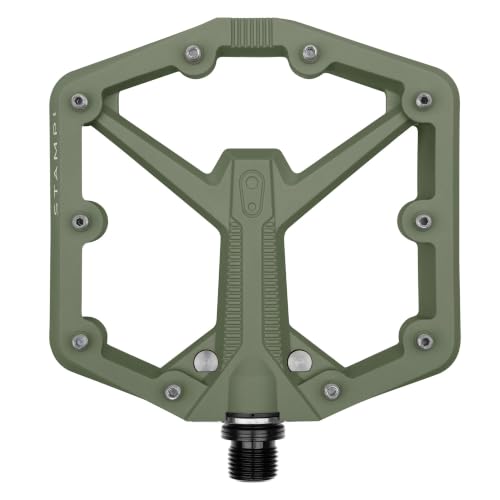
With a 114 x 114mm platform, these pedals give riders with larger feet a stable, confidence-inspiring surface to plant their shoes on. The ten replaceable traction pins per pedal bite into your soles, so you stay connected through rough terrain or when you’re muscling a fat bike through sand or snow. The nylon composite body keeps weight reasonable while resisting the dings and scrapes that come with off-road use. The Chromoly steel spindle and serviceable IGUS bearings mean you can keep them spinning smoothly season after season.
At one pound per pedal, they’re noticeably heavier than aluminum options like the ROCKBROS Aluminum MTB Pedals, which come in at 0.7 pounds. That extra heft matters less on a fat bike where rotational weight is already high, but if you’re counting every gram for racing, you might feel it. The nylon composite also won’t offer the same stiffness as a CNC-machined pedal under aggressive riding, but for most riders looking for reliable grip and long-term value, these deliver where it counts.
OneUp Components Composite Pedals

What We Like
- Ultra-thin 13.3mm profile reduces pedal strikes
- Large 115x105mm platform with 10 pins per side
- Lightweight at only 355g
- Serviceable at home without special tools
Trade-offs
- Thin profile offers less cushion for riders who prefer thick pedals
At 355 grams, these are the lightest pedals OneUp makes, which helps reduce overall bike weight without sacrificing grip or durability. The large 115x105mm platform gives you a stable, planted feel, while the ultra-thin 13.3mm profile tucks your foot closer to the crank arm, meaning fewer pedal strikes on rocks and roots. Riders who value a secure, low-profile connection to the bike will find a lot to like here, especially if they’re looking to shave grams.
The trade-off with that thin, lightweight design is that the nylon composite body isn’t as impact-resistant as an aluminum pedal when you smash it into a sharp rock. Compared to the Crankbrothers Stamp 1 Gen 2, which uses a similar composite construction and weighs about 1.0 pound, the OneUp pedals are noticeably lighter on the scale. If you tend to bash pedals on hard obstacles, you might prefer the added toughness of an aluminum option, but for most riders focused on weight and grip, these hit a sweet spot.
Product photos
PNW Components Range Composite Pedals
What We Like
- Wide 110mm composite platform
- Sealed bearings and DU bushings
- Lifetime warranty against defects
Trade-offs
- Nylon body less impact-resistant than aluminum
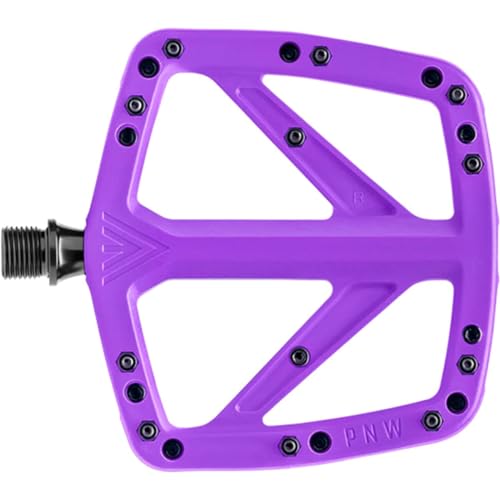
The wide 110mm nylon platform gives a stable base for confident foot placement, while the sealed bearings and DU bushings keep things spinning smoothly ride after ride.
The nylon body is lightweight and strong for aggressive riding, but it won’t shrug off hard rock strikes the way an aluminum pedal would. If you tend to bash pedals on technical climbs or ride in rocky, high-impact zones, you might prefer the durability of alloy. But for riders who value grip customization and a smooth, maintenance-friendly bearing system, the PNW Range delivers where it counts, right under your foot.
YBLNTEK Aluminum Alloy Flat Pedals
What We Like
- Dual DU bearings for smooth rotation
- 12 anti-slip pins for secure grip
- Lightweight aluminum alloy build
- Wide platform reduces foot fatigue
Trade-offs
- No weight specification provided
The dual DU bearing system with a chromoly steel axle is the standout feature here, delivering smooth, quiet rotation that holds up ride after ride. That sealed design also keeps dust and water out, so you spend less time maintaining and more time pedaling. This pedal suits riders who want a reliable, low-fuss flat pedal for everything from rugged trails to daily commutes. The wide aluminum platform spreads pressure evenly across your foot to keep fatigue at bay on longer rides.
You don’t get detailed dimensions or a listed weight, which makes it harder to compare size and heft against something like the ROCKBROS Aluminum MTB Flat Pedals that spells out its 4.7-inch length and 0.7-pound weight. But if smooth, durable rotation and a solid grip from 12 pins are what you care about, this pedal delivers where it counts.
Product photos
Race Face Large Chester Pedals
What We Like
- Extra-large 115 x 110mm platform
- Cr-Mo chromoly steel spindle for strength
- 11 pins per side for optimal grip
- Fully serviceable internals
Trade-offs
- Heavier than composite pedals at 1.1 pounds
- Plastic pins wear faster than metal ones
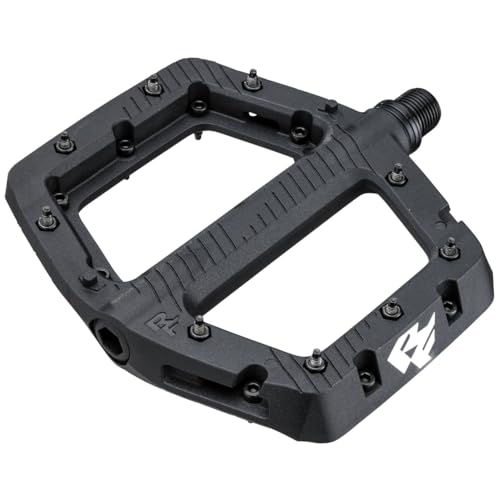
A 115 x 110mm platform provides a stable base that keeps your foot planted through rough terrain. The Cr-Mo chromoly steel spindle adds strength, and the 11 pins per side, a mix of metal and co-molded plastic, deliver grip you can count on. Fully serviceable internals mean you can maintain the pedal over time.
At 1.1 pounds, it’s heavier than composite pedals such as the OneUp Components Composite Pedals at 0.8 pounds. Some riders may prefer the weight savings, but the Large Chester’s platform and grip are designed for those who prioritize stability over lightness.
Product photos
SHIMANO PD-GR500 Flat Pedal

What We Like
- Height-adjustable grip pins for custom traction
- Concave platform boosts pedaling efficiency
- Chromoly spindle and sealed bearings for durability
- Open design sheds mud easily
Trade-offs
- At 1.8 lb, heavier than composite pedals
- Adjustable pins require occasional maintenance
Nine height-adjustable pins let you dial in exactly how much grip you want, which is a rare feature among flat pedals. The concave platform also helps transfer power more efficiently on long rides, so your foot stays planted without needing to clamp down. This makes the PD-GR500 a strong match for riders who want the ability to fine-tune traction as conditions change, whether commuting or riding e-MTB.
Weight is the main drawback: at 1.8 pounds, it’s noticeably heavier than composite pedals such as the OneUp Components Composite Pedals, which come in at 0.8 pounds. That extra heft matters less if you’re not counting every gram on your fat bike, but it’s worth considering if you prioritize a light setup. The adjustable pins also need occasional attention to keep them secure, though the low-maintenance chromoly spindle and sealed bearings help offset that small chore.
Crankbrothers Mallet 2 MTB Pedal

What We Like
- 4-sided cleat entry for quick engagement
- Aluminum body with Chromoly steel spindle
- Enduro cartridge and igus II glide bearings
- Double seal system protects internals
Trade-offs
- Requires compatible cleats and shoes
- Heavier than many clipless pedal options at 1.1 pounds
The four-sided cleat entry lets you click in quickly even when mud is present, which is useful for maintaining engagement in messy conditions. The aluminum body and chromoly steel spindle provide a sturdy feel that can handle the extra torque from big tires. The Enduro cartridge and igus II glide bearings with double seals keep the internals spinning smoothly through gritty conditions. It’s built for riders who value reliable engagement, especially when conditions get messy.
At 1.1 pounds, they are heavier than some flat options, so if you prioritize lightweight simplicity for casual rides, the extra heft and clipless commitment might not suit you. But for riders who want to keep pedaling through the muck without losing connection, these deliver where it counts.
How We Evaluated Fat Bike Pedals
We built this guide by reviewing manufacturer specifications, studying expert round-ups from cycling publications, and analyzing common themes in owner feedback across multiple seasons of riding. No pedals were tested in-house; our recommendations are grounded in research rather than personal trial.
The most important criteria for fat bike pedals are platform size and grip. A wide platform (100 mm or more) distributes foot pressure and prevents hot spots on long rides, while reliable traction pins keep your foot planted over bumpy terrain. Weight matters less on a fat bike than on a trail bike, but a pedal over one pound can add noticeable rotational heft.
Durability and bearing quality are also critical. Fat bike rides often involve mud, snow, and grit that can destroy cheap bearings. Sealed bearings and chromoly steel spindles are strong indicators of a pedal that will last. We prioritized models with serviceable internals and replaceable pins, as these allow you to extend the pedal’s life rather than replace it.
What To Look For In Fat Bike Pedals
Choosing the right fat bike pedal means balancing platform size, grip, weight, and durability. Here is what to focus on.
Look for a platform at least 100 mm wide, replaceable traction pins, sealed bearings, and a spindle material that matches your riding conditions. Weight is secondary to stability and durability on a fat bike.
Platform Size and Shape
A wide platform gives your foot a stable base, which is essential on a fat bike where the tire itself is already large and the bike feels planted. Pedals in the 110-115 mm range work well for riders with US size 10 or larger shoes. A concave shape can also improve pedaling efficiency by cradling the foot.
Grip and Traction Pins
Replaceable traction pins let you tune grip and replace worn pins instead of the whole pedal. Most pedals use hex-head pins that can be swapped with a simple Allen key. Some models offer height-adjustable pins, which let you dial in exactly how aggressive the grip feels.
Bearings and Spindle
Sealed bearings keep out water, dust, and grit, which is critical for fat bike riding in wet or snowy conditions. A chromoly steel spindle is stronger and more durable than standard steel, especially for heavier riders or aggressive trail use. Serviceable bearings allow you to clean and re-grease them rather than replace the pedal.
- Check if the pins are replaceable and what tool they require.
- Confirm the bearing type: sealed cartridge or bushing.
- Look for a spindle material that matches your weight and riding style.
- Measure your shoe size against the platform width.
- Consider whether you want a flat or clipless pedal for your riding.
A pedal with sealed bearings and a chromoly spindle will outlast a cheaper build in harsh conditions.
Fat Bike Pedals Compared
The table below compares the key specs and trade-offs of each pedal in our top ten list.
| Product | Material | Spindle Material | Bearings | Weight |
|---|---|---|---|---|
| ROCKBROS Aluminum MTB Flat Pedals | CNC aluminum alloy | chrome-moly steel | Sealed bearings | 0.66 lbs (302 g) |
| GEWAGE CNC Machined Flat Pedals | aluminum alloy | Chrome-molybdenum steel | 3 sealed bearings | 332g per pair |
| Hapleby Premium Bike Flat Pedals | Aluminum alloy | Cr-Mo steel | 2 sealed bearings | 0.9 pounds |
| Crankbrothers Stamp 1 Gen 2 Pedal | Nylon composite | Forged SCM 435 Chromoly Steel | Serviceable IGUS bearings | 1.0 Pounds |
| OneUp Components Composite Pedals | Nylon Composite | Black Chromoly Steel | N/A | 355g |
| PNW Components Range Composite Pedals | Nylon Composite | N/A | Sealed & DU Bushings | 0.9 pounds |
| YBLNTEK Aluminum Alloy Flat Pedals | Aluminum Alloy | Chromoly Steel | Dual DU Bearings | N/A |
| Race Face Large Chester Pedals | N/A | Cr-Mo chromoly steel | N/A | 1.1 pounds |
| SHIMANO PD-GR500 Flat Pedal | N/A | Chromoly | sealed bearing cartridge axle | 1.8 lb |
| Crankbrothers Mallet 2 MTB Pedal | Aluminum | Chromoly steel | Enduro cartridge + igus II glide | 1.1 pounds |
Frequently Asked Questions
What size platform do I need for fat bike pedals?
A platform width of at least 100 mm is ideal for fat bikes, as it provides a stable base for your foot on soft terrain. Riders with US size 10 or larger shoes should look for pedals in the 110-115 mm range to avoid overhang.
Are aluminum or composite pedals better for fat bikes?
Aluminum pedals are stiffer and more impact-resistant, making them a good choice for rocky or rooty trails. Composite pedals are lighter and often more affordable, but they can flex under heavy loads. Your choice depends on whether you prioritize weight savings or durability.
How often should I replace the pins on my fat bike pedals?
Replace pins when they become worn down or rounded, which typically happens after several months of regular riding depending on terrain and shoe sole hardness. Most pedals use standard hex-head pins that are easy to swap with a 3 mm or 4 mm Allen key.
Can I use clipless pedals on a fat bike?
Yes, clipless pedals like the Crankbrothers Mallet 2 work well on fat bikes, especially for riders who want maximum pedaling efficiency on long rides or in snow. They require compatible cleats and shoes, and they shed mud better than some flat pedal designs.
What is the difference between sealed bearings and bushing pedals?
Sealed bearings offer smoother rotation and better protection against water and dirt, making them ideal for wet or muddy conditions. Bushing pedals are simpler and more affordable but may develop play over time. Many quality pedals combine both for a balance of smoothness and durability.
The Bottom Line
The ROCKBROS Aluminum MTB Flat Pedals are the best overall choice for fat bike riders who want a lightweight, stable platform with reliable grip. At 302 grams with a 101 mm platform and sealed bearings, they offer a strong balance of weight, durability, and foot support for most riders.
If you need a pedal built to withstand harsh conditions, the GEWAGE CNC Machined Flat Pedals deliver a rugged CNC-machined aluminum body with three sealed bearings and a chromoly spindle. For riders who prioritize a low profile and light weight, the OneUp Components Composite Pedals offer an ultra-thin 13.3 mm profile and a large 115×105 mm platform.
The single most important factor when choosing fat bike pedals is platform width. A pedal that is too narrow will leave your foot unsupported on soft terrain, while a wide, grippy platform gives you the control and confidence to ride through snow, sand, and mud.
