
10 Best Flat Bicycle Pedals in 2026
This post contains affiliate links. As an Amazon Associate, we earn from qualifying purchases.
The Crankbrothers Stamp 1 Gen 2 Composite Pedals earn our Best Overall spot for their replaceable traction pins and serviceable IGUS bearings that keep them spinning ride after ride. For riders who want maximum traction, the Race Face Chester Pedals deliver tenacious grip, while the OneUp Components Composite Pedals offer an ultra-thin profile for trail riders.
Choosing the right flat pedal comes down to platform size, grip, and durability. A pedal that fits your shoe size and riding style makes every pedal stroke more efficient and confident, whether you are hitting singletrack or commuting through town.
This guide is built from manufacturer specifications, expert round-ups, and patterns in owner feedback. We focused on the features that matter most for real-world riding, from bearing quality to pin configuration, to help you find the right pedal without the guesswork.
Top 10 Flat Bicycle Pedals in the Market
Certain content that appears on this site comes from Amazon. This content is provided "as is" and is subject to change or removal at any time.
The Best Flat Bicycle Pedals, Reviewed
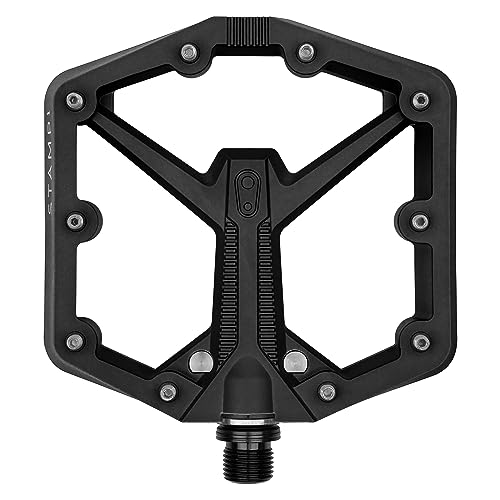
Crankbrothers Stamp 1 Gen 2 Composite Pedals
What We Like
- Replaceable traction pins for grip
- Serviceable IGUS bearings for longevity
- Lightweight nylon composite body
- Large platform supports bigger feet
Trade-offs
- Large size only, not for smaller feet
- Nylon composite less stiff than alloy
Riders with US size 10-15 feet get a 114mm square platform that stays planted underfoot on technical climbs and descents. The nylon composite body keeps each pedal at 0.8 pounds, so they don’t add noticeable heft to your bike. Replaceable traction pins let you restore grip without replacing the whole pedal, and the serviceable IGUS bearings can be maintained to keep spinning smoothly for years.
The large platform is designed for bigger feet, so riders under US size 10 may find it too wide. The nylon composite body is durable for everyday trail riding, but some riders might prefer a stiffer feel from an alloy pedal. For those who fit the size range and want a lightweight, easy-to-maintain pedal with great grip, this model delivers exactly what matters.
Product photos
OneUp Components Composite Pedals

What We Like
- Ultra-thin convex profile reduces pedal strikes
- Large 115x105mm platform for secure foot placement
- Only 355g for lightweight performance
- Replaceable hexagonal pins for custom grip
Trade-offs
- Nylon composite body less impact-resistant than aluminum pedals
- Too wide for riders with small feet
At just 355 grams, the OneUp Components Composite Pedals are among the lightest flat pedals you can bolt onto a mountain bike. That means less rotational weight to spin up climbs and less fatigue on long rides. The large 115x105mm platform pairs with a subtly convex shape that cradles the arch of your foot, and ten hexagonal pins per side keep your shoe planted through rough sections. That combination of low weight and high grip makes these pedals a natural fit for trail riders who want to shave ounces without sacrificing control.
At 355 grams, these are the lightest pedals OneUp makes, which means less rotational weight to spin up climbs or accelerate out of corners. The 115x105mm platform is larger than many competitors, so your foot has a stable landing zone even on rough trails. Ten hexagonal pins per side keep your shoe planted, and the slightly convex shape lets the pedal sit in the natural arch of your foot for a secure feel.
Product photos
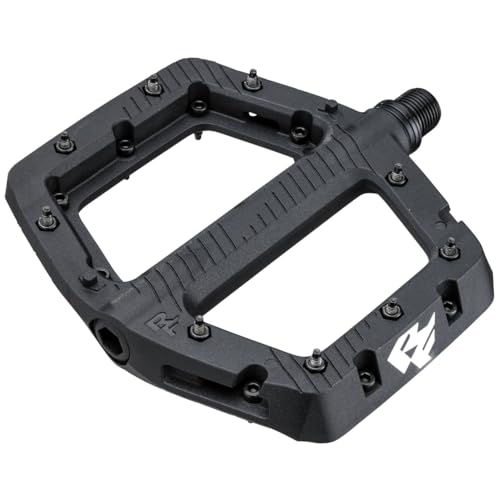
Race Face Chester Pedals
What We Like
- Large 115 x 110mm platform for stable footing
- Cr-Mo chromoly steel spindle for durability
- 11 pins per side for tenacious grip
- Fully serviceable internals for long life
Trade-offs
- At 1.1 pounds, heavier than composite competitors
A 115 x 110mm platform with 11 pins per side provides a stable footing for aggressive riding. The Cr-Mo chromoly steel spindle adds strength without unnecessary flex, and the fully serviceable internals allow for long-term maintenance. For riders who prioritize grip, this combination of size and pin count delivers secure footing.
Product photos
Shimano PD-GR500 Multi-Purpose Flat Pedal

What We Like
- Concave platform boosts efficiency on long rides
- Nine adjustable pins for secure foot grip
- Chromoly spindle and sealed bearings for durability
- Open platform sheds mud for consistent contact
Trade-offs
- At 1.8 lb, heavier than many composite pedals
- Not optimized for lightweight trail or XC builds
A chromoly spindle and sealed bearing cartridge axle give the PD-GR500 a durability that stands up to daily commuting and e-MTB abuse alike. The concave platform and nine height-adjustable pins keep your foot planted through rough terrain, while the open design lets mud fall right through instead of building up. This pedal is built for riders who want one set that works across multiple bikes, from a townie to an electric mountain bike, without sacrificing grip or longevity.
The PD-GR500 weighs 1.8 pounds, which is heavier than many composite pedals, so it’s not the best choice for a weight-weenie trail build. That heft comes from a chromoly spindle and sealed cartridge axle, meaning you get a tough, low-maintenance platform that stays planted under your feet. For commuters or e-MTB riders who prioritize durability over ounces, this pedal delivers reliable grip and mud-shedding performance.
DMR Vault Pedals

What We Like
- CNC machined aluminum body
- 22 removable pins for grip
- 4140 CroMo steel spindle
- Includes spare pins and wrench
Trade-offs
- At 0.9 lb, heavier than composite pedals
- Aluminum body can scratch rock strikes
A 105 x 105mm platform machined from solid aluminum gives you a stiff, wide stance that stays planted through rough terrain. That generous surface area, paired with 22 removable pins, means your shoe won’t wander even when the trail gets choppy. Riders who value a precise, confidence-inspiring connection to the bike will find this pedal delivers exactly that, especially if they’ve been frustrated by flexy composite platforms on technical descents.
The trade-off is weight: at 0.9 pounds, the Vaults are heavier than some composite pedals, such as the Crankbrothers Stamp 1 Gen 2 at 0.8 pounds. That extra heft is the price of a CNC machined aluminum body, but if you’re counting grams for XC or long climbs, you might prefer a lighter option. For aggressive trail riding, downhill, or dirt jumping, the Vault’s stiffness and grip make the weight penalty easy to overlook.
ROCKBROS Aluminum MTB Pedals

What We Like
- Lightweight 302g aluminum alloy body
- Wide 101mm platform for stable support
- Lifetime warranty for risk-free purchase
Trade-offs
- Aluminum body can feel cold in winter riding
- Platform too narrow for US size 12+ shoes
The main trade-off is platform size: at 4.7 by 3.9 inches, it’s narrower than the OneUp Components Composite Pedals, which offer a larger footprint for bigger feet. Riders with US size 12 or larger shoes might find their toes hanging off the edge. Still, for most riders on mountain, BMX, or commuter bikes, the ROCKBROS pedals deliver a lightweight feel that’s hard to beat at this price point. The aluminum body also means they’ll transfer cold more than composite pedals on winter rides, but that’s a minor complaint for such an affordable upgrade.
Product photos
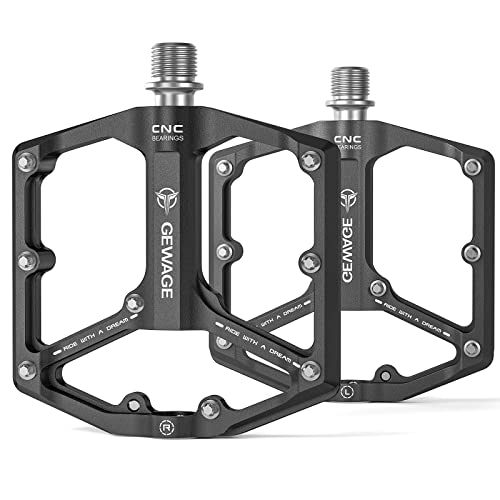
GEWAGE CNC Machined Flat Pedals
What We Like
- 16 replaceable pins per pedal for grip
- 3 sealed bearings resist water and dust
- Chrome-molybdenum steel spindle for strength
Trade-offs
- At 332g, it's heavier than some composite pedals
A 100 x 104mm platform gives you a broad, stable base for keeping your feet planted. The 16 replaceable pins per pedal provide solid grip with good foot placement, so your feet stay in position on climbs and descents. Three sealed bearings protect the spindles from water and dust, which helps prevent noise and other problems, letting you enjoy cycling in rain or on climbs. For riders who want reliable grip and durability, this pedal delivers the core features that matter most.
The GEWAGE pedals weigh 332 grams, which is a bit more than composite options like the OneUp Components Composite Pedals. But the aluminum alloy body and chromoly steel spindle deliver a durable feel that riders notice on rough terrain. The platform measures 100 x 104mm with 16 replaceable pins per pedal, so your feet stay planted during climbs or descents. Three sealed bearings protect the spindles from water and dust, making these pedals a practical choice for wet-weather riding.
Product photos
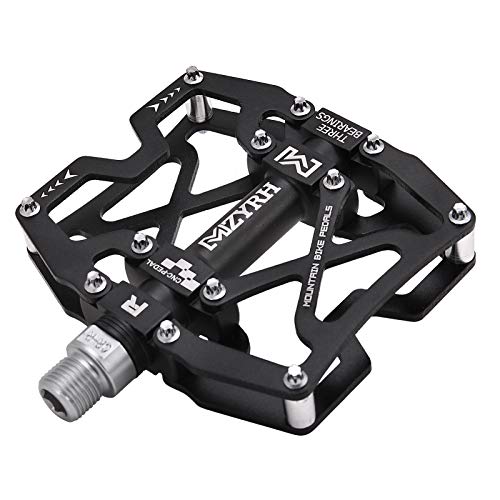
MZYRH Mountain Bike Pedals
What We Like
- 3 sealed bearings for smooth spin
- Anti-skid pins for solid grip
- CNC-machined aluminum body
Trade-offs
- Small platform limits foot placement room
- Heavier than composite pedal alternatives at 0.5 pounds
Weighing 0.45 pounds for the pair, these MZYRH pedals are a lightweight option for riders who want to keep their bike nimble. The CNC-machined aluminum body and three sealed bearings provide a smooth, durable spin, while the anti-skid pins help keep your feet planted on the platform. If you’re a weight-conscious rider looking to shed ounces without switching to clipless, this is a smart pick for XC, road, or commuting duty.
The trade-off is a compact 4.1-by-3.6-inch platform that offers less real estate for larger feet or aggressive downhill riding. Best for riders who value grams over grip area on smoother trails or pavement.
ROCKBROS Nylon Composite Platform Pedals

What We Like
- Extra-large anti-slip platform
- 10 replaceable anti-skid nails per side
- Sealed bearings resist water and mud
- Lightweight at 0.92 lb per pair
Trade-offs
- Nylon composite less impact-resistant than aluminum
A 4.56-by-5.35-inch platform gives you a stable, confidence-inspiring foothold that keeps your shoes planted even on wet or muddy trails. The ten replaceable anti-skid nails per side bite into your soles, and the sealed DU bearings shrug off grit and moisture so the pedals spin smoothly ride after ride. That combination of generous real estate and all-weather grip makes this an ideal choice for riders who want a large, forgiving surface without spending a premium.
At 0.92 pounds per pair, these pedals are light enough for daily riding without dragging you down, and the wide platform keeps your feet planted on bumpy trails. The sealed bearings fend off water and mud, so they spin smoothly even after a messy ride. For riders who want a stable, low-maintenance pedal that won’t break the bank, this is a practical choice.
Product photos
DMR V12 MTB Flat Pedals

What We Like
- Thin 16mm concave platform
- 80g lighter than standard V12
- Chromoly axle with sealed bearings
- Replaceable tunable grip pins
Trade-offs
- At 1.0 lb, heavier than some composite pedals
The DMR V12 MTB Flat Pedals shed 80 grams per pair compared to the standard aluminum V12, making them a smart pick for riders who count every ounce on climbs or technical trails. That weight savings comes from a magnesium platform that stays thin at 16mm deep with a concave shape, so your foot sits low and locked in. The chromoly axle and sealed bearings handle rough conditions without needing constant attention, and the replaceable pins let you dial in exactly how much grip you want. This pedal suits the mountain biker who values a lighter feel underfoot without giving up a large, stable platform.
The DMR V12 weighs 80g per pair less than the standard aluminum V12s, a savings you feel on long climbs without adding fatigue. Its thin 16mm concave body and large magnesium platform keep your foot planted through rough sections, while the chromoly axle and sealed bearings shrug off mud and grit ride after ride. Riders who want a light, responsive pedal will find the V12 delivers a clear performance advantage where it counts.
How We Evaluated Flat Bicycle Pedals
We researched each pedal’s construction materials, spindle type, bearing system, and platform dimensions using manufacturer data and expert round-ups. Owner feedback helped us understand how these pedals perform over time, especially regarding grip retention, bearing smoothness, and durability under repeated use.
The four criteria that mattered most were platform size and shape, grip system, bearing and spindle quality, and weight versus impact resistance. Platform size and shape determine if the pedal supports your foot without slipping. The grip system includes the number, type, and replaceability of pins. Bearing and spindle quality matters because serviceable bearings and chromoly spindles last longer. Weight versus impact resistance is a trade-off: composite pedals save weight, while aluminum pedals handle abuse better.
A research-led evaluation cannot replace months of trail testing, but it does surface the trade-offs that matter. By comparing specs and real-world owner experiences across dozens of models, we narrowed the field to ten pedals that offer clear value for different riding styles and budgets.
What To Look For In Flat Bicycle Pedals
Choosing a flat pedal means balancing platform size, grip, weight, and durability for your specific riding style and shoe size. Here is what to consider before you buy.
Platform Size and Shape
A pedal’s platform directly affects stability and control. Wider platforms (around 110mm or more) support larger feet and spread pressure evenly, reducing foot fatigue on long rides. Concave or convex profiles change how your shoe sits on the pedal: a concave shape cups the foot for a more secure feel, while a convex profile helps shed mud. Riders with US size 10 and above should look for platforms at least 105mm wide, while smaller feet may feel crowded on oversized pedals.
Grip Pins
Traction pins are the only thing keeping your foot on the pedal. Look for pedals with replaceable pins, they wear down over time and swapping them out is far cheaper than buying new pedals. More pins generally mean more grip, but pin height and placement matter too. Hexagonal or conical pins bite into shoe soles more aggressively than round pins. Some pedals let you tune grip by adding or removing pins, which is useful for riders who ride in muddy conditions or prefer some float.
Bearings and Spindle
The bearing system determines how smoothly a pedal spins and how long it lasts. Sealed cartridge bearings keep out water and grit better than loose ball bearings, while IGUS bushings offer a smooth, low-maintenance alternative that resists corrosion. A chromoly steel spindle is stronger and more durable than a standard steel or aluminum one, especially for aggressive riding. Serviceable pedals let you rebuild the internals rather than throwing the whole pedal away, which saves money over time.
- Check that the platform width matches your shoe size, too narrow and your foot will hang off the edge.
- Verify that the grip pins are replaceable, not molded into the pedal body.
- Look for a chromoly spindle if you ride rough terrain or weigh over 200 pounds.
- Confirm the bearing type: sealed cartridge or IGUS bushings last longer in wet conditions.
- Consider weight: composite pedals are lighter, while aluminum pedals resist impacts better.
A good flat pedal should let you forget it is there, so focus on fit and durability over flashy features.
Flat Bicycle Pedals Compared
The table below compares the key specs and trade-offs of our top ten flat bicycle pedals side by side.
| Product | Platform Size | Material | Weight | Spindle Material |
|---|---|---|---|---|
| Crankbrothers Stamp 1 Gen 2 Composite Pedals | 114 x 114mm | Nylon composite | 0.8 pounds | N/A |
| OneUp Components Composite Pedals | 115x105mm | Nylon Composite | 355g | Chromoly Steel |
| Race Face Chester Pedals | 115 x 110mm | N/A | 1.1 pounds | Cr-Mo chromoly steel |
| Shimano PD-GR500 Multi-Purpose Flat Pedal | N/A | N/A | 1.8 pounds | Chromoly |
| DMR Vault Pedals | 105 x 105 x 17mm | CNC machined aluminum | 0.9 pounds | 4140 CroMo steel |
| ROCKBROS Aluminum MTB Pedals | 101mm | CNC aluminum alloy | 0.7 pounds | Chrome-molybdenum steel |
| GEWAGE CNC Machined Flat Pedals | 100 x 104 mm | aluminum alloy composite | 332 g | Chrome-molybdenum steel |
| MZYRH Mountain Bike Pedals | 4.1 x 3.58 x 1.0 in | High Strength Aluminum Alloy | 0.5 Pounds | 9/16" |
| ROCKBROS Nylon Composite Platform Pedals | 4.56" x 5.35" | Nylon composite fiber | 0.9 Pounds | CR-MO steel |
| DMR V12 MTB Flat Pedals | N/A | Magnesium | 1.0 pounds | Chromoly |
Frequently Asked Questions
What size flat pedal do I need for my feet?
Platform width is the main factor. Riders with US size 10 or larger feet typically need a platform at least 105mm wide for stable footing. Smaller feet often feel more secure on a narrower platform around 100mm. The Crankbrothers Stamp 1 Gen 2 is built for larger feet, while the ROCKBROS Aluminum MTB Pedals work well up to size 12.
Are composite pedals as durable as aluminum pedals?
Composite nylon pedals are lighter and resist corrosion, but they are less impact-resistant than aluminum. Aluminum pedals handle rock strikes and hard landings better, making them a good choice for downhill and aggressive trail riding. For cross-country and trail riding, composite pedals offer plenty of durability at a lower weight.
How often should I replace the grip pins on my flat pedals?
Replace grip pins when they wear down to a rounded nub, which usually happens after several months of regular riding depending on terrain and shoe sole material. Most pedals use standard M3 or M4 pins that are inexpensive and easy to swap. Pedals like the Race Face Chester and DMR Vault include spare pins, which is a nice bonus.
Can I use flat pedals on a road bike?
Yes, flat pedals work well on road bikes, especially for commuting, fitness riding, or anyone who prefers not to clip in. Look for a pedal with a slim profile and good grip, like the MZYRH Mountain Bike Pedals, which are lightweight and smooth-spinning for road or gravel use.
What is the difference between sealed bearings and loose ball bearings?
Sealed cartridge bearings are enclosed units that resist water, dust, and mud better than loose ball bearings. They require less maintenance and last longer in wet or dirty conditions. Loose ball bearings are cheaper to manufacture but need regular cleaning and greasing. Most modern flat pedals, including the GEWAGE and Shimano PD-GR500, use sealed bearings for better reliability.
The Bottom Line
The Crankbrothers Stamp 1 Gen 2 Composite Pedals are our Best Overall pick for riders with larger feet who want a lightweight, grippy composite pedal with serviceable bearings. If you prioritize traction above all else, the Race Face Chester Pedals offer tenacious grip with a rebuildable chromoly spindle. Budget-conscious riders should consider the ROCKBROS Aluminum MTB Pedals for a lightweight aluminum option with a lifetime warranty.
The single most important factor in choosing a flat pedal is platform size relative to your foot. A pedal that fits your shoe size will feel stable and natural, while one that is too small or too large will compromise control and comfort. Start there, and everything else falls into place.
