
10 Best Flat Mountain Bike Pedals in 2026
This post contains affiliate links. As an Amazon Associate, we earn from qualifying purchases.
The Crankbrothers Stamp 1 Gen 2 Composite Pedal takes the best overall spot for its large platform that accommodates bigger feet. Replaceable traction pins provide reliable grip, and serviceable IGUS bearings extend the pedal’s life. Riders who prefer a lighter setup should look to the OneUp Components Composite Pedal, while those on a budget will appreciate the Race Face Chester Pedal.
Flat pedals let you put a foot down quickly on technical terrain, but finding the right one means balancing platform size, grip, weight, and durability for your riding style. A pedal that works for cross-country laps may feel unstable on a rocky descent, and a heavy-duty downhill pedal can feel sluggish on long climbs.
This guide is based on manufacturer specifications, expert round-ups, and patterns in owner feedback across a range of riding disciplines. We break down the ten best flat mountain bike pedals by what they do best, so you can match the right pedal to your trails and your feet.
Top 10 Flat Mountain Bike Pedals in the Market
Certain content that appears on this site comes from Amazon. This content is provided "as is" and is subject to change or removal at any time.
The Best Flat Mountain Bike Pedals, Reviewed
Crankbrothers Stamp 1 Gen 2 Composite Pedal
What We Like
- Large platform for big feet
- Replaceable traction pins for grip
- Serviceable IGUS bearings for durability
- Lightweight nylon composite body
Trade-offs
- Only fits large shoe sizes (US 10-15)
- Too small for riders with shoe sizes under US 10
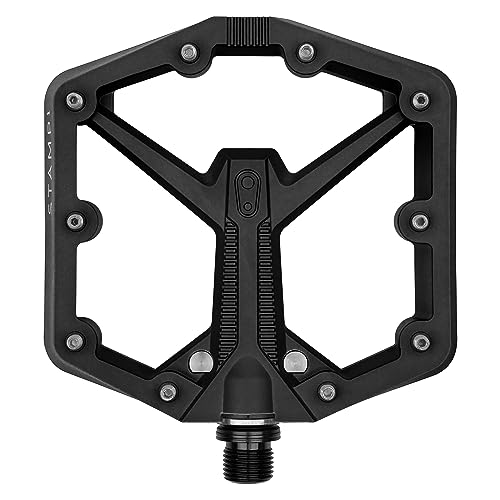
A 114 x 114mm platform gives riders with US shoe sizes 10-15 a stable, supportive surface that keeps your foot planted through rough terrain. The one-piece replaceable traction pins let you restore grip without swapping pedals, and the IGUS bearings with seals are designed to be serviced, so this pedal can last season after season. For taller or larger riders looking for a flat pedal that doesn’t skimp on contact area, this is a natural fit.
The nylon composite body keeps weight low, which helps on long climbs and when you’re maneuvering the bike around obstacles. Riders who prioritize stiffness above all else sometimes prefer aluminum pedals, but the trade-off is extra weight. For most trail and enduro riding, the composite construction offers a good balance of durability and weight savings.
Product photos
OneUp Components Composite Pedal

What We Like
- Ultra-thin convex profile reduces pedal strikes
- Large 115x105mm platform for secure foot placement
- Replaceable hexagonal pins for consistent grip
- Lightweight at only 355g
Trade-offs
- Thin profile offers less cushioning for rough trails
- Nylon composite body lacks the impact resistance of aluminum pedals
At just 355 grams, these pedals are among the lightest composite options you’ll find, making them a smart pick for riders who want to shave weight without sacrificing grip. The large 115x105mm platform combined with a subtly convex shape nestles into the natural arch of your foot, which helps you stay connected to the bike on climbs and rough descents. Ten replaceable hexagonal pins per side keep your shoes planted, while the thin profile reduces the chance of catching rocks or roots on technical terrain. If you’re building a lightweight trail bike or just hate dragging extra mass up climbs, this pedal delivers real value.
The trade-off for that low weight is a nylon composite body that won’t feel as stiff as an aluminum pedal under aggressive riding. For most trail and cross-country riders, the weight savings and grip make this a worthwhile choice.
Product photos
Race Face Chester Pedal
What We Like
- Lightweight nylon composite construction
- Bright red color option
- Nylon composite construction keeps weight low
Trade-offs
- Composite body less durable than aluminum
- Too wide for tight technical trails
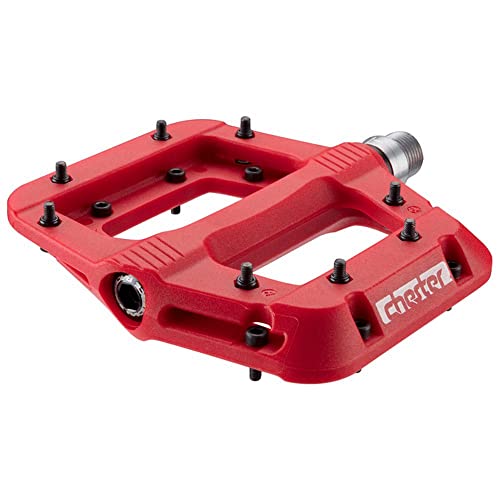
Weighing 1.0 pounds, the Race Face Chester Pedal uses a nylon composite body that keeps weight low for everyday riding. Its red color and one-size design make it a straightforward option for riders looking for a simple flat pedal. The composite construction offers a solid platform without the heft of metal pedals, which helps maintain a lively feel on the trail.
The main trade-off is durability: the composite body may not withstand repeated hard impacts as well as aluminum alternatives. For comparison, the Dmr Vault Aluminum Pedal weighs 0.9 pounds and uses a metal body, which can be more resistant to rock strikes. For most recreational trail riders, the Chester delivers dependable performance at a lower weight.
Shimano PD-GR500 Flat Pedal

What We Like
- Concave platform for comfort
- Chromoly spindle and sealed bearings
- Open design sheds mud easily
Trade-offs
- Heavier at 1.8 pounds than most composite pedals
- Open platform collects debris in dry conditions
The concave platform cradles your sole for better efficiency on longer rides, and the open shape sheds mud instead of packing up. That combination of customizable grip and all-day comfort makes it a strong fit for riders who switch between trail and pavement and want one pedal that does both well.
The trade-off is weight. But the chromoly spindle and sealed bearings mean it should hold up to hard use without needing frequent service, so the durability helps justify the mass for riders who prioritize longevity over lightness.
Dmr Vault Aluminum Pedal

What We Like
- CNC machined aluminum body
- 4140 CroMo steel axle
- 22 removable pins
- Includes spare pins and wrench
Trade-offs
- 105mm platform is smaller than some competitors
- At 0.9 lb, heavier than composite pedals
A 105 x 105mm platform with 22 removable pins means you get a solid, grippy surface that keeps your feet planted through rough descents. The CNC machined aluminum body and 4140 CroMo steel axle give this pedal a durable, premium feel that suits riders who want metal construction without paying boutique prices. It’s a smart pick for trail and enduro riders who value stiffness and long-term reliability over saving every gram.
At 0.9 pounds, the Vault is heavier than the OneUp Components Composite Pedal, which weighs 0.8 pounds, so if you’re counting every gram for climbing, the composite option might be lighter. But that extra heft comes from a CNC machined aluminum body and a 4140 CroMo steel axle, meaning it can take repeated rock strikes without failing. For riders who prioritize durability over weight savings, the DMR Vault is built to last.
Product photos
Dmr V11 Composite Pedal

What We Like
- Wide 105 x 105mm platform for stable footing
- Glass-reinforced nylon body is lightweight and tough
- CroMo steel axle for strength and durability
- Tuneable grip with removable pins
Trade-offs
- At 450g, heavier than some composite pedals
- 6mm hex wrench needed for installation
A 105 x 105mm platform gives your foot a stable, confidence-inspiring landing on technical descents or jumps. The glass-reinforced nylon body keeps weight reasonable at 450g per pair, while the 4140 CroMo steel axle adds real durability for aggressive riding. This is a pedal built for riders who prioritize a big, planted feel over featherweight grams.
At 450g, the Dmr V11 is heavier than some composite pedals. But if you value a large contact patch and a burly steel axle for hard landings, it delivers. It’s a straightforward, no-fuss design that focuses on grip and stability for downhill, freeride, and dirt jump use.
Shimano PD-G8040 Flat Pedal

What We Like
- Built for gravity riding
- Fully rebuildable design
- Multiple traction pins for grip
- Uniform thickness for stability
Trade-offs
- Built specifically for gravity riding, not all-mountain use
- Not designed for cross-country or smooth singletrack
Shimano built the PD-G8040 specifically for gravity riding, with a fully rebuildable construction that sets it apart from many pedals that get tossed when they wear out. The multiple traction pins and uniform thickness work together to give you a stable, controlled platform when you’re charging down rough terrain or hitting jumps. This is a pedal for riders who prioritize durability and grip over saving every gram, and who want something that can be restored rather than replaced after a hard season.
Built specifically for gravity-focused riding, the PD-G8040 is designed to handle the abuse of downhill trails and aggressive terrain. Its fully rebuildable construction means you can replace worn parts instead of buying a new pedal, which saves money over time. The multiple traction pins provide consistent grip even when the trail gets rough, so your feet stay planted through rock gardens and steep chutes.
ROCK BROS Aluminum MTB Pedal

What We Like
- Lightweight 302g aluminum construction
- 101mm wide platform for even foot support
- Stainless steel anti-skid spikes for grip
- Sealed bearings protect from water and dust
Trade-offs
- Aluminum can feel cold in winter riding
- No replaceable pins for custom grip tuning
At 302 grams per pair, the ROCK BROS Aluminum MTB Pedal uses a CNC-machined aluminum alloy body and a chrome-molybdenum steel spindle, so the platform stays stiff under hard pedaling without flexing. The 101mm wide face spreads foot pressure evenly, and the stainless steel pins on both sides dig into your shoe soles to keep you locked in on rough descents or when you’re just cruising fire roads. Sealed bearings with a carbon fiber bushing mean the spindle spins smooth and stays protected from trail grit and moisture, which adds to the pedal’s durability without adding bulk. For riders who want a featherweight flat pedal that still feels solid and grippy, this is a strong contender.
The ROCK BROS pedal uses a stiff aluminum body that won’t flex or creak under load, unlike the Crankbrothers Stamp 1 Gen 2 Composite Pedal, which has a plastic body that can flex. The 101mm platform is designed for shoes up to US size 12, so riders with larger feet might want to check fit. The fixed pins provide grip but can’t be swapped for different heights or materials.
Product photos
FIFTY-FIFTY Nylon Composite Pedal

What We Like
- Ultra-thin 0.7-inch profile reduces pedal strikes
- Large 106×104 mm platform for stable footing
- 9 replaceable steel pins per side for grip
- Sealed bearings protect against water and dust
Trade-offs
- Thin profile offers less cushioning on rough terrain
- Nylon composite less durable than aluminum pedals
At just 0.7 inches thick, this pedal is built for riders who want every millimeter of clearance to avoid smacking rocks and roots on technical trails. The large 106×104 mm platform keeps your foot planted even when the trail gets rowdy, and the 9 replaceable steel pins per side dig in for reliable grip. It’s a smart pick for enduro, downhill, or all-mountain riders who prioritize ground clearance without giving up a stable footing surface. The sealed bearings add durability in wet or dusty conditions, so you can keep riding through changing weather.
At just 0.7 inches thick, this pedal gives you maximum clearance to avoid snagging rocks and roots on the trail, which is a real advantage for riders who frequently tackle technical terrain. The trade-off is that the thin design means less material between your foot and the spindle, so you’ll feel the trail more directly, but for those prioritizing snag-free clearance over plushness, that’s a deliberate choice.
RaceFace Aeffect R Aluminum Pedal
What We Like
- Thin concave platform for secure footing
- Cartridge bearings and DU bushings
- Grease access port for easy maintenance
Trade-offs
- Aluminum body heavier than composite alternatives
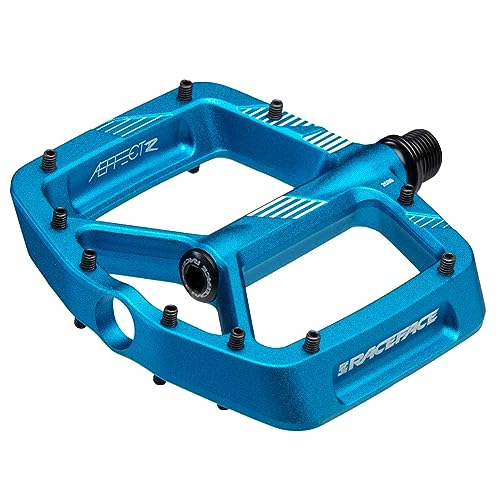
Twenty SHCS hex-head pins give this pedal serious bite, so your foot stays planted through rough descents and technical climbs. The thin concave platform lets your shoe sink in for a connected feel, making it a strong match for riders who want confident traction without a bulky profile. Cartridge bearings and DU bushings keep the spin smooth, and the hidden grease port means you can refresh the lube without pulling the pedal apart, a nice touch for anyone who rides often.
At one pound, the RaceFace Chester Pedal is heavier than some composite pedals, like the OneUp Components Composite at 0.8 pounds. If every gram matters on long climbs, that extra heft might bug you. But for riders who prioritize grip and durability over weight savings, the RaceFace Chester Pedal delivers a locked-in feel that’s hard to beat.
How We Evaluated Flat Mountain Bike Pedals
We compared pedals by reviewing manufacturer specs, studying expert recommendations from established mountain bike publications, and analyzing what owners consistently report after months of trail use. The goal was to identify which pedals perform well for specific riding styles and foot sizes.
The four criteria that mattered most were platform size and shape, grip system (pin count, type, and replaceability), weight relative to intended use, and build quality including bearing type and spindle material. A pedal that checks all four boxes for your shoe size and terrain will serve you well.
Research-led evaluation has limits: we cannot replicate years of abuse on a single pedal, and individual preferences for concave vs. Flat profiles or pin sharpness vary widely. What we can do is point you toward the pedals that consistently satisfy riders with similar needs.
What To Look For In Flat Mountain Bike Pedals
Choosing the right flat pedal comes down to matching platform dimensions to your shoe size, understanding how grip pins work with your sole, and deciding whether weight or durability matters more for your riding.
Match platform width to your shoe size for stable footing, choose pin type and count for your terrain, and balance weight against durability based on how aggressively you ride.
Platform Size and Shape
A pedal that is too small for your foot will feel unstable, especially on rough descents. For riders with US size 10 or larger, look for platforms around 105mm wide or more. Smaller-footed riders can get away with narrower pedals and may prefer them for clearance. Concave platforms, like those on the Shimano PD-GR500, help center your foot naturally, while flat or convex profiles offer a different feel.
Grip System
Replaceable traction pins are a sign of a well-designed pedal. Hex or square pins bite into soft rubber soles better than smooth studs. More pins generally mean more grip, but pin height and sharpness matter too. Some pedals, like the ROCK BROS Aluminum MTB Pedal, use fixed spikes that cannot be tuned, while others let you swap pins to adjust grip level or replace worn ones.
Weight vs. Durability
Composite pedals like the Crankbrothers Stamp 1 Gen 2 are lightweight and affordable, but they can crack on hard impacts. Aluminum pedals, such as the Dmr Vault, handle rock strikes better but add weight. For cross-country and trail riding, composite is often the smarter choice. For aggressive downhill and enduro, aluminum’s impact resistance is worth the extra grams.
- Check that the pedal uses sealed bearings or a bushing-and-bearing combo for longevity.
- Confirm the axle material: chromoly steel is stronger than standard steel or aluminum.
- Look for a rebuildable design if you plan to keep the pedal for multiple seasons.
- Measure your shoe sole thickness against the pedal’s stack height to ensure proper clearance.
A pedal that fits your foot and your terrain will feel like an extension of your shoe, not a platform you fight against.
Flat Mountain Bike Pedals Compared
The table below compares the ten flat mountain bike pedals side by side, highlighting platform dimensions, weight, and key features so you can see how they stack up at a glance.
| Product | Body Material | Platform Size | Weight |
|---|---|---|---|
| Crankbrothers Stamp 1 Gen 2 Composite Pedal | Nylon composite | 114 x 114mm | 0.8 pounds |
| OneUp Components Composite Pedal | Nylon Composite | 115x105mm | 355g |
| Race Face Chester Pedal | Nylon Composite | N/A | 1.0 Pounds |
| Shimano PD-GR500 Flat Pedal | N/A | N/A | 1.8 pounds |
| Dmr Vault Aluminum Pedal | CNC aluminum | 105 x 105 x 17mm | 0.9 Pounds |
| Dmr V11 Composite Pedal | glass-reinforced nylon | 105 x 105mm | 1.0 Pounds |
| Shimano PD-G8040 Flat Pedal | N/A | N/A | N/A |
| ROCK BROS Aluminum MTB Pedal | CNC aluminum alloy | 4.7 x 3.9 in (101mm wide) | 0.7 pounds |
| FIFTY-FIFTY Nylon Composite Pedal | nylon composite | 106×104 mm | 0.8 pounds |
| RaceFace Aeffect R Aluminum Pedal | Aluminum | N/A | 1.0 pounds |
Frequently Asked Questions
What size flat mountain bike pedal do I need?
Platform width should roughly match the width of your shoe at the ball of your foot. Riders with US size 10 or larger generally need a platform of at least 105mm for stable footing. Smaller sizes can use narrower pedals without sacrificing comfort.
Are composite or aluminum flat pedals better?
Composite pedals are lighter and more affordable, making them ideal for trail and cross-country riding. Aluminum pedals are more durable and resist cracking on rock strikes, which matters for aggressive downhill and enduro riding. Choose based on your terrain and weight priorities.
How often should I replace the pins on my flat pedals?
Replace pins when they become rounded or worn down, which reduces grip. How often depends on terrain and how much you ride. Rocky trails wear pins faster. Most pedals with replaceable pins use a standard hex or square pin that is easy to swap.
Can I use flat pedals for downhill mountain biking?
Yes, flat pedals are common in downhill riding because they let you put a foot down quickly. Look for a large platform with plenty of grip pins and a durable build. The Shimano PD-G8040 is built specifically for gravity riding.
Do flat pedals work with clipless shoes?
No, flat pedals require flat-soled shoes with soft rubber tread for proper grip. Clipless shoes have a stiff sole and a cleat mount that does not work with flat pedal pins. Use dedicated flat pedal shoes for the best connection.
The Bottom Line
The Crankbrothers Stamp 1 Gen 2 Composite Pedal is the best overall choice for riders with larger feet who want a lightweight, grippy platform with serviceable bearings. It balances all the key factors for trail riding without breaking the bank.
If your priority is saving weight for long climbs, the OneUp Components Composite Pedal offers an ultra-thin profile and a large platform at just 355 grams. For a budget-friendly entry point that still performs well, the Race Face Chester Pedal delivers reliable grip and low weight for casual trail riding.
The single most important factor in choosing a flat pedal is platform size relative to your shoe size. Get that right, and everything else falls into place.
