
8 Best Fuel Additives For High Mileage Cars in 2026
This post contains affiliate links. As an Amazon Associate, we earn from qualifying purchases.
For high-mileage cars, the Gumout Regane High Mileage Fuel System Cleaner is our Best Overall pick thanks to its three-detergent blend that cleans both GDI and port injectors while reducing friction. Drivers looking to restore lost power should consider the Chevron Techron High Mileage Fuel System Cleaner, while those focused on reducing engine wear will want the Valvoline MaxLife Complete Fuel System Cleaner.
As your car racks up miles past 75,000, carbon deposits, friction, and oil consumption become real concerns that a standard fuel additive may not address. The right high-mileage formula targets these specific issues with conditioners, friction reducers, and stronger detergents.
This guide is based on manufacturer specifications, expert round-ups, and patterns in owner feedback. We break down what to look for and compare eight top options so you can match the right additive to your car’s needs.
Top 8 Fuel Additives For High Mileage Cars in the Market
Certain content that appears on this site comes from Amazon. This content is provided "as is" and is subject to change or removal at any time.
The Best Fuel Additives For High Mileage Cars, Reviewed
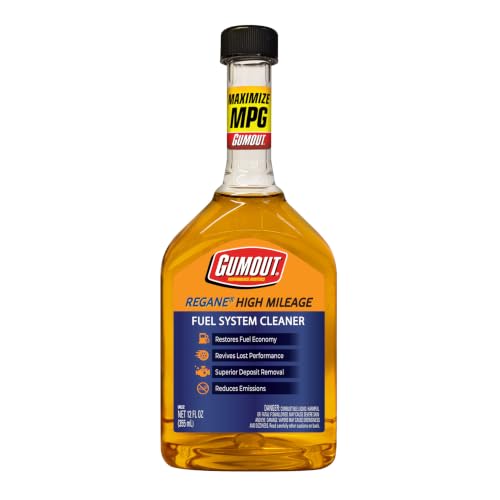
Gumout Regane High Mileage Fuel System Cleaner
What We Like
- Three-detergent blend for deeper carbon removal
- Cleans GDI and port injectors
- Conditions upper cylinder to reduce friction
- Prevents future deposit build-up
Trade-offs
- Requires near-empty tank before adding
- Best results only when repeated every 3,000 miles
- 12 oz bottle treats up to 19 gallons only
The CarbonClear Technology in this cleaner combines PEA with PIBA and a third patented detergent to remove the heavy carbon deposits that build up in engines with over 75,000 miles. That blend reaches GDI injectors, intake valves, piston tops, and combustion chambers, so a single fill-up can clear out years of buildup. It also conditions the upper cylinder to reduce friction and wear, which helps restore horsepower and improve fuel economy. For a high-mileage driver, this one bottle handles multiple cleaning jobs and adds corrosion protection against ethanol and water.
The trade-off is that you need to plan your fill-up around it. You pour the whole 12 ounces into a nearly empty tank, then add no more than 19 gallons of gas. If you top off early, you dilute the concentration. And the manufacturer recommends repeating the treatment every 3,000 miles for best results, so it is not a one-and-done fix.
Chevron Techron High Mileage Fuel System Cleaner

What We Like
- Removes gum, varnish, and deposits
- Restores lost power and performance
- Multiple corrosion inhibitors protect metal
- Compatible with all ethanol blends
Trade-offs
- Single 12 oz bottle treats one tank
Chevron’s Techron High Mileage Fuel System Cleaner targets the two biggest enemies of an older engine: carbon buildup and corrosion. Its multiple corrosion inhibitors shield both ferrous and non-ferrous metal components, while the deposit-removing chemistry works to clear gum and varnish that rob power. For a car that’s lost its punch over the years, this additive is designed to bring back the throttle response you remember. It’s fully safe with ethanol blends from E10 to E85, so it fits most modern fuel systems without worry.
Chevron Techron High Mileage Fuel System Cleaner explicitly protects the fuel gauge sensor and metal parts from corrosion, an advantage over Gumout Regane High Mileage which focuses only on deposit removal. The single 12-ounce bottle treats one tank of gas, so you will need to buy another for follow-up treatments. For a high-mileage daily driver that feels sluggish, this product restores lost power by removing gum, varnish, and other deposits.
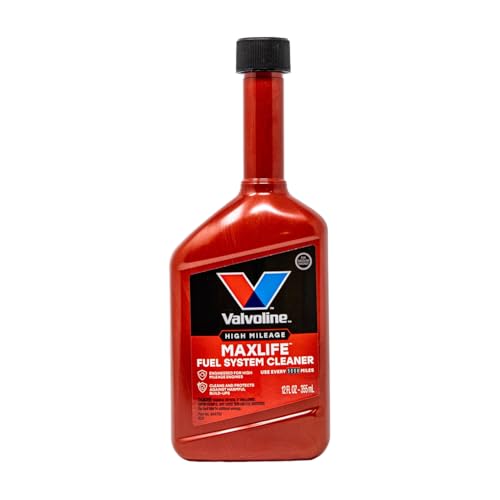
Valvoline MaxLife Complete Fuel System Cleaner
What We Like
- Reduces engine friction and wear
- Removes stubborn deposits in high-mileage engines
- Restores lost performance and fuel efficiency
- Provides long-term protection against future buildup
Trade-offs
- Designed only for engines over 75K miles
- Single-use bottle; no multi-pack option listed
Valvoline MaxLife Complete Fuel System Cleaner is formulated for high-mileage vehicles with over 75,000 miles, combining deposit removal with friction reduction to address common issues in older engines. It removes stubborn deposits that can build up over time, which helps restore lost engine performance and fuel efficiency. The additive also lubricates critical components to reduce wear, and regular use provides long-term protection against future deposit buildup. For someone driving an older car that feels sluggish or rough, this product offers a comprehensive approach to cleaning and maintaining the fuel system.
If your vehicle has over 75,000 miles, this fuel system cleaner is designed specifically for that high-mileage range, so for newer cars you would be using a formulation you do not need yet. The Valvoline product removes stubborn deposits and also reduces engine friction and wear by lubricating critical components, which helps keep older engines running reliably. Compared to Gumout Regane, which also targets engines over 75K miles, Valvoline adds friction reduction and long-term wear protection as stated features.
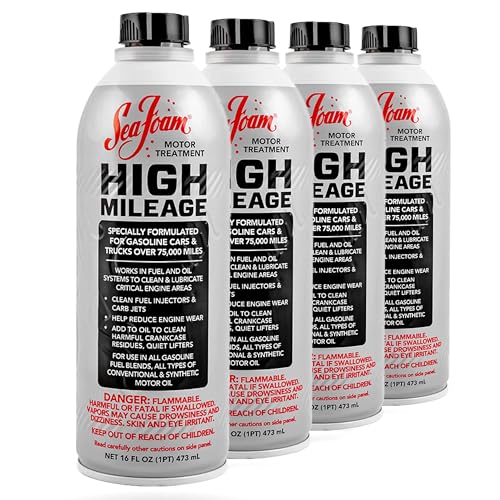
Sea Foam High Mileage Motor Treatment
What We Like
- Cleans fuel injectors and carburetor jets
- Helps prevent common oil burning causes
- Lubricates critical upper engine areas
- Reduces long-term engine wear
Trade-offs
- Requires regular use for best results
- Does not target catalytic converter cleaning
The ability to treat both fuel and crankcase oil means this additive works from two angles at once. It cleans fuel injectors and carburetor jets while also addressing the common causes of oil burning in higher-mileage engines. That dual-action approach makes it a strong choice for drivers focused on keeping an aging engine running smoothly over the long haul, rather than just chasing a quick performance boost.
Sea Foam High Mileage Motor Treatment asks for regular use to reduce long-term engine wear and prevent rough performance, so it is more of a maintenance habit than a one-time fix. Compared to the Gumout Regane, which is a high-mileage fuel system cleaner for engines over 75,000 miles, Sea Foam treats both fuel and crankcase oil. It offers a different approach for drivers who want to address both systems rather than focusing solely on fuel deposits.
Product photos
Berryman High Mileage Fuel System Rejuvenator

What We Like
- Exclusive HEST solvent technology
- Cleans injectors, valves, carburetors, chambers
- Dissolves fuel residue and carbon deposits
- Works in marine and small gas engines
Trade-offs
- Single-use pour can requires careful measuring
- Strong solvent smell during application.
Berryman’s High Energy Solvent Technology (HEST) uses strong solvents instead of weak carriers like mineral spirits, which means it goes after carbon deposits and fuel residue with real bite. For a high-mileage engine that’s been running rough, hesitating, or losing power, this 15-ounce pour can treats the whole fuel system, injectors, intake valves, carburetor, and combustion chambers, in a single tank. It’s a straightforward, no-nonsense cleaner for someone who wants aggressive chemistry, not a gentle conditioner.
Berryman High Mileage Fuel System Rejuvenator uses exclusive HEST solvents, strong solvents rather than weak carriers like mineral spirits or kerosene, to dissolve fuel residue and carbon deposits in one tank. This solvent-based approach targets neglected engines needing a deep clean, not a gentle maintenance additive for every oil change. Know your engine’s condition, and this formula delivers.
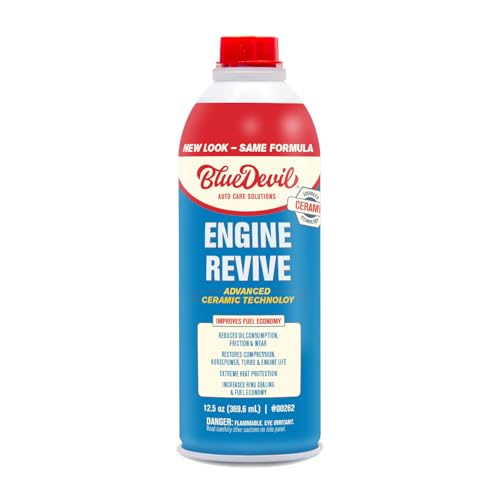
BlueDevil Engine Revive For High Mileage Vehicles
What We Like
- Cleans sludge and varnish
- Reduces friction and heat
- Improves compression and ring sealing
- Works with gas and diesel engines
Trade-offs
- Designed only for high mileage vehicles
- Targets oil consumption, not fuel system deposits
Advanced Ceramic Technology cleans sludge and varnish while reducing friction and heat, which directly targets the buildup and wear that high-mileage engines face. This technology also improves compression, horsepower, and ring sealing, helping restore engine performance. For a driver whose engine is burning oil, this additive is designed to reduce oil consumption and extend engine life. It is safe for gas and diesel engines and all engine oil types, so it fits a wide range of vehicles.
BlueDevil Engine Revive is designed to reduce oil consumption and wear, not to clean fuel system deposits. If your engine is running rough from carbon deposits in the fuel system, a product like Gumout Regane High Mileage Fuel System Cleaner is formulated for that purpose. But if your biggest concern is oil consumption, this additive addresses that with a ceramic technology that reduces friction and improves ring seal. It is a targeted solution for a common high-mileage issue.
Charunee Catalytic Converter Cleaner
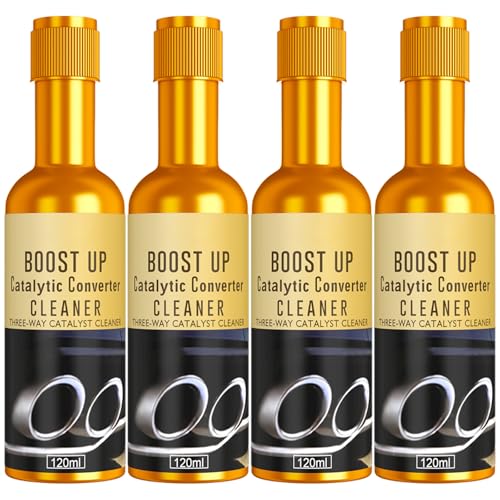
What We Like
- Works with gas, diesel, hybrid, flex-fuel
- Easy pour-in-tank application
- Reduces carbon buildup in catalytic converter and sensors
Trade-offs
- Does not alter fuel composition
Its main job is reducing carbon buildup in the catalytic converter, oxygen sensors, fuel injectors, and cylinder heads. So if you are dealing with power loss, hesitation, rough idle, or hard starts, this additive directly addresses those driveability issues.
Product photos
Part Synergy High Mileage Fuel System Treatment
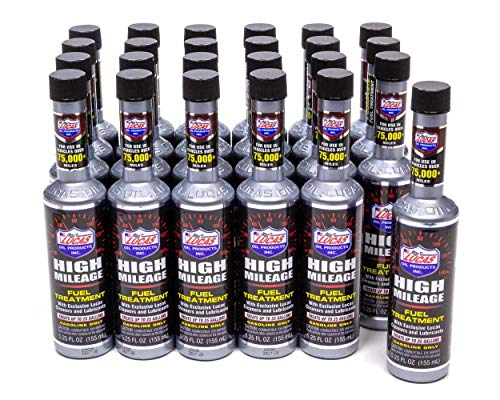
What We Like
- 24 bottles per set for long-term supply
- Designed for high-mileage fuel systems
- 5.25 oz size fits standard gas tanks
Trade-offs
- Smaller 5.25 oz bottle than most competitors
- No specific high-mileage mileage threshold stated
Twenty-four bottles in one pack means you can treat your high-mileage car’s fuel system multiple times without needing to reorder soon. Part Synergy designed this treatment for gasoline engines, so it’s a straightforward additive for regular use. For someone who drives a lot and wants consistent fuel system care without constant shopping trips, this bulk set delivers real convenience and peace of mind.
The bottle size is small: at 5.25 ounces each, you get less per treatment than the 12-ounce Chevron Techron High Mileage Fuel System Cleaner. That means you’ll need to use one bottle per fill-up more often, which is fine if you’re already in the habit of adding additive with every tank. The smaller volume means it’s best for drivers who prefer frequent small doses over a single larger pour.
Product photos
How We Evaluated Fuel Additives For High Mileage Cars
Our evaluation focused on manufacturer documentation, expert recommendations from automotive publications, and common themes in owner reports.
Three criteria mattered most: the additive’s ability to clean deposits in high-mileage fuel systems, its compatibility with modern GDI and port injection engines, and whether it addressed specific high-mileage concerns like friction reduction or oil consumption. We also considered ease of use and value.
A research-led evaluation has limits. Owner experiences vary by vehicle model, driving habits, and maintenance history. What works well for one high-mileage engine may not suit another, so we prioritized additives with broad compatibility and clear application instructions.
What To Look For In Fuel Additives For High Mileage Cars
Choosing the right additive means matching its formula to your engine’s specific needs. Not all high-mileage treatments work the same way.
Look for an additive that targets deposits, friction, and corrosion protection. Check the treatment volume against your tank size, and confirm it works with your fuel type and engine generation.
Detergent Strength and Cleaning Action
High-mileage engines accumulate stubborn carbon, gum, and varnish on injectors, intake valves, and combustion chambers. The best additives use a blend of detergents, often three or more, to break down these deposits across multiple surfaces. Some formulations use solvent-based technology for a single aggressive clean, while others use milder detergents for regular maintenance.
Friction Reduction and Wear Protection
As engines age, friction between moving parts increases, leading to lost power and efficiency. Some high-mileage additives include friction modifiers or upper cylinder lubricants that condition seals and reduce wear. This is especially important for engines over 75,000 miles where clearances have widened.
Compatibility With Modern Engines
Many newer high-mileage cars use GDI (gasoline direct injection) engines, which are prone to carbon buildup on intake valves. Not all additives clean GDI systems effectively. Check that the product is labeled for both port and direct injection engines. Also confirm it works with ethanol blends, as most modern gasoline contains ethanol.
- Check the bottle size and treatment ratio, some 12 oz bottles treat up to 19 gallons, while smaller 5.25 oz bottles handle standard tanks.
- Look for multi-tank or bulk options if you prefer regular maintenance rather than a single deep clean.
- Verify compatibility with diesel, marine, or small engines if you need a multi-use product.
- Read the application instructions, some additives require a near-empty tank for best results.
- Consider whether you want a solvent-based cleaner for occasional use or a detergent-based additive for every fill-up.
A good rule of thumb: use a dedicated high-mileage additive every 3,000 miles or with every oil change for ongoing protection.
Fuel Additives For High Mileage Cars Compared
The table below compares eight fuel additives for high-mileage cars, highlighting their primary strengths and best-use scenarios.
| Product | Volume | Application | Engine Compatibility |
|---|---|---|---|
| Gumout Regane High Mileage Fuel System Cleaner | 12 oz | Single 12 oz bottle per fill-up | Gasoline |
| Chevron Techron High Mileage Fuel System Cleaner | 12 oz | N/A | E10, E85 and more |
| Valvoline MaxLife Complete Fuel System Cleaner | 12 oz | Fuel system cleaner | N/A |
| Sea Foam High Mileage Motor Treatment | 16 oz, pack of 4 | Fuel & crankcase oil | All gasoline fuels & motor oils |
| Berryman High Mileage Fuel System Rejuvenator | 15 fl. oz | N/A | 2-stroke & 4-stroke |
| BlueDevil Engine Revive For High Mileage Vehicles | 12.5 oz | N/A | Gas & diesel engines |
| Charunee Catalytic Converter Cleaner | N/A | Pour into fuel tank at refueling | Gas, Diesel, Hybrid, Flex-Fuel |
| Part Synergy High Mileage Fuel System Treatment | 5.25 oz | N/A | Gasoline engines |
Frequently Asked Questions
How often should I use a fuel additive in a high-mileage car?
Most high-mileage additives recommend use every 3,000 miles or at each oil change. Some products designed for regular maintenance can be added every fill-up, while solvent-based cleaners are typically used once or twice a year for a deep clean.
Can fuel additives fix a check engine light on a high-mileage car?
A fuel additive may clear a check engine light caused by carbon buildup on sensors or injectors. However, many causes of a check engine light, like faulty oxygen sensors, vacuum leaks, or mechanical issues, require a proper diagnosis and repair.
Will a high-mileage fuel additive reduce oil consumption?
Some additives, like BlueDevil Engine Revive, are formulated to reduce oil consumption by cleaning sludge and improving ring sealing. Others focus on fuel system deposits and will not directly address oil burning. Choose an additive that specifically targets oil consumption if that is your primary concern.
Are fuel additives safe for catalytic converters on high-mileage cars?
Most quality fuel additives are safe for catalytic converters when used as directed. Products like the Charunee Catalytic Converter Cleaner are designed to reduce carbon buildup in the catalytic converter and oxygen sensors, which can help maintain proper exhaust system function.
What is the difference between a fuel system cleaner and a fuel injector cleaner?
A fuel system cleaner treats the entire fuel path, including injectors, intake valves, and combustion chambers. A fuel injector cleaner focuses specifically on cleaning injector nozzles. For high-mileage cars, a full fuel system cleaner is generally more effective because deposits accumulate in multiple areas.
The Bottom Line
For most drivers of high-mileage cars, the Gumout Regane High Mileage Fuel System Cleaner offers the best balance of deep cleaning, friction reduction, and future deposit prevention. It is our Best Overall pick for anyone with 75,000 miles or more who wants a comprehensive treatment.
If restoring lost power is your priority, the Chevron Techron High Mileage Fuel System Cleaner is a strong alternative. Those dealing with oil consumption or seeking long-term engine preservation should look at the BlueDevil Engine Revive or Sea Foam High Mileage Motor Treatment, respectively.
The single most important factor is matching the additive to your engine’s specific problem, whether that is carbon deposits, friction, or oil burning. Read the label, follow the instructions, and stick to a regular maintenance schedule for the best results.
