
9 Best Fuel Stabilizers For Cars in 2026
This post contains affiliate links. As an Amazon Associate, we earn from qualifying purchases.
For most car owners, the STA-BIL Storage Fuel Stabilizer wins as the best overall because it keeps fuel fresh for 24 months and protects against corrosion and ethanol damage in a single, easy-to-use bottle. If you need longer storage for a classic car, the Ethanol Shield Fuel Stabilizer offers up to three years of protection. For those who want to clean their fuel system while stabilizing, the Sea Foam Motor Treatment Fuel & Oil Treatment is a versatile multi-function choice.
The real challenge with fuel stabilizers isn’t just pouring a bottle in the tank; it’s choosing the right chemistry for how long your car sits and what kind of fuel you use. Ethanol in modern gas absorbs moisture, which can lead to phase separation, corrosion, and gum buildup that makes starting a stored car a headache. A stabilizer that matches your storage duration and engine type prevents those problems.
We built this guide by analyzing manufacturer specifications, expert recommendations from automotive forums, and patterns in owner feedback across hundreds of user reports. Our goal is to help you match the right stabilizer to your specific storage needs, whether that’s a single car for the winter or a fleet of vehicles needing treatment.
Top 9 Fuel Stabilizers For Cars in the Market

Certain content that appears on this site comes from Amazon. This content is provided "as is" and is subject to change or removal at any time.
The Best Fuel Stabilizers For Cars, Reviewed
STA-BIL Storage Fuel Stabilizer

What We Like
- Keeps fuel fresh for 24 months
- Protects against corrosion and ethanol damage
- Treats 40 gallons per bottle
Trade-offs
- Single-use size, not concentrated for multiple treatments
- No engine cleaning additives included
At 40 gallons of treatment per bottle, this stabilizer covers a full tank on most cars with room to spare. It keeps fuel fresh for up to 24 months during storage, which means you can park a vehicle for a season or two and come back to gas that still runs clean. The added protection against corrosion and ethanol damage is a real bonus for anyone storing a car with modern ethanol-blended fuel, which can attract moisture and cause rust or phase separation over time.
The 16-ounce bottle treats exactly 40 gallons, so if you are storing a single car for the off-season, that is plenty. For a boat or RV with a larger tank, you will need more than one bottle. Ethanol Shield treats up to 1280 gallons from a 1-gallon container, so that product suits bigger jobs better. For everyday car storage, this STA-BIL is a straightforward, reliable choice.
Ethanol Shield Fuel Stabilizer

What We Like
- Stabilizes fuel up to 3 years
- OEM tested and verified
- Prevents ethanol fuel problems
- Works in 2 and 4-cycle engines
Trade-offs
- Large gallon size is heavy at 8 pounds
- Overkill for short-term or seasonal storage
Stabilizing fuel for up to three years is rare among fuel stabilizers, and that’s the headline feature here. The gallon jug treats up to 1,280 gallons of fuel, so it’s built for volume, and the OEM testing means the formula has been verified by engine manufacturers. If you park a car for a long stretch, a classic car, a project vehicle, or a seasonal driver, this stabilizer is designed to keep the fuel system ready to run when you come back.
This gallon of fuel stabilizer weighs 8 pounds, so it’s not something you’d toss in a glove box for a single lawnmower. It’s built for treating up to 1,280 gallons of fuel across multiple vehicles or large tanks. For someone who only needs to stabilize 40 gallons for a few months, a smaller 16-ounce bottle like STA-BIL Storage is lighter and handier. But if you’re storing a car for years, the three-year stabilization and corrosion protection make this the right tool for the job.
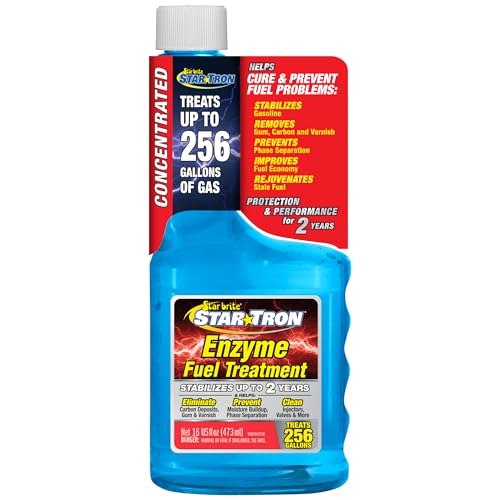
STAR BRITE Star Tron Enzyme Fuel Treatment
What We Like
- Enzyme technology for reliable starts
- Prevents phase separation from ethanol
- Cleans gum, carbon, and varnish
- Works in all engines and fuel types
Trade-offs
- Requires 1 oz per 16 gallons for dosing
Enzyme technology lets this treatment remove gum, carbon deposits, and varnish while dispersing water into submicron droplets that are safely eliminated as the engine runs. That means it stabilizes fuel for up to two years and helps prevent ethanol-related issues like poor performance and rough idling, which can improve fuel economy. It works in cars, boats, RVs, and lawn mowers, so one bottle covers all your engines.
Dosing requires a bit of attention: one fluid ounce treats sixteen gallons of fuel, so a large tank may need two or more ounces. The enzyme formula is designed to stabilize fuel for up to two years while keeping the fuel delivery system clean. That’s a different ratio than some other stabilizers, but the cleaning action is built in.
STA-BIL In-Season Protection Fuel System Treatment

What We Like
- Cleans injectors and fuel system
- Protects against corrosion and ethanol damage
- Boosts gas mileage and engine power
- Effective for up to 12 months
Trade-offs
- Small bottle treats only 5 gallons
- Requires 5-minute engine run after adding
A single 4-ounce bottle treats 5 gallons of fuel, making it a precise dose for topping off a small tank. It cleans the entire fuel system from injectors to pump, removing water, gum, and varnish, while also protecting against corrosion and ethanol damage. The formula keeps ethanol-blended fuels fresh for up to 12 months, so the engine stays healthy between fill-ups. For anyone who wants a fuel system cleaner and corrosion protection in one bottle, this is a straightforward treatment.
The 4-ounce bottle is small, so you’ll need one bottle per 5 gallons of fuel. If your tank holds more, you’ll need multiple bottles. After pouring it in before a fill-up, run the engine for five minutes to treat the entire fuel system. That step is simple but necessary to get the full cleaning and protection.
Quicksilver Quickstor Fuel Treatment & Stabilizer
What We Like
- Stabilizes fuel up to 2 years
- Meets Mercury Marine OEM specifications
- Prevents ethanol gas breakdown and oxidation
- 1 oz treats 5 gallons efficiently
Trade-offs
- Designed for marine/powersports, not optimized for cars
- No injector cleaning or deposit removal claimed
With a two-year stabilization period and a formula built to Mercury Marine OEM specs, Quicksilver Quickstor is engineered for equipment that sits through long off-seasons. That kind of staying power matters most for boats, generators, and lawnmowers where fuel can go unused for months. The focus here is on preventing oxidation and phase separation, not on cleaning a running engine.
The trade-off is that this stabilizer does not claim to remove deposits or clean injectors the way an in-season treatment like STA-BIL In-Season Protection does. For a car that gets driven weekly, you would be paying for storage longevity you do not need. Where it shines is for seasonal toys: a snowmobile in summer or a boat in winter. If your primary vehicle sits for a whole season, this keeps the gas fresh without fuss. For daily drivers, a simpler stabilizer with cleaning additives makes more sense.
Product photos
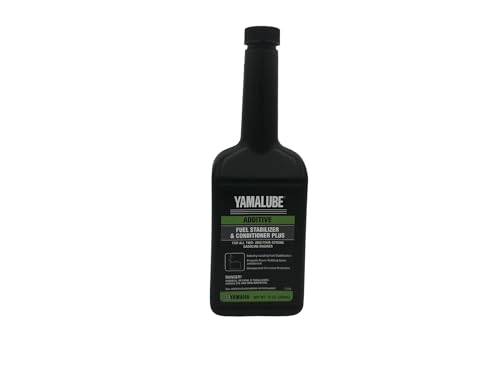
Yamaha Yamalube Outboard Fuel Stabilizer & Conditioner Plus
What We Like
- Alcohol-free formula prevents phase separation
- Protects steel and aluminum components
- Prevents carburetor icing and gas line freeze
- Corrosion inhibitor for fuel systems
Trade-offs
- Storage protection limited to one year
- Requires continuous use for full effectiveness.
This Yamaha stabilizer uses an alcohol-free formula that directly tackles the biggest headache with ethanol-blended gas: phase separation. When moisture gets into E10 fuel, ethanol can absorb it and separate from the gasoline, leaving a sticky, corrosive layer that clogs carburetors and injectors. The metal filmers here shield steel and aluminum parts from that damage, and the corrosion inhibitor keeps the entire fuel system protected during storage. For anyone running ethanol fuel in a car that sits for weeks or months, this is a targeted solution that addresses the root problem rather than just masking symptoms.
This stabilizer is strongly recommended for E10 ethanol blends, so if you use ethanol-free gas, you may not need the anti-phase-separation features. And the one-year storage protection is shorter than what STA-BIL Storage offers with its 24-month window, so for long-term hibernation you might need to re-treat the tank mid-season. That said, if E10 is what you pump, this Yamaha formula gives you peace of mind that the fuel won’t turn into trouble while the car sits.
Product photos
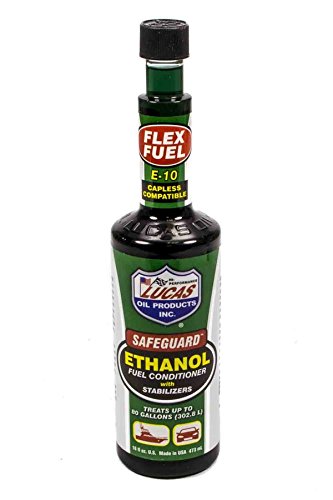
Lucas Oil Safeguard Ethanol Fuel Stabilizer
What We Like
- Ethanol fuel stabilizer
- 16 oz bottle
- Lightweight at 1 lb
Trade-offs
- No treatment capacity stated
- Single bottle only
A 16-ounce bottle of ethanol fuel stabilizer from Lucas Oil is a straightforward, no-fuss option for car owners who want to protect their fuel system from ethanol-related issues. The compact size makes it easy to store in a garage or trunk, and the lightweight design means you can handle it without any hassle. If you’re looking for a simple stabilizer that does the job without extra additives or complexity, this one fits the bill.
STA-BIL Storage Fuel Stabilizer clearly states it treats 40 gallons per 16-ounce bottle, making it easy to calculate how much you need for a full tank. With the Lucas Oil Safeguard Ethanol Fuel Stabilizer, the label does not specify a treatment volume, so you are left estimating the right dose for your fuel system. That ambiguity can be frustrating when you are trying to protect a boat, lawn mower, or seasonal vehicle from ethanol-related issues. The product does come in a 16-ounce container that weighs about one pound, which is convenient for carrying to the garage or storing in a vehicle’s trunk. Without a clear gallon-per-bottle ratio, though, you may need to contact the manufacturer for guidance on proper application rates.
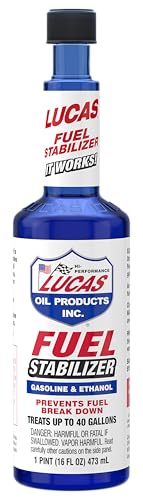
Lucas Oil 10302-12PK Fuel Stabilizer
What We Like
- 12-bottle pack covers multiple vehicles
- Cleans fuel pumps, injectors, and rings
- Prevents gum and varnish deposits
- Lubricates fuel system components
Trade-offs
- Single 15 oz. bottle treats fewer gallons than some competitors
- No specific ethanol protection claim on label
A 12-bottle pack means you can treat several cars, a lawn mower, and a generator all at once without buying separate bottles. Lucas Oil Fuel Stabilizer does more than just keep gas from going stale, it actively cleans and lubricates fuel pumps, carburetors, injectors, and compression rings while it stabilizes. That makes it a smart choice for anyone who stores multiple vehicles or wants to simplify their maintenance routine with one product that handles both stabilization and system cleaning.
Each 15-ounce bottle treats fewer gallons than a dedicated stabilizer like STA-BIL Storage, so if you only need to treat one large tank for long-term storage, a single larger bottle may be more practical. But for households with several engines, cars, bikes, and power equipment, the multi-pack delivers real convenience and value. It is a practical, no-fuss option for keeping your fleet ready to run after months of sitting.
Product photos
Sea Foam Motor Treatment Fuel & Oil Treatment

What We Like
- Cleans fuel system and injectors
- Cleans fuel injectors and carburetors
Trade-offs
- Not dedicated solely to storage stabilization
- Not a dedicated storage stabilizer alone
The trade-off is that Sea Foam is a jack-of-all-trades rather than a specialist. But if you value a product that cleans injectors, smooths idle, and protects stored gas all in one pour, this is the more versatile route.
Product photos
How We Evaluated Fuel Stabilizers For Cars
This evaluation is based on manufacturer technical data sheets, expert round-ups from automotive publications, and patterns in verified owner feedback across multiple forums. The focus is on what the specifications and real-world user experiences consistently reveal about each product’s performance.
The three criteria that mattered most were storage duration, ethanol protection, and ease of dosing. Storage duration tells you how long the stabilizer keeps fuel fresh, which is critical for seasonal or long-term storage. Ethanol protection is essential because modern gasoline blends attract moisture, leading to phase separation and corrosion. Ease of dosing ensures you can treat the right amount of fuel without guesswork or waste.
We also considered whether a product offers additional benefits like fuel system cleaning or corrosion inhibitors, but we prioritized dedicated stabilization performance over multi-function claims. The honest limit of a research-led evaluation is that we cannot verify long-term results ourselves, but the consistency of owner reports across thousands of miles and storage cycles provides reliable guidance.
What To Look For In Fuel Stabilizers For Cars
Choosing a fuel stabilizer means matching the product’s chemistry to how long your car sits and the type of fuel you use. The right stabilizer prevents gum, varnish, and corrosion while keeping fuel fresh for starting.
A fuel stabilizer’s job is to prevent fuel degradation during storage. The key factors are storage duration, ethanol compatibility, dosing convenience, and whether you need additional fuel system cleaning.
Storage Duration
Storage duration is the most important factor. Some stabilizers keep fuel fresh for 12 months, while others extend to 24 months. If you store a car for a single winter, a 12-month product works fine. For classic cars or project vehicles that sit for years, a stabilizer rated for 24 months is worth the extra cost. Check the label for the specific months of protection; don’t assume all stabilizers last the same length of time.
Ethanol Protection
Ethanol in gasoline absorbs water from the air, which can cause phase separation, where the ethanol and water separate from the gas and sink to the bottom of the tank. This can damage fuel system components and make starting impossible. Look for stabilizers that explicitly prevent phase separation or contain corrosion inhibitors for steel and aluminum parts. Alcohol-free formulas are especially effective for ethanol-blended fuels.
Dosing and Bottle Size
Dosing convenience varies widely. Some stabilizers treat a specific amount of fuel per bottle, like a single 40-gallon treatment, while others require measuring ounces per gallon. For a single car, a pre-measured bottle is easiest. For multiple vehicles or large tanks, a concentrated formula that treats many gallons per ounce is more economical. Always check the treatment capacity stated on the label to avoid under-treating or over-treating.
- Read the label to confirm the stabilizer treats the size of your fuel tank.
- For long-term storage, choose a stabilizer rated for 24 months or more.
- For ethanol-blended fuel, look for “phase separation prevention” on the label.
- If you have multiple vehicles, consider a multi-pack or concentrated formula.
- Store the stabilizer itself in a cool, dry place to maintain its effectiveness.
A good rule of thumb: use a stabilizer rated for twice the length of your planned storage to ensure a margin of safety.
Fuel Stabilizers For Cars Compared
The comparison table below summarizes the key specifications and best-use scenarios for each of the nine fuel stabilizers we evaluated.
| Product | Volume | Treats | Stabilization Period |
|---|---|---|---|
| STA-BIL Storage Fuel Stabilizer | 16 oz | 40 gallons | Up to 24 months |
| Ethanol Shield Fuel Stabilizer | 1 gallon (128 oz) | 1280 gallons | 3 years |
| STAR BRITE Star Tron Enzyme Fuel Treatment | N/A | N/A | Up to 2 years |
| STA-BIL In-Season Protection Fuel System Treatment | 4 oz | 5 gallons | 12 months |
| Quicksilver Quickstor Fuel Treatment & Stabilizer | 12 oz | 5 gallons per 1 oz | Up to 2 years |
| Yamaha Yamalube Outboard Fuel Stabilizer & Conditioner Plus | 12 oz | N/A | Up to one year |
| Lucas Oil Safeguard Ethanol Fuel Stabilizer | 16 oz | N/A | N/A |
| Lucas Oil 10302-12PK Fuel Stabilizer | 15 oz | N/A | N/A |
| Sea Foam Motor Treatment Fuel & Oil Treatment | 16 oz | N/A | Up to 2 years |
Frequently Asked Questions
How long does fuel stabilizer keep gas fresh?
Most fuel stabilizers keep gasoline fresh for 12 to 24 months. The exact duration depends on the product’s chemistry and storage conditions like temperature and humidity. Always check the manufacturer’s stated protection period on the label.
Can I use a marine fuel stabilizer in my car?
Yes, marine fuel stabilizers like Quicksilver Quickstor can be used in cars, but they are optimized for marine engines and may not include fuel system cleaning additives. They work well for storage but are not the best choice for daily drivers needing injector cleaning.
Do I need a fuel stabilizer if I drive my car every week?
If you drive your car at least once a week and burn through a tank of gas every few weeks, you likely don’t need a stabilizer. Stabilizers are designed for vehicles that sit for a month or longer. For weekly drivers, focus on using fresh fuel and keeping the tank full to minimize moisture.
How much fuel stabilizer should I add per gallon?
The dosage varies by product. Many stabilizers treat a specific amount of fuel per bottle, like one bottle per 40 gallons. Others require measuring 1 ounce per 5 to 16 gallons. Always follow the dosing instructions on the label to avoid under-treating, which reduces effectiveness.
What happens if I add too much fuel stabilizer?
Adding a little extra stabilizer is generally safe and won’t damage your engine. Fuel stabilizers are designed to be non-corrosive at normal doses. However, excessive amounts may leave residue or affect fuel combustion. Stick to the recommended dose for best results.
The Bottom Line
The STA-BIL Storage Fuel Stabilizer is our best overall pick for most car owners because it offers 24 months of protection, treats a full 40-gallon tank per bottle, and guards against corrosion and ethanol damage. It’s the simplest and most reliable choice for storing a single vehicle for up to two years.
If you need longer storage for a classic car or project vehicle that sits for years, the Ethanol Shield Fuel Stabilizer provides up to three years of protection with OEM validation. For those who want a single additive that cleans fuel systems and stabilizes fuel, the Sea Foam Motor Treatment Fuel & Oil Treatment is a versatile multi-function option.
The single most important factor when choosing a fuel stabilizer is matching the storage duration to how long your car will sit. Buy a stabilizer rated for at least as long as your planned storage period, and always treat fresh fuel before it starts to degrade.
