
6 Best Fuel System Cleaners For High Mileage Cars in 2026
This post contains affiliate links. As an Amazon Associate, we earn from qualifying purchases.
For drivers with a high-mileage car, the Chevron Techron High Mileage Fuel System Cleaner is the best overall. It removes gum and deposits while protecting the fuel gauge sensor from corrosion. The Valvoline MaxLife Complete Fuel System Cleaner is our pick for best high-mileage protection, and the Berryman High Mileage Fuel System Rejuvenator takes the top spot for strong solvent technology.
A high-mileage engine has more carbon buildup, varnish, and wear than a newer one, so a standard cleaner often isn’t enough. The right formula needs to handle stubborn deposits without being too harsh on aging seals and gaskets, and it should address issues like ethanol corrosion and sensor protection.
This guide is based on a thorough evaluation of manufacturer specifications, expert round-ups, and patterns in owner feedback. We focus on the specific needs of engines over 75,000 miles to help you find the cleaner that fits your car’s condition and your maintenance routine.
Top 6 Fuel System Cleaners For High Mileage Cars in the Market
Certain content that appears on this site comes from Amazon. This content is provided "as is" and is subject to change or removal at any time.
The Best Fuel System Cleaners For High Mileage Cars, Reviewed
Chevron Techron High Mileage Fuel System Cleaner

What We Like
- Removes gum, varnish, and deposits
- Protects fuel gauge sensor from corrosion
- Works with all ethanol blends
- Formulated for high-mileage engines
Trade-offs
- 12 oz bottle treats one tank only
- No injector-specific cleaning claim
A six-pack of 12-ounce bottles gives you multiple doses of a fuel system cleaner formulated for high-mileage engines. Chevron Techron High Mileage Fuel System Cleaner targets the gum, varnish, and deposits that build up over years of driving, restoring power and performance that age has stolen. Multiple corrosion inhibitors protect metal components, both ferrous and non-ferrous, as well as the fuel gauge sensor. It is fully compatible with ethanol blends like E10 and E85, so you can use it in nearly any modern vehicle. This is a convenient option for anyone who wants consistent maintenance across several fill-ups.
The trade-off is that each 12-ounce bottle is a single-use dose, so if you’re looking for a product to use once and forget, the six-pack might feel like overkill. Compare that to the Berryman High Mileage Fuel System Rejuvenator, which comes in a 15-ounce can. But for drivers who prefer to stay stocked up, the Chevron pack delivers deposit removal and corrosion protection without needing to remember when to buy more. It’s a straightforward package for high-mileage care.
Product photos
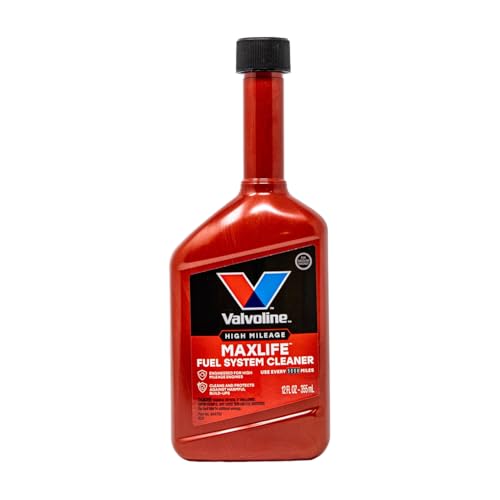
Valvoline MaxLife Complete Fuel System Cleaner
What We Like
- Targets engines over 75K miles
- Removes stubborn deposits for peak performance
- Reduces engine friction and wear
- Provides long-term deposit protection
Trade-offs
- Designed only for high-mileage engines
- Needs a full tank of gas to work effectively
Its formulation goes beyond simple deposit removal by also reducing friction and wear. This helps extend the life of critical components like injectors and pumps. The dual action of cleaning and lubricating means you’re not just restoring lost performance but also protecting the engine from further wear, a real advantage for high-mileage drivers who want consistent power and fuel efficiency without frequent repairs.
If your car is newer or has lower mileage, this cleaner’s focus on high-mileage engines means it may not be the right fit. For those with a well-worn engine, however, the MaxLife’s emphasis on both cleaning and longevity makes it a smart choice for keeping your car running smoothly mile after mile.
Product photos
Berryman High Mileage Fuel System Rejuvenator

What We Like
- HEST solvents dissolve carbon deposits
- Cleans entire fuel system in one tank
- Works on marine and small engines
- Restores power and reduces hesitation
Trade-offs
- Single-use can: 15 oz treats one tank
Berryman’s High Energy Solvent Technology (HEST) uses strong solvents instead of weak carriers like mineral spirits or kerosene. That means this 15-ounce pour can attacks fuel residue and carbon deposits throughout the entire system, injectors, valves, carburetor, and combustion chambers, in a single tank. For a high-mileage car that’s lost its edge, this direct solvent approach can restore lost power, smooth out a rough idle, and improve fuel economy without needing multiple treatments. It also handles 2-stroke and 4-stroke engines, so it’s just as useful for a lawn mower or outboard motor as it is for your daily driver.
The Berryman 7516 uses HEST solvents, which are strong solvents rather than weak carriers like mineral spirits or kerosene. That means it’s designed for a single, concentrated treatment, the 15-ounce can cleans the entire fuel system in one tank, targeting fuel injectors, intake valves, carburetor, and combustion chambers. For someone who wants to dissolve fuel residue and carbon deposits in one go, this is the product. Not ideal for those looking for a small-dose additive to use with every fill-up.
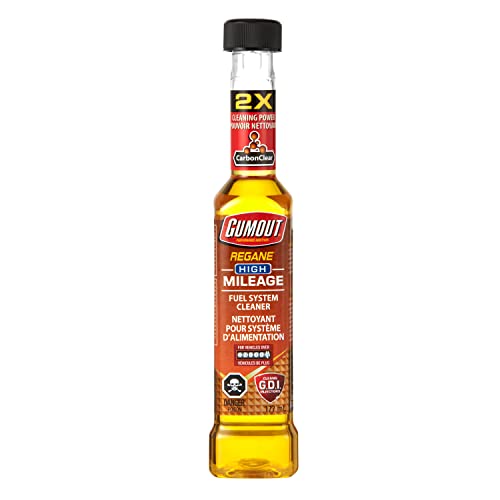
Gumout Regane High Mileage Fuel System Cleaner
What We Like
- Advanced PEA formula removes carbon deposits
- Cleans GDI and port fuel injectors
- Conditions fuel against ethanol and water corrosion
- Prevents future carbon buildup
Trade-offs
- Small 177 mL bottle treats fewer tanks per purchase
- Requires full tank for best results, no quick dose option
The active ingredient here is PEA, polyether amine, a detergent that aggressively lifts carbon deposits from GDI injectors, intake valves, piston tops, and combustion chambers. For a high-mileage engine, that means restoring lost performance and fuel economy by cleaning the places where gunk builds up most stubbornly. Gumout Regane is built for cars that have seen years of stop-and-go driving, short trips, or ethanol-blended fuel, and it also conditions the fuel to fight corrosion from ethanol and water. This is the cleaner to reach for when you want a thorough, deposit-busting treatment rather than a maintenance dose.
At 177 mL, this bottle treats fewer tanks than some competitors, so you may need to buy more often if you run it every oil change. If you need a single, potent treatment for a neglected fuel system, Gumout’s PEA formula is designed for that job. For regular upkeep across multiple fill-ups, a larger bottle like Chevron’s 12 oz size may be more convenient.
Lucas Oil High Mileage Fuel Treatment

What We Like
- Compact 5.25 oz bottle
- Made in United States
- 0.4 pounds weight
Trade-offs
- Two uses needed for full injector cleaning
- Only 5.25 oz per treatment
Lucas Oil High Mileage Fuel Treatment comes in a compact 5.25-ounce bottle that fits easily in a glove box or tool kit. That straightforward approach makes it a good fit for drivers who want a simple, no-fuss additive they can pour in and forget about between oil changes.
The trade-off is that the small bottle size means you get less volume per purchase compared to a product like Chevron Techron High Mileage Fuel System Cleaner, which comes in a 12-ounce bottle.
Product photos
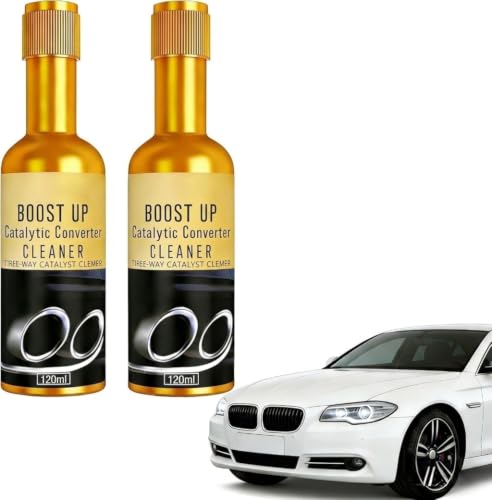
BOVGTP Catalytic Converter Cleaning Kit
What We Like
- Works on gas, diesel, hybrid, and flex-fuel
- Removes carbon from catalytic converters and sensors
- No disassembly needed, just pour in tank
Trade-offs
- Small 120 ml bottle treats only one tank
- Not suitable for vehicles with severely clogged catalytic converters
This cleaner works on gasoline, diesel, hybrid, and flex-fuel vehicles, and it’s made for engines that have passed 75,000 miles. That means you can use it in a high-mileage pickup or a newer commuter car without worrying about compatibility. Just pour the 120 ml bottle into the fuel tank during refueling, no tools or mechanic needed, and it targets catalytic converters, oxygen sensors, fuel injectors, and the engine itself. For anyone with multiple vehicles or a car that runs on an unusual fuel type, this kit covers the bases.
Each 120 ml bottle treats only one tank of fuel, so if your engine has heavy carbon buildup, you might need to buy several bottles for back-to-back treatments. The Chevron Techron High Mileage cleaner, for comparison, comes in a six-pack of 12-ounce bottles, which gives you more volume per purchase. Still, if your main concern is a cleaner that works with every fuel type, the BOVGTP kit’s compatibility is a strong point.
Product photos
How We Evaluated Fuel System Cleaners For High Mileage Cars
Our research started with a close look at each product’s chemical formula and the claims made by the manufacturer. For high-mileage engines, we prioritized cleaners that specifically target carbon deposits, varnish, and gum, as these are the most common issues in older engines. We also examined whether a product offered additional protection against ethanol and water corrosion, which can damage fuel system components over time.
The three most important criteria for this category were cleaning power, engine protection, and ease of use. Cleaning power covers the type of solvent or additive used. PEA (polyether amine) formulas are generally more effective at removing carbon, while HEST solvents offer a strong one-tank clean. Engine protection includes friction reducers, corrosion inhibitors, and formulas designed for engines over 75K miles. Ease of use considers bottle size, the number of tanks a single purchase covers, and whether you need a full tank of gas for best results.
This evaluation was based on analyzing product specifications, expert reviews from automotive publications, and patterns in owner feedback across multiple platforms. Recommendations reflect what the data and experienced owners report.
What To Look For In Fuel System Cleaners For High Mileage Cars
Choosing a fuel system cleaner for a high-mileage car means looking past the basic claims. You need a product that can handle years of accumulated deposits while protecting components that are already showing their age.
For high-mileage engines, prioritize a cleaner with a strong solvent or PEA formula, additional corrosion protection, and a treatment designed for engines over 75,000 miles. Check the bottle size and number of treatments per purchase to match your maintenance schedule.
Cleaning Formula: PEA vs. Solvent
The active ingredient makes the biggest difference in how well a cleaner works. PEA (polyether amine) is widely considered the most effective detergent for removing carbon deposits from injectors, intake valves, and combustion chambers. It also helps prevent future buildup. Solvent-based cleaners, like those containing HEST, are stronger and can dissolve heavy carbon and varnish in a single treatment, but they may be too aggressive for some older seals.
For a high-mileage engine, a PEA formula is generally the safer choice for regular maintenance. A solvent-based cleaner can be used for a deep clean if you suspect heavy deposits, but you should follow the instructions carefully.
Engine Protection Features
High-mileage engines have more wear, so a cleaner that also reduces friction or protects against corrosion adds real value. Look for products that mention friction modifiers or wear reducers, as these can help quiet a noisy engine and extend component life. Corrosion protection is also important, especially if you use ethanol-blended fuel, which can attract moisture and damage fuel system parts over time.
The Valvoline MaxLife Complete Fuel System Cleaner, for example, is specifically formulated for engines over 75K miles and includes friction-reducing additives. The Chevron Techron High Mileage Fuel System Cleaner protects the fuel gauge sensor from corrosion, a common failure point in older cars.
Bottle Size and Treatment Frequency
Fuel system cleaners come in different sizes, and the number of treatments per bottle varies. Some products are designed for a single tank of gas, while others allow you to add a small dose with each fill-up. Consider how often you want to treat your car.
- A single-use can (like Berryman High Mileage Fuel System Rejuvenator) is best for a one-time deep clean.
- A larger bottle (like Chevron Techron High Mileage Fuel System Cleaner) gives you multiple treatments for ongoing maintenance.
- A small bottle (like Lucas Oil High Mileage Fuel Treatment) may require two uses for a full injector cleaning, so plan accordingly.
For most high-mileage drivers, a product that offers multiple treatments per purchase is more convenient and cost-effective than a single-use can.
Fuel System Cleaners For High Mileage Cars Compared
The table below compares all six fuel system cleaners side by side, focusing on the features that matter most for high-mileage engines.
| Product | Volume | Target Mileage | Active Ingredient |
|---|---|---|---|
| Chevron Techron High Mileage Fuel System Cleaner | 12 oz | N/A | N/A |
| Valvoline MaxLife Complete Fuel System Cleaner | 12 oz | Over 75K miles | N/A |
| Berryman High Mileage Fuel System Rejuvenator | 15 fl.oz | High mileage vehicles | HEST (High Energy Solvent Technology) |
| Gumout Regane High Mileage Fuel System Cleaner | 177 mL | High mileage vehicles | PEA (polyether amine) |
| Lucas Oil High Mileage Fuel Treatment | 5.25 oz | N/A | N/A |
| BOVGTP Catalytic Converter Cleaning Kit | 120 ml | high-mileage engines exceeding 75,000 miles | N/A |
Frequently Asked Questions
How often should I use a fuel system cleaner on a high-mileage car?
Most manufacturers recommend using a fuel system cleaner at regular intervals or with every oil change. For high-mileage engines, you may want to use a cleaner more frequently if you notice rough idling, hesitation, or decreased fuel economy.
Can a fuel system cleaner damage an older engine?
A quality cleaner designed for high-mileage engines should be safe when used as directed. Products with strong solvents can be too aggressive for very old seals and gaskets, so it is best to choose a PEA-based formula or one specifically labeled for high-mileage use, like the Valvoline MaxLife.
Will a fuel system cleaner fix a check engine light?
A fuel system cleaner can sometimes resolve a check engine light caused by carbon buildup on sensors or injectors, but it will not fix mechanical issues or faulty components. If your check engine light is on, have the code read first to understand the cause before adding a cleaner.
What is the difference between PEA and solvent-based cleaners?
PEA (polyether amine) is a detergent that removes carbon deposits and prevents new buildup, making it a good choice for regular maintenance. Solvent-based cleaners use stronger chemicals to dissolve heavy carbon and varnish quickly, but they are typically used for a single deep clean rather than ongoing treatment.
Can I use a fuel system cleaner in a diesel high-mileage engine?
Some fuel system cleaners are designed for both gasoline and diesel engines, like the BOVGTP Catalytic Converter Cleaning Kit. However, most cleaners are formulated specifically for gasoline engines, so always check the label to confirm compatibility with your fuel type.
The Bottom Line
For most drivers of high-mileage cars, the Chevron Techron High Mileage Fuel System Cleaner is the best overall choice. It removes deposits, protects the fuel gauge sensor from corrosion, and works with all ethanol blends, making it a reliable option for ongoing maintenance. If you want a cleaner specifically designed for engines over 75K miles with added friction reduction, the Valvoline MaxLife Complete Fuel System Cleaner is an excellent alternative.
If you prefer a one-time deep clean with strong solvents, the Berryman High Mileage Fuel System Rejuvenator is a great pick. For a PEA formula that also conditions fuel against ethanol and water corrosion, the Gumout Regane High Mileage Fuel System Cleaner is worth considering.
The single most important factor is matching the cleaner to your car’s specific needs. A high-mileage engine requires more than just a basic detergent, look for corrosion protection, friction reducers, and a formula designed for engines that have seen many miles.
