
9 Best Full Face Mountain Bike Helmets in 2026
This post contains affiliate links. As an Amazon Associate, we earn from qualifying purchases.
For riders who want maximum protection without sacrificing comfort, the OutdoorMaster MIPS Full Face MTB Helmet takes our best overall spot. It combines MIPS rotational protection with a lightweight build and excellent ventilation. The Troy Lee Designs Stage is our best lightweight full-face pick, while the Bell Super Dh MIPS Spherical offers high-speed impact protection with a removable chin bar.
Full face mountain bike helmets protect your face, jaw, and teeth during crashes, but they can be heavy, hot, and restrictive on long climbs. The challenge is finding a helmet that balances safety certifications, weight, airflow, and fit for your specific riding style.
We evaluated these helmets by analyzing manufacturer specifications, safety certifications, expert round-ups from the cycling community, and patterns in owner feedback. This guide covers nine top models to help you choose the right balance of protection, weight, and ventilation for your rides.
Top 9 Full Face Mountain Bike Helmets in the Market
Certain content that appears on this site comes from Amazon. This content is provided "as is" and is subject to change or removal at any time.
The Best Full Face Mountain Bike Helmets, Reviewed
OutdoorMaster MIPS Full Face MTB Helmet
What We Like
- MIPS system reduces rotational forces
- EPP collarbone impact protection
- Lightweight at under 750g
- 27 vents for cooling airflow
Trade-offs
- At 2.9 pounds, heavier than some full-face helmets
- No chinbar ventilation listed for hot rides
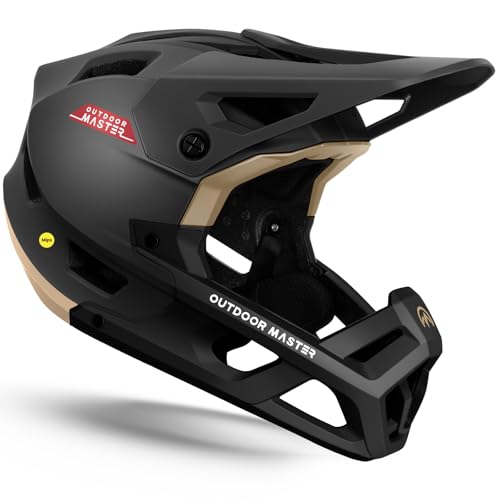
At just under 750 grams with 27 vents, this helmet keeps your head cool without weighing you down on long climbs or rough descents. The MIPS system works to reduce rotational forces in certain impacts, while the EPP collarbone impact system and chinbar shock pads add an extra layer of protection where it matters most. It’s a well-rounded package for anyone who wants full-face security without feeling like they’re wearing a bucket.
The pivoting visor helps shield your eyes from sun, wind, and rain, though some riders may prefer a wider range of adjustment. The washable liner and included two sets of D-rings make it easy to dial in the fit and keep things fresh ride after ride. For the rider who wants proven safety features in a lightweight, well-ventilated shell, this is a smart pick.
Troy Lee Designs Stage Helmet
What We Like
- Lightweight 690g design reduces fatigue
- MIPS with dual-density foam layers
- 25 vents for continuous airflow
- Reinforced chin bar with EXO-Skeleton
Trade-offs
- 690g is heavier than some half-shell helmets
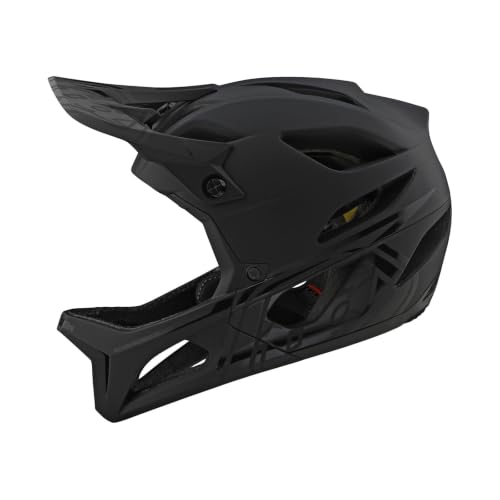
At 690 grams, the Stage helmet is a lightweight full-face option that uses MIPS with dual-density EPP and EPS foam layers to manage different impact energies. The 25 vents pull air through continuously, so you stay cooler when the pace picks up. That makes it a smart fit for enduro racers or trail riders who want full-face security without the weight of a heavier shell.
The trade-off? The EPP foam layer is designed for low-speed impacts, while the EPS layer handles high-speed hits. For riders who pedal up to ride down, the Stage delivers a good balance of weight, ventilation, and coverage in this guide.
Bell Super Dh MIPS Spherical Helmet
What We Like
- Flex Spherical+MIPS for rotational impact protection
- Removable chin bar for trail adaptability
- Integrated breakaway camera mount
- Overbrow ventilation with 19 vents
Trade-offs
- Chin bar has limits per owner manual warning
- Removable chin bar requires careful reading of manual
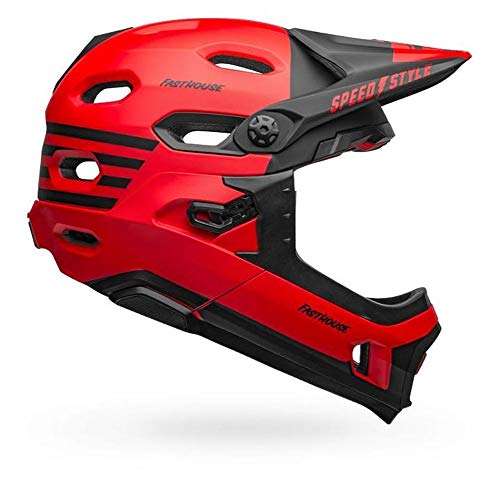
The Flex Spherical+MIPS system addresses high-speed, low-speed, and rotational impacts, making it a strong choice for riders who prioritize protection at speed. Its 19 vents and overbrow intake ports usher in cool air and push it through the air-channel matrix for full-head ventilation. The removable chin bar lets you switch between full-face and open-face use without tools, which suits trail riders who want adaptability.
For riders who document their descents, the integrated breakaway camera mount attaches without zip ties or tape and is engineered to separate upon impact, reducing injury risk. The Fidlock buckle on the Float Fit DH system allows one-handed fastening and release, so securing the helmet is quick even with gloves on. Reviewers note that the buckle’s magnetic closure aligns easily, making it simpler than traditional side-release buckles found on many full-face models.
Fox Racing Proframe RS Helmet

What We Like
- Mips Integra Split reduces rotational crash forces
- BOA fit system for secure, customized fit
- Fidlock magnetic closure for easy one-hand use
- Removable GoPro mount under visor
Trade-offs
- Heavier than OutdoorMaster Grizzly at 3.3 pounds
The Mips Integra Split impact system combines an EPP liner with the EPS layer to reduce rotational forces in a crash. That gives enduro riders serious protection without the bulk of a downhill lid. Fox Racing designed the Proframe RS with increased ventilation and a smaller surface contact area to keep you cooler on long, punchy climbs, while the BOA fit system and Fidlock magnetic closure make adjustments and fastening quick even with gloves on. This is a helmet for riders who push hard on technical descents but still pedal to the top, and the removable GoPro mount under the visor means you can capture the action without extra straps.
For aggressive trail and enduro riders seeking full-face security with modern ventilation, the Proframe RS delivers where it counts. The BOA fit system provides a precise, secure fit that stays locked in on rough descents, while the Fidlock magnetic closure makes fastening and removal effortless even with gloves on. Increased ventilation and reduced surface contact area improve cooling during sustained climbs, and the Ionic+ liner and cheek pads actively manage odor while wicking sweat. A 3-position adjustable visor accommodates goggles, and a removable under-visor GoPro mount is included for capturing the ride.
Giro Insurgent Spherical Helmet
What We Like
- Spherical MIPS ball-and-socket design
- Optimized front intake vents
- Maximized rear exhaust vents
- Breakaway visor bolts
Trade-offs
- At 3.6 lb, heavier than some full-face helmets
- No integrated goggle channel for downhill use
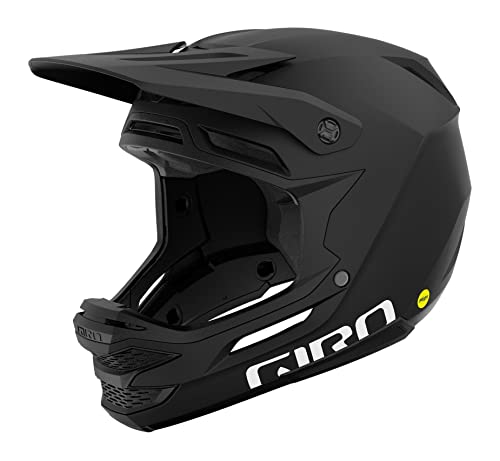
The Spherical MIPS ball-and-socket design is the standout feature here, letting the outer liner rotate around the inner liner during a crash to redirect impact forces away from the brain. That means you get a layer of protection that doesn’t rely on hard plastic against your skin, which is a real comfort advantage on long descents. Giro pairs this with a Wind Tunnel venting system that pulls cool air through optimized front intake vents and pushes hot air out the rear exhaust, helping you stay cooler when you’re working hard. This helmet is built for riders who want top-tier rotational impact management and aren’t willing to compromise on ventilation.
The trade-off is weight. At 3.6 pounds, the Insurgent is noticeably heavier than something like the Fox Racing Proframe RS, which comes in at 3.3 pounds. That extra heft is felt on long climbs or when you’re carrying the helmet by its strap, but it’s a direct result of the dual-layer Spherical construction and the protection it provides. If your priority is the lightest possible full-face for all-day pedaling, the Proframe RS might be a better fit. But if you want the most advanced MIPS system available and are willing to accept a bit more weight for that peace of mind, the Insurgent is a compelling choice.
Product photos
Fly Racing Rayce MTB Helmet
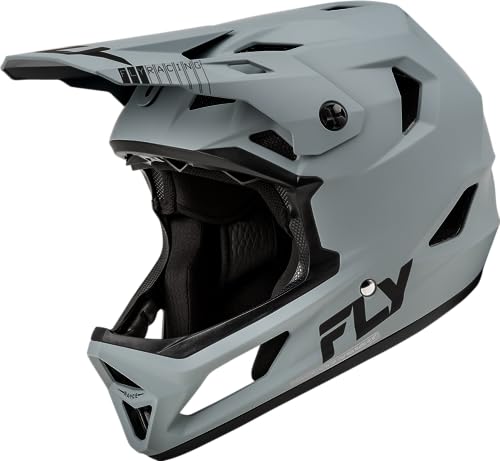
What We Like
- Certified to downhill and CPSC standards
- Lightweight 930 g design reduces fatigue
- TFV ventilation promotes consistent airflow
- Removable, washable comfort liner
Trade-offs
- No MIPS or Spherical rotational protection system
- Heavier than some full-face helmets at 2.5 pounds
At roughly 930 grams for a medium, this full-face helmet delivers downhill protection without weighing you down on long park laps or race runs. The poly-alloy shell and EPS liner meet ASTM F1952-15, CPSC, and CE EN1078 standards, so you get certified coverage for gravity riding. Its TFV ventilation system uses multiple intake and exhaust ports to manage heat, and the removable washable liner makes post-ride cleanup simple.
Certified to ASTM F1952-15 downhill and CPSC 1203 standards, the Fly Racing Rayce MTB Helmet delivers full-face protection for gravity riding without the rotational impact systems found on some competitors. Its poly-alloy shell and EPS liner meet multiple safety certifications, so you can trust it for bike-park laps and downhill runs. The trade-off is no MIPS or Spherical tech, but the helmet focuses on certified downhill safety and a lightweight feel.
Bell Sanction 2 Full-Face Helmet

What We Like
- 14 vents for improved airflow
- Removable washable cheek pads
- Flying Bridge Visor boosts airflow
- ASTM Downhill and BMX certified
Trade-offs
- Heavier than some full-face options at 2.9 lb
- Only for bicycle use, not other sports
With 14 vents and a Flying Bridge Visor that channels air across the helmet, the Bell Sanction 2 keeps you cooler on the trail than many budget full-face designs. It carries both ASTM Downhill and BMX certifications, so it’s ready for aggressive riding without the premium price tag. The removable cheek pads make cleaning easy after muddy days, and the wide size range from XXS to XL means most riders can find a secure fit. This helmet offers proper full-face protection at a price that won’t break the bank.
The Bell Sanction 2 weighs 2.9 pounds, which is lighter than the Proframe RS from Fox Racing at 3.3 pounds, so it won’t weigh you down on long descents. It meets ASTM downhill and BMX safety standards, giving you certified protection for aggressive riding. With 14 vents and a Flying Bridge visor that improves airflow, this helmet keeps you cool even when you’re pushing hard.
Product photos
OutdoorMaster Grizzly MTB Helmet

What We Like
- Weighs under 750g for all-day rides
- 27 high-flow cooling vents for breathability
- Removable and washable comfort liner
- EPP collarbone impact system with chinbar pads
Trade-offs
- No MIPS rotational impact protection
- Heavier than some competitors at 1.8 pounds
At under 750 grams, this helmet is one of the lightest full-face options you’ll find, making it a natural pick for long climbs or hot trail days where every ounce counts. The 27 injection-molded vents push plenty of air through the shell, helping you stay cooler when the pace picks up. It’s built around an EPP collarbone impact system and chinbar shock pads, giving you solid protection without the bulk. Riders who prioritize ventilation and low weight over extra rotational safety layers will appreciate how easy it is to wear all afternoon.
The trade-off is that this model skips MIPS, which some riders prefer for added rotational impact management. If that’s a priority, the OutdoorMaster MIPS Full Face MTB Helmet includes that extra layer, though it weighs more at 2.9 pounds. For anyone who wants a breezy, featherweight full-face that still delivers strong core protection, the Grizzly balances weight and airflow effectively.
Product photos
Giro Coalition Spherical Helmet
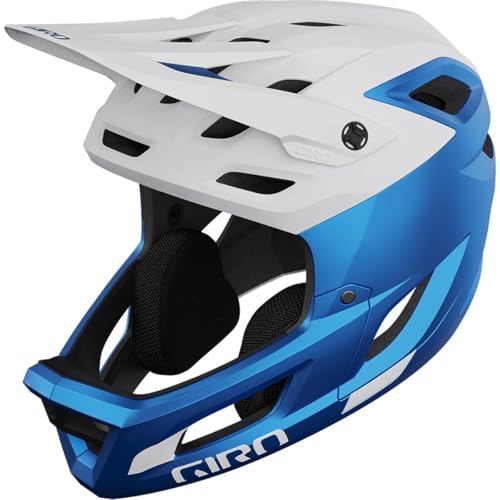
What We Like
- Spherical Technology redirects impact forces
- IONIC+ padding naturally fights odor
- Easily removable cheek pads for emergencies
- Optimized front intake vents enhance airflow
Trade-offs
- No MIPS on some competing models at this weight
- Cheek pads require directional snap system to remove
The Giro Coalition Spherical Helmet uses a ball-and-socket design powered by Mips that lets the outer liner rotate around the inner liner during a crash, redirecting impact forces away from your head. That’s the same core protection you’d find in top-tier spherical helmets, but here it’s paired with carefully placed front intake vents that pull cool air over your face and scalp. For riders who push hard on hot climbs or long descents, that airflow makes a real difference in comfort. The IONIC+ padding uses pure silver to naturally fight odor, so the helmet stays fresher ride after ride without needing constant washing.
At 1.8 pounds, the Giro Coalition Spherical Helmet is lighter than the Proframe RS from Fox Racing (3.3 pounds), making it a strong choice for riders who want full-face protection without excessive weight. The Spherical Technology with Mips allows the outer liner to rotate around the inner liner during a crash, redirecting impact forces for better safety. Optimized front intake vents are precisely placed to channel cool air over your head, which helps on hot days at the bike park. The emergency cheek-pad removal system lets you pull the pads out without disturbing your head or neck position, a thoughtful detail if you take a hard fall.
Product photos
How We Evaluated Full Face Mountain Bike Helmets
Our research began with a deep dive into manufacturer specs and safety certifications for each helmet. We cross-referenced these with expert round-ups from cycling publications and community forums to understand real-world performance patterns. Owner feedback helped us identify common praise and complaints about fit, durability, and long-term comfort.
We focused on four criteria that matter most for full face helmets: rotational impact protection systems like MIPS or Spherical technology, weight for fatigue reduction on climbs, ventilation for temperature regulation, and safety certifications such as ASTM downhill or CPSC standards. These factors determine whether a helmet protects you without slowing you down.
A research-based evaluation has limits. Our recommendations are based on expert consensus and user-reported experiences, not personal testing. Always try a helmet for fit before buying.
What To Look For In Full Face Mountain Bike Helmets
Choosing a full face helmet means weighing protection against comfort. Focus on safety certifications, rotational impact systems, weight, and ventilation for your riding style.
Look for ASTM downhill certification, MIPS or Spherical rotational protection, a weight under about 2.2 pounds for climbing comfort, and at least 15 vents for airflow. Fit is non-negotiable: a loose helmet offers little protection.
Safety Certifications and Rotational Impact Protection
Full face helmets should meet ASTM F1952 downhill standards or CPSC bicycle standards. These certifications ensure the helmet can handle higher-speed impacts. Rotational impact systems like MIPS (Multi-directional Impact Protection System) or Spherical Technology reduce rotational forces on the brain during angled crashes. Some helmets, like the Bell Super Dh, use Flex Spherical+MIPS for dual-layer protection. Not all helmets include these systems, so check the specs if rotational protection is a priority.
Weight and Ventilation
Weight directly affects neck fatigue on long climbs and all-day rides. Lightweight full face helmets range from 690 to 930 grams, while heavier models exceed that range. Ventilation is measured by vent count and design: 25 to 27 vents provide excellent airflow for climbing, while fewer vents suit downhill runs. Chin bar ventilation matters too, as it prevents fogging and overheating on hot days.
Fit System and Chin Bar Design
A secure fit prevents the helmet from shifting during a crash. BOA dials, Fidlock magnetic buckles, and adjustable chin straps improve fit and ease of use. Removable chin bars, like those on the Bell Super Dh, offer trail-to-downhill versatility but may reduce chin coverage. Check that the chin bar clears your jaw and allows full range of motion.
- Verify the helmet meets ASTM downhill or CPSC safety standards.
- Check for MIPS, Spherical, or similar rotational impact protection.
- Weigh the helmet: under about 2.2 pounds is ideal for climbing.
- Count vents: 15 or more for mixed-use, more for hot rides.
- Test the fit system: BOA dials and magnetic buckles simplify adjustments.
A helmet that doesn’t fit properly won’t protect you properly, regardless of its features.
Full Face Mountain Bike Helmets Compared
The table below compares the nine full face mountain bike helmets across key specs and features to help you narrow your choice.
| Product | Weight | Vents | Safety | Fit Range |
|---|---|---|---|---|
| OutdoorMaster MIPS Full Face MTB Helmet | Under 750g | 27 vents | MIPS + EPP collarbone impact | 54-62 cm |
| Troy Lee Designs Stage Helmet | 690g | 25 ports | MIPS + EPP/EPS foam | MD/LG |
| Bell Super Dh MIPS Spherical Helmet | 1.0 pounds | 19 vents, 2 brow ports | Flex Spherical+MIPS | 52-56 cm, 55-59 cm, 58-62 cm |
| Fox Racing Proframe RS Helmet | 3.3 pounds | Increased ventilation | Mips Integra Split | Large |
| Giro Insurgent Spherical Helmet | 3.6 pounds | Wind Tunnel venting | Spherical MIPS | X-Large/2X-Large |
| Fly Racing Rayce MTB Helmet | 930 g (size M) | TFV airflow system | ASTM F1952-15, CPSC, CE EN1078 | Large |
| Bell Sanction 2 Full-Face Helmet | 2.9 pounds | 14 vents | CPSC, ASTM Downhill, BMX | XXS to XL (48-61 cm) |
| OutdoorMaster Grizzly MTB Helmet | under 750g | 27 vents | EPP collarbone impact system | 57-62cm |
| Giro Coalition Spherical Helmet | 1.8 pounds | Optimized front intake vents | Spherical Technology with Mips | Large |
Frequently Asked Questions
What is the difference between MIPS and Spherical technology?
MIPS uses a low-friction layer that allows the helmet to rotate slightly on impact, reducing rotational forces. Spherical technology uses a ball-and-socket design with two foam layers that move independently for similar protection. Both improve safety over standard helmets, but Spherical is generally considered more advanced.
How much should a full face mountain bike helmet weigh?
Lightweight full face helmets weigh between 690 and 930 grams, while standard models are heavier. Heavier helmets offer more protection but cause neck fatigue on long climbs. Aim for under about 2.2 pounds if you ride mixed terrain with significant climbing.
Can I use a full face helmet for trail riding and climbing?
Yes, many modern full face helmets are designed for trail riding with good ventilation and lower weights. Models with many vents and sub-930 gram weights work well for climbing. Removable chin bars offer extra versatility for riders who switch between trail and downhill.
What safety certifications should a full face helmet have?
Look for ASTM F1952 downhill certification and CPSC bicycle certification. Some helmets also meet EN 1078 European standards. Certifications ensure the helmet has passed impact testing for the speeds and forces common in mountain biking.
How do I know if a full face helmet fits properly?
The helmet should feel snug but not tight, with no pressure points. The chin bar should clear your jaw without touching when you open your mouth. The helmet should not shift when you shake your head. Always try the helmet on before buying, and adjust the fit system and straps for a secure hold.
The Bottom Line
The OutdoorMaster MIPS Full Face MTB Helmet is our best overall pick for riders who want MIPS protection, lightweight design, and excellent ventilation in one package. It suits trail and enduro riders who climb and descend without switching helmets.
If your priority is the lightest possible weight for long, technical rides, choose the Troy Lee Designs Stage. For advanced rotational protection with a removable chin bar, the Bell Super Dh MIPS Spherical is the better fit. Budget-conscious riders should consider the Bell Sanction 2, which offers ASTM downhill certification at an affordable price.
The single most important factor in choosing a full face helmet is fit. No amount of safety technology matters if the helmet shifts or causes discomfort. Try before you buy, and prioritize a secure, comfortable fit above all else.
