
5 Best Gas Additives For High Mileage Cars in 2026
This post contains affiliate links. As an Amazon Associate, we earn from qualifying purchases.
The best gas additive for high mileage cars is Gumout Regane High Mileage Fuel System Cleaner. It cleans both GDI and port injectors while reducing friction and wear in the upper cylinder. For drivers experiencing lost power, the Chevron Techron High Mileage Fuel System Cleaner is a strong alternative, and the Valvoline MaxLife Complete Fuel System Cleaner is the top choice for reducing engine friction.
As cars accumulate miles, carbon deposits build up on fuel injectors, intake valves, and combustion chambers. This buildup robs the engine of power, reduces fuel economy, and can cause rough idling. High-mileage engines also face increased wear on internal components like piston rings and cylinder walls, which standard fuel additives are not formulated to address.
This guide is based on a thorough review of manufacturer specifications, expert round-ups from automotive publications, and patterns in owner feedback across thousands of user reports. We evaluated each product on cleaning ability, friction reduction, corrosion protection, and suitability for engines over 75,000 miles. The result is a focused list of five additives that genuinely help high-mileage engines run better.
Top 5 Gas Additives For High Mileage Cars in the Market
Certain content that appears on this site comes from Amazon. This content is provided "as is" and is subject to change or removal at any time.
The Best Gas Additives For High Mileage Cars, Reviewed
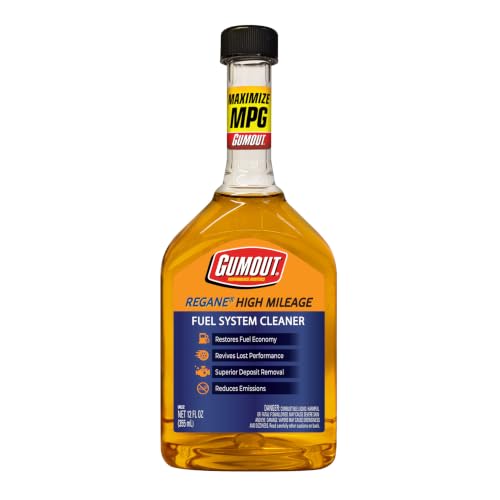
Gumout Regane High Mileage Fuel System Cleaner
What We Like
- Cleans GDI and port injectors
- Reduces friction and wear in upper cylinder
- Conditions fuel against ethanol and water corrosion
- Single fill-up treatment
Trade-offs
- Requires near-empty tank before adding
- Best repeated every 3,000 miles for ongoing protection
- Formulated only for engines over 75,000 miles
A 12-ounce bottle that treats up to 19 gallons of fuel means this cleaner is designed for a single, thorough dose rather than a dribble-in-every-tank approach. Its CarbonClear Technology combines PEA with PIBA and a third patented detergent to target the heavy carbon buildup that accumulates after 75,000 miles, cleaning everything from GDI direct injectors to piston tops and combustion chambers. For someone driving a high-mileage car, this additive is formulated to help restore horsepower and maximize fuel economy by removing years of deposits in one pour.
The trade-off is that this isn’t a set-and-forget product. You need to add it to a nearly empty tank, then refill with up to 19 gallons, and repeat every 3,000 miles for best results. That’s more hands-on than some other fuel treatments. But for a dedicated fuel-system deep clean that also conditions the upper cylinder to reduce friction and wear, the Gumout Regane delivers a focused, high-mileage-specific formula that fits naturally into an oil-change routine.
Chevron Techron High Mileage Fuel System Cleaner

What We Like
- Removes gum, varnish, and deposits
- Restores lost power and performance
- Corrosion inhibitors protect ferrous and non-ferrous metals
- Compatible with all ethanol blends
Trade-offs
- Single 12 oz bottle treats one tank
Chevron Techron High Mileage Fuel System Cleaner targets the specific deposits, gum, varnish, and carbon, that build up in engines with many miles on them. Its corrosion inhibitors protect both iron and steel as well as copper and silver components, which matters when older fuel systems have seen years of exposure to moisture and ethanol blends. For a driver whose daily commuter feels sluggish or hesitates on the highway, this additive is engineered to restore lost power and performance directly, without guesswork.
The trade-off is that this is a one-shot treatment in a 12 oz bottle, not a continuous maintenance additive. For drivers of high-mileage cars who want to keep it running smoothly, this works well as a periodic cleaner. Compared to the Gumout Regane High Mileage option, both products target similar deposit issues. But Chevron’s formula includes corrosion inhibitors for both ferrous and non-ferrous metals, which can be a real advantage in older fuel systems where rust and pitting are concerns. It’s a targeted fix for power loss, not a universal fuel system tonic.
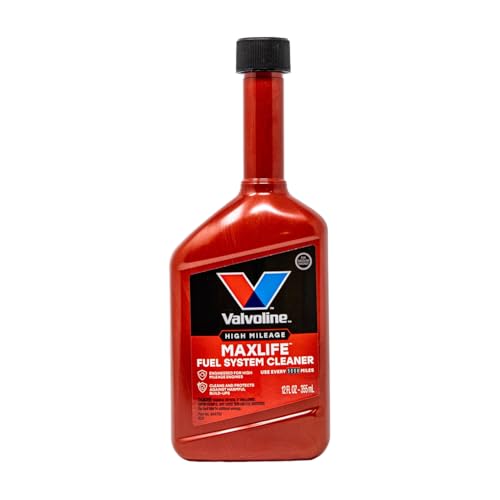
Valvoline MaxLife Complete Fuel System Cleaner
What We Like
- Cleans injectors, pumps, and carburetors
- Restores lost fuel efficiency and power
- Provides long-term protection against deposits
Trade-offs
- Designed only for engines over 75,000 miles
- Does not target younger or lower-mileage vehicles
A friction-reduction focus sets this fuel system cleaner apart for high-mileage drivers. It lubricates critical components inside the engine, which directly cuts down on wear between moving parts. For a vehicle that has already covered over 75,000 miles, that extra protection helps keep the engine running smoothly longer. Reviewers note that reduced friction often translates to less strain on the starter and better oil pressure over time. While other high-mileage additives like Gumout Regane focus primarily on deposit removal with CarbonClear Technology, this formulation adds a dedicated lubricity layer. That makes it a practical choice for anyone trying to extend the reliable life of an older daily driver without switching to a heavier oil.
Because this cleaner is designed specifically for engines with more than 75,000 miles, it isn’t the right choice for newer vehicles. Compared to other high-mileage additives on the market, Valvoline MaxLife focuses on reducing friction and lubricating parts rather than just removing carbon deposits. If your priority is protecting an aging engine from wear rather than stripping heavy buildup, this product offers a more targeted approach.
Product photos
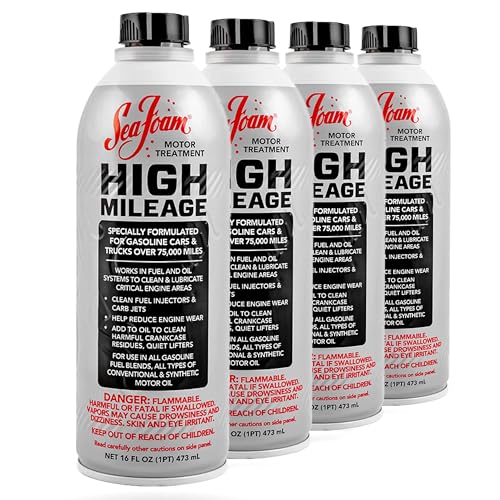
Sea Foam High Mileage Motor Treatment
What We Like
- Cleans fuel injectors and carburetor jets
- Helps prevent common causes of oil burning
- Lubricates critical upper engine areas
- Safe for all gasoline and motor oils
Trade-offs
- Requires regular use for long-term benefits
- Not suitable for engines under 75,000 miles
This treatment works in both fuel and crankcase oil, which means it tackles two major trouble spots in one bottle. By cleaning fuel injectors and carburetor jets while also helping prevent the causes of oil burning, it addresses the most common reasons high-mileage engines start running rough or burning through oil. For someone who wants to keep an older car on the road longer rather than just patching a single symptom, this dual-action approach makes it a practical choice for long-term engine health.
Using this treatment as a routine part of maintenance delivers the best results, rather than expecting a single application to solve long-standing issues. Adding it to the fuel tank on a regular basis cleans fuel injectors and carburetor jets, which helps prevent rough engine performance over time. When poured into the crankcase oil, it works to clean and address common causes of oil burning that plague higher-mileage engines. Regular use also lubricates critical upper engine areas, reducing long-term wear. Reviewers note that consistency is key for keeping older cars and trucks on the road longer, making it a practical choice for ongoing care rather than a one-time fix.
Product photos
Berryman High Mileage Fuel System Rejuvenator

What We Like
- Works on 2-stroke and 4-stroke engines
- Dissolves fuel residue and carbon deposits
- Restores power and reduces rough idle
- Exclusive HEST solvent technology
Trade-offs
- Not specifically formulated for high-mileage engines
Berryman’s exclusive HEST solvent technology uses strong solvents instead of weak carriers like mineral spirits, so this 15-ounce pour can aggressively dissolves fuel residue and carbon deposits in a single tank. The product is labeled for cleaning fuel injectors, intake valves, carburetors, and combustion chambers, and it works in all 2-stroke and 4-stroke marine and small gas engines. That means one bottle can handle a car, a boat, and a lawnmower without needing separate treatments.
Compared to the Gumout Regane High Mileage Fuel System Cleaner, which uses CarbonClear Technology and is designed for engines with 75,000-plus miles, Berryman does not specifically target high-mileage wear. If you want a formula tailored to an aging sedan, Gumout’s mileage-focused approach may fit better; if you need a single product that works across different engine types, Berryman’s broad compatibility is a strong advantage.
Product photos
How We Evaluated Gas Additives For High Mileage Cars
Our evaluation started with manufacturer technical data sheets and specifications for each product. We looked at the chemical composition, the types of deposits each additive targets, and the specific engine conditions it is designed to address. We also reviewed expert round-ups from automotive repair and maintenance publications that regularly test fuel system cleaners.
We established four criteria that matter most for high-mileage engines. First, cleaning ability: the additive must remove carbon deposits from fuel injectors, intake valves, and combustion chambers. Second, friction reduction: high-mileage engines have increased wear, so additives that reduce friction in the upper cylinder help extend engine life. Third, corrosion protection: ethanol in modern fuel attracts water, and corrosion protection is critical for older fuel systems. Fourth, suitability for engines over 75,000 miles: not all fuel additives are formulated for the specific needs of high-mileage engines.
The honest limit of an evaluation is that we cannot replicate the conditions of a high-mileage engine in a lab. Owner feedback patterns, however, consistently show which products deliver noticeable improvements in idle smoothness, throttle response, and fuel economy. We prioritized products with the strongest consensus among owners of high-mileage vehicles.
What To Look For In Gas Additives For High Mileage Cars
Choosing the right gas additive for a high-mileage engine means looking beyond the basic fuel system cleaner label. High-mileage engines have specific needs that standard additives do not always address.
Focus on additives formulated for engines over 75,000 miles. Look for cleaning power that targets carbon deposits, friction-reducing agents that protect worn components, and corrosion inhibitors that defend against ethanol-related damage.
Cleaning Power For Carbon Deposits
Carbon deposits are the primary enemy of high-mileage engines. They form on fuel injectors, intake valves, and combustion chambers, restricting fuel flow and reducing compression. Look for additives that contain polyetheramine (PEA), a detergent compound proven effective at dissolving carbon deposits. The concentration of PEA matters: higher concentrations clean more aggressively but may require less frequent use. Some products use proprietary solvent blends that work on both port injectors and direct fuel injectors, which is important for modern engines.
Friction Reduction and Wear Protection
High-mileage engines have worn piston rings, cylinder walls, and valve guides. Friction between these components increases as clearances grow, leading to oil consumption and power loss. Additives that include friction modifiers, such as esters or synthetic lubricants, help reduce this friction. Some products also condition the upper cylinder area, where combustion heat accelerates wear. This is a feature that standard fuel system cleaners rarely offer.
Corrosion Protection For Ethanol Blends
Ethanol in gasoline absorbs moisture from the air, which can cause corrosion in fuel lines, injectors, and the fuel tank. High-mileage cars often have older fuel system components that are more vulnerable to this damage. Look for additives that include corrosion inhibitors specifically formulated to protect ferrous and non-ferrous metals. Some products also include water-absorbing agents that help prevent phase separation, where ethanol and water separate from the gasoline.
- Check the recommended treatment interval: some additives work as a single dose every 3,000 miles, while others are designed for regular use at every fill-up.
- Verify compatibility with your engine type: some products are formulated only for engines over 75,000 miles, while others work on any engine.
- Look for additives that treat the full fuel system, not just injectors: carbon deposits also form on intake valves and in combustion chambers.
- Consider the bottle size: a single 12-ounce bottle treats one tank, while larger bottles may treat multiple tanks or require different dosing.
A good rule of thumb: if your car has over 75,000 miles and you have never used a fuel additive, start with a high-mileage-specific cleaner and follow the recommended treatment interval.
Gas Additives For High Mileage Cars Compared
The table below compares all five gas additives for high mileage cars across the key criteria that matter most for older engines.
| Product | Target Mileage | Technology | Bottle Size |
|---|---|---|---|
| Gumout Regane High Mileage Fuel System Cleaner | 75,000+ miles | CarbonClear (PEA + PIBA + patented detergent) | 12 oz |
| Chevron Techron High Mileage Fuel System Cleaner | High mileage vehicles | N/A | 12 oz |
| Valvoline MaxLife Complete Fuel System Cleaner | over 75K miles | N/A | 12 oz |
| Sea Foam High Mileage Motor Treatment | N/A | N/A | 16 oz |
| Berryman High Mileage Fuel System Rejuvenator | N/A | HEST (High Energy Solvent Technology) | 15 fl. oz |
Frequently Asked Questions
How often should I use a gas additive in a high-mileage car?
The frequency depends on the product. Some additives, like the Gumout Regane, work best as a single-dose treatment repeated every 3,000 miles. Others are designed for regular use at every fill-up. Always follow the manufacturer’s instructions on the bottle.
Can a gas additive fix a rough idle in a high-mileage engine?
It depends on the cause. If the rough idle is caused by carbon deposits on fuel injectors or intake valves, a high-mileage fuel system cleaner can help. If the rough idle is from worn spark plugs, vacuum leaks, or mechanical issues, the additive will not fix it.
Will a gas additive improve fuel economy in a high-mileage car?
Many owners report improved fuel economy after using a high-mileage fuel system cleaner. The improvement comes from removing carbon deposits that restrict fuel flow and reduce combustion efficiency. The effect varies based on how much buildup the engine has.
Is it safe to use a high-mileage additive in a newer car?
Most high-mileage additives are formulated specifically for engines with over 75,000 miles. Using them in a newer engine is not harmful, but it is unnecessary. The friction modifiers and corrosion protection are designed for worn components that a newer engine does not yet have.
What is the difference between a fuel system cleaner and a fuel stabilizer?
A fuel system cleaner removes deposits from injectors, valves, and combustion chambers. A fuel stabilizer prevents fuel from breaking down during storage. Some products combine both functions, but they serve different purposes. High-mileage cars benefit more from a cleaner than a stabilizer.
The Bottom Line
The Gumout Regane High Mileage Fuel System Cleaner is the best overall choice for drivers of cars with over 75,000 miles. It cleans both GDI and port injectors, reduces friction in the upper cylinder, and conditions fuel against ethanol and water corrosion. This is the product for anyone who wants a thorough, single-dose treatment that helps restore horsepower and maximize fuel economy.
If your high-mileage car is experiencing lost power and performance, the Chevron Techron High Mileage Fuel System Cleaner is the targeted solution. For those who want ongoing friction reduction and engine protection, the Valvoline MaxLife Complete Fuel System Cleaner and Sea Foam High Mileage Motor Treatment are both excellent choices. Drivers with a mix of cars, boats, and small engines should consider the Berryman High Mileage Fuel System Rejuvenator for its broad compatibility.
The single most important factor is choosing an additive specifically formulated for engines over 75,000 miles. Standard fuel system cleaners do not address the increased friction, wear, and corrosion that come with high mileage. Start with a high-mileage-specific product and follow the recommended treatment interval for the best results.
