
10 Best Glues For Car Parts in 2026
This post contains affiliate links. As an Amazon Associate, we earn from qualifying purchases.
For most car repairs, J-B Weld AutoWeld Automotive Adhesive is our best overall pick because it combines high-impact resistance with a fast 30-minute sand-and-paint time, making it versatile for both plastic and metal parts. For large body panel work, the 3M Panel Bonding Adhesive offers an OEM-recommended solution, while the J-B Weld Plastic Bonder is the go-to for tough plastic bumper and trim repairs.
The challenge with auto adhesives is that no single glue handles every material and condition. A flexible trim piece needs a different bond than a rigid body panel, and engine bay repairs require heat and vibration resistance.
This guide is built from manufacturer specifications, expert recommendations, and patterns we see in owner feedback across a range of real-world repair scenarios. We focused on the ten glues that cover the most common automotive repair needs.
Top 10 Glues For Car Parts in the Market
Certain content that appears on this site comes from Amazon. This content is provided "as is" and is subject to change or removal at any time.
The Best Glues For Car Parts, Reviewed
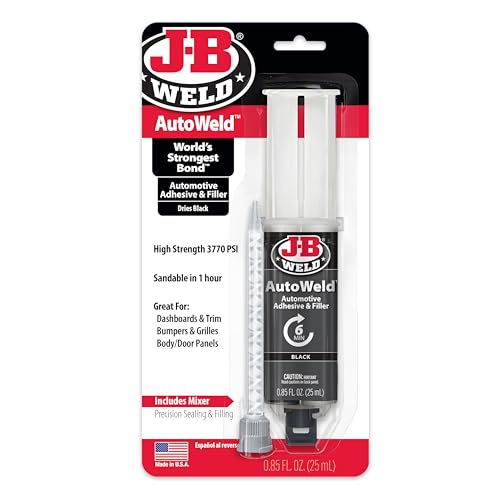
J-B Weld AutoWeld Automotive Adhesive
What We Like
- High-impact resistant automotive adhesive
- Self-mixing static mixer included
- Will not shrink over time
- Sands and paints in 30 minutes
Trade-offs
- Small 25 ml syringe for larger jobs
- Requires equal parts alignment before mixing
This two-part epoxy bonds bumpers, grills, dashboard, trim, and body/door panels with a cured strength of 3770 PSI. It sets in 15 minutes and can be sanded and painted in just 30, so you can move through a repair without waiting around. The self-mixing static mixer makes application easy, and the fact that it won’t shrink over time means the fix stays solid.
The trade-off is the 25 ml syringe size, which goes fast on larger jobs. For bigger applications, the 3M Panel Bonding Adhesive comes in a 200 ml cartridge that offers more volume. But for the majority of fixes, cracked grilles, loose trim, dashboard repairs, this J-B Weld delivers a fast, high-strength bond that sands and paints like the original part.
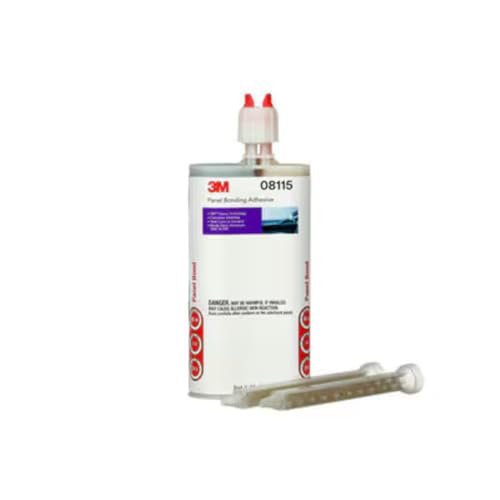
3M Panel Bonding Adhesive
What We Like
- OEM-recommended for body panel repair
- 90-minute work time for precise alignment
- Bonds metal and composites without welds
- Integrated glass beads prevent over-clamping
Trade-offs
- Requires separate applicator gun (not included)
- Full cure takes 24 hours at room temperature
- 200 mL cartridge is large for small repairs
A 90-minute working time means you can line up a quarter panel, walk around the car to check gaps, and still have plenty of margin to nudge it before the epoxy starts setting. That extended window is exactly what body panel work demands. This 3M adhesive is OEM-recommended for bonding auto body panels, creating a durable hold on properly prepared steel, aluminum, SMC, and fiberglass surfaces, replacing welds or rivets with a permanent, rust-resistant bond. The integrated glass-bead technology ensures optimal bond line thickness and prevents over-clamping.
You need a standard applicator gun to dispense the dual cartridge, and the 24-hour room-temperature cure means you’ll need to plan your repair around a full day of wait time before the panel is ready for paint or stress. Compared to J-B Weld AutoWeld’s smaller 25 mL syringe, this 200 mL cartridge is overkill for a single trim piece or small crack, but for a whole door skin or roof panel, it’s the right volume for the job. If you’re replacing a body panel and want a bond that feels like factory construction, this adhesive delivers that permanence. Just be ready to work with a gun and give it a day to fully harden.
Product photos
J-B Weld Plastic Bonder Structural Adhesive

What We Like
- 3770 PSI tensile strength for tough bonds
- 15-minute set time speeds up repairs
- Bonds thermoplastics, composites, and coated metals
- Syringe with resealable cap for multiple uses
Trade-offs
- 30-hour cure time delays full-strength use
- Not designed for flexible or rubbery plastics.
A tensile strength of 3770 PSI comes from a two-part urethane formula that fills gaps and bonds to thermoplastics, fiberglass, and coated metals. The 15-minute set time gives you enough working time to position parts correctly, and the syringe makes mixing simple with a 1:1 ratio and a cap that keeps leftover adhesive usable later. This is a strong bond for plastic repairs like bumpers or trim, as long as you can plan around the cure time.
The 30-hour cure time means you’ll leave the repair untouched for over a day before it reaches full strength, which can be inconvenient if you need the car back on the road quickly. For DIY plastic repairs where you can afford to wait, the bond strength and surface versatility are clear advantages.
3M Plastic Emblem & Trim Adhesive

What We Like
- Dries clear for clean cosmetic repairs
- Weather-resistant for interior and exterior use
- Quick-setting with no clamps needed
- Precise application from squeezable tube
Trade-offs
- 1 fl oz tube is a small amount for larger jobs
- Not a two-part epoxy for structural panel bonding
A clear-drying, weather-resistant adhesive that sets quickly without clamps or tape is exactly what you want when reattaching a plastic emblem or trim piece. This 3M tube bonds plastic and metal to automotive surfaces, so it works on everything from a door badge to a dashboard molding. The squeeze tube lets you place the glue exactly where it needs to go, even in tight spots around grilles or emblems. That precision and the fast cure time mean you can finish the job and get back on the road without waiting around.
The small 1 fl oz tube is fine for a few emblems or trim repairs but won’t stretch to panel bonding or larger structural jobs. For those, the 3M Panel Bonding Adhesive with its two-part epoxy cartridge is the right tool. But when you need a reliable, easy-to-apply glue that holds up to weather and looks invisible once dry, this tube delivers exactly that. It’s a focused solution for the kind of cosmetic fix that restores a car’s clean lines.
Product photos
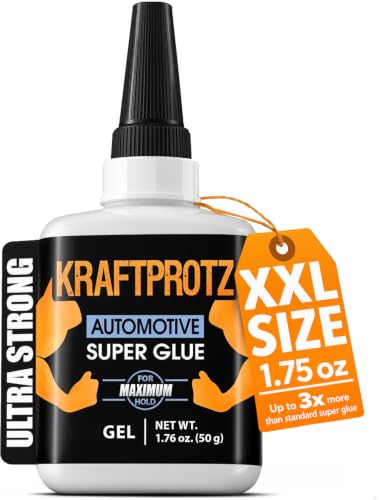
KRAFTPROTZ Automotive Super Glue Gel
What We Like
- No-drip gel stays on vertical parts
- Withstands engine vibration and road stress
- Heat resistant up to 230°F
- Anti-clog tip for repeated use
Trade-offs
- Cyanoacrylate can bond skin instantly
A 1.76-ounce tube gives you three times more glue than typical automotive adhesive tubes, so mechanics and fleet teams can work through multiple repairs without running out mid-job. The no-drip gel formula stays put on vertical surfaces like bumper brackets, mirror housings, and dashboard trim, so you don’t end up with a mess running down the panel. Its cyanoacrylate construction is engineered to handle engine vibration, road shocks, and temperature swings, making it a strong fit for interior and underhood parts that face constant motion and heat up to 230°F.
For plastic trim, fender clips, and other parts that rattle and flex while you drive, this glue’s vibration resistance and anti-clog tip make it a practical shop staple. If you need to bond large metal body panels, a two-part epoxy like J-B Weld AutoWeld would give you more structural strength for that kind of load. But the gel formula stays put on vertical surfaces without dripping, which is exactly what you want when reattaching a mirror housing or dashboard panel.
Product photos
Permatex 5-Minute Plastic Weld Adhesive

What We Like
- Sets in just five minutes
- Bonds plastics without primer
- Permanent strength up to 3500 PSI
- Works on ABS, acrylic, fiberglass, PVC
Trade-offs
- Small 0.84 oz tube limits large repairs
- Requires exact 1:1 mixing ratio for proper cure.
A five-minute set time means you can move on to the next step almost immediately, which is a real advantage when you are piecing together interior trim or repairing a cracked plastic bumper bracket. This Permatex adhesive provides permanent strength up to 3500 PSI when fully cured and needs no primer, so it grabs onto ABS, acrylic, fiberglass, and PVC right out of the tube. It is the right pick for anyone who wants a fast, no-fuss bond on plastic parts without waiting around for an epoxy to harden overnight.
A 0.84-ounce tube keeps the package compact enough to tuck into a glove box or tool drawer, but that small size means it works best for spot repairs and small parts rather than large panel jobs. For bonding a long seam or covering a big area, a product like the 3M Panel Bonding Adhesive in a 200 mL cartridge would be more practical. This Permatex adhesive sets in five minutes at room temperature and needs no primer, so it suits quick fixes on interior trim, cracks, or bonding plastic to vinyl. Just keep the tube size in mind when planning the project.
Product photos
Gorilla 2 Part Epoxy

What We Like
- Dries clear for a clean finish
- 5-minute set allows repositioning
- Gap filling bonds uneven surfaces
- Water resistant for added durability
Trade-offs
- 0.85 oz size covers only small repairs
- Not suitable for bonding large panels or structural metal
A 5-minute set time means you can align parts and still have time to adjust before the bond locks in. That is a real advantage when working on trim, emblems, or interior pieces where precision matters. This epoxy dries clear, so it won’t leave a visible mark on repairs. It also fills gaps and handles uneven or vertical surfaces, making it a versatile choice for small automotive fixes where appearance counts.
The small 0.85 oz syringe limits you to minor jobs like reattaching a mirror or fixing a cracked housing. For larger repairs, other adhesives in the guide offer more volume or different colors, but if your priority is a clear, water-resistant bond, this Gorilla epoxy fits that need.
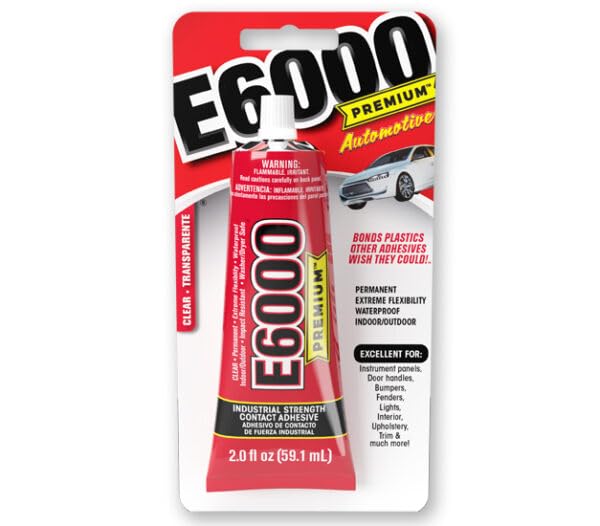
E6000 Premium Automotive Adhesive
What We Like
- Extreme flexibility resists vibration and temperature extremes
- Bonds difficult automotive materials like plastics and fiberglass
- Waterproof and paintable after cure
- Dries clear for invisible repairs
Trade-offs
- Full cure takes 24-72 hours before maximum strength
- Requires 2-minute partial cure before mating surfaces
A 24-hour cure time means this isn’t a grab-and-go glue for quick fixes, but that patience pays off with a bond that stays flexible under road vibration and temperature swings. E6000’s formulation handles plastics, metal, fiberglass, and rubber, the mix of materials you run into on bumpers, trim, and interior panels, and it dries clear so the repair doesn’t scream for attention. For anyone fixing parts that flex, like a bumper cover or a door panel, that flexibility is the difference between a bond that holds and one that cracks on the first pothole.
Time is the trade-off here: while some adhesives like J-B Weld AutoWeld are designed for different applications, E6000’s slower cure is what gives it that lasting flexibility. You apply it, wait about two minutes for the surfaces to partially cure, then mate them and allow 24 hours for curing. That makes it less ideal for quick fixes, but for a careful garage repair on a trim piece or a plastic housing that sees constant movement, the wait is worth it.
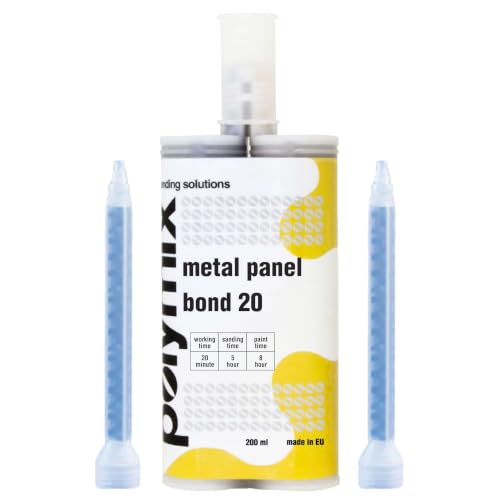
Polymix Panel Bond 20 Urethane Adhesive
What We Like
- No primer needed on any metal
- Bonds steel and aluminum directly
- Includes cartridge and two mixing nozzles
- Works with manual or pneumatic tools
Trade-offs
- Single 200ml cartridge limits large jobs
- Requires applicator tool (not included)
A urethane adhesive that bonds steel and aluminum without primer means you skip the extra step of applying a separate primer before gluing. That saves time and reduces the chance of contamination between layers, which matters when you’re repairing quarter panels, door skins, or roof panels on modern cars. This Polymix kit comes with a 200ml cartridge and two disposable mixing nozzles, so you can start working right away with either a manual caulking gun or a pneumatic applicator. It’s a straightforward choice for collision repair where speed and direct metal bonding matter most.
The single 200ml cartridge is enough for smaller panel repairs but may run short on larger jobs like a full van side or roof replacement. If you work on mixed-material vehicles and want to skip the primer step, this Polymix panel bond fits that need well. For repairs where larger volume is critical, the 3M epoxy alternative might suit you better.
Product photos
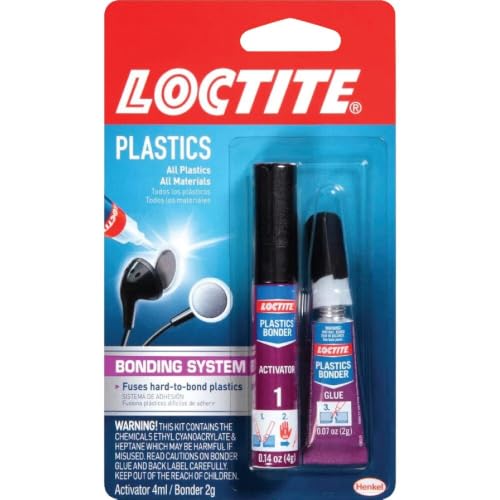
Loctite Plastics Bonding System Kit
What We Like
- Bonds polyethylene, polypropylene, PTFE
- Sets in seconds, no clamping needed
- Dries clear for invisible repairs
- Weatherproof against water and chemicals
Trade-offs
- Kit size is small (0.21 fl oz total)
- Two-step process requires activator application
A two-part system that primes the surface before the glue goes on means this kit can fuse plastics like polyethylene, polypropylene, and PTFE, materials most super glues simply slide off of. The activator preps the surface, then the cyanoacrylate bonds in seconds without clamping, drying clear so the repair barely shows. For anyone wrestling with a cracked bumper tab, a broken interior clip, or a trim piece made of those slippery plastics, this is the glue that actually sticks where others fail.
You get a small 0.21 fl oz kit, so this isn’t meant for filling large gaps or bonding big panels. For those jobs, a larger-volume adhesive system would be a better fit. But for precision repairs on hard-to-bond plastics where speed and invisibility matter, the Loctite system delivers exactly what its name promises.
How We Evaluated Glues For Car Parts
We started by looking at the materials each adhesive is designed to bond, plastic, metal, composite, or rubber, and the specific conditions it must withstand, like engine heat, road vibration, or weather exposure. Manufacturer data on tensile strength, set time, and cure time formed the foundation of our comparisons.
The three criteria that mattered most were bond strength for the intended material, working time for proper alignment, and the adhesive’s resistance to the environment it will face. For body panels, we prioritized OEM-style bonding methods; for trim and emblems, we looked for clear, weather-resistant formulas that set quickly without clamping.
A research-led evaluation like this has limits: we cannot replicate every repair scenario or test every adhesive on every car model. Instead, we rely on documented specs and the collective experience of mechanics and DIYers to identify which products perform reliably in the field.
What To Look For In Glues For Car Parts
Choosing the right glue for your car part means matching the adhesive’s properties to the material you’re bonding and the conditions it will face. Here are the key factors to consider.
Match the adhesive to your part’s material (plastic, metal, or composite) and the repair environment (heat, vibration, or weather exposure). The right bond starts with the right chemistry.
Material Compatibility
Not all glues work on all plastics. Polyethylene, polypropylene, and PTFE are notoriously difficult to bond without a special primer or activator. For these hard-to-bond plastics, look for a kit like the Loctite Plastics Bonding System that includes an activator step. For metal and composite repairs, two-part epoxies like J-B Weld products offer reliable structural bonds.
Strength and Cure Time
Tensile strength ratings give you a sense of the bond’s holding power, but cure time is just as important. A 5-minute set epoxy lets you handle the part quickly, but full cure may take hours or days before the bond reaches maximum strength. Fast-setting adhesives are great for small trim repairs, while panel bonding adhesives with longer work times let you align large parts before the glue sets.
Environmental Resistance
Consider where the part lives. Engine bay repairs need heat resistance above 200°F. Exterior trim and emblems need weatherproof, UV-resistant adhesives. Parts that experience constant vibration, like mirror housings or interior panels, benefit from flexible bonds like the E6000 or vibration-resistant cyanoacrylate gels.
- Check the adhesive’s temperature range against your repair location.
- Verify whether the glue dries clear for visible repairs.
- Confirm if the product requires a separate applicator gun or mixing nozzle.
- Look for water resistance if the repair is near the engine bay or exterior.
- Consider clamp time: some adhesives require pressure, others set without it.
A rule of thumb: if the part has moved or flexed before, choose a flexible adhesive; if it needs to hold rigid, choose a structural epoxy.
Glues For Car Parts Compared
The table below compares the ten glues we evaluated, highlighting their best use cases, key strengths, and material compatibility.
| Product | Type | Volume/Size | Set Time |
|---|---|---|---|
| J-B Weld AutoWeld Automotive Adhesive | Two-part epoxy | 25 ml | 15 minutes |
| 3M Panel Bonding Adhesive | Two-part epoxy | 200 mL cartridge | 90 minutes work time |
| J-B Weld Plastic Bonder Structural Adhesive | Two-part urethane adhesive | 25 ml | 15 minutes |
| 3M Plastic Emblem & Trim Adhesive | N/A | 1 fl oz tube | Quick-setting |
| KRAFTPROTZ Automotive Super Glue Gel | Cyanoacrylate | 1.76 oz | N/A |
| Permatex 5-Minute Plastic Weld Adhesive | N/A | 0.84 oz | 5 minutes |
| Gorilla 2 Part Epoxy | N/A | 0.85 oz | 5 minutes |
| E6000 Premium Automotive Adhesive | N/A | 2.0 fl oz | 24 hours cure |
| Polymix Panel Bond 20 Urethane Adhesive | Two-Part Urethane | 200ml cartridge | N/A |
| Loctite Plastics Bonding System Kit | Two-part adhesive with activator | 0.21 fl oz kit | Sets in seconds |
Frequently Asked Questions
What is the strongest glue for car parts?
The strongest glue depends on the material. For metal-to-metal body panel repairs, the 3M Panel Bonding Adhesive creates an OEM-style structural bond that can replace welding. For plastic repairs, the J-B Weld Plastic Bonder offers 3770 PSI tensile strength. For hard-to-bond plastics like polypropylene, the Loctite Plastics Bonding System is specifically formulated to grip these difficult surfaces.
Can I use super glue on car parts?
Standard super glue is not ideal for most car parts because it becomes brittle under vibration and heat. However, a vibration-resistant gel like the KRAFTPROTZ Automotive Super Glue Gel is formulated to withstand engine vibration and temperatures up to 230°F. That makes it suitable for small plastic and metal parts that stay on vertical surfaces. Avoid using regular super glue on body panels or flexible trim.
What glue works on plastic car bumpers?
A structural plastic adhesive like the J-B Weld Plastic Bonder is a strong choice for plastic bumper repairs because it bonds thermoplastics and composites with high tensile strength. For faster repairs, the Permatex 5-Minute Plastic Weld sets in five minutes and works on ABS, acrylic, and fiberglass. Both options require proper surface preparation for a lasting bond.
How long does car panel adhesive take to cure?
Cure times vary widely by product. Fast-setting epoxies like the Gorilla 2 Part Epoxy set in five minutes but may take longer to reach full strength. The 3M Panel Bonding Adhesive offers a 90-minute work time but requires 24 hours at room temperature for a full cure. Always follow the manufacturer’s recommended cure time before stressing the repair.
Do I need a special applicator for panel bonding adhesive?
Yes, most panel bonding adhesives require a separate applicator gun. The 3M Panel Bonding Adhesive and Polymix Panel Bond 20 both come in cartridges that need a manual or pneumatic applicator tool, which is not included. If you don’t already own one, factor that cost into your repair. For smaller repairs, syringe-style adhesives like the J-B Weld AutoWeld include a self-mixing static mixer.
The Bottom Line
For the widest range of auto repairs, the J-B Weld AutoWeld Automotive Adhesive is our best overall choice. It combines high-impact resistance with a fast cure that sands and paints in 30 minutes, making it a versatile option for both plastic and metal parts. It’s ideal for DIYers and mechanics who need a reliable all-purpose epoxy.
If you’re replacing a quarter panel or door skin, the 3M Panel Bonding Adhesive is the better pick for its OEM-style bond and extended 90-minute work time. For plastic bumper and trim repairs, the J-B Weld Plastic Bonder delivers the strength you need, though you’ll want to plan for its 30-hour full cure.
The single most important factor in any auto adhesive repair is matching the glue to your part’s material and the conditions it will face. Get that right, and the rest is just surface preparation.
