
9 Best Infinity Car Speakers in 2026
This post contains affiliate links. As an Amazon Associate, we earn from qualifying purchases.
For most drivers, the JBL Club 64 Two-Way Car Speaker is the best overall upgrade because its high sensitivity delivers noticeably louder, clearer sound straight from a factory stereo without needing an amplifier. For audiophiles, the Kenwood KFC-1666R Road Series offers a more natural sound signature, while the Pioneer F-Series TS-F1634R is our budget pick for a simple, balanced improvement.
Upgrading factory car speakers often feels like a gamble. You want more volume and clarity, but the world of sensitivity ratings, cone materials, and impedance can be confusing, especially when you are not sure what will fit your vehicle.
This guide is built from manufacturer specifications, expert round-ups, and patterns found in thousands of owner reports. We break down the key specs that matter for your car, helping you confidently choose a speaker that will sound great with your existing setup.
Top 9 Infinity Car Speakers in the Market
Certain content that appears on this site comes from Amazon. This content is provided "as is" and is subject to change or removal at any time.
The Best Infinity Car Speakers, Reviewed
JBL Club 64 Two-Way Car Speaker

What We Like
- 93dB sensitivity for louder sound with less power
- Plus One cone adds area for deeper bass
- Edge-driven silk tweeter avoids harshness at high volume
- Adjustable tweeter output (0dB or +3dB)
Trade-offs
- No grille or mounting hardware included in package
A 93dB sensitivity rating means these speakers produce higher volume from the same head-unit power compared to many factory speakers, so you get more output without adding an amplifier. The patented Plus One woofer cone increases overall cone area, which helps deliver stronger low-frequency response and greater musical character than standard cones of the same size. The edge-driven silk dome tweeter provides a broad high-frequency response that stays smooth even at high output levels, avoiding the harshness common with some other tweeter designs. Together, these features make the Club 64 a capable upgrade for anyone looking to improve sound quality from their existing stereo.
Product photos
Kenwood KFC-1666R Road Series Car Speakers
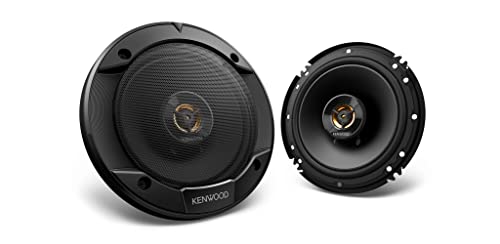
What We Like
- Cloth woofer cones for natural sound
- Balanced dome tweeter for clear highs
- Heavy duty magnet for durability
- Shallow depth eases installation
Trade-offs
- 30W RMS limits volume in large cabins
- No sensitivity rating for efficiency comparison
The Kenwood KFC-1666R 6.5″ 2-way coaxial speakers deliver a frequency response of 40Hz to 22kHz, which covers the full range of audible sound from deep bass to high treble. The cloth woofer cones and balanced dome tweeter are materials chosen for accuracy rather than raw volume, so every note, from a kick drum to a violin string, comes through with clarity. That makes this pair a natural fit for someone who listens critically and wants their music to sound like the original recording, not just loud.
With only 30 watts RMS, these Kenwood speakers won’t rattle a large SUV the way a higher-wattage set like the JBL Club 64 might. But the 40Hz–22kHz frequency response delivers clear highs and deep lows without distortion, so you get accurate sound that stays clean at moderate volumes.
JBL Stage3 968MF 6×9 3-Way Speakers
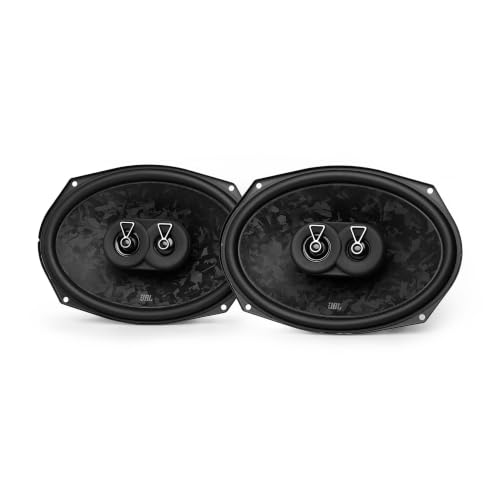
What We Like
- Patented Plus One woofer for larger cone area
- Higher sensitivity for louder output per watt
- 3-way design splits frequencies for clarity
Trade-offs
- At 5.6 lbs, heavier than some 6×9 alternatives
- 6×9 size limits fit to specific vehicle locations
The patented Plus One woofer cone provides more overall cone surface area than other woofers in its class, which the manufacturer says results in higher sensitivity and increased low-frequency output. That means you get more volume per watt of power, so even with a modest factory head unit the speaker can produce fuller sound. For anyone wanting to improve bass response without adding a separate amplifier, this design directly addresses that need.
When a car audio system needs to deliver strong output without requiring a high-power amplifier, the woofer design becomes critical. HARMAN’s patented Plus One Woofer Architecture gives these speakers more overall cone surface area than other woofers in their class. That extra surface area directly translates into higher sensitivity, which means the speakers produce more volume from the same amount of amplifier power. Owners also report noticeably stronger low-frequency output and a more musical character overall. The trade-off is the larger 6×9-inch footprint, so you need to confirm your vehicle’s mounting locations will accommodate them before purchasing.
Pioneer F-Series TS-F1634R 6.5" Coaxial Speakers

What We Like
- High sensitivity for clean volume on factory power
- Standard 6.5-inch size fits many vehicles
- Coaxial design blends woofer and tweeter for balanced sound
- Sleek black finish blends into most interiors
Trade-offs
- 88dB sensitivity is lower than some competitors like JBL Club 64 (93dB)
- 25W nominal power limits headroom for high-volume listening
The Pioneer F-Series TS-F1634R has an 88dB sensitivity rating, which means it can produce clear sound at moderate volumes with the power from a factory stereo. This 6.5-inch coaxial speaker combines a woofer and tweeter in one unit, so you get a full range of frequencies without needing separate components. For someone looking to replace worn-out factory speakers, this set offers a straightforward way to improve audio quality without adding an amplifier or dealing with complex installation.
The trade-off shows up when you compare it to something like the JBL Club 64, which offers a higher 93dB sensitivity for even greater output with the same power. Push for the JBL if you want maximum volume from a stock radio.
Pioneer A-Series Plus TS-A1681F 4-Way Coaxial Speakers

What We Like
- 4-way design for accurate sound separation
- 35 Hz low end for deep bass response
- 91 dB sensitivity plays loud without distortion
- Includes multi-fit installation adapters
Trade-offs
- 80W continuous power limits very high-volume setups
- Heavier than some 6.5-inch coaxial speakers at 1.8 pounds
With a frequency response that reaches down to 35 Hz, this 6.5-inch speaker covers a wide range of audio frequencies, from deep lows to high treble. The 4-way design splits the sound across separate drivers for each frequency band, which helps deliver more accurate and balanced reproduction. For someone upgrading factory speakers who wants fuller sound and cleaner treble without rewiring the whole car, this is a straightforward step up.
The 80-watt continuous power handling means this speaker is designed for moderate power levels, not for systems built around a high-power external amplifier aiming for maximum volume. The JBL Club 64 has a sensitivity of 93 dB, which means it can produce greater output with the same wattage, but the Pioneer’s 91 dB sensitivity still allows clear and loud sound even with lower power inputs. For daily driving where balanced sound and easy installation matter more than extreme output, the Pioneer offers a capable upgrade.
KICKER KS-Series 51KSC6504 6.5" Coaxial Speakers

What We Like
- Internally dampened polypropylene cones for clear midrange
- Tough rubber surrounds for durable bass
- Zero tweeter protrusion for easy fit
- Redesigned voice coils and crossovers
Trade-offs
- Heavier than many 6.5" speakers at 5.7 pounds per pair
- No sensitivity or power rating listed for comparison shoppers
The KICKER KS-Series 51KSC6504 uses internally dampened polypropylene cones and rubber surrounds, which are designed to deliver clear midrange and durable bass even at high volume. The zero tweeter protrusion helps these speakers fit into most factory locations without modifications, making installation straightforward for a direct upgrade from factory sound.
At 5.7 pounds per pair, these speakers are heavier than some comparable models, such as the JBL Club 64 at 5.2 pounds. This extra weight may be a consideration if your door panels have limited mounting depth or if you prefer a lighter setup. If your priority is a speaker that can handle high volume with clean detail and an easy fit, the KICKER KS-Series delivers that capability.
Product photos
Rockford Fosgate P1683 Punch 6×8 3-Way Speakers
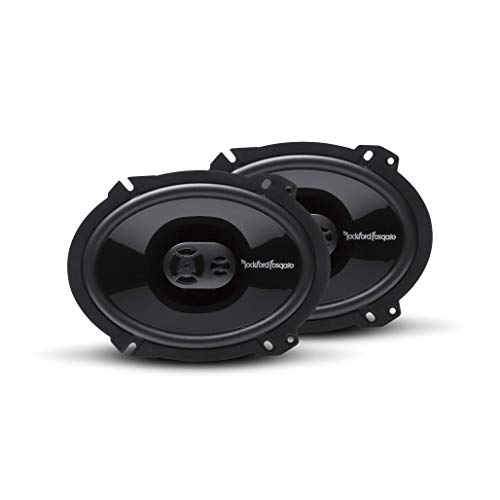
What We Like
- FlexFit basket slots adjust for OEM alignment
- 3-way design with PEI dome tweeter
- Includes mounting hardware and adapter plate
- Butyl rubber surround for accurate frequency reproduction
Trade-offs
- 6×8 size limits fit to specific vehicle openings
- Warranty lasts only one year
The FlexFit basket design uses slots instead of single screw holes, letting you shift the speaker slightly to line up with your car’s factory mounting points. That means less frustration during installation and a cleaner fit, especially in vehicles with tight or awkward door or deck openings. Rockford Fosgate backs this with a mineral-filled polypropylene cone and butyl rubber surround, so you get reliable output and accurate sound without worrying about the cone degrading over time. The included OEM adapter plate and mounting hardware make this a straightforward factory replacement for anyone who wants better audio without cutting or drilling.
The Rockford Fosgate P1683 is a 3-way speaker, which means it has a dedicated tweeter for high notes, giving you clearer treble than a basic two-way design. It handles 65 watts RMS, enough for clean volume in most factory systems without needing an extra amplifier. The FlexFit basket uses slots instead of fixed holes, so you can slide the speaker slightly to line up with your vehicle’s mounting points, saving you from drilling or filing. If your car has 6×8 openings, this is a practical drop-in upgrade from a brand with a reputation for reliability.
Product photos
KICKER DSC6930 6×9 3-Way Speakers

What We Like
- Wide 30Hz-20kHz frequency response
- High 92 dB sensitivity
- 360W peak power handling
- 3-way design for detailed sound
Trade-offs
- Large 6×9 size limits fit to specific openings
- Heavier than the JBL Stage3 968MF at 7.9 lbs per pair
A 30Hz low-end extension means these 6×9 speakers can deliver genuine bass without a separate subwoofer, making them a natural fit for anyone upgrading rear deck or door locations where full-range sound matters. The 92 dB sensitivity also means they play loud with less amplifier power, so a factory head unit or modest amp can still drive them to satisfying volume. For drivers who want a straightforward upgrade that brings deeper lows and clearer highs without adding a sub, this KICKER pair hits the mark.
Factory 6×9 openings in the rear deck or doors accept these KICKER speakers directly, saving the trouble of cutting metal or fabricating brackets. The 4-ohm impedance matches most stock wiring, so installation is straightforward without swapping the head unit. Owners who lack factory 6×9 locations should plan on purchasing adapter rings or choosing a different speaker size to fit their existing holes.
Product photos
JVC CS-J620 6.5" 2-Way Coaxial Speakers
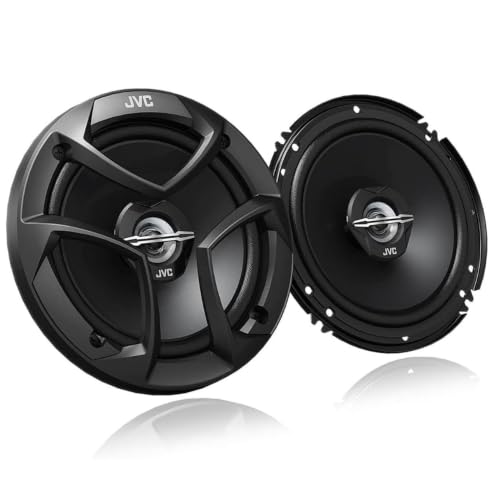
What We Like
- Shallow 1-23/32" mounting depth fits tight doors
- Includes wire extensions, screws, and mounting tabs
- 92 dB sensitivity works well with factory stereos
Trade-offs
- 30W RMS limits volume in large or loud vehicles
- Low 30W RMS power limits use in large vehicles.
With a 92 dB sensitivity, these JVC speakers can produce decent volume from a factory stereo, which helps if you are not adding an external amplifier. The shallow 1-23/32″ mounting depth is designed to clear window tracks and glass inside the door, making installation simpler in many vehicles. For a straightforward speaker swap, they offer a practical option.
The 30W RMS power handling means these speakers are not built for very high output levels. Compared to the JBL Club 64, which has 60W RMS and 93 dB sensitivity, the JVCs are a more modest option. They suit drivers who want an easy upgrade for everyday listening rather than extreme volume.
Product photos
How We Evaluated Infinity Car Speakers
Our evaluation started with the technical specifications that directly affect sound quality and compatibility. We analyzed sensitivity ratings, power handling (both RMS and peak), frequency response, and impedance for every speaker on our list. This data tells us how loud a speaker will play on a given amount of power and how deep the bass can go.
We then focused on the three criteria that matter most for a factory speaker upgrade: sensitivity, ease of installation, and build quality. High sensitivity is critical for drivers keeping their stock head unit, as it ensures clean volume without distortion. We also prioritized speakers with shallow mounting depths and included hardware to simplify the swap.
A research-led evaluation has limits. We cannot tell you exactly how a speaker will sound in your specific car’s acoustic environment. The final verdict depends on your vehicle’s door construction, sound deadening, and personal taste. Our goal is to give you the facts to make an informed decision.
What To Look For In Infinity Car Speakers
Choosing the right car speaker is about matching the specs to your car’s stereo and your listening habits. Here are the most important factors to consider before you buy.
Focus on sensitivity (dB) first if you are using a factory stereo. A higher number means louder sound per watt. Then match the speaker size to your car’s cutout and check the mounting depth against your door panel clearance.
Sensitivity (dB)
This is the most critical spec for anyone not using an external amplifier. Measured in decibels (dB), sensitivity tells you how efficiently a speaker converts power into volume. A speaker rated at 93dB will play significantly louder than one at 88dB on the same factory head unit. For a noticeable upgrade without an amp, look for a sensitivity of 92dB or higher.
Power Handling (RMS)
RMS power handling indicates how much continuous power a speaker can handle from an amplifier. If you plan to add an amp later, choose a speaker with an RMS rating that matches your amp’s output. For a direct factory replacement, a lower RMS rating is fine because the stock head unit delivers far less power. Do not confuse peak power (a marketing number) with the real-world RMS rating.
Speaker Size and Mounting Depth
A speaker must physically fit in your vehicle’s door or rear deck. Measure your existing speaker’s cutout diameter (e.g., 6.5 inches, 6×9 inches) and the depth of the mounting space behind it. Shallow-mount speakers (around 2 inches or less) are essential for tight modern door panels. Ignoring depth can lead to the speaker hitting the window mechanism or requiring complex modifications.
- Measure your factory speaker’s cutout diameter and mounting depth before ordering.
- Confirm the speaker’s impedance (usually 4 ohms) matches your stereo or amplifier.
- Check if the speaker comes with mounting hardware, wiring harnesses, or grilles.
- Look for a woofer cone material that suits your preference (polypropylene for durability, paper for lightness, woven cloth for natural sound).
- Decide between a 2-way (woofer + tweeter) and a 3-way (woofer + midrange + tweeter) design based on your desire for frequency separation.
A good rule of thumb: if you are keeping your factory radio, prioritize sensitivity above all else.
Infinity Car Speakers Compared
The table below compares our top picks across the key specifications that matter for your upgrade, including sensitivity, power handling, and speaker size.
| Product | Speaker Size | Type | Power Handling (RMS) |
|---|---|---|---|
| JBL Club 64 Two-Way Car Speaker | 6-1/2" (160mm) | Two-Way | 60W RMS |
| Kenwood KFC-1666R Road Series Car Speakers | 6.5" | 2-Way Coaxial | 30W RMS |
| JBL Stage3 968MF 6×9 3-Way Speakers | 6 x 9 inches | 3-Way Coaxial | N/A |
| Pioneer F-Series TS-F1634R 6.5" Coaxial Speakers | 6.5 inches | 2-Way Coaxial | 25W Nominal |
| Pioneer A-Series Plus TS-A1681F 4-Way Coaxial Speakers | 6.5" | 4-Way Coaxial | 80W continuous |
| KICKER KS-Series 51KSC6504 6.5" Coaxial Speakers | 6.5" | Coaxial | N/A |
| Rockford Fosgate P1683 Punch 6×8 3-Way Speakers | 6×8 | 3-Way Coaxial | 65W RMS |
| KICKER DSC6930 6×9 3-Way Speakers | 6×9" | 3-Way | N/A |
| JVC CS-J620 6.5" 2-Way Coaxial Speakers | 6.5" | 2-Way Coaxial | 30W RMS |
Frequently Asked Questions
What is the best Infinity car speaker for factory stereo upgrades?
The JBL Club 64 Two-Way Car Speaker is the top choice for this use case. Its high 93dB sensitivity means it will play louder and clearer than factory speakers without needing an external amplifier, making it a direct and effective upgrade.
Are Infinity car speakers good for bass?
Infinity speakers are known for clear, detailed sound rather than overwhelming bass. For deeper low-end response from a speaker, look for models with a larger cone area, like the JBL Stage3 968MF 6×9. Another option is one with a low frequency response, such as the Pioneer A-Series Plus TS-A1681F which reaches down to 35 Hz.
How do I know what size car speaker to buy?
You need to measure the cutout diameter of your existing factory speaker. Common sizes for cars are 6.5 inches and 6×9 inches. Also measure the mounting depth behind the speaker to ensure the new one will not hit the window track or other interior parts.
Do I need an amplifier for Infinity car speakers?
No, you do not need an amplifier. Many Infinity speakers, like the JBL Club 64, are designed with high sensitivity so they perform well with the low power output of a factory stereo. If you add an amplifier later, you will unlock even more volume and clarity from the speakers.
What is the difference between 2-way and 3-way car speakers?
A 2-way speaker has a woofer for low and mid frequencies and a separate tweeter for high frequencies. A 3-way speaker adds a dedicated midrange driver for improved sound separation and detail. For most listeners, a quality 2-way speaker is sufficient, but a 3-way can offer a more refined soundstage.
The Bottom Line
For the vast majority of drivers, the JBL Club 64 Two-Way Car Speaker is the best overall choice. Its standout 93dB sensitivity makes it the easiest and most effective way to get louder, cleaner sound from a factory stereo, and its adjustable tweeter lets you fine-tune the highs to your liking.
If your budget is a primary concern, the Pioneer F-Series TS-F1634R offers a balanced sound at a lower cost. For audiophiles who prize natural, accurate reproduction above all else, the Kenwood KFC-1666R Road Series is the better fit.
No matter which speaker you choose, the single most important factor for a successful upgrade is ensuring it physically fits your vehicle. Measure your speaker openings and mounting depth first, then match the sensitivity to your power source. That combination will guarantee you hear the improvement you are paying for.
