
8 Best Lithium Batteries For Car Audio in 2026
This post contains affiliate links. As an Amazon Associate, we earn from qualifying purchases.
For high-output car audio systems, the Big Jeff Audio Compact 22AH Lithium LFP Battery wins as our best overall pick thanks to its 6000W max power delivery and built-in cell balancing that extends battery life. The XS Power PWR-S5-3400 LTO Powercell excels for massive discharge needs, while the Audiosavings RSV-23 Lithium LTO Battery Bundle offers the best value for lightweight cranking power.
Standard lead-acid batteries struggle to deliver the instant burst of current that powerful amplifiers demand without voltage sag. Lithium batteries maintain stable voltage under heavy load, weigh significantly less, and can be deeply cycled without damage.
We evaluated these picks by analyzing manufacturer specifications, owner feedback patterns, and expert recommendations across automotive audio forums. This guide helps you match battery chemistry and capacity to your system’s power requirements, vehicle fitment, and budget.
Top 8 Lithium Batteries For Car Audio in the Market
Certain content that appears on this site comes from Amazon. This content is provided "as is" and is subject to change or removal at any time.
The Best Lithium Batteries For Car Audio, Reviewed
Big Jeff Audio Compact 22AH Lithium LFP Battery

What We Like
- 6000W max power for demanding systems
- 293 Wh energy for extended sessions
- Built-in cell balancing extends life
- Compact size fits tight spaces
Trade-offs
- 22 Ah capacity is lower than some AGM options
- No cold cranking amp rating listed
A 6000-watt max power rating means this battery can feed even a wildly powerful car audio system without breaking a sweat. That kind of headroom, paired with 293 watt-hours of stored energy, lets you crank long playlists at competition-level volume without worrying about voltage sag. It includes built-in cell balancing to keep the cells healthy over time, so you get consistent performance session after session. For anyone building a serious sound system in a car, truck, or SUV, this is the battery that gives you the juice to run big amplifiers without needing a second battery right away.
The trade-off is capacity: at 22 amp-hours, this battery stores less total energy than a typical deep-cycle AGM of similar physical size. If you’re running multiple high-wattage amps for hours at a time, you might still need a second battery or a high-output alternator to keep things topped up.
XS Power PWR-S5-3400 LTO Powercell
What We Like
- 2000 amp discharge for high-demand systems
- 1000 cold cranking amps for reliable starts
- LTO chemistry handles deep cycling well
- Compact Group 34 size fits many trays
Trade-offs
- 10Ah capacity limits total energy storage
- Not a standalone battery for long listening sessions
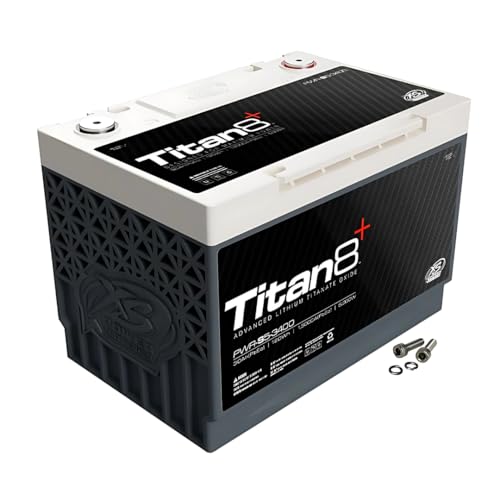
The XS Power PWR-S5-3400 carries a 2000 Amp rating in its title, which indicates it can supply a very high current for short bursts, exactly what many car audio setups demand for heavy bass notes. Its LTO chemistry is designed for deep-cycle use, so it can handle repeated discharges without degrading quickly. That makes it a strong candidate for systems where you need a quick jolt of power rather than sustained output.
A 10Ah capacity limits how long this battery can power accessories without the engine running. For longer play times, a battery like the Big Jeff Audio Compact 22AH LFP stores more than twice the energy in a similar footprint. But if you need a Group 34 battery that can deliver a high current on demand, this XS Power cell fits that role well.
Audiosavings RSV-23 Lithium LTO Battery Bundle
What We Like
- 69Ah AGM-equivalent at only 10 lbs
- 750CCA for reliable cold-weather starts
Trade-offs
- Backpack adds bulk if not needed
- 23Ah actual capacity limits extended listening time
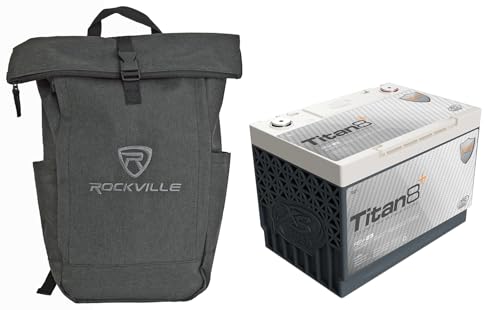
The actual capacity is 23Ah, which supports demanding setups up to 5,000 watts. But that runtime is limited compared to a larger battery like the Big Jeff Audio Compact 22AH Lithium LFP Battery (which also has 22Ah). The included charger and backpack mean you get everything needed to start using the battery right away, without tracking down extra accessories.
Product photos
Wuldnmar Group 47 LiFePO4 Car Battery

What We Like
- Ultra-light 11.0 lb design
- 600 CCA tested up to 850 CCA
- Built-in BMS for overcharge protection
- Compatible with many popular vehicles
Trade-offs
- Requires a 12V 10A LiFePO4 charger for recharging
- At 11.0 lb, heavier than some lithium audio batteries
Weighing just 11.0 pounds, this battery is about a third the weight of a conventional lead-acid unit, so handling it during installation is noticeably easier. Its 600 cold cranking amps, tested up to 850 CCA, provide reliable starting power even in cold weather, and the built-in BMS protects against overcharge and overdischarge, which adds peace of mind for daily driving.
The main trade-off is that this battery is designed as a starter battery, not for long-duration deep-cycle use. If you need extended power for accessories without the engine running, a dedicated deep-cycle lithium option like the Big Jeff Audio Compact 22AH would offer more reserve capacity. But for most drivers who just want a lighter, stronger starter battery that fits the same space as their old one, this Wuldnmar model delivers the cranking power without the extra weight.
Product photos
VEVOR 12V 30Ah LiFePO4 Dual Purpose Battery
What We Like
- Bluetooth app for real-time monitoring
- ERM reserves 10-15% power for starts
- Dual purpose: starting and deep cycle
- Lightweight at 9.3 pounds
Trade-offs
- 30Ah capacity limits sustained high-drain use
- Bluetooth app required for advanced BMS features.
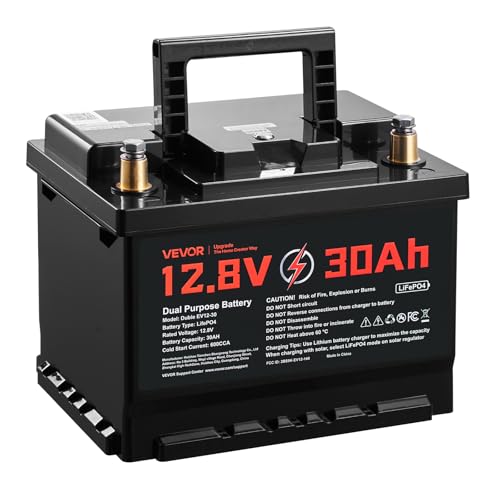
The 600 cold cranking amps and 30 amp-hour capacity mean this battery can start your engine and still power accessories like a trolling motor or fish finder. The dual-purpose design gives you reliable starts thanks to the ERM function that keeps 10-15% power in reserve, plus deep-cycle capability for running gear. The built-in Bluetooth BMS lets you check voltage, current, and temperature from your phone, so you always know the battery status. It suits anyone who wants one battery for both cranking and accessories without carrying a second unit.
A 30Ah capacity is modest for applications that need sustained high current draw over long periods. If you plan to run multiple high-drain devices for extended time, a dedicated deep-cycle battery like the XS Power PWR-S5-3400 LTO Powercell with its 2000-amp rating may handle heavier loads better. But for a daily driver who wants a lightweight, smart lithium battery that starts the car and powers moderate accessories, this VEVOR delivers a lot of convenience in a single package. Just measure your old battery first, since Group 47 dimensions are specific.
OMUGO Group 47 LiFePO4 Car Battery
What We Like
- 800 CCA for reliable cold starts
- 11 lb weight reduces front-end load
- Built-in voltage display for health check
- LiFePO4 chemistry lasts thousands of cycles
Trade-offs
- Requires checking polarity match before ordering
- Group 47 size limits fit to specific vehicles
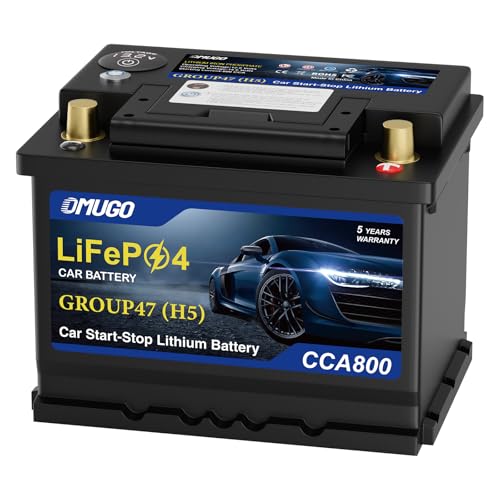
An 800 CCA rating means this battery fires up your engine even when the thermometer hits -30°C, so you won’t be stuck cranking a dead battery on a freezing morning. Premium LiFePO4 cells outlast lead-acid by years with thousands of cycles, which is why owners of start-stop vehicles find it a reliable replacement for batteries that often fail in under two years. The built-in voltage display lets you check battery health at a glance, and at 20 pounds it sheds about 30% weight versus factory lead-acid, reducing front axle strain for quicker steering and better ride feel.
Fit is the main trade-off here: this is a Group 47/H5 size with specific terminal polarity (negative left, positive right), so it won’t drop into every car bay without checking your existing battery’s dimensions and posts. If your vehicle uses a different group size, the VEVOR 12V 30Ah LiFePO4 offers a similar Group 47 footprint but weighs 9.3 pounds and delivers 600 CCA, less cold-cranking power but a touch lighter. For drivers who need maximum cold-start assurance and have the right battery tray, the OMUGO delivers where it counts.
Product photos
TPE Group 47 LiFePO4 Car Battery

What We Like
- Weighs just 11 pounds
- Practical testing up to 700 CCA
- Built-in BMS for safety
- Emergency switch for power loss
Trade-offs
- BMS shuts down below 30% charge
- Emergency switch only gives 10 minutes run time
At 11 pounds, this TPE Group 47 LiFePO4 battery is about one-third the weight of a typical lead-acid battery, which makes it easier to handle and install in tight engine bays. It delivers a rated 600 cold cranking amps, with practical testing showing up to 700 CCA, so it has enough starting power for most vehicles, including those with start-stop systems. The built-in BMS protects against overcharge, over-discharge, and overcurrent, which helps the battery last longer and operate safely in a variety of automotive applications.
The BMS low-voltage protection is a key feature here. When the battery drops to 30% charge, the system triggers a three-minute warning and then shuts down to protect the cells. You can press the silver emergency switch to get ten more minutes of run time, but that is a short window. Compared to the Big Jeff Audio Compact 22AH, which is a smaller 22Ah lithium battery, the TPE offers a higher CCA rating and is designed for starting duty. That makes it a better fit for someone who needs a reliable starter battery that can also handle moderate accessory loads.
Product photos
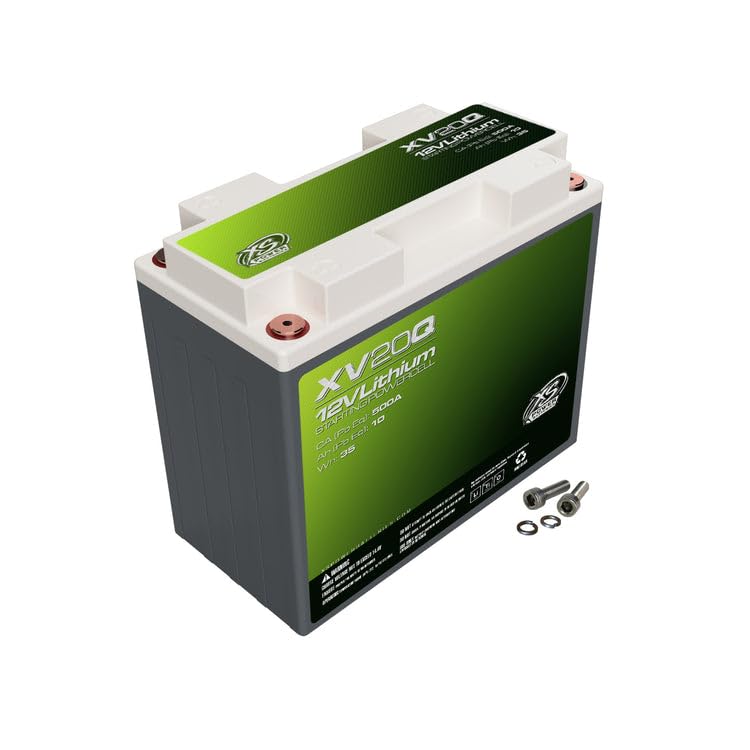
XS Power XV20Q LTO Powersports Battery
What We Like
- Weighs just 3.25 lbs for easy placement
- 335 cranking amps for reliable starts
- Sealed, leak-proof, maintenance-free design
Trade-offs
- Only 3 Ah capacity limits long-duration accessory use
- Not suitable for large UTVs needing high reserve capacity
At only 3.25 pounds and about the size of a thick paperback, the XS Power XV20Q is built for installations where every inch and ounce matters. This makes it a natural fit for tight spaces in UTVs, motorcycles, or a custom car audio setup. You need a small powercell to back up a main battery or run a modest system without adding heavy weight.
Its 3 amp-hour capacity means it won’t sustain high-draw accessories like large amplifiers or winches for long on its own. If your goal is a lightweight, compact powercell for starting and supporting a moderate audio system, this LTO battery delivers where space is at a premium.
How We Evaluated Lithium Batteries For Car Audio
We cross-referenced these specs against owner reports of real-world performance in high-drain car audio installations.
The four most important criteria for this category were burst discharge capability for amplifier peaks and total energy storage for extended listening. Weight savings over AGM alternatives and cold cranking amps for vehicles that also need reliable engine starts also mattered.
This evaluation is based on published specs and community experience. Battery performance varies with installation quality, alternator output, and ambient temperature, so we prioritized products with consistent positive feedback across multiple user scenarios.
What To Look For In Lithium Batteries For Car Audio
Choose a lithium battery that matches your system’s peak power draw, fits your battery tray, and can either start your engine or work alongside a dedicated starter battery.
Discharge Current Rating
The most critical spec for car audio is the maximum continuous and peak discharge current measured in amps. A 2000-amp battery like the XS Power PWR-S5-3400 supports systems drawing thousands of watts, while a 335-amp battery like the XS Power XV20Q suits moderate setups. Match the battery’s discharge capability to your amplifier’s fuse rating multiplied by 10 for a rough peak current estimate.
Chemistry: LiFePO4 vs LTO
Lithium iron phosphate (LiFePO4) batteries offer high cycle life, thermal stability, and built-in battery management systems (BMS) that prevent overcharging. Lithium titanate (LTO) batteries like the XS Power PWR-S5-3400 handle extreme discharge rates and deep cycling better, making them ideal for competition-level audio systems that see frequent full discharges.
Physical Fitment and Weight
Lithium batteries typically weigh less than AGM equivalents. The Wuldnmar Group 47 weighs 11 pounds versus a comparable lead-acid battery. Measure your battery tray dimensions and confirm terminal orientation before purchasing, as some models require specific group sizes.
- Verify the battery group size matches your vehicle’s tray
- Check terminal polarity orientation (positive on left vs right)
- Confirm your alternator can charge lithium chemistry without a special regulator
- Ensure the battery has a BMS rated for your charging system voltage
A lithium battery that fits poorly or lacks proper BMS protection will underperform regardless of its specs.
Lithium Batteries For Car Audio Compared
The table below compares key specs across our eight picks to help you match battery performance to your audio system’s demands.
| Product | Chemistry | CCA | Weight |
|---|---|---|---|
| Big Jeff Audio Compact 22AH Lithium LFP Battery | LFP | N/A | N/A |
| XS Power PWR-S5-3400 LTO Powercell | LTO | 1000CA | N/A |
| Audiosavings RSV-23 Lithium LTO Battery Bundle | Lithium LTO | 750CCA | 10 lbs |
| Wuldnmar Group 47 LiFePO4 Car Battery | LiFePO4 | 600A | 11.0 Pounds |
| VEVOR 12V 30Ah LiFePO4 Dual Purpose Battery | LiFePO4 | 600 | 9.3 pounds |
| OMUGO Group 47 LiFePO4 Car Battery | LiFePO4 | 800 | 11.0 lb |
| TPE Group 47 LiFePO4 Car Battery | LiFePO4 | 600A | 11.0 lbs |
| XS Power XV20Q LTO Powersports Battery | Lithium Titanate Oxide (LTO) | 335 CA | 3.25 lbs |
Frequently Asked Questions
Can I use a lithium car audio battery as my only battery?
Yes, if the battery has sufficient cold cranking amps (CCA) for your engine and a BMS that supports starting duty. The VEVOR 12V 30Ah LiFePO4 battery is designed for dual-purpose use with a reserve power mode for engine starts. Dedicated audio batteries without CCA ratings require a separate starter battery.
How long will a lithium battery power my car audio system?
Playback time depends on your system’s total power draw and the battery’s energy capacity. A 30Ah battery running a 1000-watt amplifier at moderate volume will last roughly 15-30 minutes before the BMS shuts down to protect the battery. Extended listening requires the alternator running or a larger capacity battery.
What is the difference between LiFePO4 and LTO batteries for car audio?
LiFePO4 batteries offer longer cycle life (2000-5000 cycles) and better energy density for their weight. LTO batteries handle higher discharge rates and tolerate deeper discharges better, making them ideal for competition audio systems that demand massive current in short bursts. LTO batteries cost more per amp-hour.
Do I need a special charger for lithium car audio batteries?
Yes. Lithium batteries require a charger with a lithium-specific charging profile. The Wuldnmar Group 47 explicitly requires a 12V 10A LiFePO4 charger. Using a standard lead-acid charger can damage the battery’s BMS or cause unsafe charging conditions.
How much weight can I save switching to lithium?
A typical Group 47 lead-acid battery weighs more than its lithium equivalent. Lithium equivalents like the OMUGO Group 47 weigh 11 pounds. This weight reduction improves vehicle handling and fuel economy, especially when mounted in the front of the vehicle.
The Bottom Line
The Big Jeff Audio Compact 22AH Lithium LFP Battery is our best overall pick for car audio enthusiasts who need high burst power and extended playback in a compact package. Its 6000W max power and 293 Wh energy capacity support demanding systems while the built-in cell balancing maximizes battery life.
Budget-conscious shoppers should consider the TPE Group 47 for a lightweight starter battery with emergency power backup. The Audiosavings RSV-23 bundle offers the best value for those wanting both cranking power and a carrying case. For competition-level systems, the XS Power PWR-S5-3400 delivers the highest discharge current of any pick here.
The single most important factor when choosing a lithium car audio battery is matching its discharge current rating to your amplifier’s peak power demands. Buy a battery that delivers enough current for your system’s estimated peak current draw for reliable performance without voltage sag.
