
10 Best Mid Range Motorcycle Helmets in 2026
This post contains affiliate links. As an Amazon Associate, we earn from qualifying purchases.
For most riders, the mid-range helmet market offers the sweet spot between protection and price. The LS2 Stream II Full Face Helmet wins as Best Overall thanks to its AREM rotational energy management system and ECE 22.06 certification, paired with a built-in SunShield. For budget-minded riders, the Bell Qualifier delivers great features at a sensible price, while the HJC C10 Solid Full Face Helmet is our pick for Best Lightweight Comfort on long days.
The challenge with mid-range helmets is balancing modern safety standards, weight, ventilation, and features like integrated sun visors without blowing your budget. Every rider prioritizes differently, some want the lightest shell for all-day touring, while others need Bluetooth readiness or a modular flip-up design.
We built this guide by studying manufacturer specifications, safety certifications, expert round-ups, and patterns in owner feedback across ten leading models. Our goal is to help you match the right helmet to your riding style and daily needs.
Top 10 Mid Range Motorcycle Helmets in the Market
Certain content that appears on this site comes from Amazon. This content is provided "as is" and is subject to change or removal at any time.
The Best Mid Range Motorcycle Helmets, Reviewed
LS2 Stream II Full Face Helmet

What We Like
- AREM rotational energy management system
- ECE 22.06 certified for modern safety
- Built-in SunShield for glare reduction
- Aerodynamic sport shell design
Trade-offs
- Ships with clear shield only, tinted sold separately
- At 5.0 lb, heavier than some mid-range options
The LS2 Stream II is certified to ECE 22.06 and DOT FMVSS 218, with AREM rotational energy management built into the shell. That means it meets two recognized safety standards, giving you a layer of protection that goes beyond a single certification. The Kinetic Polymer Alloy shell is paired with a built-in SunShield, so you can reduce glare without carrying a separate visor. For riders who want modern safety features at a mid-range price point, this helmet delivers where it counts.
The trade-off is weight. At five pounds, the Stream II is heavier than the HJC C10, which comes in at 3.5 pounds. That extra mass comes from the shell construction and added safety layers, so it is a fair exchange for the upgraded certification. If you log long miles and every ounce matters, the lighter HJC might suit you better. But for daily commuting and weekend rides where protection is the priority, the LS2 Stream II earns its place in the mid-range list.
Bell Qualifier Full Face Helmet
What We Like
- Anti-fog, anti-scratch NutraFog II shield
- Velocity Flow ventilation with washable liner
- Integrated Bluetooth speaker pockets
- Padded wind collar for comfort
Trade-offs
- No built-in sun shield for bright days
- Heavier than some full-face options at 4.8 lb
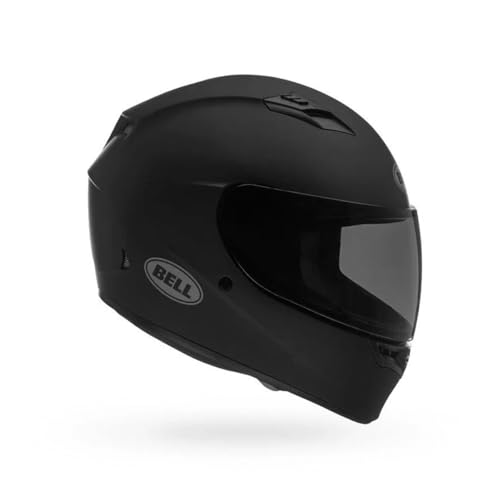
The Bell Qualifier weighs 4.8 pounds and meets DOT safety standards (FMVSS 218). Its NutraFog II shield resists fog and scratches, while the Velocity Flow ventilation system channels air through a removable, washable liner that helps manage sweat and odor. Integrated speaker pockets make it ready for a Bluetooth communication system, and a padded wind collar helps reduce noise. For riders who want a full-face helmet with these features at a practical price point, the Qualifier covers the essentials: DOT certification, anti-fog protection, and Bluetooth readiness.
The trade-off for all those features is that you don’t get a drop-down sun visor, so you will need to swap shields or wear tinted glasses on bright days. Compared to the lighter HJC C10 at 3.5 pounds, the Qualifier feels more substantial on your head, but that extra heft comes with better ventilation and anti-fog protection out of the box. If your priority is a helmet that packs premium touches into a practical everyday package, the Bell Qualifier delivers real value without asking you to spend like you are buying a race lid.
HJC C10 Solid Full Face Helmet

What We Like
- Lightweight polycarbonate shell at 3.5 lb
- Moisture-wicking, washable interior liner
- Advanced Channeling System with 5 vents
- Pinlock-ready shield with 99% UV protection
Trade-offs
- No built-in sun shield or dark smoke shield
- Speaker pockets but no Bluetooth system included
At 3.5 pounds, this helmet is lighter than several full-face models in the same size range, which reduces neck strain on long rides. The polycarbonate shell meets DOT FMVSS 218 standards for safety, and the Advanced Channeling System uses three intake and two exhaust vents to push out heat and humidity. The moisture-wicking liner dries quickly, and the removable crown and cheek pads are washable, so the interior stays fresh. Riders who want a lightweight, ventilated helmet for all-day comfort will appreciate the difference this weight makes.
The light weight comes with a trade-off: there is no built-in sun shield, and the dark smoke shield is sold separately. Riders who frequently face low sun will need to buy an extra shield or swap shields on the road. The Bell Qualifier weighs about 4.8 pounds, so the HJC C10 is easier on the neck but demands more planning for changing light. For anyone who values a barely-there feel and a cool, dry interior on warm days, this helmet performs well in those areas.
ScorpionEXO Covert FX Full Face Helmet

What We Like
- ECE 22.06 certified for modern safety
- Weighs only 2.9 lbs for all-day comfort
- Includes dark smoke EverClear fog-free shield
- KwikFit cheek pads accommodate eyeglasses
Trade-offs
- No integrated sun visor for quick shading
- Pinlock inserts sold separately for extra fog protection
At 2.9 pounds for a medium, this helmet is lighter than many full-face options, thanks to its TCT-Ultra Composite shell. It carries both DOT and ECE 22.06 certification, the latter requiring a wider range of testing than the previous standard. The included dark smoke EverClear shield is fog-free out of the box, and the KwikFit cheek pads leave room for eyeglass frames, so daily commuters won’t have to choose between vision and fit.
The trade-off for that minimalist style is convenience: there is no built-in sun visor, so riders must swap shields or rely on tinted eyewear when the sun shifts. Compared to the HJC C10, which weighs 3.5 pounds, the Covert FX’s lighter weight may appeal to riders who log longer hours in the saddle. It also includes 50mm round speaker pockets that allow easy installation of a Bluetooth communication system.
Product photos
HJC i91 Solid Modular Helmet
What We Like
- DOT-approved for impact protection
- Pinlock-ready shield with anti-scratch coating
- Removable, washable moisture-wicking liner
- Glasses grooves for eyewear comfort
Trade-offs
- Flip-up modular design adds complexity over fixed full-face
- Bluetooth system sold separately for communication
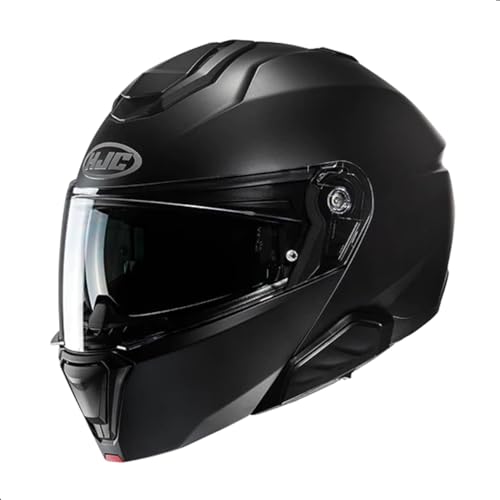
At 3.5 pounds, this modular helmet keeps weight down where many flip-ups feel heavy on long rides. The DOT FMVSS 218 certification means it meets standards for energy absorption, penetration resistance, and chin strap testing, so you get protection that’s been tested. It suits riders who want the convenience of flipping up the chin bar for quick stops or conversations, while still having a polycarbonate composite shell and a Pinlock-ready shield that blocks 99% of UV rays. The moisture-wicking, washable liner and built-in glasses grooves make it a practical choice for all-day comfort.
At 3.5 pounds, the HJC i91 is over a pound lighter than the Bell Qualifier Full Face Helmet, which makes it noticeably easier on the neck during long rides. The advanced polycarbonate composite shell meets DOT FMVSS 218 standards, so you get certified impact protection without the heft of a heavier lid. If you want Bluetooth for calls or music, you’ll need to buy the SMART HJC 21B or 50B system separately, neither is included.
ScorpionEXO T520 Touring Helmet
What We Like
- AirFit Inflation System customizes cheek pad fit
- Everclear no-fog shield on both surfaces
- Drop-down SpeedView sun visor built in
- KwikFit cheekpads accommodate eyeglasses
Trade-offs
- Bluetooth communicator kit sold separately
- Double D-ring takes longer to fasten than a ratchet
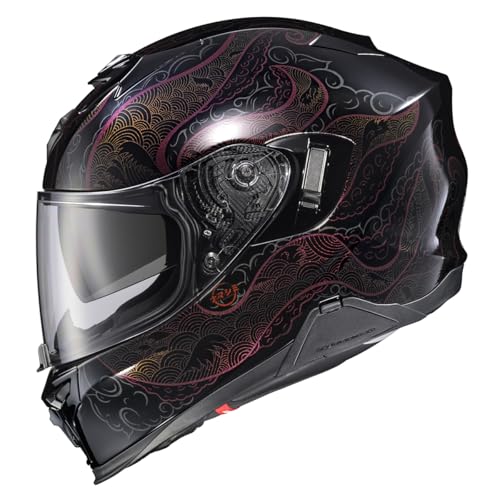
The AirFit Inflation System adjusts cheek pad fit to reduce wind noise and lift, a feature that helps riders get a snug, custom feel without swapping pads. The Everclear no-fog shield is treated on both sides, and a built-in drop-down SpeedView sun visor eliminates the need to carry a separate tinted shield. KwikFit cheekpads also slide easily over eyeglasses, so riders who wear prescription lenses won’t have to remove their glasses each time they put the helmet on.
At 4.8 pounds, this helmet is heavier than the HJC C10 Solid (3.5 pounds), so on long rides your neck may feel the extra weight. But if you want a secure fit and a fog-free shield for touring, the trade-off is worth it.
LS2 Rapid III Full Face Helmet

What We Like
- ECE 22.06 certified for advanced impact protection
- 3D laser-cut cheek pads for precise fit
- Removable washable liner keeps helmet fresh
- Micrometric buckle for quick secure closure
Trade-offs
- At 6.0 lb, heavier than the HJC C10 (3.5 lb)
- No anti-fog coating on the face shield
The LS2 Rapid III weighs 6.0 pounds, which is noticeably heavier than many helmets in this class, but that weight comes from a shell built with High Pressure Thermoplastic Technology (HPTT) and a multi-density EPS liner that meets both DOT and the tougher ECE 22.06 standard. For a rider who prioritizes safety certification over featherlight weight, this helmet delivers impact protection you can trust, with three shell sizes and five EPS densities to fit a wide range of head shapes properly. The 3D laser-cut cheek pads and micrometric buckle make daily use straightforward, and the washable liner keeps things fresh on long rides.
At 6.0 pounds, the Rapid III is heavier than the HJC C10 (3.5 pounds), which may matter for riders who want less weight on all-day trips. The Rapid III also lacks a built-in sun shield, so riders must swap visors or wear sunglasses when the sun dips low. If your main concern is getting a helmet that passes the latest ECE standard, the Rapid III earns its place here. If weight or convenience features matter more, one of the lighter options may suit you better.
Product photos
AUBOA MD-813 Full Face Helmet

What We Like
- Lightweight 3.2-pound ABS shell
- Removable, washable inner liner
- Multiple vents for airflow
- Detachable nose guard
Trade-offs
- No integrated sun shield or anti-fog visor
- Single tinted visor limits low-light use
At just 3.2 pounds, this helmet is noticeably lighter than many full-face options in the mid-range category, which makes a real difference on longer rides when neck fatigue can sneak up on you. The DOT-approved ABS shell and multi-density EPS liner cover the essential safety bases, while the removable and washable liner keeps things fresh without needing to replace the whole helmet. For someone shopping on a tighter budget who wants a functional, no-frills full-face design, this delivers the core features, ventilation, a tinted visor, and a metal buckle, without the premium price tag.
The trade-off here is that this helmet uses a single tinted visor, so you’ll need to swap it out or ride with it up in darker conditions. That said, if your priority is keeping weight low and cost reasonable over chasing every advanced feature, this helmet fills that gap neatly. It’s a straightforward, honest design that focuses on the essentials, and for daily commuting or casual weekend rides, that’s often exactly what you need.
Product photos
1Storm Full Face Helmet
What We Like
- 3-level top ventilation control
- 5-position ventilation channel
- Aerodynamic rear venturi-effect exhaust spoiler
- Removable and washable cushioned interior
Trade-offs
- Thermoplastic shell is heavier than polycarbonate alternatives
- Heavier than some competitors like HJC C10 at 3.5 lb
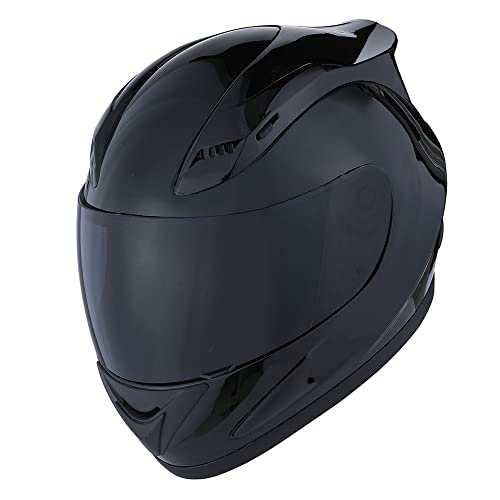
A 5-position ventilation channel paired with a 3-level top control and a rear venturi-effect exhaust spoiler means this helmet moves air through the shell. That helps keep you cooler on warm rides or in stop-and-go traffic. It suits riders who want good airflow without stepping up to a higher price tier. The thermoplastic alloy shell is listed as ultra light weight, and the helmet weighs 4.4 pounds, while the cushioned interior is removable and washable, so it stays fresh over time.
Product photos
FRBRK Bluetooth Modular Helmet

What We Like
- Built-in Bluetooth with noise reduction
- DOT certified for road use
- Dual visor system for sun protection
- Modular flip-up design for convenience
Trade-offs
- Weighs 4.8 pounds, heavier than some alternatives
- Bluetooth noise reduction only works during calls.
DOT certification means this helmet meets federal safety standards for road use in the U.S., so you can ride legally and with confidence. The built-in Bluetooth headset handles calls with active noise reduction and stereo bass surround sound, letting you stay connected without a separate device or wires. A flip-up chin bar and dual visor system add everyday convenience, while the ABS composite shell and high-density EPS foam provide durable impact protection.
The trade-off is weight: at 4.8 pounds, it is heavier than the HJC C10 Solid (3.5 lb) or the HJC i91 Solid Modular (3.5 lb). That extra weight can be felt on longer rides, especially if you are used to a lighter full-face helmet. The ABS shell keeps the cost manageable, but lacks the feel of more expensive materials. If Bluetooth integration matters more than shaving every ounce, this helmet is a good fit for that priority.
Product photos
How We Evaluated Mid Range Motorcycle Helmets
Our evaluation is research-based, drawing from official manufacturer specs, safety certification data, expert round-ups, and common themes in owner feedback.
The four criteria that mattered most were safety certification (prioritizing modern ECE 22.06 standards), weight for fatigue reduction on long rides, ventilation effectiveness for hot-weather comfort, and practical features like integrated sun visors, anti-fog shields, and Bluetooth readiness. These factors directly affect how a helmet performs in real-world riding conditions.
A research-led evaluation has limits: we cannot measure real-world noise reduction, fit variations across head shapes, or long-term durability of padding and mechanisms. We recommend trying helmets in person when possible and reading recent owner experiences for your specific head shape.
What To Look For In Mid Range Motorcycle Helmets
Choosing a mid-range helmet means weighing safety certifications, weight, ventilation, and convenience features against your budget. Here is what matters most.
A mid-range helmet should meet at least DOT safety standards, with ECE 22.06 being a strong plus. Weight under a certain threshold reduces neck fatigue, and a built-in sun visor or anti-fog shield adds daily convenience without extra cost.
Safety Certifications
The most critical factor is safety certification. DOT approval is the minimum for road use in the US, but ECE 22.06 represents a more modern impact standard that includes rotational energy testing. Several picks in this guide, like the LS2 Stream II and ScorpionEXO Covert FX, carry ECE 22.06 certification, which is a meaningful upgrade for protection.
Weight and Shell Material
Helmet weight directly affects comfort on long rides. Polycarbonate shells are common at this price point and offer good protection at a lower weight than thermoplastic. The HJC C10 weighs just 3.5 pounds, while heavier models like the LS2 Rapid III come in at 6.0 pounds. For touring or all-day commuting, lighter helmets reduce neck strain significantly.
Ventilation and Airflow
A well-ventilated helmet keeps you cool and reduces fogging. Look for multiple intake vents and rear exhaust spoilers that create negative pressure to draw hot air out. The 1Storm Full Face Helmet features a 3-level top ventilation control and a 5-position channel, making it a strong choice for hot-weather riding.
Features That Matter Daily
- Integrated sun visor (drop-down or built-in) for quick glare reduction
- Anti-fog coating or Pinlock-ready shield for clear vision in changing weather
- Bluetooth speaker pockets for communication and music
- Removable, washable liner for hygiene
- Eyeglass-friendly cheek pads if you wear glasses
A helmet that fits well and meets your safety and feature priorities will serve you better than one with premium materials that does not suit your riding style.
Mid Range Motorcycle Helmets Compared
The table below compares key specs and features across our ten picks, helping you see at a glance which mid-range helmet fits your needs.
| Product | Shell Material | Safety Standard | Weight | Ventilation |
|---|---|---|---|---|
| LS2 Stream II Full Face Helmet | Kinetic Polymer Alloy | ECE 22.06, DOT FMVSS 218 | 5.0 Pounds | Dynamic flow-through |
| Bell Qualifier Full Face Helmet | N/A | DOT (FMVSS 218) | 4.8 Pounds | Velocity Flow |
| HJC C10 Solid Full Face Helmet | Lightweight Polycarbonate | DOT FMVSS 218 | 3.5 Pounds | 3 intake, 2 exhaust vents |
| ScorpionEXO Covert FX Full Face Helmet | TCT-Ultra Composite | DOT / ECE 22.06 | 2.9 lbs (size M) | Aero-tuned ventilation system |
| HJC i91 Solid Modular Helmet | Polycarbonate Composite | DOT FMVSS 218 | 3.5 Pounds | Advanced Channeling System |
| ScorpionEXO T520 Touring Helmet | Advanced Polycarbonate | DOT / ECE | 4.8 Pounds | Aero-Tuned Ventilation |
| LS2 Rapid III Full Face Helmet | HPTT Thermoplastic | DOT & ECE 22.06 | 6.0 Pounds | N/A |
| AUBOA MD-813 Full Face Helmet | ABS | DOT FMVSS-218 | 3.2 Pounds | Multiple vents |
| 1Storm Full Face Helmet | Thermoplastic alloy | DOT FMVSS 218 | 4.4 pounds | 3-level top, 5-position channel |
| FRBRK Bluetooth Modular Helmet | ABS | DOT FMVSS-218 | 4.8 Pounds | N/A |
Frequently Asked Questions
What does ECE 22.06 certification mean for a motorcycle helmet?
ECE 22.06 is the latest European safety standard that tests impact absorption at multiple speeds and angles, including rotational energy management. Helmets with this certification, like the LS2 Stream II and ScorpionEXO Covert FX, meet stricter requirements than the older ECE 22.05 or basic DOT standards.
How much should a mid-range motorcycle helmet weigh?
Most mid-range full-face helmets weigh between 3.2 and 6.0 pounds. For all-day comfort, look for lighter models like the HJC C10 at 3.5 pounds or the ScorpionEXO Covert FX at 2.9 pounds. Heavier helmets can cause neck fatigue on long rides.
Do I need a built-in sun visor on my helmet?
A built-in sun visor is convenient for quickly shading your eyes without carrying a separate tinted shield. Models like the LS2 Stream II and ScorpionEXO T520 include one. If you ride in varying light conditions, it is a useful feature, but you can also swap shields on helmets without one.
What is the difference between a modular and full-face helmet?
A modular helmet has a hinged chin bar that flips up, making it easier to talk, drink, or put on glasses without removing the helmet. The HJC i91 is a modular pick. Full-face helmets like the LS2 Stream II are lighter and simpler, with a one-piece shell that offers consistent protection.
Can I use a Bluetooth headset with any mid-range helmet?
Many mid-range helmets include speaker pockets or are Bluetooth-ready, meaning you can install a separate communicator. The FRBRK Bluetooth Modular Helmet has a built-in system for calls and music. For others like the Bell Qualifier, you will need to buy a Bluetooth kit separately.
The Bottom Line
The LS2 Stream II Full Face Helmet is our Best Overall pick for riders who want modern ECE 22.06 safety certification and a built-in sunshield without stepping up to premium pricing. It suits daily commuters and weekend riders who value impact protection and glare reduction over the lightest possible weight.
If your budget is tighter, the Bell Qualifier Full Face Helmet offers anti-fog shielding, Bluetooth speaker pockets, and excellent ventilation at a very accessible price. For riders who prioritize long-haul comfort, the HJC C10 at just 3.5 pounds is the lightest full-face option here and will keep you fresh on all-day rides.
The single most important factor when buying a mid-range helmet is getting the right fit for your head shape and size. Even the safest helmet cannot protect you if it does not stay properly in place during a crash.
