
7 Best Motorcycle Airbag Vests in 2026
This post contains affiliate links. As an Amazon Associate, we earn from qualifying purchases.
The Hit-Air HDS Airbag Jacket is the best overall motorcycle airbag vest because it combines automatic, millisecond deployment with CE-certified integrated armor and a weather-ready design. For riders who want even faster inflation, the REV’IT! Avertum Street Tech-Air Airbag is our best fast-inflating pick, while the Alpinestars Tech-Air 3 V2 Canvas offers AI-powered autonomous protection.
Choosing the right airbag vest means balancing inflation speed, weight, and how it integrates with your existing gear. A vest that is too heavy for long days or too hot for summer riding won’t get worn, and one that deploys too slowly offers less protection.
This guide is built from manufacturer specifications, expert round-ups, and patterns in owner feedback. We focused on the features that matter most for real-world riding so you can find the vest that fits your bike, your budget, and your riding style.
Top 7 Motorcycle Airbag Vests in the Market
Certain content that appears on this site comes from Amazon. This content is provided "as is" and is subject to change or removal at any time.
The Best Motorcycle Airbag Vests, Reviewed
Hit-Air HDS Airbag Jacket

What We Like
- Automatic deployment in milliseconds
- CE-certified integrated armor
- Removable hood for versatility
- Reflective piping for low-light visibility
Trade-offs
- At 2.2 lb, heavier than lighter vests
- Non-mesh shell limits airflow in heat
- Requires 50cc CO2 cartridges to function
Automatic airbag inflation within milliseconds of impact sets this jacket apart for riders who want the highest level of passive protection without having to think about it. The CE-certified armor built into the shell means you get impact coverage even before the bag deploys, and the adjustable straps let you cinch it securely over a base layer or riding jacket. That combination of instant deployment and certified padding makes it a natural fit for daily commuters and weekend tourers who prioritize safety above all else.
The trade-off comes down to weight and ventilation. At 2.2 pounds it is heavier than some airbag vests, and the solid non-mesh shell traps more heat on warm rides. That said, the durable weather-ready construction works well in rain or cooler conditions, so riders who face varied climates will appreciate the trade. If you ride mostly in hot weather, a lighter vest might be more comfortable, but for all-around protection this jacket delivers where it counts.
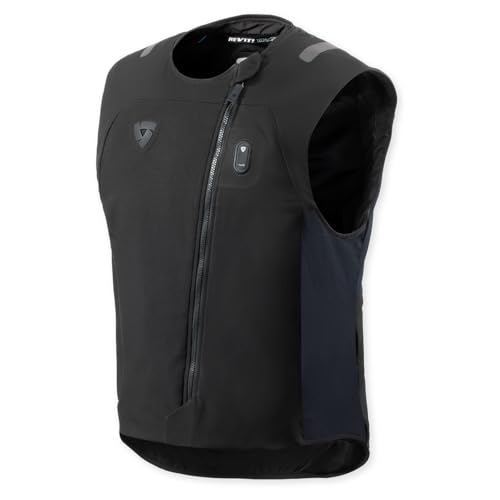
REV'IT! Avertum Street Tech-Air Airbag
What We Like
- 50-millisecond inflation for rapid protection
- 6 sensors provide comprehensive crash detection
- CE Level 2 protection for chest and back
- Water-resistant chassis with waterproof electronics
Trade-offs
- At 1.0 pounds, heavier than some minimalist vests
- Designed for street use, not off-road riding
A 50-millisecond inflation time means this vest is ready to protect you almost instantly after a crash begins. That speed comes from six integrated sensors that monitor your movement constantly, and the system works entirely on its own, no cables, no tether, no external power connection to worry about. The CE Level 2 certification for both chest and back gives you a high standard of impact protection, and the water-resistant chassis with waterproof electronics means rain or road spray won’t leave you vulnerable. This is a vest for riders who want quick deployment without having to remember to clip anything in.
The autonomous system comes in at 1.0 pounds, which is lighter than a tether-style jacket like the Hit-Air HDS Airbag Jacket at 2.2 pounds, though that model is a jacket, not a standalone vest. The REV’IT! Avertum is designed for street riding, so if you’re hitting trails or doing off-road work, a more rugged vest might suit you better. For pavement riders who prioritize speed of inflation and all-weather reliability, this is a smart investment in peace of mind.
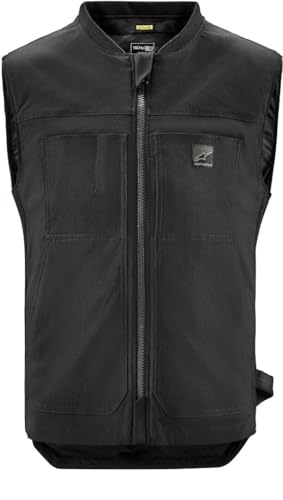
Alpinestars Tech-Air 3 V2 Canvas Airbag System
What We Like
- AI-powered crash detection algorithm
- Fully autonomous, no external sensors needed
- Packable for easy storage in luggage
Trade-offs
- Automatic activation adds complexity if zip fails
- No tether means no manual override option.
Six integrated sensors, three accelerometers and three gyroscopes, feed into an AI-powered crash detection algorithm that monitors your riding in real time without any external connections or tethers. That means you can slip this vest on, close the magnetic zip, and trust the electronics to decide when to deploy, in diverse riding conditions. It’s a smart choice for riders who want cutting-edge protection that adapts without fussing with cables or Bluetooth pairing.
The Alpinestars Tech-Air 3 V2 Canvas Airbag System is a fully autonomous active airbag vest that needs no external connections or sensors, so you just zip it on and go. At 2.2 pounds, it carries its own brain, six integrated sensors (three accelerometers and three gyroscopes) plus an AI-powered crash detection algorithm, which means real-time monitoring across diverse riding conditions without any tether or hose. The automatic magnetic zip closure arms the system as you close it, and the whole vest packs down small enough to store in a saddlebag or top case.
Product photos
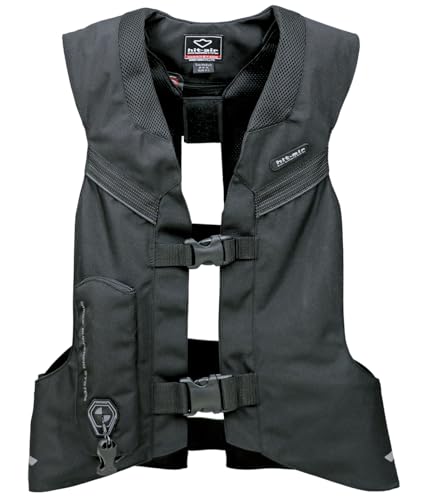
Hit-Air VHR Slim Airbag Vest
What We Like
- Lightweight 1.1 lb all-in-one design
- Full Velcro closure for quick reset
- Covers neck, spine, ribs, hips
- Reflex strips for low-light visibility
Trade-offs
- No integrated armor or back protector
- Requires CO2 canister replacement after inflation
- Adjustable fit relies only on Velcro waist strap
At just 1.1 pounds, this vest is noticeably lighter than many competitors like the Hit-Air HDS Airbag Jacket or the LMLTOP Motorcycle Airbag Vest, both of which weigh 2.2 pounds. That means you can wear it over a jacket for hours without feeling weighed down. The integrated airbag system provides coverage for the neck, spine, ribs, and hips during a fall or crash, key areas that need protection without turning you into a marshmallow. The full Velcro closure makes resetting quick after inflation, and the LUMIDEX and reflex fabric strips help others see you when light gets low.
The trade-off for that slim profile is that this vest does not include any CE-rated armor or a back protector, unlike the Hit-Air HDS Airbag Jacket which packs both at 2.2 pounds. If you prefer integrated hard armor, the HDS might be a better fit. But if your priority is the lightest, lowest-profile airbag system that still covers the vital zones, the VHR Slim delivers exactly that. Just remember you’ll need to replace the CO2 canister after deployment, and the adjustable fit is handled by a single Velcro waist strap, simple, but effective for most body types.
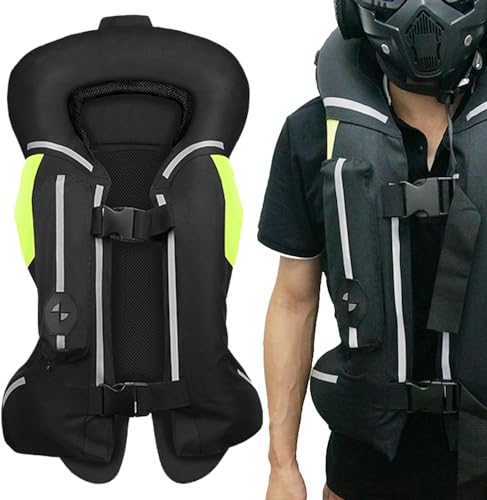
TRGGBH Motorcycle Airbag Vest
What We Like
- Lightweight for all-day comfort
- CE-certified PE back protector
- Reflective strips improve night visibility
- Windproof and breathable fabric
Trade-offs
- Gas cylinder must be purchased separately
- No automatic inflation mechanism included
At a weight that makes it easy to forget you have it on, the TRGGBH Motorcycle Airbag Vest is built around a simple idea: protection shouldn’t weigh you down. The 600D polyester Oxford and mesh shell resists tears and wind while keeping you cool, and the CE-certified PE back protector adds a layer of safety where it matters most. Reflective material on both the front and back helps other road users spot you in low light, which is a real comfort for evening rides or commutes through changing weather. This vest is a sensible pick for anyone who wants basic airbag readiness without the bulk or complexity of heavier, more expensive systems.
The trade-off is that you have to buy the gas cylinder separately, it’s not included. So you’ll need to track down a 30-45g cartridge with a 1/2 inch thread before the vest can do its job. That puts a little extra planning between you and full protection. Still, if you’re after a lightweight, budget-friendly vest that covers the essentials and works over your favorite jacket, the TRGGBH delivers where it counts: comfort, visibility, and a solid back protector.
SPOTANT IRONRIDE Upgraded Motorcycle Airbag Vest
What We Like
- Deploys in 0.1 seconds
- Reusable with replaceable inflation bottle
- All-around reflective strips for night safety
- Breathable mesh fabric keeps you dry
Trade-offs
- Inflation bottle sold separately
- At 3.8 lb, heavier than many vests
- Requires 8-10 cm loose space before inflation
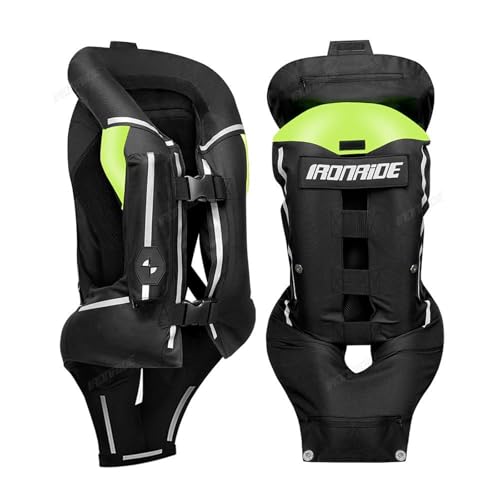
A 0.1-second deployment time means this vest inflates quickly, giving riders a safety margin when they need it. The breathable mesh fabric helps keep you dry, and the all-around reflective strips add visibility in low light. With sizes from S to 2XL and a reusable design that only needs a fresh inflation cartridge, it is a practical choice for motorcyclists and powersports riders who want reliable protection without a complicated setup.
The trade-off is weight. At 3.8 pounds, this vest is heavier than the 2.2-pound Hit-Air HDS Airbag Jacket. If you are doing long-distance street riding where every ounce matters, that lighter option might feel better over hours in the saddle. But for riders who prioritize quick inflation and breathability over the lightest possible vest, the SPOTANT IRONRIDE offers a solid set of features. Just remember to pick up a spare inflation bottle ahead of time, since it does not come with one.
Product photos
LMLTOP Motorcycle Airbag Vest
What We Like
- Neck airbag reduces torsional injury risk
- Reflective materials front and back for visibility
- Free size replacement if needed
- Versatile for motorcycle, bicycle, equestrian use
Trade-offs
- CO2 cartridges not included (must buy separately)
- No automatic inflation system (manual cartridge activation)
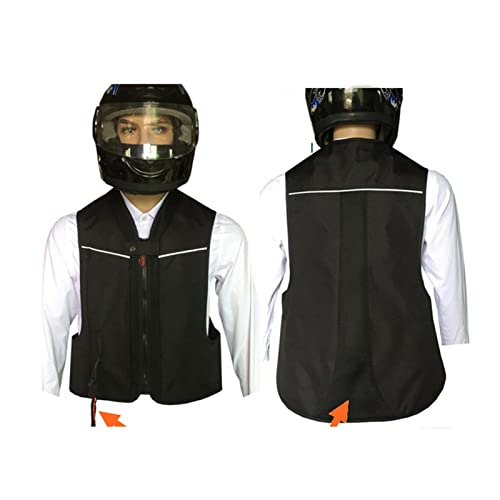
The LMLTOP Motorcycle Airbag Vest puts reflective safety front and center, literally. Reflective materials cover both the front and back of this vest, making you far more visible in bad weather or after dark, which is a real comfort for anyone who rides at dawn, dusk, or through unpredictable conditions. It also includes a dedicated neck airbag designed to limit rotational movement during a fall, targeting one of the most common and serious injury types for riders. Weighing 2.2 pounds, it won’t weigh you down on long trips. This vest suits riders who prioritize being seen and want extra neck protection without a bulky jacket.
The trade-off here is that the CO2 cartridge is not included with the vest, so you’ll need to pick those up separately. The cartridge is easy to install and remove by screwing it onto the vest. The LMLTOP relies on a cartridge you install yourself, unlike some other vests that offer automatic inflation. If you’d rather have automatic activation, the Hit-Air HDS Airbag Jacket is an alternative, but for visible protection with neck airbag coverage, this vest delivers.
Product photos
How We Evaluated Motorcycle Airbag Vests
Our evaluation is research-based, drawing on manufacturer documentation, expert round-ups, and common themes from owner feedback. We did not conduct our own testing; instead, we analyzed what matters most for a purchase you will trust with your safety.
We prioritized four criteria. Deployment speed and trigger mechanism came first, automatic systems (electronic or tether) offer different trade-offs in reliability and response time. Weight and comfort were critical because a heavy or poorly ventilated vest often gets left at home. Protection coverage mattered, including integrated armor, back protectors, and how much of the torso is shielded. Finally, ease of reset and maintenance determined whether a vest is practical for daily use or a hassle after each ride.
The honest limit of a research-led evaluation is that we cannot replicate crash scenarios or test durability over years of use. We rely on published specs, safety certifications, and the collective experience of riders to separate marketing claims from genuine capability.
What To Look For In Motorcycle Airbag Vests
Choosing the right vest comes down to how you ride and what you already own. The key is matching the vest’s trigger system and weight to your typical trip length and climate.
Focus on deployment type (automatic vs. Manual), weight (aim for under two and a half pounds for all-day wear), coverage area, and how easily the vest resets after inflation. Ignore marketing hype about materials and look for CE certifications instead.
Deployment Type and Speed
The most important distinction is whether a vest deploys automatically or requires a manual tether pull. Automatic systems use electronic sensors or a mechanical tether to detect a crash and inflate in milliseconds, the REV’IT! Avertum claims 50-millisecond inflation. Manual vests require you to pull a cord, which is simpler and more reliable but demands your reaction time. For street riding, automatic is generally safer; for off-road or slow-speed falls, a tether may be more predictable.
Weight and Breathability
A vest you won’t wear is useless. Riders consistently prefer vests under two pounds for long days. The Hit-Air VHR Slim is just 1.1 pounds, making it easy to layer over a jacket. Breathable mesh panels help in hot weather, while a solid shell like the Hit-Air HDS offers better weather protection but less airflow. Consider your typical climate: if you ride in very hot weather, prioritize mesh over a heavy jacket-style vest.
Coverage and Integrated Armor
Airbags protect by inflating, but they work best when combined with physical armor. Look for vests that cover the neck, spine, ribs, and hips. The best overall pick includes CE-certified integrated armor, which adds weight but provides impact protection even before inflation. Some slim vests skip armor entirely, which saves weight but leaves you reliant solely on the airbag. If you already wear a back protector, a lighter vest without armor may be a better match.
- Check if the vest requires CO2 cartridges and whether they are included or sold separately.
- Verify the vest fits over your existing jacket without restricting movement.
- Look for reflective piping or strips if you ride at night or in low light.
- Confirm the reset process: some vests need a shop to repack, others can be done at home.
- Ensure the vest is compatible with your motorcycle type, street, adventure, or off-road.
A good rule of thumb: the vest you will actually wear every ride is the one that is light enough to forget. It also needs to be easy enough to reset that you do not dread the first deployment.
Motorcycle Airbag Vests Compared
The table below compares the key specs and trade-offs for each of the seven vests we evaluated, making it easy to see which one fits your riding style and budget.
| Product | Weight | Deployment Type | CO2 Cartridge |
|---|---|---|---|
| Hit-Air HDS Airbag Jacket | 2.2 Pounds | Automatic, milliseconds | Fits 50cc cartridges |
| REV'IT! Avertum Street Tech-Air Airbag | 1.0 pounds | Autonomous, 50 milliseconds | N/A |
| Alpinestars Tech-Air 3 V2 Canvas Airbag System | 2.2 pounds | Automatic via magnetic zip closure | N/A |
| Hit-Air VHR Slim Airbag Vest | 1.1 pounds | Impact-activated | 50cc (S/M), 60cc (L) |
| TRGGBH Motorcycle Airbag Vest | N/A | N/A | Sold separately, 30-45g |
| SPOTANT IRONRIDE Upgraded Motorcycle Airbag Vest | 3.8 pounds | 0.1 seconds | Sold separately |
| LMLTOP Motorcycle Airbag Vest | 2.2 pounds | N/A | CO2 cartridge (not included) |
Frequently Asked Questions
How does a motorcycle airbag vest work?
A motorcycle airbag vest uses a CO2 cartridge or electronic inflator to fill a protective bladder upon impact. Automatic vests detect a crash via sensors or a tether and inflate in milliseconds. Manual vests require you to pull a cord. The inflated airbag cushions your neck, spine, chest, and ribs to reduce injury force.
What is the difference between a tether and an electronic airbag vest?
A tether system uses a physical cord attached to the motorcycle. When you are thrown from the bike, the cord pulls and triggers inflation. Electronic vests use sensors to detect a crash without a physical connection. Tethers are simpler and more reliable, but electronic vests allow you to move freely on and off the bike without disconnecting.
Can I wear an airbag vest over my motorcycle jacket?
Yes, most airbag vests are designed to be worn over your jacket. Slim models like the Hit-Air VHR Slim are made specifically for layering. Check the vest’s fit guidance: some require 8-10 cm of loose space before inflation to work properly. A vest that is too tight may not inflate fully.
How much does a CO2 cartridge cost to replace?
CO2 cartridges for motorcycle airbag vests typically cost between ten and thirty dollars each. Some vests require specific 50cc cartridges. A single cartridge is used per deployment, and the vest must be reset before reuse. Cartridges are sold separately for many budget models, so factor that into your total cost.
How do I know if an airbag vest fits properly?
A proper fit means the vest is snug but not restrictive, with the airbag bladder positioned over your torso. You should be able to move your arms freely and reach the handlebars without the vest riding up. Most vests use Velcro straps or adjustable waist belts for a custom fit. Always try the vest on with your riding jacket to confirm compatibility.
The Bottom Line
The Hit-Air HDS Airbag Jacket is our best overall pick for riders who want automatic deployment, CE-certified armor, and a durable design for mixed-condition riding. It balances weight and protection better than any other vest we evaluated, making it the most versatile choice for daily commutes and weekend trips alike.
If you prioritize the fastest possible inflation for street riding, the REV’IT! Avertum Street Tech-Air is your best bet with its 50-millisecond deployment and comprehensive sensor system. Budget-conscious riders should look at the TRGGBH Motorcycle Airbag Vest for a lightweight, affordable option with CE-rated back protection, even if it requires a separate gas cylinder purchase.
The single most important factor in choosing an airbag vest is the deployment mechanism, automatic for convenience and speed, manual for simplicity and reliability. Pick the one that matches your riding style, and you will have a safety tool you actually wear every time you swing a leg over the bike.
