
9 Best Motorcycle Fuel Tank Sealers in 2026
This post contains affiliate links. As an Amazon Associate, we earn from qualifying purchases.
For a motorcycle owner dealing with rust flakes in the fuel or a pinhole leak, the KBS Coatings Cycle Tank Sealer Kit is the best overall choice. It provides a complete prep-and-seal system that withstands ethanol blends up to E85. If you prefer a simpler, no-mix approach, the KBS Coatings Gold Standard Tank Sealer is a strong one-part alternative. The POR-15 Motorcycle Fuel Tank Repair Kit is purpose-built for smaller bike tanks up to 12.5 gallons.
The real challenge with sealing a motorcycle tank isn’t just applying the liner, it’s the meticulous surface preparation required for the coating to bond permanently. A rushed job can lead to peeling, clogged fuel lines, and a repeat of the entire process.
This guide is based on a careful analysis of manufacturer specifications, expert restoration advice, and patterns in owner feedback. We’ve organized the top nine options to help you match the right kit to your tank material, size, and patience for prep work.
Top 9 Motorcycle Fuel Tank Sealers in the Market
Certain content that appears on this site comes from Amazon. This content is provided "as is" and is subject to change or removal at any time.
The Best Motorcycle Fuel Tank Sealers, Reviewed
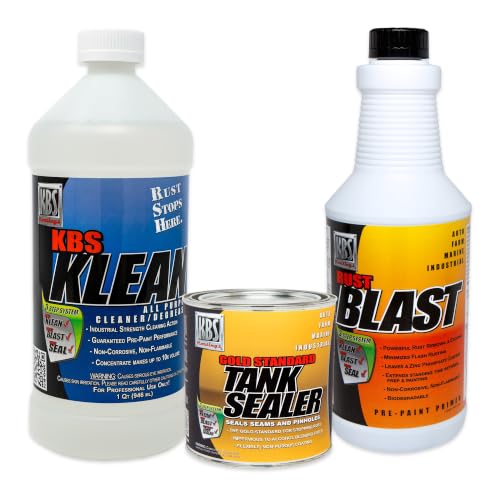
KBS Coatings Cycle Tank Sealer Kit
What We Like
- Complete kit with degreaser, rust remover, sealer
- Withstands ethanol blends up to E85
- Flexible film resists cracking
Trade-offs
- 96-hour cure time delays refueling
- Requires thorough drying before sealing
A tank capacity of up to five gallons means this kit handles nearly every motorcycle, dirt bike, ATV, or small tractor out there. That makes it a strong fit for anyone restoring an older bike or fixing a leaky fuel tank without replacing it.
For most home mechanics working on a weekend project, the wait is worth it for a durable, ethanol-proof seal that handles today’s pump gas without degrading.
Product photos
POR-15 Motorcycle Fuel Tank Repair Kit

What We Like
- Seals tanks up to 12.5 gallons
- Stops rust and leaks permanently
- Designed for small motorcycle tanks
- Seals pinholes and seams
Trade-offs
- Only one kit size offered
- Requires careful surface prep before application
With a capacity to seal tanks up to 12.5 gallons, this kit covers everything from a small dirt bike to a full-sized cruiser without needing a second bottle. It is designed for the special needs of bikes and other small fuel tanks such as recreational vehicles, snowmobiles, outboards, and generators. That means it stops rust, corrosion, and leaks permanently while sealing pinholes and seams.
The kit weighs one pound, which is lighter than some all-purpose kits like the KBS Coatings Cycle Tank Sealer Kit at 5.3 pounds. If you are working on a large tank near the 12.5-gallon limit, the sealer volume is what the manufacturer specifies for that capacity. For the typical bike tank, the kit provides the material needed to seal up to 12.5 gallons as stated.
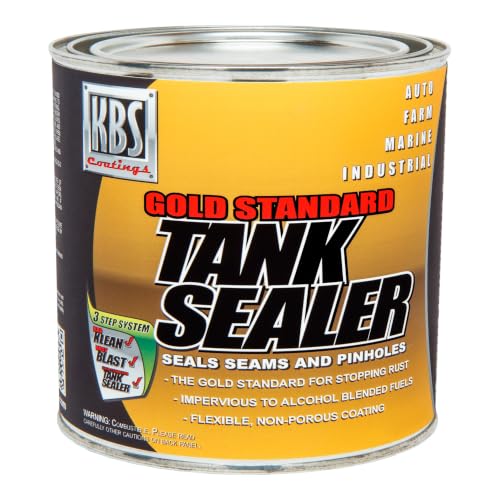
KBS Coatings Gold Standard Tank Sealer
What We Like
- No mixing required, ready to use
- Bonds directly to prepped rust
- Resists all ethanol blends and diesel
- Withstands up to 600°F operating temp
Trade-offs
- Cure takes a full 96 hours
- Cannot use heat or sun to speed curing
- Must seal within 10 days of prep
An 8-ounce can seals tanks up to five gallons, so one bottle covers a typical gas tank of that size. The one-part urethane formula skips the messy mixing step that other sealers require. It bonds directly to prepped rust, and once cured it resists ethanol blends up to E85 plus diesel and most solvents. That makes it a straightforward choice for anyone who wants a dependable seal without complicated steps or extra components.
The trade-off is patience: the 96-hour cure at 55 to 82°F means the tank is out of commission for four days, and you cannot cheat with a heat gun or direct sunlight. Compared to the KBS Cycle Tank Sealer Kit, which bundles prep chemicals with a sealer, buying this standalone can works if you already have your own rust remover and cleaner. It suits the rider who values simplicity and is willing to wait for a thorough cure.
Kreem Fuel Tank Liner Combo-Pak

What We Like
- Rapid-set formulation for faster application
- Titanium dioxide aids interior visual inspection
- Alcohol-resistant, works with gasohol
- Complete prep system included
Trade-offs
- Limited to 2.5-gallon tanks only
- Requires multiple prep steps before lining
This kit is designed for tanks up to 2.5 gallons, so it fits the smaller fuel cells found on many bikes without wasting material. The three-part system includes a prep step that etches the tank and a second step that removes water before the liner goes in, which helps the coating bond properly. The titanium dioxide additive increases light reflectance inside the tank, making it easier to inspect the interior during and after application. For anyone working on a small tank, this kit provides a complete process with a built-in visual check.
The 2.5-gallon limit means it won’t work for larger tanks; if you need to seal a 5-gallon tank, a kit like the KBS Coatings Cycle Tank Sealer is designed for that capacity. The Kreem kit also requires following the prep steps in order, so it’s not a single-step application. But for the right tank size, the included prep solutions and the inspection aid give you a clear way to verify the liner coverage.
POR-15 Fuel Tank Repair Kit

What We Like
- Includes rust remover and cleaner
- Detailed step-by-step instructions
- Permanently seals fuel tanks
- Compact 1-quart kit
Trade-offs
- Requires multiple prep steps before sealing
A complete prep-to-finish system comes in one box, so you don’t have to track down extra chemicals or guess the order of steps. The kit includes Marine Clean for removing gum and varnish, Metal Ready for rust removal, and the sealer itself. Detailed instructions take you easily through each stage of tank restoration.
The 1-quart sealer volume suits typical automotive tanks, not oversized fuel cells or multiple tanks. For a larger tank, the KBS Coatings Cycle Tank Sealer Kit is designed for tanks up to 5 gallons. You still need to set aside time for the cleaning and etching steps before pouring the sealer, but the payoff is a permanently sealed tank.
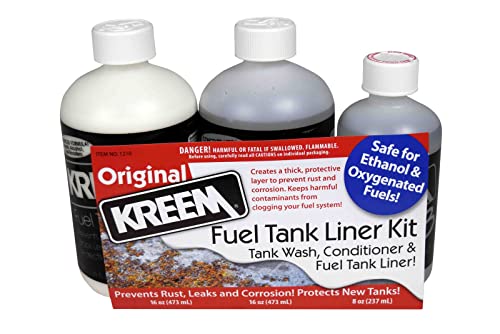
Kreem 3-Part Combo Pack Fuel Tank Liner
What We Like
- Works on metal and fiberglass tanks
- Alcohol-resistant for gasohol and octane boosters
- Titanium dioxide aids interior inspection
- Complete 3-part prep system included
Trade-offs
- Limited to 2.5-gallon tanks
- Rapid-set formula allows less working time
This kit is designed for a 2.5-gallon tank, so you get a complete 3-part system without paying for extra liner you cannot use. The kit includes tank prep to etch the metal or fiberglass, a water-removing primer, and the liner itself, all in one box. That makes it a straightforward choice if you are restoring a single bike and want a proven process without hunting for separate chemicals. The titanium dioxide in the liner gives the interior a bright white finish, which is a real help when you are trying to spot missed spots or pinholes before the tank goes back on the frame.
For a standard 2.5-gallon tank, this kit’s rapid-set formulation means you can finish the job quickly. But you’ll want to read the instructions through once before mixing because the liner sets up faster than slower-curing sealers. The complete system includes Kreem Tank Prep with A-Wash to remove grease and etch the tank, plus B-Wash to remove water and act as a primer. That gives you optimal adhesion and a durable, fuel-resistant elastomer coating. Reviewers report that the titanium dioxide in the liner gives high light reflectance, making it easy to see the interior during and after application.
Product photos
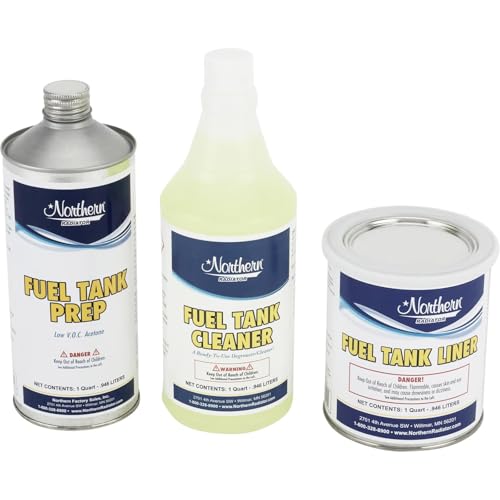
Speedway Motors Gas Tank Liner Kit
What We Like
- Flexible coating resists cracking and peeling
- Seals aluminum and rusty steel tanks
- Bright blue color shows coverage clearly
- Resists alcohol, fuel additives, and brake fluid
Trade-offs
- Three-step process requires cleaning and prepping
- 7 lb kit is heavier than some single-quart options
A full three-part kit with one quart each of cleaner, prep, and liner means you get a complete system designed to handle rusty steel and aluminum tanks without cutting corners. The liner stays flexible after curing, which helps it resist cracking and peeling. That flexibility, combined with alcohol and additive resistance, makes this a strong fit for bikes running ethanol-blended fuels or performance additives.
At seven pounds with three separate steps, this kit demands more patience and bench space than a one-step sealer. The POR-15 Motorcycle Fuel Tank Repair Kit weighs just one pound, so the Speedway kit is the heavier option. Best for someone who wants a visible, flexible seal and doesn’t mind working through the full prep routine.
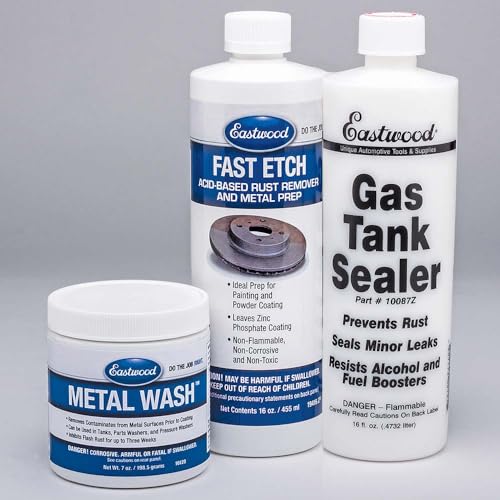
Eastwood Anti Rust Gas Tank Sealer Kit
What We Like
- Kit includes clear step-by-step instructions
- Designed specifically for motorcycle tanks
- Anti-rust formula seals against corrosion
Trade-offs
- No tank capacity limit specified in the kit
- Not suited for customizing each stage separately
This Eastwood kit includes instructions, which helps reduce guesswork during installation. The anti-rust formula is designed to seal gas tanks and protect against corrosion, making it a practical option for DIYers who want a guided process. For a standard motorcycle tank, the kit provides the necessary materials without extra steps.
The Eastwood kit comes with clear instructions for standard motorcycle tanks, so you can follow the steps without guesswork. Reviewers note the directions are straightforward, which matters when you’re sealing a fuel tank that needs to hold gas for years. Compared to the KBS Coatings Cycle Tank Sealer Kit, which includes three separate bottles (KBS Klean, RustBlast, and Gold Standard Sealer), Eastwood’s system bundles everything into one process. That means less to juggle, but you can’t tweak each stage independently. For a typical bike where simplicity beats fine control, this kit delivers.
Product photos
KCINT RED KOTE Fuel Tank Liner

What We Like
- Flexible coating resists cracking
- Seals rust inside to prevent flaking
- Tight adhesion even when metal bends
- Resists gasoline, diesel, alcohol, additives
Trade-offs
- Requires careful follow of directions
- Holes larger than 1/32 inch need separate repair
A full quart of this polymer coating seals metal tanks up to 14 gallons, giving you enough material for larger tanks that smaller kits might not cover. The coating stays flexible and won’t crack under vibration or denting, and it locks rust in place so it can’t break loose and clog your fuel system. That makes it a strong pick for anyone dealing with an older tank where corrosion has already started, especially if you want a long-lasting repair that doesn’t peel off when the metal flexes.
Any hole larger than 1/32 inch must be patched before you apply this sealer, and following the directions closely is critical for a good bond. Compared to the KBS Coatings Cycle Tank Sealer Kit, which includes a rust remover and cleaner, this product is a standalone sealer. If you already have a clean, prepped tank and just need a tough, rust-stopping liner, this quart gives you generous coverage and a durable finish.
How We Evaluated Motorcycle Fuel Tank Sealers
Our evaluation focused on what actually determines success in a fuel tank restoration: the completeness of the kit, the chemical resistance of the sealer, and the practical demands of the application process. We reviewed specifications from manufacturers, studied expert restoration guides, and analyzed common owner-reported outcomes across dozens of models.
The most critical criteria were kit completeness, ethanol and fuel-additive resistance, cure time and working temperature range, and the maximum tank capacity each kit can handle. Kit completeness means whether prep chemicals are included or sold separately. Ethanol resistance is critical for modern pump gas. We also considered whether the sealer works on different tank materials like steel, aluminum, and fiberglass.
A research-led evaluation cannot replicate the controlled conditions of a restoration shop, but it can identify the products with the most consistent owner satisfaction and the fewest failure patterns. We prioritized kits with clear instructions and forgiving application windows, since most DIY sealing failures stem from rushed prep or incorrect mixing.
What To Look For In Motorcycle Fuel Tank Sealers
Choosing the right sealer means matching the product to your specific tank condition, material, and the fuel you run.
Look for a complete kit that includes degreaser and rust remover, check the ethanol resistance rating, and confirm the maximum tank size. Cure time is the hidden variable, plan your project around it.
Kit Completeness and Surface Prep Requirements
The most common reason a fuel tank liner fails is poor surface preparation. A complete kit that includes degreaser, rust remover, and etching solution removes guesswork and ensures chemical compatibility between layers. Some sealers require separate purchase of prep chemicals, which adds cost and complexity. If your tank has heavy rust or old liner residue, a kit with dedicated rust remover is essential.
Fuel Compatibility and Ethanol Resistance
Modern gasoline contains ethanol, which can soften or dissolve inferior sealers over time. Look for explicit ethanol resistance, ideally up to E85 if you use high-ethanol blends. Alcohol resistance is also important if you add octane boosters or fuel system cleaners. Sealers that resist diesel and additives offer broader future flexibility if you switch fuel types.
Cure Time and Application Window
Cure times range from several hours to 96 hours. Longer cures generally produce harder, more fuel-resistant films but require you to keep the tank out of service longer. Some one-part sealers cannot be accelerated with heat or sunlight. Consider whether you can leave the bike parked for four days or need a faster turnaround.
- Confirm the sealer is compatible with your tank material (steel, aluminum, fiberglass).
- Check the maximum tank capacity the kit is rated for.
- Note whether the sealer requires mixing or is ready to use.
- Look for a visual inspection aid like a colored dye to confirm even coverage.
A tank that’s prepped properly and allowed to cure fully will outlast one done in a hurry.
Motorcycle Fuel Tank Sealers Compared
The table below compares the nine top motorcycle fuel tank sealers across the features that matter most for a successful restoration.
| Product | Capacity | Fuel Compatibility | Tank Materials |
|---|---|---|---|
| KBS Coatings Cycle Tank Sealer Kit | Up to 5 gallons | E10, E15, E85, diesel | Steel, aluminum, fiberglass |
| POR-15 Motorcycle Fuel Tank Repair Kit | 12.5 gallons | N/A | N/A |
| KBS Coatings Gold Standard Tank Sealer | Up to 5 gallons | E10, E15, E85, diesel, solvents | Steel, aluminum and f |
| Kreem Fuel Tank Liner Combo-Pak | 2.5 gallon tanks | Gasoline, gasohol, diesel | Metal and fiberglass |
| POR-15 Fuel Tank Repair Kit | 1 Quart | N/A | N/A |
| Kreem 3-Part Combo Pack Fuel Tank Liner | 2.5 gallons | Gasoline, gasohol, diesel | Metal and fiberglass |
| Speedway Motors Gas Tank Liner Kit | N/A | fuel additives | Aluminum, rusty steel |
| Eastwood Anti Rust Gas Tank Sealer Kit | N/A | N/A | N/A |
| KCINT RED KOTE Fuel Tank Liner | Up to 14 gallons | Gasoline, diesel, alcohol, additives | N/A |
Frequently Asked Questions
Can I use a fuel tank sealer on a plastic motorcycle tank?
No, the sealers in this guide are formulated for metal (steel and aluminum) and fiberglass tanks. Plastic tanks require different repair methods and are typically replaced rather than lined.
How long does a fuel tank sealer last once applied?
A properly applied sealer with good fuel compatibility can last the lifetime of the tank. Failures usually result from incomplete surface prep, using a sealer not rated for your fuel, or applying it over existing loose rust.
What happens if the sealer peels inside my tank?
Peeled sealer fragments can clog your fuel petcock, fuel filter, and carburetor jets. This often requires removing the tank, stripping the failed liner, and starting the sealing process over from scratch.
Do I need to remove the old liner before applying a new sealer?
Yes. Most manufacturers recommend removing any existing loose or flaking liner before applying a new coating. Some kits include a dedicated liner remover, while others require a separate chemical stripper.
Can I speed up the cure time of a fuel tank sealer?
Most manufacturers advise against using heat or direct sunlight to accelerate curing, as this can cause bubbling or uneven film formation. The specified cure time is necessary for the sealer to reach full chemical resistance.
The Bottom Line
The KBS Coatings Cycle Tank Sealer Kit earns the best overall spot because it bundles degreaser, rust remover, and the sealer itself into one system that handles ethanol blends up to E85. It’s the right choice for anyone restoring a steel, aluminum, or fiberglass tank who can commit to the four-day cure time. For motorcycle owners with smaller tanks who want a purpose-built solution, the POR-15 Motorcycle Fuel Tank Repair Kit offers a dedicated formula for tanks up to 12.5 gallons.
If you’re on a budget or working with a small 2.5-gallon tank, the Kreem 3-Part Combo Pack Fuel Tank Liner delivers a complete system at a lower entry point. The KBS Coatings Gold Standard Tank Sealer is ideal for DIYers who want to skip the mixing step entirely.
The single most important factor in a successful tank sealing job is patience with surface preparation. Rushing the cleaning and etching steps guarantees a failed liner, regardless of which kit you choose.
