
8 Best Motorcycle Racing Helmets in 2026
This post contains affiliate links. As an Amazon Associate, we earn from qualifying purchases.
For track-day riders and serious sportbike enthusiasts, the Shoei X-Fifteen Full Face Helmet stands out as the best overall choice, meeting four top safety standards with an adjustable center pad for a custom fit. The AGV Pista GP RR delivers MotoGP-level technology for club racers, while the RaceQuip PRO25 offers a Snell SA2025-certified option for budget-minded drivers.
Choosing a racing helmet means balancing safety certifications, weight, aerodynamics, and ventilation, all critical factors when you’re pushing limits on a track. The wrong choice can mean a heavy neck load at high speeds or a helmet that doesn’t meet race-day requirements.
We built this guide by analyzing manufacturer specifications, safety certifications, expert reviews, and patterns in owner feedback. Our goal is to help you match the right helmet to your riding style and budget without the noise.
Top 8 Motorcycle Racing Helmets in the Market
Certain content that appears on this site comes from Amazon. This content is provided "as is" and is subject to change or removal at any time.
The Best Motorcycle Racing Helmets, Reviewed
Shoei X-Fifteen Full Face Helmet

What We Like
- Meets four top safety standards
- Emergency Quick Release System included
- Adjustable center pad for custom fit
Trade-offs
- At 3.8 lb, heavier than AGV K6 S
- Track-focused design less suited for casual commuting
Four separate safety certifications. FVMSS 218, DOT, Snell, and ECE R22/06, mean this helmet meets both U.S. and international standards, so you can ride anywhere without worrying about compliance. The CWR-F2R racing shield uses a double lock to keep the visor secure at high speeds, and the Emergency Quick Release System lets EMTs remove the helmet quickly after a crash. For anyone who wants proven race-level protection, this helmet delivers. At 3.8 pounds, it is heavier than the 2.8-pound AGV K6 S, but the multi-density EPS liner and adjustable center pad system let you fine-tune the fit with replaceable sections. The cheek pad cooling ventilation system keeps you comfortable even in intense conditions, though the helmet is clearly built for the track first. If your riding is mostly commuting or casual weekend cruises, a lighter option like the AGV K6 S might feel more natural. For those chasing lap times and maximum protection, this is the helmet to beat.
The trade-off comes in weight: at 3.8 pounds, the X-Fifteen is noticeably heavier than the 2.8-pound AGV K6 S. The multi-density EPS liner and adjustable center pad system let you fine-tune the fit with replaceable sections. But for daily street riding or stop-and-go traffic, the added heft can fatigue your neck over time. The cheek pad cooling ventilation system keeps you comfortable even in intense conditions, yet the helmet is clearly designed for the track first. If your riding is mostly commuting or casual weekend cruises, a lighter option like the AGV K6 S might feel more natural. For those chasing lap times and maximum protection, this is the helmet to beat.
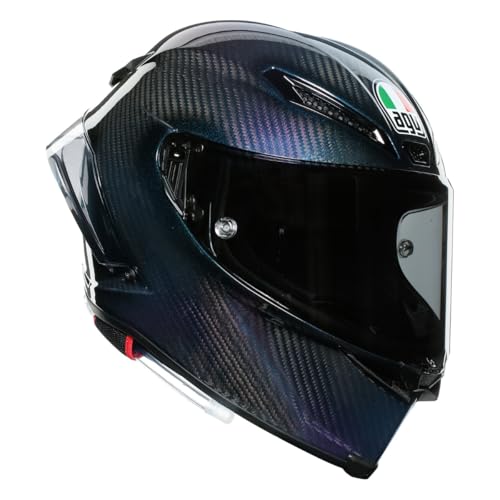
AGV Pista GP RR Full Face Helmet
What We Like
- MotoGP-level racing technology with FIM homologation
- Ultrawide 190° horizontal field of vision
- Wind tunnel-developed aerodynamic shell and spoiler
- Fully customizable interior for race-fit comfort
Trade-offs
- At 3.2 lb, heavier than the AGV K6 S
- Track-focused design limits everyday street comfort
A 100% carbon fiber shell that weighs just 3.2 pounds means you get the same lightweight, high-speed stability the pros rely on in MotoGP. That FIM homologation isn’t just a badge, it’s a guarantee that this helmet meets the elite-level protection standards required for actual race competition. The 190-degree horizontal visor gives you a massive field of view, crucial when you’re tucked low behind a fairing and need to spot your braking points. This is the helmet for riders who take track days seriously and want nothing less than what the fastest racers on earth wear.
If your riding is mostly laps and hot laps, this is your shell. If you commute or tour, you might be better served by a more road-friendly design.
RaceQuip PRO25 Full Face Racing Helmet

What We Like
- Snell SA2025 certified for racing safety
- HANS/HNR ready with Kevlar chin strap
- Nomex interior with ventilation ports
- Wide eyeport fits eyewear
Trade-offs
- At 4.7 lb, heavier than many race helmets
- No integrated sun visor or tinted shield
A Snell SA2025 certification means this helmet meets the impact and fire-resistance standards that many racing organizations require. It’s also HANS/HNR ready, so you can connect a head-and-neck restraint without any modifications, and the Nomex interior helps manage heat during long sessions. That gives you the core safety features needed to get on track.
The trade-off is weight. At 4.7 pounds, this helmet is heavier than the Shoei X-Fifteen, which weighs 3.8 pounds. You also don’t get an integrated sun visor or a tinted shield, so you’ll need to swap shields or wear sunglasses in bright conditions. But if your priority is a Snell SA2025-certified helmet that’s ready for racing right away, and you’re willing to carry a little extra weight, this is a straightforward choice.
Shoei RF-1400 Full Face Helmet

What We Like
- Wind-tunnel-refined aerodynamic shell
- Noise-reducing ear and cheek pads
- SNELL M2020 and DOT approved
Trade-offs
- Heavier than some racing helmets like AGV Pista GP RR at 3.2 lb
- Heavier than AGV K6 S at 2.8 lb for weight-obsessed riders
A wind-tunnel-shaped shell constructed from hand-laid interwoven layers of fiberglass and lightweight organic fibers delivers impact absorption without unnecessary bulk. Proprietary matrix technology helps the helmet meet SNELL M2020 and DOT ratings while remaining Shoei’s strongest, most elastic shell for optimal energy management. Riders who prioritize a quiet cabin on extended, high-speed journeys will appreciate that this design leaves room for noise reduction features, unlike many lighter helmets that compromise on wind noise. The compact shell also aids ventilation by allowing airflow to move freely over the rider.
If your priority is absolute minimum weight for track sessions, the AGV might edge ahead. But for day-long touring or spirited backroad runs where wind fatigue sets in, the Shoei’s quieter shell and snug window seal make a real difference. It’s a premium balance of protection, comfort, and hush that suits riders who want one helmet for both the commute and the canyon.
AGV K6 S Full Face Helmet

What We Like
- Ultra-light carbon-aramid shell
- 190° panoramic visor for wide vision
- MotoGP-inspired aerodynamic spoiler
- Removable, washable waterproof interior
Trade-offs
- No integrated sun visor or tinted shield included
- No internal sun visor for quick glare reduction
At just 2.8 pounds, this is one of the lightest full-face road helmets in its class. That weight savings comes from a carbon-aramid composite shell that maintains high-impact protection and structural rigidity. The MotoGP-inspired aerodynamics and integrated rear spoiler help reduce drag and improve stability at high speeds across all riding positions. Riders who spend long days in the saddle will appreciate the wide 190-degree field of vision, which enhances awareness and road visibility in all conditions. The adjustable ventilation system lets you dial in airflow even with gloves on. This helmet delivers race-level lightness and visibility for riders who want those features without added weight.
This helmet doesn’t include a built-in sun visor or a tinted shield out of the box, so you’ll need to swap shields or wear sunglasses on bright days. That’s a fair exchange if your priority is keeping weight off your neck during all-day rides or track days. For the rider who values featherlight construction and a wide view over convenience features, this helmet delivers exactly what it promises.
Product photos
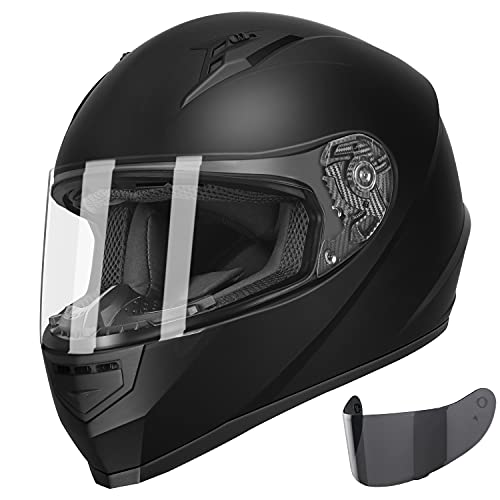
GLX GX11 Compact Full Face Helmet
What We Like
- Three adjustable air intakes for custom airflow
- Four exhaust outlets for quieter ride
- Removable and washable interior lining
- Quick-change shield mechanism
Trade-offs
- Not Snell-certified for track-day requirements
- Lacks Snell certification for track use.
The GX11’s ventilation system uses a wind tunnel-tested design with three adjustable air intakes and four exhaust outlets, giving you control over airflow for different conditions. The Multi-Density EPS liner and GLX shell molding technology provide layered impact protection, while the fully removable, washable interior keeps things fresh on long rides.
The trade-off for that customizable ventilation and compact shell is a 3.1-pound weight that sits above lighter options like the AGV K6 S at 2.8 pounds. If you spend all day tucked low on a sportbike, every ounce matters. But for weekend canyon carving or daily commuting where adjustable airflow and easy shield swaps matter more, the GX11 delivers thoughtful features at a sensible weight.
Product photos
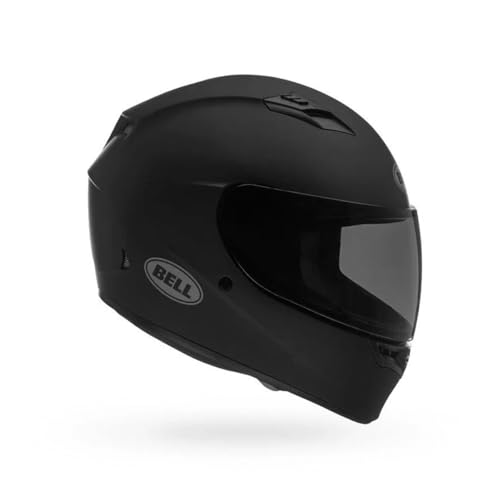
Bell Qualifier Full Face Helmet
What We Like
- Three shell sizes for better fit
- IONIC+ padding manages sweat and odor
- Meets DOT and ECE22.06 standards
Trade-offs
- At 6.0 lb, heavier than premium racing helmets
- Not the lightest option for long track sessions
The Bell Qualifier uses three shell sizes to accommodate a wider range of head shapes without relying solely on thicker padding, which can help achieve a more natural fit. Its IONIC+ padding is designed to manage sweat and fight odor-causing bacteria, a useful feature for anyone wearing the helmet for extended periods. The helmet meets DOT and ECE22.06 standards, providing core safety certifications.
At 6.0 pounds, the Qualifier is heavier than some premium helmets like the Shoei X-Fifteen (3.8 pounds). For riders who prioritize minimal weight, this may be a consideration, especially during longer rides. However, the Bell offers a full-face helmet with multi-shell fit technology and key safety certifications at a different price point. That makes it a practical option for those who want certified protection without the highest-end weight savings.
Product photos
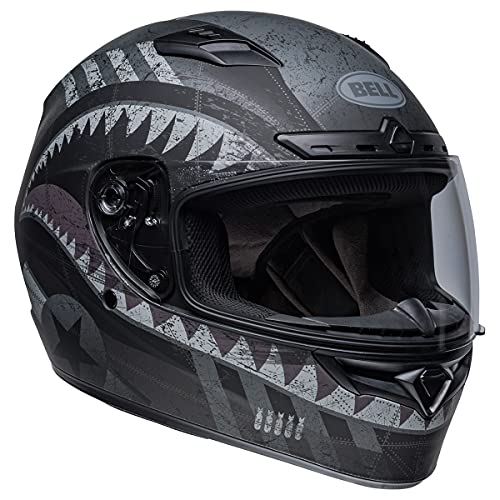
Bell Qualifier DLX MIPS Street Helmet
What We Like
- Mips energy management system included
- Velocity Flow ventilation with adjustable cooling
- Integrated speaker pockets for communication devices
- Removable, washable liner and padded wind collar
Trade-offs
- At 4.9 lb, heavier than several racing-focused helmets
- DOT-only certification, no Snell or ECE rating listed
The Mips energy management system built into this helmet is the feature that sets it apart for street riders who want an extra layer of rotational-impact protection without stepping up to a full race shell. Velocity Flow ventilation with a FlowAdjust dial lets you tune airflow on the fly, which matters when you’re stuck in stop-and-go traffic or cruising a long highway stretch. The removable, washable liner and padded wind collar keep things comfortable ride after ride, and integrated speaker pockets make adding a communicator clean and simple. This is a well-rounded street helmet that brings flagship safety tech to a more accessible price point.
Weight is the trade-off here: at 4.9 pounds, the Qualifier DLX MIPS is heavier than the Shoei RF-1400 (3.6 lb), so long days in the saddle may feel more fatiguing on your neck. It also carries only DOT certification, while some riders prefer additional standards found on track-oriented helmets. If you prioritize Mips protection and adjustable ventilation over light weight, this Bell delivers those features. For those chasing minimal heft, the lighter Shoei RF-1400 is worth a look.
Product photos
How We Evaluated Motorcycle Racing Helmets
Our evaluation started with the hard facts: safety certifications (Snell, DOT, ECE, FIM), shell materials, and weight. We compared each helmet’s stated specs against the demands of track riding and street use, noting which models meet specific race-day requirements and which prioritize comfort for longer sessions.
We focused on four criteria that matter most for racing helmets. Safety certification is non-negotiable, a helmet that doesn’t meet your track’s standards won’t let you ride. Weight directly affects neck fatigue over a weekend of sessions. Aerodynamics and ventilation keep you comfortable and focused at speed. Finally, fit and adjustability determine whether a helmet works for your head shape and riding position.
A research-led evaluation can’t replace trying a helmet on your own head, but it can narrow your options to the ones most likely to fit your needs. We prioritized models with strong reputations across multiple expert sources and consistent owner feedback on durability and comfort.
What To Look For In Motorcycle Racing Helmets
Choosing a racing helmet is about matching safety standards and physical fit to the type of riding you do. Here are the key factors to consider before you buy.
Look for the safety certification your track requires (Snell, ECE, or FIM), then prioritize a lightweight shell, effective ventilation, and a snug, customizable fit.
Safety Certifications
The most important decision is which safety standard your helmet must meet. Snell M2020 and SA2025 are common for American track days, while ECE is the European standard. FIM homologation is required for some racing organizations. A helmet that meets multiple standards, like the Shoei X-Fifteen, gives you flexibility across different events.
Weight And Shell Material
A lighter helmet reduces neck strain during long track sessions and high-speed cornering. Premium helmets use carbon fiber or carbon-aramid composites to keep weight low. Polycarbonate shells are heavier but more affordable. Every extra half-pound becomes noticeable after a full day of riding.
Aerodynamics And Ventilation
At racing speeds, a poorly shaped helmet can buffet your head and cause fatigue. Look for wind-tunnel-developed shells and spoilers that reduce lift. Adjustable intake vents let you control airflow, while exhaust ports help extract hot air. Proper ventilation also helps prevent visor fogging on cooler mornings.
- Check the track’s rulebook for required certifications before you buy
- Try the helmet on with your typical riding glasses or earplugs
- Verify that the visor mechanism works smoothly with your gloves on
- Confirm the helmet fits your head shape (intermediate oval, round oval, or long oval)
A helmet that fits perfectly will feel snug all around without pressure points.
Motorcycle Racing Helmets Compared
The table below compares key specs and trade-offs for each helmet in our lineup, helping you see the differences at a glance.
| Product | Weight | Certification | Visor/Shield |
|---|---|---|---|
| Shoei X-Fifteen Full Face Helmet | 3.8 Pounds | FVMSS 218, DOT, Snell, ECE R22/06 | CWR-F2R with double lock |
| AGV Pista GP RR Full Face Helmet | 3.2 pounds | FIM Homologation | 190° H x 85° V |
| RaceQuip PRO25 Full Face Racing Helmet | 4.7 Pounds | Snell SA2025 | 3mm Polycarbonate |
| Shoei RF-1400 Full Face Helmet | 3.6 Pounds | N/A | N/A |
| AGV K6 S Full Face Helmet | 2.8 Pounds | N/A | 190° |
| GLX GX11 Compact Full Face Helmet | 3.1 Pounds | DOT | Tinted Visor |
| Bell Qualifier Full Face Helmet | 6.0 Pounds | DOT and ECE22.06 | N/A |
| Bell Qualifier DLX MIPS Street Helmet | 4.9 Pounds | DOT / FMVSS 218 | N/A |
Frequently Asked Questions
What safety certification do I need for track days?
Most track day organizations accept Snell M2020 or ECE certifications. Some racing clubs require Snell SA2025 or FIM homologation. Always check your specific event’s rules before buying a helmet.
How much should a racing helmet weigh?
A good racing helmet weighs between three and four pounds. Premium carbon fiber models like the AGV K6 S are around 2.8 pounds, while entry-level helmets can exceed five pounds. Lighter helmets reduce neck fatigue during long sessions.
Can I use a street helmet for track days?
Some track day groups allow DOT-only helmets, but many require Snell or ECE certification. A street-focused helmet may not provide the aerodynamic stability and ventilation needed for high-speed riding. It is safer to buy a helmet that meets your track’s requirements.
What is the difference between Snell M2020 and SA2025?
Snell M2020 is designed for motorcycle use, while SA2025 is made for auto racing but is often accepted on track days. SA2025 helmets have a wider field of vision and a Nomex fire-resistant interior. Both standards are updated every five years.
How often should I replace a racing helmet?
Most manufacturers recommend replacing a helmet every five years, or sooner if it has been involved in a crash. The materials degrade over time from heat, sweat, and UV exposure. A helmet that has taken a hard impact should be retired immediately.
The Bottom Line
The Shoei X-Fifteen Full Face Helmet is our best overall pick for riders who want the highest safety certifications and a customizable fit for serious track work. It’s heavier than some competitors, but the peace of mind from meeting four top standards makes it the right choice for dedicated sportbike enthusiasts.
If your priority is the lightest possible shell for club racing, the AGV Pista GP RR delivers MotoGP-level aerodynamics and a 190-degree field of vision. For drivers on a tighter budget who still need Snell SA2025 certification, the RaceQuip PRO25 offers a solid foundation for track days and club events.
The single most important factor in any racing helmet is the safety certification it carries, make sure it matches what your track requires before you consider anything else.
