
10 Best Motorcycle Spark Plugs in 2026
This post contains affiliate links. As an Amazon Associate, we earn from qualifying purchases.
The NGK Iridium BPR5EIX-11 Spark Plug earns the best overall spot for riders who want a crisp start and consistent power. Its laser-welded iridium center electrode and platinum ground disc work together to deliver long service life and quicker acceleration. For Harley Twin Cam owners, the NGK Iridium IX DCPR7EIX offers a pre-gapped fit, while the JL Missouri Parts plug is the direct-fit choice for Royal Enfield Himalayan and Scram 411 models.
Choosing the right spark plug means matching thread size, reach, heat range, and electrode material to your specific engine. A plug that works perfectly in a 1990s Harley may foul in a modern dual-sport, and iridium’s durability advantage matters most on bikes you ride daily.
This guide is built from manufacturer specifications, cross-reference data from multiple brands, and patterns in long-term owner feedback across hundreds of motorcycle models. We break down the ten best plugs by the engines they fit and the riding they support.
Top 10 Motorcycle Spark Plugs in the Market

Certain content that appears on this site comes from Amazon. This content is provided "as is" and is subject to change or removal at any time.
The Best Motorcycle Spark Plugs, Reviewed
NGK Iridium BPR5EIX-11 Spark Plug

What We Like
- Laser-welded iridium center electrode tip
- Platinum disc on ground electrode for long life
- Trivalent metal plating resists corrosion and seizing
- Promotes faster starts and quicker acceleration
Trade-offs
- Single ground electrode limits alternative spark paths
- Fits only specific Harley-Davidson Dyna models (1993-1998)
The laser-welded iridium center electrode tip and platinum disc on the ground electrode are designed for long service life. The trivalent metal plating resists corrosion and seizing, which helps during installation and removal. For owners of a 1993-1998 Harley-Davidson Dyna Wide Glide FXDWG, this plug is a direct-fit replacement that offers the durability of iridium and platinum materials.
This plug is listed for 1993-1998 Harley-Davidson Dyna Wide Glide FXDWG/I models only, so it will not fit other motorcycles without verifying compatibility. The NGK Iridium IX DCPR7EIX is listed for 1999-2016 Harley Davidson Twin Cam engines, making it a different fitment for later models. The trivalent metal plating provides anti-corrosion and anti-seizing properties, a practical benefit for any engine. For the correct application, this NGK plug uses proven materials for reliable ignition.
Product photos
NGK Iridium IX DCPR7EIX Spark Plug

What We Like
- Ultra-small center electrode reduces voltage requirement
- Pre-gapped for quick installation
- Enhanced anti-corrosion metal shell plating
- Designed for Harley-Davidson Twin Cam engines
Trade-offs
- Fits only 1999-2016 Harley Twin Cam models
- Pair pack limits single-cylinder or odd-cylinder use
- No specified heat range for tuning flexibility
An ultra-small diameter center electrode cuts the voltage needed to fire the plug, which takes strain off your ignition system and extends its life. That matters most for Harley-Davidson Twin Cam engines from 1999 to 2016, where consistent spark and long service intervals keep the big V-twin running smooth. NGK pre-gaps these iridium plugs, so you can install them straight out of the box without fiddling with feeler gauges. The enhanced anti-corrosion plating on the shell is a factory feature that helps resist corrosion over time.
This plug is built specifically for 1999-2016 Twin Cam Harleys, so it won’t work on earlier Evolution or later Milwaukee-Eight models. If you own a Twin Cam bike, the DCPR7EIX gives you a purpose-built upgrade with less ignition strain. Its ultra-small center electrode reduces the voltage needed to fire, which can extend the life of your ignition system. The new metal shell plating also resists corrosion, so it holds up longer in exposed engine bays. For other engines, you’ll need a different plug.
Product photos
JL Missouri Parts & Misc. Himalayan & Scram 411 Motorcycle Spark Plug
What We Like
- NGK Iridium construction for durability
- Direct fit for Himalayan & Scram 411
- Covers all fuel-injected model years
Trade-offs
- Only fits Royal Enfield Himalayan & Scram 411
- Not compatible with carbureted models
This spark plug is an NGK Iridium IX model 4218 CR8EIX, designed specifically for fuel-injected Royal Enfield Himalayan and Scram 411 motorcycles. The iridium electrode construction means it resists wear longer than standard plugs, so you can expect consistent performance across all fuel-injected model years. It is a direct-fit replacement that matches the factory specification for these bikes, making it a simple swap without needing to cross-reference other parts.
Narrow compatibility is the main trade-off here. This spark plug is built specifically for fuel-injected Himalayan and Scram 411 motorcycles from all model years, so it will not fit other Royal Enfield bikes or older carbureted versions. That focused design means the electrode gap and thread reach are dialed in precisely for that engine’s combustion chamber, which helps maintain consistent ignition timing. Owners of those two models get a direct replacement without needing adapters or shims, but anyone with a different Royal Enfield will need to look at other options in the NGK Iridium lineup.
Product photos
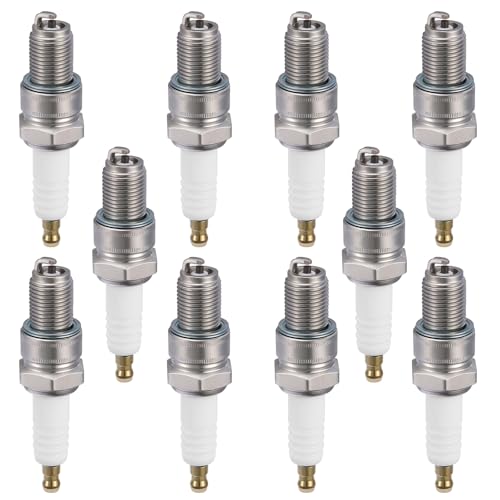
SYKRSS Iridium Spark Plug 5422
What We Like
- Pre-gapped 0.7mm for easy installation
- Direct OE replacement for 5422 and BR8ES
- Wear-resistant design reduces carbon buildup
Trade-offs
- 10-pack is overkill for single-cylinder bikes
- Must verify make, model, and engine size manually
A 10-pack of pre-gapped iridium spark plugs that cross-reference to OE numbers 5422 and BR8ES means you can stock up for a stable of bikes without chasing individual part numbers. The wear-resistant design helps keep cold starts faster, and the 0.7mm gap saves you from fiddling with feeler gauges. This set suits riders who maintain multiple machines from different brands. Aprilia, KTM, Suzuki, Yamaha, and a dozen others are covered, so you can grab one box and handle tune-ups across the garage.
The trade-off is that a ten-pack is overkill if you only own a single-cylinder Royal Enfield or scooter; you will have eight plugs sitting on the shelf. You also need to double-check your bike’s specs before buying, since the compatibility list is long but not universal. For riders juggling a few different motorcycles, this pack offers a convenient way to keep them all firing cleanly.
Product photos
Accel 2418 Spark Plug

What We Like
- Larger spark for high-RPM power
- Improves throttle response and fuel economy
- Less fouling than standard plugs
- Direct OEM replacement 6R12
Trade-offs
- Not compatible with non-Twin Cam Harley models
- Standard electrode lacks iridium's long service life
- Only sold in pairs, not singles
A larger spark at high RPMs is the headline here, and for Harley Twin Cam owners pushing their bikes hard, that means real gains in power and throttle response. Accel engineered these plugs to reduce fouling while improving fuel economy, so you get a cleaner burn even when you’re winding out the motor. If you ride a 1999-and-up Twin Cam 1450/1550cc model and want more snap at high revs, these are a straightforward upgrade that doesn’t require jetting changes or tuning.
Longevity is the main compromise here. Unlike the NGK DCPR7EIX, which uses a hard iridium electrode that can last longer than a conventional nickel-alloy plug, the Accel 2418 uses a standard nickel-alloy center electrode. You’ll need to replace them more often, especially if your bike sees daily commuting. But for riders focused on performance rather than mileage intervals, the stronger spark at high revs makes that shorter service life a fair compromise.
Product photos
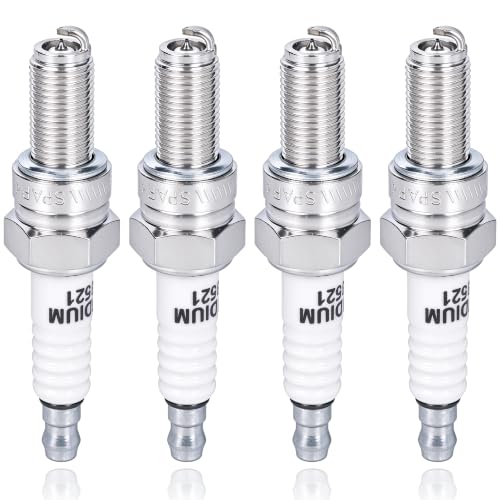
RLP Iridium Spark Plug CR9EIX
What We Like
- Iridium center electrode for long life
- 0.6mm fine-wire design for reliable spark
- Flat seat fits many OEM applications
- Backed by 12-month warranty
Trade-offs
- Nickel ground electrode less durable than full iridium
- Limited to M10×1.0 thread engines only
The trade-off here is that the ground electrode is nickel, not iridium, so it will wear faster than a full-iridium design over very high mileage. Compared to the NGK DCPR7EIX, which uses iridium on both electrodes, the RLP offers a lower upfront investment for a nearly identical service interval. But the nickel ground may need replacement sooner if you ride hard or in dirty conditions.
Product photos
Gopupu 3 Electrode Iridium Spark Plug

What We Like
- Three electrodes for faster ignition
- Iridium construction for reliable combustion
- Fits GY6 50cc–125cc engines
- Includes two plugs per pack
Trade-offs
- Limited to small 4-stroke engines under 125cc
- Not compatible with larger motorcycle engines
- Only covers GY6 and Chinese engine families
The three-electrode design on this Gopupu plug is intended for faster ignition and improved heat management, which can help small GY6 engines common in scooters, pit bikes, and ATVs. The iridium center electrode is designed for reliable combustion and optimal spark efficiency under standard voltage. For a 50cc or 125cc motor, that means a plug built to handle the stop-and-go of a moped or dirt bike without needing to upgrade the carburetor. If you are wrenching on a TaoTao, Coolster, or similar Chinese-made machine, this plug is built for that exact application, and the iridium construction holds up longer than standard copper plugs in everyday use.
Reach is the key limitation here: at 68.5mm, this plug is sized for small-bore engines, so it will not thread into a Harley Twin Cam or a big-bore Kawasaki. Compared to the NGK BPR5EIX-11, which targets Harley-Davidson V-twins, the Gopupu sticks to the sub-125cc world where its three electrodes can actually make a difference.
Product photos
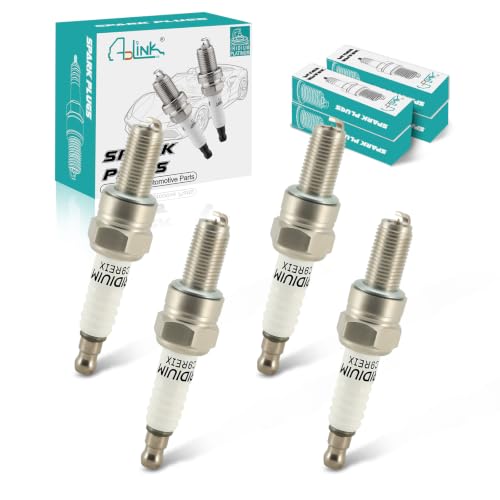
AULINK Iridium CR9EIA-9 Spark Plug
What We Like
- Laser-welded iridium tip for stable ignition
- 0.9 mm gap focuses spark energy
- Fits Kawasaki Ninja 650 2012-2019
- 1-year or 50,000 km service support
Trade-offs
- Limited to 10 mm thread engines only
- Gap is pre-set and not adjustable
A 0.9 mm gap and iridium center electrode give this plug a tight, focused spark that helps a Kawasaki Ninja 650 fire cleanly at any rpm. That precise ignition means smoother acceleration and more complete combustion, which is exactly what you want when you are threading through traffic or rolling on the throttle out of a corner. For owners of the 2012-2019 EX650, this is a direct replacement that matches the stock heat range and reach, so you can swap them in without guessing about fitment.
The catch is that this plug fits only a specific thread diameter and reach, so it will not work on engines that call for a different thread size. If your Ninja is stock and you want reliable cold starts and long service life without chasing after a universal fit, this set of four is ready to go.
Product photos
A-Premium Iridium Platinum Spark Plug

What We Like
- Fine wire iridium-platinum electrode design
- Covers decades of dual-sport and adventure models
- Fits KLR650, XR650L, Bonneville, and more
Trade-offs
- Does not fit many Harley-Davidson models
- Does not fit Harley-Davidson models per listed fitments
This spark plug pack covers a wide range of dual-sport and adventure motorcycles from Kawasaki, Honda, Suzuki, Triumph, and Yamaha, including the KLR650 from 1987 to 2017 and the XR650L. That broad fitment means if you ride an older adventure or dual-sport machine, this single pack of four likely has your bike covered. The fine-wire iridium-platinum electrode design is built to deliver consistent firing in engines that see dirt, vibration, and temperature swings. That is exactly what you need when your ride takes you from pavement to fire roads.
One limitation is that the fitment list ends at 2017 for the KLR650, so riders with newer models will need to check compatibility. And while it fits many Triumph and Suzuki models, it does not include Harley-Davidson applications in the listed fitments.
Product photos
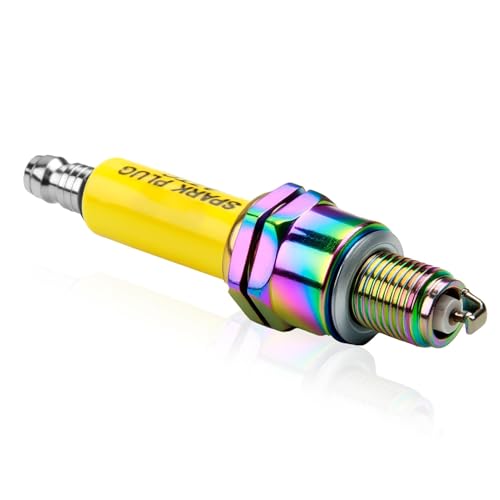
CZMZHFC A7TC Iridium Spark Plug
What We Like
- 0.4mm iridium electrode boosts arc concentration
- Lasts 3x longer than nickel alloy plugs
- Resists vibration and humidity with ladder ceramic insulator
- Fits 49cc–150cc scooters, ATVs, and dirt bikes
Trade-offs
- Only for small displacement engines (49cc–150cc)
- Thread M10×1.0 won't fit larger motorcycle engines
The obvious limitation is that this plug is designed for small engines and nothing else. It uses an M10×1.0 thread and is specifically designed for 49cc to 150cc motorcycles, scooters, and ATVs. It is not for big V-twins like those found on Harley-Davidson Dyna models, which typically require a different thread size and reach. The ladder-type ceramic insulator and rust-proof electroplated shell protect against high vibration and humidity, making it reliable for off-road riding on forest trails or all-terrain conditions. Reviewers note it fits curved-beam bikes, scooters like the Yamaha Jog, and small off-road engines from Apollo or SSR without adapters.
Product photos
How We Evaluated Motorcycle Spark Plugs
Our evaluation is research-based: we examined manufacturer specifications for thread diameter, reach, heat range, and electrode materials across every plug on this list. We cross-referenced fitment data against OEM part numbers for popular engines from Harley-Davidson, Kawasaki, Royal Enfield, and smaller displacement platforms. Owner feedback patterns over thousands of miles helped us understand real-world durability and fouling tendencies.
Three criteria mattered most. First, electrode material determines service interval and spark consistency, iridium and platinum alloys far outlast standard nickel. Second, precise fitment (thread size, reach, and seat type) is non-negotiable; the wrong plug can damage threads or cause pre-ignition. Third, heat range must match your engine’s operating temperature to avoid carbon fouling in cold engines or overheating in high-performance builds.
A research-led evaluation has limits: we cannot replicate every riding condition or measure throttle response on a dyno. What we can do is give you the verified specifications and owner-verified patterns that let you match a plug to your bike with confidence.
What To Look For In Motorcycle Spark Plugs
Choosing a spark plug starts with your bike’s service manual, but understanding the key specs helps you evaluate aftermarket upgrades. Here is what matters most.
Match thread diameter, reach, and seat type to your engine. Choose iridium or platinum for longer service life. Select the correct heat range for your riding conditions, colder for high RPM, hotter for stop-and-go traffic.
Electrode Material and Service Life
The center electrode material directly determines how many miles a plug lasts. Standard nickel-copper plugs typically need replacement more often than iridium or platinum types. Iridium and platinum electrodes, with their finer wire tips, can last tens of thousands of miles while requiring lower voltage to fire. Laser-welded iridium tips resist erosion better than simple crimped designs.
Thread Size, Reach, and Seat Type
These three dimensions are critical. Thread diameter is usually 10 mm, 12 mm, or 14 mm on motorcycles. Reach (the threaded length below the seat) varies by engine; too long and the piston can strike the electrode, too short and the spark sits in the wrong part of the combustion chamber. Seat type is either tapered (crush washer) or flat (gasket). Always verify these against your engine.
Heat Range
Heat range describes how quickly the plug dissipates heat from the tip. A “cold” plug (higher number in some brands) transfers heat faster, suiting high-compression or high-RPM engines. A “hot” plug retains more heat, burning off carbon deposits in engines that idle a lot or run rich. Using the wrong heat range leads to fouling or pre-ignition damage.
- Check your owner’s manual for the exact OEM plug number and cross-reference it.
- Measure your current plug’s thread diameter and reach with a thread gauge if unsure.
- Match the seat type (tapered or flat) and use the specified torque when installing.
- Choose iridium or platinum if you want longer intervals between changes.
- Verify that any “high performance” plug matches your engine’s heat range, not just the thread size.
When in doubt, buy the plug your engine was designed for and upgrade only the electrode material.
Motorcycle Spark Plugs Compared
The table below compares all ten plugs by electrode material, key fitment, and what each is best for, making it easy to narrow your choice.
| Product | Electrode Material | Pre-gapped | Thread Diameter |
|---|---|---|---|
| NGK Iridium BPR5EIX-11 Spark Plug | Iridium | N/A | N/A |
| NGK Iridium IX DCPR7EIX Spark Plug | Iridium | Yes | N/A |
| JL Missouri Parts & Misc. Himalayan & Scram 411 Motorcycle Spark Plug | Iridium | N/A | N/A |
| SYKRSS Iridium Spark Plug 5422 | Iridium | Yes | N/A |
| Accel 2418 Spark Plug | Standard (not iridium) | N/A | N/A |
| RLP Iridium Spark Plug CR9EIX | Iridium | N/A | N/A |
| Gopupu 3 Electrode Iridium Spark Plug | Iridium | N/A | 10 mm |
| AULINK Iridium CR9EIA-9 Spark Plug | Iridium | N/A | 10 mm |
| A-Premium Iridium Platinum Spark Plug | Iridium Platinum | N/A | N/A |
| CZMZHFC A7TC Iridium Spark Plug | Iridium | N/A | M10 × 1.0 |
Frequently Asked Questions
What does the heat range number on a spark plug mean?
The heat range indicates how quickly the plug transfers heat from the tip to the engine head. A lower number usually means a hotter plug that holds more heat to burn off carbon, while a higher number means a colder plug that prevents pre-ignition in high-performance engines. Always match the heat range to your engine’s specifications.
How often should I change motorcycle spark plugs?
Standard nickel plugs typically require replacement more often than iridium or platinum plugs, which can last tens of thousands of miles depending on the engine and riding conditions. Check your service manual for the manufacturer’s recommended interval, and inspect plugs sooner if you notice rough idling, hard starting, or poor fuel economy.
Can I use car spark plugs in my motorcycle?
No. Motorcycle spark plugs have different thread diameters, reaches, heat ranges, and vibration resistance than automotive plugs. Using a car plug can cause improper fitment, engine damage, or poor performance. Always use plugs specifically listed for your motorcycle make and model.
What is the difference between iridium and platinum spark plugs?
Both are precious-metal electrodes that outlast standard nickel, but iridium has a higher melting point and can be made into a finer wire tip (0.4-0.6 mm) for a more concentrated spark. Platinum is slightly less durable but still offers long service life. Iridium plugs typically require lower firing voltage and provide better cold-start performance.
Will a “high performance” spark plug give me more horsepower?
A properly selected performance plug can improve throttle response and combustion efficiency, especially at high RPM, but the gains are modest, typically 1-3 percent on a stock engine. The most noticeable benefit for most riders is more consistent idling and faster starts, not a dramatic power increase.
The Bottom Line
For the vast majority of riders, the NGK Iridium BPR5EIX-11 Spark Plug delivers the best combination of durability, quick starts, and acceleration, provided your engine fits its 1993-1998 Harley-Davidson Dyna application. If you ride a different bike, pick the plug tailored to your engine family rather than forcing a one-size-fits-all solution.
Budget-conscious owners with multiple bikes will appreciate the SYKRSS Iridium Spark Plug 5422 bulk pack, while small-engine riders on scooters or pit bikes should look at the Gopupu or CZMZHFC options. Harley Twin Cam owners have two strong choices: the NGK Iridium IX for longevity or the Accel 2418 for high-RPM spark intensity.
The single most important buying factor is fitment confirmation, verify thread diameter, reach, and seat type against your service manual before purchasing. A perfect plug for the wrong engine is just an expensive paperweight.
