
9 Best Multimedia Receivers For Cars in 2026
This post contains affiliate links. As an Amazon Associate, we earn from qualifying purchases.
For most drivers, the Pioneer DMH-WT3800NEX Multimedia Receiver is the best overall choice. Its 9-inch floating capacitive touchscreen, wireless Apple CarPlay and Android Auto, and split-screen mode let you run navigation and music side by side. If you prefer a wired connection for reliability and want deep sound tuning, the Pioneer DMH-1600NEX is our top wired pick. For those on a tighter budget, the JVC KW-M595BT delivers strong audio controls and wired mirroring without the premium price.
The challenge with car multimedia receivers is balancing screen size, smartphone integration, and sound quality within your dash’s physical constraints. A receiver that looks great on paper might not fit your vehicle’s opening or offer the tuning controls you need to improve factory speaker performance.
This guide is based on manufacturer specifications, expert installation guides, and patterns in owner feedback across dozens of models. We focused on the features that matter most for daily driving: screen responsiveness, smartphone mirroring reliability, and audio customization.
Top 9 Multimedia Receivers For Cars in the Market
Certain content that appears on this site comes from Amazon. This content is provided "as is" and is subject to change or removal at any time.
The Best Multimedia Receivers For Cars, Reviewed
Pioneer DMH-WT3800NEX Multimedia Receiver

What We Like
- 9-inch floating capacitive touchscreen
- Wireless Apple CarPlay and Android Auto
- Split-screen for dual app control
- Auto light/dark mode for sunny conditions
Trade-offs
- Requires Vozsis and Weblink apps for Alexa
A 9-inch capacitive touchscreen is the standout feature, and it supports wireless Apple CarPlay and Android Auto so you can use maps and music without plugging in a cable. The split-screen mode lets you keep navigation on one side and your music on the other, which is handy for multitasking. This receiver is for drivers who want a large display and hands-free phone integration without dealing with wires every time they get in the car.
The 9-inch capacitive touchscreen on this receiver is noticeably larger than the 7-inch flush screen found on the Sony XAV-AX4000, so it occupies more dashboard space and requires careful planning for placement. Because the display floats forward rather than sitting flush, installation may involve a deeper mounting location or a custom bracket to avoid interference with vents or controls. Owners have noted that the extra screen size makes on-screen buttons easier to tap while driving, though the floating design can block access to climate knobs in some vehicles. The trade-off is a more prominent interface that demands a bit more forethought during setup.
Pioneer DMH-1600NEX Multimedia Receiver

What We Like
- Wired CarPlay and Android Auto
- 13-band equalizer for sound tuning
- Built-in Bluetooth for hands-free calls
- Capacitive touchscreen display
Trade-offs
- Requires wired connection for smartphone integration
- No wireless CarPlay or Android Auto
A 6.8-inch capacitive touchscreen gives you a clear, responsive interface for navigating maps, music, and calls while you drive. Wired smartphone integration lets you access apps and stay connected without fumbling with a phone mount. This receiver suits anyone who wants straightforward smartphone connectivity, and the 13-band equalizer lets you dial in sound that matches your car’s cabin.
The trade-off is the wired connection itself: you’ll need to plug your phone in each time. On the plus side, that wired link keeps the connection stable and your phone’s battery from draining during use. If you prefer a clean, simple install and don’t mind the cable, this is a reliable way to bring modern connectivity to an older dashboard.
Sony XAV-AX4000 Multimedia Receiver

What We Like
- 14-band graphic equalizer for custom tone
- DSP with 1 cm time alignment per channel
- 5 addressable channels plus subwoofer pre-out
Trade-offs
- Single-DIN chassis limits screen size to 6.95 inches
- No HDMI input like some Sony models offer
A 14-band graphic equalizer and digital signal processing with time alignment down to one centimeter per channel give you control over your car’s audio that most receivers at this level can’t match. That means you can dial in the sound for your specific car cabin, adjust each of the five addressable channels (four speakers plus a subwoofer pre-out), and get the imaging just right.
Screen size is the main compromise here. At 6.95 inches, the XAV-AX4000 fits a single-DIN space, but the Pioneer DMH-WT3800NEX offers a larger 9-inch floating display if a bigger touchscreen matters more to you. For audio customization in a compact package, this Sony delivers.
Kenwood DMX709S eXcelon Multimedia Receiver

What We Like
- Capacitive touchscreen with high contrast and vivid text
- 13-band graphic EQ and Time Alignment for sound tuning
- Three camera inputs including rear view with parking guidelines
- Plays high-resolution FLAC audio files via USB
Trade-offs
- CarPlay and Android Auto require a wired USB connection
- SiriusXM requires an optional tuner sold separately
- At 4.0 pounds, it is heavier than some competitors
The capacitive touchscreen with LED backlighting delivers a high contrast ratio and vivid text, so maps and album art stay crisp even in bright sunlight. The screen responds to fingertip taps without the lag of older resistive displays. That means less squinting at directions and less frustration when you’re trying to skip a track or adjust the 13-band graphic equalizer while driving. The Time Alignment feature lets you fine-tune the soundstage so music and podcasts come through with clear separation. Owners who want a sharp screen and precise audio control will find this receiver fits their needs.
The Kenwood DMX709S includes smartphone integration, which lets you use navigation, calls, and music through the receiver’s display. For drivers who prefer not to plug in a phone each time, the Pioneer DMH-WT3800NEX offers wireless connectivity with a larger floating display. This Kenwood model also provides three camera inputs with adjustable parking guidelines, so you can monitor behind the vehicle while backing up, and the 13-band EQ gives you detailed control over sound staging.
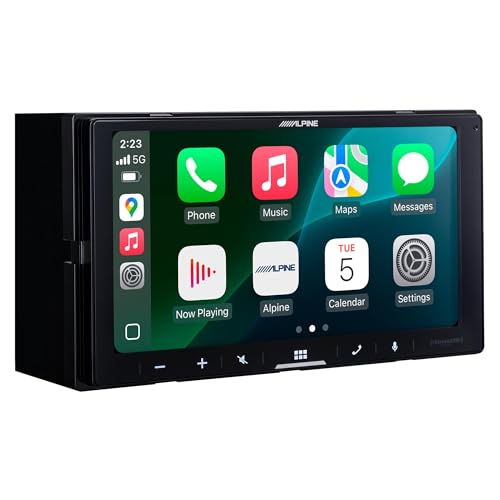
Alpine iLX-W770 Multimedia Receiver
What We Like
- Wireless Apple CarPlay & Android Auto
- Dual camera inputs for front and rear
- Customizable 6.75" touchscreen with key illumination
- Expandable with Alpine KTA amplifiers and PrismaLink subwoofers
Trade-offs
- Smaller screen than floating-display models like Pioneer DMH-WT3800NEX
- No HDMI video input for external media sources
A 6.75-inch customizable touchscreen and wireless smartphone integration mean you can leave your phone in your pocket and still access maps, music, and calls. This receiver is built for drivers who want a clean, compact install without sacrificing modern smartphone connectivity. The dual camera inputs add safety for both forward and reverse maneuvers, and the Sound Boost Menu lets you dial in bass and subwoofer levels to match your taste. It also works with Alpine’s PowerStack amplifiers and PrismaLink subwoofers, so you can expand the system later without replacing the head unit.
Screen real estate is the main compromise. At 6.75 inches, this display is noticeably smaller than the 9-inch floating screen on the Pioneer DMH-WT3800NEX, which can be easier to read at a glance. If you prioritize a large, adjustable screen over a compact chassis, the Pioneer might suit you better. But if you want wireless phone integration, dual camera support, and room to grow your audio system in a package that fits standard double-DIN slots, the Alpine iLX-W770 delivers a focused, practical set of features.
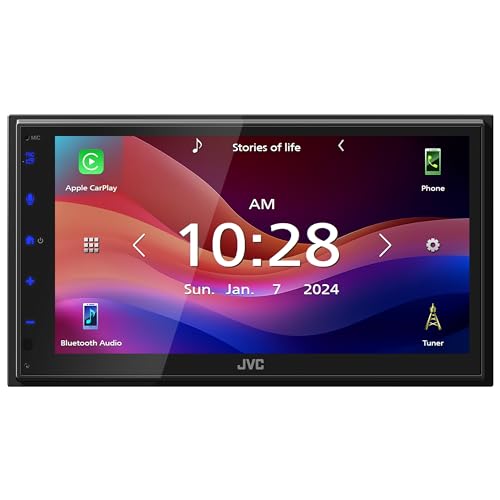
JVC KW-M595BT Multimedia Receiver
What We Like
- Wired Apple CarPlay and Android Auto
- 13-band graphic EQ and time alignment
- iDatalink Maestro ready for factory features
Trade-offs
- Wired connection only for smartphone mirroring
- No wireless CarPlay or Android Auto
- Requires optional modules for satellite radio
Wired smartphone integration puts your phone’s apps on that screen with simple USB plug-in, so you get voice control and familiar interfaces without learning a new system. This receiver suits someone who wants strong everyday smartphone integration and clean audio tuning tools. The 13-band EQ and digital time alignment let you shape the sound to your car’s cabin without spending extra on a processor.
You have to plug in your phone every time you want CarPlay or Android Auto; there’s no wireless option here, unlike the Sony XAV-AX4000 which offers wireless connectivity at a higher cost. If you’re fine with a cable and prefer putting your budget into screen quality and sound adjustment instead, this JVC delivers where it counts. The iDatalink Maestro compatibility also means you can retain factory features like steering wheel controls in many vehicles, which keeps installation straightforward for a DIY-minded owner.
Product photos
Kenwood DMX5710S Multimedia Receiver

What We Like
- Wireless Apple CarPlay and Android Auto
- Wireless mirroring for iPhone and Android
- 13-band graphic equalizer with time alignment
- Compact short-chassis design
Trade-offs
- 6.8-inch screen is smaller than some floating displays
- No physical volume knob for quick audio adjustments
Wireless mirroring for both iPhone and Android sets this Kenwood apart from many receivers that only offer wired screen sharing. That means you can toss your phone in the cupholder or pocket and still run apps, navigation, or video content on the capacitive touchscreen without plugging in a cable. The 13-band graphic equalizer and digital time alignment give you fine control over the soundstage, so you can dial in the audio to match your car’s interior. It’s a strong pick for anyone who wants a clean, cable-free dashboard and values smartphone flexibility over screen size.
The trade-off is that 6.8 inches is modest compared to the 9-inch floating display on the Pioneer DMH-WT3800NEX, which may appeal more if you prioritize a larger viewing area. The Kenwood also lacks built-in HD Radio or SiriusXM capability, so if radio variety matters, you would need to add external tuners. But for the driver who wants effortless wireless phone integration and solid audio tuning in a compact package that fits most dashboards, this receiver delivers exactly that.
Product photos
Alpine iLX-W670 Multimedia Receiver

What We Like
- Sound Boost menu with expanded bass controls
Trade-offs
- Requires separate PrismaLink subwoofer for lighting sync
- No wireless CarPlay or Android Auto support
A dedicated Sound Boost menu with expanded Bass Boost and Mid-Bass Boost controls puts precise low-end tuning right at your fingertips. That means you can dial in exactly the punch or rumble you want without digging through layers of menus, and the subwoofer adjustments let you match your sub to the rest of the system.
If bass control is your priority and you do not mind a cable, this unit gives you more tuning power than most at this level.
Product photos
JVC KW-Z1000W Floating Touchscreen Receiver

What We Like
- Large 10.1-inch HD floating touchscreen
- Wireless Apple CarPlay and Android Auto
- 13-band equalizer with digital time alignment
- Four camera inputs for versatile viewing
Trade-offs
- Parking brake must be wired for video and settings
- Manual tilt adjustment requires driver interaction
- Receiver chassis is heavy at 4.4 pounds
A 10.1-inch HD floating display makes this receiver the largest screen in the guide. The capacitive touchscreen is HD, and the manual tilt range from -10° to +45° lets you angle it against glare or for your seating height. Wireless smartphone integration is supported, and the 13-band equalizer with digital time alignment gives you control over sound shaping.
A wired connection to the parking brake is required to access settings and other features on this receiver, which means installation involves an extra step. At 4.4 pounds, the unit is heavier than many rivals, so a sturdy mounting kit is advisable. Four camera inputs allow versatile viewing setups, while the manual tilt adjustment (-10° to +45°) is set once for optimal visibility rather than adjusted on the fly. This receiver suits drivers who want the largest floating screen and are comfortable with a bit more install work.
Product photos
How We Evaluated Multimedia Receivers For Cars
We started by reviewing manufacturer spec sheets to compare screen sizes, display types (resistive vs. Capacitive touch), and supported smartphone protocols. Capacitive screens, like those on the Kenwood DMX709S, offer sharper contrast and faster touch response than older resistive panels. We also cross-referenced installation dimensions to flag receivers that may not fit standard double-DIN openings.
The three criteria that mattered most were display quality, smartphone integration, and audio tuning. A receiver with a poor screen is hard to read in sunlight, while one without wireless CarPlay or Android Auto adds friction to every trip. For audio, we prioritized units with at least a 13-band equalizer and time alignment, as these give you the tools to correct common in-car acoustics issues.
A research-led evaluation cannot replace a hands-on listening test. We do not claim to have installed or used every receiver. Instead, we present the data and owner-reported patterns so you can narrow your options before visiting a shop or making a purchase.
What To Look For In Multimedia Receivers For Cars
Choosing the right receiver starts with knowing your dash size and your daily habits. The three factors below will guide you to a model that fits, connects, and sounds the way you want.
Focus on screen size and type first, then smartphone connection method, then audio tuning depth. A 10-inch floating screen is useless if it blocks your vents or does not fit your dash.
Screen Size and Display Quality
Screen size is the first thing you notice, but it must fit your vehicle. Single-DIN receivers like the Sony XAV-AX4000 top out at around 7 inches, while floating displays like the JVC KW-Z1000W can reach 10.1 inches. Capacitive touchscreens (Pioneer DMH-WT3800NEX) provide better contrast and faster response than resistive screens. Look for auto-brightness or light/dark mode to improve visibility in direct sun.
Smartphone Integration
Wireless Apple CarPlay and Android Auto are the gold standard for convenience. If you are willing to plug in each time, wired receivers like the Pioneer DMH-1600NEX are often more reliable and cost less. Some units, like the Kenwood DMX5710S, also offer wireless phone mirroring, which lets you project your phone’s entire screen without an app. Check whether the receiver supports both iPhone and Android if you share the car.
Audio Tuning and Expandability
A basic receiver can play music, but a good one lets you shape the sound. A 13- or 14-band graphic equalizer and digital time alignment are the minimum for improving clarity and staging. The Sony XAV-AX4000 goes further with 1 cm per-channel time alignment. If you plan to add amplifiers or a subwoofer, look for receivers with multiple pre-outs (front, rear, sub) and compatibility with expansion modules like Alpine’s KTA amplifiers.
- Measure your dash opening depth and width before choosing between single-DIN, double-DIN, or floating display.
- Check whether the parking brake wire must be connected to access video and settings (common on JVC and Kenwood units).
- Confirm your smartphone’s protocol: Wireless CarPlay and Android Auto require compatible phones and receivers.
- Look for at least three camera inputs if you want front, rear, and dash-cam views.
- Consider a receiver with a physical volume knob if you dislike tapping the screen for quick audio changes.
A receiver with a 13-band EQ and time alignment will let you correct harsh treble or muddy bass without spending on new speakers.
Multimedia Receivers For Cars Compared
The table below compares all nine receivers side by side, focusing on screen size, smartphone connection type, and audio tuning features.
| Product | Screen Size | Smartphone Integration | Equalizer |
|---|---|---|---|
| Pioneer DMH-WT3800NEX Multimedia Receiver | 9 inches | Wireless Apple CarPlay & Android Auto | N/A |
| Pioneer DMH-1600NEX Multimedia Receiver | 6.8 inches | Wired CarPlay & Android Auto | 13-band |
| Sony XAV-AX4000 Multimedia Receiver | 6.95-inch touchscreen | Wireless Car Play/Android Auto | 14-band graphic equalizer |
| Kenwood DMX709S eXcelon Multimedia Receiver | 6.8-inch capacitive touchscreen | CarPlay and Android Auto | 13-Band Graphic EQ with Time Alignment |
| Alpine iLX-W770 Multimedia Receiver | 6.75" touchscreen | Wireless CarPlay and Android Auto | N/A |
| JVC KW-M595BT Multimedia Receiver | 6.8 inches | Wired | 13-band graphic EQ |
| Kenwood DMX5710S Multimedia Receiver | 6.8 inches | Wireless Apple CarPlay & Android Auto | 13-band graphic EQ |
| Alpine iLX-W670 Multimedia Receiver | 7 inches | Wired CarPlay & Android Auto | 13-band graphic EQ |
| JVC KW-Z1000W Floating Touchscreen Receiver | 10.1 inches | Wireless or wired | 13-band with time alignment |
Frequently Asked Questions
Will a floating display receiver fit my car?
Floating displays like the Pioneer DMH-WT3800NEX and JVC KW-Z1000W extend forward from the dash, so they require enough clearance to avoid blocking vents, hazard lights, or the gear shifter. Measure your opening depth and compare it to the receiver’s chassis dimensions. Most manufacturers provide a template or fit guide on their support page.
What is the difference between wired and wireless CarPlay?
Wired CarPlay connects your iPhone via USB cable and charges it at the same time. Wireless CarPlay uses Bluetooth and Wi-Fi to connect without a cable, but it may drain the phone battery faster. Both offer the same interface and app support. Wired connections tend to be more stable and are often found on lower-cost receivers like the JVC KW-M595BT.
Do I need a separate amplifier with these receivers?
Not necessarily. Most receivers have built-in amplifiers rated at 14 watts RMS per channel, which is enough for factory speakers at moderate volumes. If you want louder, cleaner sound or plan to add a subwoofer, look for receivers with at least three pre-outs (front, rear, sub). The Alpine iLX-W770 is designed to pair with Alpine’s KTA amplifier modules for an easy upgrade path.
Can I keep my factory steering wheel controls?
Many receivers support steering wheel control retention through an adapter module. The JVC KW-M595BT is iDatalink Maestro ready, which means it can integrate with factory controls, vehicle menus, and even display engine data. Check compatibility with your specific make and model before buying.
What audio tuning features should I prioritize?
A 13-band graphic equalizer and digital time alignment are the most useful tools for improving sound. Time alignment lets you delay each speaker’s output so the sound reaches your ears at the same moment, creating a more centered soundstage. The Sony XAV-AX4000 offers a 14-band EQ and 1 cm per-channel time alignment, which is among the most precise at this price level.
The Bottom Line
The Pioneer DMH-WT3800NEX stands out as the best overall multimedia receiver for drivers who want a large, responsive touchscreen with wireless smartphone integration and the ability to run two apps at once. Its 9-inch floating display and split-screen mode make it ideal for navigating and controlling music without switching views.
If your budget is tighter, the JVC KW-M595BT gives you wired CarPlay, a 13-band EQ, and iDatalink Maestro compatibility without the premium cost. For audiophiles who prioritize sound shaping, the Sony XAV-AX4000 offers the most detailed EQ and time alignment controls in a single-DIN package.
The single most important buying factor is fit. Measure your dash opening, check clearance for floating displays, and confirm smartphone compatibility before you buy. A receiver that fits and connects the way you drive will serve you well for years.
