
10 Best Night Vision Car Cameras in 2026
This post contains affiliate links. As an Amazon Associate, we earn from qualifying purchases.
For nighttime driving, a standard dash cam often delivers blurry, grainy footage that makes license plates unreadable. The VIOFO A229 Pro 4K HDR Dash Cam earns our Best Overall spot because its dual STARVIS 2 sensors and HDR on both cameras capture crisp, balanced footage in near-darkness. For drivers who want true 4K on both channels, the BlackVue Elite 10 4K+4K Dash Cam is our Best Dual 4K Night Vision pick. The compact VIOFO A119M Pro 4K HDR Mini Dash Cam wins for Best Mini Night Vision.
The real challenge with night vision car cameras isn’t just brightness, it’s managing harsh headlight glare, reading plates at highway speeds, and recording usable footage in unlit parking lots. Many cameras claim night vision, but only those with larger apertures, advanced Sony STARVIS sensors, and proper HDR processing deliver the clarity you actually need.
To build this guide, we analyzed manufacturer specifications, sensor types, aperture sizes, and HDR capabilities across the top models. We also studied patterns in owner feedback to understand real-world performance in low-light conditions. This research-based approach helps you find the camera that matches your driving environment and budget.
Top 10 Night Vision Car Cameras in the Market
Certain content that appears on this site comes from Amazon. This content is provided "as is" and is subject to change or removal at any time.
The Best Night Vision Car Cameras, Reviewed
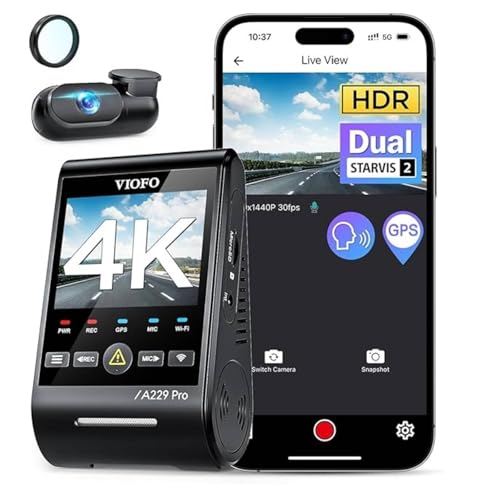
VIOFO A229 Pro 4K HDR Dash Cam
What We Like
- Dual STARVIS 2 sensors for night clarity
- 4K front and 2K rear recording
- HDR on both cameras reduces glare
- Voice control with 12 commands
Trade-offs
- Hardwire kit sold separately for parking mode
- Weighs 1.9 pounds, heavier than many rivals
The VIOFO A229 Pro pairs a 4K front camera with a 2K rear camera, both using STARVIS 2 sensors and HDR technology, so license plates stay readable even at highway speeds or under dim streetlights. That dual-sensor setup makes it a strong fit for anyone who drives at night or parks on unlit streets and wants clear evidence from both ends of the car. The buffered parking modes record 15 seconds before and 30 seconds after an event, which means you catch the lead-up, not just the bump.
The main trade-off is that the hardwire kit for 24/7 parking mode is sold separately, adding an extra step if you want full overnight coverage. At 1.9 pounds, it is noticeably heavier than something like the THINKWARE U3000, which weighs 0.3 pounds, so the mount and windshield need to handle that mass. Still, for the combination of front and rear night vision quality and the hands-free voice control, this dash cam delivers where it counts for nighttime driving.
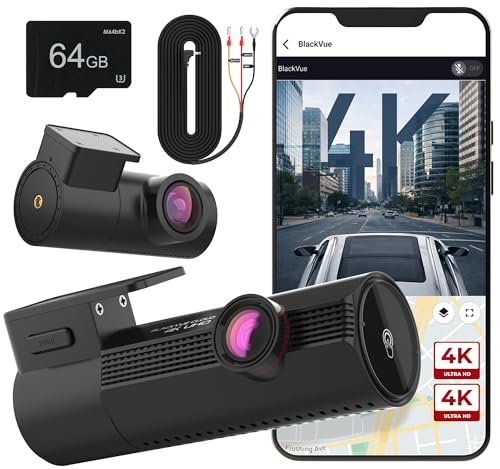
BlackVue Elite 10 4K+4K Dash Cam
What We Like
- Dual STARVIS 2 for low-light clarity
- True 4K recording on both channels
- Boots and records in under 1 second
- Parking mode wakes in 0.89 seconds
Trade-offs
- Hardwire cable required for parking mode
- Heavier than some single-channel dash cams at 0.9 lbs
- Requires separate microSD purchase for 1TB capacity
The BlackVue Elite 10 records true 4K at 30 fps on both front and rear cameras, so you get the same high resolution from every direction. Its dual STARVIS 2 sensors improve low-light sensitivity and reduce noise, which helps keep details like license plates visible on dim streets or in tunnels. HDR on the front camera balances bright and dark areas, making footage usable in direct sun or at night. This setup is for drivers who want clear evidence from both ends of the car, especially in challenging light.
The catch is that the parking mode requires the included hardwire cable to be installed, which takes a bit more effort than a simple plug-in. Compared to the VIOFO A229 Pro, which also uses dual STARVIS 2 sensors, the BlackVue offers true 4K on both channels rather than 4K front and 2K rear, giving you more consistent detail in the back.
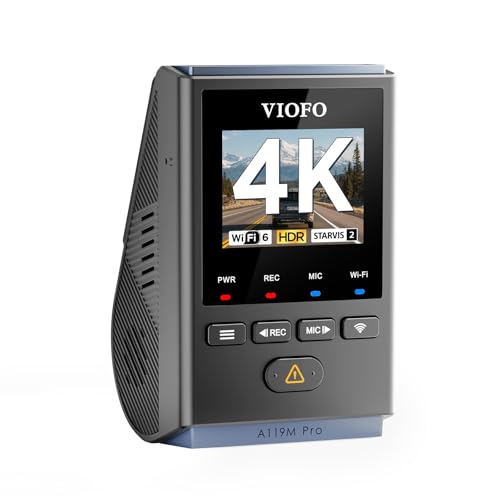
VIOFO A119M Pro 4K HDR Mini Dash Cam
What We Like
- STARVIS 2 sensor for low-light clarity
- Compact mini design hides behind mirror
- HDR + Night Vision 2.0 for balanced exposure
- Included CPL filter cuts glare and reflections
Trade-offs
- Single front camera only, no rear coverage
- MicroSD card not included in the box
- Hardwire kit for parking mode sold separately
This is a front-only camera, so you won’t get rear or cabin coverage unless you buy a second unit. That puts it in a different category compared to dual-channel models like the VIOFO A229 Pro, which records front and rear simultaneously. Also, the memory card and hardwire kit for 24-hour parking mode are extras you’ll need to budget for. If single-channel recording fits your needs and you prioritize compact size plus low-light performance, this mini cam is worth considering.
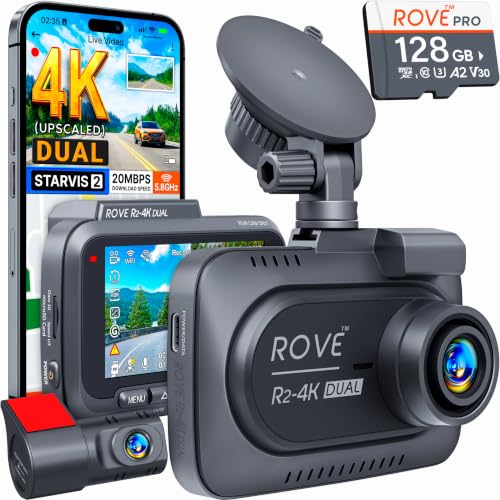
ROVE R2-4K Dual Dash Cam
What We Like
- Sony STARVIS 2 sensor for low-light clarity
- Upscaled 4K front footage for sharper detail
- Free 128GB card included in the box
- Fast 5.8GHz WiFi with 20 MB/s downloads
Trade-offs
- Upscaled 4K, not native 4K resolution
- Hardwire kit for 24H parking mode sold separately
- Rear camera limited to 1080P recording
If you prioritize identical resolution front and back, that model edges ahead. The ROVE also requires a separate hardwire kit for its 24-hour parking mode, which adds a small step for buyers who want continuous overnight coverage. For most daily driving and low-light security, though, the R2-4K delivers strong value with its generous included memory and fast 5.8GHz WiFi downloads.
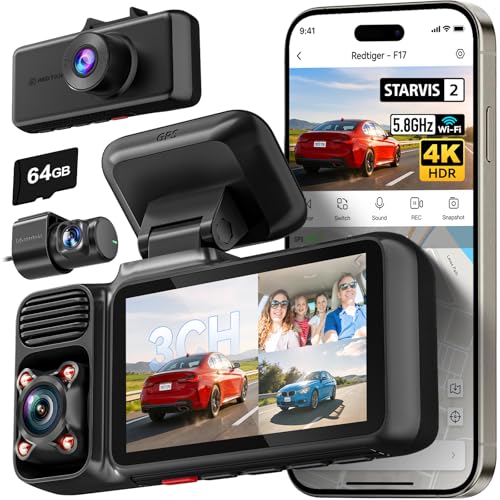
REDTIGER F17 4K 3CH Dash Cam
What We Like
- STARVIS 2 IMX675 sensor for low light
- 3-channel 360° coverage
- Super capacitor for extreme temperatures
Trade-offs
- Inside camera only 1080P, not 4K
- Parking mode requires extra hardwire kit
The REDTIGER F17’s STARVIS 2 IMX675 sensor is the key reason it handles night driving so well, it pulls in more light and cuts motion blur, so license plates stay readable on dark highways. With three channels covering front, cabin, and rear, plus four infrared LEDs for the interior, this dash cam gives you a full picture of what happens around your car after sunset. It’s a strong fit for rideshare drivers, families, or anyone who parks in dim lots and wants cabin visibility without relying on streetlights.
The inside and rear cameras record at 1080P while the front shoots 4K, so cabin detail won’t match the front’s clarity. The REDTIGER adds a third interior channel, whereas the VIOFO A229 Pro offers front and rear with dual STARVIS 2 sensors. If cabin night vision matters most, this setup delivers; if you need higher resolution on all cameras, the VIOFO is an alternative.
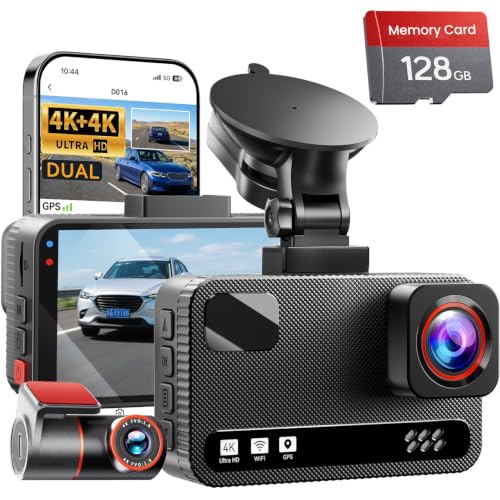
Aputeta 4K+4K Dual Dash Cam
What We Like
- True 4K on both front and rear
- Starlight sensor with f/1.5 aperture
- Free 128GB card included
- 5.8GHz WiFi for fast downloads
Trade-offs
- Parking mode requires separate hard-wiring kit
- No voice control feature
- Rear lens is 160° vs front's 170°
A Starlight-level sensor paired with an f/1.5 aperture means this dashcam pulls in crisp, colorful footage even in near-dark conditions. That is exactly what you want when the sun drops or you’re parked under a dim streetlight. Both front and rear cameras record at 3840x2160P resolution, so you get the same sharp detail from behind as from ahead. The included 128GB card lets you start recording right out of the box without buying extra accessories.
For drivers who prioritize nighttime clarity, this dashcam delivers strong low-light performance with its Starlight sensor and wide apertures. The advanced 24/7 parking mode does require a separate hard-wiring kit, so you’ll need to budget a little extra time and money for installation if you want full overnight coverage.
Product photos
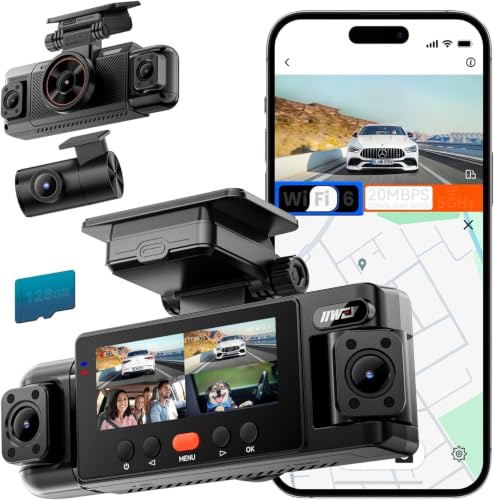
IIWEY N6 360° Dash Cam 4 Channel
What We Like
- True 360° coverage with side cameras
- 48-hour time-lapse parking surveillance
- Wi-Fi 6 for fast app previews
Trade-offs
- Wired only, no built-in battery
- Parking mode needs sold-separately hardwire kit
- Side cameras reduce but don't eliminate blind spots
Four channels, front, rear, and both sides, give you a full 360° view around the car, which is rare in a dash cam. The 8 IR lights and STARVIS 2K (1440p) resolution help capture clearer license plates and lane markings at intersections after dark, according to the manufacturer. That makes this a strong pick for rideshare drivers, fleet operators, or anyone who parks on dim streets and wants to know what’s happening on all sides, not just front and back.
This camera is wired only; there’s no battery to keep it running if your car’s power cuts out. For 24/7 parking recording you’ll need to buy the hardwire kit separately and connect it to your fuse box, which adds a step. The IIWEY N6 trades extra installation work for that full surround view, while the VIOFO A229 Pro records front and rear with dual STARVIS 2 sensors. If you want eyes on every corner and are willing to wire it in, the coverage is hard to beat.
Product photos
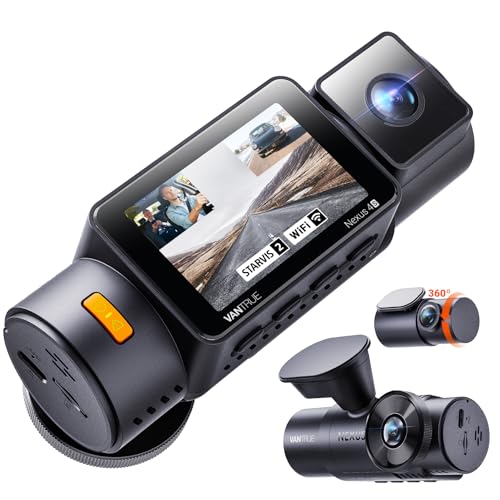
Vantrue N4S 2.7K 3 Channel Dash Cam
What We Like
- Triple STARVIS 2 sensors for low-light clarity
- PlatePix technology sharpens plates 2X
- 360° rotating rear camera for cargo or pets
- Supercapacitor works from -4°F to 140°F
Trade-offs
- Rear camera wiring must be connected carefully per manual
- No voice control for hands-free operation
Three STARVIS 2 sensors give this camera strong low-light performance, with the front recording at 1944P and the interior and rear each at 1440P. PlatePix technology sharpens license plates by 2X, and triple HDR balances harsh contrasts like headlights against dark roads. For rideshare drivers or anyone who parks on dark streets, that light sensitivity and HDR balance help capture readable plates in challenging conditions.
You have to run wiring to the rear camera, and the manual warns that a loose connection can cause trouble. At 1.5 pounds it is heavier than a compact single-channel unit like the VIOFO A119M Pro, so the mount needs a firm spot on the windshield. But if you want full cabin coverage and the best night vision in this guide, the three-channel setup and supercapacitor durability make it worth the extra installation effort.
Product photos
THINKWARE U3000 4K Dash Cam
What We Like
- Radar parking mode saves battery life
- Buffered recording captures events before impact
- Super Night Vision 4.0 for low light
- Built-in red light and speed camera alerts
Trade-offs
- Requires hardwiring or OBD cable for parking mode
- No built-in screen for quick playback
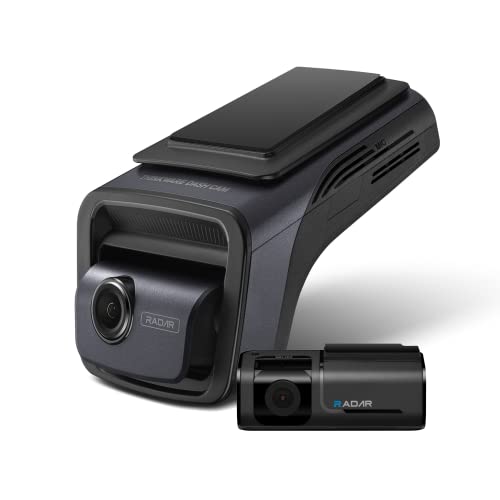
The built-in radar in the U3000 is the standout feature here. Instead of relying on motion sensors that drain your car battery overnight, the radar sips power while keeping watch. When it detects movement or an impact, the buffered recording saves a 20-second clip that includes the moments leading up to the event. That makes it a strong pick for anyone who parks on the street or in a shared lot and wants extended surveillance without worrying about a dead battery come morning. The Super Night Vision 4.0, powered by the STARVIS 2 sensor, also helps capture clear footage in dim parking garages or unlit streets.
There is a trade-off, though. To use that radar parking mode, you need to hardwire the dash cam or buy the OBD-II cable separately; it does not work with just the cigarette lighter plug. That adds a bit of installation effort. If you are comfortable with a little wiring work, the U3000 delivers radar-triggered parking recording and strong night vision.
Product photos
70mai A810 Lite 4K Dash Cam
What We Like
- 4G LTE remote live view and tracking
- F1.55 aperture and HDR for low-light clarity
- Supercapacitor for heat resistance
Trade-offs
- Rear camera limited to 1080P resolution
- 4G LTE and parking mode require separate hardwire kit
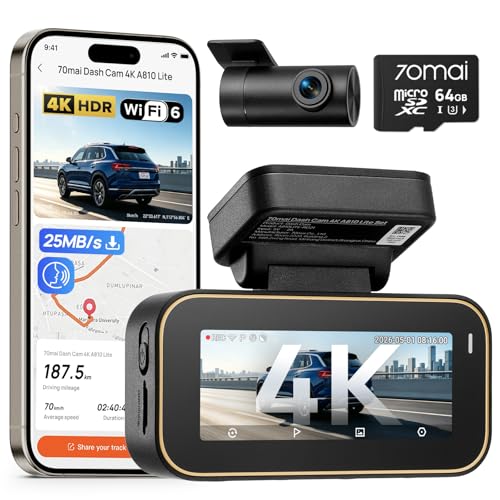
The 70mai’s rear image is a step down in low light compared to the VIOFO A229 Pro, which uses dual STARVIS 2 sensors for both channels.
Product photos
How We Evaluated Night Vision Car Cameras
Our evaluation focused on the hardware and technology that directly impact nighttime recording quality. We compared sensor generations (STARVIS 2 vs. Older STARVIS or OmniVision), lens apertures (f/1.5 to f/1.8), and whether HDR or WDR was applied to both front and rear channels. These specs tell us how much light a camera can capture and how it handles high-contrast scenes like oncoming headlights.
We also examined the recording resolution claims carefully, distinguishing native 4K from upscaled 4K. A camera that records native 4K on both channels, like the BlackVue Elite 10, has a genuine advantage in resolving fine details like license plates at night. For parking mode, we noted whether hardwire kits were required or included, as this affects both installation effort and the camera’s ability to record overnight.
This is a research-led evaluation, not a hands-on test. Our conclusions come from reading spec sheets, expert round-ups, and patterns in thousands of owner reviews. We prioritize clarity on the trade-offs, like weight, included accessories, and installation complexity, so you can match a camera to your specific needs.
What To Look For In Night Vision Car Cameras
Choosing a night vision car camera means looking beyond marketing claims at the sensor, lens, and software that actually determine low-light performance.
Prioritize cameras with Sony STARVIS 2 sensors, an aperture of f/1.8 or wider, and HDR processing on all recording channels for the best nighttime footage.
Sensor Technology: STARVIS 2 vs. STARVIS vs. CMOS
The sensor is the heart of night vision. Sony’s STARVIS 2 generation offers the best low-light sensitivity currently available, with improved signal-to-noise ratio over the original STARVIS. Cameras like the VIOFO A229 Pro and BlackVue Elite 10 use dual STARVIS 2 sensors for front and rear clarity. Older STARVIS sensors still perform well, but budget cameras with generic CMOS sensors will struggle in dim conditions, producing grainy or dark footage.
Aperture and Lens Quality
A wider aperture (lower f-number) lets more light hit the sensor. The Aputeta’s Starlight sensor and the 70mai’s aperture are excellent for very dark environments. Most good night vision cams fall between f/1.5 and f/1.8. A bundled CPL filter, like the one included with the VIOFO A119M Pro, can also reduce dashboard reflections and windshield glare that wash out night footage.
HDR, WDR, and Exposure Processing
High Dynamic Range (HDR) balances bright and dark areas within the same frame. This is critical for reading plates in oncoming headlights or under streetlights. The VIOFO A229 Pro applies HDR to both front and rear cameras, while some models limit it to the front only. Wide Dynamic Range (WDR) is a less advanced alternative. For the best night results, choose a camera with HDR on every recording channel.
Parking Mode and Night Surveillance
If you park on the street or in unlit lots, parking mode matters. The THINKWARE U3000 uses radar to wake the camera only when motion is detected, saving battery life while still capturing events before impact. The IIWEY N6 offers 48-hour time-lapse parking surveillance. Most cameras require a separate hardwire kit for parking mode, so factor that cost and installation effort into your decision.
- Confirm whether the camera uses a STARVIS 2 or older sensor for each channel.
- Check if HDR is applied to both front and rear cameras, not just the front.
- Note whether the hardwire kit for parking mode is included or sold separately.
- Look at the included accessories: memory card, CPL filter, and mounting hardware.
- Verify the recording resolution is native 4K, not upscaled, for the channels you need.
A camera with a STARVIS 2 sensor and f/1.5 aperture will outperform one with a generic sensor and f/1.8, even if both claim “night vision.”
Night Vision Car Cameras Compared
The table below compares the key specs and trade-offs of our top 10 picks, making it easy to see which camera matches your night driving needs.
| Product | Front Resolution | Night Vision Sensor | Wi-Fi | Parking Mode |
|---|---|---|---|---|
| VIOFO A229 Pro 4K HDR Dash Cam | 4K 2160P | STARVIS 2 IMX678 & IMX675 | 5GHz | 3 (buffered) |
| BlackVue Elite 10 4K+4K Dash Cam | True 4K at 30FPS | Dual STARVIS 2 | Wi-Fi | 24H Parking Mode |
| VIOFO A119M Pro 4K HDR Mini Dash Cam | 4K 30FPS | STARVIS 2 IMX678 | Wi-Fi 6 | Buffered 24H Parking Mode |
| ROVE R2-4K Dual Dash Cam | 2.5K upscaled to 4K | Sony STARVIS 2 IMX675 | 5.8GHz | 24Hr Parking Mode |
| REDTIGER F17 4K 3CH Dash Cam | 4K (2160P) | STARVIS 2 IMX675 | 5.8GHz + 2.4GHz | Parking Mode |
| Aputeta 4K+4K Dual Dash Cam | 3840x2160P | Starlight sensor | 5.8GHz | 24/7 time-lapse + collision lock |
| IIWEY N6 360° Dash Cam 4 Channel | STARVIS 2K (1440p) | N/A | 5.8G WiFi-6 | 48-hour time-lapse |
| Vantrue N4S 2.7K 3 Channel Dash Cam | 1944P | Triple STARVIS 2 | 5 GHz | 4 modes |
| THINKWARE U3000 4K Dash Cam | 4K | STARVIS 2 | 5GHz + Bluetooth | Radar Buffered |
| 70mai A810 Lite 4K Dash Cam | 3840×2160P | F1.55 aperture + HDR | 5GHz Wi-Fi 6 | 24H (hardwire kit required) |
Frequently Asked Questions
Do I need a separate hardwire kit for parking mode?
Most night vision dash cams with parking mode require a hardwire kit, sold separately, to connect to your car’s fuse box. The VIOFO A229 Pro, BlackVue Elite 10, and THINKWARE U3000 all need one. A few models include basic parking detection via their internal battery or capacitor, but for 24-hour surveillance, hardwiring is the standard.
What is the difference between STARVIS and STARVIS 2 sensors?
STARVIS 2 is Sony’s second-generation low-light sensor technology, offering better sensitivity and less noise than the original STARVIS. Cameras with dual STARVIS 2 sensors, like the VIOFO A229 Pro and BlackVue Elite 10, provide clearer footage in very dark conditions. Older STARVIS sensors are still good, but they capture less detail in near-total darkness.
Is upscaled 4K as good as native 4K for night footage?
No. Native 4K records at true 3840×2160 resolution, while upscaled 4K takes a lower-resolution image and digitally enlarges it. For reading license plates at night, native 4K on both channels, as found on the BlackVue Elite 10, provides sharper, more usable detail. The ROVE R2-4K uses upscaled 4K on the front camera, which is still an improvement over 1080P but not equal to native 4K.
How wide should the lens angle be for night driving?
A front lens angle between 150° and 170° is ideal for capturing both lanes of traffic and the sides of the road without excessive fisheye distortion. The IIWEY N6 uses side cameras for true 360° coverage, while most dual-cam setups cover front and rear. Avoid cameras under 140°, as they may miss peripheral activity.
Can I use a night vision dash cam in extreme temperatures?
Yes, but look for a supercapacitor instead of a lithium battery. Supercapacitors, used in the Vantrue N4S and 70mai A810 Lite, handle temperatures from -4°F to 140°F without swelling or failing. Battery-based cameras are more prone to heat damage in parked cars during summer.
The Bottom Line
The VIOFO A229 Pro 4K HDR Dash Cam is our Best Overall pick for drivers who need exceptional night vision from both front and rear cameras. Its dual STARVIS 2 sensors, HDR on both channels, and 4K front recording make it the most capable all-around choice for nighttime driving and parking coverage.
If your priority is the absolute sharpest 4K footage from both cameras, the BlackVue Elite 10 4K+4K Dash Cam delivers native 4K on every channel with instant boot times. For rideshare drivers or those who want cabin coverage, the Vantrue N4S 2.7K 3 Channel Dash Cam offers triple STARVIS 2 sensors and plate-enhancing PlatePix technology.
The single most important factor in night vision performance is the sensor generation. Choose a camera with at least one STARVIS 2 sensor and HDR processing, and you will see the difference the first time you review footage from an unlit road.
