
10 Best Noise Cancelling Microphones For Car Stereos in 2026
This post contains affiliate links. As an Amazon Associate, we earn from qualifying purchases.
For drivers who need crystal-clear hands-free calls, the ATOTOZONE AC-MIC20 Dual Microphone is the best overall pick thanks to its dual MEMS design that precisely captures your voice while rejecting road noise. If you are on a budget, the GHIOPMZ Universal Hands-Free Microphone offers excellent value, while the Finmnmda Car Radio Microphone provides the most flexible mounting options.
The real challenge with car microphones is separating your voice from engine hum, wind, and road rumble. A mic that picks up everything in the cabin makes calls frustrating for everyone on the line. The right noise cancelling microphone solves this by focusing on you, not the car.
This guide is built from manufacturer specifications, expert round-ups, and patterns in owner feedback. We break down what actually matters for clear calls in a moving vehicle, from connector types to placement options, so you can buy with confidence.
Top 10 Noise Cancelling Microphones For Car Stereos in the Market
Certain content that appears on this site comes from Amazon. This content is provided "as is" and is subject to change or removal at any time.
The Best Noise Cancelling Microphones For Car Stereos, Reviewed
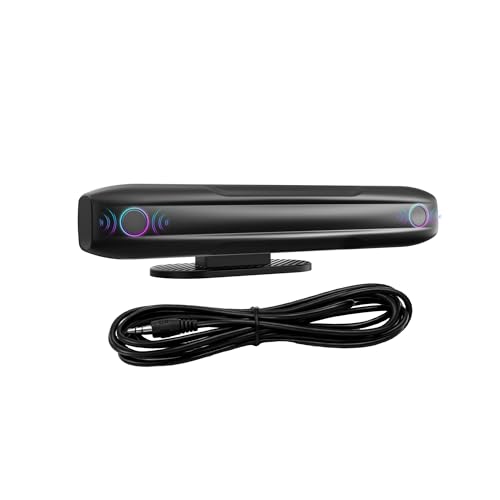
ATOTOZONE AC-MIC20 Dual Microphone
What We Like
- Dual MEMS microphones for precision pickup
- Plug-and-play 3.5 mm connection
- Flexible silicone with adjustable hinge mount
Trade-offs
- Only compatible with X10 and S8 GEN4 series
- Requires adhesive mount for installation
- No universal fit for other car stereo brands
It’s the kind of precision that makes voice assistants feel responsive and phone calls sound natural, even with the windows down or the highway humming.
This mic is a dedicated companion, not a universal solution. Unlike the GHIOPMZ or Finmnmda models that work with many car stereos, the AC-MIC20 only fits the X10 and S8 GEN4 series. That narrow focus pays off in performance. The automotive-grade materials and wide temperature tolerance mean it’s built to last in a hot car or a cold winter morning, but it also means you’re locked into the ATOTO ecosystem. If you have the right head unit, the extra precision is worth the commitment.
Product photos
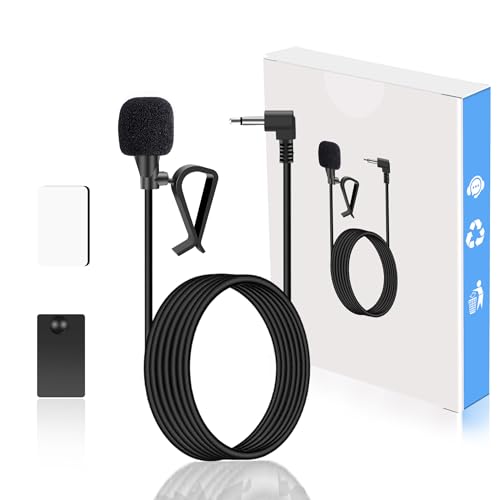
GHIOPMZ Universal Hands-Free Microphone
What We Like
- Filters wind and engine noise
- Universal 3.5mm compatibility
- Plug-and-play with included mounts
- Long 2m cable for flexible routing
Trade-offs
- No adapter for 2.5mm stereo inputs
- Requires a nearby 3.5mm port for use.
An electret condenser cartridge with high sensitivity and low impedance effectively filters wind and engine noise, so your voice comes through clearly in all driving scenarios. That makes this mic a practical choice for anyone who wants reliable hands-free calling or voice command response without spending much. Its universal 3.5mm plug works with most major stereo brands, and the included dash mount and visor clip let you place it exactly where you need it. Setup is truly plug-and-play, no menus or wiring headaches.
The trade-off is the 2-meter cable, which is plenty for a compact car but might require careful routing in a full-size SUV or truck to reach the ideal spot near the driver. Compared to the Finmnmda model with its 10-foot cable, the GHIOPMZ gives you less slack for long dashes or rear-mounted head units. Still, for the driver who wants effective noise cancellation and straightforward installation at a budget-friendly price, this mic delivers exactly what matters most.
Product photos
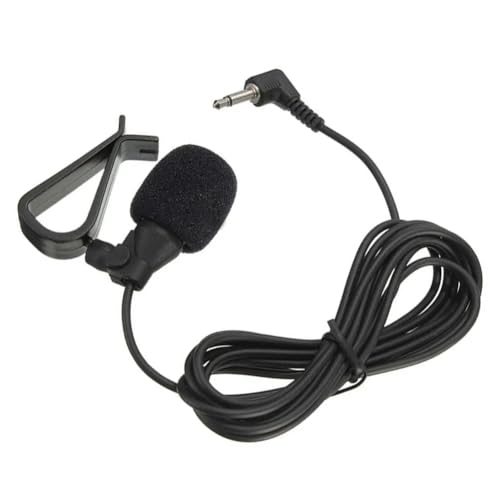
Finmnmda Car Radio Microphone
What We Like
- Rotating clip for precise mic positioning
- 10ft cable for flexible routing
- Durable PVC jacket with strain relief
- Universal 3.5mm compatibility with major brands
Trade-offs
- Requires 3.5mm mic port; no 2.5mm adapter
- No 2.5mm adapter included for older stereos
A 10-foot cable and a 360-degree rotating clip give you the freedom to place this mic exactly where your voice comes through clearest. That could be clipped to the sun visor or tucked along the steering column. The condenser capsule paired with a foam windscreen suppresses road rumble and wind noise, so hands-free calls and navigation prompts come through clearly. That makes it a natural fit for drivers who want to dial in their mic placement without wrestling with short cords or fixed-angle clips.
The most important thing to know is that this microphone only works with car stereos that have a standard 3.5mm mic jack. Older units with a 2.5mm port won’t fit without an adapter, which isn’t included. For most daily drivers, the extra cable length and adjustable clip give you plenty of mounting flexibility, making it a practical choice for sedans, SUVs, trucks, and RVs.
Product photos
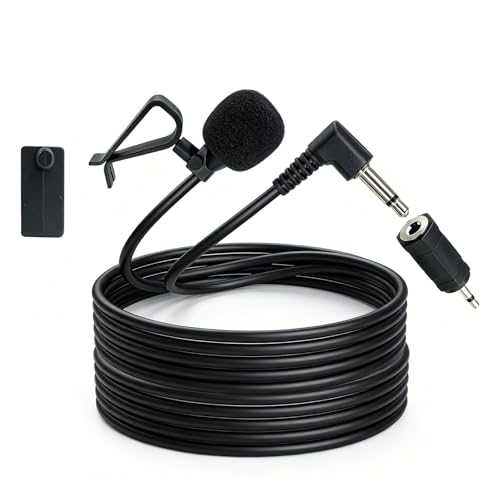
SEYUGOPTI External Car Microphone
What We Like
- Includes 2.5mm adapter for wide fit
- 9.8 ft cable for flexible placement
- Clip and adhesive mounting options
Trade-offs
- Mono pickup, not stereo for richer audio
- Omnidirectional pattern picks up cabin noise
The included 2.5mm adapter means this mic plugs into stereo models that older or single-size cables can’t reach, like the Pioneer DMH-1500NEX or Kenwood KMR-M308BT. That adapter, plus the 3.5mm plug, covers a wider range of head units than most competitors offer out of the box. For anyone swapping a factory radio or upgrading a used car stereo, this one saves a trip to the electronics store for a separate adapter. The 9.8-foot cable lets you route the mic along the windshield pillar or under the dash to sit close to the driver. Both a clip and adhesive sticker give you mounting choices on vents, glass, or trim.
A mono microphone captures sound from a single point rather than the wider pickup a dual-mic setup can offer. If your stereo uses only a standard 3.5mm jack and you want stereo pickup, another mic might suit you better. But if adapter compatibility and easy placement matter most, this is the straightforward pick.
Product photos
ViaBecs External Car Mic
What We Like
- 9.8 ft cable for flexible placement
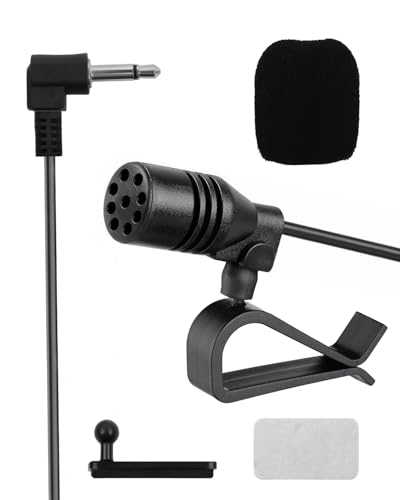
- Includes visor clip and dash mount
- Foam windscreen reduces breath pops
- No pairing or battery required
Trade-offs
- Only works with 3.5mm MIC input stereos
- Not compatible with USB, AUX, or phone ports
A 9.8-foot cable gives you the reach to tuck this mic up on the visor or dash, right where your voice hits it. That driver-side placement is the whole point. By moving the pickup closer to you instead of relying on a distant built-in mic, the ViaBecs External Car Mic helps your stereo catch commands and calls with less background noise. It runs on a simple wired 3.5mm connection, so there is no Bluetooth to pair or battery to charge. For anyone who wants clearer hands-free talk without fussing with wireless quirks, this setup makes sense.
This mic only works with stereos that have a dedicated 3.5mm MIC input. If your head unit lacks that port, this mic will not help. The wired design means you will need to route that cable cleanly along the A-pillar or dash; the included adhesive tape helps, but it takes a little patience on install day.
Product photos
NHOPEEW Lavalier Clip Microphone

What We Like
- Intelligent Noise Reduction for clear calls
- Compact clip-on design mounts on sun visor
- High sensitivity with anti-interference ability
- Universal 3.5mm jack for Bluetooth car stereos
Trade-offs
- Clip-only design limits placement options
- 5ft cable is shorter than many rival mics
The NHOPEEW Lavalier Clip Microphone uses a 3.5mm jack and a 5-foot cable, which means you will want to clip it close to the driver, such as on the sun visor or headliner edge, so the wire reaches the stereo without dangling loose. Its electret condenser cylinder and intelligent noise reduction are designed to keep your voice clear during various driving conditions. For someone who wants a tiny, no-fuss mic that stays out of sight and out of mind, this is a tidy solution. It suits drivers who prefer a minimalist install and do not need to route a long cable to the back seat.
The trade-off is reach. At 5 feet, you lose the flexibility to mount it far from the head unit, unlike the Finmnmda Car Radio Microphone with its 10-foot cable. If your stereo sits low on the dash or you want the mic tucked near the rearview mirror, you might find yourself stretching the cord. That said, the clip-on simplicity and noise filtering make it a strong pick for anyone who values a quick, clean setup over maximum placement freedom.
Product photos
SPTSSWET Car Microphone 2.5mm
What We Like
- Plug-and-play installation with no tools
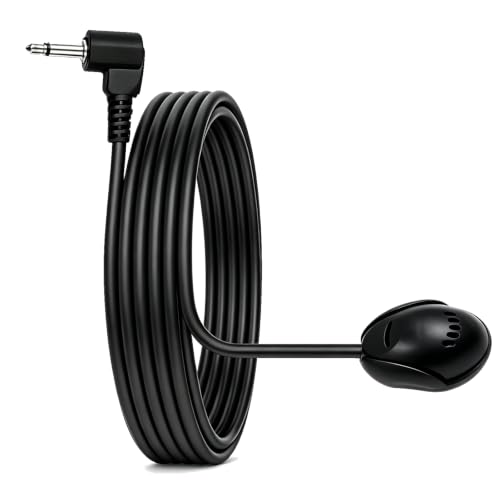
- Extra-long 3m cable for large vehicles
- Advanced electret condenser with noise filtering
- Includes both adhesive pad and visor clip
Trade-offs
- Only fits Pioneer radios with 2.5mm MIC port
A 2.5mm connector targets this microphone squarely at Pioneer owners, and with over 100 compatible models including the AVH-4000NEX and MVH-1400NEX, it’s a near-certain fit if your radio has that port. The advanced electret condenser cartridge with anti-noise technology filters out background hum and road chatter, so your voice comes through clearly during hands-free calls or GPS prompts. Installation is genuinely tool-free: peel the adhesive pad or clip the visor mount, route the 3-meter cable behind the dash or along the headliner, and plug it in. That extra-long reach is a real help in vans, SUVs, and trucks where the radio sits far from the driver’s seat.
The 2.5mm connector means this mic is designed for Pioneer radios with that specific port size, so it won’t connect to the 3.5mm jacks common on many other brands. If your stereo uses a standard 3.5mm input, you will need a different microphone. For Pioneer owners who want a simple, reliable upgrade that fits their radio without adapters, this is a clean, well-matched solution that puts the mic where it matters most.
Product photos
FingerLakes 3.5mm Microphone Assembly
What We Like
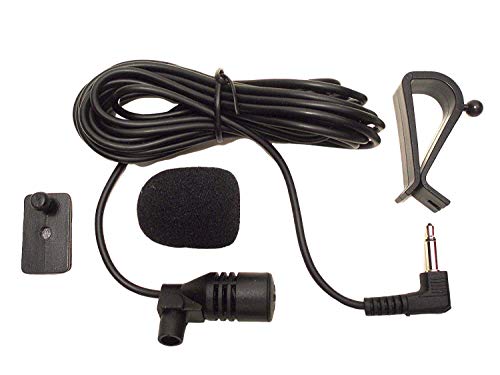
- Includes both dash and visor mounts
- 9-foot cable reaches driver easily
- Works with most 3.5mm mic input radios
Trade-offs
- No foam windscreen for open-window driving
- Only works with car radios that have a 3.5mm mic input
The 9-foot cable on the FingerLakes 3.5mm Microphone Assembly gives you real placement freedom, letting you route the mic along the windshield pillar or clip it to the visor without fighting a short cord. That extra length also means you can stash the main unit in the glove box or center console while keeping the mic within easy reach of the driver. The kit includes both a dash mount and a visor clip, so you can choose the spot that picks up your voice best. Owners note the electret condenser cartridge handles background noise well, which helps during highway calls or when the radio is on.
There is no foam windscreen, so on highway drives with the windows down wind blast can reach the capsule directly. For everyday commuting and closed-window cruising, the FingerLakes assembly offers a straightforward, well-routed solution that puts the mic where you need it.
Product photos
FingerLakes FLTP910 Plug & Play Mic

What We Like
- 9 ft cable for flexible placement
- Omnidirectional pickup captures voice clearly
- Electret condenser reduces background noise
- Easy sticker or clip installation
Trade-offs
- Omnidirectional design picks up cabin noise too
- No adapter for 2.5mm stereo ports
A 9-foot cable gives you the freedom to place this microphone exactly where it works best, tucked into a visor, clipped near the driver’s seat, or even routed to the back row. That extra reach solves a real problem in larger vehicles or setups where the stereo sits far from the driver. The electret condenser cartridge offers anti-noise and anti-jamming capability, which can help reduce unwanted sounds during hands-free calls or navigation prompts. It’s a straightforward, no-fuss solution for anyone who needs distance without sacrificing call quality.
The FingerLakes FLTP910 uses an omnidirectional electret condenser cartridge, which means it captures sound from all directions, handy if you’re not always facing the mic, but it also means it picks up engine hum and road noise in a busy cabin. Its 9-foot cable gives you plenty of slack to route the mic where you need it, and the 3.5 mm plug works with most car stereos, GPS units, and Bluetooth radios without any extra adapters. The included sticker lets you mount it on the dash or windshield, so installation takes just a couple of minutes.
Product photos
Ponskoy Portable External Car Mic
What We Like
- Works with Android and Windows CE radios
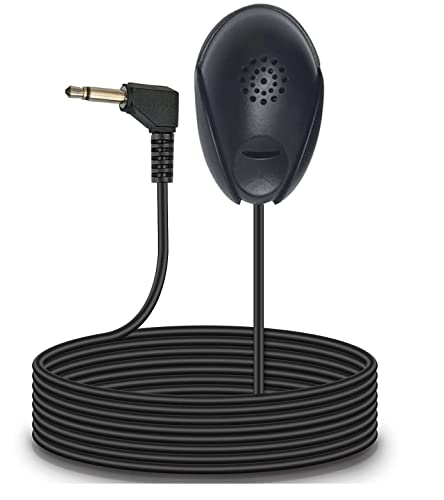
- 9.8 ft cable for flexible placement
- High sensitivity with anti-noise function
Trade-offs
- 3.5mm plug limits use with 2.5mm-only head units
- No included adapter for non-standard inputs
A standard 3.5mm plug and 9.8-foot cable make the Ponskoy Portable External Car Mic one of the more flexible options for drivers juggling different gear. It pairs with Android auto radios, Windows CE navigation units, laptops, and even counter intercoms, so you aren’t locked into one brand or system. The mic can be picked up from its base to get it closer to your voice during hands-free calls, and the anti-noise and anti-jamming features help reduce background interference. If you hop between vehicles or use a mix of devices, this mic adapts without extra fuss.
Its 3.5mm plug won’t fit head units with a 2.5mm input, like some older Pioneer models, and there’s no adapter in the box. That limits its compatibility compared to the SEYUGOPTI External Car Microphone, which is listed with a 2.5mm adapter. Still, for the majority of modern car stereos and portable gear, the Ponskoy’s long cable and broad device support give it an edge in flexibility.
Product photos
How We Evaluated Noise Cancelling Microphones For Car Stereos
Our evaluation is research-based, drawing from manufacturer documentation, expert round-ups, and patterns in verified owner feedback. We analyzed each mic’s specs, build quality, and real-world reports to identify the most reliable performers.
The three criteria that mattered most were noise rejection technology, connector compatibility, and cable length. A mic that filters wind and engine noise is useless if it cannot plug into your stereo, and a short cable often forces poor placement that undermines noise cancellation.
A research-led approach has limits: we cannot verify how each mic sounds in every vehicle model. However, by cross-referencing technical specs with what owners consistently report, we can identify the mics most likely to deliver clear calls in a noisy car environment.
What To Look For In Noise Cancelling Microphones For Car Stereos
Choosing the right mic means matching your stereo’s input type, your vehicle’s layout, and your tolerance for installation effort. Here is what to check before you buy.
Match the connector (3.5mm or 2.5mm) to your stereo’s mic port, choose a cable long enough to place the mic near you, and look for noise filtering that targets wind and engine frequencies.
Connector Type and Compatibility
The most common car stereo mic input is a 3.5mm jack, but many Pioneer and older head units use a 2.5mm port. Some mics, like the SEYUGOPTI External Car Microphone, include a 2.5mm adapter for wider compatibility. Always check your stereo’s manual for the mic port size before buying.
Noise Cancellation Technology
Look for mics that use electret condenser capsules or dual MEMS designs, which are naturally better at focusing on close-range speech. A foam windscreen or intelligent noise reduction circuit further helps filter out wind and engine rumble. The ATOTOZONE AC-MIC20’s dual MEMS setup is a standout for precision pickup.
Cable Length and Mounting Options
A cable long enough to reach a visor or dash mount is the minimum. Longer cables, such as the 10-foot cable on the Finmnmda or the 9-foot cables on the FingerLakes models, offer more placement flexibility. Mounting clips, adhesive pads, and visor clips let you position the mic where it captures your voice best.
- Measure the distance from your stereo to your desired mic placement before buying.
- Check if your stereo’s mic port is 3.5mm or 2.5mm (a 2.5mm jack is thinner).
- Decide between a clip, adhesive pad, or visor mount based on your car’s interior.
- Consider a foam windscreen if you drive with windows down frequently.
A mic placed close to your mouth will always sound clearer than one mounted far away, even with the best noise filtering.
Noise Cancelling Microphones For Car Stereos Compared
The table below compares the 10 noise cancelling microphones across the specs that matter most for clear calls in a car.
| Product | Connector | Cable Length | Microphone Type | Mounting |
|---|---|---|---|---|
| ATOTOZONE AC-MIC20 Dual Microphone | 3.5 mm | 2 m | Dual MEMS | N/A |
| GHIOPMZ Universal Hands-Free Microphone | 3.5mm | 2m | Electret condenser | Dash mount / visor clip |
| Finmnmda Car Radio Microphone | 3.5mm mono plug | 10 ft (3 m) | Condenser capsule + foam windscreen | 360° rotating clip |
| SEYUGOPTI External Car Microphone | 3.5mm + 2.5mm adapter | 9.8 ft | Mono Omnidirectional Condenser | Clip and adhesive sticker |
| ViaBecs External Car Mic | 3.5mm | 9.8 ft | N/A | Visor clip and dash mount |
| NHOPEEW Lavalier Clip Microphone | 3.5 mm Jack | 5 ft | Electret condenser cylinder | Clip-on (sun visor) |
| SPTSSWET Car Microphone 2.5mm | 2.5mm | 3 meters (9.8 ft) | Electret condenser cartridge | Adhesive pad & visor clip |
| FingerLakes 3.5mm Microphone Assembly | 3.5mm | 9 feet (3 m) | Electret condenser cartridge | Dash mount & visor clip |
| FingerLakes FLTP910 Plug & Play Mic | 3.5 mm standard plug | 9 feet (3 m) | Electret condenser cartridge | Sticker mount, clip-on |
| Ponskoy Portable External Car Mic | 3.5mm plug | 9.8 ft / 3 m | N/A | N/A |
Frequently Asked Questions
What is the best noise cancelling microphone for a car stereo?
The ATOTOZONE AC-MIC20 Dual Microphone is the best overall choice for its dual MEMS design that precisely captures your voice while rejecting background noise. It is designed specifically for ATOTO X10 and S8 GEN4 series stereos.
Will a 3.5mm microphone work in a 2.5mm car stereo port?
No, a 3.5mm plug will not fit a 2.5mm port. You need a mic with a 2.5mm plug, like the SPTSSWET Car Microphone for Pioneer stereos, or a mic that includes a 2.5mm adapter, such as the SEYUGOPTI External Car Microphone.
How long should the microphone cable be for a car stereo?
Aim for a cable long enough to reach a visor or dash mount. Mics with 9 to 10-foot cables, like the Finmnmda Car Radio Microphone and FingerLakes models, offer more flexibility for routing the mic to an optimal position away from the stereo.
What is the difference between omnidirectional and noise cancelling microphones?
An omnidirectional mic picks up sound from all directions, including cabin noise. A noise cancelling mic uses an electret condenser or dual MEMS design to focus on near-field speech and filter out background sounds like engine rumble and wind.
Can I install a noise cancelling microphone in any car stereo?
Only if your stereo has a dedicated 3.5mm or 2.5mm microphone input. Many aftermarket head units include this port, but factory stereos often do not. Check your stereo’s manual or look for a small MIC jack on the back or front panel.
The Bottom Line
For most drivers, the ATOTOZONE AC-MIC20 Dual Microphone is the best choice if you own an ATOTO X10 or S8 GEN4 stereo. Its dual MEMS design delivers the clearest voice pickup and noise rejection in this lineup. For everyone else, the GHIOPMZ Universal Hands-Free Microphone offers strong noise filtering at a budget-friendly price with universal 3.5mm compatibility.
If you need to mount the mic away from the stereo, the Finmnmda Car Radio Microphone with its 10-foot cable and rotating clip gives you the most placement freedom. Pioneer owners should look directly at the SPTSSWET Car Microphone with its 2.5mm plug and extra-long 3-meter cable.
The single most important buying factor is connector compatibility. A great noise cancelling microphone is useless if it does not plug into your stereo. Always confirm your head unit’s mic port size before making a purchase.
