
8 Best Oils For Classic Cars in 2026
This post contains affiliate links. As an Amazon Associate, we earn from qualifying purchases.
For classic car owners, the right oil is non-negotiable. Castrol Classic XL 20w50 Motor Oil is our choice for best overall, offering high zinc for vintage engine wear protection and compatibility with motorcycle wet clutches. For high-performance engines, the Valvoline VR1 Racing SAE 30 delivers extreme protection, while the Lucas Oil Hot Rod & Classic Car 10W-30 is best for worn engines needing improved oil pressure.
Modern oils lack the specific additives, like high levels of zinc and phosphorus, that older engines need to prevent cam and lifter wear. Choosing the wrong viscosity or a low-zinc formula can lead to premature engine failure.
We built this guide by analyzing manufacturer specifications, expert round-ups, and patterns in owner feedback across the classic car community. Our goal is to help you match the right oil formulation to your engine’s age, condition, and driving style.
Top 8 Oils For Classic Cars in the Market
Certain content that appears on this site comes from Amazon. This content is provided "as is" and is subject to change or removal at any time.
The Best Oils For Classic Cars, Reviewed
Castrol Classic XL 20w50 Motor Oil

What We Like
- High zinc for vintage engine wear protection
- Compatible with motorcycle wet clutches
- Designed specifically for pre-1980 vehicles
- Low oil consumption for older engines
Trade-offs
- Mineral base lacks synthetic thermal stability
- Not suitable for modern post-1980 engines.
A high-zinc formulation designed specifically for pre-1980 engines means this oil delivers the anti-wear protection older metallurgy demands. The SAE 20W-50 multigrade mineral base also keeps oil consumption low, a real advantage for older engines. If you own a vintage vehicle that needs a straightforward, compatible oil, this Castrol option covers the essentials well.
The trade-off is that this is a conventional mineral oil, not a full synthetic. For engines that run hot or see extended intervals between changes, a synthetic oil may offer different characteristics. But for pre-1980 classics, the Castrol Classic XL’s high zinc and low consumption characteristics make it a suitable everyday choice. The vintage collectible tin is a nice touch, too, fitting the character of the car it protects.
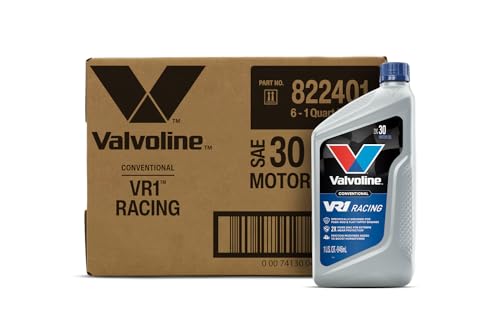
Valvoline VR1 Racing SAE 30 Motor Oil
What We Like
- 2X more zinc for extreme wear protection
- Special friction modifiers deliver maximum horsepower
- Enhanced anti-foam agents for high-speed protection
- Formulated for flat-tappet and performance cam motors
Trade-offs
- Designed for high-performance, not daily low-stress driving
- SAE 30 viscosity too thick for cold-weather starts
With double the zinc of standard oils, this SAE 30 racing oil builds a tough film on pistons, cams, and bearings where classic high-performance engines need it most. The special friction modifiers are engineered to free up horsepower and torque at high RPMs. That makes it a natural fit for a flat-tappet V8 or a track-day special that spends most of its time at high engine speeds. If you are building or running a motor that demands extreme wear protection and thermal stability, this oil is formulated to deliver exactly that without compromise.
A single-grade SAE 30 oil like this one is not as versatile as a multigrade. For a car that sees cold morning starts or stop-and-go driving, Castrol Classic XL 20w50 offers a wider temperature range while still providing high zinc for protection. But if your classic is a fair-weather performer, a weekend racer, or an engine built for sustained high loads, the VR1 Racing SAE 30 gives you the dedicated film strength and anti-foam protection those conditions demand.
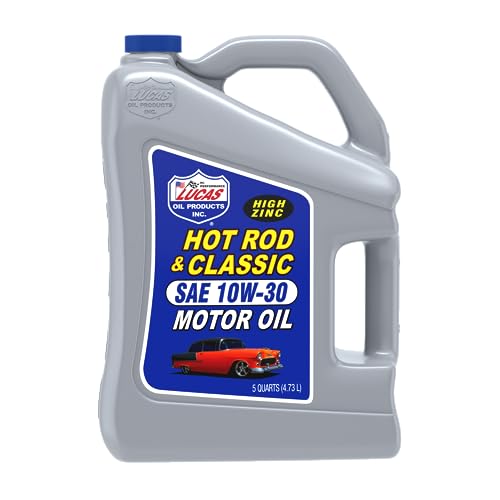
Lucas Oil Hot Rod & Classic Car 10W-30 Motor Oil
What We Like
- High zinc, molybdenum, and phosphorus levels
- Thicker additive film for worn engines
- Improves oil pressure and reduces burning
- Compatible with methanol and racing fuels
Trade-offs
- Not formulated for modern emissions systems
- Not recommended for late-model vehicles with catalytic converters
A unique additive package packed with high levels of zinc, molybdenum, and phosphorus gives this oil a noticeably thicker film between moving parts. That extra cushion is exactly what a high-mileage or worn engine needs to restore oil pressure and cut down on burning. It also handles cold starts well, so you won’t fight with a stubborn crank on a chilly morning. For anyone nursing an older classic that’s lost a bit of its original tightness, this is the oil that buys you more reliable miles.
The 10W-30 viscosity works well in moderate temperatures and for engines that don’t see extreme heat or sustained high-rpm use. For those conditions, a heavier oil like the Castrol Classic XL 20w50 might be a better match based on its higher viscosity rating. Still, for a worn engine that needs steady lubrication and improved pressure, this Lucas formula delivers what the specifications promise.
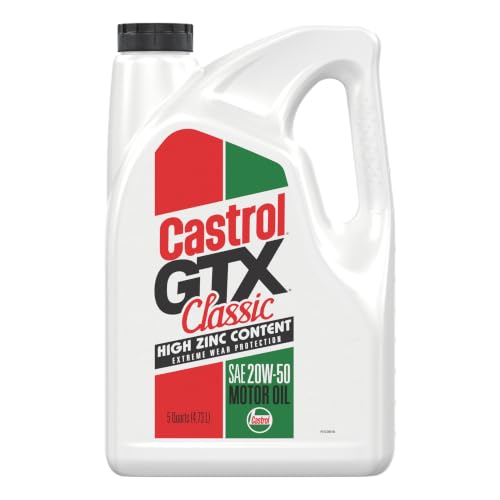
Castrol GTX Classic 20W-50 Conventional Motor Oil
What We Like
- High zinc and phosphorus for wear protection
- Maintains thick oil film under severe conditions
- Minimal foaming and high thermal resistance
- Compatible with gasoline and alcohol fuels
Trade-offs
- Conventional base lacks synthetic's high-temp stability
- API SJ spec limits use in newer engines with tighter tolerances
The high zinc and phosphorus levels in this 20W-50 conventional oil are its standout feature, delivering extreme wear protection for older engines that need that extra cushion. It maintains a tough oil film even under severe conditions, so you can push a classic on a hot day or a long cruise without worrying about metal-on-metal contact. This oil suits engines where the thick viscosity and anti-wear additives help keep everything quiet and happy, especially those running on gasoline or alcohol-based fuels.
A high zinc and phosphorus formulation delivers extreme wear protection for engines that operate within their original design limits. The oil maintains a tough, thick film even under severe conditions, which means it won’t break down during a long highway cruise or a spirited drive on a hot day. Minimal foaming and strong resistance to thermal degradation keep the lubricant stable when the engine gets hot. It is compatible with both gasoline and alcohol-based fuels, so it works in classic cars that run on ethanol blends. Meeting API SJ standards, this conventional oil provides the level of protection that pre-1980 engines need without overcomplicating the choice.
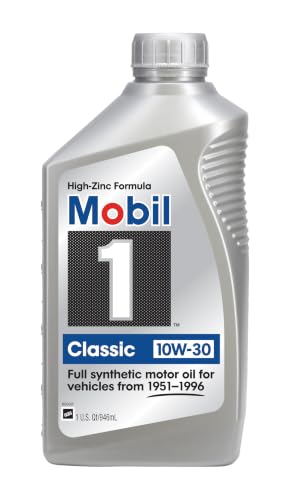
Mobil 1 Classic Car Advanced Full Synthetic Motor Oil
What We Like
- Full synthetic formulation resists oil breakdown
- 1300 ppm zinc protects pre-modern engines
- Helps prevent harmful sludge and deposits
- Designed to reduce engine wear
Trade-offs
- Zinc level fixed at 1300 ppm, not adjustable
- Not suitable for engines requiring 20W-50 viscosity.
A full synthetic oil with 1300 ppm of zinc, this Mobil 1 formula is designed to reduce engine wear and help prevent harmful sludge and deposits. The added zinc at 1300 ppm supports protection for pre-modern engines, while the synthetic base resists oil breakdown. It is a strong fit for drivers who want the convenience of a synthetic with the specific protection older engine designs require.
Choosing a 10W-30 viscosity means this oil flows more readily at cold start than a 20W-50 grade. That is a common recommendation for older, high-mileage engines that rely on a thicker film to sustain oil pressure. The lower cold-weather number helps the oil circulate quickly on a chilly morning, reducing dry-start wear. For a classic car that sees moderate driving in varied temperatures, this viscosity strikes a useful balance between cold flow and high-temperature protection. Engines with loose tolerances may still need a heavier weight to keep the bearings quiet and pressure steady.
Product photos
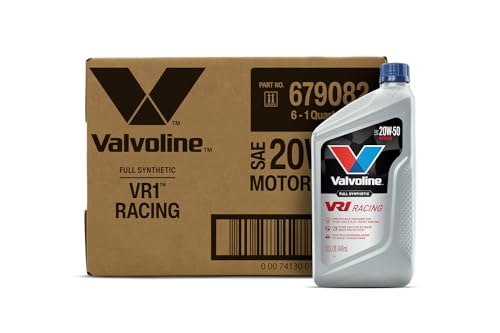
Valvoline VR1 Racing Synthetic 20W-50 Motor Oil
What We Like
- Full synthetic formula for high-performance engines
- 2X more zinc for extreme wear protection
- Special friction modifiers reduce heat at high RPMs
- Enhanced anti-foam agents for high-speed safety
Trade-offs
- Racing-focused formulation not optimized for daily street driving
- 20W-50 viscosity too thick for most modern passenger cars
This full synthetic 20W-50 oil delivers 2X more zinc than standard oils, which provides extreme wear protection on critical engine components like pistons, cams, and bearings, important for high-performance engines that see high RPMs. The special friction modifiers help minimize friction and keep heat down, so you get maximum power and torque when pushing the engine hard. It’s also compatible with alcohol fuels, making it a strong option for engines running full or partial alcohol blends. Enhanced anti-foam agents safeguard parts at high speeds and in extreme conditions, which matters for track use or spirited driving.
Compared to the Castrol Classic XL 20W-50, which is a mineral oil aimed at pre-1980 classic cars and motorcycles, the Valvoline VR1 Racing Synthetic is a full synthetic formula. It is engineered specifically for modern and classic high-performance engines both on and off the track. If your classic car is a weekend cruiser that rarely sees high revs, the Castrol mineral oil might suit it better. But for a high-performance engine that gets pushed hard, this synthetic offers the film strength and thermal stability needed to keep critical parts safe.
Product photos
Lucas Oil SAE 30 Racing Engine Break-in Oil

What We Like
- Designed for quicker ring seal
- Recommended for flat tappet and roller cam break-in
- Works with ethanol, methanol, and race gas
- Track-ready before switching to racing oil
Trade-offs
- Single-purpose break-in oil, not for regular driving
- Not suitable for engines requiring multi-viscosity oil.
Quicker, more efficient ring seal is the main reason to pick this oil for a fresh engine build, and that’s exactly what Lucas formulated it to deliver. It’s recommended for initial break-in on both flat tappet and roller camshaft applications, so it covers a wide range of builds during those critical first minutes. The oil is compatible with ethanol, methanol, and high-octane race gas, which means it works with the fuel blends common in race cars and hot rods. For anyone firing up a freshly rebuilt engine, this is the oil to put in the pan.
This is a single-purpose product. SAE 30 is a straight-weight oil, so once break-in is done, you’ll drain it and switch to a conventional or synthetic racing oil. Lucas even says to swap to their racing-only line afterward. Compared to other oils that might be used for regular driving, this Lucas oil is strictly for the break-in phase. It’s not a daily driver oil, but for that first critical startup, it does exactly what it’s supposed to.
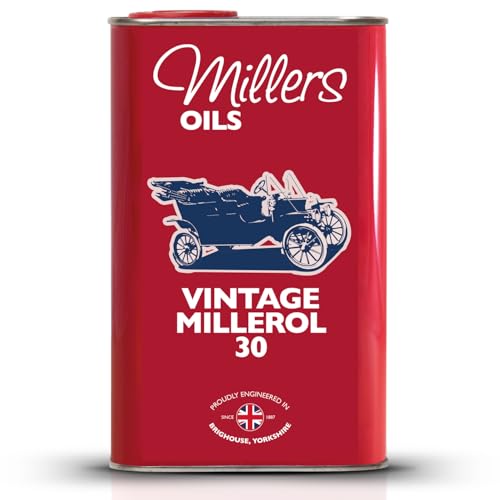
Millers Oils Vintage Millerol 30 Non-detergent Motor Oil
What We Like
- Non-detergent formula for pre-war engines
- API SB rating matches early engine specs
- Works in gearboxes requiring GL1 oil
- Straight 30 weight for simple systems
Trade-offs
- No detergents means no sludge cleaning
- Monograde 30 not for modern multi-season use
- Unfiltered engines only, clogs modern filters
The non-detergent, API SB formulation is the single most decisive feature here, because this oil is designed for unfiltered pre-war applications where a simple mineral oil that won’t disturb existing deposits is essential. This makes Millers Vintage Millerol 30 the right choice for owners of pre-war cars that need a straight 30-weight with zero dispersant additives. It also works in gearboxes specifying GL1 oil, so you can use it in the transmission of many vintage vehicles without buying a separate product.
Compared to Castrol Classic XL 20w50, which offers multigrade protection for pre-1980 cars, the Millerol 30 is much more limited in temperature range but historically accurate for the earliest classics. If your car has a filter or was built after the pre-war era, you’ll want a modern classic oil instead.
Product photos
How We Evaluated Oils For Classic Cars
Our evaluation is research-based, drawing on manufacturer technical data sheets, expert recommendations from respected automotive publications, and the collective experience of classic car owners on forums and in clubs. We focused on the technical specifications that matter most for vintage engines, not marketing claims.
The three criteria that mattered most were zinc and phosphorus levels (ZDDP) for flat-tappet cam protection, viscosity grade matching the engine’s original design, and compatibility with specific fuel types (ethanol, methanol, race gas). For older engines, we also considered whether the oil was detergent or non-detergent, as pre-war engines with no oil filters require a different approach.
This is a research-led evaluation, not a hands-on test. We cannot tell you how an oil performs over thousands of miles in your specific engine. What we can do is give you the facts to make an informed decision based on your car’s era, condition, and how you drive it.
What To Look For In Oils For Classic Cars
Choosing the right oil for a classic car starts with understanding your engine’s era, its current condition, and how you plan to drive it. The wrong oil can cause rapid wear or poor performance.
Look for a high-zinc (ZDDP) formulation for flat-tappet engines, match the viscosity to your owner’s manual, and decide between conventional and synthetic based on your driving habits and engine condition.
Zinc And Phosphorus (ZDDP) Levels
Classic engines with flat-tappet camshafts rely on zinc dialkyldithiophosphate (ZDDP) to prevent metal-on-metal contact between the cam lobes and lifters. Modern API SN and SP oils have reduced ZDDP to protect catalytic converters, which is why they are dangerous for older engines. Look for oils with high zinc levels, with racing oils often offering double that for extreme protection.
Viscosity Grade
The correct viscosity depends on your engine’s original design and your climate. Pre-war engines often used straight-weight oils like SAE 30, while post-war V8s typically called for 20W-50 or 10W-30. Multi-viscosity oils (like 20W-50) offer better cold-start protection and are suitable for most classics used in varied weather. Always start with the recommendation in your owner’s manual.
Conventional Vs. Synthetic
Conventional mineral oils are period-correct for pre-1980 engines and often have the right additive packages. Full synthetics offer superior thermal stability and resistance to breakdown, making them ideal for high-performance or frequently driven modern classics. However, some older seals and gaskets may leak with synthetics, so consider your engine’s condition before switching.
- Check your owner’s manual for the original viscosity and API service classification.
- Confirm the oil has sufficient ZDDP for a flat-tappet camshaft if your engine has one.
- Consider a non-detergent oil only for pre-war engines without oil filters.
- Choose a racing oil if you track your car or run high RPMs for extended periods.
When in doubt, a high-zinc 20W-50 conventional oil is a safe starting point for most post-war classic American engines.
Oils For Classic Cars Compared
The table below compares each oil’s key features, including viscosity, formulation type, and best use case, to help you match the right oil to your classic car.
| Product | Viscosity | Zinc Level | Container |
|---|---|---|---|
| Castrol Classic XL 20w50 Motor Oil | SAE 20W-50 | High zinc formulation | Vintage collectible tin |
| Valvoline VR1 Racing SAE 30 Motor Oil | SAE 30 | 2X more zinc | 1 QT, Case of 6 |
| Lucas Oil Hot Rod & Classic Car 10W-30 Motor Oil | 10W-30 | Zinc, molybdenum, phosphorus | 5 qt |
| Castrol GTX Classic 20W-50 Conventional Motor Oil | 20W-50 | High | 5 Quarts |
| Mobil 1 Classic Car Advanced Full Synthetic Motor Oil | 10W-30 | 1300 ppm | 6-pack of 1 quarts |
| Valvoline VR1 Racing Synthetic 20W-50 Motor Oil | 20W-50 | 2X more zinc | 1 QT, case of 6 |
| Lucas Oil SAE 30 Racing Engine Break-in Oil | SAE 30 | N/A | 5 qt |
| Millers Oils Vintage Millerol 30 Non-detergent Motor Oil | SAE 30 monograde | N/A | 1 liter |
Frequently Asked Questions
Can I use modern synthetic oil in my classic car?
Yes, if your engine’s seals are in good condition and the synthetic oil has sufficient ZDDP. Oils like Mobil 1 Classic Car Advanced Full Synthetic are formulated specifically for pre-modern engines. Avoid synthetics in high-mileage engines with known leaks.
What happens if I use modern low-zinc oil in a classic engine?
Modern low-zinc oil can cause rapid wear on flat-tappet camshafts and lifters, potentially leading to cam failure within a few thousand miles. The reduced ZDDP levels are insufficient to protect the high-pressure contact points in older engines.
Is 20W-50 oil always the right choice for a classic car?
No. While 20W-50 is common for many post-war V8s, some engines require 10W-30 or straight-weight oils like SAE 30. Always consult your owner’s manual. Using too thick an oil can cause poor cold-start lubrication and reduced oil flow.
What is the difference between detergent and non-detergent oil?
Detergent oils contain additives that suspend contaminants so they can be removed by the oil filter. Non-detergent oils lack these additives and are only suitable for pre-war engines without oil filters, where sludge would otherwise clog the system.
How often should I change the oil in a classic car?
For conventional oil, change it every three thousand miles or annually, whichever comes first. Synthetic oils can extend intervals, but the age of the engine and fuel dilution should be considered. Short trips and storage require more frequent changes.
The Bottom Line
The Castrol Classic XL 20w50 Motor Oil is the best overall choice for most pre-1980 classic car owners. Its high-zinc formulation provides the wear protection older engines need, and it works with motorcycle wet clutches if you have a classic bike too. It is a reliable, period-appropriate mineral oil.
If you push your engine hard on the track, the Valvoline VR1 Racing SAE 30 offers double the zinc for extreme protection. For a worn engine that burns oil or has low oil pressure, the Lucas Oil Hot Rod & Classic Car 10W-30 is formulated to improve pressure and reduce consumption.
The single most important factor is matching the oil to your engine’s era and condition. Start with your owner’s manual, then choose an oil with the right ZDDP level for your camshaft type.
