
10 Best Open Face Motorcycle Helmets in 2026
This post contains affiliate links. As an Amazon Associate, we earn from qualifying purchases.
For riders who want the wind-in-your-face feel without full-face confinement, the Shoei J-Cruise 3 Open Face Helmet takes the top spot with its wind-tunnel-tested aerodynamics, dual safety certifications, and integrated sun visor. The Best Dual Visor Retro award goes to the BEON Half 3/4 for city cruisers, while the HJC i31 Solid is our pick for budget-minded buyers.
The challenge with open-face helmets is balancing protection, comfort, and features like sun shields or communication readiness without adding too much weight. A helmet that works for a quick commute might feel heavy after a full day in the saddle.
We built this guide by analyzing manufacturer specifications, safety certifications, and patterns in rider feedback across dozens of models. Our goal is to match you with the helmet that fits your riding style and priorities.
Top 10 Open Face Motorcycle Helmets in the Market
Certain content that appears on this site comes from Amazon. This content is provided "as is" and is subject to change or removal at any time.
The Best Open Face Motorcycle Helmets, Reviewed
Shoei J-Cruise 3 Open Face Helmet

What We Like
- Wind-tunnel-tested aerodynamic shell reduces lift
- Meets both DOT and ECE 22.06 safety standards
- Integrated sun visor for versatile light control
- Optional SENA SRL 3 communication system compatibility
Trade-offs
- Heavier than some open-face helmets at 3.1 pounds
- Communication system sold separately, not included
Meeting both DOT FMVSS 218 and the tougher ECE 22.06 safety standards means this helmet offers certified protection for riders who log serious miles. The wind-tunnel-tested AIM+ shell cuts down on wind noise and lift, so you stay stable and comfortable on commutes or long tours. That aerodynamic focus, paired with the CJ-2 face shield and built-in QSV-2 sun visor, makes it a natural fit for anyone who values all-day riding ease without constant squinting or fumbling with separate sunglasses.
The trade-off for that refined shell and integrated visor is weight: at 3.1 pounds, it’s heavier than the retro-style BEON Half 3/4, which weighs 2.6 pounds. Riders who prioritize a barely-there feel for short trips may notice the difference. But for touring-focused riders who want communication-ready capability, reduced wind noise, and top-tier safety certifications in one package, the extra ounces are a fair exchange for the features packed into this lid.
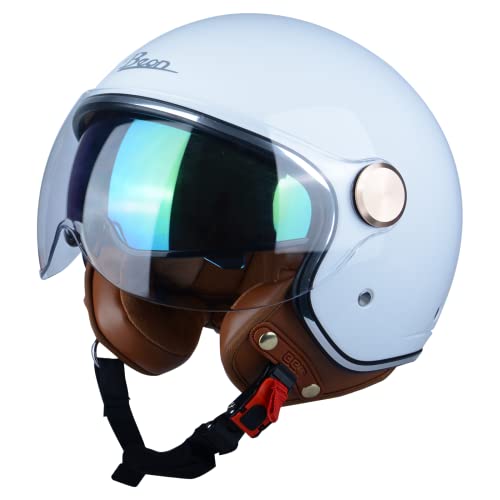
BEON Half 3/4 Open Face Helmet
What We Like
- Dual visors: clear outer plus retractable inner sun visor
- Quick-release buckle operates with one gloved hand
- Removable and washable inner liner
- Extra long visor included for high-speed face protection
Trade-offs
- Open face design offers less chin and jaw protection than full-face helmets
- At 2.6 pounds, lighter than some retro models but not the lightest available
A retractable inner sun visor built into a retro 3/4 shell means you don’t have to swap shields or carry sunglasses every time the sun ducks behind a cloud. The BEON Half meets both DOT FMVSS 218 and ECE 22.05 standards, and the quick-release buckle can be released with one gloved hand, a real plus when you’re gearing up. It comes with a clear anti-scratch outer visor and a retractable anti-UV inner sun visor. This helmet is designed for adults riding motorcycles, cruisers, choppers, scooters, cafe racers, and street bikes, for daily commute, touring, or city cruise.
The trade-off comes in the open-face format itself: you get great airflow and a classic profile, but your chin and jaw are exposed compared to a full-face helmet. For riders who prioritize the convenience of a built-in sun visor and a lightweight shell that still carries dual certifications, the BEON Half delivers that retro style with genuinely useful features. The included extra long visor adds face protection for high-speed riding.
HJC i31 Solid Open Face Helmet

What We Like
- DOT-approved for safety standards
- Removable and washable crown and cheek pads
- Glasses grooves for eyewear comfort
- 99% UV protection with anti-scratch coating
Trade-offs
- Weighs 3.4 lb, heavier than the Shoei J-Cruise 3 at 3.1 lb
- Dark smoke sun shield limits night use without a separate clear visor.
A DOT-approved shell made from an advanced polycarbonate compound gives this helmet a strong, impact-resistant build without the weight of a full-face design. The Pinlock-ready visor blocks 99% of UV rays and resists scratches, while the advanced channeling ventilation system pushes heat and humidity out the back, keeping you comfortable on longer rides. Riders who wear glasses will appreciate the built-in eyewear grooves, and the removable, washable liner makes maintenance simple. This is a practical, safety-minded choice for anyone looking to keep costs down without cutting corners on protection.
The HJC i31 meets DOT FMVSS 218 standards, so it has passed rigorous testing for impact absorption and chin strap security. At 3.4 pounds, it weighs more than the Shoei J-Cruise 3 (3.1 pounds), which some riders notice on longer trips. The included dark smoke sun shield handles bright sun well, but for low-light conditions you would need to buy a separate clear visor.
LS2 Copter Open Face Helmet

What We Like
- Flip up quick change shield
- Drop down sun shield
- Removable washable moisture-wicking padding
- Lightweight open design
Trade-offs
- At 3.9 lb, heavier than several competitors
- Open design offers less face protection than full-face helmets
The LS2 Copter’s flip-up quick change shield is the standout feature here. Instead of fumbling with screws or tools, you can swap the main visor in seconds, which is a real time-saver when you ride through changing light conditions. The built-in drop down sun shield adds another layer of convenience, letting you block glare without swapping visors mid-ride. Combined with removable, washable padding that wicks moisture, this helmet is built for riders who value practicality and comfort on everyday trips.
The trade-off is weight. At 3.9 pounds, the LS2 Copter is noticeably heavier than the Shoei J-Cruise 3, which comes in at 3.1 pounds. That extra heft might be felt on longer rides, especially if you’re used to a lighter lid. But if you prioritize easy shield changes and integrated sun protection over shaving ounces, the Copter delivers a thoughtful design that keeps you focused on the road, not the gear.
LEM Retro 3/4 Open Face Helmet
What We Like
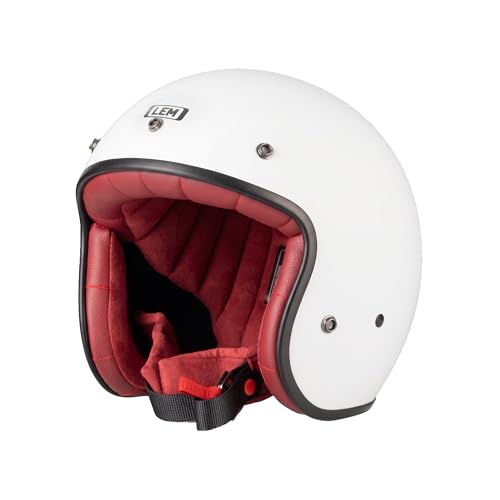
- Lightweight fiberglass shell at 1083g
- Removable, machine-washable 3D liner
- DOT safety certified
- Double D-ring quick-adjust buckle
Trade-offs
- Open face leaves chin and jaw exposed
- No integrated visor or shield included
- Retro hood extension adds wind resistance
Weighing only 1083 grams, the fiberglass construction reduces neck fatigue compared to standard helmets, according to the manufacturer, making it a good match for long tours or daily commutes. The DOT certification confirms it meets FMVSS 218 impact standards, so you get safety without giving up the retro look. Owners report that the lighter weight helps them stay comfortable on extended rides.
The open-face design leaves the chin and lower face exposed to wind and debris, unlike a full-face or modular helmet. The Shoei J-Cruise 3 weighs about 3.1 pounds and includes a built-in sun visor, while the LEM Retro is lighter but relies on a removable hood extension for wind and sun protection. That hood extension adds a vintage look but may not offer the same coverage as an integrated shield. This helmet suits riders who prioritize a lightweight, classic style over all-weather protection.
HJC i20 Solid Open Face Helmet
What We Like
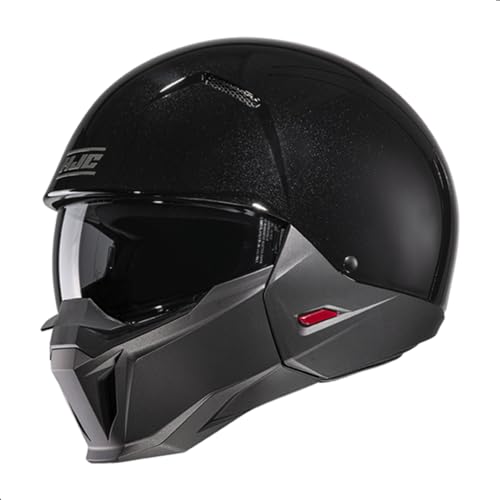
- Integrated anti-fog sun shield deploys quickly
- DOT FMVSS 218 certified for safety
- Removable, washable liner for easy care
- Glasses grooves reduce pressure on eyewear
Trade-offs
- Bluetooth system sold separately
- Heavier than the Shoei J-Cruise 3 at 3.5 pounds.
The HJC i20 includes a built-in HJ-V10 sun shield that deploys quickly and is anti-fog coated, so you don’t have to swap visors or carry a separate tinted shield when the sun dips behind a cloud. At 3.5 pounds, it’s a mid-weight open-face helmet with a polycarbonate composite shell that meets DOT FMVSS 218 standards for impact protection. Riders who wear glasses will appreciate the dedicated eyewear grooves, and the double D-ring closure keeps things secure and simple. This is a helmet built for riders who want one do-it-all lid for commuting and day trips, with the sun shield as the standout feature.
Product photos
Bell Mag-9 Open Face Helmet

What We Like
- Integrated communication port for Bluetooth headsets
- Tool-free shield changes for quick adjustments
- Three EPS sizes for personalized fit
- Velocity Flow ventilation system with adjustability
Trade-offs
- Designed specifically for Bell and Senna Bluetooth systems
- No built-in sun visor
An integrated communication port and convenient speaker pockets make this helmet ready for Bluetooth headsets without awkward aftermarket drilling or adhesive pads. That built-in compatibility with Senna and Cardo systems means you can pair with your riding group or take calls without sacrificing fit or comfort. The lightweight Polycarbonate/ABS shell and three EPS sizes help it sit securely on different head shapes, while the Velocity Flow ventilation system with Flow Adjust lets you dial in airflow on warmer days. It also offers multiple configuration options, with or without the shield and visor, so you can tailor the look and protection to your ride.
The listed weight of 0.0 Pounds is the only figure provided, so you will need to handle the helmet in person to judge its heft. Compared to the similarly open-face Shoei J-Cruise 3, which lists a real weight of 3.1 pounds, the Bell Mag-9’s specs leave a question mark about how it will feel on longer trips. Still, if Bluetooth integration is your priority and you are willing to verify the weight before buying, this helmet offers a purpose-built solution that few competitors match straight out of the box.
Product photos
Shoei RJ Platinum-R Open Face Helmet

What We Like
- Lightweight AIM shell reduces drag
- Multiple vents keep airflow steady
- Removable, washable interior for freshness
- Noise-reducing design for quieter rides
Trade-offs
- Open face leaves chin and jaw exposed
- 2.9 pounds is heavier than some 3/4 helmets
The Shoei RJ Platinum-R weighs just 2.9 pounds, which means less strain on your neck during long rides compared to many open-face helmets. Its Advanced Integrated Matrix shell cuts wind drag and lift, so you stay stable at highway speeds, and the multiple air intakes and exhausts pull fresh air through to keep you cool. The plush, fully removable interior makes cleaning easy, and the noise-reduction features let you hear the road without the constant roar of wind, making it a strong fit for riders who prioritize comfort on all-day trips.
An open-face design leaves your chin and jaw exposed, so this helmet isn’t suited for off-road or high-risk riding. Weighing 2.9 pounds, it’s slightly heavier than the BEON Half 3/4 at 2.6 pounds, but the Advanced Integrated Matrix (AIM) shell keeps it lightweight and strong while reducing drag. The ventilation system uses multiple air intakes and exhausts to keep airflow moving, and the noise reduction features help minimize wind noise for a quieter ride.
ILM 3/4 Open Face Helmet Model 726X
What We Like
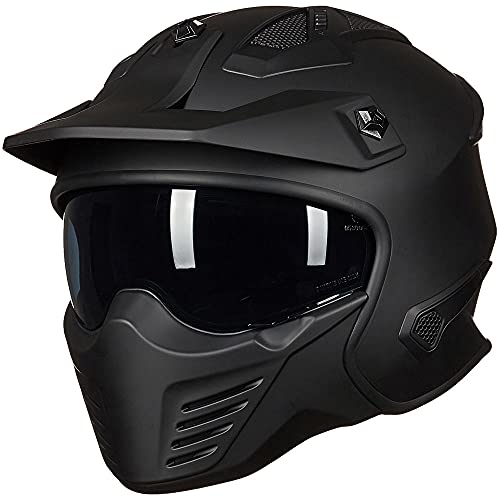
- Detachable lens, sun shield, and chin guard
- Quick release buckle for easy on/off
- Multiple vents for airflow
- DOT certified for safety
Trade-offs
- At 4.2 lb, heavier than many open face helmets
- No integrated face shield; relies on detachable parts
The detachable lens, sun shield, and chin guard let you switch between full-coverage and open-air riding without buying a second helmet. At 4.2 pounds, it’s heavier than the Shoei J-Cruise 3 (3.1 lb), so riders who prioritize lightweight comfort may prefer that model. But for those who want one helmet that can adapt to different conditions by swapping those pieces, the ILM 726X offers that flexibility.
Weighing 4.2 pounds, this helmet is heavier than several open-face options on the market. The Shoei J-Cruise 3, for example, comes in at 3.1 pounds, and the BEON Half weighs only 2.6 pounds. That extra mass can become noticeable during long rides or when you’re turning your head frequently to check traffic. Riders who prioritize lightweight comfort above all else may find the Shoei a better fit for all-day wear. The trade-off is that the added heft here comes with features like a detachable sun shield and chin guard, plus a ventilation system with multiple vents to keep air moving. It’s a matter of deciding whether those extras are worth the extra ounces.
Product photos
Bell Custom 500 Open-Face Helmet

What We Like
- Low-profile fiberglass composite shell
- Multi-density EPS liner for impact protection
- 5 shell sizes for a tailored fit
- Integrated 5-snap pattern for shields
Trade-offs
- No built-in visor or face shield included
- Snap-on shield is an extra purchase
A low-profile fiberglass composite shell is the standout feature here, giving you the lightweight strength of fiberglass without the bulky look that some classic helmets carry. This makes the Bell Custom 500 a natural fit for riders who want vintage style with modern materials and DOT-approved protection. The multi-density EPS liner adds another layer of energy management, while five different shell and EPS liner sizes help the helmet sit close to your head instead of looking oversized.
The trade-off is that you get no built-in visor or face shield, so you’ll need to add a snap-on shield or wear goggles for wind and debris protection. At 3.0 pounds, it’s comparable to many open-face helmets in its class. If you prioritize a classic fiberglass build and don’t mind accessorizing for coverage, this helmet delivers on its retro promise.
Product photos
How We Evaluated Open Face Motorcycle Helmets
Our evaluation combines manufacturer-published specifications, safety certification data (DOT and ECE standards), and recurring themes from rider discussions and expert round-ups. We focused on the features that matter most for real-world riding, not marketing claims.
Three criteria drove our rankings. Safety certifications came first: every helmet we considered meets DOT standards, and those with ECE 22.06 certification earned extra consideration. Weight and aerodynamics followed, since a heavy or poorly shaped shell causes neck fatigue on longer rides. Finally, we weighed convenience features like integrated sun visors, communication system compatibility, and ease of visor changes.
This is a research-led evaluation, not a product test. We do not have lab equipment or a wind tunnel. Our recommendations reflect what the specifications and owner experiences consistently point to.
What To Look For In Open Face Motorcycle Helmets
Choosing the right open-face helmet means understanding how safety, weight, and features affect your daily ride. Here are the key factors to consider.
Look for DOT and ideally ECE 22.06 certification, keep weight under 3.5 pounds for comfort, and decide whether you need an integrated sun visor or Bluetooth readiness before you buy.
Safety Certifications
Every helmet sold in the US must meet DOT FMVSS 218 standards, but not all certifications are equal. ECE 22.06 is a newer, more demanding international standard that tests impact absorption at higher speeds and from multiple angles. Helmets with both certifications, like the Shoei J-Cruise 3, offer broader protection assurance.
Weight and Aerodynamics
Open-face helmets typically weigh between 2.5 and 4.2 pounds. Lighter shells reduce neck strain on long rides, especially at highway speeds where wind lift becomes a factor. A wind-tunnel-tested shape, as seen on the Shoei J-Cruise 3, helps prevent the helmet from lifting or buffeting at speed.
Visor and Sun Shield Systems
Integrated sun visors eliminate the need to carry a separate tinted shield or swap visors mid-ride. Some helmets use a drop-down mechanism, while others rely on detachable shields or snap-on patterns. Consider how often you ride in changing light and whether quick visor changes matter to you.
- Confirm the helmet’s weight before buying if you plan long days on the road.
- Check whether your sunglasses or prescription glasses fit comfortably with the helmet on.
- Verify that any communication system you plan to use is compatible with the helmet’s port or mounting design.
- Look for removable, washable liners to keep the helmet fresh over time.
A helmet that fits snugly without pressure points will always outperform one with better specs that doesn’t fit your head shape.
Open Face Motorcycle Helmets Compared
The table below compares the key specs and features of our top picks side by side so you can see the differences at a glance.
| Product | Weight | Safety Certifications | Shell Material |
|---|---|---|---|
| Shoei J-Cruise 3 Open Face Helmet | 3.1 pounds | DOT FMVSS 218, ECE 22.06 | AIM+ (Advanced Integrated Matrix Plus) |
| BEON Half 3/4 Open Face Helmet | 2.6 Pounds | DOT FMVSS 218 & ECE 22.05 | Advanced Thermoplastic |
| HJC i31 Solid Open Face Helmet | 3.4 Pounds | DOT FMVSS 218 | Advanced Polycarbonate Compound |
| LS2 Copter Open Face Helmet | 3.9 Pounds | DOT approved | N/A |
| LEM Retro 3/4 Open Face Helmet | 1083 grams | DOT FMVSS 218 | Fiberglass |
| HJC i20 Solid Open Face Helmet | 3.5 pounds | DOT FMVSS 218 | Polycarbonate composite |
| Bell Mag-9 Open Face Helmet | N/A | DOT approved | Polycarbonate/ABS |
| Shoei RJ Platinum-R Open Face Helmet | 2.9 pounds | DOT / FMVSS 218 | AIM (Advanced Integrated Matrix) |
| ILM 3/4 Open Face Helmet Model 726X | 4.2 pounds | DOT / FMVSS-218 | N/A |
| Bell Custom 500 Open-Face Helmet | 3.0 pounds | DOT approved | Fiberglass composite |
Frequently Asked Questions
How should an open face helmet fit?
An open face helmet should fit snugly all around your head without any painful pressure points. It should not move when you shake your head, and there should be no gaps between the padding and your cheeks or forehead. The helmet should sit level on your head, not tilted back or forward.
What is the difference between DOT and ECE certification?
DOT certification is the minimum safety standard required for helmets sold in the United States. ECE 22.06 is a more rigorous international standard that tests impact absorption at higher speeds and from more angles. Helmets with both certifications offer a higher level of verified protection.
Can I wear glasses with an open face helmet?
Yes, many open face helmets include glasses grooves in the padding to reduce pressure on eyewear. The HJC i31 and HJC i20 both feature dedicated glasses grooves. Try the helmet on with your glasses or sunglasses before buying to ensure a comfortable fit.
Are open face helmets safe?
Open face helmets provide less protection to the chin and jaw than full-face or modular helmets, but they meet the same DOT safety standards for impact absorption. They are a valid choice for riders who accept the trade-off in exchange for better visibility, airflow, and the open riding experience.
Do I need a sun visor in an open face helmet?
A built-in sun visor is very convenient for riders who encounter changing light conditions on their route. It eliminates the need to carry a separate tinted shield or stop to swap visors. If you ride mostly at night or in consistently overcast conditions, a clear shield may be sufficient.
The Bottom Line
The Shoei J-Cruise 3 Open Face Helmet is our best overall pick for riders who want a touring-ready helmet with advanced aerodynamics, dual safety certifications, and the convenience of an integrated sun visor. It’s built for long days on the road where wind lift and neck fatigue are real concerns.
If your budget is tighter, the HJC i31 Solid offers DOT-approved protection with glasses grooves and UV coating at a more accessible price point. Riders who want retro styling with modern features should look at the BEON Half 3/4 for its dual visor system and quick-release buckle.
The single most important factor in any helmet purchase is fit. No feature or certification matters if the helmet doesn’t fit your head shape comfortably and securely.
