
10 Best Primers For Car Paint in 2026
This post contains affiliate links. As an Amazon Associate, we earn from qualifying purchases.
For a paint job that lasts, the right primer is non-negotiable. The Rust-Oleum Self Etching Primer Spray is our best overall pick because it etches and primes bare metal in one step, dries fast, and fights rust. For professional-grade corrosion protection, look to the SprayMax 2K Epoxy Primer Gray, while the Rust-Oleum Stops Rust Filler Primer is a solid budget choice for small repairs.
The challenge is that car paint primers are not one-size-fits-all. A primer that bonds perfectly to bare steel may not stick to a flexible bumper cover or a carbon fiber hood. Choosing the wrong one can lead to peeling, rust, or hours of wasted sanding.
This guide is research-based, drawing on manufacturer specifications, expert round-ups, and patterns in owner feedback to help you match the right primer to your specific surface and project. We break down the key differences between etching, epoxy, high-build, and flexible primers so you can buy with confidence.
Top 10 Primers For Car Paint in the Market
Certain content that appears on this site comes from Amazon. This content is provided "as is" and is subject to change or removal at any time.
The Best Primers For Car Paint, Reviewed
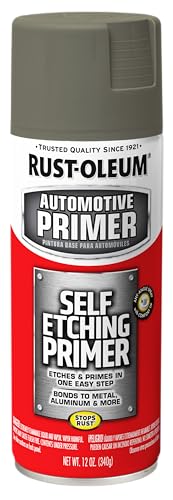
Rust-Oleum Self Etching Primer Spray
What We Like
- Etches and primes bare metal in one step
- Rust-preventing formula for long-term protection
- Dries to touch in 10 minutes
- Sprays at any angle, even upside down
Trade-offs
- Oil-based formula requires solvent cleanup
A 10-minute dry time and 30-minute recoat window mean you can move from primer to paint in under an hour, which keeps a weekend project from dragging into next week. This self-etching formula bonds directly to bare metal, aluminum, and fiberglass while its Stops Rust chemistry fights corrosion from the start. For someone tackling a patch panel or a full respray on a daily driver, that combination of speed and adhesion makes it a natural first choice.
For most DIY bodywork, the convenience and rust protection here win the day. This oil-based spray uses a Stops Rust formula to prevent corrosion on bare metal, aluminum, and fiberglass. The self-etching action etches and primes in a single step, saving time compared to separate products. Coverage reaches up to 12 square feet, and the paint dries to the touch in 10 minutes, ready for a topcoat in 30. The flat finish promotes smoothness for the final coat, while any-angle spray technology lets you apply it upside down, handy for tight spots under a fender.
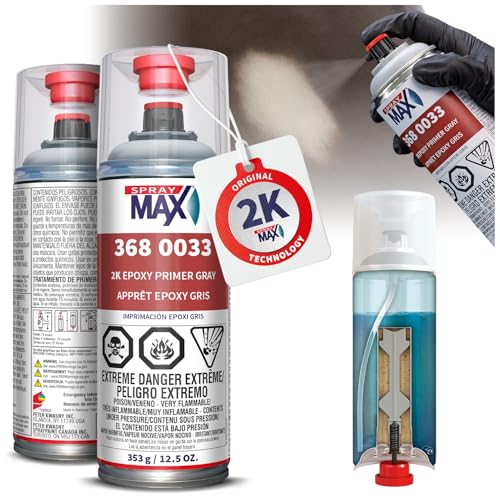
SprayMax 2K Epoxy Primer Gray
What We Like
- Superior corrosion protection on metal
- Fast-drying and sandable within hours
- Variable nozzle for precise spray control
Trade-offs
- Requires activation before use, cannot store once mixed
- Heavier than some aerosol primers at 0.9 pounds
- Limited to metal, aluminum, and steel surfaces
A 15-minute dust-dry time means you can move through a paint job without waiting around, which is exactly what you want when you’re layering primer and topcoat in a single day. This 2K epoxy system provides corrosion resistance and adhesion on bare steel, aluminum, and galvanized surfaces, making it a suitable choice for anyone restoring a car body or prepping a motorcycle frame. The professional-grade bonding strength and smooth surface sealing give subsequent paint layers a reliable foundation, as stated in the product description.
The trade-off is that this is a two-part system that requires activation before use, and once activated, the remaining primer cannot be stored. That makes it less convenient than a single-stage aerosol if you only need a quick touch-up or have multiple small jobs spread out over weeks. But for a full panel or a restoration project where you want maximum durability from the start, the SprayMax delivers a finish that meets professional standards.
SEM Flexible Primer Surfacer

What We Like
- Flexible formulation for flexible substrates
- Quick drying saves time
- Easy to sand for smooth finish
- Ready to spray from can
Trade-offs
- Not formulated for rigid metal panels
- 13 oz can covers less area than larger primer kits
A flexible formulation is the single most important feature here, because it lets the primer move with bumpers, trim, and other plastic or rubber parts instead of cracking when they flex. That makes SEM Flexible Primer Surfacer the right choice when you’re refinishing flexible substrates like urethane bumper covers or flexible body panels. It’s ready to spray right out of the can, dries fast so you can keep moving, and sands easily to prep for your topcoat. If your project involves parts that bend or twist, this primer is built for that job.
The flexible formulation is the single most important feature here, because it lets the primer move with flexible substrates instead of cracking when they flex. That makes SEM Flexible Primer Surfacer the right choice when you’re refinishing parts that bend or twist. It’s ready to spray right out of the can, dries fast so you can keep moving, and sands easily to prep for your topcoat. If your project involves flexible substrates, this primer is built for that job.
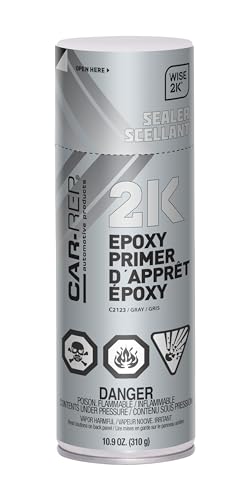
CAR-REP 2K Epoxy Primer
What We Like
- No mixing, unlimited potlife
- Anti-corrosion pigments for humidity resistance
- Wet-on-wet topcoat application
Trade-offs
- Requires ambient humidity to cure properly
- 11 oz can covers less area than larger kits
- Not a high-build filler primer for deep imperfections
The humidity-activated crosslink technology in this 11-ounce aerosol means you get true 2K epoxy performance without mixing or measuring. The anti-corrosion pigments add chemical and moisture resistance, so it works as a solid foundation for both interior and exterior parts.
A smaller 11-ounce aerosol can means this primer covers less area per can than some competitors, so multiple cans are needed for a full car body. The curing process depends on ambient humidity rather than a separate hardener; moisture in the air triggers the crosslink reaction that forms the epoxy surface. This eliminates the need to mix or activate anything before spraying, and the can has an unlimited potlife once opened. Reviewers note that in very dry climates, cure times may extend compared to using a traditional two-part system.
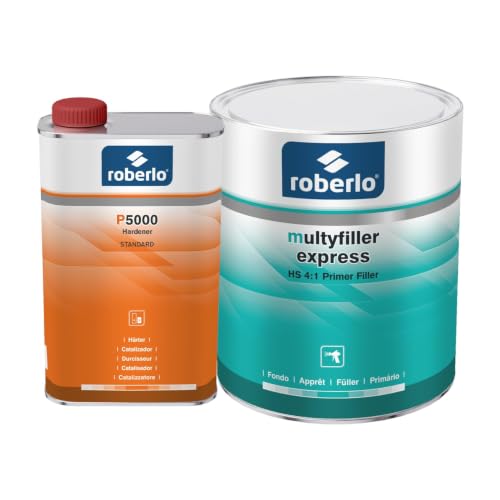
Roberlo Multyfiller Express Primer Filler
What We Like
- High-build formula fills scratches and imperfections
- Fast-drying to speed up repair cycles
- Excellent adhesion to steel and aluminum
- Easy sanding for a smooth surface
Trade-offs
- At 14.1 lb, heavy for small DIY jobs
- Requires hardener mixing before use
- Large kit size best for shop volume
A full 3.78 liters of primer plus a separate 946ml hardener means this kit is built for serious bodywork, not touch-up cans. The high-build formula fills sanding scratches and minor dings in one coat, while the fast-drying technology cuts wait time between steps. That combination makes it a natural fit for collision shops or anyone doing multiple panel repairs who wants to move through primer, sanding, and paint in a single day without rushing each layer.
At 14.1 pounds for the kit, this is a professional-grade primer that demands a dedicated workspace and a willingness to mix hardener before spraying. It’s not a grab-and-go rattle can; you’ll need a gun, a respirator, and some cleanup time. But the payoff is a high-build formula that fills sanding scratches and minor imperfections in one coat, cutting down on the number of passes you’d need with a thinner product. Body shop professionals report that the fast-drying technology helps them move through repairs faster, so the extra setup pays off when you’re doing multiple panels.
Rust-Oleum Stops Rust Filler Primer

What We Like
- Fills minor surface imperfections
- Dries to touch in 10 minutes
- Rust-preventive oil-based formula
- Sands smooth for topcoat adhesion
Trade-offs
- Only 10 sq ft coverage per can
- Flat finish needs sanding before topcoat
A 10-minute dry time means you can move from primer to sanding and then to paint in under an hour, which is a real time-saver when you’re working on a weekend project. This Rust-Oleum filler primer is built for the budget-conscious DIYer who wants to smooth out light scratches, sanding marks, or minor dings on metal, fiberglass, or even wood surfaces. The oil-based Stops Rust formula adds a layer of corrosion resistance, making it a practical choice for touch-ups on older cars or truck beds where rust is a concern. It’s a straightforward, no-fuss option that gets the job done without requiring special equipment or mixing.
Coverage is the main limitation here. At 10 square feet per can, you’ll need multiple cans for a full panel or larger repair, and the flat finish requires sanding before you apply your topcoat. Unlike a 2K epoxy primer that offers a more durable, corrosion-resistant base in one step, this one needs that extra sanding step. But if you’re patching a small area, prepping a replacement fender, or just want an affordable way to fill and seal before painting, this primer does exactly what it promises. It’s a practical choice for light surface prep on a budget.
Product photos
Dupli-Color Paint Shop Primer

What We Like
- No hardener or reducer needed
- Ready-to-spray right from can
- Dries to touch in 1 hour
- No re-coat window restrictions
Trade-offs
- Heavier than aerosol primers at 2.8 lb
- Not formulated for bare metal etching
A 32-ounce can that needs no hardener or reducer means you can start spraying as soon as you open the lid, no mixing ratios, no waiting, no leftover activator going bad. That’s the core appeal of this lacquer-based primer for anyone doing a DIY restoration or custom job at home. It dries to the touch in an hour and can be handled in three, so you can keep moving through your project without losing a whole weekend to drying time. For the home hobbyist who wants a straightforward, forgiving system that still delivers a finish you can buff smooth, this is a very practical way to go.
A lacquer primer like this one won’t offer the same level of corrosion resistance as a 2K epoxy primer that is specifically formulated for corrosion resistance on metal. If you’re painting a daily driver or a surface exposed to heavy road debris, the extra protection of a two-part system may be worth the extra mixing step. But for a garage project, a motorcycle tank, or a custom paint job where ease and speed matter more than ultimate toughness, this Dupli-Color system keeps things simple and gets you to color coats fast.
Product photos
Seymour PBE Self Etching Primer
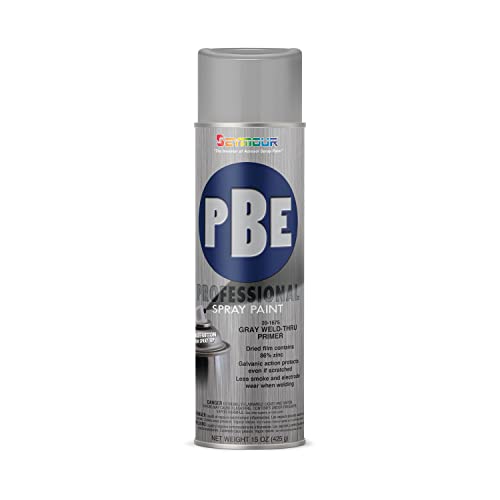
What We Like
- Etches bare metal and aluminum in one step
- Zinc-enhanced coating resists corrosion and rust
- Galvanic action protects even if scratched
- 86% pigment dry film reduces weld smoke
Trade-offs
- Not a high-build filler primer for deep imperfections
- Maximum heat tolerance is only 250°F
The zinc-enhanced formula creates a durable coating that chemically bites into bare steel and aluminum, so you skip the separate acid etch step. That electrochemical galvanic action keeps guarding against rust even if the coating gets nicked or chipped, which matters when you’re welding panels and know a scratch is almost inevitable. This primer handles temperatures up to 250°F, making it a fit for engine bays and exhaust-adjacent repairs where heat is a real concern. For anyone tackling bodywork that involves welding, the 86 percent pigment dry film produces less smoke and electrode wear, meaning cleaner prep and faster work at the weld joint.
That 250°F ceiling means it won’t stand up to direct exhaust manifold heat or brake rotor temperatures, so keep it away from those spots. Compared to a 2K epoxy primer, this Seymour is lighter on build and not meant to fill pitted or uneven surfaces. It is a thin, protective etch primer first and foremost, not a high-build surfacer. If your project is a patch panel or a full quarter replacement where weld-through protection and corrosion defense are the priority, this primer delivers exactly that without extra steps.
Product photos
Eastwood 2K Epoxy Gray Primer
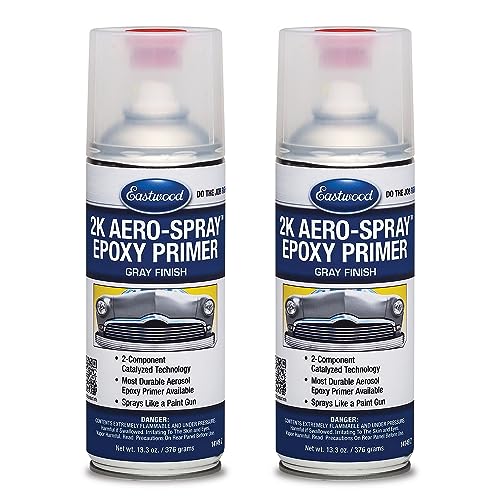
What We Like
- Direct-to-metal application prevents rust
- 48-hour pot life after activation
- 3-year shelf life unactivated
- Wide fan spray pattern from engineered nozzle
Trade-offs
- Requires NIOSH-approved respirator and ventilation
- Weighs 1.2 lb per can, heavier than some 2K epoxy primers
A 48-hour pot life after activation means you can mix this epoxy primer and keep spraying over two full days without rushing. That’s a rare advantage for a rattle-can product, especially when you’re tackling multiple panels or a whole project. The direct-to-metal formula grabs onto steel, aluminum, and fiberglass while sealing out moisture, so rust doesn’t get a foothold under your paint. It’s the right pick if you want professional-grade corrosion protection without buying an HVLP sprayer.
Product photos
Restoration Shop 2K High Build Primer Kit
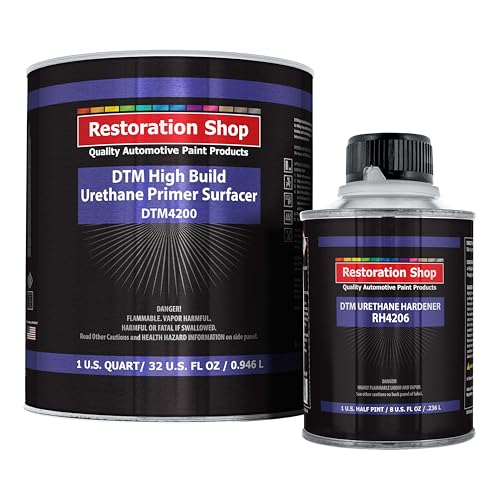
What We Like
- High solids fill medium to deep scratches
- Direct-to-metal adhesion on bare metal
- Fast drying, sands easily wet or dry
- No shrinkage under urethane finishes
Trade-offs
- Requires mixing hardener before use
- Requires a spray gun, not rattle-can ready
The 4:1 mix ratio with a full quart of primer and half-pint of hardener gives you 1.25 quarts of sprayable material. That’s enough to cover a whole panel or multiple smaller jobs without running short. The high solids content is the real story here: it fills medium to deep sand scratches in a single coat, saving you time on buildup and blocking. This kit is built for someone who wants professional-level filling and adhesion on bare metal, old paint, body filler, or even certain plastics, and is comfortable mixing a two-part urethane for the best results.
You have to mix it yourself, and the 4.0-pound weight makes it less convenient for quick spot repairs compared to an aerosol 2K epoxy primer. But if you’re working on a larger area or want the control of a spray gun, this kit’s filling power and direct-to-metal bonding are hard to beat. It’s a dedicated high-build primer, not a one-step etching primer, so plan your prep accordingly.
Product photos
How We Evaluated Primers For Car Paint
We evaluated these primers by analyzing their chemical formulations, application requirements, and intended surface compatibility as stated by manufacturers and documented in technical data sheets. We also reviewed patterns in owner feedback from experienced DIYers and body shop professionals to understand real-world performance, drying times, and sandability.
The four criteria that mattered most were adhesion mechanism (etching, epoxy, or filler), surface compatibility (bare metal, plastic, aluminum, or flexible substrates), ease of use (mixing required, pot life, cleanup method), and film-build capability. These factors determine whether a primer will actually solve the problem you are trying to fix.
An evaluation based on research has limits: we rely on documented specs and the collective experience of many users. A primer that works perfectly in a climate-controlled shop may behave differently in a humid garage, so consider your own working conditions.
What To Look For In Primers For Car Paint
Choosing the right primer starts with knowing what surface you are covering. The primer’s chemistry must match the substrate to ensure adhesion and prevent corrosion or cracking.
Pick your primer by the surface: etching for bare metal, epoxy for maximum corrosion resistance, flexible primer for bumpers and plastic, and high-build filler for hiding imperfections.
Adhesion Mechanism: Etching, Epoxy, or Flexible
Self-etching primers contain acid that chemically bonds to bare metal, making them ideal for steel, aluminum, and galvanized surfaces. They often include rust-inhibiting pigments. Two-part epoxy primers provide a tough, moisture-resistant barrier and are the gold standard for corrosion protection on metal, but they require mixing and have a limited pot life. Flexible primers are formulated with elastomeric resins that move with plastic or urethane substrates, preventing cracks when the part flexes.
Film Build and Sandability
High-build primers are designed to fill shallow scratches, sanding marks, and minor imperfections, reducing the amount of body filler needed. They are typically thicker and require sanding before the topcoat. Standard primers offer less fill but are easier to sand to a smooth, thin film. If your panel is straight and smooth, a thin-film primer is faster; if it has imperfections, a high-build formula saves labor.
Application Method and Setup
Aerosol primers are convenient for small jobs and require no equipment beyond the can. Two-part primers in larger kits need a spray gun, compressor, and proper mixing. Some 2K primers are available in aerosol cans with an internal activator, but once mixed, the entire can must be used within a set time. Consider your available tools, ventilation, and whether you are willing to clean a spray gun.
- Check the primer’s temperature and humidity requirements before you start.
- Verify that the primer is compatible with your topcoat (urethane, enamel, or lacquer).
- Look for a primer that dries fast enough for your workflow but allows adequate leveling.
- For bare metal, confirm the primer includes rust-inhibiting or anti-corrosion pigments.
- If welding, choose a zinc-rich self-etching primer that reduces weld smoke.
A general rule: if you are unsure about the surface, use a high-quality epoxy primer for metal and a flexible primer for plastic.
Primers For Car Paint Compared
The table below compares all ten primers across surface compatibility, application method, drying time, and key features so you can see the differences at a glance.
| Product | Type | Surface | Dry Time |
|---|---|---|---|
| Rust-Oleum Self Etching Primer Spray | Self Etching Primer | Bare metal, aluminum, fiberglass | 10 minutes to touch |
| SprayMax 2K Epoxy Primer Gray | 2K Epoxy Primer | Metal, Aluminum & Steel | Dust-dry in 15 minutes |
| SEM Flexible Primer Surfacer | Flexible | N/A | Quick drying |
| CAR-REP 2K Epoxy Primer | 2K Epoxy Primer | Metals, carbon fiber, plastics | Touch dry |
| Roberlo Multyfiller Express Primer Filler | High-build primer filler | Steel, aluminum, galvanized steel, OEM finishes, body fillers | Fast-drying |
| Rust-Oleum Stops Rust Filler Primer | Oil-based 2-in-1 | Wood, metal, fiberglass | 10 minutes to touch |
| Dupli-Color Paint Shop Primer | Lacquer-based primer | N/A | Dry to touch in 1 hour |
| Seymour PBE Self Etching Primer | Self-etching / weld-through | Bare metal and aluminum | N/A |
| Eastwood 2K Epoxy Gray Primer | 2K Epoxy Primer | Aluminum, steel, fiberglass, body panels | N/A |
| Restoration Shop 2K High Build Primer Kit | 2K urethane high-build primer | Direct-to-metal, over paint, filler, plastics | Fast drying |
Frequently Asked Questions
Can I use any primer on bare metal?
No. Bare metal requires a self-etching or epoxy primer that chemically bonds to the surface and prevents rust. Standard filler primers do not etch and will not adhere properly, leading to peeling and corrosion.
What is the difference between etching primer and epoxy primer?
Etching primer uses acid to bite into bare metal, creating a mechanical bond. Epoxy primer forms a tough, moisture-resistant chemical barrier and offers superior corrosion protection. Epoxy is often used as a sealer over etching primer for maximum durability.
Do I need to sand primer before painting?
Yes, in most cases. Primer should be sanded with fine-grit paper to remove any texture and create a smooth surface for the topcoat. High-build primers are specifically designed to be sanded flat after they dry.
How long should primer dry before painting?
Drying time varies by product. Many aerosol primers dry to touch in minutes, but full cure may take longer. Always follow the manufacturer’s recoat window: some primers require topcoat within a certain time, while others allow unlimited delay.
Can I use a flexible primer on metal?
No. Flexible primers are formulated for urethane, plastic, and composite substrates. They lack the etching agents and adhesion promoters needed for bare metal and will peel off rigid steel or aluminum panels.
The Bottom Line
For most DIYers, the Rust-Oleum Self Etching Primer Spray is the best place to start. It handles bare metal, dries fast, and includes rust protection without needing a separate etching step. If you are working on a full restoration or need maximum corrosion resistance, the SprayMax 2K Epoxy Primer Gray is worth the extra care in mixing and application.
Budget-conscious readers tackling small touch-ups or mixed surfaces like fiberglass and wood should grab the Rust-Oleum Stops Rust Filler Primer. For plastic bumpers or composite panels, the SEM Flexible Primer Surfacer is the right tool, not a metal primer. The single most important factor is matching the primer chemistry to your surface: get that right, and the rest is sanding and spraying.
