
10 Best Road Motorcycle Helmets in 2026
This post contains affiliate links. As an Amazon Associate, we earn from qualifying purchases.
For most road riders, the BELL Qualifier Full-Face Motorcycle Helmet is the best overall choice because it combines an anti-fog shield, Bluetooth speaker pockets, and strong ventilation at a price that delivers real value. Riders who want advanced safety features should look at the BELL Lithium MIPS, while those on a tight budget will appreciate the lightweight ILM Full Face Motorcycle Helmet Model ILM-313.
Choosing a road helmet means balancing protection, comfort, and features like integrated sun visors or modular convenience. Weight, ventilation, and shell material all affect how a helmet feels after a full day in the saddle.
This guide is based on manufacturer specifications, expert round-ups, and patterns in owner feedback. We focused on DOT certification, ventilation design, weight, and real-world features that matter for road riding.
Top 10 Road Motorcycle Helmets in the Market
Certain content that appears on this site comes from Amazon. This content is provided "as is" and is subject to change or removal at any time.
The Best Road Motorcycle Helmets, Reviewed
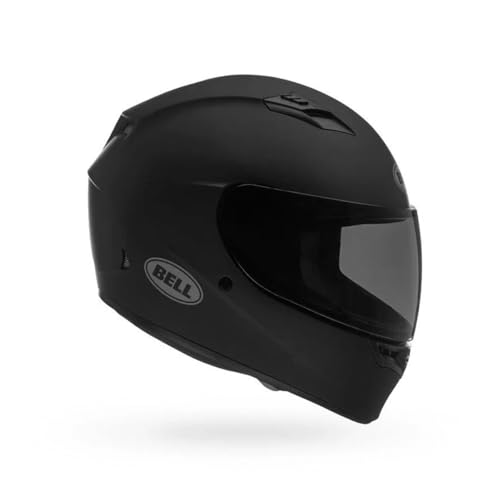
BELL Qualifier Full-Face Motorcycle Helmet
What We Like
- Anti-fog, anti-scratch NutraFog II shield
- Velocity Flow ventilation system
- Bluetooth speaker pockets included
- Removable, washable quick-drying liner
Trade-offs
- At 4.8 lb, heavier than several competitors
- No integrated sun visor or tinted shield included
The Qualifier’s NutraFog II shield resists fogging and scratching, while the Velocity Flow ventilation system moves air through the interior. For riders who want a full-face helmet that handles sweat and odor with a washable liner and leaves room for a Bluetooth headset via built-in speaker pockets, this is a well-rounded daily companion on the road.
The trade-off is weight: at 4.8 pounds, the Qualifier is heavier than the 3.6-pound Shoei RF-1400 listed in the same guide. It also lacks a drop-down sun visor, which the AGV K1 S does not offer either, but riders who want that convenience may need to look at modular options. If you prioritize value-packed features and DOT-certified protection over featherlight weight, this Bell delivers a strong set of features for its price.
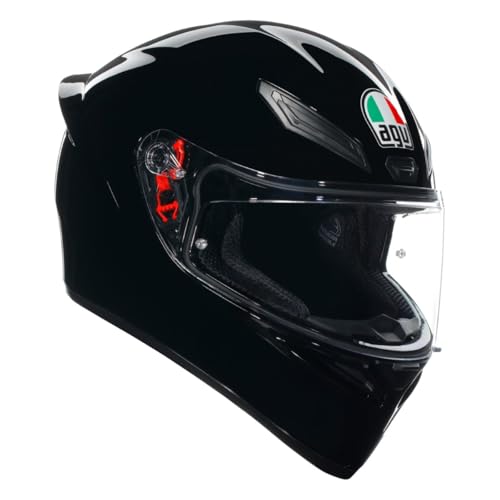
AGV K1 S Street Full Face Motorcycle Helmet
What We Like
- Two shell sizes for balanced fit
- Large front and crown vents with rear extractors
- Pinlock MaxVision-prepared wide visor
- Removable, washable liner
Trade-offs
- No tinted visor included, only clear
- Heavier than the 3.3 lb CYRIL helmet
The AGV K1 S uses a high-resistance thermoplastic shell offered in two shell sizes for an optimal, balanced fit. Large front and crown vents with rear extractors deliver a constant supply of fresh air, which helps keep you comfortable on longer rides. The Pinlock MaxVision-prepared GT4 visor gives you a broad view of the road, and a clear visor is included. With a Double-D ring chinstrap closure for a secure, race-proven fit and DOT FMVSS 218 certification, this is a straightforward, safety-minded choice for street riders who want proven protection without a premium price tag.
The trade-off for that thermoplastic shell is weight: at 3.5 pounds, the K1 S is lighter than the Shoei RF-1400, which comes in at 3.6 pounds. You get a clear visor included. Still, if you value a secure, race-proven chinstrap and a well-vented interior, the AGV K1 S delivers where it counts. It’s a practical, no-frills full-face helmet that focuses on fit, airflow, and impact protection.
Shoei RF-1400 Full Face Motorcycle Helmet

What We Like
- Wind-tunnel refined shell reduces drag and lift
- Dual-layer multi-density EPS foam liner
Trade-offs
- At 3.6 lb, heavier than some lightweight alternatives
- No integrated sun visor for quick shading
The Shoei RF-1400’s wind-tunnel-tested shell shape cuts through the air with less drag and lift, which means less buffeting at highway speeds and a quieter ride overall. At 3.6 pounds it’s lighter than many full-face helmets, so you get serious impact protection without feeling like you’re wearing a cinder block. The hand-laid fiberglass and organic fiber shell, paired with a dual-layer multi-density EPS liner, absorbs impact energy while keeping the helmet compact. Riders who log long miles or spend time on open roads will appreciate the removable ear pads and a redesigned window beading that seals out wind and water, so you can focus on the asphalt ahead.
That wind-cheating shape comes with a weight penalty. At 3.6 pounds it’s heavier than some lightweight options, which may be noticeable during all-day rides or if you’re used to an ultralight helmet. There’s also no built-in sun visor, so you’ll rely on the CWR-F2 shield’s Vortex Generator to manage turbulence and a separate tinted shield or sunglasses for glare. If you prioritize aerodynamics and quiet over absolute lightness or convenience features, the RF-1400 is a refined choice.
BELL Lithium MIPS Helmet

What We Like
- MIPS reduces rotational impact forces
- Three shell sizes for better fit
- Class 2 optics drop-down sun shield
Trade-offs
- At 5.0 pounds, heavier than some full-face helmets
- Polycarbonate shell, not premium fiberglass or carbon
The MIPS slip-plane technology inside this helmet is the standout feature, designed to help reduce rotational forces from certain impacts. That alone makes it a smart pick for riders who prioritize head protection beyond the basic DOT certification it already meets. The three shell sizes also mean you’re more likely to get a proper fit without relying on thick padding to fill the gap, and the drop-down sun shield with Class 2 optics keeps glare out without swapping visors.
The trade-off is weight: at 5.0 pounds, it’s heavier than a polycarbonate helmet like the AGV K1 S (3.5 pounds), so long days in the saddle may feel more tiring on your neck. The polycarbonate shell keeps the price accessible. If rotational protection and a tailored fit matter more than shaving ounces, this helmet delivers where it counts.
Shoei Neotec II Modular Motorcycle Helmet

What We Like
- Flip-up face for open or full coverage
- Integrated anti-fog sun visor
- Advanced ventilation with quiet ride design
- Lightweight AIM shell for long rides
Trade-offs
- At 4.1 lb, heavier than some full-face options
- Modular hinge adds bulk for compact storage
The flip-up face cover and shield let you switch between open-face convenience and full-face protection without taking the helmet off, so you can grab a drink or talk at a gas stop and still have a secure lid for the highway. That modular flexibility, paired with Shoei’s Advanced Integrated Matrix shell, keeps the weight reasonable at 4.1 pounds while delivering the durability you want for touring or daily commuting. The built-in QSV-1 sun visor is anti-fog and anti-scratch, which helps you adjust to changing light conditions without stopping to swap shields. The ventilation system is designed for optimal airflow and reduced humidity, and the noise reduction technology makes it one of the quietest helmets in its class. This is the helmet for riders who want one lid that does double duty without compromising on protection or comfort.
Weighing 4.1 pounds, the Neotec II is heavier than a dedicated full-face like the Shoei RF-1400 at 3.6 pounds. You’ll feel the extra heft on long days in the saddle, especially if you’re used to a lighter full-face helmet. The modular hinge also makes it a bit bulkier to pack in a saddlebag or carry around off the bike. But if your riding mixes highway miles with city stops where you need to flip the chin bar up for air or conversation, the Neotec II’s modular design and quiet ride make that weight a fair price to pay for the convenience.
Product photos
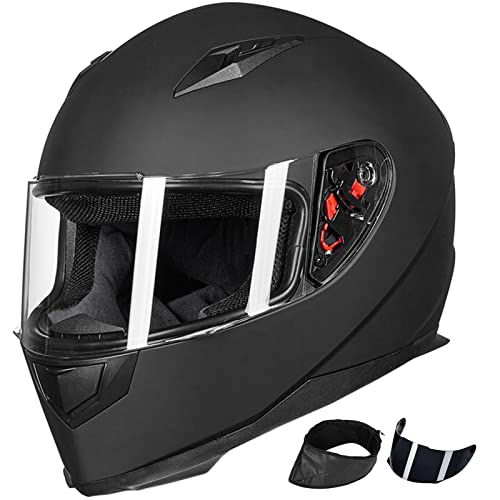
ILM Full Face Motorcycle Helmet Model ILM-313
What We Like
- Two visors (clear + smoked) included
- Removable winter neck scarf for cold rides
- Lightweight 3.0 lb ABS shell
- Quick-release clasp for easy on/off
Trade-offs
- No MIPS or multi-density liner for advanced impact protection
- ABS shell is less impact-absorbent than polycarbonate or fiberglass
At just 3.0 pounds, this helmet is noticeably lighter than many full-face options on the road, which means less neck fatigue on long rides or stop-and-go commutes. It arrives with both a clear and a smoked visor out of the box, plus a removable winter neck scarf, so you’re ready for changing light and cold mornings without buying extras. The streamlined ABS shell meets DOT safety standards, giving you the essential protection a street rider needs at a budget-friendly price. If you want a capable, no-fuss lid for daily riding without emptying your wallet, this is the one to grab.
The ABS shell and single-density liner don’t offer the layered impact management you’d find in a pricier helmet like the Shoei RF-1400, which uses a multi-density EPS liner and a stronger fiberglass shell. For casual cruising and commuting at legal speeds, the ILM-313’s protection is perfectly adequate. But if you regularly push high speeds or want the latest in rotational-impact tech, you might want to step up. That said, for the rider who values light weight, included accessories, and DOT certification over premium materials, this helmet delivers real value without the premium price tag.
Orthrus Full Face Motorcycle Helmet

What We Like
- Dual visors for day and night riding
- Removable washable liner for easy care
- Multiple vents reduce heat buildup
- DOT-approved ABS shell with EPS liner
Trade-offs
- No integrated sun shield or drop-down visor
The Orthrus Full Face Motorcycle Helmet gives you two visors right in the box a tinted one for bright sunlight and a clear one for night or low-light rides. That dual-visor setup means you don’t have to buy extras or swap shields mid-trip, which is a real convenience for daily commuters or weekend street riders. The removable washable liner also makes long-term upkeep simple, and the multiple vents at the front, top, and rear help keep air moving so you stay cooler on warmer days. For riders who want a solid DOT-approved helmet without overspending, this package delivers practical features that work from sunrise to sunset.
The Orthrus helmet meets DOT and FMVSS-218 standards with a durable ABS shell and EPS foam liner, so you get solid impact protection for daily commuting or street riding. That safety comes without any weight figures listed on the spec sheet, but the shell material is common in this price range. The dual-visor system includes a tinted visor for daytime glare reduction and a clear visor for night use, and both swap out in minutes without tools. If you want a straightforward, budget-friendly full-face helmet with easy maintenance and a removable, washable liner, this model works well for everyday road use.
Product photos
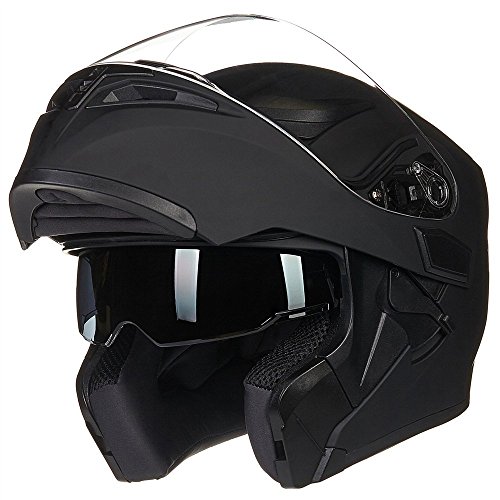
ILM Motorcycle Dual Visor Flip Up Modular Helmet
What We Like
- Dual visor with anti-fog and anti-scratch
- Removable, washable liner and cheek pads
- Modular flip-up for easy communication
- Meets DOT safety standards
Trade-offs
- At 4.6 lb, heavier than most full-face helmets
- ABS shell, while DOT-approved, is heavier than some composite alternatives
A modular flip-up design with a dual visor system gives you both a clear shield and a built-in sun visor, so you can ride from bright afternoon into dusk without swapping lenses. At 4.6 pounds, it’s noticeably heavier than a dedicated full-face helmet, but that weight comes with the convenience of flipping the chin bar up for quick chats at gas stations or when you need to grab a drink without removing the whole helmet. The removable, washable liner makes long-term care simple, and the micrometric strap lets you dial in a secure fit without fumbling with traditional D-rings. This is a solid everyday companion for riders who prioritize versatility over featherlight weight.
That modular convenience comes with heft: at 4.6 pounds, this helmet is heavier than many full-face options, which can contribute to neck fatigue on longer rides. Its ABS shell meets DOT safety standards, but riders seeking the lightest possible setup or maximum protection for high-speed touring may prefer a dedicated full-face or a premium modular helmet.
Product photos
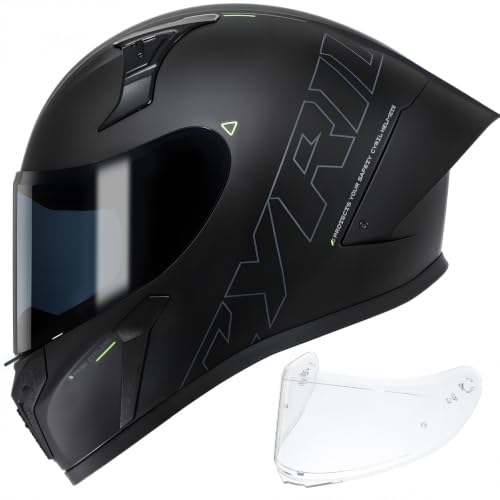
CYRIL Full Face Motorcycle Helmet
What We Like
- Lightweight 3.3 lb build reduces neck fatigue
- 5-point ventilation prevents fogging
Trade-offs
- No MIPS or ECE rating mentioned for higher-speed impacts
- Quick-release buckle lacks the security of a double-D ring
For riders who want a versatile, lightweight lid without paying a premium, this kit delivers solid everyday protection with the convenience of a washable liner and a storage bag to protect the shell when parked.
The trade-off is that the CYRIL meets DOT FMVSS-218 standards but does not carry MIPS or ECE ratings, so riders who want those certifications might look at other models. The quick-release buckle is easy to fasten one-handed, unlike the double-D ring setup some riders prefer. For commuters and weekend riders who want a lightweight helmet with easy visor swaps and a machine-washable interior, this delivers solid value.
Product photos
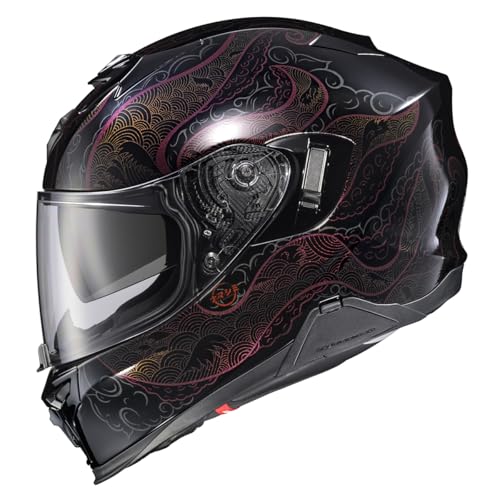
ScorpionEXO T520 Full Face Touring Helmet
What We Like
- AirFit inflation customizes cheek pad fit
- Everclear anti-fog shield on both surfaces
- Drop-down SpeedView sun visor built in
- KwikFit cheekpads ease eyeglass insertion
Trade-offs
- Bluetooth communicator kit sold separately
- Weighs 4.8 pounds, heavier than some full-face helmets
The AirFit Inflation System lets you pump up the cheek pads for a custom fit that reduces wind noise and lift, something few helmets at this level offer. That, combined with the Everclear fog-free shield (treated on both sides) and a drop-down SpeedView sun visor, makes this a strong choice for long days on the road where comfort and clear vision matter most. The KwikFit cheekpads also accommodate glasses easily, so you won’t have to fight with your frames every time you stop.
Product photos
How We Evaluated Road Motorcycle Helmets
We started by reviewing the specifications and safety certifications for each helmet, including DOT and SNELL ratings where applicable. Manufacturer documentation told us about shell materials, ventilation systems, and included accessories like extra visors or winter scarves.
The four criteria that mattered most for road helmets were safety certification (DOT minimum, with SNELL and MIPS as bonuses), weight for all-day comfort, ventilation effectiveness, and practical features like anti-fog shields or Bluetooth readiness. A helmet that checks all those boxes at a reasonable price earned higher consideration.
Our evaluation is research-based, drawing on technical data, expert commentary, and the collective experience of owners. This approach helps you narrow the field before you try on helmets yourself.
What To Look For In Road Motorcycle Helmets
Finding the right road helmet starts with understanding how shell material, fit features, and ventilation work together for your specific riding style.
Prioritize a DOT-certified helmet that fits snugly without pressure points. Look for a lightweight shell, effective ventilation, and features like an anti-fog shield or drop-down sun visor that match how you ride.
Shell Material and Weight
The shell material directly affects both protection and comfort. Polycarbonate shells like those on the ILM Full Face Motorcycle Helmet are affordable and lightweight, with that model coming in at just 3.0 pounds. Fiberglass and multi-composite shells, as found on the Shoei RF-1400, offer better impact absorption and are often quieter at speed, though they tend to cost more. Heavier helmets around 4.8 pounds can cause neck fatigue on long touring days, so weight is worth considering seriously.
Ventilation and Fog Management
Good ventilation keeps you cool and prevents visor fogging. Look for large front and crown vents paired with rear extractors, like the system on the AGV K1 S. An anti-fog shield, such as BELL’s NutraFog II, or Pinlock-prepared visors are essential for riding in variable weather. Five-point ventilation systems, like the one on the CYRIL helmet, help maintain airflow even at lower speeds.
Fit and Retention Systems
A helmet only protects if it fits properly. Look for multiple shell sizes (small, medium, large) rather than one shell with different padding, as the BELL Lithium MIPS offers with three shell sizes. The retention system matters too: Double-D rings, found on the AGV K1 S, are the most secure and are standard at track days. Quick-release buckles are more convenient for daily commuting but should still meet DOT standards.
- Try on helmets to check for pressure points.
- Shake your head gently; the helmet should not shift independently.
- Check that cheek pads press firmly against your cheeks without causing pain.
- If you wear glasses, look for models with eyeglass-friendly channels like the ScorpionEXO T520.
A helmet that fits correctly should feel snug all around but never painful, and it should not move when you push up from the chin bar.
Road Motorcycle Helmets Compared
The table below compares key specs and features across our top picks to help you decide which road helmet fits your needs best.
| Product | Weight | Shell Material | Safety Standard | Visor System |
|---|---|---|---|---|
| BELL Qualifier Full-Face Motorcycle Helmet | 4.8 Pounds | N/A | DOT (FMVSS 218) | NutraFog II anti-fog, anti-scratch |
| AGV K1 S Street Full Face Motorcycle Helmet | 3.5 Pounds | High-resistance thermoplastic | DOT FMVSS 218 | Pinlock MaxVision-prepared GT4 |
| Shoei RF-1400 Full Face Motorcycle Helmet | 3.6 Pounds | Hand-laid fiberglass & organic fibers | N/A | CWR-F2 with Vortex Generator |
| BELL Lithium MIPS Helmet | 5.0 pounds | Polycarbonate | FMVSS 218 | Class 2 optics drop-down sun shield |
| Shoei Neotec II Modular Motorcycle Helmet | 4.1 Pounds | Advanced Integrated Matrix (AIM) | DOT-218 | QSV-1 sun shield, anti-fog, anti-scratch |
| ILM Full Face Motorcycle Helmet Model ILM-313 | 3.0 pounds | Advanced ABS | FMVSS-218 / DOT | Clear + Smoked |
| Orthrus Full Face Motorcycle Helmet | N/A | Durable ABS | DOT / FMVSS-218 | Tinted + Clear, quick-release |
| ILM Motorcycle Dual Visor Flip Up Modular Helmet | 4.6 Pounds | High Resistance ABS | FMVSS-218 / DOT | Dual (Clear + Sun) Anti-Scratch/Anti-Fog |
| CYRIL Full Face Motorcycle Helmet | 3.3 lb | N/A | DOT FMVSS-218 | Dual (clear + tinted), tool-free swap |
| ScorpionEXO T520 Full Face Touring Helmet | 4.8 Pounds | Advanced Polycarbonate | DOT / ECE Certified | Ellip-Tec Ratchet, Everclear no-fog |
Frequently Asked Questions
What is the difference between DOT and SNELL helmet certification?
DOT certification is the minimum legal safety standard for motorcycle helmets sold in the United States. SNELL is a voluntary, more rigorous standard that includes additional impact tests at higher speeds and from different angles. Helmets like the Shoei RF-1400 carry SNELL certification for riders who want extra assurance.
How do I know if a motorcycle helmet fits properly?
A proper fit means the helmet is snug all around your head without painful pressure points. When you shake your head gently, the helmet should move with your head, not slide independently. Cheek pads should press firmly against your cheeks, and you should be able to breathe normally through your nose.
Should I buy a modular or full-face motorcycle helmet?
Modular helmets like the Shoei Neotec II offer the convenience of flipping up the chin bar for quick stops or conversations. Full-face helmets provide a more rigid structure and are generally lighter and quieter at high speeds. Your choice depends on whether you prioritize versatility or maximum aerodynamic efficiency.
What does MIPS protection do in a motorcycle helmet?
MIPS stands for Multi-directional Impact Protection System. It is a low-friction layer inside the helmet that allows the outer shell to rotate slightly on impact, reducing rotational forces transferred to the brain. The BELL Lithium MIPS includes this technology for an added layer of protection against angled impacts.
How often should I replace my motorcycle helmet?
Most manufacturers recommend replacing a helmet every five years, even if it has not been in a crash. UV exposure, sweat, and temperature changes can degrade the EPS liner over time. Always replace a helmet immediately after any significant impact, even if there is no visible damage.
The Bottom Line
For most riders, the BELL Qualifier Full-Face Motorcycle Helmet delivers the best balance of features, safety certification, and value. Its anti-fog shield and Bluetooth readiness make it a practical choice for daily commuting and weekend rides alike, even if it is a bit heavier than some competitors.
If you want advanced rotational impact protection, the BELL Lithium MIPS is worth paying more for. Budget-conscious riders will appreciate the lightweight ILM Full Face Motorcycle Helmet with its included winter scarf and dual visors. Touring riders who value custom fit should consider the ScorpionEXO T520 and its AirFit inflation system.
The single most important factor in choosing any helmet is fit. No feature or safety rating matters if the helmet does not fit your head shape securely and comfortably, so try before you buy whenever possible.
