
10 Best Safety Helmet Motorcycles in 2026
This post contains affiliate links. As an Amazon Associate, we earn from qualifying purchases.
For the rider who prioritizes protection, the Shoei RF-1400 Full Face Helmet leads our list with its SNELL M2020 and DOT approval and wind-tunnel-optimized shell that cuts lift and drag. The Shoei X-Fifteen offers MotoGP-level certification for track days, while the Bell Qualifier delivers a budget-friendly full-face option with modern safety standards.
Choosing a motorcycle helmet means balancing safety certifications, weight, and features like ventilation and visor options. A helmet that fits poorly or lacks proper airflow can ruin a ride, no matter how much protection it offers. The right choice depends on whether you spend your time on the highway, the track, or city streets.
We built this guide by analyzing manufacturer specifications, safety certifications, and expert reviews, then cross-referencing patterns in owner feedback. Our goal is to help you find a helmet that meets your riding needs without guesswork.
Top 10 Safety Helmet Motorcycles in the Market
Certain content that appears on this site comes from Amazon. This content is provided "as is" and is subject to change or removal at any time.
The Best Safety Helmet Motorcycles, Reviewed
Shoei RF-1400 Full Face Helmet

What We Like
- SNELL M2020 and DOT approved
- Wind-tunnel-optimized shell reduces lift and drag
- Airtight window beading blocks wind and water
Trade-offs
- No integrated sun shield or Bluetooth pockets
- Heavier than the ILM 313 at 3.0 pounds
A hand-laid matrix of interwoven fiberglass and lightweight organic fibers forms the shell, which meets both SNELL M2020 and DOT safety ratings. The dual-layer multi-density EPS liner further aids impact absorption while allowing cool airflow through its channels. Wind tunnel refinement shaped the spoilered shell and the CWR-F2 shield, which uses Vortex Generator technology to displace turbulence and reduce drag and lift. An airtight window beading system creates a windproof and waterproof seal. Riders who prioritize safety, comfort, and quieter rides find this helmet sets the benchmark.
Yet those lighter helmets lack the RF-1400’s airtight window beading and removable ear pads that soften wind noise, making long highway miles more fatiguing. If you prioritize proven impact protection and a quiet, stable ride over the absolute lightest weight, the RF-1400 delivers a balanced package that few competitors match.
Shoei X-Fifteen Full Face Helmet

What We Like
- Meets four safety standards including Snell
- Emergency Quick Release System for safe removal
- Adjustable center pad system for custom fit
Trade-offs
- Heavier than some full-face helmets at 3.8 pounds
- No integrated sun shield or drop-down visor
- Racing focus limits street touring features
The Shoei X-Fifteen carries four major safety certifications: FVMSS 218, DOT, Snell, and ECE R22/06. That means it meets multiple global standards for impact protection, so riders who push speed can trust its engineering. Its CWR-F2R racing shield uses a double lock to stay sealed at high speeds, and the Emergency Quick Release System lets medical responders remove the helmet safely after a crash. For anyone who spends serious time on a track or rides aggressively on the street, this helmet earns trust through its design.
At 3.8 pounds, the X-Fifteen is a bit heavier than some alternatives like the AGV K1 S Street or HJC C10, so you’ll feel the extra weight on long rides. It also skips a built-in sun shield, which means you’ll need to swap visors or wear sunglasses when the light shifts. That trade-off makes sense if your priority is the safety certification that comes from being worn by the fastest rider on the planet.
LS2 Stream II Full Face Helmet

What We Like
- Kinetic Polymer Alloy shell
- AREM rotational energy management
- Dynamic flow-through ventilation
- Built-in SunShield
Trade-offs
- Ships with clear shield only, tinted optional
- At 5.0 lb, heavier than some sport helmets
At 5.0 pounds, the LS2 Stream II is heavier than several full-face helmets like the HJC C10 or Shoei RF-1400, so you’ll feel that extra weight on longer rides. Its Kinetic Polymer Alloy shell meets both ECE 22.06 and DOT safety standards, and the AREM rotational energy management is designed to reduce impact forces in a crash. The dynamic flow-through ventilation keeps air moving through the helmet, and the built-in SunShield lets you quickly adapt to changing light without swapping visors. Riders looking for modern safety and ventilation at a more accessible price point will find this helmet fits the bill.
At 5.0 pounds, it is heavier than the Shoei RF-1400 at 3.6 pounds, which may be noticeable on longer rides. The LS2 ships with a clear shield only; the tinted shield shown in some images is optional and sold separately. For the sport rider who values ventilation and safety features over absolute lightness, the Stream II delivers a balanced package.
Bell Qualifier Full Face Helmet
What We Like
- Three shell sizes for better fit
- IONIC+ padding fights odor and sweat
- Meets DOT and ECE22.06 standards
- Full face coverage for protection
Trade-offs
- At 6.0 pounds, heavier than Shoei RF-1400
- Weighs 6.0 pounds, heavier than many competitors
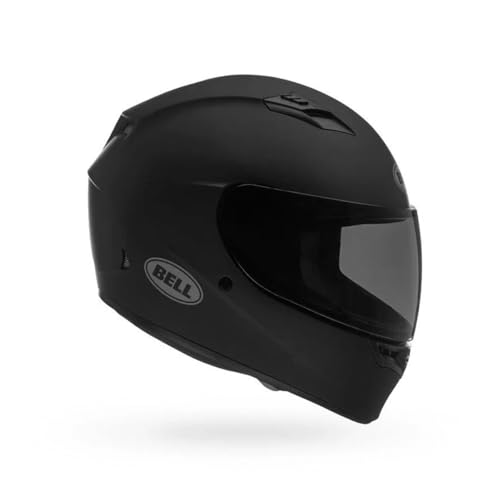
Three shell sizes mean this helmet can accommodate a wider range of head shapes without relying solely on thicker padding, which is a smart approach for a budget-friendly full-face option. The IONIC+ padding helps manage sweat and fights odor-causing bacteria, so it stays fresher on warm rides. If you are looking for solid protection that meets both DOT and ECE22.06 standards without stretching your budget, this is a practical choice that covers the essentials well.
The trade-off for that affordability is weight: at 6.0 pounds, it is noticeably heavier than the Shoei RF-1400, which weighs 3.6 pounds. That extra heft can become more noticeable on longer trips or if you are used to a lighter lid. For riders who prioritize value and solid safety certifications over featherlight weight, the Bell Qualifier delivers where it counts.
AGV K1 S Street Full Face Helmet
What We Like
- Large front and crown vents with rear extractors
- Pinlock MaxVision-ready wide visor
- Removable, washable liner
Trade-offs
- Thermoplastic shell lacks the impact absorption of fiber composites
- No built-in sunshield or tinted visor included
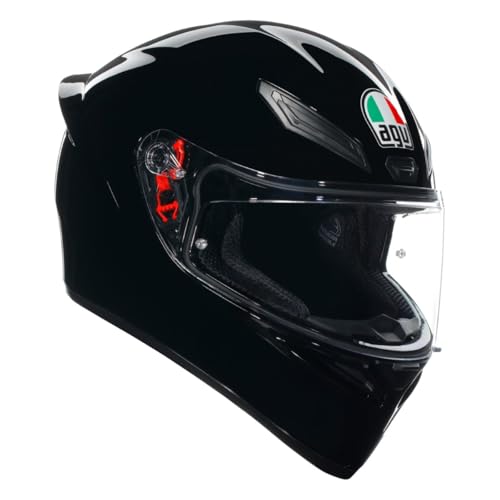
This full-face helmet weighs 3.5 pounds, which is similar to several other helmets in the guide such as the HJC C10 Solid and the Shoei RF-1400. The high-resistance thermoplastic shell comes in two sizes for a balanced fit, while the large front and crown vents paired with rear extractors keep air moving so you stay cool on warm days. Riders who prioritize a comfortable fit and steady ventilation will find a lot to like here, especially if they commute or take all-day trips.
At 3.5 pounds, this helmet is lighter than several full-face options on the market, like the Bell Qualifier at 6.0 pounds or the LS2 Stream II at 5.0 pounds. That makes it easier on your neck during long rides. The high-resistance thermoplastic shell comes in two shell sizes to help balance fit across head sizes, so you’re not stuck with a one-size-fits-all outer shape. A clear visor is included, and the visor is Pinlock MaxVision-prepared, which means you can add an anti-fog insert for wet or cold conditions.
HJC C10 Solid Full Face Helmet

What We Like
- ACS Advanced Channeling System with 5 vents
- Lightweight polycarbonate shell for comfort
- Removable, washable moisture-wicking liner
- Pinlock-ready shield with anti-scratch coating
Trade-offs
- Dark Smoke shield sold separately, not included
- Heavier than some polycarbonate competitors at 3.5 lbs
Five vents, three intakes and two exhausts, make this one of the most airflow-focused helmets in its class. The ACS Advanced Channeling System actively pulls heat and humidity out of the shell, which matters a lot if you ride in warm weather or spend long hours on the highway. At 3.5 pounds, the polycarbonate shell keeps weight reasonable without sacrificing DOT-approved protection. Riders who prioritize staying cool and comfortable on the move will find a lot to like here, especially given the moisture-wicking, washable liner that helps manage sweat over time.
The trade-off is that the Dark Smoke shield, which many riders prefer for glare reduction, is not included and must be bought separately. That adds a small step before you get the full sun-blocking setup. The HJC C10 offers a pinlock-ready shield with anti-scratch coating and 99% UV protection, but the tinted option costs extra. For riders who want a helmet with strong ventilation and a lightweight polycarbonate shell, the C10 delivers on those core features.
Product photos
ScorpionEXO T520 Full Face Touring Helmet
What We Like
- AirFit system customizes cheek pad fit
- Everclear fog-free shield on both surfaces
- Drop-down sun visor for variable light
- KwikFit cheek pads accommodate eyeglasses
Trade-offs
- At 4.8 lb, heavier than several touring helmets
- Bluetooth communicator kit sold separately
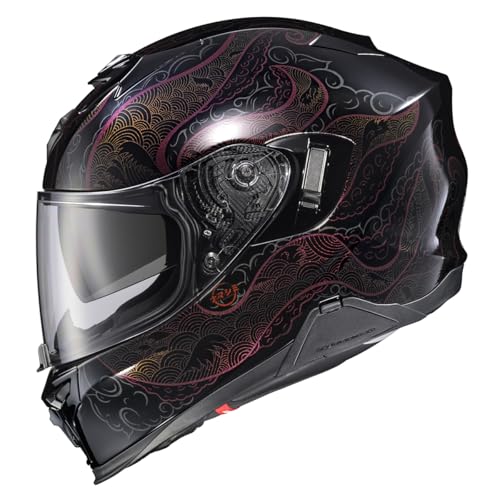
The AirFit Inflation System is the standout feature here, letting you pump up the cheek pads for a custom fit that cuts wind noise and lift without swapping parts. That pneumatic adjustability makes this ScorpionEXO a smart pick for riders who want a precise, adaptable fit right out of the box. It also packs an Everclear fog-free shield, a drop-down sun visor, and KwikFit cheek pads that slide over glasses easily. So you are set for long days on the road without constant fiddling with your visor or eyewear.
At 4.8 pounds, this helmet is heavier than the Shoei RF-1400, which weighs 3.6 pounds, but the polycarbonate shell and dual-density EPS still deliver solid protection. The Bluetooth speaker pockets accommodate most communication system speakers, though the EXO-COM kit is sold separately. Best for touring riders who prioritize a custom fit over absolute lightness.
Product photos
ILM 313 Full Face Motorcycle Helmet
What We Like
- Two visors (clear + smoked) included
- Removable winter neck scarf included
- Quick release clasp for easy fastening
- Removable inner lining pads for cleaning
Trade-offs
- ABS shell less impact-absorbent than premium composites
- No integrated sun shield mechanism
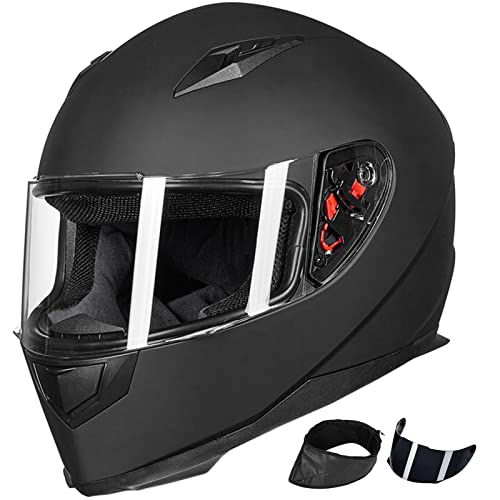
At 3.0 pounds, the ILM 313 is lighter than every other full-face helmet listed in this guide, which can reduce neck strain on longer rides. It comes with both a clear and a smoked visor plus a removable winter neck scarf, so you are ready for changing light and cooler weather right out of the box. That bundle of extras, paired with a DOT-certified ABS shell and quick-release clasp, makes this an ideal pick for a rider who wants a solid, no-fuss helmet without stretching their budget. The removable inner lining pads also mean you can keep things fresh with an easy wash.
The ILM 313 meets or exceeds FMVSS-218 and DOT safety standards, so it’s a legitimate protective helmet for street riding, not just a costume piece. Its advanced and lightweight durable ABS shell keeps the weight at just 3.0 pounds, which means less neck strain during long commutes or weekend cruises. For anyone buying their first full-face helmet or looking for an affordable daily rider, this model covers the essentials without breaking the bank.
Product photos
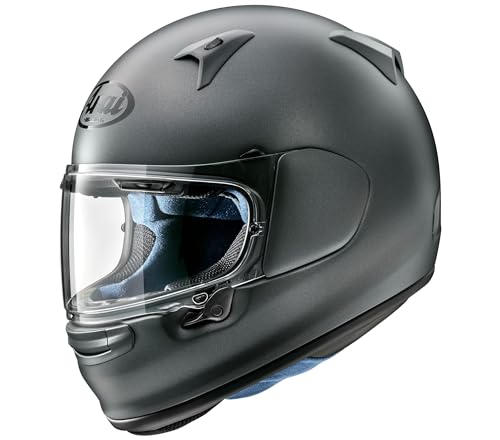
Arai Regent-X Full Face Helmet
What We Like
- Shell designed to glance off impact forces
- Five exhaust vents for airflow
Trade-offs
- At 4.7 pounds, heavier than some full-face options
- No integrated sun shield for glare reduction
Arai’s PB-cLc1 shell is built around a core idea: a strong outer layer that helps impact forces glance away rather than drive straight through. That glancing-off design, paired with a multi-density EPS liner, aims to spread energy across a wider area. For riders who prioritize impact protection over cutting-edge weight savings, this is a purposeful, thoughtfully engineered helmet.
The trade-off shows up on the scale. At 4.7 pounds, the Regent-X is noticeably heavier than the Shoei RF-1400, which comes in at 3.6 pounds, and you won’t find a built-in sunshield here. That extra heft is the price of the reinforced hyper ridge and the multi-layer shell construction. What you get in return is a helmet designed from the ground up to manage crash energy in a specific, deliberate way. It’s a choice for riders who value that engineering over featherlight weight or convenience features.
AUBOA MD-813 Full Face Helmet

What We Like
- Ultra lightweight ABS shell at 3.2 lb
- Multiple vents for airflow
- Removable, washable inner liner
- Includes tinted visor with UV protection
Trade-offs
- Single tinted visor only, no clear included
- ABS shell, not fiberglass or carbon fiber
At 3.2 pounds, the AUBOA MD-813 is a lightweight full-face helmet with an ABS shell and multi-density EPS liner that meets DOT safety standards. The multiple vents and removable, washable inner liner help keep you comfortable on warmer days. This helmet comes with one tinted shield and a quick-release metal buckle for convenience.
The AUBOA MD-813 comes with a single tinted visor instead of a clear one, so you will want to swap it out if you ride at night. Its ABS shell and multi-density EPS liner are designed to meet DOT safety standards, giving you a lightweight helmet that weighs 3.2 pounds. That makes it easy to carry along or store under a seat, and the quick-release metal buckle adds simple, secure fastening.
Product photos
How We Evaluated Safety Helmet Motorcycles
Our evaluation is research-based. We studied each helmet’s safety certifications (SNELL, DOT, ECE), shell materials, weight, and ventilation systems from official documentation. We then compared these specs against expert round-ups and patterns in long-term owner feedback to understand real-world performance and durability.
The four criteria that mattered most were safety certification level, weight, ventilation, and included features. A SNELL or ECE22.06 rating signals higher impact protection, while weight affects neck fatigue on long rides. Good ventilation keeps a rider cool and focused, and features like drop-down sun visors or Pinlock-ready shields add daily convenience.
We synthesize information from multiple sources to identify which models are well-regarded by the riding community. This approach helps us recommend helmets that are well-documented and widely trusted.
What To Look For In Safety Helmet Motorcycles
The right helmet protects your head and makes every ride more comfortable. Focus on fit, safety certifications, and the features that match your riding style.
A safe motorcycle helmet must fit snugly without pressure points, carry a DOT or SNELL certification, and provide adequate ventilation. Weight and included accessories like extra visors or Pinlock inserts affect long-term comfort and value.
Safety Certifications
DOT (Department of Transportation) is the minimum legal standard in the US. SNELL and ECE 22.06 are voluntary, more rigorous standards that test higher impact forces and multiple impact points. A SNELL M2020 or ECE 22.06 rating gives you a higher confidence level in the helmet’s ability to protect in a crash. Track-day organizers often require a SNELL-certified helmet.
Weight and Shell Material
A lighter helmet reduces strain on your neck and shoulders during long rides. Premium helmets use fiberglass composites or multi-fiber shells that are strong and light, while budget models often use polycarbonate or ABS plastic, which are heavier. A helmet weighing under 3.5 pounds is considered light; anything over that can cause fatigue on a full day in the saddle.
Fit and Comfort Features
A proper fit is non-negotiable. Look for helmets with multiple shell sizes (not just one shell with different padding) for a more precise fit. Removable, washable liners help manage sweat and odor. Features like emergency quick-release cheek pads and eyeglass channels add safety and convenience.
- Try the helmet on for at least 15 minutes to check for pressure points.
- Ensure the cheek pads touch your cheeks without causing discomfort.
- Check that the chin strap sits centered and snug.
- Test the visor operation and lock mechanism.
- Verify that the helmet does not rotate or lift when you push on the back.
A helmet that fits well at the store will feel even better after a few hours on the road.
Safety Helmet Motorcycles Compared
The table below compares the key specs and safety ratings of our top picks to help you narrow down your choice.
| Product | Weight | Shell Material | Safety Standard | Shield/Visor |
|---|---|---|---|---|
| Shoei RF-1400 Full Face Helmet | 3.6 Pounds | Hand-laid fiberglass composite | SNELL M2020 | CWR-F2 with Vortex Generator |
| Shoei X-Fifteen Full Face Helmet | 3.8 Pounds | N/A | FVMSS 218, DOT, Snell, ECE R22/06 | CWR-F2R racing shield with double lock |
| LS2 Stream II Full Face Helmet | 5.0 Pounds | Kinetic Polymer Alloy | ECE 22.06, DOT | Built-in SunShield |
| Bell Qualifier Full Face Helmet | 6.0 Pounds | N/A | DOT and ECE22.06 | N/A |
| AGV K1 S Street Full Face Helmet | 3.5 Pounds | High-resistance thermoplastic | DOT FMVSS 218 | Pinlock MaxVision-ready GT4 |
| HJC C10 Solid Full Face Helmet | 3.5 Pounds | Lightweight Polycarbonate | DOT FMVSS 218 | Pinlock Ready HJ-34P |
| ScorpionEXO T520 Full Face Touring Helmet | 4.8 Pounds | Advanced Polycarbonate | DOT / ECE Certified | Everclear No-Fog / Drop-Down Sun Visor |
| ILM 313 Full Face Motorcycle Helmet | 3.0 pounds | Lightweight Durable ABS | DOT (FMVSS-218) | Clear + Smoked |
| Arai Regent-X Full Face Helmet | 4.7 Pounds | PB-cLc1 | DOT, FMVSS 218 | VAS-V MAX, Pinlock ready, F1 latch |
| AUBOA MD-813 Full Face Helmet | 3.2 Pounds | ABS | FMVSS-218 and DOT | Tinted Shield |
Frequently Asked Questions
How do I know if a motorcycle helmet fits correctly?
A properly fitting helmet should feel snug all around your head without painful pressure points. It should not move when you shake your head. The cheek pads should touch your cheeks, and the chin strap should sit firmly under your chin. If you can roll the helmet off your head with the strap fastened, it is too large.
What is the difference between DOT, SNELL, and ECE safety ratings?
DOT is the legal minimum standard in the United States. SNELL is a stricter, voluntary standard that tests higher impact forces and multiple impacts. ECE 22.06 is the European standard and is also more rigorous than DOT. For the highest level of protection, look for SNELL or ECE 22.06 certification.
Should I buy a full-face or modular helmet for safety?
Full-face helmets offer the most protection because they cover your entire head and jaw. Modular helmets have a hinged chin bar for convenience, but they are generally heavier and may not provide the same level of impact protection as a fixed full-face design. For maximum safety, a full-face helmet is the best choice.
How often should I replace my motorcycle helmet?
Most manufacturers recommend replacing a helmet every five to seven years, even if it has not been in a crash. UV light, heat, and sweat degrade the materials over time. You should also replace your helmet immediately after any significant impact, even if there is no visible damage.
What features improve comfort on long rides?
Good ventilation is key for long rides. Look for helmets with multiple intake vents and rear exhaust ports. A lightweight shell reduces neck fatigue. Removable, washable liners keep the helmet fresh, and a Pinlock-ready shield prevents fogging in cold or wet weather.
The Bottom Line
The Shoei RF-1400 Full Face Helmet is our best overall pick for riders who want a premium, SNELL-approved helmet with excellent aerodynamics and noise reduction for long-distance touring or daily commuting. It is the right choice if you prioritize safety certification and wind-tunnel-tested design over integrated sun shields.
If your budget is tighter, the Bell Qualifier gives you DOT and ECE22.06 approval with sweat-wicking padding at a lower cost. Track-day riders should look at the Shoei X-Fifteen for its race-proven aerodynamics and maximum safety certifications.
The single most important factor in choosing a helmet is fit. No certification or feature matters if the helmet does not fit your head shape correctly. Try before you buy, and ride with confidence.
