
9 Best Sounding Speakers For Cars in 2026
This post contains affiliate links. As an Amazon Associate, we earn from qualifying purchases.
For drivers who want audio that truly comes alive, the Pioneer P.R.O. Series TS-M651PRO Component Speakers deliver exceptional clarity and efficiency for high-SPL builds. The JBL Stage 3637F offers a premium direct upgrade, while the Pioneer F-Series TS-F1634R is a solid budget-friendly starting point.
Upgrading car speakers is about more than just volume. The real challenge is finding a set that reproduces music with accuracy, handles the power from your system, and fits your vehicle’s specific mounting locations without modification.
This guide is based on a thorough analysis of manufacturer specifications, expert recommendations, and patterns found in owner feedback. We break down the key specs and trade-offs to help you match the right speaker to your car and your listening goals.
Top 9 Sounding Speakers For Cars in the Market
Certain content that appears on this site comes from Amazon. This content is provided "as is" and is subject to change or removal at any time.
The Best Sounding Speakers For Cars, Reviewed
Pioneer P.R.O. Series TS-M651PRO Component Speakers

What We Like
- Lightweight pulp cone minimizes distortion
- Designed for high-SPL pro-level builds
- 500W max power for dynamic audio
Trade-offs
- Component design requires separate crossover installation
- Lower frequency response starts at 50 Hz, not sub-bass territory
- At 5.7 pounds, heavier than typical coaxial speakers
A 94dB sensitivity rating means these Pioneer component speakers turn even modest amplifier power into seriously loud, clean audio. That high efficiency, paired with a lightweight pulp cone that keeps distortion low, makes them a natural fit for anyone building a system focused on sound pressure levels and clarity. If you want your music to cut through road noise without cranking the gain into distortion, this is the engineering that delivers. They handle 500 watts at peak and 120 watts continuously, so there’s headroom for dynamic peaks without blowing a driver.
The trade-off is that these are component speakers, not a simple drop-in coaxial. You’ll need to mount the tweeter separately and install the crossover, which adds time and complexity compared to a set like the JBL Club 64 component speakers. And while the 50 Hz low end is solid for most music, it won’t shake the seats without a dedicated subwoofer. For the enthusiast who values precision and volume over ease of installation, these Pioneers reward the extra effort with pro-level performance.
JBL Stage 3637F 6.5" Three-Way Coaxial Speakers

What We Like
- Plus One cone boosts efficiency 2dB
- Edge-driven dome tweeter for smoother highs
- Vented basket cools voice coils
- Engineered to fit factory locations
Trade-offs
- No grilles included for protection
- Heavier than the 2.2-pound Pioneer F-Series TS-F1634R
The Plus One woofer cone gives this 6.5-inch coaxial up to 2dB more efficiency than a standard cone of the same size. That means it plays louder and clearer off the same factory head unit power. This extra output makes it a natural upgrade for anyone who wants JBL’s signature clarity without adding an amplifier. The edge-driven dome tweeter also helps here, delivering a broader, smoother high-frequency response that keeps vocals and cymbals from sounding harsh or tinny, even at higher volumes.
The three-way design and slightly larger overall dimensions (12.6 inches long) can make fitting trickier in some factory locations compared to a simpler two-way like the Pioneer F-Series TS-F1634R. You also won’t find grilles in the box, so if your speakers sit exposed behind a kick panel or in a shallow door pocket, you may want to source covers separately. Still, for the price, the combination of vented basket cooling for reliability and that efficiency bump gives you genuinely premium sound without needing to rewire your whole system.
Pioneer F-Series TS-F1634R 6.5" Coaxial Speakers

What We Like
- 2-way coaxial design gives balanced full-range audio
- Standard 6.5" size fits most cars easily
- Sleek black finish blends into any interior
Trade-offs
- 25W nominal power limits output for loud builds
- Not designed for high-SPL or pro-level systems
With an 88dB sensitivity rating, these speakers produce higher volume from lower power input, which is helpful when running off a factory stereo. The 2-way coaxial design combines a woofer and tweeter in one unit, so you get both bass and treble from a single drop-in replacement. For daily driving where you want a straightforward upgrade from worn-out original speakers, this setup works without extra gear.
With 25 watts nominal, these won’t fill a truck cab or compete with a high-output system. If you’re planning a serious SPL build, you’d want something like the Pioneer P.R.O. Series TS-M651PRO components, which handle much more power. But for the budget-conscious driver who just wants better sound from their stock radio, the F-Series offers real value without demanding extra gear or installation headaches.
DS18 G6.9Xi GEN-X 6×9 3-Way Coaxial Speakers

What We Like
- Steel basket for long-term durability
- Mylar dome tweeters for clear highs
- Reaches down to 35Hz for deep bass
- Includes grills for protection
Trade-offs
- Designed primarily for amplifier use
- Heavier than some coaxial speakers at 6.2 lbs
A 180-watt max power handling and a steel basket make these 6×9 speakers a rugged choice for drivers who push their audio hard. The Mylar dome tweeters handle the highest frequencies cleanly, while the 35Hz low-end gives you thumping bass without a separate subwoofer. This is a set built to survive rough roads and long hauls, ideal for truck owners, off-roaders, or anyone who cranks the volume on dusty backroads and wants speakers that won’t quit.
At 6.2 pounds each, these are heavier than some coaxial speakers, which makes installation a bit more involved, and the 4-ohm impedance works best with an external amplifier rather than a stock head unit. If your factory system is weak, you might need that amp to get the full benefit. For listeners who want plug-and-play lightness, the JBL Stage 3637F is a lighter alternative, but it won’t match the sheer durability of the DS18.
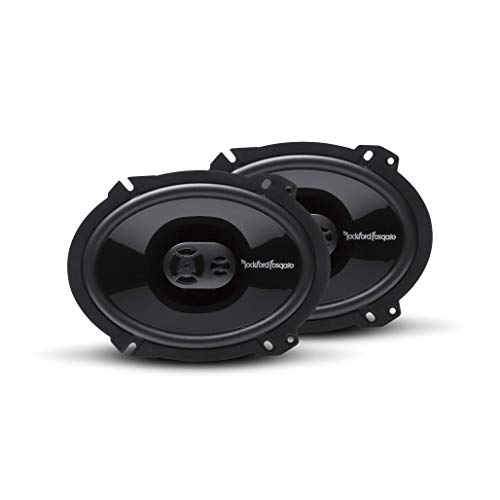
Rockford Fosgate P1683 Punch 6×8 3-Way Coaxial Speakers
What We Like
- FlexFit basket slots for easier alignment
- Includes OEM adapter plate and mounting hardware
- Butyl rubber surround for accurate frequency reproduction
- PEI dome tweeter with built-in crossover
Trade-offs
- 65W RMS is lower than some competing coaxial speakers
- 3-way design adds complexity without necessarily improving clarity
The FlexFit basket design uses slots instead of fixed screw holes, so you can shift the speaker slightly to line up with your factory mounting points. That means less frustration and fewer trips back to the hardware store when you’re swapping out old speakers in a truck or SUV. This pair is built for drivers who want a quality upgrade without cutting new holes or buying adapters separately. The injection-molded mineral-filled polypropylene cone with butyl rubber surround helps keep bass tight and vocals clear at moderate volumes.
At 65 watts RMS, these are designed for use with factory radios or modest aftermarket head units rather than high-output amplifiers. If you’re planning a system with a powerful external amp, you’ll want speakers with higher RMS ratings. For everyday listening from a standard source, the P1683s offer a straightforward drop-in fit that avoids extra work.
Product photos
JBL Club 64 6.5" Two-Way Component Speakers

What We Like
- Patented Plus One cone for higher sensitivity
- Edge-driven silk dome tweeter for smooth highs
- Adjustable tweeter output level (0dB/+3dB)
- Larger magnet for higher power handling
Trade-offs
- Component design requires separate crossover installation
- 3-ohm impedance limits amplifier compatibility.
With a sensitivity of 93dB (@ 2.83V), these speakers convert power into sound efficiently, so they can play loud even with a modest source. The patented Plus One cone gives you more cone area than other 6.5-inch speakers, which helps produce higher sensitivity and stronger low frequencies. The edge-driven silk dome tweeter is designed to stay smooth at high output levels, never turning harsh. For anyone upgrading factory speakers, this combination means noticeably louder music without needing a high-power amplifier.
Product photos
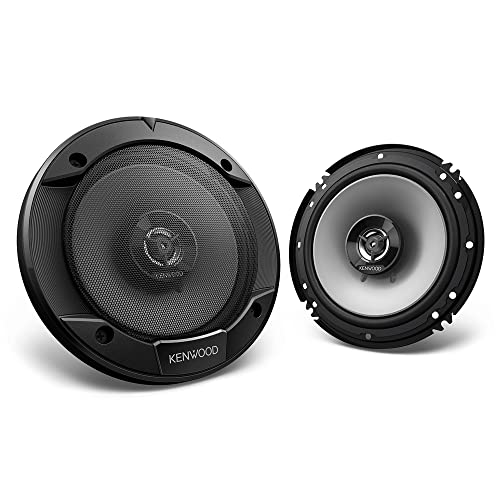
Kenwood KFC-1666S 6.5" 2-Way Coaxial Speakers
What We Like
- Polypropylene woofer with treated cloth surround
- 1-inch PEI balanced dome tweeter
- Frequency response from 40 to 22,000 Hz
- Grilles included for easy installation
Trade-offs
- Sensitivity at 90 dB is lower than some competitors
- No component system option for dedicated tweeter placement
A frequency response of 40 to 22,000 Hz means this Kenwood covers the full range of audible bass and treble, from deep kick drums to crisp cymbal crashes. The polypropylene woofer with a treated cloth surround handles low frequencies with control, while the 1-inch PEI balanced dome tweeter reproduces high notes clearly. Grilles come included, so installation is straightforward and the drivers stay protected right out of the box.
The 90 dB sensitivity rating means the speaker converts power into volume at a standard efficiency level. For most factory-radio setups, that works fine without extra amplification. If you’re aiming for very high volume levels, the Pioneer P.R.O. Series TS-M651PRO handles 500 watts peak and is designed for high-SPL builds. For typical listening where you want a full frequency range, the Kenwood delivers balanced sound without requiring a complex installation.
Product photos
KICKER CS Series CSC68 6×8 Coaxial Speakers

What We Like
- Fits nearly any vehicle due to shallow depth
- Fits nearly any vehicle due to reduced mounting depth
- UV-treated poly-foam surround resists heat and sunlight
Trade-offs
- 6×8 size limits compatibility with standard 6.5-inch openings
- Stamped-steel framework less rigid than cast alternatives
The 6×8 shape is designed for vehicles that use that size, so if your car has round 6.5-inch openings, you may need an adapter plate. For owners of trucks and SUVs with factory 6×8 slots, this Kicker pair is a direct-fit option that keeps installation simple while delivering the bass extension and high-frequency output the CS-Series is known for.
Product photos
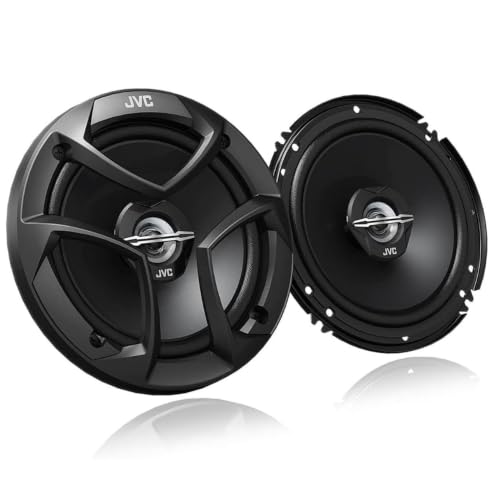
JVC CS-J620 6.5" 2-Way Coaxial Speakers
What We Like
- Shallow mount depth avoids window track
- Pre-arranged holes for quick installation
- Includes wire extensions and mounting tabs
- 92 dB sensitivity for efficient volume
Trade-offs
- 30W RMS limits output for loud systems
- Coaxial design lacks separate tweeter placement
A shallow 1-23/32-inch top mount depth means these JVCs slip into tight factory doors without hitting window tracks or glass, making them one of the friendliest upgrades for a first-time installer. The 92 dB sensitivity allows efficient volume from a head unit, and the mica cone woofer paired with a 1-inch PEI tweeter covers 35 Hz to 22 kHz. This is the pair to grab if you want an easy factory replacement with included wire extensions and mounting tabs.
With 30W RMS per speaker, these won’t fill a car with the output of a higher-power component set like the Pioneer TS-M651PRO. The coaxial design also integrates the tweeter into the woofer’s frame, so you can’t angle it separately. Still, for a straightforward swap that includes installation hardware and avoids cutting or drilling, the JVC CS-J620s offer a practical upgrade.
Product photos
How We Evaluated Sounding Speakers For Cars
Our evaluation focused on the technical specifications that directly translate to sound quality and real-world performance. We studied manufacturer datasheets to compare frequency response, sensitivity, power handling, and driver materials, as these are the measurable indicators of a speaker’s potential.
The four most critical criteria were sensitivity, which is how loud a speaker gets with a given power input. Frequency response is the range of audible sound it can reproduce. Power handling refers to its ability to handle amplifier output without distortion. Build quality covers materials like cone composition, surround type, and basket rigidity. These factors determine whether a speaker sounds clear, plays loud, and lasts.
This evaluation draws on analysis of product information and common themes in owner feedback to help guide your purchase decision.
What To Look For In Sounding Speakers For Cars
Choosing the right speakers means balancing your car’s power source, your listening preferences, and your installation capabilities. The goal is to find a speaker that works efficiently with your system to produce clean, distortion-free sound.
Focus on sensitivity for factory stereos, power handling for amplified systems, and frequency response for balanced sound. The right speaker matches your car’s electrical setup and physical mounting space.
Sensitivity and Power Handling
Sensitivity, measured in decibels (dB), tells you how much volume a speaker produces from one watt of power. A speaker with 92 dB sensitivity will sound significantly louder than one with 88 dB when powered by a factory stereo. For systems with an external amplifier, look at RMS power handling to ensure the speaker can handle the amp’s output without distorting.
Frequency Response
This spec shows the range of bass, midrange, and treble a speaker can reproduce. A wider range (e.g., 40 Hz to 22 kHz) generally means more detail and a fuller sound. Pay attention to the low end: a speaker that reaches down to 50 Hz will produce noticeable bass, but you’ll still need a subwoofer for deep sub-bass.
Build Quality and Materials
The materials used in the cone, surround, and tweeter affect both sound and durability. A lightweight pulp or polypropylene cone reduces distortion, while a rubber or cloth surround allows for more accurate cone movement. Features like a steel basket add rigidity and longevity, especially in demanding, high-power setups.
- Check the mounting depth to ensure the speaker fits behind your door panel without hitting the window track.
- Verify the speaker size (6.5-inch, 6×9, 6×8) matches your vehicle’s factory openings.
- Consider whether a coaxial (all-in-one) or component (separate woofer and tweeter) design fits your installation skill level.
- Look for included hardware like grilles, wiring adapters, or mounting brackets for a simpler installation.
- For amplified systems, match the speaker’s RMS rating to your amplifier’s output per channel.
A good rule of thumb: higher sensitivity for factory radios, higher RMS power handling for amplified systems, and a lower frequency response number for fuller bass.
Sounding Speakers For Cars Compared
The table below compares the key specifications of our top picks, making it easy to see which speaker fits your power source and vehicle.
| Product | Speaker Size | Power Handling (Max) | Cone Material |
|---|---|---|---|
| Pioneer P.R.O. Series TS-M651PRO Component Speakers | 6.5" | 500W | Lightweight Pulp |
| JBL Stage 3637F 6.5" Three-Way Coaxial Speakers | 6.5" | N/A | Plus One Woofers |
| Pioneer F-Series TS-F1634R 6.5" Coaxial Speakers | 6.5" | 200W | N/A |
| DS18 G6.9Xi GEN-X 6×9 3-Way Coaxial Speakers | 6×9 inches | 180W | N/A |
| Rockford Fosgate P1683 Punch 6×8 3-Way Coaxial Speakers | 6×8 | 130W Max | Mineral-Filled Polypropylene |
| JBL Club 64 6.5" Two-Way Component Speakers | 6.5" | 180W Peak | UV-resistant polypropylene |
| Kenwood KFC-1666S 6.5" 2-Way Coaxial Speakers | 6.5 inches | 300 watts | polypropylene |
| KICKER CS Series CSC68 6×8 Coaxial Speakers | 6×8 inches | N/A | polypropylene |
| JVC CS-J620 6.5" 2-Way Coaxial Speakers | 6.5" | 300W | Mica Cone |
Frequently Asked Questions
What makes a car speaker sound good?
A speaker sounds good when it reproduces a wide frequency range accurately with low distortion. Key factors include a high sensitivity rating for efficient volume, a peak-free frequency response for balanced sound, and quality materials like a pulp or polypropylene cone that move precisely without breaking up.
Do I need an amplifier for new car speakers?
An amplifier is not strictly necessary, but it unlocks a speaker’s full potential. Factory stereos typically output low power, so speakers with high sensitivity (92 dB or more) will still play loudly. For speakers with lower sensitivity or higher RMS ratings, an amplifier is needed to achieve clean volume without distortion.
What is the difference between coaxial and component speakers?
Coaxial speakers combine a woofer and tweeter into a single unit for an easy, direct replacement. Component systems separate the woofer, tweeter, and external crossover, allowing for better sound staging and imaging because you can mount the tweeter higher in the door or dashboard. Component systems deliver superior sound but require more installation work.
How do I know if a speaker will fit my car?
Check the speaker’s size (e.g., 6.5-inch, 6×9, 6×8) against your vehicle’s factory speaker openings. The most critical measurement is mounting depth: the speaker must fit behind the door panel without hitting the window track or other internal components. Many manufacturers list vehicle fit guides or include adapter plates for common applications.
Can I install car speakers myself?
Yes, replacing coaxial speakers is a common DIY project if you have basic tools like screwdrivers, wire strippers, and a trim removal tool. The process involves removing the door panel, disconnecting the old speaker, and wiring the new one. Component systems are more complex because you must mount and wire the tweeter and crossover separately.
The Bottom Line
For enthusiasts building a high-performance audio system, the Pioneer P.R.O. Series TS-M651PRO Component Speakers are the best overall choice. Its lightweight pulp cone and high power handling deliver the clarity and output needed for a pro-level build, though it requires separate crossover installation.
If you want premium sound without adding an amplifier, the JBL Stage 3637F provides excellent efficiency and clear highs as a direct factory upgrade. For a simple, budget-friendly start, the Pioneer F-Series TS-F1634R gives you balanced audio with an easy installation.
The single most important factor is matching the speaker’s sensitivity and power handling to your car’s audio source. A speaker that works efficiently with your stereo will always sound better than a powerful speaker that is underpowered.
