
10 Best Speakers For Car Audios in 2026
This post contains affiliate links. As an Amazon Associate, we earn from qualifying purchases.
For drivers who want better sound without a full system overhaul, the Kenwood KFC-1666R Road Series Coaxial Speakers earn the Best Overall spot. Their balanced dome tweeter and cloth woofer cone deliver clear, natural audio at everyday volumes. We also highlight the Pioneer F-Series TS-F1634R as a strong Budget Pick and the KICKER DSC6930 as the Best 6×9 Upgrade for those with factory oval openings.
The real challenge with car audio speakers is matching them to your vehicle’s power and space. Factory stereos put out limited wattage, and door depths vary wildly between models.
This guide is built from manufacturer specifications, expert round-ups, and patterns in owner feedback to help you choose the right speakers for your car, budget, and listening habits. We cover ten top picks across different needs and price points.
Top 10 Car Audio Speakers in the Market
Certain content that appears on this site comes from Amazon. This content is provided "as is" and is subject to change or removal at any time.
The Best Car Audio Speakers, Reviewed
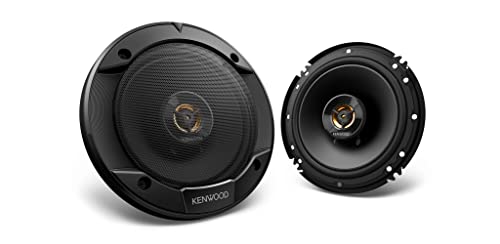
Kenwood KFC-1666R Road Series Coaxial Speakers
What We Like
- Cloth woofer cone for balanced sound
- Balanced dome tweeter for clear highs
- Shallow depth simplifies installation
- Heavy duty magnet for durability
Trade-offs
- 30W RMS limits loudness for bass-heavy music
- Not a component system, so soundstage is fixed
- Only 6.5-inch size, not for larger openings
With 300W peak and 30W RMS power handling, these Kenwood coaxials are designed to work with factory head units without overloading your car’s electrical system. The cloth woofer cone and balanced dome tweeter are materials chosen for balanced sound reproduction, which means vocals and instruments come through clearly at moderate listening levels. They fit front or rear positions and include grilles, making them a practical upgrade for drivers who want better audio without adding an external amplifier.
With 30W RMS, these speakers deliver clean sound at moderate volumes rather than rattling the car. That makes them a practical choice for anyone who wants a reliable upgrade without overpowering a factory stereo. The 300W peak power means they can handle brief dynamic bursts, so you still get punch when the music calls for it.
KICKER DSC6930 6×9 3-Way Speakers

What We Like
- 360W peak power handling
- 92 sensitivity rating
- 3-way speaker design
Trade-offs
- 6×9 size limits fit to specific vehicles
- 7.9-pound pair requires sturdy mounting
With 360 watts of peak power handling, this KICKER pair can produce serious volume in a rear deck or large door opening without needing an outboard amplifier. The 92 sensitivity rating means it responds efficiently to the power your stereo sends it, so even a factory head unit can drive it to satisfying levels. For someone replacing worn-out factory speakers, this set delivers a noticeable upgrade in output and clarity.
Pioneer F-Series TS-F1634R 2-Way Coaxial Speakers

What We Like
- Standard 6.5" size fits many cars
- 2-way coaxial gives balanced sound
- Sleek black finish matches interiors
Trade-offs
- 25W nominal power limits max loudness
The 88dB sensitivity rating means these speakers produce clear sound with less power, so they’re a practical choice for anyone sticking with a factory stereo who wants an audible upgrade. The standard 6.5-inch diameter fits most common car speaker openings without modification, and the 2-way coaxial design combines a woofer and tweeter to deliver both bass and treble in a single unit. Owners report that this efficiency lets them enjoy fuller audio without needing to upgrade the amplifier or rewire the system.
The trade-off shows up when you push them hard: at 25 watts nominal, they won’t reach the same maximum loudness as the 300W Kenwood KFC-1666R when paired with a separate amplifier. For drivers who want a simple swap that sounds better than factory without breaking the budget, these Pioneers hit a practical middle ground. If your goal is higher volume or deeper bass, you would be better served by a higher-power design like that Kenwood pair, but for everyday listening on stock power, this is a smart, fuss-free choice.
Pioneer A-Series Plus TS-A1681F 4-Way Coaxial Speakers

What We Like
- 4-way design for precise frequency separation
- 91 dB sensitivity for loud, clear sound
- Includes multi-fit installation adapters
- Wide frequency range from 35 Hz to 29 kHz
Trade-offs
- 80W RMS limits output with high-power amplifiers
A 4-way coaxial design uses separate drivers to handle different frequency ranges, which helps produce more accurate and balanced sound than a single full-range driver. With a frequency response from 35 Hz to 29 kHz, these speakers cover a broad range of audio frequencies. The 91 dB sensitivity rating means they can produce clear, loud sound even with lower power inputs, so they work well with factory stereos that don’t put out high wattage. That makes them a practical upgrade for everyday listening without needing an external amplifier.
The 80W RMS power handling means these speakers work best with a factory or modest aftermarket system, not a high-power amp that pushes serious wattage. For a direct factory replacement that gives you balanced sound without rewiring your whole car, they fit the bill. The included multi-fit installation adapters expand flexibility and improve acoustic performance, so you can focus on enjoying your music.
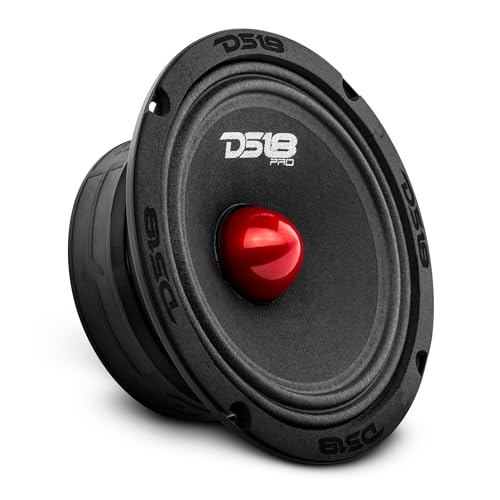
DS18 PRO-GM6.4B Midrange Loudspeaker
What We Like
- Dedicated midrange for vocals and instruments
- High-temperature 1.5" Kapton voice coil
- Aluminum bullet dust cover protects coil
- Single speaker for custom setups
Trade-offs
- Sold as one speaker, not a pair
- Midrange only, no built-in tweeter or woofer
- Requires separate components for full-range sound
A 140W RMS midrange driver with a 1.5-inch Kapton voice coil means this speaker can handle the most significant part of the audible sound spectrum without breaking a sweat. That high-temperature voice coil is built to maintain its structural integrity under extreme heat, which contributes to long life out of your speakers. The aluminum bullet dust cover protects the voice coil and is designed to provide optimal sound each and every time. This is the pick for anyone building a system where vocal clarity and instrumental detail matter more than a one-box solution. It suits the enthusiast who wants to dial in a dedicated midrange channel, not the person looking for a quick factory swap.
The trade-off is that you are buying a single midrange driver, not a pair or a full-range coaxial. That means you will need to pair it with a separate tweeter and woofer (and likely an external crossover) to cover the full frequency range. If you are willing to build a system piece by piece, the dedicated midrange focus here is hard to match for vocal and instrumental detail, but if you want simplicity, look at a coaxial instead.
Skar Audio TX65 2-Way Elite Coaxial Speakers

What We Like
- 1" silk dome tweeter for smooth highs
- TPE surround for durability
- Ferrite magnet for strong output
- 4 Ohm impedance for easy pairing
Trade-offs
- Only 100W RMS limits high-volume headroom
- No separate crossover for fine tuning
The 100W RMS power handling means the Skar Audio TX65 can deliver clean, detailed sound when paired with a modest aftermarket amplifier or a strong head unit, covering everything from rock to jazz without distortion. Its 1-inch silk dome tweeter produces highs that avoid the harshness some metal-dome designs can introduce, so vocals and cymbal hits stay clear during long drives. With an 89 dB sensitivity rating, it works best with a bit of extra power behind it.
Listeners who want a speaker with a 1-inch silk dome tweeter for smooth high-frequency detail and are willing to pair it with an external amplifier. Not ideal for those relying solely on a factory head unit’s built-in power.
Product photos
KICKER KS-Series 51KSC6504 Coaxial Speakers

What We Like
- Concert-like volume without harshness
- Internally dampened polypropylene cones for detail
- Zero tweeter protrusion for easy fit
- Redesigned voice coils and crossovers
Trade-offs
- At 5.7 pounds, heavier than some 6.5-inch pairs
- Zero tweeter protrusion limits some vehicle fit options
These KICKER KS-Series speakers are built to deliver concert-like volume while keeping the sound smooth and refined. The internally dampened polypropylene cones and rubber surrounds work together to produce punchy bass and clear midrange detail, even when you crank the volume. If you love feeling the music in your car without the harshness that often comes with high output, this pair is engineered for exactly that experience. The zero tweeter protrusion also means they fit cleanly into most vehicles without extra cutting or drilling, making installation straightforward for a DIY upgrade.
At 5.7 pounds per pair, these KICKERs are heavier than the 2.2-pound Pioneer F-Series TS-F1634R, so you’ll want solid door panels and secure mounting. That extra weight comes from the build needed to play at concert-like volume while keeping midrange detail and bass punch clean. If loud, clear sound matters more than the lightest possible install, these speakers deliver a strong balance of power and precision.
Product photos
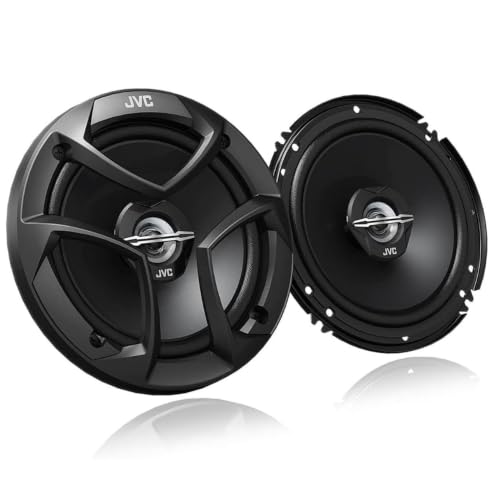
JVC CS-J620 2-Way Coaxial Speakers
What We Like
- Shallow mount depth for tight doors
- Pre-arranged holes simplify installation
- Includes extension cables and mounting tabs
- Mica cone and PEI tweeter for clarity
Trade-offs
- 30W RMS limits high-volume headroom
- 2-way design lacks a dedicated midrange driver
A shallow top mount depth of just 1-23/32 inches is the single most practical feature here. It means these speakers slide into doors where window tracks or glass sit close behind, saving you the headache of cutting or shimming. For anyone swapping out factory speakers on a weekend, the pre-arranged mounting holes and included wire extensions, screws, and tabs turn a fiddly job into a straightforward one. The mica cone and 1-inch PEI tweeter deliver clear highs and smooth mids, so your daily commute gets a noticeable upgrade without demanding a lot of your time or patience.
The JVC CS-J620 delivers 30W RMS per speaker, which keeps things clean at moderate volumes but won’t satisfy those who need to fill a large vehicle with sound. The shallow 1-23/32-inch top mount depth simplifies installation in tight doors, and the included extension cables, screws, and mounting tabs help if you need to modify the fit. For a driver who prioritizes easy installation and balanced audio over sheer output, these speakers work well.
Product photos
ORION Cobalt CB65C Component Speaker System

What We Like
- Silk dome tweeters for smooth highs
- Butyl rubber surround for durable bass
- Universal fit with surface or flush tweeter mount
Trade-offs
- 70W RMS limits output for high-power systems
- 6.5" size won't fit 6×8 or 6×9 openings
A dedicated woofer and tweeter with an external crossover let you place the tweeter where it sounds best, surface or flush. This gives you clear highs and deep bass without the muddiness of a coaxial speaker fighting for space. This Orion system is built for the driver who wants to tune their front stage, not just swap in a one-piece speaker. The silk dome tweeter delivers smooth treble that won’t fatigue your ears on a long road trip, and the butyl rubber surround keeps the woofer under control even when you crank it.
Product photos
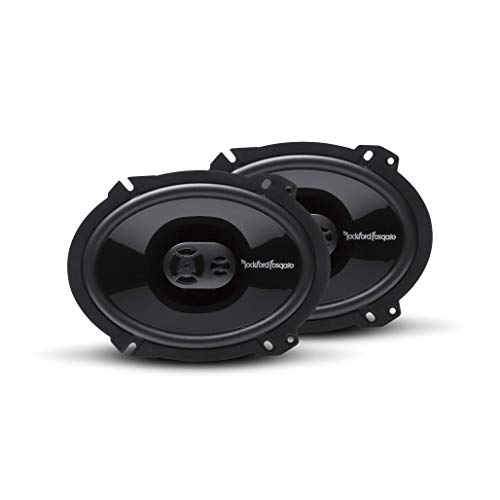
Rockford Fosgate P1683 Punch 6×8 3-Way Coaxial Speakers
What We Like
- FlexFit basket slots for easy alignment
- PEI dome tweeter with built-in crossover
- Butyl rubber surround for accurate sound
- OEM adapter plate included for simple install
Trade-offs
- 65W RMS limits high-volume headroom
- 1-year warranty is shorter than some competitors offer
The FlexFit basket design uses slots instead of fixed screw holes, so you can slide the speaker slightly to match your vehicle’s factory mounting points. That small adjustment saves you from drilling or filing when replacing stock speakers in older cars or trucks where holes never quite line up. With a PEI dome tweeter and a mineral-filled polypropylene cone wrapped in butyl rubber, these 6×8 coaxial speakers are built for high output and accurate frequency reproduction. They come as a pair with an OEM adapter plate and mounting hardware.
Product photos
How We Evaluated Car Audio Speakers
Our evaluation is research-based. We examined manufacturer specifications including power handling, sensitivity ratings, and speaker dimensions. We also analyzed expert round-ups from automotive audio specialists and identified common themes in owner feedback across a wide range of vehicles.
The four criteria that mattered most were power handling (RMS and peak), sensitivity (how loud a speaker gets with a given amount of power), and build quality (cone material, surround type, voice coil construction). Ease of installation (mounting depth, included hardware, fit flexibility) also played a big role. These factors directly affect whether a speaker will sound good in your specific car.
A research-led evaluation has limits. We cannot claim to have tested every speaker in every vehicle, and your car’s acoustics, head unit, and sound deadening will affect the final result. What we can do is give you the data and owner-reported patterns to make a confident choice.
What To Look For In Car Audio Speakers
Choosing car speakers means matching them to your vehicle’s power, space, and your listening preferences. Focus on sensitivity, power handling, and physical fit above all else.
Match speaker sensitivity to your stereo’s power: higher sensitivity (92 dB and up) works best with factory head units, while lower sensitivity speakers need an external amplifier.
Sensitivity and Power Handling
Sensitivity, measured in decibels (dB), tells you how loud a speaker plays from a given amount of power. A speaker rated at 92 dB sensitivity will sound noticeably louder than a model with lower sensitivity when both are run from a factory stereo’s modest power. For those planning to add an amplifier, RMS power handling becomes the key number, it shows how much continuous power the speaker can handle without distortion.
Speaker Size and Mounting Depth
Car speakers come in standard sizes: 6.5-inch round and 6×9 oval are the most common. Measure your existing speaker openings before buying. Mounting depth is equally critical, some modern cars have very shallow door cavities. The JVC CS-J620 and Kenwood KFC-1666R both feature shallow designs that fit tight spaces.
Cone and Tweeter Materials
Cone material affects sound character and durability. Polypropylene cones, like those in the KICKER KS-Series, resist moisture and deliver detailed midrange. Cloth woofers, found on the Kenwood pick, offer balanced sound. For tweeters, silk dome designs (Skar Audio TX65, ORION Cobalt) produce smooth, non-fatiguing highs, while PEI or metal dome tweeters can be brighter.
- Check your car’s factory speaker size and depth before ordering.
- Match the speaker’s RMS rating to your stereo or amplifier’s output.
- Decide between coaxial (all-in-one) and component (separate tweeter) systems.
- Look for included mounting hardware and adapters to simplify installation.
- Consider your listening style: do you want balanced sound or concert-level volume?
A simple rule: if your stereo is factory, buy speakers with high sensitivity and moderate RMS power handling. If you have an amp, focus on RMS handling above a moderate level.
Car Audio Speakers Compared
The table below compares the ten speakers across key specs so you can see at a glance which ones fit your vehicle and listening needs.
| Product | Size | Peak Power | Impedance |
|---|---|---|---|
| Kenwood KFC-1666R Road Series Coaxial Speakers | 6.5 inches | 300W | 4 ohms |
| KICKER DSC6930 6×9 3-Way Speakers | 6×9" | 360W | 4 Ohms |
| Pioneer F-Series TS-F1634R 2-Way Coaxial Speakers | 6.5" | 200W max | 4 ohms |
| Pioneer A-Series Plus TS-A1681F 4-Way Coaxial Speakers | 6.5" | 350W | N/A |
| DS18 PRO-GM6.4B Midrange Loudspeaker | 6.5" | 480W Max | 4 Ohms |
| Skar Audio TX65 2-Way Elite Coaxial Speakers | 6.5" | 200W (Pair) | 4 Ohm |
| KICKER KS-Series 51KSC6504 Coaxial Speakers | 6.5 Inches | N/A | 4 Ohms |
| JVC CS-J620 2-Way Coaxial Speakers | 6.5" | 300W | 4 ohms |
| ORION Cobalt CB65C Component Speaker System | 6.5" | 280W | 4-ohm |
| Rockford Fosgate P1683 Punch 6×8 3-Way Coaxial Speakers | 6×8 | 130W Max | 4-Ohm |
Frequently Asked Questions
What size car speakers do I need?
Measure the diameter and depth of your existing factory speakers. Common sizes are 6.5-inch round and 6×9 oval. Many listings include a fit guide, but measuring yourself is the only way to be sure. The Rockford Fosgate P1683 Punch speakers feature a FlexFit basket that adjusts to different mounting patterns.
Do I need an amplifier for new car speakers?
Not always. Speakers with high sensitivity (91 dB or more) like the Pioneer A-Series Plus TS-A1681F can sound great on factory stereo power. If you choose speakers with lower sensitivity or want very loud, clean sound at high volumes, an external amplifier becomes necessary.
What is the difference between coaxial and component speakers?
Coaxial speakers have the woofer, tweeter, and crossover built into one unit for easy drop-in installation. Component systems, like the ORION Cobalt CB65C, separate the tweeter from the woofer for better soundstage and imaging but require more installation work.
How do I know if speakers will fit my car?
Check three measurements: mounting depth (how far the speaker protrudes into the door), cutout diameter (the hole size), and clearance behind the door panel. The JVC CS-J620 and Kenwood KFC-1666R both have shallow mounting depths that help in tight spaces.
What does speaker sensitivity mean for sound quality?
Sensitivity measures how efficiently a speaker converts power into sound. A 92 dB speaker will play twice as loud as an 89 dB speaker from the same stereo wattage. This matters most when using a factory head unit, which typically provides only 15-20 watts per channel.
The Bottom Line
The Kenwood KFC-1666R Road Series Coaxial Speakers are our Best Overall pick for drivers who want a straightforward upgrade with clear, balanced sound. Their shallow depth and cloth woofer make them a versatile choice for most vehicles, and they work well with factory stereo power.
For budget-conscious buyers, the Pioneer F-Series TS-F1634R delivers solid performance at an affordable price point. Those with factory 6×9 openings should look at the KICKER DSC6930 for a high-power upgrade, while DIYers will appreciate the easy installation of the JVC CS-J620.
The single most important buying factor is matching the speaker to your car’s power and space. Measure your openings, know your stereo’s output, and choose a speaker with the right sensitivity for your setup. Do that, and you’ll hear the difference immediately.
