
10 Best Sport Bike Boots in 2026
This post contains affiliate links. As an Amazon Associate, we earn from qualifying purchases.
For sport bike riders, the Alpinestars SMX-6 V3 Sport Boots are the best overall choice, offering CE-certified safety and a lightweight microfiber construction that works for both spirited street riding and track days. The Sidi Vertigo 2 Motorcycle Boots earn our award for best adjustable protection, while the ILM BRC1 Racing Boots deliver strong value for riders on a budget.
Finding the right sport bike boot means balancing protection, weight, and feel at the controls. A boot that is too stiff can compromise your shifting, while one that is too light may not hold up in a slide. Ventilation, closure systems, and sole traction also matter depending on whether you ride in hot weather, wet conditions, or on rough pavement.
This guide is based on a thorough review of manufacturer specifications, safety certifications, and patterns in owner feedback. We evaluated each boot against the criteria that matter most for sport riding, so you can choose with confidence.
Top 10 Sport Bike Boots in the Market
Certain content that appears on this site comes from Amazon. This content is provided "as is" and is subject to change or removal at any time.
The Best Sport Bike Boots, Reviewed
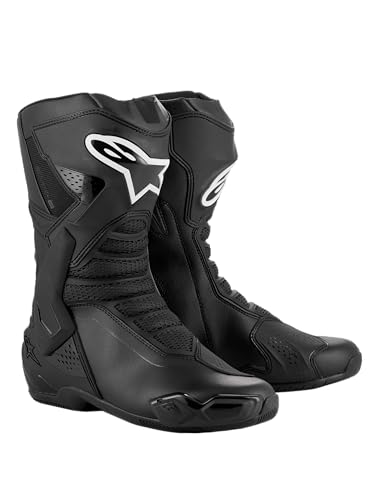
Alpinestars SMX-6 V3 Sport Boots
What We Like
- CE-certified to EN 13634:2017 safety standard
- Biomechanical ankle brace for impact protection
- Replaceable dual-density TPU toe sliders
- Lightweight advanced microfiber construction
Trade-offs
- No venting for hot-weather riding comfort
- Listed as women's boots, not unisex sizing
A CE certification to EN 13634:2017 means these boots meet strict European safety standards for impact and abrasion resistance, giving you real confidence carving canyon roads or tracking a sport bike. The biomechanical ankle brace system supports natural movement while protecting the Achilles and ankle from hard hits, and the lightweight microfiber construction keeps the pair at just 2.2 pounds, noticeably lighter than many racing boots. That combination of certified protection, smart brace design, and low weight is why these suit riders who want serious safety without feeling like they’re strapping on lead weights.
These boots are built for protection and durability, with replaceable dual-density TPU toe sliders that add safety during aggressive riding. The advanced microfiber construction provides abrasion resistance while keeping the weight low, and the front and rear flex zones allow natural foot movement. For the rider who prioritizes certified protection, a light feel, and replaceable toe sliders over maximum airflow, this boot delivers a balanced package that covers the essentials without overcomplicating things.
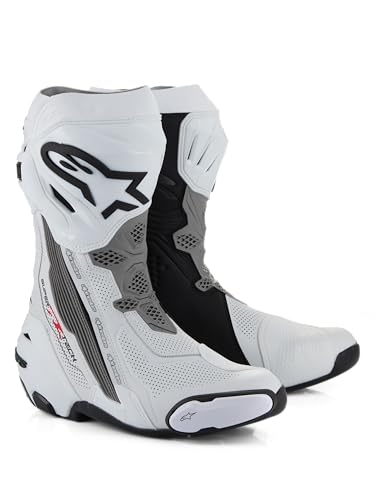
Alpinestars Supertech R Vented Racing Boots
What We Like
- Advanced microfiber construction reduces weight
- CE certified with bio-mechanical pivot system
- Strategically placed perforations for maximum airflow
- High-performance sole for exceptional traction
Trade-offs
- No metal toe slider for extended track-day sliding
- Lacks a waterproof membrane for wet-weather riding
A CE-certified safety rating backed by a bio-mechanical pivot system means these boots prioritize ankle stability and impact protection where it counts most. The advanced microfiber construction keeps weight manageable while still delivering durability, so you get race-ready safety without feeling like you’re strapping on bricks. For riders who want a ventilated boot that breathes on hot track days or spirited canyon rides, the strategically placed perforations pull airflow through the shell, making this a strong match for warm-weather sport riding.
At 6.7 pounds, these boots are not the lightest in the guide. The Alpinestars SMX-6 V3 Sport Boots come in at just 2.2 pounds, which is a significant difference if every ounce matters during long sessions. The vented design also means less insulation for cooler morning commutes or autumn rides. If you ride in variable temperatures or prioritize featherweight feel above all else, that other Alpinestars model might suit you better. But for a fully certified racing boot with serious airflow, this one delivers where it counts.
Sidi Vertigo 2 Motorcycle Boots

What We Like
- Replaceable toe scuff pads extend life
- Closable air vent for temperature control
- Double stitching in high-stress areas
Trade-offs
- Single ankle brace, not dual-axis design
- Nylon scuff pads wear faster than metal
For riders who want to tailor their gear to their body rather than accept a one-size-fits-all safety profile, this is the boot that puts you in control of your protection level.
For riders who want protection they can tune as their riding evolves, the Vertigo 2 delivers where it counts. The single nylon ankle support brace provides extra support, while double stitching in all high-stress areas adds durability. Bolt-on replaceable scuff pads on the toe and a closable air vent allow for customization and maintenance, making this boot adaptable to changing conditions and personal preferences.
Product photos
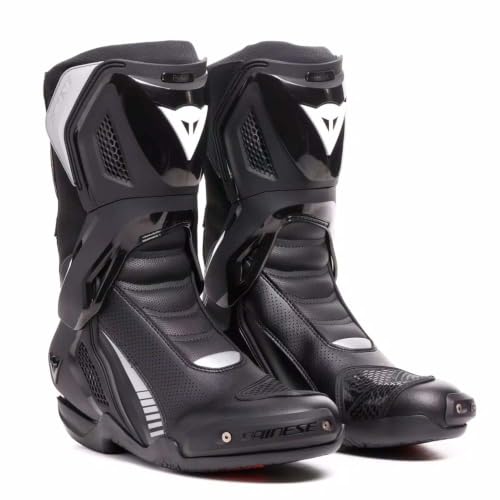
Dainese Nexus 3 Air Perforated Boots
What We Like
- Micro-perforated shaft for hot-weather airflow
- Axial Distortion Control protects ankle, shin, heel
- Groundtrax soles grip well on track
- Replaceable grinder and TPU gear protection
Trade-offs
- Ventilation-focused design limits cold-weather use
- IN/OUT wear requires adjusting fit each time
The micro-perforated shaft on these boots provides effective ventilation for warm-weather riding, backed by the Axial Distortion Control System that ties the ankle, shin, and heel together into a protective cage. If you ride in hot conditions, this boot keeps you cool while offering the structural support needed for aggressive riding.
The trade-off is that all that perforation works against you when temperatures drop, so these are strictly a warm-weather choice. The rear zip closure is fast to get in and out of, and the IN/OUT wear system lets you adjust the fit for use over or under clothing.
Sidi Rex Air Racing Boots

What We Like
- Perforated design with breathable mesh panels
- Nylon and fiberglass ankle support brace
- Tecno-3 push closure for custom fit
- Dual-compound sole for grip
Trade-offs
- Heavier than Alpinestars SMX-6 V3 at 2.2 lb
The perforated panels and breathable mesh on this boot deliver serious airflow, so your feet stay cool even during long summer rides or track days. Sidi built it with a nylon-and-fiberglass ankle brace, a reinforced heel cup, and a fiberglass-reinforced toe slider, giving you solid protection without feeling like a clunky work boot. The Tecno-3 push closure lets you dial in the fit quickly and keeps everything locked in place, which matters when you’re shifting aggressively through corners. Riders who prioritize keeping their feet dry and comfortable in hot conditions will find a lot to like here.
Weighing 5.2 pounds, these are noticeably heavier than the featherweight Alpinestars SMX-6 V3 at 2.2 pounds. That extra heft comes from the protective structure and materials, so you’re trading a bit of lightness for more armor. The closure system also takes a few tries to get used to if you’re coming from a traditional zipper or buckle boot. For anyone who rides in warm climates and wants maximum ventilation with race-level protection, this boot is a strong fit.
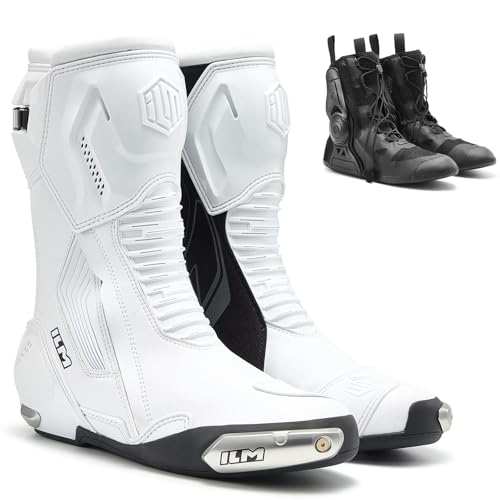
ILM BRC1 Racing Boots
What We Like
- Dual-layer construction for impact resistance
- TPU armor at shin, heel, toe, shifter
- Anti-torsion sole meets CE standards
- Heel and shin vents with mesh liner
Trade-offs
- Heavier than some sport boots at 4.4 lb
- No CE Level rating specified for armor
A dual-layer construction with a protective inner bootie and reinforced outer shell gives this boot serious impact resistance and torsional stability for aggressive riding. The TPU armor at the shin, heel, toe, and shifter area, plus an anti-torsion sole that meets CE standards, means you get real racing protection without spending a premium. It suits riders who want track-ready safety features and ventilated comfort from the heel and shin air vents and 3D mesh liner, all at a budget-friendly price point.
At 4.4 pounds, these boots are heavier than the lightweight Alpinestars SMX-6 V3 at 2.2 pounds, which could cause more fatigue on long days. The side zipper and quick-lock buckle provide a secure fit and fast entry. For the rider who prioritizes protection and value over minimal heft, the ILM BRC1 delivers where it counts.
Scoyco CE Level 2 Racing Boots

What We Like
- Reinforced TPU shin guard and inner skeleton
- Replaceable magnesium alloy toe slider
- Anti-slip sole with excellent pedal grip
Trade-offs
- Ratchet buckles add time to on/off compared to zipper-only boots
- No venting features mentioned for hot-weather riding
The microfiber leather upper, while durable and dirt-resistant, doesn’t have the natural-breathing feel of leather, and the ratchet buckle system takes a bit longer to fasten than a simple zipper. Compared to the Alpinestars SMX-6 V3, which uses a more traditional leather construction and a single zipper closure, the Scoyco offers a higher protection certification but less convenience for quick changes. It’s a deliberate choice for riders who want maximum armor and are willing to spend an extra minute suiting up.
Product photos
DUHAN Dual-Axis Racing Boots

What We Like
- Dual-Axis Joint System for ankle protection
- Detachable titanium alloy sliders
- Ortholite cushioned insoles reduce fatigue
Trade-offs
- No weight data provided for comparison
- Fixed inner boot limits fit for wider feet
The Dual-Axis Joint System disperses impact forces, so your ankles stay protected on rough terrain or at the track. A TPU shin shell, detachable titanium alloy sliders, and built-in toe protection layer up the defense, while Ortholite cushioned insoles absorb sweat and reduce fatigue on long rides. Breathable channels keep feet cool and dry, and the accordion-style design ensures flexibility without sacrificing protection.
The fixed inner boot with inner shoelace design hugs the foot snugly, which means less room for adjustment if you have a wider foot or prefer a looser fit. For riders who value a secure, locked-in feel and don’t mind a bit of extra weight, these boots deliver exceptional ankle support that stands out in this category.
Product photos
Noru Hakone Motorcycle Boots

What We Like
- CE certified to EN 13634:2017
- Easy entry hook and loop closure
- Replaceable toe slider
- Reflective rear panel for visibility
Trade-offs
- No ratchet buckle closure for secure fit
At 5.3 pounds, these boots are light enough for all-day touring without weighing you down, yet they carry full CE certification to EN 13634:2017 including the optional ankle and shin impact tests. That means you get serious protection in a package that won’t leave you limping at the gas station. The hook and loop closure with a YKK zipper makes getting in and out quick, while the replaceable toe slider and removable insole add longevity that touring riders appreciate. If you spend more time on winding roads than at the track, this boot balances safety with real-world comfort.
The Noru Hakone boots weigh 5.3 pounds, which keeps them manageable for carrying along on a weekend trip. They offer CE-certified impact protection, a slip-resistant sole with arch support, and a reflective panel on the rear for low-light visibility. The hook-and-loop closure with a YKK zipper makes entry easy, though riders who prefer a more locked-down fit might want a boot with multiple closures.
Product photos
Fly Racing Maverik LT Riding Boots

What We Like
- Aggressive lug pattern for superior traction
- Rubber heat shield resists melting
- Gaiter seals out debris at calf
- One-piece fish tail midsole adds stability
Trade-offs
- At 10.0 pounds, heavier than some sport boots
- No venting features listed for hot weather riding
The aggressive molded outsole with its deep lug pattern is the defining feature here, providing better traction when you put your foot down. That same outsole also helps keep weight down compared to a traditional full motocross boot, though at 10.0 pounds these are still heavier than road-focused options like the Alpinestars SMX-6 V3 at 2.2 pounds. If you ride on surfaces where a sure-footed stance matters more than featherlight weight, this boot delivers where it counts.
The rubber heat shield is a smart touch for exhaust pipe contact, and the gaiter keeps trail debris from sneaking in around your calf. Compared to the Alpinestars SMX-6 V3, which weighs only 2.2 pounds, the Fly Racing Maverik LT is clearly aimed at riders who prioritize sticky footing over all-day lightness.
Product photos
How We Evaluated Sport Bike Boots
Our evaluation started with the safety certifications, materials, and construction details listed by each manufacturer. We looked at CE certification levels, ankle protection systems, and the type of armor used at the shin, heel, and toe. Replaceable parts like toe sliders were also a key factor, as they indicate a boot built to last through hard use.
We then considered the practical details that affect daily riding: weight, closure mechanisms, venting, and sole grip. Owner feedback patterns helped us understand how each boot fits, how the closures hold up over time, and whether the claimed ventilation actually works in hot weather. Comfort features like cushioned insoles and gaiter seals were noted where available.
An evaluation like this has limits. It relies on the data manufacturers provide, the safety standards they meet, and what experienced riders report. This approach gives you a reliable starting point for your own decision.
What To Look For In Sport Bike Boots
Choosing the right sport bike boot means focusing on protection, fit, and features that match your riding style. Here are the key criteria to consider.
Look for CE-certified boots with ankle protection, replaceable sliders, and a closure system you can operate with gloves. Weight and ventilation matter for all-day comfort, while sole grip affects your feel at the pegs and on the ground.
Safety Certification and Armor
The most important feature of any sport bike boot is its safety certification. Look for boots certified to CE EN 13634:2017, which sets standards for impact abrasion, cut resistance, and sole rigidity. Within that standard, Level 1 offers basic protection while Level 2 provides the highest certified protection. Ankle protection systems, whether biomechanical braces, dual-axis joints, or axial distortion controls, reduce the risk of twisting injuries in a crash. TPU armor at the shin, heel, and toe adds crucial impact resistance.
Weight and Construction
Sport bike boots made from advanced microfiber are significantly lighter than traditional leather, which reduces fatigue during a long ride and makes shifting easier. Lighter boots also allow quicker foot movement when you need to put a foot down. However, lighter materials may not offer the same abrasion resistance as thicker leather, so check the CE certification level. Replaceable toe sliders and scuff pads extend the life of the boot, saving you money over time.
Closure Systems and Fit
The closure system affects both security and convenience. Ratchet buckles provide the most secure, adjustable fit and are common on racing boots. Hook-and-loop closures are faster to use but may not hold as securely at high speeds.
Some boots combine a zipper with a top strap for a secure fit that is still easy to get in and out of. Make sure the closure can be operated with riding gloves on. A proper fit means the boot is snug around the calf and ankle without pinching, with enough room to tuck your pant leg inside.
- Check that the boot meets CE EN 13634:2017 certification.
- Look for replaceable toe sliders and scuff pads.
- Test the closure system with your riding gloves on.
- Consider your typical riding temperature, vented boots for hot weather, waterproof for wet.
- Choose a sole pattern that provides good grip on both pegs and pavement.
A boot that fits well and meets safety standards is always a better choice than one with more features that doesn’t fit properly.
Sport Bike Boots Compared
The table below compares the key specifications and protection features of each boot in our top 10, making it easy to see the differences at a glance.
| Product | Closure | Ankle Protection | Weight |
|---|---|---|---|
| Alpinestars SMX-6 V3 Sport Boots | Ratchet buckle, zipper | Biomechanical brace system | 2.2 pounds |
| Alpinestars Supertech R Vented Racing Boots | Adjustable closure system | Bio-mechanical pivot system | 6.7 pounds |
| Sidi Vertigo 2 Motorcycle Boots | Tecno VR system | Single nylon brace | 5.2 pounds |
| Dainese Nexus 3 Air Perforated Boots | Rear zip + IN/OUT wear | Axial Distortion Control System | 4.1 pounds |
| Sidi Rex Air Racing Boots | Tecno-3 Push System | Ankle brace | 5.2 lb |
| ILM BRC1 Racing Boots | Side zip + quick-lock buckle | Dual-layer, TPU armor | 4.4 Pounds |
| Scoyco CE Level 2 Racing Boots | Ratchet buckle + YKK zipper + Velcro tab | TPU shin guard, inner skeleton | N/A |
| DUHAN Dual-Axis Racing Boots | Zipper, Velcro, inner shoelace | Dual-Axis Joint System | N/A |
| Noru Hakone Motorcycle Boots | Hook and loop, YKK zipper | Dual density molded protectors | 5.3 Pounds |
| Fly Racing Maverik LT Riding Boots | N/A | N/A | 10.0 Pounds |
Frequently Asked Questions
Do I need CE-certified sport bike boots?
Yes. CE certification to EN 13634:2017 means the boot has been tested for impact abrasion, cut resistance, and sole rigidity. Without it, you have no guarantee the boot will hold up in a slide. Level 2 offers the highest protection, but Level 1 is still a significant step above uncertified gear.
What is the difference between a racing boot and a sport touring boot?
Racing boots prioritize maximum protection and track-specific features like replaceable toe sliders, rigid ankle braces, and aggressive sole patterns. They tend to be stiffer and less comfortable for walking. Sport touring boots are lighter, more flexible, and easier to walk in, but they may offer less impact protection and fewer replaceable parts.
Can I wear sport bike boots for walking?
It depends on the boot. Racing-focused boots like the Alpinestars Supertech R or Sidi Rex Air have stiff soles and limited flexibility, making them awkward for extended walking. Sport touring boots like the Noru Hakone are designed for more comfort off the bike. If you plan to walk at your destination, look for a boot with a more flexible sole and cushioned insole.
How should sport bike boots fit?
Sport bike boots should fit snugly around the ankle and calf without pinching. Your heel should stay in place when you walk, and your toes should have just enough room to wiggle. The boot should not compress your foot to the point of numbness. Try them on with the socks you plan to ride in, and make sure you can operate the closure with your gloves on.
Are vented boots worth it for hot weather riding?
Yes. Vented boots with perforations or mesh panels make a significant difference in comfort on hot days. Boots like the Dainese Nexus 3 Air and Sidi Rex Air are designed specifically for warm-weather use. Just keep in mind that vented boots offer less insulation in cold weather and are not waterproof, so they are best for riders who primarily ride in warm conditions.
The Bottom Line
The Alpinestars SMX-6 V3 Sport Boots are the best overall choice for most riders, combining CE-certified safety, a lightweight microfiber build, and a biomechanical ankle brace that provides excellent impact protection. They are ideal for anyone who wants a do-it-all sport boot for street riding and the occasional track day.
If your priority is maximum airflow for hot-weather riding, the Sidi Rex Air Racing Boots are worth the investment. For riders on a budget, the ILM BRC1 Racing Boots deliver CE-rated protection and ventilation without breaking the bank. Those who need the highest certified protection level should look at the Scoyco CE Level 2 Racing Boots.
The single most important factor in choosing a sport bike boot is the safety certification. Everything else, weight, venting, closure type, comes second to knowing your boot will protect you in a crash. Choose a certified boot that fits well, and you will ride with more confidence.
