
10 Best Two Stroke Oils Dirt Bikes in 2026
This post contains affiliate links. As an Amazon Associate, we earn from qualifying purchases.
For most dirt bike owners, the Klotz TechniPlate Synthetic Premix Oil is the best overall choice thanks to its ashless formula that fights deposits and keeps power valves clean. For high-performance racing engines, the TRIAX Power Sport 2T Full Synthetic delivers exceptional film strength. And if you ride a Yamaha, the Yamaha Yamalube Racing 2R Oil is optimized for those engines.
Choosing the right two-stroke oil isn’t just about brand loyalty, it’s about matching the oil’s chemistry to your engine’s age, your riding style, and how you mix your fuel. Use the wrong oil and you risk carbon buildup, plug fouling, or inadequate protection under hard acceleration.
This guide is built on manufacturer specifications, expert round-ups, and patterns in owner feedback. We’ve ranked ten oils by their specific strengths and trade-offs so you can pick the one that fits your bike and your riding.
Top 10 Two Stroke Oils For Dirt Bikes in the Market
Certain content that appears on this site comes from Amazon. This content is provided "as is" and is subject to change or removal at any time.
The Best Two Stroke Oils For Dirt Bikes, Reviewed
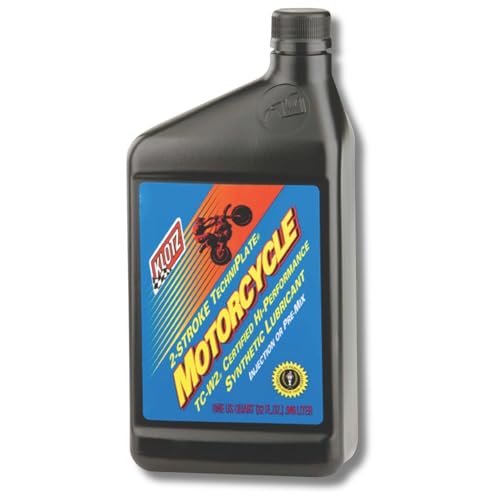
Klotz TechniPlate Synthetic Premix Oil
What We Like
- Ashless formula reduces deposit formation
- Detergents prevent spark plug fouling
- Anti-wear chemistry protects bearings and rings
- Maintains power valve cleanliness
Trade-offs
- Designed only for 1992 and older models
- Not suitable for post-1992 two-stroke engines
Klotz TechniPlate uses an ashless synthetic formula with detergents and dispersants that actively fight deposit buildup and spark plug fouling, so your older two-stroke dirt bike can keep running clean without constant plug changes. The extreme film strength from its anti-wear chemistry protects bearings and piston rings from metal-on-metal contact, which matters most when you’re pushing a 1992 or older engine hard on the trail or track. This oil is built for riders who want reliable protection and throttle response from a classic machine, not the latest fuel-injected race bike.
The main trade-off is that TechniPlate is specifically formulated for 1992 and older off-road models, meaning it won’t suit a newer KTM or Husqvarna. If you ride a 1992 or older bike, this oil’s power valve cleaning ability gives it an edge over a general-purpose synthetic like the Motul 710, though direct comparisons on deposit targeting are not available. For vintage dirt bike owners who value long engine life and consistent performance, this quart delivers exactly what the label promises.
Product photos
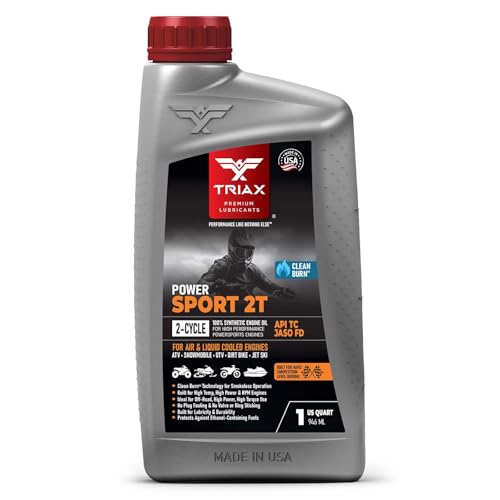
TRIAX Power Sport 2T Full Synthetic
What We Like
- Clean Burn Technology reduces smoke
- Anti-friction formula boosts power output
- Maintains piston ring cleanliness
- High film strength under racing conditions
Trade-offs
- Designed for high-performance engines, not casual trail riding
- Not formulated for low-stress trail riding or casual puttering
A full synthetic formula built for air and liquid cooled high-performance two-stroke engines handles the heat and RPMs of a race-ready dirt bike without breaking a sweat. The Clean Burn Technology keeps piston rings free of carbon buildup and cuts smoke, so you spend more time on the track and less time cleaning. Riders pushing their bikes hard off-road or on a closed course will appreciate the anti-friction chemistry that helps torque and power climb fast while the high film strength protects rings and liners even when things get brutal.
The trade-off is that this oil is tuned for demanding conditions, so if your riding is mostly casual trail puttering or low-stress cruising, the advanced synthetic package may deliver more protection than you really need. Compared to a semi-synthetic like the Klotz TechniPlate, which is designed for broader TC-W2 applications, the TRIAX is a more focused choice for those who genuinely race or ride hard. For the weekend warrior who wants every bit of performance their engine can give, this is the oil to pour.
Product photos
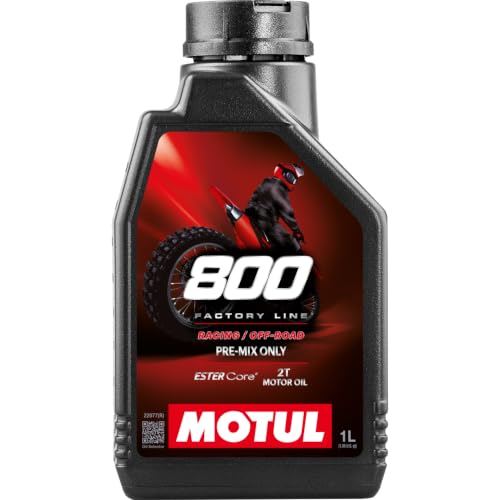
Motul 800-2T Off-Road Premix
What We Like
- 100% synthetic formulation
- Meets most demanding requirements
Trade-offs
- Heavier than Klotz KL-300 at 2.0 lb vs 1.0 lb
- Strong scent lingers after riding.
Motul’s 800-2T Off-Road Premix is a 100% synthetic oil that meets the most demanding requirements on the market, which means it is built to handle high heat and high RPMs without breaking down. The 1-liter bottle is a single size option, and the oil’s fully synthetic base is designed for engines that need strong lubrication under stress. For riders who race or ride aggressively, this oil offers the reassurance of a synthetic formulation that can take the heat.
At 2.0 pounds, this bottle is heavier than the 1.0-pound Klotz TechniPlate KL-300. If you are carrying oil in a backpack for a long ride, every ounce matters. But that extra weight comes from a formulation that prioritizes film strength over portability. For riders who race or ride aggressively and want the reassurance of a synthetic oil that can handle high temperatures, this is the one to grab. It is not the lightest option, but it is built for demanding use.
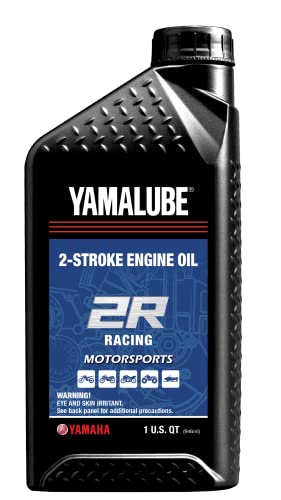
Yamaha Yamalube Racing 2R Oil
What We Like
- High-temperature protection for competition engines
- Reduces carbon deposits on pistons and rings
- Synthetic additives minimize exhaust port buildup
Trade-offs
- Optimized for Yamaha engines, less universal than some blends
- Not recommended for TC-W2 or TC-W3 outboard motors
This oil uses special base stocks and synthetic additives to reduce friction and limit carbon deposits on pistons, rings, and exhaust ports. For Yamaha two-stroke models like the YZ125 or YZ250, that means less buildup during high-temperature competition use. It’s a straightforward choice for riders who want a premix that fits a wide range of Yamaha dirt bikes from the factory compatibility list.
This blend is listed for specific Yamaha models, so if you ride a different brand, you might find a more universal option like the Motul 800-2T Off-Road Premix offers broader compatibility. Still, for Yamaha owners, the fitment list covers decades of bikes from the PW50 up to the YZ450F, making it a straightforward, no-guesswork pick. You get protection that’s developed for high temperatures and competition stress, with low carbon deposits on pistons, rings, and exhaust ports.
Motul 710 2T Full Synthetic Premix
What We Like
- Full synthetic formula for smooth performance
- Works with oil-injection or premix systems
- Designed for demanding 2-stroke engines
Trade-offs
- 4L bottle is heavy at 8.2 lbs for carrying on trails
- Not suitable for outboard or marine two-stroke engines
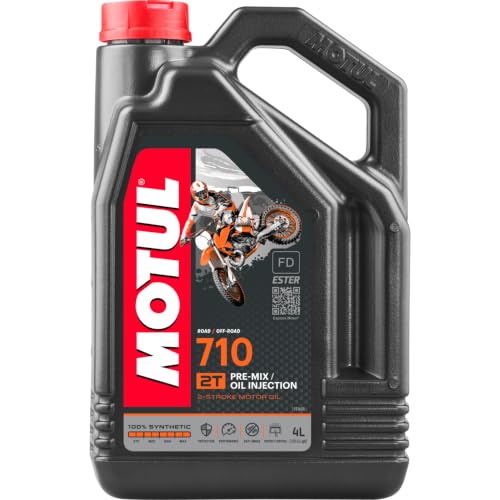
A full synthetic premix that handles both oil-injection and traditional premix systems, the Motul 710 2T is built for demanding 2-stroke engines. That dual compatibility means you can run it in a modern injected enduro or an older premix-only bike without second-guessing your oil choice. The 4-liter jug provides a substantial volume for multiple uses, so you are not constantly restocking.
At 8.2 pounds, the 4-liter jug is too heavy to carry in a backpack for a day on the trail. If you prefer smaller bottles to the staging area, a quart-sized option like the Klotz TechniPlate is lighter and easier to pack. The Motul 710 is designed for oil-injection or premix motors, so it works in both setups without needing separate oils.
Klotz TechniPlate KL-302 Premix Oil

What We Like
- Ashless formula reduces deposit formation
- Surface-active anti-wear chemistry protects bearings
- Clean Burn Technology lowers smoke and plug fouling
- Designed for modern 1993+ engines
Trade-offs
- Requires engine manufacturer's mix ratio for premix use
Klotz TechniPlate KL-302 is built around an ashless synthetic formula with surface-active anti-wear chemistry, which means it actively fights deposit buildup on power valves and spark plugs while protecting bearings and piston rings from metal-on-metal contact. That makes it a strong fit for riders running modern dirt bikes from 1993 onward, especially fuel-injected or high-RPM machines where carbon fouling can rob horsepower and throttle response. The Clean Burn Technology keeps smoke low, so you spend more time riding and less time clearing the air.
This oil is specifically engineered for newer engines, so if you are restoring or riding a vintage two-stroke from before 1993, the formulation may not provide the film strength those older air-cooled motors need. Against a classic like Maxima Castor 927, which uses castor base for old-school lubrication, the Klotz is a cleaner, more modern option that prioritizes deposit control over the nostalgic smell and cling of bean oil. For anyone with a 1993 or later bike who wants to keep power valves and plugs clean without sacrificing protection, this quart hits the mark.
Product photos
VP Racing Full-Synthetic 2-Cycle Oil

What We Like
- Smooth, easy starts every time
- Reduces carbon build-up in pistons
- Keeps fuel fresh up to 12 months
- Meets top industry standards
Trade-offs
- 4-pack size limits single-bottle purchase options
- Not ideal for low-smoke sensitive environments
A full-synthetic ester-fortified blend that meets API TC, JASO FD, and ISO-L-EGD standards delivers clean, reliable combustion from the first kick. The anti-oxidant package keeps fuel fresh for up to a year, so you can park the bike after a long ride and come back months later without worrying about stale mix gumming up the carburetor. That easy-start performance is exactly what weekend riders and racers alike need when every second at the starting line counts.
The 4-pack size means you cannot buy a single bottle. That may be inconvenient if you only need a small amount for a single use or want to test the oil before committing to multiple bottles.
Maxima Formula K2 Racing Premix
What We Like
- Race track developed with factory teams
- Surface-active chemistry clings to engine parts
- Optimal ring seal for maximum power
- Proprietary additive system virtually eliminates wear
Trade-offs
- Designed for aggressive riding, not casual trail use
- Requires precise mixing ratio for best results
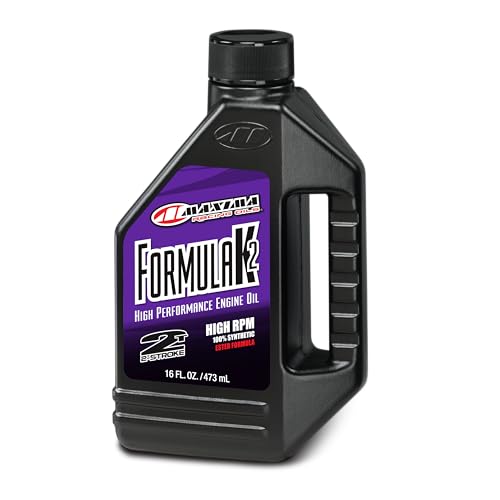
A surface-active chemistry aggressively attaches to engine surfaces, so the oil clings to critical parts even when the engine is under full throttle. Race track developed with factory race teams, this premix uses a world-class proprietary additive system and esters that combine to virtually eliminate wear, while the optimal ring seal ensures maximum power output. It’s built for riders who want ultimate hardware protection for even the most aggressive riding styles.
Red Line 40603 Two-Stroke Racing Oil
What We Like
- High-temp stability prevents deposits
- Extreme cleanliness in combustion chambers
- Extreme cleanliness
Trade-offs
- 16 oz bottle is small for frequent rides
- Racing formulation is overkill for casual trail riding
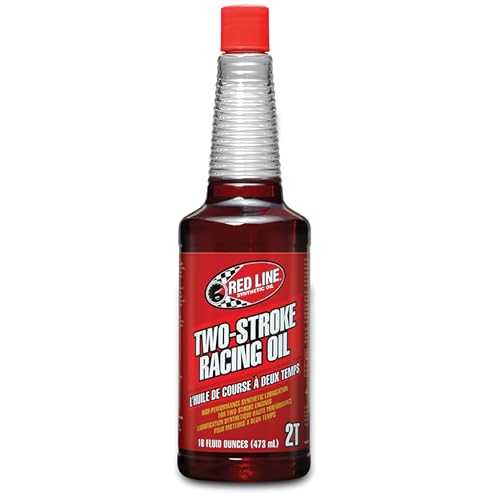
This oil is aimed at peak performance, not budget-friendly convenience. At 16 ounces, you get less volume than a quart container like the Klotz TechniPlate, and the racing formulation is more than a casual weekend trail rider really needs. If you are not wringing every rev out of your engine on a track or aggressive off-road loop, a more general-purpose premix might stretch your dollar further without sacrificing reliability.
Maxima Castor 927 Racing Premix
What We Like
- Exotic esters and castor oil film
- Surface-active chemistry protects engine surfaces
- Surface-active chemistry keeps engine surfaces clean
Trade-offs
- 64 oz bottle is heavy for transport
- Castor blend can leave more deposits than full synthetics
A 64-ounce bottle of castor-and-ester blend means you can mix multiple tanks without restocking, which matters when you’re burning through premix on a weekend ride. The surface-active chemistry clings to engine internals, keeping them clean while the castor oil maintains a thick film under hard throttle.
The 64-ounce bottle weighs 3.8 pounds, so it’s not something you’ll want to carry in a backpack on a long trail. Compared to a full synthetic like the Motul 800-2T Off-Road Premix, the Maxima uses a castor blend rather than a purely synthetic base, which some riders prefer for its film strength at high load. If you’re an aggressive rider who rebuilds on a schedule, this blend’s protection is worth the extra care.
How We Evaluated Two Stroke Oils For Dirt Bikes
We evaluated these oils based on manufacturer technical data, expert recommendations from the off-road community, and consistent themes in owner reports. Our goal was to match each oil to a specific rider need, from vintage engine preservation to all-out racing performance.
The four criteria that mattered most were deposit control, film strength, formulation type, and compatibility with oil-injection or premix systems. Deposit control is how clean the oil keeps pistons, rings, and power valves. Film strength means protection under high heat and load.
Our rankings reflect what the specs and the riding community consistently report, not controlled experiments. Use this as a starting point, then listen to your own engine.
What To Look For In Two Stroke Oils For Dirt Bikes
Choosing the right oil starts with knowing your engine’s age and your riding style. The wrong oil can cause deposits, poor starting, or even engine damage.
Match the oil type to your engine year and riding intensity. Use synthetic for modern engines and high performance, castor blends for aggressive riding, and ashless formulas to prevent deposits.
Formulation Type
Full synthetics offer the cleanest burn and best protection across a wide temperature range. They are ideal for modern liquid-cooled engines and high-performance racing. Castor blends provide superior film strength for aggressive riding but can leave more deposits. Mineral oils are budget-friendly but less effective at preventing carbon buildup.
Engine Compatibility
Older engines (pre-1993) often benefit from oils designed for their era, like the Klotz TechniPlate. Modern engines with power valves and tighter tolerances require oils with ashless formulas to prevent deposit formation on moving parts. Always check your owner’s manual for the recommended API or JASO rating.
Mix Ratio And Convenience
Some oils require precise mixing ratios for best results. Bottle size matters too, a 64-ounce bottle is fine for the garage but heavy to pack on a trail ride. Consider whether you prefer single-bottle purchases or value packs, and whether you mix by the gallon or the tank.
- Check your engine year and choose an oil formulated for that generation.
- Match the oil type to your riding intensity: synthetic for racing, castor for aggressive, mineral for casual.
- Consider bottle weight if you plan to carry oil on the trail.
- Verify the oil is compatible with your mixing system (premix or oil injection).
A good rule: if your engine has a power valve, use an ashless synthetic to keep it clean.
Two Stroke Oils For Dirt Bikes Compared
The table below compares all ten oils side by side, highlighting their formulation, best use, and key trade-offs.
| Product | Type | Weight | Volume |
|---|---|---|---|
| Klotz TechniPlate Synthetic Premix Oil | Synthetic premix/injector oil | 1.0 pounds | 1 quart |
| TRIAX Power Sport 2T Full Synthetic | Full Synthetic | N/A | 1 Quart |
| Motul 800-2T Off-Road Premix | 100% Synthetic Premix | 2.0 pounds | 1 Liter |
| Yamaha Yamalube Racing 2R Oil | N/A | N/A | 1 Quart |
| Motul 710 2T Full Synthetic Premix | Full Synthetic Premix | 8.2 Pounds | 4L |
| Klotz TechniPlate KL-302 Premix Oil | Synthetic | 0.2 pounds | 1 Quart |
| VP Racing Full-Synthetic 2-Cycle Oil | Full-synthetic ester-fortified | N/A | 16 oz (4 pack) |
| Maxima Formula K2 Racing Premix | 100% Synthetic | 1.0 Pounds | N/A |
| Red Line 40603 Two-Stroke Racing Oil | Synthetic | 0.6 pounds | 16 oz |
| Maxima Castor 927 Racing Premix | Castor blend | 3.8 pounds | 64 oz |
Frequently Asked Questions
What is the best two stroke oil for a 250cc dirt bike?
For most dirt bike engines, a full synthetic premix like the Motul 800-2T Off-Road Premix or Klotz TechniPlate KL-302 works well. Choose based on your engine year and riding style, ashless synthetics for modern power valves, high-film-strength oils for aggressive riding.
Can I use outboard motor oil in my dirt bike?
No. Outboard oils like TC-W2 or TC-W3 are formulated for water-cooled marine engines and lack the ashless detergents needed for air-cooled dirt bike engines. Using them can cause carbon buildup, plug fouling, and power valve sticking.
How do I know the right oil-to-gas ratio for my bike?
Always follow the ratio specified in your owner’s manual. Common ratios for dirt bikes include 32:1. Some racing oils recommend a specific ratio for best protection. Never guess, using too little oil can cause engine seizure, and too much can foul plugs and create deposits.
What is the difference between synthetic and castor two-stroke oil?
Synthetic oils burn cleaner and leave fewer deposits, making them ideal for modern engines and trail riding. Castor oils provide a thicker film that clings to engine parts under extreme heat, offering superior protection for aggressive racing but leaving more carbon residue.
Is it okay to mix different brands of two-stroke oil?
Mixing different brands or types (synthetic with castor, for example) is not recommended. Each oil has a unique additive package, and mixing can alter the burn characteristics and reduce protection. Stick with one oil per tank.
The Bottom Line
If you ride a 1992 or older dirt bike and want to keep power valves and pistons clean, the Klotz TechniPlate Synthetic Premix Oil is the best overall pick. Its ashless formula is purpose-built for vintage engines that need deposit control without the drawbacks of modern synthetics.
For racers and aggressive riders, the TRIAX Power Sport 2T Full Synthetic or Maxima Formula K2 Racing Premix offer the film strength and cleanliness required for hard laps. If you ride a Yamaha, the Yamaha Yamalube Racing 2R Oil is engineered specifically for those engines.
The single most important factor is matching the oil to your engine’s age and your riding style. Pick the right formulation, stick with it, and your bike will run cleaner and last longer.
