
10 Best Vocal Speakers For Cars in 2026
This post contains affiliate links. As an Amazon Associate, we earn from qualifying purchases.
For drivers who want crystal-clear vocals in their car audio system, the Pioneer D-Series TS-D65C Component Speakers are our Best Overall pick, thanks to their wide frequency response and flexible tweeter mounting. The Hertz UNO Series K-165 and Skar Audio TX65 are also strong contenders for different budgets and climates.
The problem with many factory speakers is that they muddy vocals, making dialogue hard to follow and robbing music of its emotion. A dedicated vocal speaker separates the midrange and treble to put the singer front and center, without the distortion that plagues stock systems.
This guide is based on manufacturer specifications, expert round-ups, and patterns in owner feedback. We evaluated ten top vocal speakers to help you find the right fit for your car, budget, and installation goals.
Top 10 Vocal Speakers For Cars in the Market
Certain content that appears on this site comes from Amazon. This content is provided "as is" and is subject to change or removal at any time.
The Best Vocal Speakers For Cars, Reviewed
Pioneer D-Series TS-D65C Component Speakers

What We Like
- Tri-position tweeter mounting for flexible install
- Handles up to 270W max power
- Frequency response from 32 Hz to 49 kHz
Trade-offs
- Requires separate tweeter wiring (component system)
- Heavier than some competitors at 5.0 pounds
A frequency response that stretches from 32 Hz to 49 kHz means these speakers can reproduce the full range of a singer’s voice, from the lowest chest notes to the highest overtones, without losing detail. That wide reach, paired with a design that keeps sound uniform even when speakers are aimed away from your ears, makes the Pioneer D-Series TS-D65C a natural pick for anyone who values vocal clarity in their car. It’s a component system, so the tweeter and midrange are separate, giving you more placement options to shape the soundstage exactly how you want. For drivers who listen to acoustic, jazz, or spoken-word content and want every syllable to come through crisp, this setup delivers.
The trade-off is sensitivity: at 84 dB, these speakers are rated to produce clear and loud sound even with lower power inputs, according to the spec sheet. That means they can work with a factory head unit, but adding an external amplifier will let you get more out of them, especially at higher volumes. Compared to something like the Hertz Dieci Series DSK-1653, which weighs 2.0 pounds and is lighter, the Pioneer at 5.0 pounds is heavier, but weight alone doesn’t determine how easy a speaker is to drive. If you’re willing to add an amplifier, the Pioneer rewards you with a soundstage that feels wide and open, centered on the vocals.
Morel Maximo Ultra 602 MKII Component Speakers

What We Like
- High 90.5 dB sensitivity for louder vocals
- External Voice Coil technology for clarity
- Soft dome tweeters for smooth highs
- Treated paper cone for natural sound
Trade-offs
- Heavier build at 8.0 pounds per pair
- 63mm mounting depth limits fit in shallow doors
A 90.5 dB sensitivity rating means these Morel speakers turn your car’s power into clear, present vocals without needing a monster amplifier. The External Voice Coil technology helps them handle that energy cleanly, while the treated paper cone keeps voices sounding natural rather than harsh. For anyone upgrading a factory system and wanting vocals that cut through road noise, this is a smart pick that rewards a modest amp with big results.
Product photos
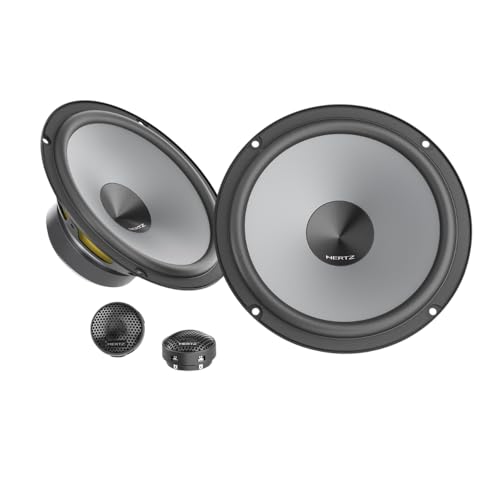
Hertz UNO Series K-165 Component Speakers
What We Like
- Water-repellent pressed paper woofer cone
- Neodymium tweeter magnet for efficiency
- PEI tweeter dome for clear highs
- Lightweight at 1.6 pounds
Trade-offs
- Ferrite woofer magnet is heavier than neodymium alternatives
- Ferrite woofer magnet adds weight compared to neodymium-only designs
A water-repellent pressed paper woofer cone sets these Hertz UNO Series K-165 speakers apart. That material resists moisture from rain, car washes, or humid climates far better than standard paper cones, so the speaker keeps its shape and sound even in a door that sees weather. The neodymium tweeter magnet is small and efficient, letting the PEI dome deliver crisp vocal highs without needing a huge mounting depth. For drivers who live in wet regions or often drive with windows down, this is a smart pick that prioritizes longevity without sacrificing clarity.
The woofer uses a ferrite magnet, which is heavier than neodymium, so it adds a bit more weight to the door install. At 1.6 pounds the whole pair is still lighter than the 5-pound Pioneer D-Series TS-D65C. If your car stays dry and you want maximum cone toughness, the Pioneer D-Series may be a better match, but for real-world moisture protection, the Hertz UNO K-165 is the one to beat.
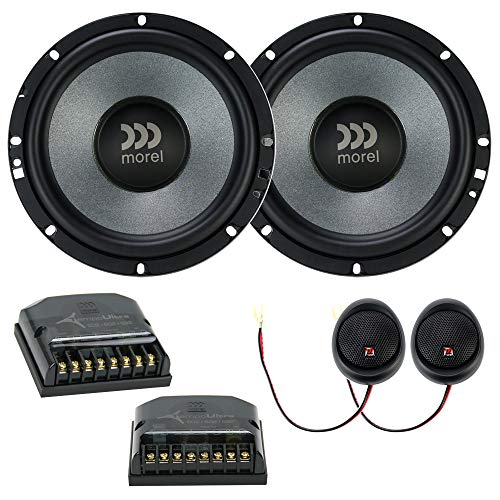
Morel Tempo Ultra 602 MKII Component Speakers
What We Like
- High power handling for loud, clean playback
- Treated paper composite cone for natural sound
- Ferrite neodymium magnet for strong motor force
- Copper voice coil wire for heat resistance
Trade-offs
- Low sensitivity requires a powerful amplifier
- Heavier build adds 9 pounds to installation
With a peak power rating of 500 watts per pair, these speakers are built to work with amplifiers that can deliver that level of output. The treated paper composite cone and copper voice coil wire are materials that support durability under high power, while the ferrite neodymium magnet provides motor force for midrange control. This set is a match for anyone who already has or plans to install a strong external amplifier and wants speakers that can take the power without damage.
With 90dB sensitivity, these speakers need more power from your amp to reach the same volume as a more sensitive design, so they won’t shine with a basic head-unit-powered setup. Compared to the Hertz Dieci Series DSK-1653, which weighs only 2.0 pounds, the Morel Tempo Ultra’s 9-pound heft reflects its heavy-duty construction. That also means you’ll need solid mounting points and careful installation in your door panels. For the enthusiast who values headroom and durability over easy power efficiency, these deliver exactly what the spec sheet promises.
Hertz Dieci Series DSK-1653 Component Speakers

What We Like
- Water-repellent pressed paper woofer cone
- Neodymium tweeter magnet for light weight
- PEI tweeter dome for clear highs
- Complete kit includes grilles
Trade-offs
- Ferrite woofer magnet adds weight vs neodymium
- Pressed paper cone less durable than coated materials
At just 2.0 pounds for the pair, this Hertz Dieci kit is the lightest component system in the guide. That weight savings comes from a neodymium tweeter magnet and a pressed paper woofer cone treated to repel water. If you are installing in doors where every ounce matters for fitment or you want to keep unsprung mass low on a lightweight car, this kit makes that job much easier. The water-repellent cone also gives you a bit of weather resistance in damp climates or leaky door seals, which is a practical touch for daily drivers.
The ferrite woofer magnet is a standard type found in many speakers. The pressed paper cone, while treated for water resistance, may not be as impact-resistant as some other materials used in higher-priced speakers. This kit is a sensible choice for budget-conscious builders who prioritize low weight and ease of installation over maximum durability.
Focal ES 165 K2E Component Speakers

What We Like
- Aramid fiber cone for rigid, lightweight sound
- 93dB sensitivity for efficient, clear output
- Bi-amplifiable crossover for refined treble control
- Versatile tweeter mounting options included
Trade-offs
- Requires a subwoofer for deep bass below 60Hz
- Tweeter housings add depth behind the dash
A 93dB sensitivity rating means these speakers play loud and clear without needing a massive amp, which is a real advantage when you want vocals to cut through road noise. The aramid fiber sandwich cone, ultralight foam between layers of aramid and fiberglass, gives you the rigidity of a stiff cone with the damping of a soft one. Voices stay precise and dynamic rather than muddy or harsh. This is a speaker for someone who values clarity and detail in the midrange, where most vocal energy lives, and who wants a system that rewards careful installation with true hi-fi character.
The 2Ω impedance means these speakers draw more current than a typical 4Ω design, so you’ll want to confirm your amplifier can handle that load before buying. Compared to the 6.5″ 2-way component set from Pioneer, the Focal uses an inverted aramid dome tweeter and a bi-amplifiable crossover for treble control. If you prioritize vocal accuracy and are willing to plan your system around the 2Ω spec, this kit delivers where it counts.
Focal PS 165 F3E Flax EVO Component Speakers

What We Like
- Flax cone for natural, uncolored sound
- TAM tweeter with wide-angle diffusion
- TMD surround on all speaker drivers
Trade-offs
- 3-way design needs more installation space
- Heavier than many 2-way kits at 9.0 pounds
This is a 3-way component system, so installation requires more planning and space than a typical 2-way set. At 9.0 pounds, it is heavier than some 2-way kits, so secure mounting is important. The result is a speaker that rewards the extra effort with natural, uncolored sound.
Product photos
Skar Audio TX65 Coaxial Speakers

What We Like
- Silk dome tweeter for smooth highs
- 200W peak power for clear output
- TPE surround for durability
- 1.25" copper voice coil for reliability
Trade-offs
- 89 dB sensitivity needs more amplifier power
- Only coaxial, no separate crossover for vocal clarity
At 89 dB sensitivity, these speakers are less efficient than some other models, so they may require more amplifier power to achieve higher volume levels compared to speakers with higher sensitivity ratings. The 100 watts RMS power handling gives them enough headroom for most aftermarket car audio setups. If you’re pairing them with an external amplifier, the silk dome tweeter and 4-ohm impedance make them a straightforward choice for a 2-way coaxial system.
Product photos
JVC CS-J6930 3-Way Car Speakers

What We Like
- Wide frequency range from 30 to 22,000 Hz
- Carbon mica woofer for smooth mids and lows
- Includes grilles for protection and appearance
- 400 watts peak power handling
Trade-offs
- Peak power rating, not RMS continuous power
- Coaxial design limits staging compared to components
A frequency response of 30 to 22,000 Hz means these JVC 6×9 speakers can handle deep bass and high treble, covering the full range of most music. The three-driver design uses a carbon mica woofer for lows and mids, a dedicated midrange driver, and a polymer film dome tweeter for highs.
Because the tweeter is fixed in the center of the woofer, you cannot aim the high frequencies as precisely as with a component system. If you are willing to spend more installation effort, components offer finer control, but for a straightforward upgrade that covers the full vocal range, these JVCs deliver good performance.
Product photos
PRV Audio 6MR200A-4 Midrange Speakers

What We Like
- Kevlar-loaded paper cone with cloth surround
- Vented pole piece reduces power compression
- 200-watt program power rating
Trade-offs
- Narrow frequency range limits full-range use
- Designed as a dedicated midrange, not a coaxial
- Requires separate tweeter and crossover for highs
Keep in mind that this is a pure midrange driver, not a full-range speaker. Its frequency response stops at 155 Hz on the low end and 11,000 Hz on the top, so you will need a separate subwoofer for bass and a tweeter for highs. Compared to a component set like the 6.5″ Pioneer D-Series, which includes a tweeter and crossover out of the box, the PRV demands more planning and additional components. If you are ready to build a custom three-way setup and need every millimeter of clearance, this shallow-mount design delivers focused vocal presence that deeper speakers simply cannot fit.
Product photos
How We Evaluated Vocal Speakers For Cars
Our evaluation began with a deep look at the technical specs that matter most for vocal clarity: frequency response, sensitivity, and power handling. We cross-referenced these numbers with manufacturer documentation to understand each speaker’s design philosophy and intended use case.
We then identified the four criteria that separate a good vocal speaker from a great one. Sensitivity determines how efficiently a speaker converts power into volume, critical for vocals. Cone material affects how naturally the midrange is reproduced. Crossover design and tweeter type control the clarity and smoothness of the high frequencies. Finally, installation requirements, like mounting depth and component vs. Coaxial design, decide whether a speaker will work in your specific vehicle.
A research-led evaluation has limits: we can’t account for every vehicle’s unique acoustic environment or personal listening preference. What we can do is give you the data and patterns to make an informed choice before you buy.
What To Look For In Vocal Speakers For Cars
Choosing the right vocal speaker means understanding a few key specifications and how they translate to real-world performance. Focus on sensitivity, cone material, and the type of speaker system that fits your car.
Look for a sensitivity rating of 90 dB or higher for louder vocals from modest power. A paper or composite cone often delivers the most natural midrange. Component systems with separate tweeters offer the best soundstage, while coaxial speakers are simpler to install.
Sensitivity and Power Handling
Sensitivity, measured in decibels (dB), tells you how loud a speaker will play from a given amount of power. A speaker with higher sensitivity will produce noticeably louder vocals than one with lower sensitivity when both are fed the same wattage. This is especially important if you’re using a factory radio or a low-power amplifier.
Power handling (RMS and peak) indicates how much power the speaker can handle without distortion. A speaker with high power handling, like the Morel Tempo Ultra 602 MKII, needs a strong external amplifier to perform. A high-sensitivity speaker like the Morel Maximo Ultra 602 MKII can sound great with less power.
Cone Material and Design
The cone material is the heart of vocal reproduction. Treated paper cones, like those in the Morel and Hertz models, are known for their natural, uncolored sound. Aramid fiber, as used by Focal, offers rigidity and lightness for detailed midrange. Flax cones, also from Focal, aim for a neutral, natural tone.
Water-repellent cones, like the pressed paper in Hertz speakers, are a practical choice for humid climates or cars that see rain, as they resist moisture damage that can degrade sound over time.
Component vs. Coaxial Systems
- Component systems separate the woofer, tweeter, and crossover, allowing for precise tweeter placement (like on the dash or sail panel) for a wide, realistic soundstage. The Pioneer D-Series and Focal ES 165 K2E are examples. They require more installation work.
- Coaxial speakers mount the tweeter in the center of the woofer, making them a simple drop-in upgrade. The Skar Audio TX65 and JVC CS-J6930 are coaxial options that improve vocal clarity without the complexity of a component setup.
- Dedicated midrange speakers, like the PRV Audio 6MR200A-4, are for custom three-way systems and require separate tweeters and crossovers.
For the best vocal clarity, choose a component system with a sensitivity rating of 90 dB or higher and a natural cone material like treated paper or flax.
Vocal Speakers For Cars Compared
The table below compares the ten vocal speakers across key specs to help you see the differences at a glance.
| Product | Type | Size | Power Handling (Max) |
|---|---|---|---|
| Pioneer D-Series TS-D65C Component Speakers | 2-Way Component | 6.5" | 270W |
| Morel Maximo Ultra 602 MKII Component Speakers | 2-Way Component | 6-1/2" | 360W |
| Hertz UNO Series K-165 Component Speakers | 2-Way Component | 6.5" | N/A |
| Morel Tempo Ultra 602 MKII Component Speakers | 2-Way Component | 6-1/2" | 500W |
| Hertz Dieci Series DSK-1653 Component Speakers | 2-Way Component | 6.5" | N/A |
| Focal ES 165 K2E Component Speakers | 2-Way Component | 6.5" | 200W |
| Focal PS 165 F3E Flax EVO Component Speakers | 3-Way Component | 6.5" | 160W |
| Skar Audio TX65 Coaxial Speakers | 2-Way Coaxial | 6.5" | 200W |
| JVC CS-J6930 3-Way Car Speakers | 3-Way | 6"x9" | 400W |
| PRV Audio 6MR200A-4 Midrange Speakers | Midrange | 6.5" | 200W |
Frequently Asked Questions
What makes a car speaker good for vocals?
A good vocal speaker has high sensitivity (90 dB or higher) to produce clear, loud vocals without requiring massive power. It also uses a cone material that reproduces midrange naturally, like treated paper, aramid fiber, or flax. A component system with a separate tweeter and crossover further improves clarity and soundstage.
Do I need an amplifier for vocal speakers?
Many high-performance vocal speakers benefit from an external amplifier to reach their full potential. Speakers with lower sensitivity, like the Morel Tempo Ultra 602 MKII, require a powerful amp. High-sensitivity models, such as the Morel Maximo Ultra 602 MKII, can sound good with a moderate-powered amp but still outperform factory speakers on head-unit power.
Are component speakers better than coaxial for vocals?
Component speakers are generally better for vocal clarity because they allow you to place the tweeter separately from the woofer. This creates a wider, more accurate soundstage, putting the singer in the center. Coaxial speakers are easier to install and still improve vocal clarity over factory speakers, but they can’t match the imaging of a component setup.
What is the difference between sensitivity and power handling?
Sensitivity measures how efficiently a speaker converts power into volume (louder from less power). Power handling is the maximum power a speaker can handle without damage. A high-sensitivity speaker can sound loud with a low-power amp, while a low-sensitivity speaker needs a powerful amp to reach the same volume.
How do I know if a speaker will fit in my car?
Check the speaker’s mounting depth and diameter against your car’s door or dash specifications. Shallow-mount speakers like the PRV Audio 6MR200A-4 fit tight cavities, while deeper speakers like the Morel Maximo Ultra 602 MKII may require spacers or modification. Always measure your factory speaker’s depth before buying.
The Bottom Line
The Pioneer D-Series TS-D65C Component Speakers are our Best Overall pick for vocal clarity, offering a wide frequency response and flexible tweeter mounting that suits most installs. If you need high sensitivity for louder vocals from moderate power, the Morel Maximo Ultra 602 MKII is an excellent alternative. For a budget-friendly coaxial upgrade, the Skar Audio TX65 delivers smooth highs with a silk dome tweeter.
Drivers in humid climates should consider the Hertz UNO Series K-165 for its water-repellent cone, while audiophiles seeking detailed, natural sound will appreciate the Focal ES 165 K2E with its aramid fiber cone. The single most important factor in choosing a vocal speaker is matching the sensitivity and power handling to your amplifier, get that right, and the rest falls into place.
