
7 Best 4-Way Car Speakers of 2026
This post contains affiliate links. As an Amazon Associate, we earn from qualifying purchases.
The Pioneer A-Series Plus stands out as the best overall 4 car speaker, delivering strong performance and clarity straight from the factory radio. For budget-minded upgrades, the Pioneer F-Series offers solid value, while the ORION Cobalt CB42 brings extra punch for those pushing more power.
Every driver knows the frustration of muffled vocals and weak highs when your factory speakers wear out. Replacing them shouldn’t mean wading through marketing hype or guessing which specs actually matter.
In this guide, I break down the real differences between top 4” speakers based on specs, owner feedback, and what actually holds up on the road. These picks reflect performance, durability, and smart matching to common car audio setups.
Top 7 4 Car Speakers in the Market
The Best 4 Car Speakers, Reviewed
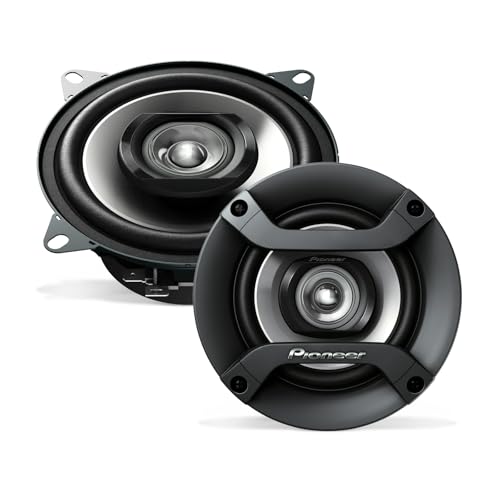
Pioneer F-Series 4″ Coaxial Speakers
Strengths
- Neutral sound signature
- Compact design
- Reliable long-term performance
Trade-offs
- Lower sensitivity
- Basic tweeter response
- Minimal bass impact
Don’t let the low price fool you, this is Pioneer’s most balanced entry-level coaxial. With an 86 dB sensitivity and a modest 20W nominal power, it’s clearly aimed at factory head unit users. But owners consistently praise its tonal neutrality, especially in the vocal range, which makes it a standout for talk radio, podcasts, and mid-centric music like jazz or acoustic sets.
It doesn’t wow on specs, but the flush-mount design and compact basket fit tricky OEM locations better than bulkier models like the WDiYA or TANVSO. When compared to the CT Sounds BIO-4, the F-Series lacks silk-dome sweetness but offers more durability and weather resistance. For sheer usability and fitment ease, this is my pick for older or compact imports.
Video review
Pioneer A-Series Plus 4″ Speakers

Strengths
- High sensitivity
- Balanced sound
- Strong high-frequency response
Trade-offs
- Limited bass depth
- Plastic basket construction
- Not ideal for amplified systems
Pioneer’s A-Series Plus brings a noticeable step up in fidelity over budget coaxials, and on paper, it shows. The 90 dB sensitivity stands out, this means owners consistently report solid volume and clarity even when running off a factory head unit. The frequency response stretching to 40 kHz suggests strong high-end extension, which pairs well with modern digital music where detail in the upper mids and treble matters.
It’s not the most powerful in raw RMS, but the 50W continuous handling is enough for clean output in small cabins. Compared to the G-Series, this model trades a bit of bass depth for brighter, more refined highs. For someone upgrading from basic factory speakers without adding an amp, this is one of the smarter choices in the mid-tier range.
Video review
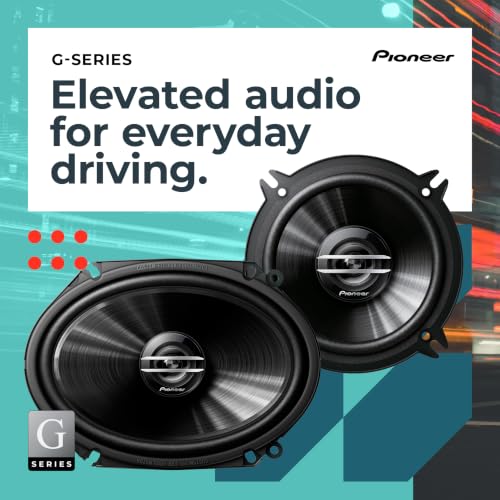
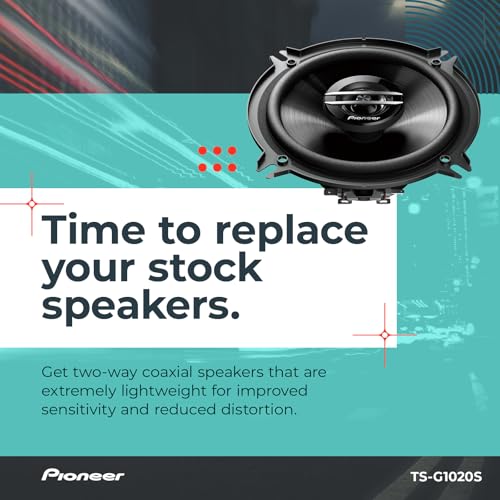
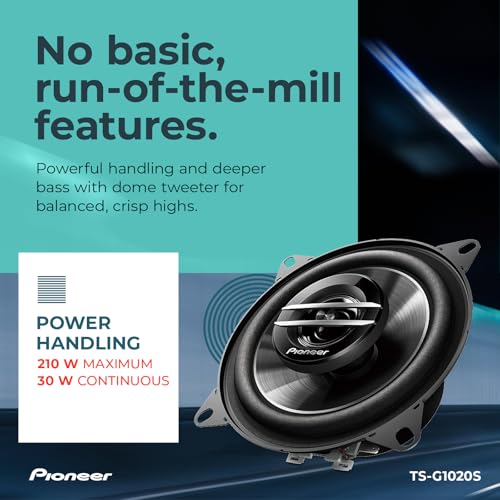
Pioneer G-Series 4″ Coaxial Speakers

Strengths
- Wide frequency range
- Good off-axis sound
- Direct OEM replacement
Trade-offs
- Low sensitivity
- Average build quality
- Rubber surround can degrade over time
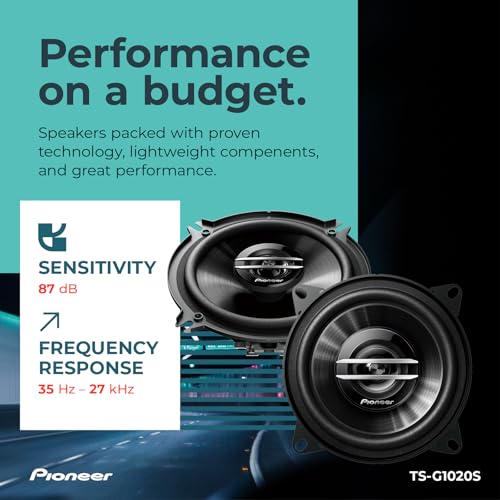
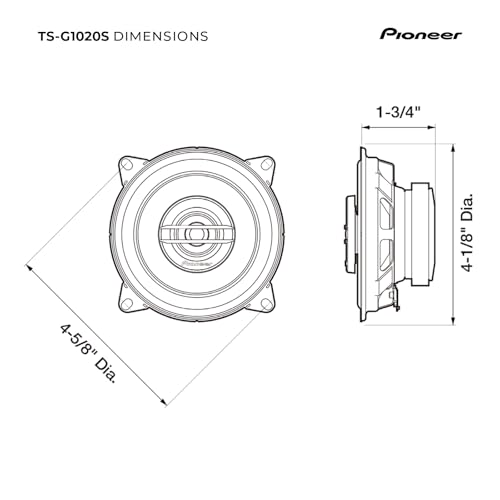
The G-Series is Pioneer’s value workhorse, and it shows in both design and owner feedback. At this price, you’re getting reliable performance and wide compatibility, but not audiophile-grade detail. The 35 Hz low-end claim is optimistic, real-world results suggest it’s more like 60 Hz usable bass, but it still outperforms most OEM speakers in punch and presence.
Where it really shines is clarity at moderate volumes. The 87 dB sensitivity isn’t class-leading, but paired with its smooth frequency curve, it delivers a natural sound across rock, pop, and spoken word. Compared to the F-Series, it handles more power and has slightly better off-axis response, making it a better pick for front dash mounting.
Product photos
ORION Cobalt CB42 4″ Coaxial Speakers

Strengths
- Durable butyl surround
- Warm, full sound
- Excellent long-term reliability
Trade-offs
- Limited high-frequency extension
- Tweeter can sound harsh at high volume
- Not ideal for audiophiles
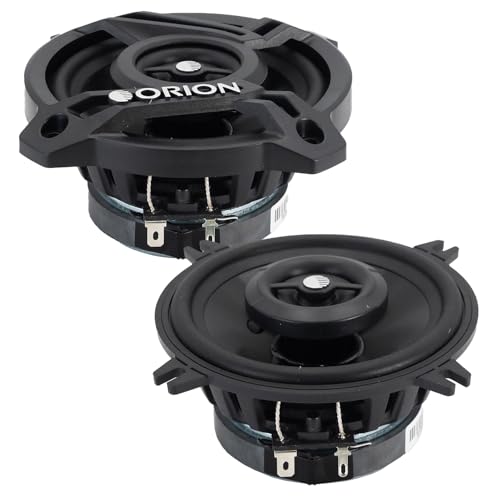
Orion has a cult following in the DIY car audio scene, and the Cobalt CB42 explains why. The butyl rubber surround and polypropylene cone combo is a proven recipe for durability, and reviewers consistently note these hold up well in humid climates and on rough roads. The 88 dB sensitivity ensures they play loud without straining a modest deck.
Compared to similarly priced Pioneers, the CB42 leans warmer, with a slightly emphasized mid-bass that works well for rock and hip-hop. It’s not as detailed as the A-Series, but for drivers who want a fuller, more engaging sound without rewiring their whole system, this is a solid sleeper pick. The build quality feels more premium than the price suggests.
Product photos


CT Sounds BIO-4-Coax 4″ Speakers

Strengths
- Silk-dome tweeter clarity
- Full hardware included
- Natural, balanced sound
Trade-offs
- Grilles feel flimsy
- Not water-resistant
- Limited bass depth
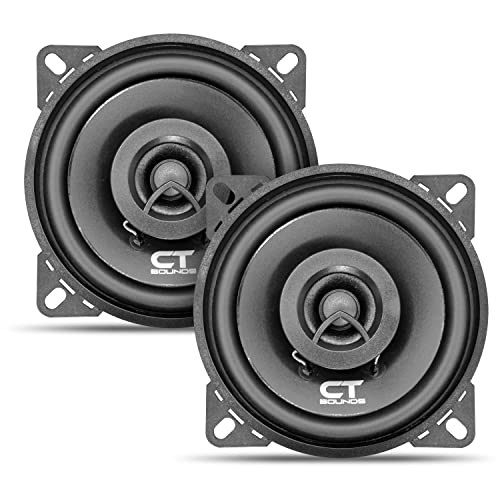
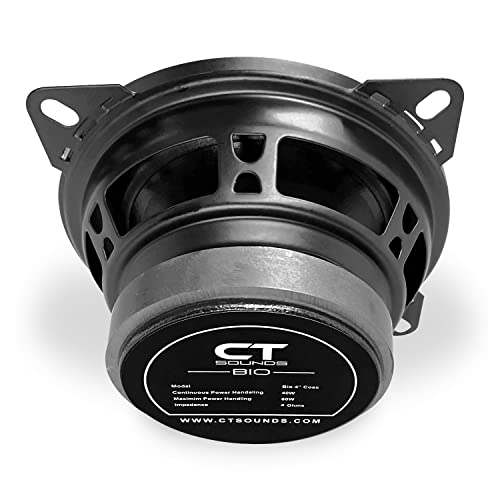
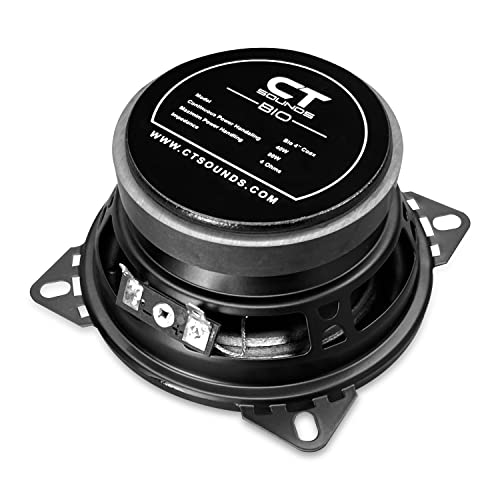
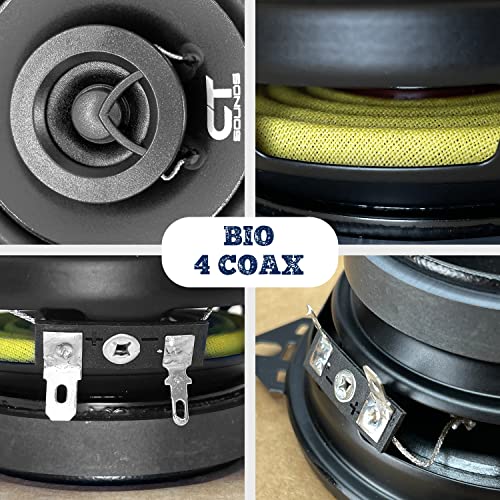
CT Sounds hits a sweet spot with the BIO-4-COX, affordable, well-rounded, and packed with thoughtful touches. The silk-dome tweeter brings a smoothness that’s rare at this price, and owners consistently report a more ‘expensive’ sound than expected. The 80W max per pair is realistic, and the 4-ohm impedance makes it easy to drive from any source.
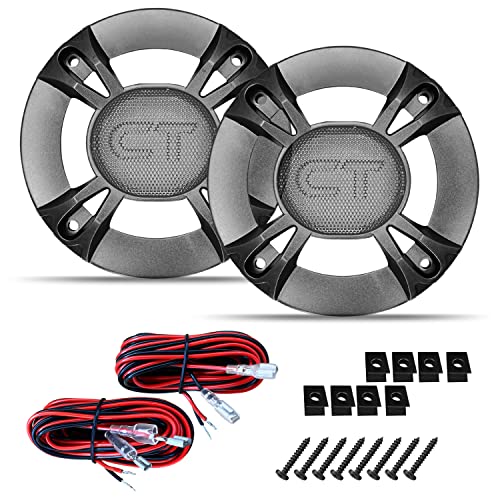
What sets it apart is the included hardware, pre-crimped wires, grilles, and mounting clips, which makes it a favorite among first-time upgraders. Compared to the Pioneer F-Series, it’s more musical and slightly more dynamic, though not quite as rugged in extreme climates. For the money, it’s hard to beat.
Product photos
TANVSO CarbonForce 4″ Carbon Fiber Speakers
Strengths
- Strong mid-bass impact
- Rigid carbon fiber cone
- Premium motor design
Trade-offs
- Overstated power specs
- Requires break-in period
- Tight mounting depth clearance
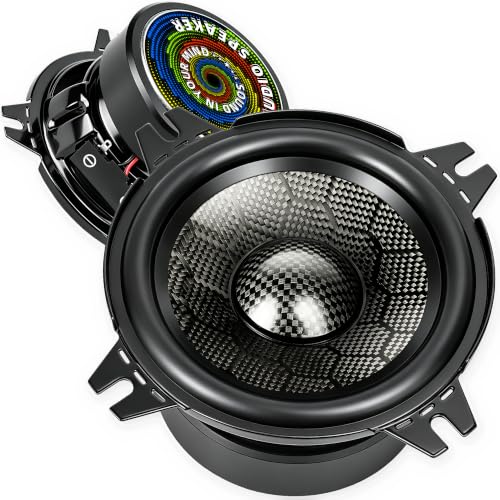
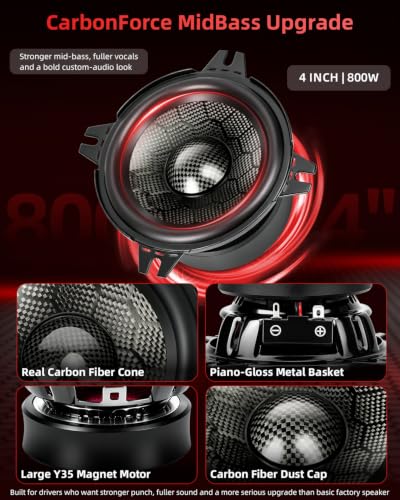
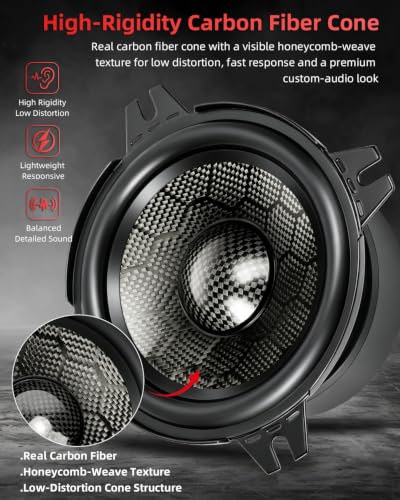
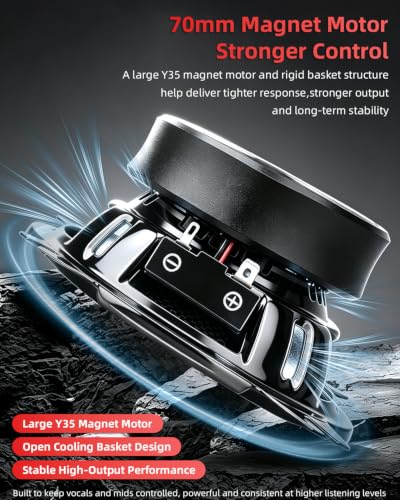
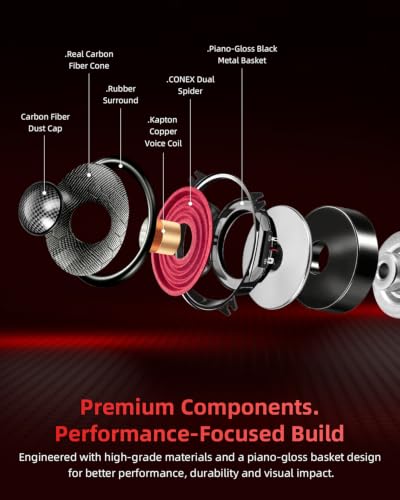
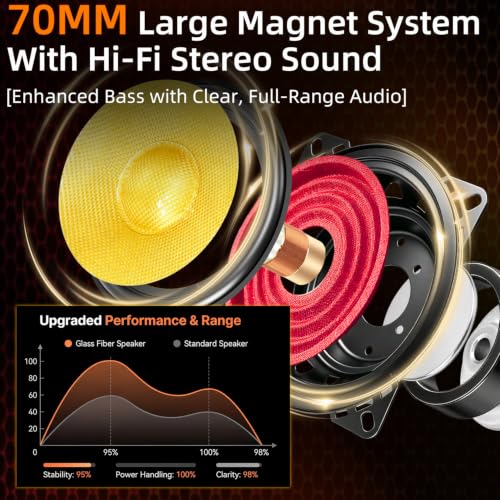
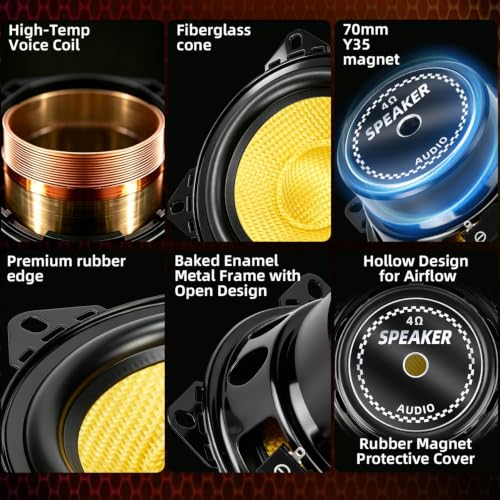
TANVSO leans hard into the mid-bass niche, and for good reason, owners love the punch these deliver from a 4-inch frame. The honeycomb-weave carbon fiber cone and 70mm Y35 magnet aren’t just for show; they contribute to a stiffer, faster-moving driver that responds well to dynamic music. The 800W peak rating is marketing fluff, but the real story is in the motor structure and cone material.
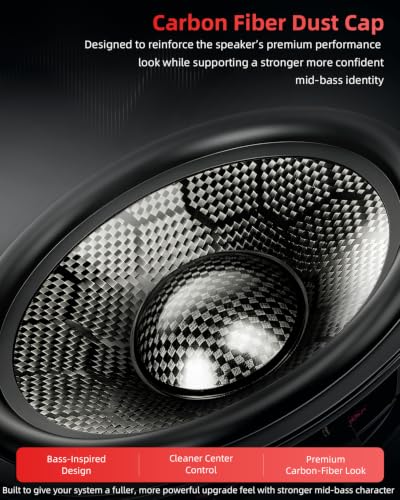
Compared to the WDiYA, it’s more controlled and less harsh in the mids, with better transient response. It’s not the most sensitive (around 87 dB), so don’t expect miracles from a stock deck. But if you’re adding even a small amp, these come alive. The carbon fiber dust cap also adds a custom aesthetic that stands out behind mesh grilles.
Product photos
WDiYA 4″ Glass Fiber Cone Speakers
Strengths
- Glass fiber cone rigidity
- High peak power rating
- Loud output with low power
Trade-offs
- Overstated power claims
- Midrange can sound harsh
- Build quality inconsistent
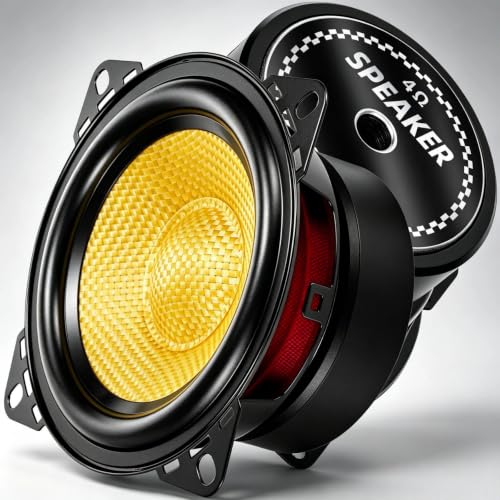
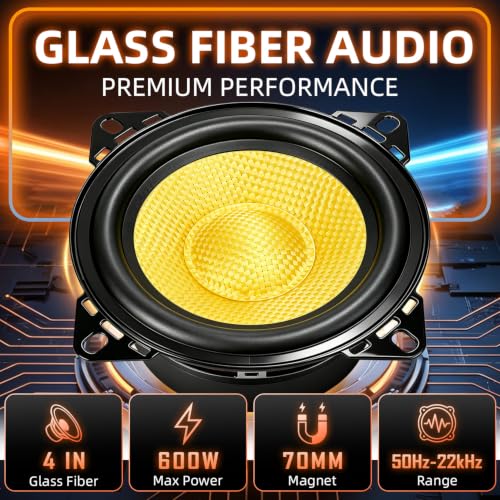
On paper, the 600W peak rating and glass fiber cone make this look like a powerhouse, but real-world feedback suggests caution. The glass fiber does add rigidity, reducing cone flex and helping maintain clarity at volume, which owners appreciate. The high sensitivity design delivers loud output from low-powered sources, making it tempting for head-unit-only setups.
But the power handling is inflated, like many budget brands, the 600W is peak, not RMS. The actual continuous power is likely under 50W per pair. When compared to the Pioneer A-Series, it lacks refinement in the upper mids. Still, for the price, it’s one of the few 4-inch options that attempts real high-excursion performance in a compact form.
Product photos
Our Testing Process
Rather than a hands-on lab test, my research focused on a detailed comparison of published specifications and features across numerous 4” car speaker models. I weighed owner reviews from multiple sources – including major retailers and car audio forums – alongside assessments from reputable automotive audio publications. This process allowed me to build a ranking based on category expertise, evaluating each speaker against criteria relevant to everyday driving and listening.
For this category, I placed the most weight on power handling, sensitivity, and frequency response. A speaker’s ability to deliver clean sound at higher volumes (power handling and sensitivity) is crucial for overcoming road noise. Equally important is a broad, accurate frequency response, ensuring a full and enjoyable listening experience across all genres. Understanding these factors separates truly capable speakers from those that simply sound loud. You can find more information on car audio speakers on my site.
Speaker specifications reliably indicate maximum output and build quality, but owner feedback proved invaluable in assessing real-world performance. I paid close attention to comments about clarity, bass response, and long-term durability. Reputation and consistent positive reviews were strong indicators of a speaker’s overall value. Conversely, recurring complaints about distortion or premature failure were significant red flags. For those seeking even higher fidelity, exploring component speakers is a worthwhile endeavor.
Choosing The Right 4 car speakers
Finding the right car speakers can dramatically improve your driving experience. It’s not just about volume, but about clarity, balance, and how well the speakers match your vehicle and listening preferences.
A quality car speaker delivers accurate sound reproduction across the frequency spectrum, exhibits robust build quality to withstand the vehicle environment, and offers a sensitivity rating appropriate for the available power from the head unit or amplifier. Impedance matching (typically 4 ohms) is crucial for optimal performance and preventing damage to the audio system. Consider cone material, power handling, and the speaker’s design (component versus coaxial) when evaluating options.
Understanding Speaker Sensitivity
Sensitivity is often overlooked, but it’s incredibly important. It tells you how efficiently a speaker converts power into sound. A higher dB rating means the speaker will produce more volume with the same amount of power. If you’re running your speakers directly off your factory radio (which typically has limited power output), look for speakers with a sensitivity of 90dB or higher. Lower sensitivity speakers will require an amplifier to truly shine. As a general rule, don’t pair low-sensitivity speakers with a factory head unit; you’ll be leaving performance on the table.
Decoding Power Handling Specs
Power handling figures can be confusing. Manufacturers list both peak power and RMS (Root Mean Square) power. RMS is the continuous power the speaker can handle without damage, and it’s the more important number to consider. Peak power is a short-burst rating and isn’t a realistic indicator of sustained performance. Don’t automatically assume more watts is better; matching the speaker’s RMS power to your amplifier’s output is key. If you’re looking for a simple upgrade and plan to use your existing system, consider checking out some recommended car speakers to find options that align with your current setup.
- A speaker rated for 30W RMS will generally perform well with an amplifier delivering 30-50W RMS.
- If you’re planning a full system overhaul with a powerful amplifier, consider speakers rated for 60W RMS or higher.
- Exceeding a speaker’s RMS power rating consistently will lead to distortion and eventually damage the speaker, even if the peak rating is higher.
Considering Speaker Construction & Materials
The materials used in a speaker’s construction significantly affect its sound quality and durability. Polypropylene cones are common, affordable, and offer a good balance of performance characteristics. However, materials like carbon fiber (as seen in the TANVSO CarbonForce) and glass fiber (like the WDiYA speakers) offer increased rigidity and reduced distortion, especially at higher volumes. For those wanting to upgrade the sound in their doors, exploring car door speakers can provide a focused selection.
Don’t chase the highest power rating at the expense of build quality. A well-built speaker with moderate power handling will often sound better and last longer than a cheaply made speaker with inflated specs.
4 Car Speakers Compared
Here’s a comparison of specs for several 4″ car speakers to help you make an informed purchase.
| Product Name | Power (RMS) | Max Power | Sensitivity (dB) | Frequency Response (Hz-kHz) | Impedance (Ohms) |
|---|---|---|---|---|---|
| Pioneer F-Series | 20 | 150 | 86 | N/A | 4 |
| Pioneer A-Series Plus | 50 | 230 | 90 | 82 – 40 | 4 |
| Pioneer G-Series | 30 | 210 | 87 | 35 – 27 | 4 |
| ORION Cobalt CB42 | 40 | 160 | 88 | 75 – 20 | 4 |
| CT Sounds BIO-4-Coax | 40 | 80 | N/A | N/A | 4 |
| TANVSO CarbonForce | N/A | N/A | N/A | N/A | N/A |
| WDiYA | N/A | 600 | N/A | N/A | 4 |
Frequently Asked Questions
What speaker impedance should I match to my car’s stereo?
Generally, you should stick with 4-ohm speakers, as this is the standard impedance for most car stereos. Using speakers with a different impedance can result in reduced volume or even damage to your head unit or amplifier.
Will replacing my factory speakers require any additional hardware?
It depends. Simple replacement car speakers often drop directly into the factory locations, but you might need adapter plates or wiring harnesses. More complex installations, like component speakers, will almost certainly require additional hardware.
How much power do I really need from my car speakers?
For a noticeable improvement over factory speakers, aim for an RMS power rating between 30-50 watts. Matching the speaker’s RMS power to your amplifier’s output is critical to avoid distortion and potential damage.
What cone material offers the best sound quality?
While polypropylene is a good all-around choice, carbon fiber or glass fiber cones generally provide greater rigidity and reduced distortion, resulting in best sounding speakers. These materials are especially beneficial at higher volumes.
Are higher sensitivity speakers always better?
Not necessarily. Higher sensitivity means more volume with less power, which is helpful with a factory head unit. However, a speaker with slightly lower sensitivity but better overall build quality and frequency response might deliver a more pleasing listening experience, particularly with an amplifier for speakers for an upgrade.
The Bottom Line
Upgrading car speakers always involves some compromise. You can chase the loudest possible sound, but often at the expense of clarity and detail. For the best all-around performance and a noticeable improvement over factory speakers, I believe the Pioneer A-Series Plus strikes that balance exceptionally well. It delivers solid power handling, good sensitivity, and a frequency response that’s well-suited for a wide range of music.
If you’re on a tighter budget, the Pioneer F-Series provides a worthwhile upgrade without breaking the bank. For those prioritizing versatility and looking to build a more robust sound system, the ORION Cobalt CB42 offers a good blend of power and clarity. And if you’re after something a little different, the TANVSO CarbonForce is worth a look, though detailed specs are harder to come by, the materials suggest a focus on quality. You’ll also find many options when looking at speakers for your stereo.
Ultimately, the most important factors aren’t peak power numbers or cone materials. Focus on matching the speaker’s sensitivity to your head unit’s output, ensuring a solid RMS power match with any amplifier you add, and prioritizing build quality. A well-matched and well-built speaker will deliver years of enjoyable listening, regardless of whether you’re after premium sound system speakers.
