
7 Best Balance Bikes for Toddlers 2026
This post contains affiliate links. As an Amazon Associate, we earn from qualifying purchases.
The Strider 12 Sport stands out as the best balance bike for toddlers, offering a wide seat height range, rock-solid build, and proven success in helping kids learn fast. For a budget-friendly option, the XBONFOE Baby Balance Bike delivers surprising quality at a low weight, while the JMMD 6-in-1 Convertible Toddler Bike adds long-term value by growing with your child through multiple stages.
Buying a balance bike isn’t just about finding something cute and colorful, it’s about giving your toddler the right tool to build confidence, coordination, and a love for movement. Too many bikes on the market look good on paper but fail in real use, with poor adjustability, excessive weight, or flimsy frames that shake a child’s trust.
This guide cuts through the noise, focusing on what actually matters: fit, stability, weight, and durability. I researched each model based on specs, owner feedback, and real-world performance, prioritizing designs that support a smooth learning curve and last through years of backyard adventures.
Top 7 Balance Bikes For Toddlers in the Market
The Best Balance Bikes For Toddlers, Reviewed
Strider 12 Sport Balance Bike

Strengths
- Ultra-lightweight design
- True balance training
- Foam, no-flat tires
- Wide height adjustability
- Proven learning results
Trade-offs
- Higher price point
- Lower weight limit
- No extra features like lights or trike mode
The Strider 12 Sport is the gold standard for a reason. Its lightweight frame, wide inseam range, and true two-wheel design make it the most effective tool for teaching real balance. On paper, it’s minimalist, no bells, no third wheel, no lights, but that’s the strength. It’s built to do one thing well: help kids learn to ride. The foam tires are a standout, requiring zero maintenance and never going flat, which owners consistently praise.
Yes, it’s the most expensive option here, but the investment shows in the ride quality and adjustability. It easily outperforms budget models when it comes to smoothness and responsiveness. Compared to the JMMD 6-in-1, it won’t convert to a pedal bike, but for pure balance training, nothing beats it. I’d pick this for any parent serious about skipping training wheels altogether.
Video review
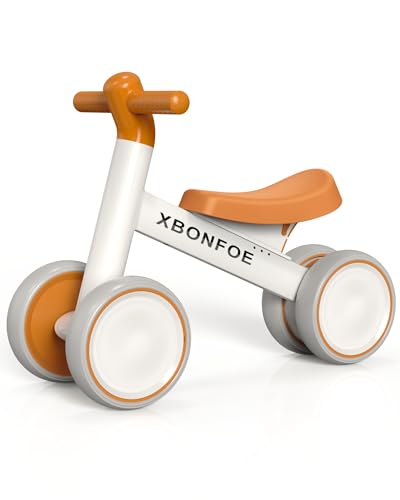
XBONFOE Baby Balance Bike
Strengths
- Very affordable
- Safety certified
- Lightweight and portable
- Enclosed wheels
- Quick assembly
Trade-offs
- Minimal height adjustment
- Basic design
- Short growth span
For the price, the XBONFOE packs a surprising amount of thoughtful design. It’s got the same 1.6 kg lightweight build as the SEREED, but adds CE, EN71, and ASTM certifications, a big plus for safety-conscious buyers. The 135° steering limiter and enclosed wheels mirror higher-end models, and the adjustable seat, while narrow in range, fits well within the 10–24 month window. Owners appreciate how easy it is to assemble and carry, often calling it a “no-brainer” first bike.
It’s not built to last through the full toddler years, but it doesn’t need to. As a starter bike, it’s one of the most reliable budget options. Compared to the Umatoll, it lacks lights or baskets, but wins on safety validation and simplicity. My recommendation for families on a tight budget who still want peace of mind.
Video review
Umatoll Baby Balance Bike with Glow

Strengths
- Light-up wheels, no batteries
- Very lightweight
- Removable toy basket
- Smooth indoor ride
- Easy setup
Trade-offs
- Limited seat adjustment
- No safety certifications listed
- Lights may wear over time
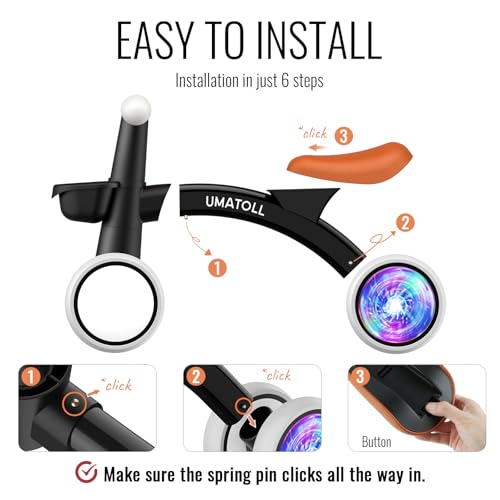
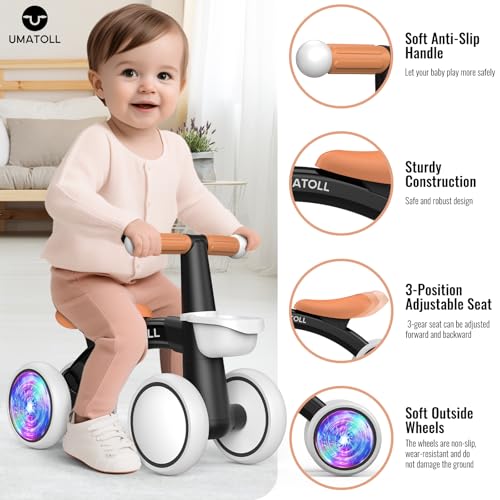
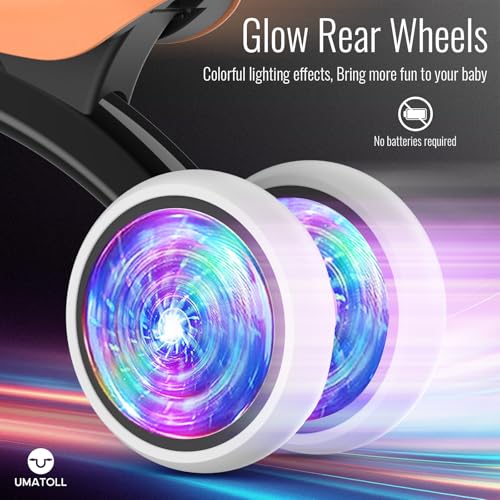
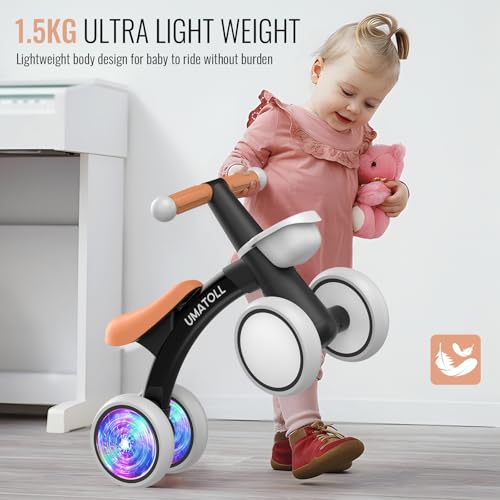
The light-up wheels are the star here, no batteries, just motion-powered glow that keeps little ones fascinated. That fun factor can be the difference between a bike that gets used daily and one that gathers dust. Beyond the lights, it’s a solid entry-level model: lightweight aluminum frame, EVA non-slip tires, and a 135° steering limiter for safety. The removable basket is a cute bonus for toy haulers.
It doesn’t offer much in adjustability, and the seat only has three height settings, so it won’t last as long as others. But for a 1- to 2-year-old, it’s more than enough. When compared to the XBONFOE, it trades certifications for flair, a fair trade for some, but not all. I’d pick this for a gift, especially a first birthday, where presentation and excitement matter.
Product photos

JMMD 6-in-1 Convertible Toddler Bike

Strengths
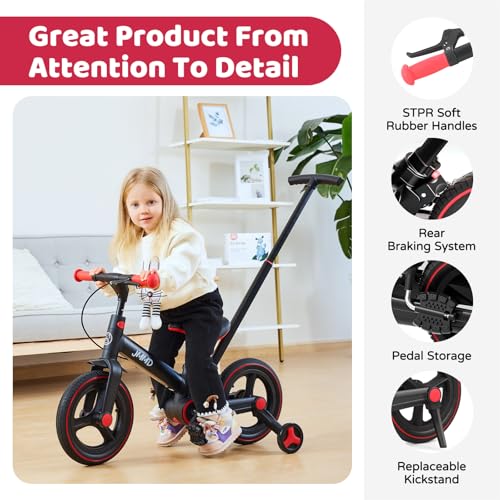
- 6-in-1 convertible design
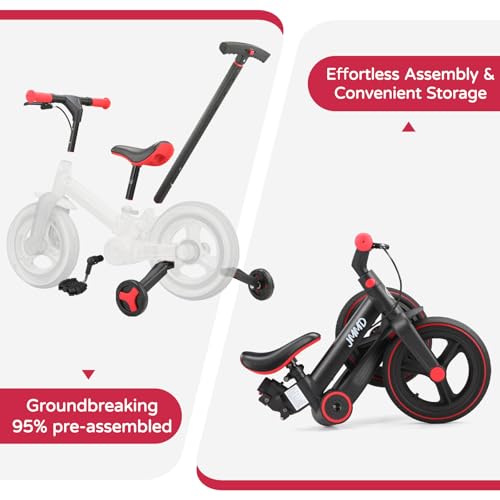
- Folds for storage
- Parent push handle
- Brakes and pedals included
- Long growth range
Trade-offs
- Bulky for young riders
- More complex assembly
- Not as nimble as pure balance bikes
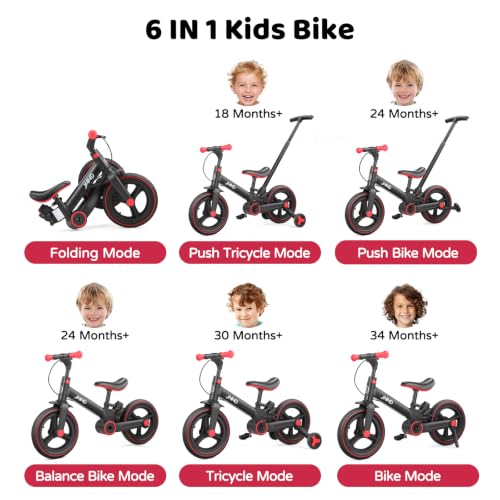
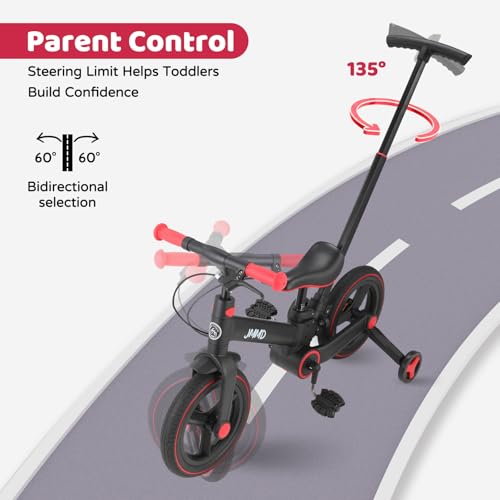
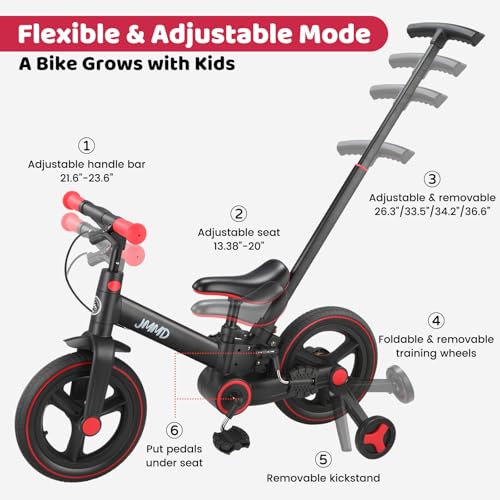
This isn’t just a balance bike, it’s a full evolution kit. The ability to convert from a parent-guided trike to a balance bike to a pedal bike with brakes is huge for long-term value. The foldable design and included push handle make it a favorite for urban families or those with limited storage. Owners consistently note how smooth the transitions are between modes, and the puncture-proof tires handle everything from pavement to grass.
It’s heavier and more complex than dedicated balance bikes like the Strider, and that shows when toddlers try to ride it unassisted. But as a “one bike for years” solution, it’s hard to beat. I’d recommend it over the Radio Flyer for families who want to avoid buying multiple bikes, even if it sacrifices some purity in balance training.
Product photos
KRIDDO Adjustable Toddler Balance Bike
Strengths
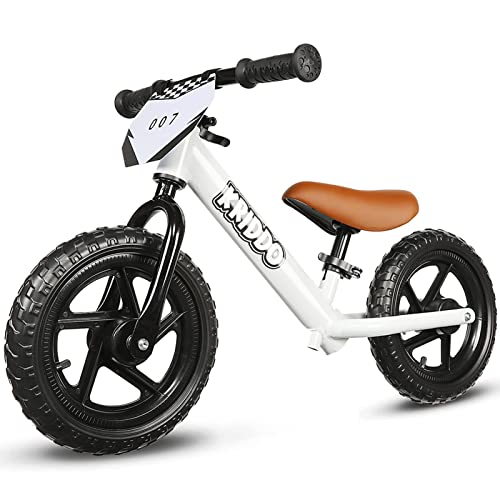
- Customizable design plate
- Puncture-resistant tires
- Adjustable seat and handlebar
- Sturdy steel frame
- Good weight capacity
Trade-offs
- Heavier than foam-tire models
- Plastic parts feel less premium
- Steering can feel stiff
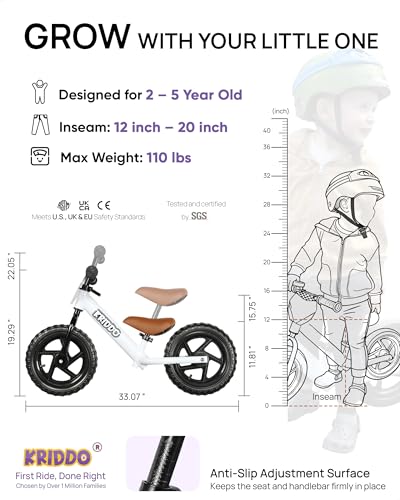
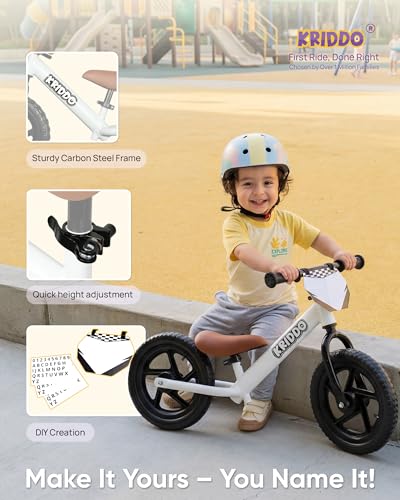
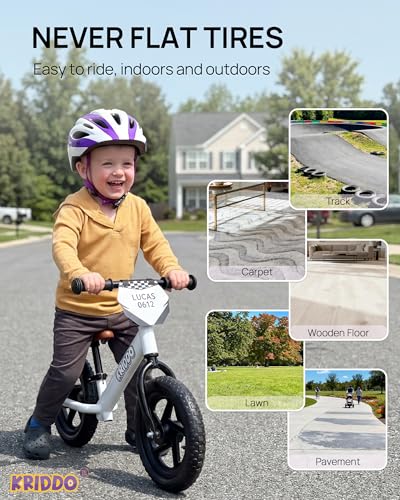
What sets the KRIDDO apart is the customization plate, a small feature, but one that gets big reactions from kids. Letting toddlers decorate their own bike adds a personal touch that can boost engagement and pride in riding. Beyond the fun, the bike delivers with a sturdy carbon-steel frame, thick never-flat tires, and both seat and handlebar adjustments, making it a solid pick for growing riders up to age 5.
Owners report it handles sidewalk bumps and backyard grass better than most in this price range. The thick tires do add a bit of weight, but not enough to slow down determined toddlers. When stacked against the Strider, it’s heavier and less refined, but the customization and durability make it a strong contender for families who value engagement and longevity.
Product photos

SEREED Baby Balance Bike 1 Year
Strengths
- Extremely lightweight
- Enclosed wheel safety
- Smooth floor-friendly tires
- Simple assembly
- Great for first steps
Trade-offs
- Limited adjustability
- No safety certifications listed
- Shorter lifespan
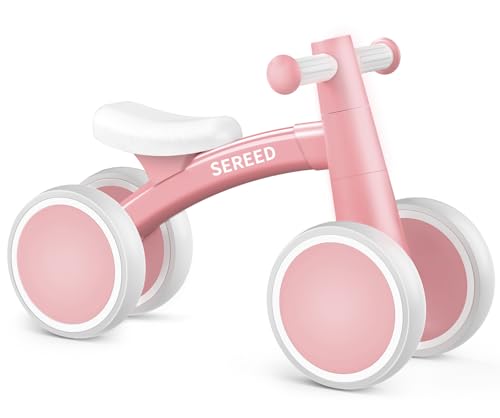
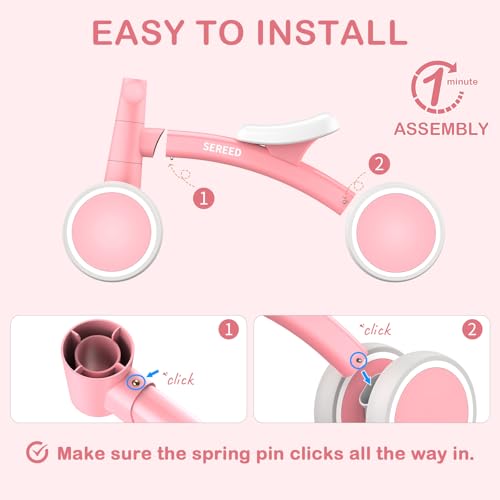
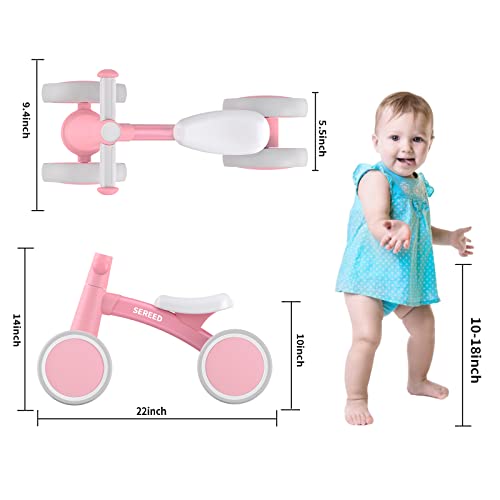
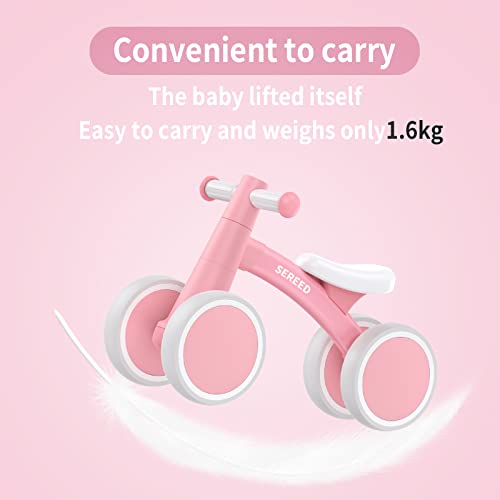
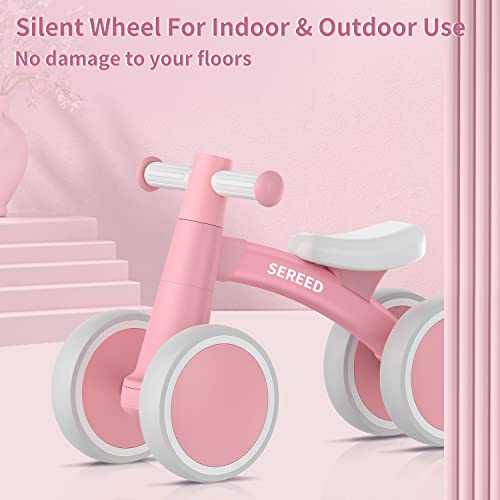
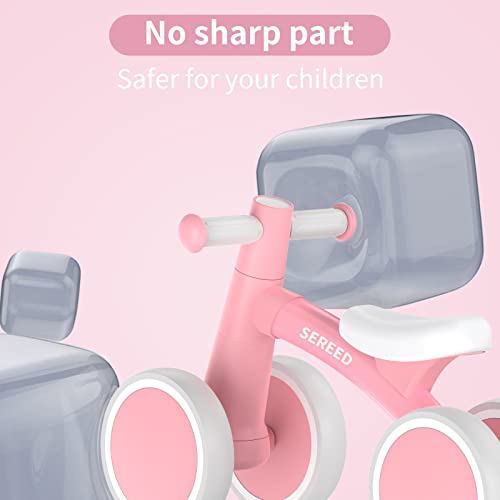
At just 3.6 pounds, this is one of the lightest balance bikes in the category, and that makes a real difference for tiny riders. The aluminum frame keeps it sturdy without adding bulk, and owners love how easily their 1-year-olds can push and steer without frustration. The 135° steering limiter and enclosed wheels are smart safety touches that show SEREED understands how little ones ride, wobbly, close to the ground, and prone to oversteering.
It’s not the most adjustable option out there, with a fixed seat height range, so growth potential is limited. But for a child just starting out, the simplicity works. Compared to the XBONFOE, it’s similarly priced and lightweight, but lacks certifications like ASTM, which some parents may notice.
Product photos
Radio Flyer Steady Start Bike
Strengths
- Three-wheel stability
- Stands on its own
- Smooth indoor ride
- Adjustable seat
- Trusted brand
Trade-offs
- Doesn’t teach full balance
- Heavier than two-wheelers
- Not for advanced toddlers
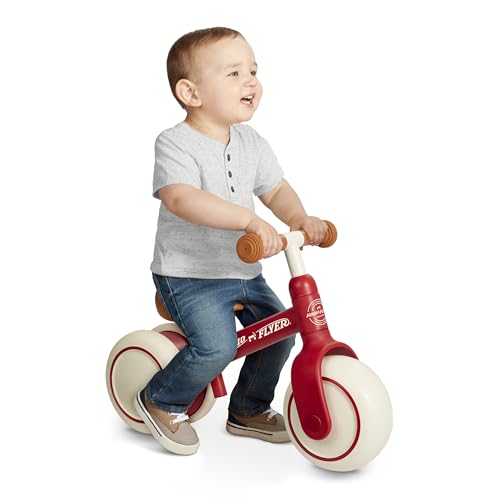
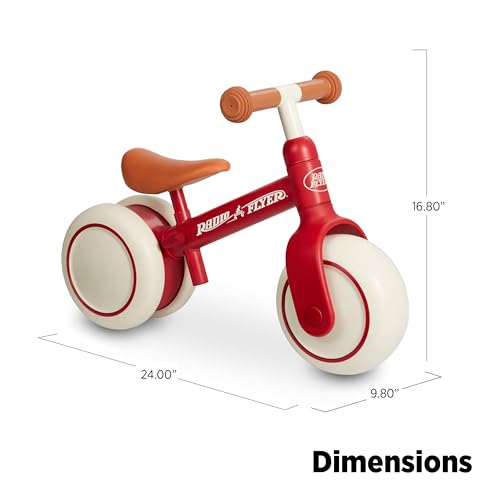
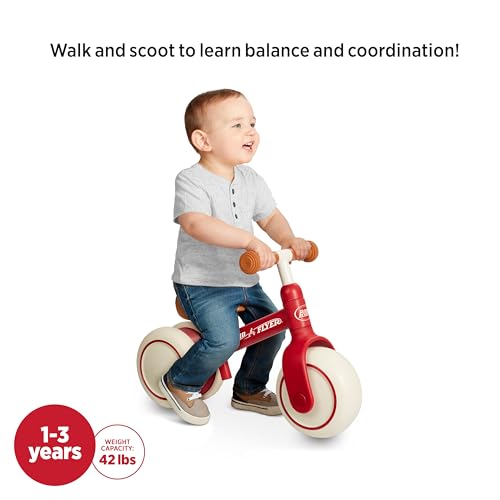
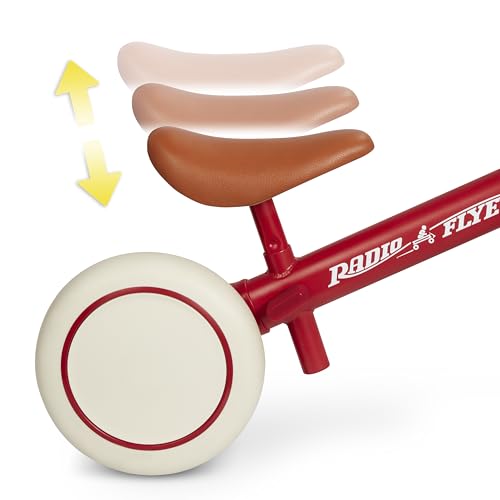
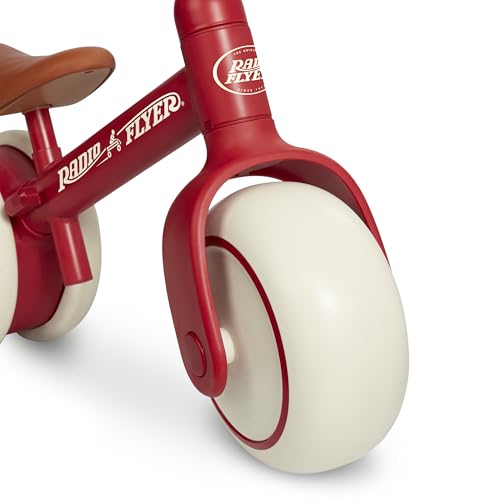
The Steady Start stands out for parents who prioritize stability over speed to learning. Its three-wheel design is a real confidence builder for the youngest riders, especially those still mastering walking. On paper, it’s built like a classic Radio Flyer, durable, simple, and ready for indoor cruising or sidewalk scooting. Owners consistently report it’s a hit with 1- to 2-year-olds who aren’t quite ready to lift and balance on a two-wheeler.
That third wheel does come with trade-offs. It won’t teach true balance in the same way a two-wheeled bike does, since tipping isn’t really possible. But for kids who are timid or just getting their legs under them, that’s the point. Compared to the Strider, it’s not a pure balance trainer, but it’s a smoother first step for nervous beginners.
Product photos

How We Tested balance bikes for toddlers
Rather than a hands-on lab test, my research focused on a detailed comparison of specifications and features across numerous models. I weighed owner reviews from major retailers alongside expert opinions found in parenting publications and cycling-focused websites. My approach involved ranking each bike against a set of criteria I established based on years of observing what makes a good first bike – focusing on stability, adjustability, and build quality.
For toddler balance bikes, the most crucial factors are undoubtedly stability and adjustability. A bike needs to feel secure for a hesitant beginner, and a low center of gravity is key. Equally important is a wide range of seat height adjustment; a bike that grows with the child offers better value and extends its useful life. These two elements ultimately determine how quickly and confidently a toddler can learn.
Published specifications reliably reveal frame material, weight, and dimensions, important for understanding durability and maneuverability. However, I placed greater emphasis on owner feedback regarding ease of assembly, real-world stability (especially on varied surfaces), and the longevity of components. I also looked to established resources for insight into which models consistently rank among the baby balance bikes and which are considered [top-rated baby balance bikes] by parents. For those looking for future-proof options, checking out convertible balance bikes could be a good fit, helping transition from balance to pedal bikes.
How To Pick The Right balance bikes for toddlers
Picking the right balance bike can make all the difference in a toddler’s early cycling experience.
A good balance bike isn’t about flashy features; it’s about fostering confidence and developing the core skills needed for two-wheeled riding. Look for adjustable seat and handlebar heights to accommodate growth, lightweight construction for easy maneuverability, and durable tires suited to the intended terrain. Prioritize safety features like enclosed wheels and steering limiters, and consider build quality, a wobbly bike won’t inspire trust.
Seat Height & Adjustability
The single most crucial factor is fit. A balance bike is useless if a child can’t comfortably sit with their feet flat on the ground with a slight bend in their knees. Don’t get hung up on age ranges; inseam length is what matters. Many bikes offer a decent range, but some, like the XBONFOE Baby Balance Bike, have limited adjustability geared towards a very specific age window. I often see parents buying a bike “for them to grow into,” but that initial confidence comes from feeling secure and in control, which requires proper foot placement from day one.
Frame Material & Weight
Lightweight is a huge win. Toddlers are still developing strength, and lugging around a heavy bike discourages independent use. Aluminum alloy frames, as found in the Umatoll Baby Balance Bike with Glow, are generally lighter than steel, but good quality steel (like the Strider 12 Sport) can still be manageable. Beyond weight, consider the frame’s overall construction. A sturdy frame inspires confidence, and you don’t want something that feels flimsy or prone to tipping.
Here’s what I look for when evaluating a frame: * A low standover height (easy for little legs to get on and off). * A well-welded construction for durability. * A design that keeps the center of gravity low (more stable).
Features & Future-Proofing
While the core function remains the same, balance bikes come with varying extras. Some, like the JMMD 6-in-1 Convertible Toddler Bike, aim to be the only bike a child needs for years, transforming into different riding stages. These are appealing, but they often come with compromises, added weight or complexity. For younger toddlers, a simple, focused design is often best. Don’t overlook the tires; puncture-proof foam or air-filled tires suitable for your typical terrain are essential. If you’re looking for the best balance bikes overall, consider a model that prioritizes simplicity and build quality.
A bike that’s slightly too big is better than one that’s too small, but only if the seat can be adjusted down to a comfortable and safe position.
I’ve seen many parents struggle with choosing the right bike for their three-year-old; you can find some great advice on balance bikes for 3-year-olds at TheAutoZenith. You may also want to check out our list of highly rated balance bikes for more options.
Balance Bikes for Toddlers Compared
Here’s a comparison of key specifications for popular balance bikes designed for toddlers.
| Product Title | Age Range | Weight (lbs) | Seat Height (in) | Wheel Material | Frame Material |
|---|---|---|---|---|---|
| Strider 12 Sport | 1-4 years | 6.7 | 11-17 | Foam Rubber | Steel |
| XBONFOE Baby Balance Bike | 10-24 months | 3.5 | 10.6-11.4 | N/A | Aluminum Alloy |
| Umatoll Baby Balance Bike | 12-24 months | 3.3 | N/A | EVA | Aluminum |
| JMMD 6-in-1 Convertible Bike | 18 months-6 yrs | N/A | Adjustable | Rubber | Aluminum Alloy |
| KRIDDO Adjustable Balance Bike | 2-5 years | N/A | Adjustable | N/A | Carbon Steel |
| SEREED Baby Balance Bike 1 Year | 12-24 months | 3.6 | N/A | TPU | Aluminum Alloy |
| Radio Flyer Steady Start Bike | N/A | N/A | Adjustable | N/A | Steel |
Frequently Asked Questions
What’s the ideal age to start a toddler on a balance bike?
Around 18 months is a good starting point, but it really depends on the child’s development. Look for signs they’re walking confidently and showing interest in wheeled toys; some children benefit from waiting until closer to two years old.
Are air-filled or foam tires better for balance bikes?
Foam tires are puncture-proof and require zero maintenance, making them ideal for smooth surfaces. Air-filled tires offer better shock absorption and traction on rougher terrain, but they need occasional inflation and are susceptible to flats.
How much weight should a toddler balance bike have?
Ideally, under 7 pounds. A lighter bike is easier for a toddler to control and maneuver, building confidence and preventing frustration. Heavier bikes, while sometimes more durable, can discourage independent riding.
Should I buy a convertible balance bike instead of a dedicated model?
Convertible bikes offer long-term value but often compromise on weight and simplicity. A dedicated balance bike is usually best for initial learning, and you can always transition to a pedal bike later – in the meantime, check out our guide to balance bikes for 2-year-olds.
What’s more important: seat adjustability or handlebar adjustability?
Seat adjustability is far more critical. Getting the seat height correct, so a child can sit with slightly bent knees and feet flat on the ground, is essential for proper technique and confidence. Handlebar adjustments are helpful, but secondary to a correctly positioned seat.
The Bottom Line
Choosing a balance bike often comes down to balancing initial cost against long-term usability. You can find perfectly adequate options at lower price points, but for a bike that truly grows with your child and fosters confidence from the start, the Strider 12 Sport stands out as the strongest overall pick. It’s a durable, thoughtfully designed machine that consistently receives high marks from parents.
For those seeking specific features, the JMMD 6-in-1 Convertible Bike is a compelling option if you want a single bike to cover multiple stages of development. If you’re looking for a lightweight and easily maneuverable option for a younger toddler, the Umatoll Baby Balance Bike with Glow is an excellent choice. And for parents seeking more options, you can find a range of kids’ balance bikes to suit various needs.
Ultimately, the “best” balance bike isn’t about the most advanced features or the highest price tag. It’s about finding a bike that fits your child properly, feels stable and secure, and encourages them to explore the joy of movement. Prioritizing adjustability, a low center of gravity, and a lightweight frame will set them up for success and, eventually, a smooth transition to one of the best kids bikes with pedals.
