
7 Best CCTV Cameras for Car 2026
This post contains affiliate links. As an Amazon Associate, we earn from qualifying purchases.
The 360 View 4 Channel Dash Cam stands out as the best overall choice for full-vehicle coverage, while the Dash Cam Front and Rear 4K+1080P delivers the sharpest front-facing footage at a more accessible price. For those on a tighter budget, the Veement 1296P Front Dash Cam offers solid basic performance.
As a lifelong enthusiast who’s dug into the guts of everything with wheels, I know how frustrating it is when your car becomes a target or you’re left disputing an incident with no proof. A reliable CCTV system isn’t just about recording, it’s about trust, clarity, and knowing you’re covered when things go wrong.
This guide cuts through the noise by focusing on what matters: real-world performance, durability, and smart feature choices. I compared specs and owner feedback to find systems that actually work when you need them most.
Top 6 Cctv Cameras For Car in the Market
The Best Cctv Cameras For Car, Reviewed
360 View 4 Channel Dash Cam

Strengths
- True 4-channel 360 coverage
- Includes 128GB memory card
- 5GHz Wi-Fi for fast transfers
- WDR + infrared night vision
- Supercapacitor for heat/cold
Trade-offs
- Stitching glitches at high speed
- GPS sold separately
- App limited to local Wi-Fi
This is the closest thing to a true 360-degree surround view system you’ll find outside OEM setups, and it comes with the 128GB card already installed, which saves hassle. Four synchronized 1080P cameras cover front, rear, sides, and interior, giving a stitched bird’s-eye perspective when reversing or parking larger vehicles. The 5GHz Wi-Fi works reliably within range, letting you pull clips fast via app without removing the card. Owners praise the WDR and infrared night vision, especially for side blind-spot clarity after dark.
It lacks native GPS, but you can add it as an external module, a fair trade-off for keeping costs down. The supercapacitor handles temperature swings better than standard batteries, making it more dependable in extreme climates. While the video stitching isn’t flawless at speed, for slow-maneuver security, it’s unmatched in this price tier. Compared to dual-lens budget cams, this is the smarter buy if you drive a large SUV or tow frequently.
Video review
Dash Cam Front and Rear 4K+1080P
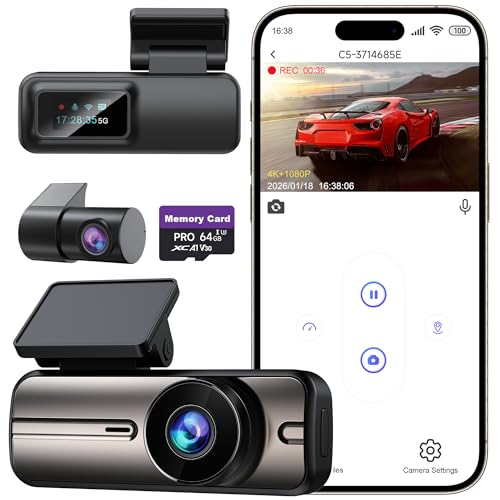
Strengths
- 4K front + 1080P rear
- Built-in 64GB card
- 5GHz Wi-Fi with app
- Compact low-profile design
- G-sensor incident lock
Trade-offs
- Rear cable not extendable
- Hardwire kit sold separately
- Night vision good but not elite
At this price, getting 4K front resolution with a preloaded 64GB card is impressive. The jump from 2.5K to 4K means license plates and road signs stay legible at greater distances, reviewers note this makes a real difference in dispute resolution. The 5GHz Wi-Fi connects quickly to the app, and once linked, downloading recent clips takes seconds. It’s compact, unobtrusive, and the F1.8 aperture helps in dim conditions, though it doesn’t quite match starlight sensors in pricier models.
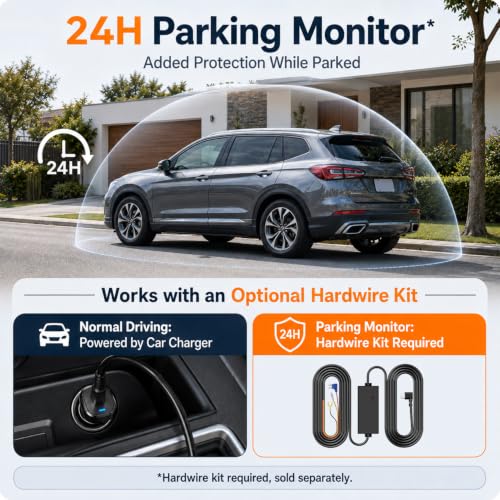
Parking mode requires a hardwire kit (sold separately), which adds cost, but the G-sensor does auto-lock footage well. Compared to the Veement front-only model, this offers far more value with rear coverage included. My take: if you want strong evidence quality without overspending, this hits the sweet spot. Just remember the rear cable is fixed-length, so longer vehicles may struggle with routing.
Video review
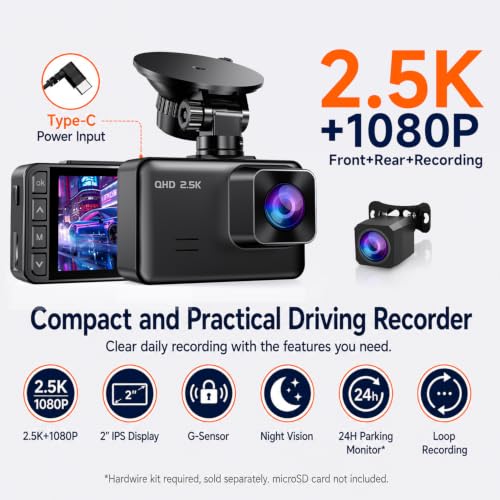
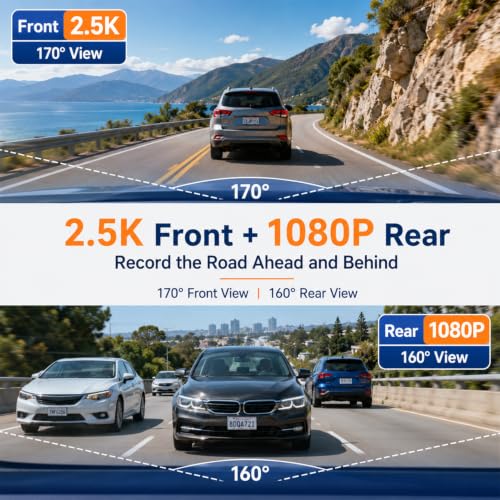
Dash Cam Front and Rear 2.5K+1080P
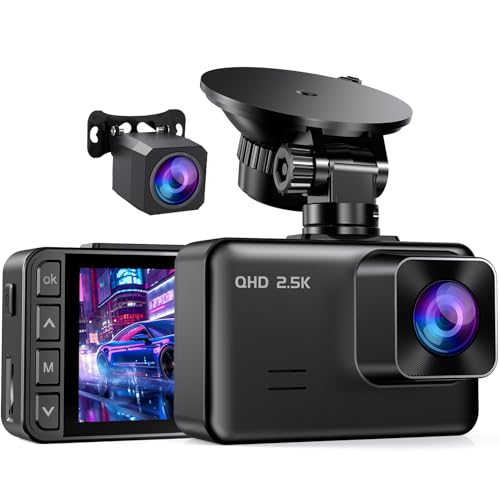
Strengths
- 2.5K front + 1080P rear
- Starlight sensor + WDR
- Onboard 2-inch IPS screen
- Physical button controls
- Screen saver preserves view
Trade-offs
- MicroSD card not included
- Hardwire kit sold separately
- App optional but not essential
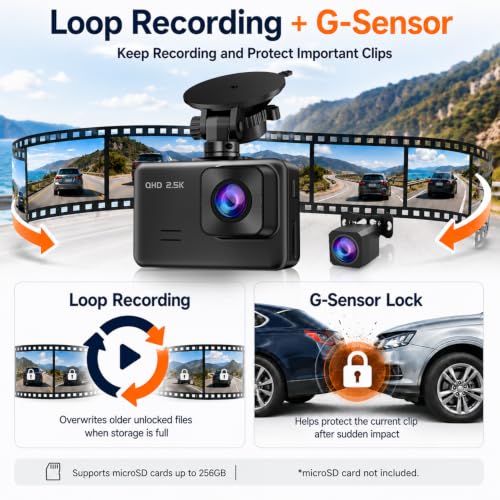
For pure bang-for-buck, this E-YEEGER model blends upgraded specs with hands-on usability. The 2.5K front resolution strikes a real balance between clarity and file size, and the starlight sensor with WDR handles contrasty scenes, like tunnels or dusk driving, better than most in this range. Having a 2-inch IPS screen onboard is a win: you can review footage, format the card, or adjust settings without pulling out your phone. That matters for older users or those wary of apps.
The G-sensor locks events cleanly, and loop recording works as expected. But you’ll need to buy a microSD card separately, which stings a little given others include storage. Still, when stacked against the Veement or even some 4K models, this one offers a more complete out-of-box experience minus the app dependency. My pick for parents, second-car setups, or anyone who values direct controls over smartphone linking.
Product photos

JOINLGO 4 Channel 1080P AHD Mobile DVR

Strengths
- Full 4-channel 1080P
- IP68 waterproof cameras
- 7-inch onboard monitor
- Loop record with overwrite
- G-sensor impact detection
Trade-offs
- No built-in Wi-Fi or app
- Complex wiring for casual users
- SD card not included
This system is built like a commercial workhorse, and that’s exactly who it’s for. With full 1080P H.265 4-channel recording, you’re getting real-time coverage across all angles, something most consumer dash cams still cut corners on. The inclusion of a 7-inch IPS monitor onboard means drivers or fleet managers can view feeds live, which is rare at this level. Owners consistently report solid performance in vibration-heavy environments, and the G-sensor does its job locking footage during hard braking or impacts.
It’s not plug-and-play for your average sedan, though. This is overkill for personal use unless you’re running an RV or large van. The reliance on SD cards up to 1TB is great for long-haul logging, but don’t expect smartphone-style Wi-Fi streaming, the interface is functional, not flashy. Compared to modern app-linked systems, it feels dated, but reliability wins here. I’d pick this over flashier options if uptime and durability are essential.
Product photos


Veement 1296P Front Dash Cam

Strengths
- 1296P high-res front video
- F1.7 aperture + glass lens
- Capacitor-based (no battery)
- Affordable entry point
- App control with local Wi-Fi
Trade-offs
- No rear camera option
- SD card not included
- Wi-Fi range is short
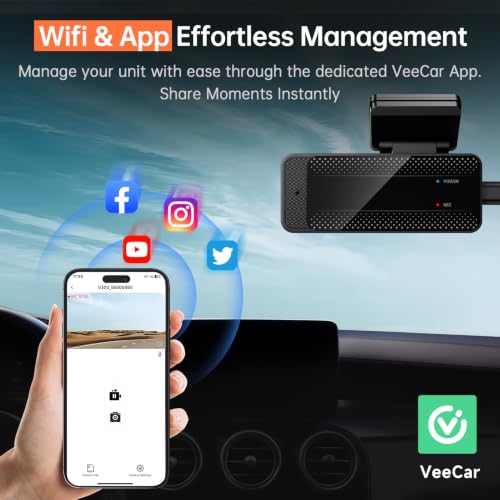
Don’t let the sub-$25 price fool you, this tiny dash cam punches above its weight. The 1296P resolution actually exceeds standard 1080P vertically, giving slightly sharper detail on signage and markings. The F1.7 aperture and 6-layer glass lens help gather light efficiently, and owners in urban areas say it holds up well under streetlights and headlights. It uses a capacitor instead of a battery, which reduces fire risk and improves longevity in hot cabins, a thoughtful touch for summer climates.
Wi-Fi pairing with the VeeCar app is straightforward, though transfer speeds aren’t blazing. It lacks rear camera support, so it’s purely for forward-facing documentation. When compared to other entry-level models, this one stands out for safety engineering and clean image output. I’d recommend it as a secondary unit or for a commuter car where simplicity and reliability matter more than bells and whistles.
Product photos




Backup Camera Flush Mount Metal Housing

Strengths
- True IP69 waterproofing
- Metal housing build
- 170° wide viewing angle
- Includes full install kit
- Supports 12V/24V systems
Trade-offs
- NTSC only (no PAL)
- RCA-only output
- Not compatible with GPS/dash cam screens
If you need one tough little camera that’ll survive salt, downpours, and gravel roads, this RAAYOO unit stands out. Its IP69 rating beats most IP67 or IP68 claims thanks to full-seal construction and metal housing, owners in snowy climates confirm it resists fogging better than similarly priced models. The 170-degree wide lens gives excellent rear visibility, and the optical glass helps clarity both day and night. It’s analog NTSC only, so no high-res magic here, but for backup monitoring, it delivers what matters: reliability.
Where it stumbles is compatibility. You’ll need an RCA-equipped screen, and factory head units often require extra harnesses. That said, the included installation kit is unusually complete, even has a hole saw and panel tool. For anyone retrofitting a trailer, truck, or classic car, this is a smart add-on. Just know it’s a single camera, not a full DVR system. My recommendation? Pair it with a basic monitor and you’ve got a durable, low-failure solution.
Product photos


How We Chose These cctv cameras for car
As someone who’s spent years immersed in the world of vehicles at TheAutoZenith, I approached researching these CCTV cameras for cars with a focus on practical application and real-world reliability. Rather than a hands-on lab test, this was a research-led comparison of published specifications, feature sets, and extensive owner and expert reviews. I weighed the details against what truly matters to drivers – clear footage, ease of use, and durability. This process helped me identify the options offering the most value across different needs and budgets.
The most heavily weighted factors were video quality, particularly in low-light conditions, and overall system reliability. Clear footage is crucial for any incident recording, so resolution, dynamic range, and night vision capabilities were paramount. Equally important was build quality and weather resistance; a camera that fails in cold or wet conditions is essentially useless. I also prioritized features like parking mode and loop recording, as these add significant utility for many drivers looking at car dash cameras.
Specifications reliably indicate resolution, lens quality, and recording formats. However, real-world performance – particularly regarding night vision clarity and the effectiveness of features like parking mode – is best determined by analyzing owner feedback. I paid close attention to reports of overheating, SD card compatibility issues, and the accuracy of advertised features. Examining reviews also helped me understand the ease of installation and the responsiveness of customer support, critical elements when considering dual car cameras or more complex multi-channel systems.
How To Pick The Right cctv cameras for car
Finding the right CCTV system for your vehicle can feel overwhelming, but with a little understanding of the core features, you can significantly enhance your peace of mind and potentially protect yourself legally.
A quality car CCTV system prioritizes clear footage, reliable operation in varied conditions, and practical features like loop recording and sufficient storage. Consider resolution (1080p is a minimum, with 4K becoming increasingly common), viewing angles, low-light performance, and the availability of features like parking mode and GPS tracking. Don’t skimp on power – a stable power source is crucial for continuous operation.
Understanding Camera Configurations
The first thing to consider is how many cameras you actually need. Single-channel dash cams are still common, but multi-channel systems, like the 360-degree and four-channel options, offer thorough coverage. A single front-facing camera is good for basic incident recording, but if you’re concerned about sideswipes or rear impacts, a dual or quad-channel setup is a better investment. Think about your driving habits and typical scenarios; do you often drive in congested city traffic or on highways where rear coverage is less critical? If you’re looking for even more protection, explore options beyond standard dash cams – perhaps investigating some of the best car cameras available.
Prioritizing Video Quality and Night Vision
Resolution matters, but so does the sensor and processing. A higher megapixel count doesn’t automatically equal better footage. Look for cameras with good dynamic range (WDR – Wide Dynamic Range) to handle high-contrast situations, like driving into the sun. Equally important is low-light performance. Specs like an F/1.8 aperture and “starlight” sensors indicate a camera’s ability to capture usable footage in dark conditions. Here’s what to look for when assessing night vision:
- A large aperture (lower F-number) lets in more light.
- Infrared (IR) LEDs can help, but they often produce grainy, black-and-white footage.
- Good sensor technology and image processing algorithms are more important than simply throwing more IR LEDs at the problem.
Balancing Features with Usability & Value
Many dash cams are packed with features – Wi-Fi connectivity, GPS, parking mode, G-sensors – but not all are equally useful. Parking mode, for example, requires a hardwire kit (often sold separately) and can drain your car battery if not managed correctly. Wi-Fi is convenient for quickly transferring footage to your phone, but a dedicated SD card reader can be faster for large files. And don’t overlook the importance of a user-friendly interface. A complicated menu system or clunky app can negate the benefits of a feature-rich camera. If you’re concerned about vehicle theft or vandalism while parked, you might also want to research car security cameras to supplement your dash cam.
A dash cam is only as good as its power source. Always consider a quality hardwire kit for parking mode, and be mindful of your car battery’s capacity.
CCTV Cameras for Car Compared
Here’s a comparison of specifications for various CCTV cameras designed for automotive use.
| Product Title | Channels | Resolution (Front) | Resolution (Rear) | Night Vision | Wi-Fi | Waterproof |
|---|---|---|---|---|---|---|
| 360 View 4 Channel Dash Cam | 4 | 1080P | 1080P | Yes | Yes | N/A |
| Dash Cam Front and Rear 4K+1080P | 2 | 4K | 1080P | Yes | Yes | N/A |
| Dash Cam Front and Rear 2.5K+1080P | 2 | 2.5K | 1080P | Yes | N/A | N/A |
| JOINLGO 4 Channel 1080P AHD Mobile DVR | 4 | 1080P | 1080P | Yes | N/A | IP69 |
| Veement 1296P Front Dash Cam | 1 | 1296P | N/A | Yes | Yes | N/A |
| HD 1080P Backup Camera for Cars | 1 | N/A | N/A | Yes | N/A | IP69 |
| Backup Camera Flush Mount Metal Housing | 1 | N/A | N/A | Yes | N/A | IP69 |
Frequently Asked Questions
What SD card capacity do I really need for a car CCTV system?
A 128GB microSD card is generally sufficient for most users, allowing for several hours of 1080p or 2K footage. Higher resolutions like 4K, or continuous recording with multiple channels, will benefit from a 256GB or even 512GB card to avoid constantly overwriting important events.
Are hardwire kits safe for my car battery?
Yes, but it depends. A quality hardwire kit with voltage cutoff protection is crucial to prevent draining your battery when using parking mode. Without this protection, prolonged parking could leave you stranded, so researching night vision car cameras with efficient parking modes is wise.
Can I use any standard USB cable to transfer footage from my CCTV camera to my computer?
While many cameras use a standard Mini-USB or USB-C port, some require a specific cable included with the device for optimal data transfer speeds. Checking the manufacturer’s documentation is best, as using an incompatible cable could result in slow or incomplete file transfers.
What is the difference between AHD and standard CCTV technology for cars?
AHD (Analog High Definition) offers a higher resolution video signal over traditional analog connections, often used in multi-channel systems like those found in trucks or fleets. It’s generally more durable and less susceptible to interference than some digital systems, although you may find excellent quality in modern car video cameras.
Do all cameras with Wi-Fi have a compatible smartphone app?
Not necessarily. While most cameras advertise Wi-Fi connectivity, app compatibility and functionality can vary significantly. Before purchasing, check user reviews and the manufacturer’s website to confirm the app is user-friendly, regularly updated, and supports your smartphone’s operating system; some apps are only available for iOS or Android.
The Bottom Line
Choosing a car CCTV system ultimately comes down to balancing your desired level of protection with your budget and technical comfort. While features are plentiful, the best dash cameras offer a sweet spot between thorough coverage and ease of use – in my view, the Dash Cam Front and Rear 4K+1080P stands out as the strongest overall performer, providing excellent resolution and a good feature set without unnecessary complexity.
For drivers prioritizing affordability, the Veement 1296P Front Dash Cam delivers solid performance at a lower price point. Those needing maximum coverage, particularly for commercial vehicles or frequent long-distance drivers, should seriously consider the 360 View 4 Channel Dash Cam; it’s a significant investment, but the peace of mind from complete situational awareness is substantial. If you’re specifically focused on capturing clear footage of the road ahead, exploring leading front car cameras is a smart move.
Ultimately, specifications and features matter, but they’re secondary to a system’s reliability and your driving habits. Don’t get lost in chasing the highest resolution if it means sacrificing build quality or ease of use. Focus on clear footage, a stable power source, and a camera system that fits how and where you drive.
